Tag: semiconductors

  • SK Hynix Plans $28B US Listing, Rivage Secures €1.5M, and More Top Tech News

    SK Hynix Plans $28B US Listing, Rivage Secures €1.5M, and More Top Tech News

    Good morning, tech fam; here are some quick tech updates for you to catch up on!

    What’s New Today

    SK Hynix is planning a $28 billion US listing to expand AI chip production and strengthen its global semiconductor business.

    Fast-Track Insights

    French proptech startup Rivage has raised €1.5 million to scale its AI-powered rental management platform across France and Germany.

    Here’s a quick rundown of the biggest tech headlines making waves today. Let’s dive into the day’s top tech stories, from SK Hynix’s massive US listing plans to South Africa’s proposed crypto tax guidance.


    SK Hynix Launches $28 Billion Nasdaq Listing to Capitalize on AI Boom

    South Korea’s SK Hynix is launching a $28 billion Nasdaq listing through depositary receipts, aiming to benefit from booming global AI demand. The AI memory chip leader plans to use the proceeds for expanding semiconductor production, strengthening its global presence, and supporting South Korea’s broader AI and chip investment strategy.


    Rivage Raises €1.5M to Scale AI Rental Management Platform Across Europe

    Paris-based proptech startup Rivage has secured €1.5 million in funding led by Kima Ventures to expand its AI-powered rental management software. The platform automates accounting, billing, and property workflows for real estate agencies. Rivage aims to accelerate growth in France, expand into Germany, and reach €5 million in annual recurring revenue by 2027.


    Malaysia Focuses on Better Jobs and AI Hiring

    Malaysia is changing its job strategy by focusing on better jobs instead of just creating more jobs. The government is using AI to help people find the right jobs through the MYFutureJobs platform. It also aims to improve workers’ skills, increase salaries, and prepare the workforce for future industries.


    Best AI Agent Frameworks for Building High-Performance Agents

    This article explains some of the best AI agent frameworks that help developers create smart AI agents more easily. It compares their features, ease of use, and performance. The guide also shows how the right framework can save time, improve efficiency, and support simple as well as large AI projects.


    South Africa Proposes Draft Crypto Tax Guidance Under Existing Laws

    South Africa’s Revenue Service (SARS) has released draft guidance explaining how existing income tax and capital gains tax rules apply to crypto assets. The proposal treats most crypto transactions as taxable events, depending on individual circumstances, and invites public feedback until August 31 before finalizing the guidance.

  • Tech Roundup: Samsung Stocks Dip, Indian Startups Thrive Under Digital Rules, Robinhood Unveils Blockchain, and Anthropic Releases Claude Sonnet 5

    Tech Roundup: Samsung Stocks Dip, Indian Startups Thrive Under Digital Rules, Robinhood Unveils Blockchain, and Anthropic Releases Claude Sonnet 5

    Good morning! Here’s your quick roundup of today’s biggest developments across semiconductors, digital policy, enterprise AI, cryptocurrency, and generative AI.

    What’s New Today

    • South Korean technology stocks took a hit after a Nasdaq-led selloff.
    • India’s digital regulatory measures are helping startups scale rapidly.
    • Ford is hiring hundreds of engineers despite the rise of AI automation.
    • Robinhood launched its own public blockchain for tokenized assets.
    • Anthropic released Claude Sonnet 5 with improved agentic AI capabilities.

    Fast-Track Insights

    • Samsung and SK Hynix shares decline amid global tech weakness.
    • India’s digital ecosystem strengthens startup growth.
    • Ford adds 350 engineers to support product development.
    • Robinhood launches a public blockchain for tokenized assets.
    • Claude Sonnet 5 expands AI capabilities with API access.

    Samsung and SK Hynix Shares Fall After Global Tech Selloff

    Samsung Electronics and SK Hynix stocks fell amid an acute selloff in U.S. tech shares on the Nasdaq. The downturn followed rising concerns about valuations tied to artificial intelligence and semiconductor demand. Analysts, however, maintain a long-term growth outlook, citing sustained investments in AI infrastructure and memory chips.

    India’s Digital Rules Strengthen Startup Ecosystem

    An Oxford Economics report indicates that India’s evolving digital regulations are helping startups expand by boosting consumer trust, encouraging innovation, and creating a more predictable business environment. The study highlights that balanced policies are supporting investment, digital adoption, and economic growth, enabling emerging companies to compete more effectively in the technology sector.

    Ford Hires Engineers Despite AI-Driven Automation

    Ford is looking to hire approximately 350 engineers, recognizing that AI cannot fully replace human skills in automobile production. Experts note that while AI can increase productivity, it is not a substitute for human engineering creativity, product design, and safety expertise. The hiring drive reflects the lasting importance of human talent in modern vehicle development.

    Robinhood Launches Public Blockchain for Tokenized Assets

    Robinhood has introduced its own public blockchain, deepening its engagement with digital assets. The blockchain will support tokenized financial products and fast transactions. This development marks a significant step for Robinhood in the blockchain space.

    Claude Sonnet 5 Brings More Agentic AI Capabilities

    Anthropic has launched Claude Sonnet 5, its latest AI model featuring enhanced reasoning, coding, planning, and tool-use capabilities. The model is available through the Claude API, Claude Code, Amazon Bedrock, Google Cloud, and other platforms. Sonnet 5 now serves as the default model for Free and Pro users, while offering developers improved performance at lower API pricing.

  • Apple MacBook and iPad Price Hikes Stir Supplier Tensions; Micron Points to 2023 Pricing Pressure

    Apple MacBook and iPad Price Hikes Stir Supplier Tensions; Micron Points to 2023 Pricing Pressure

    Apple has raised prices across several MacBook, iPad, Apple TV, HomePod, and Vision Pro models, attributing the increases to soaring memory and storage costs driven by AI data center demand. The company announced the broad price hikes on June 25, affecting multiple hardware products while leaving iPhone prices unchanged. According to Apple, the rapid expansion of AI infrastructure has created exceptional demand for memory and storage chips, reducing available supply for consumer electronics.

    CEO Tim Cook described the current market conditions as unlike anything Apple has experienced before. He stated, “There’s less supply at a time when consumers want devices and the memory guys are passing along huge price increases.” Cook also called the situation “unavoidable” and “unsustainable.”

    Market data supports the broader supply trend. Research firms report that memory and storage prices are now roughly four times higher than they were several quarters ago. TrendForce estimates memory chip prices rose by as much as 98% during the first quarter of 2026 and could increase by another 58% to 63% in the following quarter. Those higher component costs have reached consumers: the MacBook Neo increased from $599 to $699, while several MacBook and iPad models received price increases ranging from $100 to $300. Apple also confirmed that the affected devices did not receive additional memory or storage upgrades despite the higher prices.

    Micron Points to Pricing Pressure During the 2023 Downturn

    Shortly after Apple’s announcement, Micron Chief Business Officer Sumit Sadana offered a different explanation for today’s supply constraints in an interview with The Wall Street Journal. He said some major customers pushed suppliers to accept extremely low prices during the memory market collapse in 2023. Sadana stated, “We told a couple of the customers who were being very aggressive with pricing at that time that this is not constructive.” He added that poor pricing and weak margins forced many companies across the industry to reduce investment in new production capacity.

    Although Sadana never identified Apple by name, Apple is widely known for negotiating long-term supply agreements and purchasing large volumes of memory components. During 2023, Micron reported deeply negative margins as the memory market experienced one of its weakest periods in recent years. The company has since recovered, reporting strong quarterly financial results with revenue rising sharply alongside improved profitability. Its shares climbed after the earnings report, while Apple’s stock declined following the announcement of higher product prices.

    Supply Constraints May Continue Beyond 2027

    Industry analysts say both explanations reflect different parts of the same market cycle. AI servers require high-bandwidth memory, which uses far more manufacturing capacity than standard memory found in smartphones and laptops. As more production shifts toward AI hardware, fewer chips remain available for consumer devices. Meanwhile, reduced investment during the 2023 downturn limited the industry’s ability to expand manufacturing before AI demand accelerated. New semiconductor facilities require several years to build and reach full production, meaning additional capacity cannot arrive quickly.

    Apple has reportedly begun seeking additional memory suppliers, including Chinese manufacturer CXMT, to improve future supply. However, Tim Cook said Apple has no plans to enter the memory business itself. Several analysts expect memory costs to remain elevated through at least 2027. Research firms also estimate memory could account for a much larger share of smartphone production costs over the next two years, leading some industry observers to expect future iPhone price increases if current market conditions continue.

    Related Articles

    • Apple Stock Slides 6% After MacBook and iPad Price Hikes Worldwide
    • US Stock Market Today: NASDAQ Falls as Apple Slides Nearly 5% While Dow Surges 598 Points to Record High
    • Micron Stock Surges 16% After $9.8B Revenue Beat and $22B AI Supply Deals
    • US Stock Market Today: S&P 500 Rises as Oil Prices Slide and Investors Await Micron’s Earnings Report
    • US Stock Market Today: S&P 500 and NASDAQ Slide as Micron Leads Global Chip Stock Sell-Off
  • Wall Street Opens July with Mixed Trading as Chip Stocks Decline and Iran Tensions Persist

    Wall Street Opens July with Mixed Trading as Chip Stocks Decline and Iran Tensions Persist

    Wall Street kicked off the second half of 2026 with mixed trading on Wednesday, as geopolitical tensions in the Middle East and profit-taking in semiconductor stocks weighed on investor sentiment. The Dow Jones Industrial Average managed modest gains, while the NASDAQ Composite fell as chipmakers retreated following a strong first half of the year. Investors also monitored fresh economic data and comments from Federal Reserve Chair Kevin Warsh ahead of this week’s US jobs report.

    Middle East Tensions and Fed Outlook Keep Markets Cautious

    Major US indexes traded unevenly during Wednesday’s session as renewed uncertainty surrounding US-Iran relations kept investors cautious. Tehran said it would not meet senior US officials who had traveled to the region after recent hostilities. Meanwhile, technical discussions between the two countries reportedly took place in Doha, though public statements suggested a broader agreement remained uncertain.

    According to Reuters, concerns surrounding the conflict continued to influence financial markets as investors assessed possible effects on global energy supplies. At the same time, traders remained focused on monetary policy after expectations grew that the Federal Reserve could raise interest rates at least once before the end of the year.

    Federal Reserve Chair Kevin Warsh spoke at the European Central Bank forum in Portugal, noting that “we’ve seen that prices are too high.” His remarks came after the central bank removed forward guidance from its latest policy statement, leaving markets dependent on incoming economic data.

    The Institute for Supply Management reported that US manufacturing activity slowed in June following stronger growth during the previous month. Investors are now waiting for Thursday’s June nonfarm payrolls report for more direction on the health of the labor market.

    Chip Stocks Retreat After a Record First Half

    Technology shares led losses across the broader market as investors locked in gains following a powerful rally during the first six months of 2026. The information technology sector declined while several leading semiconductor companies traded lower.

    Micron fell about 6%, Sandisk dropped roughly 8%, NVIDIA lost around 2%, and Broadcom also moved lower. Despite the pullback, many of these companies remain among the year’s strongest performers after benefiting from continued demand tied to artificial intelligence infrastructure.

    The VanEck Semiconductor ETF gained 82% during the first half of 2026, marking its strongest first-half performance since the fund launched in 2000. Market participants said some investors were reducing exposure ahead of the upcoming corporate earnings season.

    Shawn Snyder, economic strategist at Potomac Fund Management, told CNBC: “We’re in this range where valuations increasingly need to be validated. I think investors are probably just taking some chips off the table after a really tremendous first half.”

    Paul Hickey, co-founder of Bespoke Investment Group, added: “Over the long term, we still like the semis, but I wouldn’t be aggressive towards it here.”

    Meta Surges While Corporate Developments Drive Individual Stocks

    Meta Platforms climbed about 10% after reports that the company is developing a cloud computing business designed to monetize excess artificial intelligence infrastructure. According to the report, Meta is considering offering hosted AI models or direct access to computing power for external customers.

    The report boosted communication services stocks and helped offset part of the weakness seen across the technology sector. Investors viewed the potential business as another way for Meta to generate returns from its growing AI investments.

    Elsewhere, Shutterstock dropped nearly 31% after ending its planned merger with Getty Images. Kroger also slipped after announcing a $1.65 billion agreement to acquire regional supermarket chain Giant Eagle.

    Despite weakness in several large-cap technology names, smaller companies continued to outperform. The Russell 2000 reached a new all-time high after extending its winning streak to six sessions. The small-cap index has gained more than 21% during the first half of 2026, marking its strongest first-half performance since 1991.

    As Wall Street moves into the second half of 2026, investors are maintaining optimism around AI-driven growth while monitoring concerns over valuations, interest rates, geopolitical risks, and the upcoming earnings season for clearer market direction.

    Disclaimer: This article is provided for informational purposes only and does not constitute investment advice. Readers are encouraged to conduct their own research before making any investment decisions.

  • NVIDIA Stock Stays Below $200 Ahead of Vera Rubin Launch Amid Rising Competition and AI Spending Trends

    NVIDIA Stock Stays Below $200 Ahead of Vera Rubin Launch Amid Rising Competition and AI Spending Trends

    NVIDIA shares continue to trade below the $200 mark despite a modest rebound, as investors shift their attention to the company’s upcoming Vera Rubin platform and its expanding robotics business. The stock has underperformed the broader semiconductor sector in 2026, even as demand for artificial intelligence infrastructure remains robust.

    NVIDIA Trails Semiconductor Sector Despite AI Demand

    Shares of NVIDIA rose about 1.5% to $197.96 in early Tuesday trading. However, the stock has gained only about 5% year-to-date, while the PHLX Semiconductor Index has surged approximately 94% in the same period, making NVIDIA one of the weaker performers among major chip companies. Investors have been reallocating capital to other areas of the AI supply chain, including memory chipmakers, custom chip developers, and CPU manufacturers. Intel and Advanced Micro Devices have posted significantly stronger gains in 2026, and the iShares Semiconductor ETF has also outperformed NVIDIA. Analysts point to concerns over export restrictions affecting China and questions about future growth rates as factors weighing on the stock.

    Vera Rubin Platform and Robotics Expansion

    The market is now focused on NVIDIA’s next-generation Vera Rubin platform, which could strengthen the company’s position in AI infrastructure if it delivers substantial performance improvements. Competition is intensifying as large technology companies diversify their AI spending across multiple suppliers. Meanwhile, NVIDIA is expanding beyond AI chips into robotics, having opened more than a dozen robotics-related positions in Beijing, Shanghai, and Shenzhen. The roles cover embodied intelligence, simulation, implementation, and robotics solutions. NVIDIA says the robotics team aims to build a leading platform and ecosystem for autonomous machines, speeding the transition from research to commercial use. Employees will work on Project GR00T, the Cosmos physical simulation world model, and NVIDIA’s GPU computing platform.

    Market Watches AI Spending and China Competition

    NVIDIA remains one of the world’s largest listed companies with a market valuation of about $4.696 trillion—a 1% move changes its value by approximately $47 billion. Investors are tracking broader AI capital expenditure: the Bank for International Settlements projects that the five largest hyperscalers will invest more than $1 trillion in AI capex over 2025 and 2026, while also noting funding pressure and supply constraints around power, advanced chips, and grid infrastructure. Separately, Reuters reported that Baidu’s Kunlunxin chip business targets a $50 billion Hong Kong IPO, and IDC data shows domestic suppliers now hold 41% of China’s AI accelerator server market. Despite these headwinds, NVIDIA continues to project strong growth. The company forecast fiscal second-quarter revenue of $91 billion, above analyst expectations, and announced an $80 billion share buyback. CEO Jensen Huang stated, ‘We should be growing faster than hyperscale capex.’ Analysts are monitoring whether AI investment can sustain its pace through the coming years.

  • Wall Street Poised for Best Quarter in Years as Tech Stocks Rebound Amid Geopolitical Calm

    Wall Street Poised for Best Quarter in Years as Tech Stocks Rebound Amid Geopolitical Calm

    Wall Street is on track to close the second quarter with its strongest performance in years, even as ongoing US-Iran tensions continue to create geopolitical uncertainty. Investors have maintained buying momentum, buoyed by optimism over the upcoming earnings season and easing concerns about Middle East hostilities. Major indexes posted solid gains, with technology shares staging a recovery after a challenging June.

    Major US Indexes Target Strongest Quarterly Gains

    The S&P 500 and NASDAQ Composite are heading toward their best quarterly gains in six years, while the Dow Jones Industrial Average is on pace for its strongest quarter since 2022. In Tuesday trading, the S&P 500 rose 0.34%, the NASDAQ gained 0.76%, and the Dow traded nearly flat. These gains reflect continued investor confidence despite earlier volatility driven by semiconductor weakness.

    The Dow is also on track for its best first-half performance since 2021. The S&P 500 has posted more than an 8% gain during the first six months of 2026, while the NASDAQ has advanced over 11%. The Russell 2000 has outperformed larger indexes, climbing more than 21% in the same period.

    Technology Stocks Recover as Earnings Season Approaches

    Technology stocks helped lift markets after suffering sharp losses earlier in June. Investors are now shifting focus to the upcoming corporate earnings season, expecting strong results to support current valuations. Chipmakers led Tuesday’s rally: NVIDIA gained more than 1%, Advanced Micro Devices advanced about 3%, and Intel climbed roughly 4%.

    Semiconductor exchange-traded funds also delivered record quarterly gains. The VanEck Semiconductor ETF surged around 70% during the second quarter, while the iShares Semiconductor ETF gained approximately 94%. Micron was among the sector’s strongest performers, rising about 240% during the quarter.

    Despite Tuesday’s rebound, June remained challenging for several technology stocks. The S&P 500 and NASDAQ are still on track to end two consecutive months of gains as investors reassess AI-related valuations.

    Geopolitical Developments and Interest Rates Remain in Focus

    Investors continue monitoring US-Iran developments. Recent signs of reduced hostilities have improved market sentiment after both countries agreed to halt attacks and allow commercial shipping through the Strait of Hormuz. Oil prices remained relatively stable, with Brent crude trading near $73 per barrel and West Texas Intermediate around $70. Stable energy prices have helped ease concerns about additional inflation pressure.

    Markets are also focused on monetary policy expectations. Traders now anticipate at least one Federal Reserve rate hike before the end of 2026, following stronger economic data that shifted expectations away from earlier forecasts for rate cuts. Investors are awaiting comments from Federal Reserve Chair Kevin Warsh after fresh job openings and consumer confidence reports.

    Individual Stocks Post Mixed Performance

    Several individual companies recorded notable moves during Tuesday’s session. Concentrix shares fell more than 20% after lowering its full-year revenue and adjusted profit forecasts, pushing the stock to a record low. In contrast, AeroVironment surged about 22% after reporting a strong increase in quarterly revenue. Morgan Stanley slipped around 1% after Oppenheimer downgraded major Wall Street investment banks and encouraged investors to consider alternative asset managers.

    European markets also ended higher on the final trading day of June, with technology stocks leading regional gains. Major indexes in Germany, France, Italy, and the United Kingdom all closed in positive territory. Although analysts continue monitoring geopolitical developments and interest rate expectations, strong corporate earnings and resilient investor demand have kept Wall Street positioned for one of its strongest quarters in recent years.

  • Best Stocks to Buy Now With $3,000: Turn a Small Investment Into Long-Term Wealth

    Best Stocks to Buy Now With $3,000: Turn a Small Investment Into Long-Term Wealth

    Investing doesn’t require a fortune. With just $3,000, you can build a diversified portfolio of high-quality stocks that have strong growth potential. Here are some of the top picks for long-term wealth creation.

    NVIDIA (NVDA)

    The AI chip leader continues to benefit from booming demand for data centers and artificial intelligence. NVIDIA’s GPUs are essential for training large language models and powering AI applications, making it a core holding for any tech-focused portfolio.

    Microsoft (MSFT)

    Its cloud business (Azure) and AI investments, including its partnership with OpenAI, make Microsoft one of the strongest long-term technology stocks. The company’s diversified revenue streams from productivity software, gaming, and enterprise services provide stability and growth.

    Amazon (AMZN)

    Beyond e-commerce, Amazon’s cloud platform (AWS) and AI services continue driving future growth. AWS remains the dominant cloud provider, and Amazon’s logistics network and advertising business add further upside.

    Alphabet (GOOGL)

    Google’s AI expansion and advertising business keep Alphabet among the market’s strongest performers. The company’s search dominance, YouTube growth, and investments in autonomous driving (Waymo) and cloud computing provide multiple growth engines.

    Meta Platforms (META)

    Meta is investing heavily in AI while maintaining strong revenue from digital advertising. Its social media platforms (Facebook, Instagram, WhatsApp) generate massive user engagement, and its metaverse and AI initiatives could unlock new revenue streams.

    Broadcom (AVGO)

    Its semiconductor and infrastructure software businesses continue benefiting from enterprise AI demand. Broadcom’s networking chips are critical for data centers, and its software acquisitions (VMware) provide recurring revenue.

    Eli Lilly (LLY)

    Strong demand for weight-loss and diabetes treatments makes Eli Lilly a healthcare favorite. Its drugs like Mounjaro and Zepbound have blockbuster potential, and the company’s pipeline includes promising treatments for Alzheimer’s and other conditions.

    Visa (V)

    Global digital payments continue expanding, giving Visa steady long-term growth potential. As cash transactions decline worldwide, Visa’s network effects and transaction volume growth provide reliable returns.

    Disclaimer: This article is for informational purposes only and does not constitute financial advice. Always do your own research before investing.

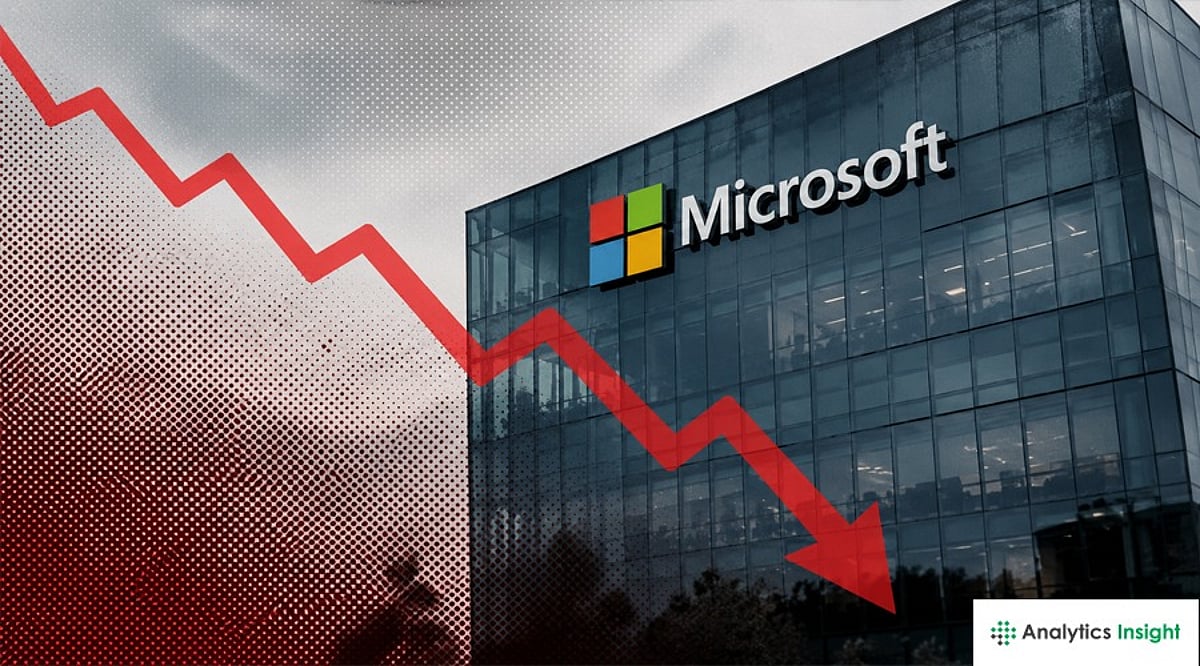
  • Microsoft Stock on Track for Worst Monthly Drop Since 2000 as AI Spending Surge Eclipses Strong Earnings

    Microsoft Stock on Track for Worst Monthly Drop Since 2000 as AI Spending Surge Eclipses Strong Earnings

    Microsoft Corp. is heading toward its weakest monthly stock performance in more than two decades, even as the company continues to report steady revenue growth and earnings that exceed Wall Street expectations. Investors have shifted their attention from quarterly results to the rising cost of expanding artificial intelligence infrastructure.

    AI Investment Costs Overshadow Earnings Beat

    Microsoft has delivered year-over-year revenue growth of 16% to 18% for eight consecutive quarters and consistently beaten analyst earnings estimates. Yet these strong results have done little to support the share price. The market is now laser-focused on spending rather than revenue.

    Capital expenditure has become the primary metric investors watch. Microsoft spent approximately $38 billion on capital projects in the latest quarter, much of it directed toward expanding AI data centers. Bank of America estimates the company’s capital spending could approach $190 billion in 2026. This surge is not unique to Microsoft—Amazon, Alphabet, Meta Platforms, and Oracle are also pouring billions into AI infrastructure, with combined spending by the five largest hyperscale cloud providers projected to exceed $700 billion in 2026.

    As more companies build data centers, demand for advanced chips and memory continues to rise, driving up equipment costs and extending investment cycles. Investors are now questioning how quickly these projects can generate meaningful financial returns.

    Cash Flow and Shareholder Returns Under Pressure

    Microsoft’s capital spending increased 63% from a year earlier, while free cash flow declined 10%. With more operating cash funneled into infrastructure, less remains available for share repurchases and dividend growth. Bank of America notes that hyperscaler capital spending has risen from roughly 70% of operating cash flow in 2025 to nearly 100% in 2026, raising concerns that large technology companies may have fewer resources for direct shareholder returns while AI investment remains elevated.

    Stifel lowered its Microsoft price target to $400, forecasting that Azure’s expansion will reduce gross margins by 100 to 150 basis points each quarter through fiscal 2027. Analysts estimate Microsoft’s fiscal 2027 gross margin could fall to about 63%, and earnings per share may trail actual results if spending continues at the current pace.

    Meanwhile, semiconductor companies have benefited from the AI investment cycle. Since January, the semiconductor sector has outperformed many large technology stocks as demand for AI hardware continues to increase.

    Technical Levels Under Scrutiny

    Technical analysts are also watching Microsoft’s stock price action closely. John Roque, a technical strategist at 22V Research, noted that the stock has struggled to stay above its 200-day moving average after repeated failures near resistance levels. He warned that a break below long-term support around $350 could trigger further weakness. “A break below $350 would, on his math, open the path to $250 — measured down from the stock’s failure near $450 in early June,” Roque said. That projection represents roughly 30% below recent trading levels, though it remains a technical scenario rather than a forecast.

    Outlook: AI Returns Remain the Key Question

    Current market conditions draw comparisons to earlier technology investment cycles, including the period following the dot-com boom. Many investors continue to monitor whether Microsoft’s expanding AI business, cloud platform, and related services will eventually generate returns that justify the record level of infrastructure spending. Until then, AI investment costs remain one of the biggest drivers of sentiment surrounding the company’s stock.

  • MEXC Launches TradFi Gala: $1,000,000 USDT Prize Pool for Futures Traders

    MEXC Launches TradFi Gala: $1,000,000 USDT Prize Pool for Futures Traders

    Victoria, Seychelles, June 29, 2026 – MEXC, a leading 0-fee digital asset trading platform, has announced the launch of the TradFi Gala, a month-long Futures trading campaign running from June 26 to July 26, 2026 (UTC). With rising demand for AI infrastructure and high-bandwidth memory (HBM), trading activity in AI-related stocks has surged. MEXC’s May data showed Stock Futures volume up 105% month-over-month and MU (Micron) Futures volume skyrocketing 1,002%. The campaign combines zero-fee trading, exclusive new user rewards, and competitive events, offering a total reward pool of 1,000,000 USDT.

    TradFi Gala: Four Reward Opportunities for Traders

    The TradFi Gala features four events targeting both new and existing users:

    • 0-Fee Trading Fest: Zero trading fees on selected Futures pairs including MUUSDT, SKHYNIXUSDT, INTCUSDT, SNDKUSDT, and more.
    • Welcome Power Reward: New users who deposit at least $100 and hold it for 24 hours receive a $200 position airdrop and one chance to pull the Treasure Lever.
    • Treasure Lever Frenzy: Users earn pulls by completing trading tasks, competing for a share of 300,000 USDT, including a $20,000 SKHYNIX position airdrop grand prize.
    • TradFi Trading Rush: Three-tiered challenges distribute 650,000 USDT in Futures bonuses, with separate pools for new users and all participants based on trading volume.

    As AI and semiconductor stocks attract growing investor interest, MEXC continues to expand its TradFi product suite. Users can trade U.S. stocks like Intel, Micron, and SanDisk directly within a single account, benefiting from competitive fees, deep liquidity, and fast execution. The TradFi Gala reinforces MEXC’s commitment to “0 Fees” and “Infinite Opportunities.”

    For more details and to participate, visit the MEXC TradFi Gala page.

    About MEXC

    MEXC is the world’s fastest-growing cryptocurrency exchange, trusted by over 40 million users across 170+ markets. It offers industry-leading 0-fee trading and access to over 3,000 digital assets, along with tokenized stocks, ETFs, commodities, and precious metals.

    Risk Disclaimer: This content does not constitute investment advice. Cryptocurrency markets are highly volatile; investors should assess risks carefully before trading.

  • Musk and Cook Warn Memory Chip Shortage Could Stifle AI Growth as Prices Soar

    Musk and Cook Warn Memory Chip Shortage Could Stifle AI Growth as Prices Soar

    Elon Musk has publicly backed Apple CEO Tim Cook’s stark warning about an unprecedented memory chip shortage, as surging costs driven by AI data center demand create ripple effects across the consumer electronics and automotive industries.

    Cook described the shortage as a “hundred-year flood,” noting he had not seen a similar cost shock in any sector in over four decades. Musk echoed that sentiment, calling it the “biggest price jump in anything I’ve ever seen.” Both executives are now calling for a massive expansion of production capacity to avert long-term constraints.

    AI Infrastructure Fuels Demand for Advanced Memory

    The rapid expansion of artificial intelligence infrastructure has dramatically increased demand for high-bandwidth memory (HBM) products, which are critical for running AI processors and handling large datasets. Chip manufacturers have shifted significant production capacity toward these higher-value components, creating tighter supplies of standard memory and storage chips used in smartphones, computers, televisions, and game consoles.

    Cook stated that Apple could no longer absorb the full increase in component costs, calling price hikes “unavoidable.” The company subsequently raised prices across several product lines, including Mac computers and iPads, with some increases reaching hundreds of dollars depending on the model and storage configuration. Apple also adjusted prices for its Apple TV, HomePod, and iMac products.

    Microsoft followed suit by announcing higher prices for Xbox consoles, and other electronics manufacturers have similarly adjusted their pricing as memory and storage costs climb throughout the supply chain.

    Tesla’s AI Ambitions at Risk

    Musk warned that the gap between memory demand and production capacity is “insane,” adding that the industry requires significantly higher output to alleviate the shortage. Tesla relies on advanced chips for its vehicles, AI systems, and Optimus robots. During Tesla’s fourth-quarter earnings call in January, Musk indicated that supplier output could constrain the company’s plans.

    He noted that memory could become “an even bigger limiter than AI logic.” While AI logic chips handle calculations, memory chips store and move the data those processors require. Both must be available in large volumes for AI systems to operate effectively.

    Tesla currently works with external manufacturers, including major chip producers in the United States and Asia, but Musk said the company faces risks if suppliers cannot ramp up production quickly enough. The shortage also impacts SpaceX and xAI, both of which require growing computing power for satellite systems, AI training, and data center projects.

    TeraFab Project Aims to Boost Production

    Musk has proposed TeraFab as a potential long-term solution. The project involves Tesla, SpaceX, and xAI, with Intel also announcing its participation. The planned facility would combine logic chip production, memory manufacturing, and advanced packaging, potentially reducing reliance on outside suppliers and supporting future AI and robotics projects.

    However, many details remain unclear. The companies have released limited information about production timelines, financing, and each participant’s exact role. Reports have noted that formal commitments between some parties have not been fully disclosed. Tesla has begun recruiting semiconductor workers with experience in advanced manufacturing, covering chip design, packaging, lithography, testing, and production management.

    Even with new factories, semiconductor facilities take years to build and prepare for mass production. Consequently, current supply pressure may persist as data center operators, automakers, and device manufacturers compete for available chips.

    For consumers, the immediate outcome is higher prices across computers, tablets, consoles, and other electronics that depend on memory and storage components. Both Cook and Musk have urged the industry to invest in new capacity, but relief is unlikely in the near term.