Tag: semiconductors

  • UnitedHealth Lifts Dow as Chip Selloff Pressures NASDAQ and S&P 500

    UnitedHealth Lifts Dow as Chip Selloff Pressures NASDAQ and S&P 500

    The S&P 500 and NASDAQ Composite fell on Thursday as semiconductor shares extended their decline, offsetting gains across much of the market. Strong earnings from UnitedHealth and firm economic data supported the Dow Jones Industrial Average, but technology losses kept pressure on the other major indexes.

    At 10:00 a.m. ET, the Dow rose 82 points, or 0.16%, to 52,740.92. The S&P 500 fell 0.39% to 7,545, while the NASDAQ dropped 1% to 26,100. Eight of the 11 S&P 500 sectors traded higher, showing that weakness remained concentrated in large technology names.

    Chip Stocks Lead the NASDAQ Lower

    Semiconductor shares posted the largest losses after Taiwan Semiconductor Manufacturing released its second-quarter results. Its US-listed shares fell about 2.5%, even though the company reported earnings above forecasts. Traders focused on its higher spending plan for 2026.

    TSMC raised its expected capital spending range to between $60 billion and $64 billion from $52 billion to $56 billion. The increase renewed concern over the cost of expanding artificial intelligence capacity across the chip industry. The Philadelphia Semiconductor Index fell 3.8%. Western Digital and Seagate Technology each dropped 7.3%, while Micron Technology lost 4.8%. Arm Holdings fell more than 6%, and Advanced Micro Devices and Broadcom also moved lower.

    Shiraz Ahmed of Sartorial Wealth said the chip rally is cooling, but “not because AI is losing steam.” He said AI use is still expanding across data centers, energy systems and semiconductor production.

    UnitedHealth Supports the Dow Jones

    UnitedHealth shares rose 7.8% after the health insurer posted better-than-expected second-quarter results and raised its 2026 profit forecast. The move helped keep the Dow Jones positive while the S&P 500 and NASDAQ fell. The healthcare sector gained about 2%, while consumer staples rose 2.1%. Those gains limited the broader decline, even as the information technology sector fell 1.9%.

    Meanwhile, GE Aerospace dropped 4.4% despite reporting earnings and revenue above forecasts. The company posted adjusted earnings of $2.02 per share on revenue of $12.63 billion, compared with forecasts of $1.86 and $11.86 billion. GE Aerospace also lifted its full-year guidance. United Airlines fell 2.8% as rising oil prices added pressure to its third-quarter and full-year profit outlook.

    Retail Sales and Jobless Claims Shape Rate View

    Fresh economic data showed that US consumers kept spending during June. Retail sales rose 0.2%, matching expectations. Lower gasoline prices reduced service-station receipts, while other areas of consumer spending held up. Bill Adams, Chief US Economist at Fifth Third Commercial Bank, said slower headline retail sales growth was “actually positive” since lower fuel prices drove much of the weakness. He added that the report supports second-quarter real gross domestic product growth.

    Weekly jobless claims also came in below forecasts. Initial claims fell to 208,000 for the week ended July 11, compared with expectations of 218,000. The data pointed to resilience in the labor market. Inflation reports released earlier in the week eased concern over tighter Federal Reserve policy. Traders priced an 88% chance that the central bank will leave rates unchanged at its July meeting, according to CME FedWatch data.

    Wider Market Gains Fail to Lift Major Indexes

    The market showed a split between large technology stocks and the wider group of companies. Advancing stocks slightly outnumbered decliners on the New York Stock Exchange, while declining shares held a wider lead on the NASDAQ. The Invesco S&P 500 Equal Weight ETF rose 0.6%, showing that the average company performed better than the market-cap-weighted index. The standard S&P 500 still fell as major chip and technology shares carried greater influence.

    Geopolitical concerns also stayed in focus. Reports said Iran asked Yemen’s Houthi movement to prepare for a possible closure of the Red Sea oil route if the United States strikes Iranian power facilities. The threat kept energy prices and airline costs in view during Thursday’s early trading session.

    Investors will now watch upcoming corporate earnings and economic data for clearer signals on the strength of the US economy and the Federal Reserve’s next policy move. Whether chip stocks stabilize or extend their pullback is also likely to play a key role in determining the broader market’s direction.

  • ASML Stock Jumps After Second 2026 Revenue Upgrade Fueled by AI Chip Demand

    ASML Stock Jumps After Second 2026 Revenue Upgrade Fueled by AI Chip Demand

    ASML shares surged more than 3% on Wednesday after the Dutch lithography giant raised its 2026 sales forecast for the second time this year, driven by robust demand for artificial intelligence chips. The company also reported quarterly revenue and profit that exceeded analyst expectations as chipmakers accelerated spending on advanced production equipment.

    The upgraded outlook reflects strong demand for tools used in AI processors, data centers, and high-bandwidth memory. ASML noted that customer orders remained elevated in the first half of 2026 as foundries and memory producers moved faster on capacity expansion plans.

    ASML Raises Sales and Margin Guidance

    ASML now expects 2026 net sales between €43 billion and €45 billion, up from its previous forecast of €36 billion to €40 billion. The company also lifted its gross margin range to 54%–56%, compared with the earlier 51%–53% guidance.

    Second-quarter net sales reached €9.3 billion, above the €8.8 billion consensus estimate from LSEG analysts. Net profit came in at €2.9 billion, versus the €2.6 billion market forecast. Shares opened more than 7% higher before settling to a gain of about 3.4%.

    CEO Christophe Fouquet described order intake as “extremely strong” during the first half and said customers are accelerating expansion plans across both logic and memory production. These commitments give ASML better visibility into demand through 2028.

    ASML plans to increase its 2026 low-NA EUV capacity by 30% and boost its deep ultraviolet immersion capacity by the same margin. Both systems are manufactured at its facility in Veldhoven, Netherlands.

    AI Spending Drives Equipment Orders

    ASML holds a near-monopoly position in advanced chip production as the sole supplier of extreme ultraviolet lithography machines used to manufacture the most advanced semiconductors. Its customers include TSMC, Intel, SK Hynix, and Micron Technology.

    Fouquet said stronger end-market demand encouraged customers to raise capital spending and bring forward expansion plans. “This has also translated practically into very strong order booking through the first half of 2026,” he said.

    Orders for EUV systems now extend into 2028, reflecting sustained investment in AI servers, advanced processors, and memory chips. Chipmakers are also seeking faster productivity gains through upgrades to installed equipment.

    TSMC, one of ASML’s largest customers, reported a 68% rise in June sales. The Taiwanese company is also preparing new advanced packaging plants to meet growing demand for AI chips and related services.

    TSMC Earnings Draw Closer Scrutiny

    ASML’s report arrives one day before TSMC is scheduled to release second-quarter results on July 16. Analysts expect TSMC to report earnings of $3.89 per share on revenue of $39.31 billion, based on consensus estimates.

    Investors will focus on TSMC’s capital spending plans, its 2-nanometer production ramp, and demand for advanced packaging. ASML’s order strength suggests major customers are still committing funds to new capacity, though TSMC’s guidance will provide the next key update.

    China remains an important market for ASML despite tighter export controls. The company still expects China to account for about 20% of annual sales. China’s share fell to 14% in the second quarter from 19% in the first quarter.

    South Korea became ASML’s largest market during the quarter, contributing 43% of sales. The company plans to provide a broader update on long-term targets at its Capital Markets Day on June 10, 2027.

  • ASML Stock Climbs After Second 2026 Revenue Forecast Hike Fueled by AI Chip Demand

    ASML Stock Climbs After Second 2026 Revenue Forecast Hike Fueled by AI Chip Demand

    ASML shares rose more than 3% on Wednesday after the Dutch chip equipment maker raised its 2026 sales forecast for the second time this year. The company also reported quarterly revenue and profit above market estimates as chipmakers increased spending on advanced production tools.

    The update points to demand for equipment used in AI processors, data centers, and high-bandwidth memory. ASML said customer orders stayed strong during the first half of 2026 as foundries and memory producers moved faster on capacity plans.

    ASML Lifts Sales and Margin Outlook

    ASML now expects 2026 net sales between €43 billion and €45 billion. Its earlier forecast called for sales between €36 billion and €40 billion. The company also raised its gross margin range to 54% to 56%, from 51% to 53%.

    Second-quarter net sales reached €9.3 billion, above the €8.8 billion expected by analysts surveyed by LSEG. Net profit came in at €2.9 billion, compared with the €2.6 billion market forecast. Shares opened more than 7% higher before trimming gains to about 3.4%.

    Chief Executive Christophe Fouquet said order intake was ‘extremely strong’ during the first half. He added that customers were accelerating expansion plans across logic and memory production. Those commitments gave ASML better visibility into demand through 2028.

    ASML plans to increase its 2026 low-NA EUV capacity by 30%. It will also add 30% to its deep ultraviolet immersion capacity. The company produces both systems at its site in Veldhoven, Netherlands.

    AI Spending Drives Equipment Orders

    ASML holds a central position in advanced chip production. It is the only supplier of extreme ultraviolet lithography machines used to make the most advanced semiconductors. Its customers include TSMC, Intel, SK Hynix, and Micron Technology.

    Fouquet said stronger end-market demand had encouraged customers to lift capital spending and bring forward expansion plans. ‘This has also translated practically into very strong order booking through the first half of 2026,’ he said.

    Orders for EUV systems now extend into 2028. That longer order window reflects continued investment in AI servers, advanced processors, and memory chips. Chipmakers also seek faster productivity gains from upgrades to installed equipment.

    TSMC, one of ASML’s largest customers, reported a 68% rise in June sales. The Taiwanese company is also preparing new advanced packaging plants as demand grows for AI chips and related services.

    TSMC Earnings Draw Closer Scrutiny

    ASML’s report arrives one day before TSMC is due to release second-quarter results on July 16. Analysts expect TSMC to report earnings of $3.89 per share and revenue of $39.31 billion, based on consensus estimates.

    Investors will watch TSMC’s capital spending plans, its 2-nanometre production ramp, and demand for advanced packaging. ASML’s order strength suggests major customers are still committing funds to new capacity, though TSMC’s guidance will provide the next update.

    China is an important market for ASML despite tighter export controls. The company still expects China to account for about 20% of annual sales. China’s share fell to 14% in the second quarter from 19% in the first quarter.

    South Korea became ASML’s largest market during the quarter, contributing 43% of sales. The company plans to provide a broader update on long-term targets at its Capital Markets Day on June 10, 2027.

  • China Trade Data Shows 27% Export Surge and 36% Import Spike Fueled by AI Infrastructure Boom

    China Trade Data Shows 27% Export Surge and 36% Import Spike Fueled by AI Infrastructure Boom

    China’s Trade Performance Exceeds Expectations

    China’s exports and imports in June significantly surpassed market forecasts, driven by robust global demand for artificial intelligence (AI) hardware and strategic tariff front-loading by exporters. According to data released by the General Administration of Customs, exports rose 27% year-on-year—the strongest pace since October 2021 and well above the consensus forecast of 18.2%. Imports surged 36%, marking the largest single-month jump since 2021 and beating the 24% economists had anticipated.

    AI Hardware and Tariff Front-Loading as Key Drivers

    Two primary forces combined to produce the outsized June numbers. The first, more structural driver, is booming global demand for semiconductors, electronic components, and AI-related technology products, which are heavily concentrated in China’s manufacturing base. Wang Jun, China’s vice minister of customs, stated at a press briefing that imports and exports in the AI field are “robust,” directly linking the trade acceleration to the global buildout of data center infrastructure.

    The second driver was tactical: Chinese exporters front-loaded shipments to the United States ahead of anticipated new tariffs, compressing several months of expected shipping activity into a narrower window. Aggressive pricing by manufacturers helped sustain order volumes even as factory-gate prices continued to fall.

    “Rising global demand for AI infrastructure, advanced electronics, and capital equipment remains a key support for Chinese manufacturing exports,” said Hao Zhou, chief economist at Guotai Junan International Holdings. “With external demand holding up better than expected, policymakers face less urgency to launch aggressive stimulus,” he added.

    Import Growth Hits a Five-Year High

    The 36% import surge in June built on May’s already-strong 27.4% gain. Analysts attributed part of the acceleration to higher energy costs tied to the ongoing Middle East conflict, which pushed up commodity prices. However, high-tech product categories remained the core engine of volume growth.

    China’s trade surplus widened to $125.6 billion in June, up from $105.4 billion the previous month—a record figure that is drawing scrutiny from trading partners. For the first half of 2026, exports climbed 17.6% year-on-year while imports rose 26.6%.

    Diverging Trade Routes and Growing Scrutiny

    The export gains are spreading unevenly across regions. Shipments to Southeast Asia jumped nearly 35% in June, while exports to the European Union and Latin America grew more than 18% and 28% respectively. China has been actively diversifying its export routes partly in response to rising tariff barriers, with businesses moving factories into Europe and ramping up shipments through Southeast Asian intermediaries.

    “The global AI supercycle will continue to support the overall regional and Chinese trade performance,” said Samuel Tse, senior economist at DBS Bank Hong Kong Ltd. “Easing trade tension with the US also helps with the export momentum,” he added.

    Outlook for China’s Export-Driven Economy

    The widening surpluses are prompting pushback from US and European policymakers alarmed by growing trade deficits. A proposed US Senate bill threatening secondary tariffs of up to 500% on countries buying Russian oil—a category that includes China—could become a significant headwind. BNP Paribas analyst Wei Li cautioned that while robust shipments in autos and AI-related items should persist, export growth is becoming increasingly fragile and dependent on regulatory conditions that can shift quickly.

    China’s stronger-than-expected trade figures highlight the resilience of its export sector despite global uncertainty. As AI infrastructure, advanced manufacturing, and technology demand continue to expand, the country’s trade momentum could remain a key driver of global supply chains and broader economic growth in the coming months.

  • Wall Street Slips as Renewed US-Iran Tensions Lift Oil Prices and Drag Down Chip Stocks

    Wall Street Slips as Renewed US-Iran Tensions Lift Oil Prices and Drag Down Chip Stocks

    US stocks declined on Monday as escalating tensions between the United States and Iran prompted investors to adopt a cautious stance. The S&P 500 fell 0.4% at its session low, while the NASDAQ Composite dropped 1%. The Dow Jones Industrial Average traded roughly 56 points lower, or 0.1%.

    The market weakened after President Donald Trump announced the reinstatement of a blockade targeting Iranian shipping through the Strait of Hormuz. Oil prices surged on the news, adding pressure to growth stocks and other risk assets. This came despite the S&P 500 posting two consecutive weekly gains amid volatile chip shares and renewed Middle East risks.

    Oil Surges After New Hormuz Order

    Trump stated that the United States would act as ‘THE GUARDIAN OF THE HORMUZ STRAIT’ and impose a 20% charge on cargo shipped through the route to cover security costs. He said the action would prevent Iranian ships and customers from entering or leaving via the waterway.

    West Texas Intermediate crude futures gained more than 5%, moving above $75 per barrel. Brent crude climbed about 5.3% to $80. The gains followed another exchange of strikes between the US and Iran over the weekend, renewing concerns over energy supplies and shipping access.

    Chip Stocks Lead the Market Decline

    Semiconductor shares posted some of Wall Street’s steepest losses. US-listed shares of SK Hynix fell 7% after surging 13% during its NASDAQ debut on Friday. Micron Technology dropped about 6% to 7%, while Sandisk lost close to 10%. Seagate Technology fell 6%, and Advanced Micro Devices and Intel traded around 4% lower. The Philadelphia Semiconductor Index slid 3.6%, standing more than 14% below its late-June record.

    Technology became the weakest S&P 500 sector during the morning session, falling about 1.3%. Four of the index’s 11 sectors traded lower early. The NASDAQ posted the largest decline among the three major indexes, while gains in IBM and UnitedHealth helped limit losses in the Dow.

    “Markets have started the week firmly on the defensive,” said Daniela Hathorn, senior market analyst at Capital.com. She linked the weaker mood to renewed US-Iran tension and uncertainty over the path toward a lasting agreement.

    Earnings and CPI Move into Focus

    Wall Street also prepared for a busy week of corporate results. JPMorgan Chase, Goldman Sachs, Morgan Stanley, Bank of America, Citigroup, and Wells Fargo will report. Netflix, Johnson & Johnson, and UnitedHealth also have results scheduled.

    Analysts expect second-quarter S&P 500 earnings to rise by more than 23% from a year earlier, based on FactSet and LSEG estimates. Investors will track bank results for signs of consumer strength and credit quality. Technology earnings will also draw attention as companies update AI spending plans.

    The June consumer price index report arrives Tuesday morning. The data could reshape interest-rate expectations after higher oil prices renewed inflation concerns. Federal Reserve Chair Kevin Warsh will also deliver his first monetary policy testimony before Congress on Tuesday.

    Apple drew attention after Citi raised its price target to $365 from $315, citing potential market share gains despite slower demand. Analyst Asiya Merchant noted that ‘selective price increases’ may offset margin pressure, and pointed to the September iPhone 18 launch as a possible catalyst before Apple reports earnings on July 30.

  • US Stock Futures Decline as Middle East Tensions Drive Oil Prices Higher, Stoking Market Anxiety

    US Stock Futures Decline as Middle East Tensions Drive Oil Prices Higher, Stoking Market Anxiety

    US stock futures edged lower on Monday as renewed tensions in the Middle East unsettled investors and sent crude oil prices higher, raising concerns over inflation and global economic growth.

    Nasdaq futures suffered the biggest loss, with S&P 500 and Dow Jones Industrial Average futures indicating the market will open lower as investors weighed the impact of rising energy prices amid uncertainty over the interest rate outlook.

    Oil Rise Puts Pressure on Market Sentiment

    Oil prices increased amid growing tensions between the United States and Iran. Concerns about potential oil supply disruptions have arisen due to the strategically located Strait of Hormuz, which is among the most active oil transportation routes worldwide.

    Brent crude oil has been hovering near $79 per barrel, while West Texas Intermediate has exceeded $74 per barrel. Increased oil prices have caused inflation concerns.

    Tech and semiconductor stocks continued to underperform as investors cut positions in growth sectors. Increasing bond rates have contributed to weakness in tech stocks due to their sensitivity to rate changes.

    Attention Turns to Earnings and Inflation Reports

    Despite geopolitical and market uncertainties, investors are preparing for yet another busy week on Wall Street. Several big US banks are expected to report earnings next week, kicking off the earnings season. Market participants will watch how tech firms perform during earnings in the upcoming days.

    Moreover, investors will consider figures on US inflation and statements by Fed Chair Kevin Warsh, which may have a strong impact on market expectations for further Fed action. Any indications of inflation persistence, especially following the oil price hike, may add to the list of reasons to maintain high interest rates.

    For now, investors are trying to weigh geopolitical influences against company earnings and economic data. It seems that all these issues will play an important role in global markets in the coming days.

  • TSMC Posts Record Q2 Revenue as AI Chip Demand Drives 36% Growth

    TSMC Posts Record Q2 Revenue as AI Chip Demand Drives 36% Growth

    Taiwan Semiconductor Manufacturing Co. reported record second-quarter revenue as demand for chips used in artificial intelligence systems lifted sales. The company generated NT$1.27 trillion, or about $39.62 billion, from April through June. Revenue rose 36% from a year earlier and came in slightly above the NT$1.264 trillion estimate drawn from 20 analysts.

    The result placed TSMC near the upper end of its official revenue forecast of $39 billion to $40.2 billion. The chipmaker supplies advanced processors to major technology companies, including NVIDIA and Apple.

    Investors now turn to the full earnings report, where profit, margins, spending and the next sales forecast will receive closer attention. TSMC gives its quarterly guidance in US dollars rather than Taiwan dollars, so currency movements can affect direct comparisons with reported sales.

    June Revenue Records Sharp Annual Growth

    TSMC generated NT$442.68 billion in June revenue. Sales rose 67.9% from June 2025 and increased 6.2% from May. The annual rise marked the company’s fastest monthly growth rate in 2026 and completed a record quarter for the Taiwan-based chip producer.

    Meanwhile, first-half revenue reached about NT$2.4 trillion, equal to approximately $74.99 billion. That figure was 35.6% higher than the same period last year. First-half sales were equal to about 63% of TSMC’s full-year revenue for 2025. TSMC originally planned the June report for Friday, July 10, but delayed the release after Typhoon Bavi closed financial markets in Taipei.

    AI Chip Orders Support TSMC Sales

    TSMC produces semiconductors designed by other companies and operates the world’s largest dedicated chip foundry business. Its production network gives the company a central role in supplying processors used by AI developers, cloud providers, smartphone makers and computer companies.

    Strong demand for high-performance computing chips has supported recent revenue growth. The brief sales statement did not show how much June revenue came directly from AI-related products. It also gave no product or customer revenue breakdown.

    Additionally, Taiwan plans to expand advanced chip packaging capacity in Chiayi Science Park. TSMC will add two more packaging plants at the site, according to Taiwan’s science and technology minister. The first facility already runs mass production, while officials expect the second facility to begin operations soon. Advanced packaging combines several chip parts for demanding AI computing systems.

    Earnings Report Shifts Focus to Outlook

    TSMC will release its full second-quarter results on Thursday, July 16. The earnings conference starts at 2 p.m. Taiwan time. Analysts expect second-quarter net profit to rise 58.8% from a year earlier, though the monthly sales statement did not include profit, earnings per share or margin figures.

    Investors will watch the company’s third-quarter revenue forecast, gross margin range and capital spending plans. TSMC previously guided for a second-quarter gross margin of 65.5% to 67.5% and an operating margin of 56.5% to 58.5%. Management did not issue updated guidance with the June sales release.

    TSMC’s Taipei-listed shares closed 1% higher on Monday before the sales figures became public. The broader Taiwan market finished the session almost unchanged. The company carried a market value of about $1.96 trillion at the time of the report, making it Asia’s most valuable publicly traded company.

  • Indian Metros Lead the Deep-Tech Revolution: A City-by-City Breakdown

    Indian Metros Lead the Deep-Tech Revolution: A City-by-City Breakdown

    India is witnessing a remarkable transformation as several cities evolve into robust deep-tech innovation hubs. From artificial intelligence and robotics to semiconductors and aerospace, these urban centers are leveraging startups, research institutions, and government support to drive next-generation technology. Here’s a closer look at how each city is contributing to India’s deep-tech landscape.

    Bengaluru: The Silicon Valley of India

    Bengaluru remains India’s premier deep-tech hub, powering innovation in AI, robotics, aerospace, semiconductors, and enterprise software. The city’s vibrant startup ecosystem, world-class research institutions, and presence of global tech giants create a fertile ground for cutting-edge developments.

    Hyderabad: IT, Life Sciences, and Advanced Manufacturing

    Hyderabad combines world-class IT infrastructure with strengths in life sciences, AI research, and data centers. Government support and a focus on advanced manufacturing have accelerated deep-tech entrepreneurship in the city, making it a key player in India’s innovation story.

    Chennai: EVs, Semiconductors, and Industrial Automation

    Chennai strengthens India’s deep-tech capabilities through electric vehicles, semiconductor design and manufacturing, industrial automation, and engineering-driven tech startups. Its strong industrial base and research institutions support a thriving ecosystem.

    Pune: Engineering Excellence in Robotics and Automotive Tech

    Pune leverages its strong engineering ecosystem to foster robotics, automotive technology, AI, defense innovation, and manufacturing research. The city’s growing deep-tech startup communities are making a mark nationally.

    Delhi NCR: AI, Cybersecurity, Fintech, and Space Tech

    Delhi NCR attracts significant deep-tech investments across AI, cybersecurity, fintech, space technology, and enterprise innovation. A dense network of startups, incubators, universities, and venture capital firms fuels its growth.

    Ahmedabad: Semiconductor Initiatives and Industrial Development

    Ahmedabad is expanding its deep-tech ecosystem with semiconductor initiatives, advanced manufacturing, research collaborations, and startup incubation. Technology-focused industrial development is driving progress across multiple sectors.

    Kochi: Digital Infrastructure and Maritime Tech

    Kochi nurtures emerging deep-tech companies through digital infrastructure, startup incubators, AI innovation, and maritime technology research. Government-backed entrepreneurship initiatives are fostering a supportive environment in Kerala.

    Bhubaneswar: Engineering Talent and Electronics Manufacturing

    Bhubaneswar leverages its engineering talent, research institutions, and electronics manufacturing base to build capabilities in AI, semiconductors, and advanced digital technologies. Startup programs further bolster the local deep-tech scene.

    Collectively, these emerging innovation hubs are strengthening India’s research commercialization, skilled talent pool, venture funding, infrastructure, and global competitiveness across next-generation technology sectors. The deep-tech ecosystem in India is poised for exponential growth.

  • 7 High-Growth US Tech Stocks to Watch in 2026: Key Drivers and Risks

    7 High-Growth US Tech Stocks to Watch in 2026: Key Drivers and Risks

    The US technology sector continues to be shaped by artificial intelligence, cloud software, and semiconductor innovation. Companies delivering consistent revenue and earnings growth remain in focus. These high-growth tech stocks stand out for their strong business momentum and long-term potential.

    Overview

    Seven US tech companies posted verified double- or triple-digit revenue growth in their most recent 2026 quarterly reports. Each stock carries a distinct growth driver, from AI infrastructure demand to NAND storage contracts, rather than a repeated AI narrative. Every pick comes with a specific, company-disclosed risk factor investors should track before buying.

    Revenue separates market leaders from market stories. The strongest US tech companies are proving their growth through earnings rather than expectations. From AI infrastructure to cybersecurity and digital commerce, these seven stocks are backed by measurable performance instead of market hype.

    NVIDIA Stock: Why it Remains a Top High-Growth AI Stock in 2026

    NVIDIA posted first-quarter fiscal 2027 revenue of $81.6 billion, up 85% year over year, with data center revenue up 92%. The Blackwell ramp is still driving that growth, and the Rubin platform is set to contribute revenue for the first time next quarter. The clearest risk sits in the guidance itself: NVIDIA is assuming zero data center compute revenue from China going forward, a quantified exposure rather than a vague valuation concern.

    Palantir Stock: Enterprise AI Growth Makes it a Top Tech Stock in 2026

    Palantir grew revenue 85% year over year in Q1 2026, its fastest pace since 2020, with US commercial revenue up 133%. The company raised its full-year guidance to 71% growth and reported a Rule of 40 score of 145. Operating expenses rose 32% in the same quarter, so any slowdown in commercial deal velocity would hit margins faster than revenue could offset it.

    Shopify Stock: Commerce Growth and AI Innovation Drive 2026 Performance

    Shopify crossed $100 billion in quarterly GMV for the second straight quarter, with revenue up 34%. The Universal Commerce Protocol, now backed by Amazon, Meta, Microsoft, Salesforce, and Stripe, is the structural story here. Investors should still note that the stock fell 8.7% on the print itself, as rising transaction losses and a price-to-earnings ratio near 135 offset the headline growth.

    Zscaler Stock: Cybersecurity Growth Powered by AI Demand

    Zscaler grew revenue 25% and ARR 25% in its third fiscal quarter, positioning itself as the cybersecurity layer for AI agents. Strip out the Red Canary acquisition, and organic ARR growth drops to 21%, and the company’s own early guidance for fiscal 2027 points to a step down to 16 to 17% growth.

    HubSpot Stock: AI-Powered CRM Growth Supports Long-Term Potential

    HubSpot grew revenue 23% in Q1 2026, with total customers approaching 300,000 and active AI seat users up 90% year over year. The company’s push into agentic tools, including its new Customer, Prospecting, and Data Agents, is driving upmarket deal sizes higher, with deals above $120,000 in ARR up 64%. But pricing and go-to-market changes made in April slowed sales capacity, and management has already guided Q2 growth down to 18%. That is a declaration the company disclosed itself, not a market guess.

    SanDisk Stock: AI-Driven NAND Demand Fuels Revenue Growth

    Revenue more than tripled to $5.95 billion as AI workloads drove NAND demand, and the company locked in $42 billion of long-term supply contracts covering a third of its fiscal 2027 bit shipments. Management has flagged the risk directly: the variable-priced portions of those contracts could erode margins fast if NAND supply outpaces demand.

    Reddit Stock: Advertising and AI Data Licensing Drive Growth

    Reddit rounds out the list with a genuinely different growth driver. Revenue grew 69% in Q1 2026, its seventh straight quarter above 60% growth, powered by advertising revenue up 74% and a data licensing relationship with AI model builders built on more than 25 billion posts and comments. Active advertisers on the platform grew more than 75% year over year, and the company’s own automated campaign product, Reddit Max, is already showing measurable results for advertisers. The gap to watch: US daily active users sit at 53.5 million, approximately half of management’s own stated target of 100 million.

    What is Driving High-Growth US Tech Stocks in 2026?

    None of these seven stocks is growing for the same reason. NVIDIA and SanDisk are riding AI infrastructure demand from opposite ends of the supply chain. Palantir and HubSpot are monetizing AI inside enterprise software. Shopify is building a two-decade-old commerce network. Zscaler is selling security for a threat landscape that did not exist five years ago. Reddit is turning its content archive into a licensing asset.

    Final Thoughts

    Every stock on this list beat growth expectations this year, and every one of them also handed investors a specific reason to stay disciplined. The market has stopped rewarding growth on its own; it now waits to see whether a China exposure, a slowing organic ARR line, or a guided deceleration actually shows up in the next print. The companies that manage their own disclosed risk will separate from the ones that only manage the headline. Watch the risk column as closely as the growth column, because that is where the real verdict gets written.

  • White House Urges Apple, NVIDIA, and SpaceX to Boost Intel’s US Chip Production

    White House Urges Apple, NVIDIA, and SpaceX to Boost Intel’s US Chip Production

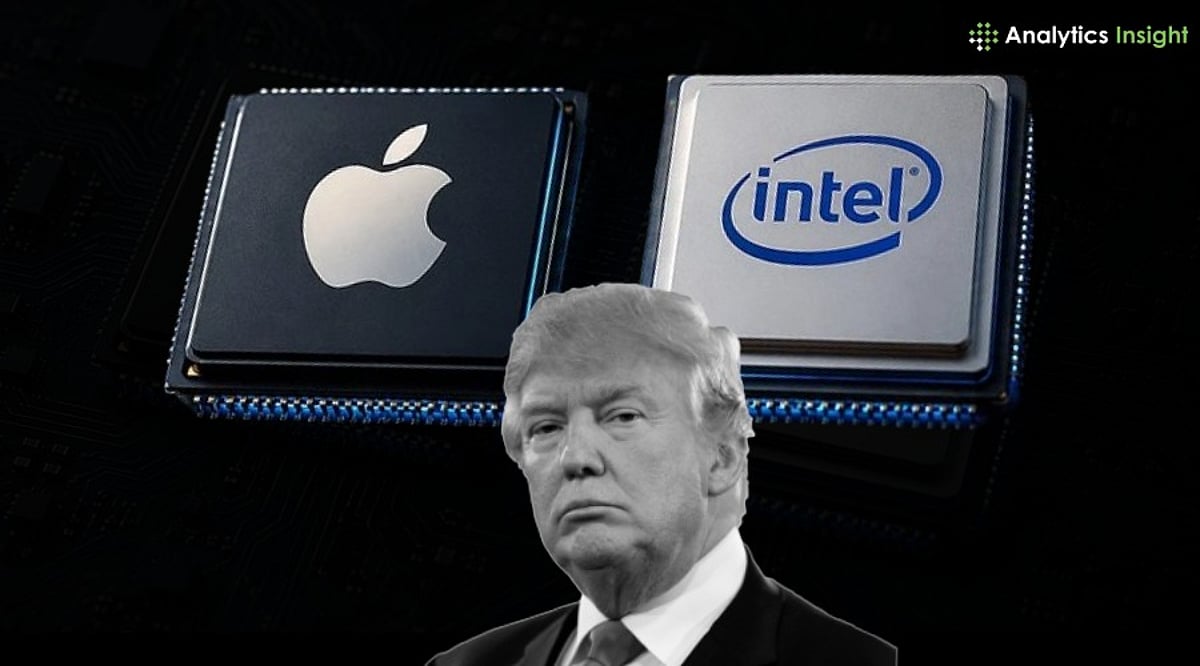
    The Trump administration has taken an active role in Intel’s recovery, urging major US technology companies to invest in or work with the chipmaker. Apple, NVIDIA, and SpaceX have entered talks or partnerships with Intel as Washington seeks to expand semiconductor production within the United States.

    This support has improved Intel’s access to capital and raised demand for its processors. However, the company’s contract manufacturing business still relies heavily on work from Intel’s own product units. Outside foundry revenue remains small compared with the wider manufacturing division.

    White House Presses Tech Firms to Back Intel

    President Donald Trump and Commerce Secretary Howard Lutnick urged Apple Chief Executive Tim Cook to use Intel’s US factories during talks over proposed semiconductor tariffs. Apple later reached a preliminary agreement for Intel to manufacture selected chips, though large-scale production may take several years.

    Washington also converted about $8.87 billion in federal funding into an equity position of roughly 10% in Intel, making the US government the company’s largest shareholder. NVIDIA subsequently invested $5 billion, while SoftBank added $2 billion. Officials also encouraged Intel to work with NVIDIA and SpaceX.

    Meanwhile, Intel Chief Executive Lip-Bu Tan reorganized engineering teams and shifted spending toward equipment for advanced production and packaging. Intel also recruited managers with experience at Samsung Electronics and SK Hynix.

    Server Sales Rise as Intel Posts a Loss

    Intel reported first-quarter revenue of $13.6 billion, up 7% from one year earlier. Data Center and AI revenue rose 22% to $5.1 billion as cloud and AI customers bought more Xeon processors. Intel still recorded a net loss of $3.7 billion, partly linked to restructuring charges.

    The company expects second-quarter revenue between $13.8 billion and $14.8 billion and projects adjusted earnings of $0.20 per share. Tan said AI inference is ‘significantly increasing the need for Intel’s CPUs and wafer and advanced packaging offerings.’

    Additionally, Intel expanded its work with Google Cloud. The companies agreed to use Intel Xeon processors across AI, inference, and general computing tasks. The agreement gives Intel a large processor customer, though it does not establish Google as a major outside buyer for Intel’s foundry plants.

    Outside Foundry Revenue Stays Limited

    Intel Foundry reported $5.4 billion in first-quarter revenue, up 16% from a year earlier. Most of that amount came from Intel’s internal product groups. External foundry revenue reached only $174 million, compared with $31 million in the same quarter of 2025.

    The increase mainly came after Altera became an outside customer following its separation from Intel. Intel’s filing said the change accounted for much of the $143 million annual rise. Chief Financial Officer David Zinsner described the outside sales as ‘legacy business that we have mainly on the wafer side.’

    Intel has identified external foundry growth as a key long-term strategy. The company has secured capital, processor agreements, and government support, but first-quarter figures show that third-party manufacturing orders have not yet become a major source of revenue.