Tag: SpaceX

  • SpaceX Stock Slips Below IPO Price as Blue Origin Raises $10 Billion to Expand Space Operations

    SpaceX Stock Slips Below IPO Price as Blue Origin Raises $10 Billion to Expand Space Operations

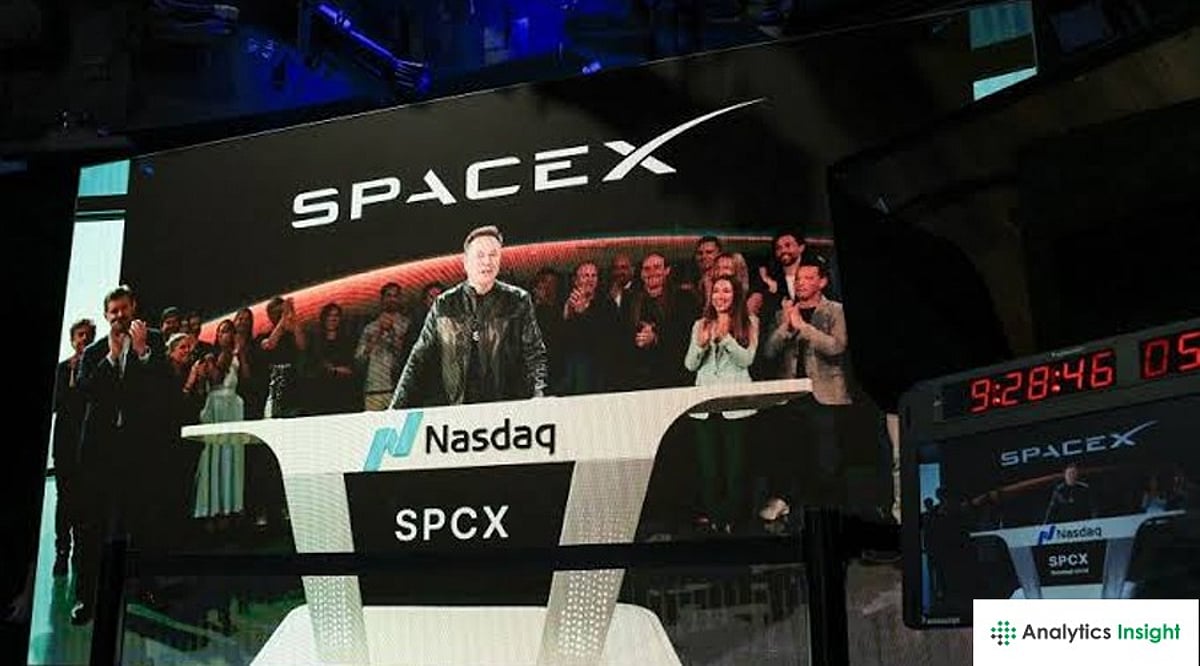
    SpaceX shares dropped below their IPO opening price this week, closing at $148 on Wednesday after a two-day decline following the company’s inclusion in the NASDAQ-100 index. The stock touched an intraday low of $145.20 before recovering some losses. The decline came as rival Blue Origin moved to raise $10 billion in outside capital at a reported $130 billion valuation, intensifying competition in the space launch and satellite connectivity markets.

    SpaceX’s IPO opened at $150 per share in June after the company raised $85.7 billion, including the greenshoe option. The stock reached a closing high of $201.80 on June 16 but has since pulled back. Analysts attribute the decline to a post-IPO adjustment phase, where early demand cools and investors test valuation support. Despite the drop, most analysts remain bullish, with price targets above $200. Morgan Stanley rates the stock overweight with a $300 target, while Bernstein, RBC, and UBS initiated coverage with positive ratings.

    Analysts point to SpaceX’s leadership in reusable rockets, launch services, and Starlink satellite internet, as well as potential growth from AI tools, orbital data centers, and broader space infrastructure. Morgan Stanley’s Adam Jonas described SpaceX as more than a rocket company, noting its ability to connect launch economics, satellite networks, and AI infrastructure into a single business model.

    Meanwhile, Blue Origin is seeking outside funding for the first time in its 25-year history. The Jeff Bezos-backed company is raising $10 billion, including $4 billion from Coatue Management, $4 billion from other large investors, and $2 billion from Bezos himself. The raise follows a difficult period that included a New Glenn rocket explosion during a static engine test that damaged its only launch pad. Bezos told CNBC in May that the company has enough visibility into its future to bring in outside investors. Blue Origin also plans to operate TeraWave, an enterprise satellite connectivity service, using New Glenn rockets to launch satellites into medium and low Earth orbit.

    Amazon is preparing its own satellite internet service, Amazon LEO, which would compete with Starlink in consumer connectivity, but TeraWave targets large business customers. The funding signals Blue Origin’s push to strengthen its capital base as competition in launch services and satellite internet intensifies. SpaceX still leads in satellites in orbit, but Blue Origin is working to build a stronger position across rockets and connectivity.
  • SpaceX Launches First Commercial Nuclear-Powered Satellite on Falcon 9

    SpaceX Launches First Commercial Nuclear-Powered Satellite on Falcon 9

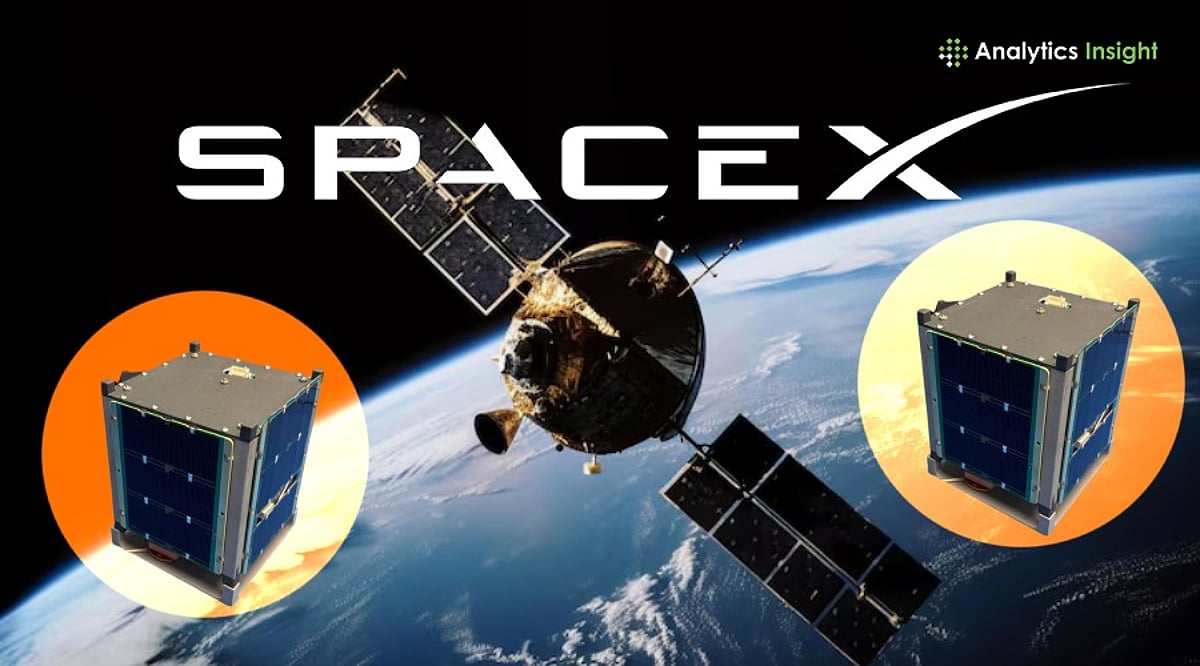
    SpaceX has successfully launched the world’s first commercial nuclear-powered satellite into orbit, marking a significant milestone in the commercialization of space nuclear technology. The satellite, named BOHR (Betavoltaic Orbital High-Reliability CubeSat), was built by Miami-based City Labs and launched aboard a Falcon 9 rocket as part of the Transporter-17 rideshare mission from Vandenberg Space Force Base on July 7.

    The BOHR satellite uses a novel betavoltaic battery system called NanoTritium, which generates electricity from the natural beta decay of tritium trapped in a metal hydride matrix. Unlike traditional radioisotope thermoelectric generators used by NASA on missions like Voyager or the Curiosity rover, this system has no moving parts, no liquid electrolytes, and virtually no fire risk. As the tritium fuel decays, it converts into helium-3, a stable, non-radioactive byproduct.

    City Labs CEO Peter Cabauy emphasized the significance of this achievement, stating, “This is a historic step for commercial nuclear power in space.” The mission demonstrates that nuclear energy systems are ready for commercial use, addressing a critical limitation of solar panels: they cease to function when not exposed to sunlight. Batteries can provide short-term power but cannot sustain long-duration operations.

    NASA has separately explored tritium betavoltaics for powering small autonomous sensors in permanently shadowed regions of the Moon, where extreme cold and total darkness make conventional batteries impractical. The BOHR mission also cleared a new regulatory path, becoming the first commercial nuclear payload to undergo the FAA’s dedicated review pathway established under National Security Presidential Memorandum-20 in 2019.

    The launch arrives alongside NASA and the Department of Energy’s continued development of a lunar surface fission reactor, targeting a first deployment by 2030. Cabauy described BOHR as a pathfinder, noting that the goal extends beyond City Labs to open the commercial nuclear space sector for other firms pursuing similar technology. “BOHR demonstrates that safe, compact, and regulatory-approved nuclear power systems are ready for routine commercial deployment. This capability enables persistent, always-on payload operations that are not constrained by sunlight or battery life,” he said.

    While the power output is modest, unsuitable for large-scale applications like lunar bases, Cabauy hopes it can scale toward larger applications over time, underscoring nuclear power as essential infrastructure for the next phase of deep space and lunar exploration.

  • SPCX Stock Falls After NASDAQ-100 Debut as Analysts Deliver Mixed Forecasts

    SPCX Stock Falls After NASDAQ-100 Debut as Analysts Deliver Mixed Forecasts

    SpaceX stock (ticker: SPCX) experienced a decline following its first day of trading on the NASDAQ-100 index, closing at $149.47 on Tuesday. The 7% drop came despite expectations that index inclusion would trigger buying from funds tracking the benchmark. The stock remains above its $135 IPO price but is more than 25% below its June 16 closing high of $201.80.

    The NASDAQ-100 entry had been anticipated to bring demand from index-tracking funds, which collectively manage approximately $800 billion in assets. However, this anticipated buying did not materialize into a rally, suggesting that some of the index demand may have been priced into the stock earlier. SPCX had gained nearly 6% in the week leading up to the index addition, and investors sold off shares as the first NASDAQ-100 session failed to extend that upward move.

    Meanwhile, ARK Invest increased its position in SpaceX by purchasing 44,196 SPCX shares on Tuesday, valued at around $6.6 million based on the closing price. ARK funds already held approximately 3.29 million shares by the end of SpaceX’s first public trading day.

    Wall Street analysts have begun issuing coverage following the end of the post-IPO quiet period, with a wide range of price targets reflecting significant uncertainty about the company’s valuation. The average analyst target stands near $236, implying roughly 58% upside from Tuesday’s close. Nineteen analysts have issued ratings so far.

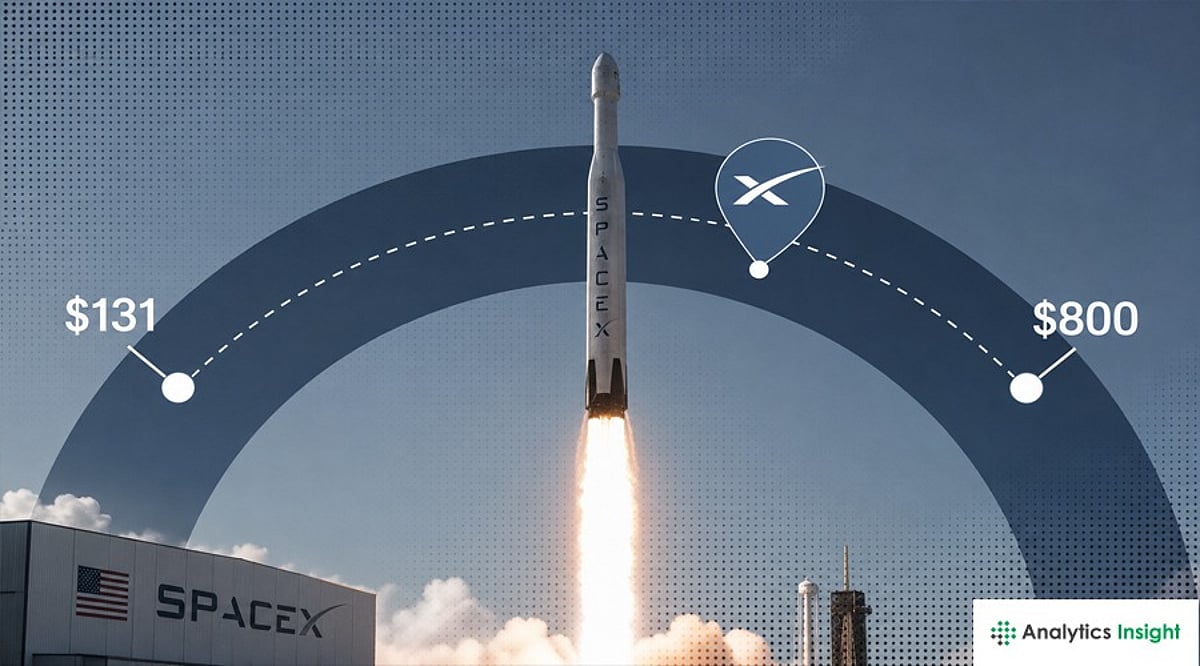
    Deutsche Bank initiated coverage with a Buy rating and a $255 target, citing SpaceX’s reusable rockets, Starlink satellite internet business, and potential use in AI infrastructure. Cantor Fitzgerald started with an Overweight rating and a $246 target, describing SpaceX as a “planetary infrastructure company.” Raymond James set the highest target on the Street at $800. Citi rated the stock a Buy at $200, linking a longer-term $900 case to the Starship program. Morgan Stanley set a $300 base case, with a $600 bull case and a $75 bear case.

    However, not all analysts share this optimism. MoffettNathanson set a $131 target with a neutral rating, questioning SpaceX’s valuation and long-term business forecasts. The firm called the company’s $30 trillion addressable market estimate “absurd” and expressed doubts about plans tied to orbital compute, stating, “There is simply no credible financial model that can support what is at the time of this writing a roughly $2 trillion valuation.”

    In other news, SpaceX has raised prices for Starlink Business Aviation customers. The Aviation Regional 25GB plan increased to $4,000 per month from $2,000, with additional data priced at $250 per GB. The company also introduced Aviation Regional Unlimited at $12,500 per month and raised Aviation Global Unlimited to $20,000 per month from $10,000, offering worldwide coverage and speeds up to 1 Gbps with the Aviation Performance Antenna. Starlink aviation equipment costs also rose to $200,000 per business jet, up from $145,000 last year.

  • SpaceX’s Rapid NASDAQ 100 Entry Could Trigger $4.3 Billion in Passive Fund Inflows

    SpaceX’s Rapid NASDAQ 100 Entry Could Trigger $4.3 Billion in Passive Fund Inflows

    SpaceX officially joined the NASDAQ 100 index on Tuesday, July 7, 2026, just 15 trading days after its historic public market debut. The swift inclusion follows NASDAQ’s revised entry rules designed to accommodate large new listings, making the rocket and satellite company one of the fastest additions to the benchmark.

    The company’s IPO on June 12 priced at $135 per share and raised $75 billion — the largest IPO on record. With its market capitalization now above $2 trillion, SpaceX’s inclusion in the NASDAQ 100 ensures that millions of index fund investors gain automatic exposure to the stock through ETFs and mutual funds, including those tracking the Invesco QQQ complex.

    Passive Buying Pressure Expected

    J.P. Morgan estimates that the index inclusion could generate approximately $4.3 billion in passive fund inflows. This buying is driven by index rules rather than a fundamental view on the company, meaning fund managers must adjust their portfolios to match the new benchmark composition.

    However, SpaceX’s starting weight in the index will be limited. Despite its massive market cap, only about 5% of shares are freely traded. NASDAQ uses free-float market capitalization in its index calculations, keeping SpaceX’s initial weight near 1% to 1.3%.

    Volatility Risks Remain

    SpaceX shares surged after the IPO, reaching a post-listing high near $225.64 before pulling back to around $160 just ahead of the index entry. Even after the decline, the stock remains above its $135 IPO price and $150 opening price.

    Avery Marquez of Renaissance Capital noted, “IPOs are inherently volatile, and especially in those early weeks.” The small float — combined with broader market volatility — could amplify price swings. The Cboe NASDAQ 100 Volatility Index rose about 43% through Thursday, compared with an 8% rise for the Cboe Volatility Index tied to the S&P 500.

    S&P 500 Entry Still Distant

    While SpaceX has joined the NASDAQ 100, its inclusion in the S&P 500 is not imminent. S&P Dow Jones Indices requires a one-year listing and profitability standards, which SpaceX has not yet met. This gap means that passive demand from S&P 500 index funds will come later, if at all.

    Lockup expirations also loom. Early investors and employees may become eligible to sell shares in stages. Louis Navellier of Navellier & Associates said he would consider buying SpaceX after insiders sell some shares and once the company appears ready to report a profitable quarter, highlighting the uncertainty around public market performance.

  • Tesla and SpaceX Stock Slide Hits Retail Investors as AI-Led Rally Fades

    Tesla and SpaceX Stock Slide Hits Retail Investors as AI-Led Rally Fades

    Retail investors are facing significant losses after a sharp decline in Tesla and SpaceX shares, following a strong rally earlier this year. The downturn has affected global investors, including those in India who purchased U.S. stocks through international platforms.

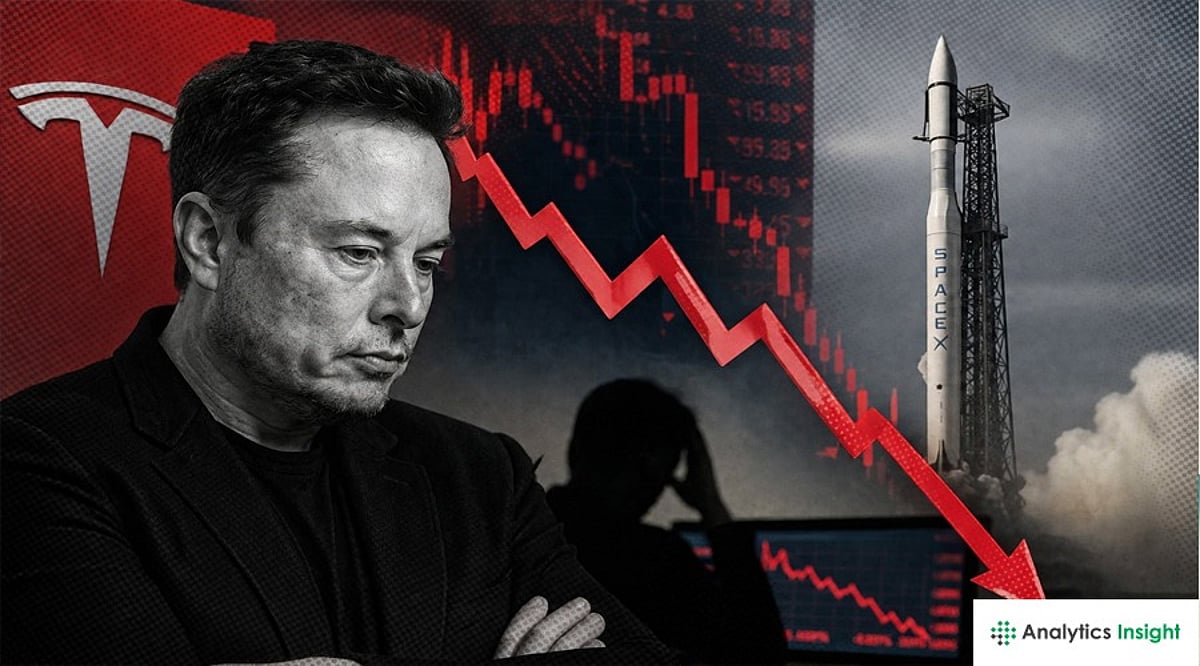
    Tesla is currently trading near $393, roughly 21% below its 52-week high of $498.83. SpaceX has fallen about 30% from its post-listing intraday high of $225.64 to around $157–158. The company debuted on Nasdaq on June 12 after pricing its IPO at $135 and opening at $150.

    The correction has also eroded Elon Musk’s paper wealth. His net worth briefly surged after the SpaceX listing but later dropped below the trillion-dollar mark as both stocks weakened. For retail investors, the focus has shifted from Musk’s fortune to their own exposure in these two volatile stocks.

    Why Tesla and SpaceX Fell After Strong Performance

    Tesla’s decline came despite the company reporting strong second-quarter delivery numbers. This indicates that investors are looking beyond vehicle sales and weighing future plans in autonomy, robotaxis, and AI-linked businesses. SpaceX faces a different challenge: its Starlink, rocket launch, and space infrastructure businesses have drawn interest, but a limited public float has amplified price swings.

    The correction has already triggered selling by some investors. Tesla has appeared among the most sold stocks on Vested Finance, according to platform data. SpaceX also saw strong retail demand after its IPO, including from Indians investing under the Liberalised Remittance Scheme (LRS).

    Viram Shah, founder and CEO of Vested Finance, explained that the selloff reflects both business expectations and broader market repricing. “One is the actual businesses, and the other is the way the market’s re-pricing a whole basket of AI-linked names right now,” he said.

    AI-Linked Valuations Under Scrutiny

    Shah noted that Tesla’s recent stock move shows the market is not solely focused on cars. “Tesla just posted its strongest Q2 deliveries in a while, and the stock still fell. That tells you the move isn’t really about cars,” he said. He added that investors are questioning how much of Tesla’s valuation should depend on autonomy and robotaxi plans, which may take time to prove.

    SpaceX has faced pressure despite strong interest in its core business. “Starlink’s profitable and growing, the launch business is setting records; what’s moving the stock is a very thin float and a premium valuation, so any selling gets magnified,” Shah said.

    The broader market mood has turned cautious toward AI-linked stocks. Investor Michael Burry, known for his bet before the 2008 housing crash, has disclosed bearish positions against Tesla and other AI-related names, adding concern that some technology shares may have outpaced earnings support.

    Shah described the current fall as a mix of profit-booking and a market re-rating. “You had a near-vertical run in SpaceX right after listing and a strong 2025 in Tesla, so some of this is just gains being taken. But underneath it, the market’s asking a harder question about how it wants to price these AI and space bets, and that’s the re-rating part.”

    Advice for Indian Retail Investors

    For Indian investors, experts recommend reviewing portfolio allocation rather than reacting to price moves. Selling only during a fall can lock in losses, while buying more at a lower price can increase risk. High-growth stocks like Tesla and SpaceX can move sharply, with large portions of their valuations depending on future businesses.

    Investors should check whether one or two U.S. stocks have become too large in their portfolio. A long-term investor may view short-term volatility differently from someone with a shorter time horizon. However, a large position can heighten risk even if the company’s business remains strong.

    “A great company and a great entry price aren’t the same thing,” Shah said. “For Indian investors going global through the LRS route, the discipline’s the same as always: size it so a rough quarter is a nuance in the portfolio, not the whole story.”

    Newly listed stocks can remain unstable for several quarters. SpaceX still has a limited public float, and future lock-up expiries may add more shares to the market, potentially affecting prices.

  • Elon Musk Dismisses SpaceX AI Smartphone Rumors as ‘Utterly False’

    Elon Musk Dismisses SpaceX AI Smartphone Rumors as ‘Utterly False’

    Elon Musk has publicly denied recent reports claiming that SpaceX is developing an AI-powered smartphone. The rumors, which gained traction after reports of a prototype AI device, have been firmly rejected by the billionaire entrepreneur.

    The speculation began when The Wall Street Journal reported that SpaceX was working on an AI handheld device powered by Qualcomm’s Snapdragon chipset and running a custom operating system with AI capabilities from xAI, Musk’s AI company. The report also suggested that SpaceX had shown an early prototype to investors ahead of its record-breaking IPO. Days earlier, the Financial Times reported that SpaceX COO Gwynne Shotwell had discussed launching a mobile service in the U.S. using the Starlink satellite network, further fueling the rumors.

    In response, Musk took to X (formerly Twitter) on July 1, 2026, posting a simple but definitive statement: “Utterly false.” This is not the first time he has denied such claims. Earlier this year, he refuted a Reuters report, stating that SpaceX is “not developing a phone.” During an event in Pennsylvania last year, Musk made his position clear: “The idea of making a phone makes me want to die. If we have to make a phone, we will, but we will aspire not to make a phone.”

    Despite the denial, the rumors underscore growing industry interest in dedicated AI hardware. OpenAI is also reportedly exploring purpose-built AI devices. Industry analysts believe that if OpenAI pursues such a device, Musk would want to compete. SpaceX and its sister company Tesla have the manufacturing expertise to mass-produce AI hardware, and SpaceX has signaled interest in expanding into wireless services via Starlink Mobile, potentially challenging Verizon and AT&T.

    Musk continues to focus on artificial intelligence, recently predicting that AI could surpass the combined intelligence of all humans within the next four to five years. While a SpaceX smartphone remains off the table, the broader AI hardware race is accelerating, with the potential to reshape how users interact with AI through purpose-built devices.

  • SpaceX to Join NASDAQ 100 on July 7 Following New Index Entry Rules for Large IPOs

    SpaceX to Join NASDAQ 100 on July 7 Following New Index Entry Rules for Large IPOs

    SpaceX will officially enter the NASDAQ 100 index before the market opens on July 7, 2026, less than a month after its public debut on June 12. The addition, confirmed by NASDAQ on Friday, places the rocket, satellite, and artificial intelligence company among the exchange’s largest non-financial firms.

    JP Morgan estimates that the inclusion could trigger approximately $4.3 billion in passive inflows from index-tracking funds. However, skeptics like Morningstar have raised valuation concerns, noting the company’s limited trading history and recent net losses.

    Index Funds Prepare for Rebalancing

    Funds that replicate the NASDAQ 100, including Invesco QQQ and QQQM, will need to purchase SpaceX shares according to its assigned weight. The NASDAQ 100 tracks 100 large non-financial companies listed on NASDAQ, and its membership influences retirement accounts, brokerage portfolios, and other savings vehicles. NASDAQ reports that over 200 investment products track the index, with more than $800 billion in assets under management worldwide. This could create a large block of price-insensitive demand when the change takes effect.

    Faster Index Rules Pave the Way

    SpaceX began trading under the ticker SPCX on June 12, pricing its IPO at $135 per share. The swift entry into the NASDAQ 100 reflects revised rules that ease conditions on profitability, public float, and trading history for newly listed companies. NASDAQ, FTSE Russell, and MSCI have all relaxed some of these criteria to accommodate large, high-valuation firms. SpaceX reported a $4.9 billion net loss for 2025, though revenue grew as the company expanded Starlink, launch services, and AI operations.

    Valuation Debate Persists

    Despite the expected buying, concerns about SpaceX’s valuation remain. Morningstar chief equity market strategist Michael Field commented, “We think the stock is overvalued,” citing the company’s short public record and heavy spending needs. Meanwhile, S&P Global maintains stricter entry requirements for the S&P 500, including a 12-month trading history and profitability tests, meaning SpaceX cannot be considered for that index until at least June 2027.

    The divergent approaches create separate timelines for index-linked buying. NASDAQ 100 trackers will adjust in July, while S&P 500 funds will not purchase SpaceX under current rules. Other high-profile tech companies like OpenAI and Anthropic may face similar index questions if they proceed with public listings in 2026 or 2027 at valuations above $1 trillion.

  • OpenAI Weighs IPO Delay to 2027 Amid $1 Trillion Valuation Skepticism

    OpenAI Weighs IPO Delay to 2027 Amid $1 Trillion Valuation Skepticism

    OpenAI is reportedly considering delaying its initial public offering until 2027, as financial advisers question whether current market conditions can support a $1 trillion valuation. The ChatGPT developer had been preparing for a possible listing in late 2026 after filing confidential paperwork with the U.S. Securities and Exchange Commission.

    The potential shift follows notable volatility in technology shares. SpaceX’s stock, which soared after its June 2026 IPO, has since fallen sharply, raising concerns about investor appetite for high-valuation tech offerings.

    Advisers Flag Concerns Over 2026 IPO Timing

    OpenAI has engaged bankers and legal teams to explore a public listing. CEO Sam Altman reportedly directed the team to target a $1 trillion market capitalization, exceeding OpenAI’s most recent private valuation of roughly $852 billion. However, advisers cautioned that public markets may not show sufficient enthusiasm for the deal under current conditions.

    According to sources familiar with the discussions, two paths were presented: wait until 2027 to pursue the full valuation, or accelerate the timeline in 2026 at a lower price. Altman described any valuation reduction as a “nonstarter.” OpenAI confirmed it has filed confidential IPO documents but emphasized it has not committed to any specific timeline.

    Financial Readiness and Spending Pressures

    OpenAI generated approximately $13 billion in revenue last year while reporting a net loss of about $21 billion. The company expects sustained heavy spending on computing infrastructure, chips, data centers, and hardware through 2030. CFO Sarah Friar has voiced concerns about whether OpenAI is prepared for the rigorous public reporting requirements, including regular financial statements, risk disclosures, and cost guidance.

    Meanwhile, OpenAI is exploring new revenue streams. It has tested advertising within ChatGPT and is pursuing commerce partnerships with Shopify and Stripe. The company has also scaled back spending on some loss-making projects, such as parts of its Sora video business, as part of a broader cost-review initiative.

    SpaceX Market Activity Reshapes IPO Sentiment

    SpaceX went public on June 12 in a record-breaking IPO that raised more than $85 billion. Shares initially surged above $225 but later dropped to around $153, demonstrating how quickly investor sentiment can shift after a high-profile debut. This volatility has become a key reference for OpenAI’s advisers, reinforcing that a strong first trading day does not guarantee sustained support at elevated valuations.

    Broader weakness in the technology sector has also made investors more cautious toward capital-intensive companies. Anthropic, another AI firm, has filed confidentially for its own IPO, and other companies like Discord, Kraken, Strava, and Oura have also entered the IPO pipeline, creating a crowded market.

    OpenAI has not made a final decision. The company could still list in late 2026 at a lower valuation, or postpone to 2027. Any update will depend on its financial performance, spending trajectory, market stability, and investor confidence in the $1 trillion target.

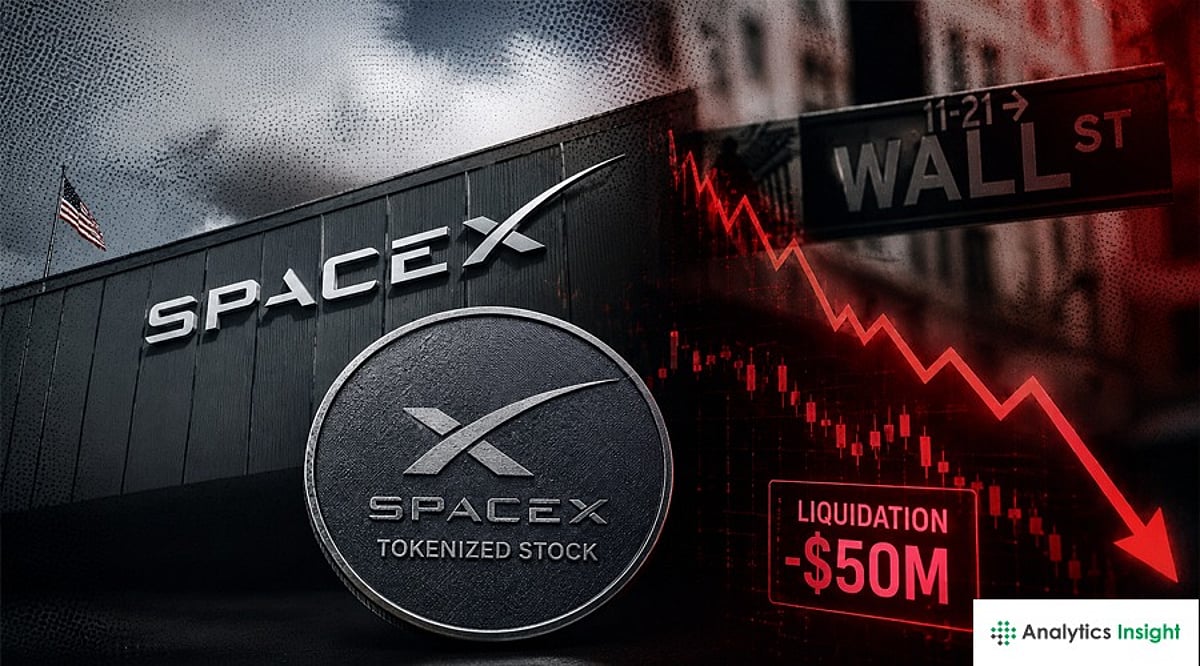
  • SPCX Perpetual Liquidations Surpass $50 Million as SpaceX Stock Tests Nasdaq Debut

    SPCX Perpetual Liquidations Surpass $50 Million as SpaceX Stock Tests Nasdaq Debut

    SPCX perpetual contracts have witnessed over $50 million in liquidations within 48 hours as SpaceX shares dipped below their $150 Nasdaq opening price. The event underscores the heightened volatility and risk inherent in leveraged tokenized stock products, which can react far more aggressively than traditional equity markets.

    What Happened

    According to market data, SPCX-linked perpetual contracts recorded more than $50 million in forced closures, trailing only Bitcoin and Ethereum in liquidation volume among crypto derivatives during that period. The liquidations followed a sharp decline in SpaceX stock, which fell below its Nasdaq debut price after a major drawdown. Investors who bought shares above the company’s $135 initial public offering price are now facing losses.

    How SPCX Differs from Traditional Stock Ownership

    SPCX products are pre-IPO or equity perpetual contracts that offer leverage, cash settlement, and funding mechanisms. Unlike owning actual shares, these instruments provide price exposure without ownership rights, voting rights, or share delivery. Binance lists SPCXUSDT as a USDT-settled pre-IPO perpetual contract, while Coinbase explains that such products settle entirely in cash. Crypto.com describes a structure allowing conversion between SpaceX pre-IPO perpetuals and equity perpetuals depending on platform mechanics.

    This structure places traders in a derivatives-driven environment where margin requirements and funding rates dictate outcomes. If prices move sharply against a position, exchanges can liquidate traders automatically at any time—without waiting for a market close.

    Liquidation Pressure Builds Around Leveraged Exposure

    The $50 million liquidation figure is a notable signal because Bitcoin and Ethereum typically dominate liquidation rankings due to deep liquidity and large leveraged positions. SPCX joining that group reflects strong demand for SpaceX-linked exposure. Liquidation risk does not require a total collapse in the underlying asset—a combination of leverage, open interest, and adverse price movement can easily trigger forced exits.

    While traditional investors may still be evaluating whether the decline reflects temporary weakness or fundamental concerns, perpetual contract markets react instantly, closing positions as soon as collateral support drops.

    Tokenized Stock Perpetuals Face a Different Risk Cycle

    Tokenized stock perpetuals trade around the clock, using venue-specific mark prices and funding systems while enforcing margin requirements continuously. This continuous trading can amplify disagreements over value into sudden liquidation pressure, even as traditional investors are still assessing the stock’s outlook.

    These products may ultimately serve as effective risk-transfer markets, but that will require improved liquidity and reduced leverage. Until then, high open interest and persistent volatility will likely sustain heavy market stress.

    What’s Next

    SpaceX stock slipped below its Nasdaq opening price, triggering the $50 million liquidation wave for SPCX. The event highlights how tokenized stock perpetuals can lead to rapid forced exits when leverage and margin rules kick in. Market participants are now watching to see if the asset stabilizes and whether open interest, funding rates, and liquidation activity will flatten out.

  • Top AI Stories This Week: Anthropic Halts Claude, SpaceX Acquires Cursor, Meta Admits Mistakes

    Top AI Stories This Week: Anthropic Halts Claude, SpaceX Acquires Cursor, Meta Admits Mistakes

    Anthropic Disables Claude Models After US Export Control Order

    Anthropic recently launched Claude Fable 5, touted as the world’s most powerful cybersecurity model. However, just days after its release on June 9, the US government issued a sudden export control order over concerns that the model’s automated hacking capabilities were evading regulatory boundaries. Both Mythos 5 and Fable 5, the two variants of Anthropic’s advanced AI tier, were affected. While Mythos 5 remains restricted for government use under Project Glasswing, the public-facing Fable 5 was recalled on June 12, leaving users and developers questioning the balance between AI power and safety.

    SpaceX to Acquire Cursor Developer Anysphere for $60 Billion

    Following its blockbuster Nasdaq debut, SpaceX is making a bold move into enterprise AI by acquiring Anysphere, the company behind the popular AI coding agent Cursor. The deal, valued at $60 billion in SpaceX shares, is expected to close by September 2026. This acquisition comes shortly after SpaceX’s IPO, which valued the company at over $2 trillion and propelled it past Amazon to become the world’s fifth-largest company by market cap. The move signals SpaceX’s ambition to integrate cutting-edge AI tools into its operations.

    Meta CEO Acknowledges Mistakes in AI Restructure

    Meta CEO Mark Zuckerberg has admitted to internal missteps during the company’s aggressive reorganization toward an AI-native structure. In a company memo, he acknowledged the friction caused by rapid changes and consecutive layoffs, but assured employees that no more company-wide layoffs are expected this year. Meta has invested billions in AI technology to optimize operations, mirroring industry trends, but the speed of transformation has created unprecedented challenges. Zuckerberg emphasized his focus on providing stability while acknowledging that mistakes were made and more may follow.

    AMD Partners with Imperial College London to Boost UK AI Research

    AMD has formed a partnership with Imperial College London to advance AI research infrastructure and computational capacity in the UK. The collaboration will combine AMD’s computing platforms with Imperial’s research strengths in scientific and healthcare disciplines. Key focus areas include AI model development, sovereign computing infrastructure, and talent programs. AMD will provide access to its accelerated computing systems and ROCm open software platform, enabling researchers to optimize AI models for engineering design, multi-physics simulation, and materials discovery.

    Gartner: AI Servers Drive 26% Spike in Data Center Energy Consumption

    Global data center electricity consumption is projected to reach 565 TWh in 2026, a 26% increase from 447 TWh in 2025, according to Gartner. The surge is driven by compute-intensive AI workloads, and power availability is becoming a critical constraint for scaling AI capacity. Linglan Wang, Lead Economist at Gartner, warns that data center power security is now the new battleground for protecting margins in the global AI race.