
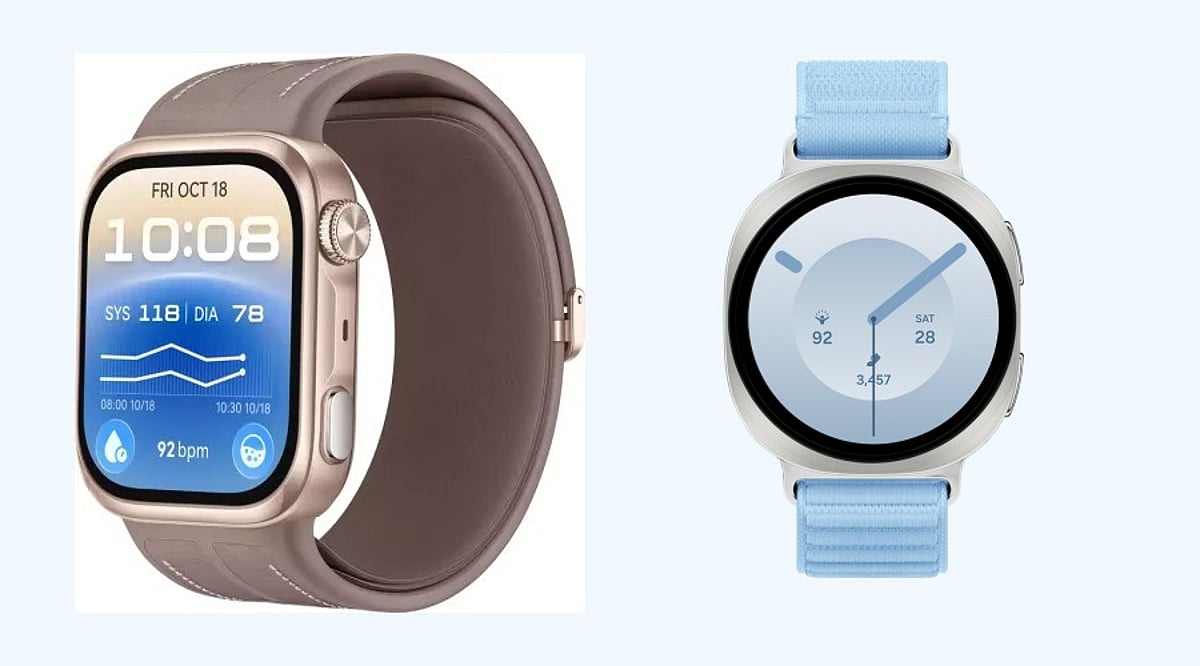
Smartwatches have evolved far beyond step counting and notifications. Today, a wearable health tracker is expected to flag irregular heart rhythms, monitor blood pressure, and support long-term wellness goals. Two devices leading this shift in 2026 are the Huawei Watch D3 and the Samsung Galaxy Watch9, each built with a distinct philosophy toward health monitoring.
The Huawei Watch D3 takes a clinical approach, centered around genuine cuff-based blood pressure readings. The Samsung Galaxy Watch9, meanwhile, blends everyday smartwatch convenience with an expanding suite of optical health metrics. This comparison breaks down their sensors, specifications, and health capabilities to help buyers decide which wearable health tracker suits their needs.
Design and Display
The Huawei Watch D3 measures 46.5 x 41 x 11.3mm and weighs only 40 grams — remarkably light for a watch carrying a mechanical airbag inside its strap. Its 1.92-inch LTPO AMOLED display reaches 3,000 nits at peak brightness.
The Samsung Galaxy Watch9 comes in two sizes, 40mm and 44mm, both using Super AMOLED panels protected by sapphire glass. Brightness also reaches 3,000 nits, giving strong outdoor visibility. Build quality feels premium on both: Huawei uses aluminium alloy, while Samsung uses brushed aluminium. Neither offers a titanium option this generation.
Health Sensors Compared
Sensor choices reveal the biggest gap between these two smartwatches. The Huawei Watch D3 combines a nine-axis IMU, ECG sensor, temperature sensor, and barometer. Its most distinctive component is a differential pressure sensor tied to a physical airbag that inflates around the wrist, briefly restricting blood flow — a mechanical method mirroring clinical upper arm monitors.
The Samsung Galaxy Watch9 instead relies on its upgraded BioActive sensor, merging optical heart rate tracking, electrocardiography, and bioelectrical impedance analysis. A skin temperature sensor and ambient light sensor round out the package. Samsung also introduced an Antioxidant Index, measuring carotenoid levels through the fingertip using multi-wavelength light.
Blood Pressure Monitoring
This is where the two watches truly part ways. Huawei’s cuff-based system holds CE MDR certification in Europe and NMPA approval from Chinese regulators — a strong clinical signal. The Watch D3 performs ambulatory blood pressure monitoring across a full day, automatically taking up to 20 daytime readings and seven overnight readings. A dedicated exercise mode checks blood pressure within two minutes post-workout.
Samsung’s approach is lighter: the Galaxy Watch9 offers a blood pressure trend feature through Samsung Health but still needs periodic calibration against a traditional cuff for meaningful accuracy. In short, Huawei treats blood pressure as its central purpose; Samsung treats it as one wellness metric among many. Buyers managing hypertension will likely notice this difference quickly.
Heart, Sleep, and Recovery Tracking
Both smartwatches handle cardiovascular monitoring seriously. Huawei adds atrial fibrillation alerts through its PPG sensor, beat-by-beat ECG readings, and arterial stiffness detection. Its Health Glance feature checks 11 biometric indicators within about a minute — a single-tap convenience for a quick daily snapshot.
Samsung leans harder into structured fitness coaching. The Galaxy Watch9 includes a Heart Health Score, Daily Cardio Load metric, and FDA-cleared sleep apnea detection that adds real medical weight to its sleep tracking. Advanced sleep coaching and a three- to five-week Running Coach program target active users, making the Galaxy Watch better suited to structured training routines.
Performance and Battery Life
The Galaxy Watch9 runs Wear OS 7 with One UI 9 Watch software on a Snapdragon SW6100 Wear Elite chipset (3nm process). Battery capacity sits at 390mAh (40mm) or 445mAh (44mm). Samsung rates both for up to 30 hours with always-on display, meaning daily charging remains part of the routine. Fast wireless charging helps offset this shorter runtime.
The Huawei Watch D3 runs HarmonyOS instead of Wear OS. Its 540mAh battery delivers up to six days under typical use, with a 75-minute fast charge keeping downtime minimal.
Price and Value
The Huawei Watch D3 launched at £399.99 in the UK (approx €449 in Europe), reflecting its medical-grade hardware and certification — positioning it closer to a diagnostic tool than a lifestyle gadget. The Samsung Galaxy Watch9 starts at USD 379.99 (40mm Bluetooth) and rises to USD 459.99 (44mm LTE), placing it firmly within mainstream smartwatch territory.
Final Words
Choosing between these two wearables comes down to personal priorities. Anyone managing blood pressure concerns will benefit from Huawei’s clinical accuracy, certification, and ambulatory monitoring. The Samsung Galaxy Watch9 suits those wanting an all-round smartwatch experience with Google integration, plus unique features like the Antioxidant Index and sleep apnea detection. Neither watch is objectively better across every category — both represent thoughtful, well-researched approaches to modern health tracking. The right pick simply depends on what health priority matters most.
Leave a Reply