
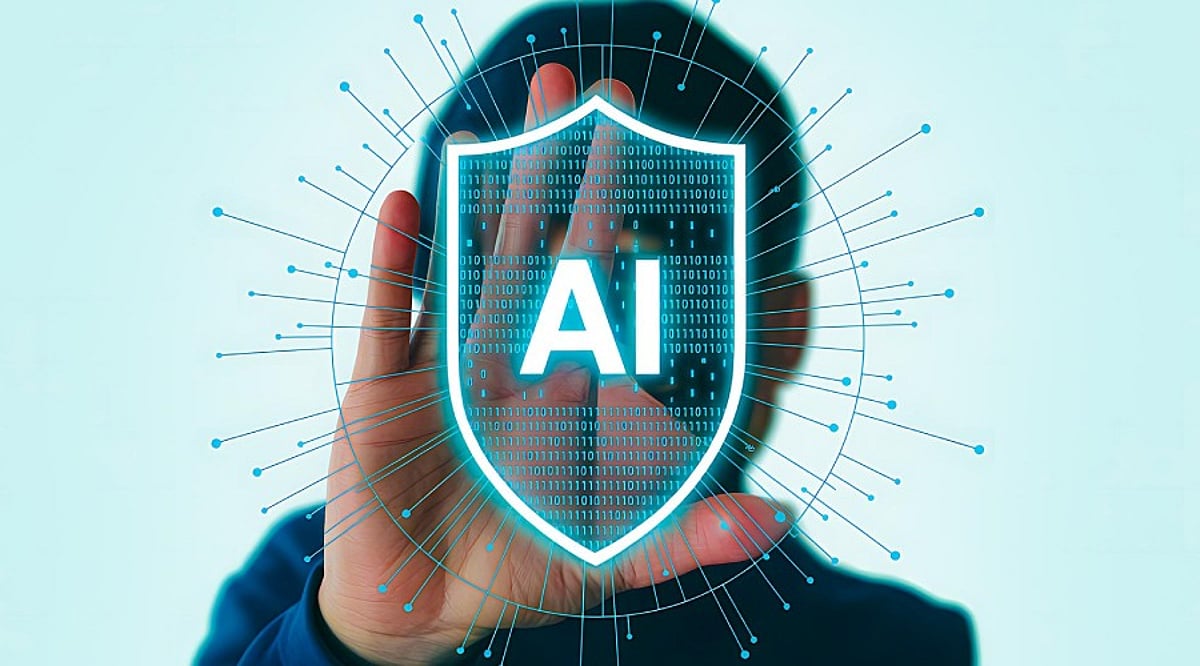
As enterprises rapidly integrate artificial intelligence into customer support, coding, analytics, and daily operations, the speed of adoption brings significant risks. A single erroneous response or data leak can undermine trust and profitability. This is where AI guardrails become essential. Acting as safety barriers, they keep AI systems within defined boundaries, ensuring safety, accuracy, and compliance.
What Are AI Guardrails?
AI guardrails are rules, filters, and checks that control what an AI system can receive as input and what it can generate as output. They operate in real-time, intercepting unsafe content before it reaches users. Some guardrails screen prompts, while others inspect responses. A robust setup also logs every decision for audit trails. These tools can prevent prompt attacks, redact personal data, and flag fabricated information.
Risks Addressed by AI Guardrails
Generative AI introduces real risks: incorrect or biased answers, privacy breaches, jailbreak attempts, and misuse. Prompt injection, where hidden text tricks a model into ignoring its rules, is a primary attack vector. According to the Stanford AI Index, documented AI incidents surged by 56.4% in a single year. These risks impact security, legal compliance, and brand reputation. The stakes are even higher with AI agents, which can execute actions like modifying databases or initiating payments based on hallucinations.
Types of AI Guardrails
Enterprises typically deploy multiple layers of guardrails:
- Input Filters: Screen prompts for attacks.
- Data Protection Tools: Identify and redact personal or proprietary information.
- Content Filters: Remove hate speech and other harmful material.
- Fact Checks: Compare outputs against trusted sources.
- Custom Policy Rules: Enforce company-specific limits.
Layering is critical because no single filter catches every issue. Tools vary: cloud services like AWS Bedrock Guardrails and Azure AI Content Safety handle moderation, while frameworks like NeMo Guardrails and Guardrails AI operate within applications.
Regulatory and Audit Pressures
Regulation is a key driver. The EU AI Act imposes fines up to 7% of global annual turnover for prohibited practices, and GDPR adds privacy obligations. Guardrail logs provide evidence for audits and align with frameworks like the NIST AI Risk Management Framework and OWASP’s top LLM risks. Deloitte’s 2026 AI report found only 20% of organizations have mature governance models, highlighting a significant gap.
Implementation Strategies
A layered deployment is standard. A central gateway can manage all model traffic, with cloud safety services checking inputs and specialized tools validating outputs for accuracy and attacks. Teams should treat retrieved documents and tool results as untrusted inputs. Logging every decision helps identify weaknesses and demonstrate control. Speed is crucial; some runtime tools claim to block unsafe outputs in under 200 milliseconds. Gartner predicts that by 2030, half of AI agent failures will stem from governance gaps and weak system integrations.
Conclusion
AI guardrails establish clear boundaries for what AI systems can see, say, and do. They reduce the risk of data leaks, false information, and rule violations while providing the audit trails regulators demand. As AI agents take on real-world tasks, guardrails transition from a nice-to-have to a necessity. Enterprises that build layered guardrails early will scale AI with greater trust and fewer surprises.
Frequently Asked Questions
1. What are AI guardrails?
They are rules, filters, and checks that limit what an AI system can accept and produce. Some screen prompts, others inspect responses, catching unsafe content before it reaches users.
2. Why do enterprises need AI guardrails?
A single wrong answer or leaked file can harm trust, profit, and compliance. Guardrails reduce the risk of data leaks, false answers, and rule violations, and provide logs for auditors.
3. What are the main types of AI guardrails?
Common types include input filters, data protection tools, content filters, fact checks, and custom policy rules. Enterprises typically combine multiple layers for comprehensive protection.
4. What is the difference between a chatbot risk and an agent risk?
A chatbot that hallucinates gives a wrong answer. An AI agent that hallucinates can act on it, such as changing a database or triggering a payment, making guardrails more critical for agents.
5. How can enterprises roll out AI guardrails?
A layered plan is common: a central gateway for model traffic, cloud services for input checks, and specialist tools for output validation. Logging every decision and treating retrieved documents as untrusted inputs are also key.
Leave a Reply