
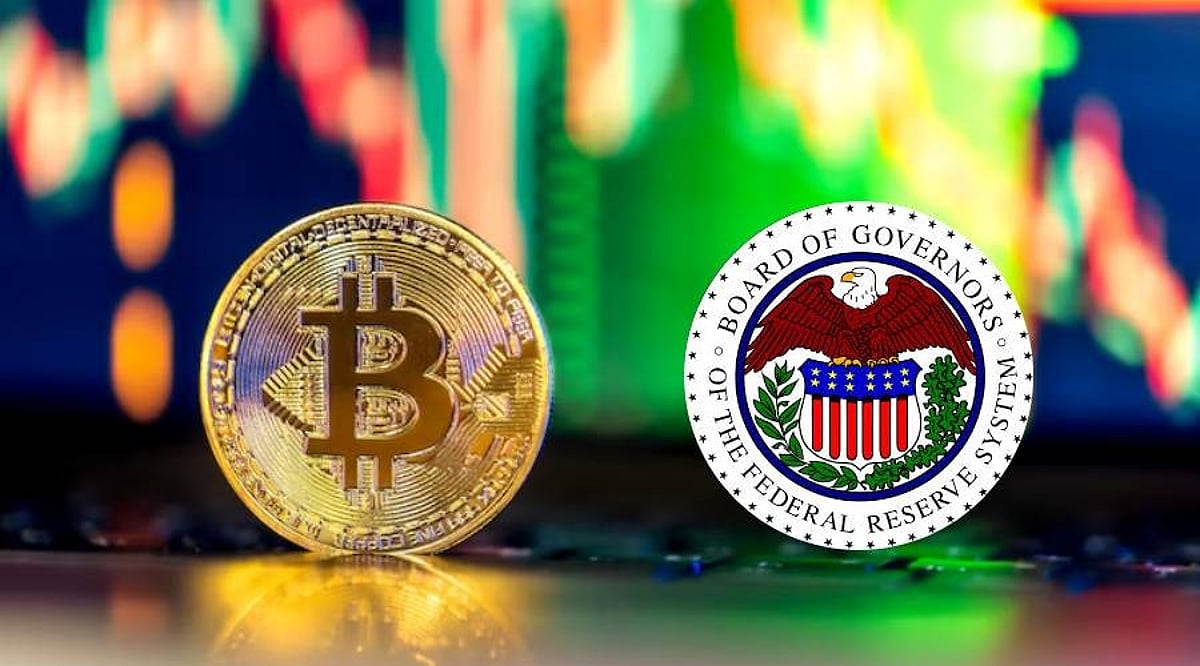
Bitcoin was designed to operate outside the control of any central authority, including the U.S. Federal Reserve. Yet in practice, the cryptocurrency’s market price remains tightly linked to the Fed’s policy decisions. Interest rates, liquidity conditions, inflation expectations, and bond yields all shape how investors allocate capital between Bitcoin and traditional financial assets.
Fed’s September Rate Hike and Its Impact on Bitcoin
On September 16, 2026, the Federal Reserve raised its target federal funds rate by 25 basis points to a range of 3.75%–4.00%. Citing persistently elevated inflation, the central bank said the move was intended to steer inflation back toward its 2% objective. For Bitcoin, the decision is significant because interest rates directly affect the returns available from other investments.
Why Higher Rates Can Pressure Bitcoin
Bitcoin does not yield contractual interest. When Treasury bills, bonds, and cash-equivalent instruments offer higher yields, investors can earn meaningful returns without taking on the price volatility inherent in cryptocurrencies. Higher borrowing costs also tend to reduce liquidity across the financial system and discourage leveraged speculation. These conditions can create downward pressure on risk assets, including equities and digital currencies. As institutional participation in Bitcoin grows, macroeconomic variables increasingly influence BTC in tandem with conventional markets.
Why Lower Rates Can Encourage Risk-Taking
When monetary policy becomes less restrictive, the dynamic shifts. Declining interest rates reduce the yields on cash and short-term government securities, prompting investors to seek higher returns in stocks, commodities, and cryptocurrencies. Easier access to credit further improves overall liquidity. However, Bitcoin does not automatically rally when rates fall. Regulatory news and other crypto-specific developments can sometimes overshadow the impact of lower rates.
Inflation: A Double-Edged Sword for Bitcoin
Bitcoin’s fixed maximum supply of 21 million coins has led many to compare it to scarce assets like gold. Persistent inflation can therefore strengthen Bitcoin’s appeal as a hedge against currency debasement. But unexpectedly high inflation can also prompt the Fed to raise rates, creating a tug-of-war: a stronger scarcity narrative versus tighter monetary conditions. These competing forces make Bitcoin’s response to inflation complex and sometimes unpredictable.
Other Drivers of Bitcoin’s Price
Federal Reserve policy is just one factor among many. Spot ETF flows, institutional adoption, regulatory developments, leverage levels, mining economics, and Bitcoin’s roughly four-year halving cycle all contribute to crypto-specific supply and demand dynamics. This is why Bitcoin does not maintain a permanent inverse relationship with interest rates. Sometimes crypto-native catalysts outweigh the influence of monetary policy.
Key Takeaways
- Higher interest rates make yield-bearing assets more attractive and can reduce appetite for volatile investments like Bitcoin.
- Lower rates and easier liquidity conditions generally support risk assets, but Bitcoin’s response is not guaranteed.
- Inflation boosts Bitcoin’s scarcity narrative but may also trigger rate hikes that pressure prices.
- ETF flows, regulation, mining economics, and halving cycles are equally important price drivers.
Frequently Asked Questions
1. How do Federal Reserve interest rates affect Bitcoin?
Higher rates make bonds and cash-like assets more attractive while increasing borrowing costs and tightening liquidity. These conditions can reduce investor appetite for volatile assets such as Bitcoin.
2. Why can lower interest rates support Bitcoin prices?
Lower rates reduce yields on cash and short-term government securities while potentially improving financial-system liquidity. This can encourage investors to increase exposure to risk assets, including cryptocurrencies.
3. Does Bitcoin always fall when the Federal Reserve raises rates?
No. Bitcoin is also influenced by ETF flows, institutional demand, regulation, leverage, and crypto-specific market conditions. These factors can sometimes outweigh the effects of tighter monetary policy.
4. How does inflation affect Bitcoin?
Bitcoin’s maximum supply of 21 million BTC supports its scarcity narrative during periods of inflation. However, persistent inflation can also trigger higher interest rates, potentially creating pressure on Bitcoin and other risk assets.
5. What other factors influence Bitcoin besides Federal Reserve policy?
Spot Bitcoin ETF flows, institutional adoption, mining economics, regulation, market liquidity, and Bitcoin’s halving cycle can all affect BTC. Monetary policy is therefore one important factor rather than a standalone price indicator.
Leave a Reply