
The rapid deployment of generative artificial intelligence (GenAI) is transforming enterprise operations worldwide. Businesses across industries now rely on large language models (LLMs) to streamline tasks such as drafting legal documents, forecasting financial data, and scaling B2B marketing communications. Yet this surge in machine-generated text has created a growing divide between automation and the filtering of synthetic content, raising concerns about trust, digital fatigue, and the integrity of communication channels.
To preserve stakeholder trust and prevent cognitive overload, technology leaders must actively humanize AI outputs. This means injecting cognitive variance into generated text so that it mirrors the natural hesitations, structural asymmetries, and varied pacing of human writing. Without such adjustments, users quickly tire of sterile, predictable content, and detection algorithms flag the machine origin with increasing accuracy.
Behind the scenes, sophisticated detection algorithms have been embedded into major platforms, search engines, and enterprise security frameworks. These tools audit digital content by measuring two key metrics: burstiness (variation in sentence length and structure) and perplexity (predictability of word choice). Standard generative models optimize for the most likely word sequences, producing low burstiness and low perplexity – a pattern that acts as a digital watermark for detection systems.
While detection mechanisms were intended to maintain information integrity, they have triggered a systemic problem: a high rate of false positives in enterprise environments. Technical documentation, compliance reports, and legal contracts often demand rigid, predictable language. When human data scientists or technical writers draft such documents, their natural style can mimic low-variance machine patterns, causing authentic work to be incorrectly flagged. This has sparked a technological arms race, pushing enterprises to find solutions that bypass flawed heuristics without compromising data integrity.
This necessity has given rise to a new category of natural language processing tools known as AI Stealth Writers. Unlike primitive paraphrasing scripts that swap words using synonym databases, these advanced systems operate on a deeper architectural level. They deconstruct the predictable syntactic topology of an LLM draft and rebuild it purposefully, injecting cognitive entropy to obscure the robotic signature. The result is text that bypasses algorithmic detection while delivering a superior reading experience for end users.
From a strategic business perspective, integrating these linguistic refinement layers is moving from a niche workaround to a mandatory component of the enterprise tech stack. Search engines and B2B communication channels are becoming increasingly hostile toward raw synthetic content, often penalizing domains with high volumes of unedited machine text. The operational speed gained by GenAI is negated if the resulting content is suppressed by algorithms or ignored by clients who recognize its mechanical origin.
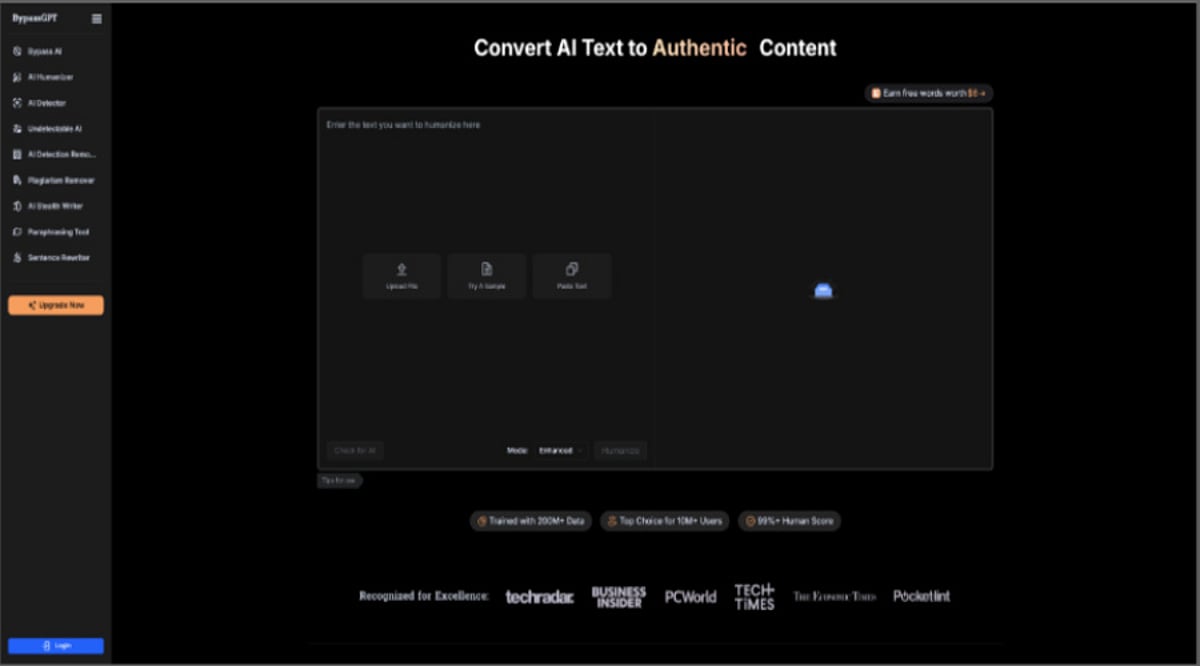
Looking ahead, continued advances in NLP will enable enterprises to produce descriptive texts that are indistinguishable from human authorship. Platforms like the newly launched BypassGPT are working to bridge the gap between computational efficiency and human-like empathy. Companies that embrace such technologies will gain a competitive edge in today’s regulatory environment and global marketplace.
Leave a Reply