Category: AI Strategy

  • Top Multimodal LLMs to Watch in 2026: Leading AI Models Shaping Enterprise and Creativity

    Top Multimodal LLMs to Watch in 2026: Leading AI Models Shaping Enterprise and Creativity

    Artificial intelligence has moved far beyond text-only chatbots. Multimodal Large Language Models (LLMs) now process text, images, audio, video, documents, and code simultaneously, enabling smarter virtual assistants, faster software development, richer research tools, and more efficient business workflows. As competition heats up, AI companies are racing to differentiate through reasoning, enterprise security, live web access, and open-source flexibility. Here are the top multimodal LLMs to explore in 2026.

    GPT-5.5: The Ultimate AI Assistant

    OpenAI’s GPT-5.5 handles text, images, voice, documents, and code with exceptional reasoning and creativity. It excels at generating business documents, summarizing research, debugging code, and interpreting graphs, making it a versatile choice for professionals across industries.

    Gemini 3 Pro: Built for Collaboration

    Google’s Gemini 3 Pro integrates deeply with Google Workspace, allowing users to compress long texts, clean data, inspect spreadsheets, and draft presentations. Its multimodal capability lets you combine text, images, audio, and video in a single request, while a large context window handles hefty information loads effortlessly.

    Claude Opus 4.6: Accuracy & Dependability

    Anthropic’s Claude Opus 4.6 prioritizes accurate and dependable responses, making it ideal for long-form content, legal document review, software development, and analytical reports. Its focus on AI safety and predictable behavior suits highly regulated sectors like finance, medicine, and law.

    Grok 4: Real-Time Awareness

    Unlike models limited to static training data, Grok 4 accesses live web content for timely responses. This makes it invaluable for journalists, researchers, and analysts tracking fast-changing topics. It also performs strongly in coding, brainstorming, and problem-solving.

    Qwen 3: Driving Multilingual Innovation

    Alibaba’s Qwen 3 delivers robust reasoning, coding, and translation across multiple languages. International businesses benefit from its multilingual skills, while developers appreciate its affordability and customizability.

    Llama 4: Open-Source Innovation

    Meta’s Llama 4 pushes open-source AI forward, offering customization without vendor lock-in. Startups, researchers, and data-sensitive companies value its flexibility, strong community support, and self-hosting capability.

    GLM-5.2: Improving Frontend Development

    GLM-5.2 excels at web development, generating HTML, CSS, and UI components from text or visual inputs. Frontend developers can build sites and refine designs faster with this model’s intuitive understanding of design intent.

    Comparison Table: Top Multimodal LLMs in 2026

    Model Key Strengths Best For
    GPT-5.5 Reasoning, creativity, coding General AI assistant
    Gemini 3 Pro Google Workspace integration, large context Collaboration and productivity
    Claude Opus 4.6 Accuracy, safety, long-form Regulated industries
    Grok 4 Real-time web access Journalism, fast-changing topics
    Qwen 3 Multilingual, affordable International business
    Llama 4 Open-source, customizable Startups, data-sensitive orgs
    GLM-5.2 Web development, UI generation Frontend developers

    Which Model Fits Your Needs?

    Choosing the right multimodal LLM depends on your use case: enterprise automation, creative writing, research, coding, or multilingual support. GPT-5.5 and Claude Opus 4.6 lead in coding and reasoning; Gemini 3 Pro excels in collaboration; Grok 4 offers real-time insight; Qwen 3 and Llama 4 provide cost-effective, customizable options; GLM-5.2 targets web development.

    Road Ahead for Multimodal AI

    The race to build the best multimodal AI model is accelerating. Future models will become even more agentic—capable of planning, executing, and completing workflows with minimal human intervention. Expect advances in video processing, voice understanding, scientific reasoning, and specialized knowledge. For both enterprises and individuals, the priority is shifting from picking a chatbot to selecting a digital ally that meets your specific needs.

    FAQs

    1. What is a multimodal LLM? A multimodal LLM processes text, images, audio, video, documents, and code simultaneously, enabling more versatile and intelligent AI interactions.
    2. Which multimodal LLM is best for coding? GPT-5.5 and Claude Opus 4.6 excel at coding, debugging, code reviews, and software development across multiple programming languages.
    3. Why are multimodal AI models important in 2026? They streamline workflows by understanding multiple data formats, improving productivity, automation, content creation, research, and enterprise decision-making.
    4. Which multimodal LLM is best for businesses? GPT-5.5, Gemini 3 Pro, and Claude Opus 4.6 offer enterprise-grade security, integrations, automation, and advanced reasoning.
    5. Can open-source multimodal LLMs compete with proprietary models? Yes. Models like Llama 4 and Qwen 3 deliver competitive performance, customization, and cost-effective deployment for developers and enterprises.
  • Apple Seeks Dismissal of AI Lawsuit Over YouTube Video Training – Here’s Why It Matters

    Apple Seeks Dismissal of AI Lawsuit Over YouTube Video Training – Here’s Why It Matters

    Apple has asked a US court to dismiss a lawsuit filed by three YouTube creators who accuse the company of using millions of copyrighted YouTube videos to train its artificial intelligence systems without permission. The case centers on whether publicly available online content can be legally used for AI development.

    The lawsuit, filed in April in the US District Court for the Northern District of California, was brought by the channels h3h3Productions, MrShortGame Golf, and Golfholics. They claim Apple bypassed YouTube’s download restrictions and violated the Digital Millennium Copyright Act (DMCA) by scraping their videos. The creators also argue that technology companies should not profit from creators’ work without sharing benefits or seeking consent.

    Apple’s Defense: Public Is Public

    Apple’s response emphasizes that the videos were accessible to anyone without a password, payment, or special permission. The company contends that public videos are fundamentally different from private or protected content, and that YouTube’s Terms of Service do not prohibit accessing public videos. Apple therefore argues the lawsuit lacks legal grounding and should be dismissed before proceeding to discovery.

    Legal observers note that the case could become a landmark test for copyright law in the age of artificial intelligence. A ruling could help define how companies may use public online material when training AI models, and what responsibilities they have toward content creators.

    Broader Implications for AI and Copyright

    The same trio of creators has also filed similar lawsuits against Meta, Nvidia, ByteDance, and Snap. All raise the same fundamental questions about the legality of using YouTube content for AI training. As AI companies increasingly rely on publicly available data, creators, publishers, and artists continue to push for stronger protections and fair compensation.

    The court will now decide whether to dismiss Apple’s case or allow it to proceed. Its decision could shape future rules for AI training and copyrighted content, influencing both industry practices and legislative efforts.

  • How Data-Driven Gifting is Reshaping Corporate Culture and Employee Engagement

    How Data-Driven Gifting is Reshaping Corporate Culture and Employee Engagement

    Giving company gifts used to be just another chore to cross off the to-do list—a branded mug, a basket of snacks, a seasonal parcel that reached the desk, then faded into the background. That old model is giving way to something sharper and far more human. Data-driven gifting uses employee preferences, customer behavior, timing cues, and AI-assisted recommendations to make each gesture feel considered instead of random, and that shift is changing how people experience work itself. Forbes Business Council framed this as a move toward smarter, scalable gifting with stronger ROI, while the same evolution is also described as a response to the long-standing problem of personalization at scale.

    The cultural effect is bigger than the gift table. Once a company starts using data to decide who gets recognized, when that recognition lands, and what feels relevant, gifting stops being decorative. It becomes part of the employee experience, customer relationship, and the tone a company sets for itself. Deloitte’s 2025 Human Capital Trends research found that 67% of leaders say customizing work and workforce experiences around people’s skills, motivations, and styles matters, which tells you the corporate world is already moving toward more personal treatment in general. Gifting is simply one of the most visible places where that shift shows up.

    Why Personalization is Essential in Corporate Gifting

    Generic gifts are easy to send, but they rarely feel earned. Traditional programs often run into three problems at once: they stay generic, fail to scale cleanly, and miss recipient preferences because companies are guessing instead of using signals. Personalized gifts can deepen client relationships, lift employee engagement, and improve brand loyalty. That logic is hard to ignore, especially now that companies have more data than ever from HR systems, CRM platforms, survey tools, and purchase histories.

    How AI is Changing the Gifting Workflow

    The most useful thing AI does here is not novelty—it reduces the guesswork. According to McKinsey, generative AI can create and scale highly relevant messages with bespoke tone, imagery, copy, and experiences at high volume and speed. In gifting, that means companies can match the message, the packaging, and the product more closely to the person receiving it, instead of relying on a standard template with a logo stamped on top. Modern gifting platforms like Gifteo are now following data and automation to create more relevant recipient experiences. Smart systems pull together details on who the recipient is, what they’ve bought before, and current market shifts. They use all that to shape solid gift ideas and move customization along faster than any manual process could.

    What Data Can Tell a Gifting Team

    In practice, data-driven gifting usually draws from a few places. HR systems can capture tenure and milestone dates. Surveys can surface dietary needs, hobbies, or preferred categories. Purchase and engagement data can reveal what people respond to over time. Those signals help a company decide whether a person would value a desk item, a wellness kit, a premium experience, or a more practical work upgrade.

    This is also where the culture piece becomes visible. A company that uses data well sends a message that people are seen as individuals. That message can be stronger than the value of the item itself. Gallup’s workplace research says employees who receive high-quality recognition are 45% less likely to have turned over after two years, and employees who strongly agree their organization encourages recognition are five times as likely to be connected to company culture and four times as likely to be engaged.

    Why Corporate Culture is Changing Around Recognition

    The modern office, whether it is hybrid, remote, or split across time zones, runs on fewer shared rituals than it used to. That means recognition has to do more work. Gallup reported in 2025 that U.S. engagement had edged up only one point in the second quarter, while the cost of disengagement was estimated at about $2 trillion in lost productivity. That backdrop makes any credible recognition strategy more valuable, especially one that feels specific and timely rather than generic and routine.

    Data-driven gifting fits this moment because it helps companies rebuild connection without pretending the workplace still looks like it did ten years ago. Deloitte’s 2025 research on employee personalization notes leaders recognize the need for more customized experiences, yet many struggle to make it real. Gifting gives organizations a visible place to practice that idea. It is easier to see a package, a note, an experience, or a tailored reward than it is to see a strategy deck.

    The Trust Problem Companies Cannot Skip

    There is a catch, and it is a serious one. The more data a company uses, the more careful it must be. Adobe’s 2025 digital report states 88% of consumers expect responsible handling of personal information, yet only 49% of organizations meet that expectation, and just 14% deliver experiences that truly delight. In other words, personalization can easily cross the line into awkwardness if privacy, consent, and relevance are handled carelessly.

    From Objects to Experiences

    The trend is moving beyond physical objects as well. Experiential gifting is becoming more durable because hybrid work, digital fatigue, and sustainability pressure have changed what people value. The same budget can create very different outcomes depending on whether it buys a forgettable object or a memory people keep talking about. That idea fits the broader corporate culture story. The smartest gifting is no longer about filling a shelf—rather, it is about creating a moment that sticks.

    That is also why the market feels different now. Gifting is increasingly tied to onboarding, recognition, client retention, and team rituals instead of sitting off to the side as a seasonal expense. A modern gifting platform has to think more like an experience designer than a merch seller.

  • HDFC Bank Shares Gain 0.92% on Proprietary AI Platform and Governance Revamp

    HDFC Bank Shares Gain 0.92% on Proprietary AI Platform and Governance Revamp

    HDFC Bank closed at Rs. 803.25, up 0.92%, as investors responded positively to the lender’s aggressive push into artificial intelligence and a proposed leadership change aimed at strengthening corporate governance. The stock’s advance reflects a broader market trend where technology adoption and governance standards are increasingly influencing valuations.

    AI Platform Drives Efficiency and Security

    The bank is developing a proprietary AI platform and a high-end fraud monitoring system, moving away from third-party solutions. This in-house approach is expected to enhance operational efficiency, bolster cybersecurity, and improve customer experiences amid India’s rapidly growing digital transaction ecosystem. By controlling its own AI infrastructure, HDFC Bank can reduce long-term technology costs and maintain full data sovereignty.

    Leadership Transition Bolsters Governance

    The Reserve Bank of India has approved the nomination of Rajiv Kumar, former Finance Secretary and Chief Election Commissioner, as part-time chairman of HDFC Bank. The move is seen as a significant step to reinforce governance practices, which have been under scrutiny. Strong governance credentials often command premium valuations, and the new leadership is expected to shift investor focus from regulatory concerns to business strategy and growth execution.

    LTTS Remains a Key AI Beneficiary

    HDFC Securities reaffirmed its positive stance on L&T Technology Services (LTTS) despite trimming the target price, citing valuation adjustments rather than fundamental weakness. The brokerage views LTTS as well-positioned to capitalize on rising global investment in industrial AI, automation, and digital engineering across sectors such as automotive, healthcare, and manufacturing.

    What to Watch Next Week

    Investors will track HDFC Bank’s AI platform execution, digital banking metrics, and any further regulatory clarity on the chairman nomination. For LTTS, management commentary, deal flow, and client spending on AI engineering will be key. Broader market cues from quarterly earnings in banking and technology will also influence sentiment. Analysts recommend a stock-specific approach, with fundamentally strong companies that combine innovation and governance likely to outperform.

    Disclaimer: This article is for informational purposes only and does not constitute investment advice. Readers should conduct their own research before making any financial decisions.

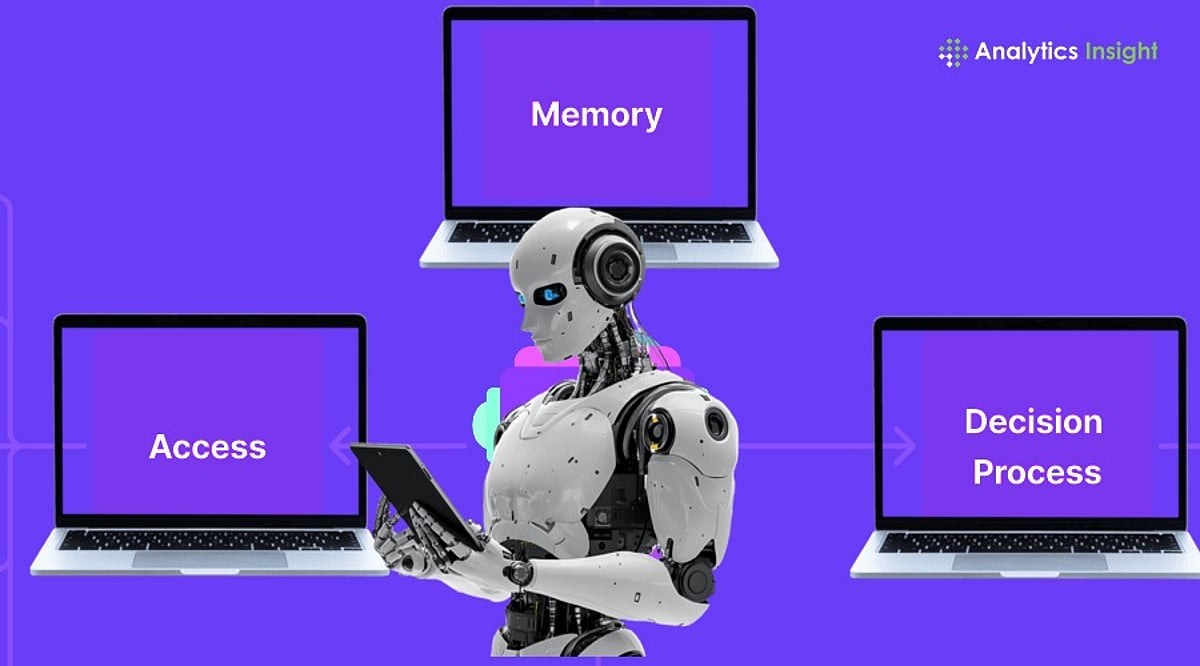
  • Mastering AI Agent Memory and Context Management for Enhanced Performance

    Mastering AI Agent Memory and Context Management for Enhanced Performance

    Modern AI agents must process information efficiently while maintaining continuity across conversations and tasks. Poor memory management leads to higher costs and inconsistent outputs. Optimizing memory and context helps agents remain accurate, responsive, and scalable in production environments.

    Why Flat Memory Fails

    Most memory failures trace back to one design mistake: treating memory as a single, ever-growing log instead of a managed lifecycle. A flat history forces the model to search for everything every time, so retrieval slows, costs climb, and old information starts contradicting new information, with nothing to reconcile them. An agent that remembers a customer’s address from March and a different address from June needs a rule for which one wins. Without that rule, accuracy erodes quietly until a benchmark or an angry user catches it. Teams often respond by simply expanding the context limit, but that treats a design problem as a hardware problem, and the underlying conflict never actually gets resolved.

    The Memory Lifecycle Model

    A lifecycle model fixes this by giving memory-defined stages instead of one undifferentiated pile.

    Capture

    Capture decides what enters memory at all. Not every message deserves storage. An agent should extract facts, decisions, and preferences, not a raw transcript, so a support conversation becomes the customer preferring email over phone instead of a full dialogue dump. The agent decides what’s worth keeping. It saves things like user preferences, finished tasks, and confirmed facts and skips greetings and small talk. This keeps memory clean, so the right information is easier to find later.

    Store

    Store separate memories based on how often they are needed. Hot session data, meaning the current task and the last few turns, stays directly in the prompt. Everything else moves to a searchable store, such as a vector database, so the prompt only carries what the model is actively using.

    Retrieve

    Retrieve pulls relevant memory back into context on demand. This is where most systems lose accuracy. Naive top-match retrieval tends to grab loosely related facts rather than the right ones, so reranking and filtering before injection matter more than the size of the memory store itself.

    Update

    If the new information is contrary to current memory, the agent must decide which memory is correct. Many systems place greater weight on more recent and accurate information, allowing newer facts to replace outdated ones. Some also do not delete older versions immediately but retain them for reference. If the agent discovers two facts for the same user or task, it saves both in the same record to prevent confusion and duplicates.

    Forget and Archive

    Forget and archive to keep memory from growing without bounds. Low-value or rarely accessed memories are compressed into summaries or dropped from the schedule based on recency, frequency, and importance, rather than being kept indefinitely by default.

    Choosing Between Long Context, RAG, and Memory Frameworks

    None of this requires choosing a single technology. Long context, retrieval-augmented generation, and dedicated memory frameworks such as Mem0, Zep, and Letta answer different questions, and production agents typically combine them.

    A Real-World Example: Support Agent Memory

    Consider a support agent handling a returning customer. The current ticket sits in working memory. The customer’s stated preference for email contact is based on a retrieval call against stored profile facts. Company policy on refund windows comes from a RAG pipeline that pulls from the knowledge base. Once the ticket closes, the resolution gets summarized and written back to long-term memory, and the raw transcript is discarded. Nothing here depends on a bigger context window. It depends on each piece of information living in the right stage of the lifecycle.

    Measuring Memory Performance

    Measuring whether this works means tracking token usage per turn, retrieval latency, and accuracy on tasks that require recalling something from a past session, not just this one. Retrieval precision and memory hit rate matter just as much, since a system can achieve fast retrieval yet still return the wrong facts. Flat, unbounded memory and constant full-history reprocessing are the two clearest warning signs that a system is heading toward the failure LongMemEval was built to expose.

    Frequently Asked Questions

    What is AI agent memory?

    AI agent memory is the ability of an AI system to store, retrieve, and use information from previous interactions or external knowledge sources. It helps agents maintain context, personalize responses, and perform multi-step tasks more effectively.

    Why is context management important for AI agents?

    Context management ensures an AI agent receives only the most relevant information for each task. Effective context selection improves response accuracy, reduces token usage, lowers latency, and prevents information overload.

    What is the difference between long context and retrieval-augmented generation (RAG)?

    Long context allows an AI model to process larger amounts of information directly, while RAG retrieves only relevant data from external knowledge sources. Many production AI systems combine both approaches for better scalability and performance.

    How can AI agent memory be optimized?

    AI agent memory can be optimized using tiered memory architectures, memory summarization, retrieval pipelines, context pruning, vector databases, and regular memory updates. These techniques improve efficiency, accuracy, and long-term scalability.

    What are the biggest challenges in AI agent memory management?

    Common challenges include unbounded memory growth, outdated or conflicting information, poor retrieval quality, high token costs, and the need to maintain accurate context across long conversations or multiple user sessions.

    Final Thoughts

    As AI agents shift from short-lived assistants to long-running collaborators, memory architecture will play a growing role in how reliable they actually are. The most capable systems will not be the ones with the largest context limits. Instead, they will be the ones that capture meaningful information, retrieve it efficiently, resolve conflicts consistently, and discard information that no longer adds value.

  • How Universities Are Redesigning Curricula for AI: Full Integration vs. Bolt-On Approaches

    How Universities Are Redesigning Curricula for AI: Full Integration vs. Bolt-On Approaches

    The AI revolution has exposed a critical divide in higher education. Some universities have redesigned learning across every discipline, while others have introduced AI as an additional subject. This comparison shows which approach is creating graduates ready for tomorrow’s workforce.

    Universities are splitting into two camps: those rebuilding degree programs around AI and those adding AI tools on top of unchanged curricula. Kogod, Arizona State, and Miami Dade show measurable gains from full redesign, including a 40% enrollment jump at Kogod. Barnard, Michigan, and Columbia chose speed and flexibility, but governance questions are still catching up to deployment.

    When AI becomes the curriculum, American University’s Kogod School of Business offers the clearest case study. In early 2024, its leadership gave faculty six weeks to rethink what AI-literate business education should look like. What emerged was not a bolt-on course but a full redesign. New AI Artisan classes cover foundational knowledge, while AI Sage courses embed hands-on AI work directly into finance, marketing, and accounting. Every incoming student now takes mandatory AI workshops. The school also created an AI Instruction Faculty Fellow role to keep teaching current and to train instructors before students were expected to use the tools. Three years on, undergraduate enrollment has climbed 40%, applications are up 50%, and more than 90% of faculty now use AI in their teaching. Kogod rebuilt courses first, invested in faculty second, and taught AI’s limitations before its strengths. The point was never just to teach students how to use AI—it was to teach them to question what it produces.

    Arizona State University took a different route to a similar outcome. After partnering with OpenAI in 2024, ASU rolled out ChatGPT Enterprise campus-wide but let individual departments decide how to use it. The AI Innovation Challenge invited faculty and staff to pitch their own projects rather than follow a top-down plan. Hundreds of proposals grew into more than 200 active initiatives spanning nearly every discipline, from research assistants to simulated patient conversations for health science students. By 2025, the partnership had expanded to ChatGPT Edu, backing more than 500 projects. ASU shows that large institutions can transform curricula without centralizing every decision, as long as shared tools and incentives exist.

    Miami Dade College proves that this kind of change doesn’t require a big budget. Starting in 2021, the college trained hundreds of faculty, partnered with IBM on AI for All, and launched Florida’s first associate’s and bachelor’s degrees in artificial intelligence. It later opened an AI center and is moving toward requiring every student to complete an applied AI course, with ethics built in from day one. Enrollment across its technology programs has hit record highs. The driver wasn’t honesty but leadership commitment.

    There is an interesting trend: not all of the universities that move faster are wealthy, but all of the ones that move faster have governance structures that enable curriculum decisions to be made quickly.

    Building skills without rewriting degrees: Barnard College chose a lighter touch. Instead of redesigning majors, it focused on giving every student access to AI tools through a partnership with Google, which brought Gemini and NotebookLM to campus, paired with a four-level literacy framework. This model moves faster and disrupts less. However, it has also exposed a weakness: faculty have raised concerns about privacy and oversight after the tools were already in students’ hands, a reminder that governance built after deployment tends to lag behind the technology it’s meant to manage.

    The University of Michigan and Columbia University follow a similar pattern. Michigan offers short AI courses through its Centre for Academic Innovation. Columbia provides professional AI certificates alongside tools like CU-GPT. In both cases, AI sits beside the degree rather than inside it, treated the way universities once treated coding or data science: a useful add-on, not a requirement.

    What the comparison shows: The overhaul schools moved on governance early. Kogod trained faculty before launching anything. Miami-Dade built ethics into required coursework from the outset. Barnard’s governance questions, by contrast, surfaced only after the tools were already deployed. Faculty adoption tells a similar story. Kogod tracks its numbers publicly and watched them rise from roughly half of the faculty to over 90% in a year. No comparable figures exist at the add-on schools, since participation there remains voluntary. The risks differ too. Curriculum redesign takes more coordination but produces consistent outcomes across students. Add-on strategies are quicker to launch but risk leaving preparation uneven and governance fragmented.

    The real divide in higher education isn’t public versus private, or large versus small. It’s between schools that treated AI as a reason to rebuild and schools that treated it as one more tool to fit into what already existed. Kogod, ASU, and Miami Dade can already point to enrollment gains and faculty adoption numbers. Barnard, Michigan, and Columbia bet on speed and flexibility, and their long-term results are still unfolding. The universities that remain competitive may not be those that adopted AI first but those that built academic systems capable of adapting every time AI evolves.

  • 10 Undiscovered AI Businesses Poised to Transform Industries in 2026

    10 Undiscovered AI Businesses Poised to Transform Industries in 2026

    Artificial intelligence is moving far beyond chatbots and image generators. While industry heavyweights like OpenAI, Google, Microsoft, and Anthropic continue to dominate the conversation, a new crop of AI startups is quietly building technologies that could reshape industries over the next decade.

    From accelerating drug discovery and transforming legal services to simplifying software development and improving enterprise productivity, these companies are tackling highly specialized problems with AI-first solutions. Although these companies have yet to enter the mainstream, their rapid innovation, expanding customer base, and growing investor confidence position them as potential leaders of the next AI wave.

    Emerging AI Startups Quietly Reshaping Industries Across the Global Economy

    Here are 10 AI businesses that deserve far more attention:

    Exonic

    Healthcare innovation can take years of costly research work, but Exonic is trying to change that. They use AI to study biological data, make predictions about protein interactions, and find drug candidates in the early stages of their research. This way, Exonic helps to make advanced biotechnological technologies available even for research organizations and young biotech companies.

    Spring Health

    Mental healthcare is now being influenced by an increasing amount of data, and Spring Health is driving this change. With its AI-based solution, it analyzes patient data to make recommendations for personalized mental treatment solutions. It also connects patients with the best-suited therapists and delivers effective, efficient outcomes for employers and healthcare organizations that provide such services.

    EvenUp

    Legal professionals spend countless hours reviewing medical records, calculating damages, and preparing case documentation. EvenUp streamlines these repetitive processes through generative AI, enabling law firms to prepare personal injury claims more efficiently. By automating administrative work without compromising accuracy, the platform allows lawyers to devote more time to legal strategy and client advocacy.

    Baseten

    Building an AI model is just the first step, but actually deploying that model is still one of the biggest challenges in the field. Baseten offers the services companies require to deploy, manage, and scale machine learning models for enterprise usage. By providing this platform, Baseten removes much of the operational complexities involved in deploying AI technology.

    Hebbia

    Organizations have been creating massive amounts of data that have made the task of gaining insights from them more challenging. This is because Hebbia provides an AI-powered research assistant that can be used to analyze multiple files at once. Whether it’s a legal agreement, financial statement, or research paper, Hebbia will provide context-based answers within minutes.

    Harvey

    Artificial intelligence is increasingly becoming an integral part of the legal field, and one of its leading innovators is Harvey. The platform has been designed to benefit lawyers, who can use it for legal research, contract drafting, compliance reviews, and document analysis. Rather than making lawyers’ work redundant, it saves them time on mundane tasks.

    Cognition AI

    Cognition AI became known internationally when it launched Devin, an independent AI software engineer capable of writing, testing, debugging, and optimizing code. This illustrates how AI can help with software development in ways beyond providing code recommendations. As businesses continue adopting AI in software development, Cognition AI is playing an instrumental role in redefining the future of software engineering.

    Lovable

    Software development is increasingly user-friendly for people without technical expertise, and Lovable is leading this trend. Using the platform, users can develop software just by writing down what they need in plain English. By simplifying software development processes by removing the need for coding skills, Lovable is speeding up product development for entrepreneurs and startups.

    Replit

    Replit has evolved from an online code editor into a full-fledged AI-powered software development environment. Users can code, test, deploy, and work together on their applications using just their browser while enjoying the benefits of AI coding assistants at every step of the process.

    Poolside

    The development of enterprise software goes beyond mere code generation and requires considerations such as security, privacy, and reliability. Poolside focuses on AI models designed specifically for organizations developing mission-critical applications. By emphasizing security and enterprise-level performance, Poolside is tackling one of the major challenges with using AI in corporate software engineering.

    Why These AI Businesses Matter

    The next phase of artificial intelligence will not be defined solely by general-purpose chatbots. Increasingly, innovation is coming from specialized companies building AI solutions for healthcare, legal services, biotechnology, software engineering, and enterprise operations. Although they are not yet widely known beyond tech communities, these firms are addressing industry challenges through real-world solutions that have commercial potential. With ongoing investment in AI transformation by organizations, many of these startup firms will likely play significant roles in the global technology landscape. Keeping an eye on these companies today may offer an early glimpse into the future of artificial intelligence.

  • Tech Roundup: OpenAI Seeks Government Stake, Sony Goes Digital, WhatsApp Usernames, Fable 5 Returns

    Tech Roundup: OpenAI Seeks Government Stake, Sony Goes Digital, WhatsApp Usernames, Fable 5 Returns

    In today’s top tech news, OpenAI has proposed a 5% stake for the U.S. government, signaling a new era of federal involvement in AI. Sony is reportedly planning a digital-only future for its PlayStation ecosystem, moving away from physical discs. Meanwhile, WhatsApp faces scrutiny over its new username feature, and the beloved Fable franchise is making a comeback with a fifth installment. Additionally, Ant Group is expanding into humanoid robotics.

    OpenAI’s proposal marks a significant shift as AI companies face growing federal oversight. The move could reshape how AI giants interact with government regulators. Sony’s digital-only PlayStation strategy aligns with industry trends toward streaming and downloadable content, but raises questions about consumer choice. WhatsApp’s username feature is under question as privacy concerns mount. Fable 5’s return has excited fans of the fantasy RPG series. Ant Group, backed by Jack Ma, is testing a major AI overhaul for its Alipay super app and venturing into humanoid robotics.

  • Supreme Court Overturns Essel Infra Insolvency Orders Citing AI-Generated Fake Legal Precedents

    Supreme Court Overturns Essel Infra Insolvency Orders Citing AI-Generated Fake Legal Precedents

    The Supreme Court of India has struck down insolvency orders against Essel Infraprojects Ltd. after discovering that the lower tribunals relied on fictitious judicial precedents created using artificial intelligence. The apex court remanded the case to the National Company Law Tribunal (NCLT) for a fresh hearing based on verified legal citations and factual findings.

    Case Background

    Essel Infraprojects Ltd. acted as the corporate guarantor for a loan taken by another company. Jammu & Kashmir Bank initiated insolvency proceedings against the company. Pooja Ramesh Singh, the suspended director of Essel Infraprojects, filed a Section 7 petition challenging the admission of the company into corporate insolvency resolution. The NCLT Mumbai Bench initially admitted the insolvency petition on August 28, 2024, and the National Company Law Appellate Tribunal (NCLAT) confirmed that decision on September 11, 2025.

    Fake AI-Generated Citations Exposed

    Senior counsel Madhavi Divan, representing Essel Infraprojects Ltd., alerted the court to the issue. She pointed out that the NCLT had relied on several judgments that either did not exist or contained paragraphs not present in the original rulings. The Supreme Court conducted an independent verification and confirmed the problem. Some citations referenced actual Supreme Court rulings but included fabricated paragraphs, while others cited completely nonexistent judgments.

    Supreme Court’s Strong Warning

    A bench comprising Justices Pamidighantam Sri Narasimha and Alok Aradhe declared that the use of fake, AI-generated documents must be met with ‘zero tolerance.’ The bench emphasized that relying on hallucinated data without proper verification poses a serious threat to the integrity of the legal system. The case raises broader questions about the application of AI in legal decision-making.

    The judges drew a clear distinction between using AI as a tool and allowing it to replace human judgment. They stated: “It is not only a device to help us in our work; it is an alternative to our very thoughts, reasoning, and even decision-making.” However, they clarified they are not opposed to AI usage in law practice or courts, adding: “While it can indeed be a tool in the courtroom, it must be supervised completely by human beings.” The court directed the Bar Council of India to form a committee to study the issue thoroughly.

    Previous Instances of AI Errors in Indian Courts

    This is not the first time Indian courts have flagged AI-generated errors. In January 2026, the High Court of Andhra Pradesh warned trial court judges after discovering that a lower court had referred to four fake case statutes generated by an AI software. In 2025, the Bombay High Court found a tax assessment order citing fake court precedents, and the Supreme Court itself encountered completely fabricated citations in a filed reply.

    Draft AI Regulations Released

    In response to the growing problem, the Supreme Court published draft regulations in June 2026. These regulations strongly prohibit the use of AI tools in judicial decision-making or determining case outcomes. However, they allow AI for administrative and research tasks such as legal research, writing, translation, transcription, and case management. The document specifically warns against the dangers of unreliable automated content, erroneous citations, and AI hallucinations.

  • OpenAI Reportedly Proposes 5% Stake for US Government Amid Rising AI Oversight

    OpenAI Reportedly Proposes 5% Stake for US Government Amid Rising AI Oversight

    OpenAI is reportedly in early discussions about granting the U.S. government a 5% equity stake in the company as federal scrutiny of artificial intelligence intensifies. The proposal, still unconfirmed, comes as the AI giant prepares for a potential initial public offering (IPO) and the Trump administration explores ways to give the public a financial stake in AI’s growth.

    Discussions Over Public Ownership Gain Momentum

    According to the Financial Times, OpenAI executives have floated a plan that would allow the U.S. government to hold a 5% stake in the company. Similar arrangements might be extended to other leading American AI firms, though their support remains unclear. The talks are preliminary and have not been finalized.

    Based on OpenAI’s latest funding round in March, a 5% stake would be valued at approximately $42.6 billion. CEO Sam Altman has suggested that public participation in AI’s financial gains could help address concerns about the technology’s impact on jobs and the broader economy. In April, OpenAI proposed creating a ‘public wealth fund’ to give every citizen a stake in AI-driven economic growth, regardless of their involvement in financial markets.

    The report also indicates that Altman discussed the proposal with President Donald Trump, Commerce Secretary Howard Lutnick, Treasury Secretary Scott Bessent, and Senator Bernie Sanders. Any final arrangement would likely require congressional approval.

    Growing Federal Oversight of AI

    The proposed stake comes as OpenAI and fellow AI developer Anthropic prepare for public stock listings. IPOs would allow public investment while requiring greater financial disclosure. Meanwhile, U.S. officials have ramped up oversight of advanced AI systems, reviewing new models before public release citing national security and safety concerns.

    Previously, Anthropic worked with officials before export restrictions on one of its models were lifted. OpenAI has reportedly faced White House requests to limit access to an upcoming GPT-5.6 model to government-approved partners during its initial rollout. These developments reflect deeper cooperation between AI companies and federal agencies as governments seek more involvement in managing rapidly advancing AI technology.

    Trump Administration Seeks Broader Government Role

    Last month, President Trump said his administration was exploring ways for the public to benefit directly from AI industry growth. One proposal, as reported by the Financial Times, would place government-owned AI shares into a fund modeled on Alaska’s Permanent Fund, which distributes annual dividends from oil revenue.

    Government investment in strategic technology firms has expanded during Trump’s second term. Last year, the U.S. acquired a 10% stake in Intel as part of efforts to strengthen domestic technology leadership.

    OpenAI has not confirmed whether the reported proposal will move forward. For now, discussions remain preliminary while policymakers and AI companies continue negotiations over future ownership models, regulation, and public participation in the sector’s growth.