Category: AI Strategy

  • Tesla’s Steerless Cybercab Test Ignites Safety and Liability Debate

    Tesla’s Steerless Cybercab Test Ignites Safety and Liability Debate

    Tesla has reignited the discussion around autonomous vehicle safety after releasing footage of its Cybercab completing a public road test in Austin, Texas—without a steering wheel or pedals. The vehicle, which relies entirely on self-driving technology, carried only a safety monitor inside, prompting fresh questions about liability and public trust.

    The video, shared by CEO Elon Musk, shows the Cybercab navigating city streets using Tesla’s camera-based autonomous system. First unveiled in 2024, the Cybercab is designed exclusively for robotaxi service, featuring a minimalist passenger display instead of a traditional dashboard. Tesla already operates robotaxi trials in Austin with Model Y vehicles, and this test signals a move toward dedicated autonomous fleets.

    Reactions on social media have been mixed. Supporters praised the technological leap, calling it a glimpse of the future. Critics, however, voiced safety concerns—wondering how the vehicle would handle emergencies, software glitches, or cyberattacks. Many asked whether a safety monitor could intervene in time, and who would be liable in an accident involving a fully driverless car.

    The debate unfolds as U.S. regulators consider a proposal from the National Highway Traffic Safety Administration (NHTSA) that could eliminate the requirement for brake pedals in fully autonomous vehicles. If passed, the rule would clear a path for companies like Tesla to deploy robotaxis without traditional controls.

    Tesla faces stiff competition from Waymo and Cruise, both of which use additional sensors like lidar and radar. Each company takes a different technical approach to safe autonomy. The Cybercab test underscores both the promise and the hurdles of driverless technology, with public confidence and clear safety regulations remaining critical barriers to widespread adoption.

  • Microsoft Layoffs Could Reshape Xbox Gaming Division Amid Shift to AI: 5,700 Jobs at Risk

    Microsoft Layoffs Could Reshape Xbox Gaming Division Amid Shift to AI: 5,700 Jobs at Risk

    Microsoft is reportedly preparing another round of job cuts that could affect nearly 2.5% of its workforce, placing the Xbox gaming division at the center of the restructuring. The move comes as the tech giant continues to pivot heavily toward artificial intelligence, raising questions about the future of its gaming strategy.

    Multiple reports indicate that Microsoft may announce layoffs affecting around 5,700 positions globally, impacting sales, consulting, and the Xbox gaming division. With a current global workforce of approximately 228,000, even a 2.5% reduction represents a significant number of job losses. This would mark one of the largest workforce reductions at Microsoft since the 4% layoff in July 2025.

    Although Microsoft has not officially confirmed which teams will be affected, the gaming division is widely expected to be the most impacted. Xbox has already undergone major changes since the company completed its Activision Blizzard acquisition. Several studios have closed, projects have been canceled, and teams have been reorganized. Recent reports even suggest that Microsoft is about to close Arkane Studios, effectively halting development of Marvel’s Blade.

    The layoffs come at a time when Microsoft is investing billions of dollars in AI infrastructure, cloud services, and new software. Many industry experts believe AI has become Microsoft’s biggest priority. As a result, the gaming division may need to adjust to a new reality where efficiency and cost control take precedence over rapid expansion.

    “If Xbox teams are included in the latest layoffs, it could point to a broader change in Microsoft’s gaming strategy,” the report notes. Instead of pursuing more acquisitions or larger development teams, the company may focus on making existing studios more productive. Services such as Xbox Game Pass are still expected to remain central to the company’s gaming plans.

    Microsoft is unlikely to abandon gaming entirely, given that it owns some of the industry’s biggest franchises. However, the latest reports suggest that the company’s biggest investments are now flowing into AI. For Xbox, that means a stronger emphasis on careful spending rather than breakneck growth.

    As the tech landscape continues to evolve, Microsoft’s next moves will be closely watched by industry observers and gamers alike.

  • India’s AI Chip Push, Brekfuz Funding, and Trump’s Crypto Income: Top Tech News Today

    India’s AI Chip Push, Brekfuz Funding, and Trump’s Crypto Income: Top Tech News Today

    Today’s Tech Roundup

    From artificial intelligence and startups to cryptocurrency and employment debates, here are the key stories shaping the tech landscape today.

    India Doubles Down on AI Chips and Quantum Computing

    India is accelerating its digital transformation with a renewed focus on AI chips, semiconductors, and quantum technology. The government aims to boost domestic innovation, strengthen digital infrastructure, and support startups to position the country as a global tech leader.

    Gurugram AI Startup Brekfuz Secures Fresh Funding

    Brekfuz, an AI startup based in Gurugram, has raised $525,000 in a funding round that values the company at $7.5 million. The funds will be used to enhance its AI solutions, expand the team, and grow its customer base.

    Trump Reports $1.4 Billion in Cryptocurrency Income

    US President Donald Trump disclosed approximately $1.4 billion in earnings from cryptocurrency in a government financial filing. The report underscores the growing role of digital assets in his business portfolio and highlights crypto’s significance as a major income source.

    Delhi University Graduate’s Low Salary Sparks Campus Placement Debate

    A University of Delhi graduate’s post about receiving a monthly salary of Rs. 12,000 has ignited online discussions about the quality of campus placements and entry-level pay in India. Critics point to rising education costs and limited job opportunities for fresh graduates.

    OpenClaw Launches AI Agents for Android Smartphones

    OpenClaw has introduced an Android app that turns smartphones into personal automation hubs. The app supports voice commands, automation, and remote task management, aiming to make AI assistants more practical for everyday users while maintaining user control over permissions.

    Stay tuned for more updates on these rapidly evolving stories.

  • How Artificial Intelligence Is Revolutionizing Property Sales and Marketing

    How Artificial Intelligence Is Revolutionizing Property Sales and Marketing

    Artificial intelligence is quickly becoming an essential part of everyday life—from drafting emails to buying and selling property. Despite lingering skepticism, AI’s role in decision-making is expanding at a remarkable pace. In the property industry, AI is already transforming how homes are marketed, staged, and sold, making the entire process faster and more immersive.

    AI-Powered Virtual Staging

    One of the most visible innovations is AI-driven virtual staging. Instead of relying on expensive physical staging or imagination, buyers can now see a home’s potential before ever stepping inside. Virtual staging tools can digitally furnish empty rooms, remove outdated decor, or present the same space in multiple design styles—all in minutes. Studies show that staged homes help buyers visualize better, and AI makes this approach both faster and more affordable than ever.

    Detailed Digital Renderings for Developers

    Developers are using AI on a larger scale to create highly detailed renderings of future neighborhoods and housing developments. Potential buyers can explore planned parks, transport links, and community spaces before construction begins. Combined with interactive virtual tours and AI-generated visualizations, this new level of immersion is far more effective than flat architectural plans.

    Speeding Up Sales for Individuals

    AI also accelerates the lengthy buying and selling process. Cash-buying services now use AI to analyze local market trends, estimate property values, and forecast demand. For sellers, AI tools can identify the best time to move, and when paired with a guaranteed cash sale, provide unprecedented flexibility. While some remain skeptical, the competitive edge that AI offers is undeniable—businesses that adopt these tools gain efficiency, better customer experience, and resilience.

    The message across industries is clear: embrace AI or risk falling behind. In property, that means using AI to stage, visualize, and sell faster—giving buyers and sellers alike a smarter, more streamlined experience.

  • ABB Innovation Center Unites Over 1,000 Global Innovators to Accelerate Industrial AI

    ABB Innovation Center Unites Over 1,000 Global Innovators to Accelerate Industrial AI

    ABB’s Innovation Center (AIC) in Bengaluru recently concluded the sixth edition of its ABB Accelerator program, a five-day event that brought together more than 1,000 innovators from 37 countries. The program aimed to harness frontier technologies and domain expertise to create real-world industrial AI solutions.

    The event featured over 25 distinguished thought leaders from industry and academia, 80 startups, and participation from more than 350 universities. This collaborative effort showcased how diverse expertise can accelerate product development and build a future-ready talent pipeline for industrial transformation.

    “ABB Accelerator is a global innovation program where ideas are transformed into impactful solutions for our customers. By combining cutting-edge R&D, domain and application engineering strength, digital and AI capabilities, we are helping customers unlock greater value while building capabilities that shape the future,” said GNV Subba Rao, Whole-time Director, ABB Innovation Center.

    Rajesh Ramachandran, Global Chief Digital Officer for Automation at ABB, added: “At ABB, we see the Accelerator as a powerful platform where innovation meets industrial impact. By bringing together ABB experts, partners, startups, academia and thought leaders, we are accelerating the development of scalable solutions that harness industrial AI to shape more autonomous, efficient, and sustainable operations.”

    Over the past two years, the ABB Accelerator program has engaged more than 2,000 participants and generated nearly 700 approved use cases across AI, automation, cloud, and digital technologies. The program has also earned global recognition, receiving three prestigious international awards in 5, including Gold and Bronze Stevie® Awards and the International Innovation Award.

    The ABB Innovation Center (AIC) is one of ABB’s largest global technology and engineering hubs, employing nearly 4,000 technologists in R&D, engineering, digital technologies, and global operations. It focuses on developing next-generation industrial technologies and supporting customers toward increasingly autonomous operations.

    About ABB: ABB is a global technology leader in electrification and automation, enabling a more sustainable and resource-efficient future. With over 140 years of history and around 110,000 employees worldwide, ABB’s shares are listed on the SIX Swiss Exchange and Nasdaq Stockholm. More at www.abb.com.

  • Videonetics Deploys AI-Powered Surveillance Network Across Andhra Pradesh for Real-Time Governance

    In a landmark step toward building a future-ready, technology-led governance ecosystem, Videonetics has successfully deployed its AI-powered Unified Video Management Platform across all 28 districts of Andhra Pradesh. This large-scale implementation establishes a connected, real-time intelligence network that enhances public safety, optimizes traffic enforcement, and enables data-driven decision-making across the state.

    Platform Overview

    At the core of this transformation is Videonetics’ unified platform, which brings together video management, AI-driven analytics, traffic management, e-ticketing, and face recognition within a single architecture. Approximately 15,000 IP cameras have been installed across critical locations, enabling continuous monitoring and seamless data flow into command centers.

    Traffic Management

    An advanced traffic management system is operational across more than 680 crucial intersections. This system automates detection of violations such as over-speeding and signal breaches, while also enabling identification of blacklisted vehicles, significantly reducing manual intervention and improving enforcement consistency.

    Face Recognition System

    The face recognition system deployed at nearly 1,000 locations assists authorized law enforcement agencies to identify persons of interest through integration with approved national databases, in compliance with regulatory frameworks.

    Real-World Outcomes

    Within weeks of becoming fully operational, CCTV360 (RTGS) began delivering tangible results beyond enforcement statistics:

    • A stolen two-wheeler reported in Bapatla was recovered within 3 hours. The vehicle was tracked across districts via ANPR and recovered by police in Tenali.
    • Two 11-year-olds reported missing from Yelamanchili were reunited with their families in under 4 hours after being identified using the Face Recognition System at Visakhapatnam Railway Station.
    • A Non-Bailable Warrant offender was flagged by the Face Recognition System at Tirumala Bus Stand, Tirupati, and taken into custody within 81 minutes.
    • A statewide facial recognition alert for a woman missing for over a month from Anantapur helped trace her location at Puttaparthi the very same day.

    State officials reported a broader pattern of reduced crime rates, faster investigations, and measurably safer roads through consistent, automated traffic enforcement.

    Leadership Perspectives

    “Andhra Pradesh represents one of the most progressive examples of how technology can be leveraged to transform governance at scale. At Videonetics, we are deeply committed to supporting the state’s vision of building safer, smarter, and more responsive cities.” — Naresh B. Wadhwa, Vice-Chairman & MD, Videonetics

    “The true value of technology in policing is measured not just by the number of cameras deployed, but by the outcomes delivered to citizens. This platform has helped us recover missing children, apprehend repeat offenders, trace stolen vehicles, and strengthen inter-district intelligence sharing at an unprecedented scale.” — Ch. Srikanth, IPS, Inspector General of Operations, Andhra Pradesh Police

    “Earlier, by the time CCTV footage was manually reviewed, valuable response time was already lost. Today, the system automatically alerts us about suspicious vehicles, wanted offenders, or missing persons within minutes. It has made investigations faster, patrol teams more effective, and field coordination far more efficient.” — Mrs. Malika Garg, IPS, Superintendent of Police (Operations), Andhra Pradesh Police

    Implementation Details

    Implemented in partnership with MATRIX Security & Surveillance Pvt. Ltd., the deployment integrates a vast network of cameras, analytics engines, and enforcement systems into a centralized Command and Control Centre in Amaravati, creating a unified operational backbone for statewide monitoring and response. Built on a modular and scalable architecture, the platform is designed to evolve with the state’s future requirements.

    About Videonetics

    Videonetics’ Unified Video Management Platform, powered by an indigenously developed True AI and deep learning engine, offers a comprehensive, modular, yet integrated solution. It includes applications such as Video Management System (VMS), Video Analytics (VA), Traffic Management System (TMS), and Face Recognition System (FRS). The company has been consistently ranked as the #1 Video Management Software provider in India and among the top 10 in Asia (OMDIA Informa TechTarget 2025).

  • MiniMax AI: Why This Multimodal Platform Is Drawing Attention in the Agentic AI Era

    MiniMax AI: Why This Multimodal Platform Is Drawing Attention in the Agentic AI Era

    Artificial intelligence is moving beyond simple chatbots. The new wave of AI systems is being shaped by models that can support coding, long-context reasoning, multimodal understanding, workflow planning, and more advanced agent-style tasks. In this fast-changing environment, MiniMax AI has started gaining attention among users who want to explore how modern AI models can support real productivity, research, software development, and creative experimentation.

    The term “Minimax” can mean different things depending on context. In classic computer science, minimax refers to a decision-making algorithm used in game theory and artificial intelligence. In today’s AI market, however, many users searching for Minimax are looking for MiniMax AI, the model and product ecosystem associated with language models, coding tools, video generation, speech, music, and AI-native applications.

    What Makes MiniMax AI Relevant?

    MiniMax has positioned its ecosystem around multimodal foundation models and AI-native products. Its official materials describe model capabilities across text, audio, image, video, music, coding, agentic workflows, and long-context processing. This makes the platform relevant to a wide range of users, from developers testing code-generation workflows to creators experimenting with AI-assisted media.

    The rise of MiniMax AI also reflects a larger trend in the AI industry: users are no longer satisfied with models that only answer basic questions. They want AI systems that can understand complex instructions, help with multi-step tasks, analyze longer inputs, support software engineering work, and prepare outputs that are useful in real business or creative settings.

    For those who want to explore the ecosystem in a simple way, an independent resource such as MiniMax AI chat can help users test prompts, understand model use cases, and learn how MiniMax-style AI tools may fit into coding, research, summarization, and workflow planning scenarios.

    Agentic AI and Long-Context Workflows

    One of the most important shifts in artificial intelligence is the movement from passive chat to agentic workflows. In a traditional chatbot experience, the user asks a question and receives an answer. In an agentic workflow, the AI system is expected to break down a goal, plan steps, reason across dependencies, and support more complex execution.

    This matters for developers, analysts, students, researchers, and business teams. A model that can handle larger context windows and structured prompts can become more useful for tasks such as reviewing documentation, summarizing long reports, planning software architecture, drafting technical content, or comparing options before a decision.

    MiniMax AI is often discussed in this context because recent M-series models are associated with coding, tool use, long-context tasks, and agent-style productivity. As AI tools become more specialized, users are likely to compare models not only by general intelligence, but by how well they perform in specific workflows.

    Coding and Developer Productivity

    Coding remains one of the strongest use cases for modern AI models. Developers use AI assistants to explain code, debug errors, refactor functions, write tests, review architecture, and generate documentation. The value is not only in producing code faster, but in reducing friction during problem-solving.

    MiniMax AI’s focus on coding and agentic engineering workflows makes it especially relevant for developers who want to test alternatives to mainstream AI coding assistants. However, as with any AI model, outputs should be reviewed carefully. AI-generated code may contain mistakes, security issues, outdated assumptions, or incomplete logic. The best use case is not blind automation, but assisted development with human review.

    Multimodal AI and Creative Expansion

    Another major reason MiniMax AI is drawing interest is the growing importance of multimodal AI. Users increasingly expect AI systems to work across different content formats, including text, images, audio, video, and speech. This shift is changing how creators, marketers, educators, and product teams think about content production.

    AI video generation, speech synthesis, music tools, and multimodal assistants are becoming part of a broader creative technology stack. Businesses can use these tools to prototype campaigns, test content ideas, generate educational material, or speed up media workflows. As multimodal models improve, the distinction between writing tools, design tools, and development tools will continue to narrow.

    Why Independent Exploration Matters

    The AI landscape changes quickly. Model names, access methods, pricing, API limits, benchmarks, and product features can shift over time. That is why independent exploration is useful. Users often need a place to understand what a model family is designed for before committing to official API integration or paid production use.

    Independent guides and chat sandboxes can help beginners and technical users test prompt strategies, compare model behavior, and learn which tasks may be suitable for a specific AI system. At the same time, users should always verify production details through official documentation before using any AI tool for commercial, sensitive, or high-stakes work.

    The Future of MiniMax AI

    MiniMax AI is part of a competitive global AI market where model providers are racing to build more capable, multimodal, and agent-ready systems. Its relevance will depend on how well its models perform in real-world tasks such as coding, reasoning, content generation, speech, video, and enterprise integration.

    For users, the key is practical evaluation. Instead of asking whether one AI model is universally better than another, the better question is: which model works best for this specific task, workflow, budget, and risk level?

    As AI adoption expands, platforms like MiniMax AI will continue to attract attention from developers, creators, researchers, and businesses looking for flexible tools that go beyond basic text generation. The next stage of AI will be shaped not only by bigger models, but by models that can help people plan, build, create, and make better decisions with less friction.


  • Why Creator Commerce’s Future Depends on Infrastructure, Not Follower Counts

    Why Creator Commerce’s Future Depends on Infrastructure, Not Follower Counts

    For years, the creator economy has been measured by a simple scoreboard: followers, views, and engagement. Creators built audiences on platforms like YouTube, TikTok, and Instagram, then converted attention into income through ads, sponsorships, affiliate links, and product drops. But as creator commerce enters its next decade, follower count is no longer enough.

    As the industry evolves, creators may not realize that platform-based success can be short-lived. What we see online is largely dictated by the platforms themselves and their algorithms. A small change to your main platform’s algorithm or a priority shift can immediately impact followers, views, and engagement — ultimately affecting traffic and creator income. While creators own their content, they don’t fully own their audience.

    The obvious solution is to remove the unpredictable algorithms by shifting from essentially renting platform traffic to owning the brand entirely. This shift resembles what happened with e-commerce, where early online sellers relied heavily on marketplaces to find buyers. Over time, many realized that long-term value came from building their own storefronts, collecting customer data, and developing direct relationships with buyers. Now it’s time for creators to follow a similar path.

    The Hidden Roadblock: Creators Become the Integration Glue

    Seasoned content creators may think audience growth is their biggest challenge — but it’s not. Many already have engaged communities and strong audience trust. The real problem is knowing how to turn that trust into a sustainable business. Smart creators know you can’t do everything yourself at scale, so they rely on systems. But when different systems manage different parts of the business — analytics, content planning, storefront, customer databases, product sourcing, link-in-bio — creators end up as the glue linking everything together. It’s exhausting. The complexity creates a barrier for many mid-tier creators, who have audience potential but lack the time or resources to build a complete commerce operation from scratch. That digital infrastructure is crucial.

    AI Infrastructure: Compressing Fragmented Operations into a Single Engine

    We’ve all seen AI-generated content, but AI can do much more. Rather than replacing creative aspects, what if you could harness AI to reduce operational disconnects? That’s exactly what fypro.ai attempts to do. As an AI creator growth engine, fypro.ai closes the loop from audience growth to monetization in a single workflow, laying the foundations for an owned digital business.

    How Does Fypro.ai Work?

    It starts with the creator’s social handle. Creators drop their handle to receive a free AI growth plan — account connection takes about 30 seconds. The system analyzes audience demographics, content style, engagement patterns, and viral performance signals to inform the plan. AI Studio, fypro.ai’s content engine, has been trained on more than 4 million viral TikToks and refined by creator strategists to optimize results. Fypro.ai then produces a plan matching the creator’s niche and voice. A branded site goes live in minutes — with a homepage, product shop, content blog, and link-in-bio under the creator’s own domain. Colors, messaging, tone, and positioning are informed by existing content rather than generic templates. Fypro.ai is currently in public beta with more than 2,000 active creators, and content planned on the platform generated more than 10 million views last quarter.

    The Monetization Conundrum

    Even the most successful content creators need help turning content into revenue. With fypro.ai, creators get help answering the common question: “What should I sell?” For example, Marty, a pet comedy micro-creator with over 3,000 followers and an 11% engagement rate, had strong audience loyalty but no commercial system. Using fypro.ai’s tailored commercial content library, structured content calendar, and smart scheduled publishing, Marty turned engagement into more than $2,000 in first revenue within weeks. The engine matches products to your niche, shows margins clearly (typical margins range from 30% to 70% compared to roughly 10% in many affiliate arrangements), and lets you choose what fits your brand.

    The Ultimate Asset: Digital Property Rights and Owned Customer Data

    While followers can disappear and algorithms can change, the one thing that lasts is the creator’s relationship with their followers and customers. Every time you capture an email address, build a customer profile, or record purchase history, you’re creating a business asset independent of any platform. When a creator owns their customer database, they can communicate directly, review purchase histories, identify repeat buyers, and evaluate organic site traffic. Control is key. Fypro.ai emphasizes this ownership layer by helping creators build branded experiences on their own domains while maintaining direct control of customer information — with one-click data export. SEO-ready content surfaces generate discoverable traffic outside social feeds.

    The Next Chapter of Individual Entrepreneurship

    Gone are the days of defining the creator economy strictly through follower numbers and engagement stats. Increasingly, success is measured by ownership: owned audiences, owned customer relationships, owned domains, and owned brands. Success increases as creators learn to view social platforms as discovery tools, not final brand destinations. Once you have an audience, using an AI growth engine like fypro.ai helps you own your content and systems. The result is a lasting business, assisted by AI — letting content creators do what they set out to do: create content they’re passionate about, while the tech handles the infrastructure heavy lifting.

  • How EaseMyTrip’s AI Assistant Is Evolving into a Travel Companion: CEO Rikant Pittie Shares Insights

    How EaseMyTrip’s AI Assistant Is Evolving into a Travel Companion: CEO Rikant Pittie Shares Insights

    Artificial intelligence is reshaping how travelers discover destinations, book trips, and seek customer support. As conversational AI becomes more intuitive, consumers are moving away from keyword-based searches and traditional support channels, expecting faster, more contextual, and personalized assistance throughout their travel journey.

    EaseMyTrip has witnessed this shift firsthand through its AI-powered assistant, EVA, which has handled over 2.5 million interactions across WhatsApp and the company’s web chatbot. The growing adoption highlights increasing consumer trust in AI for everything from travel discovery and bookings to itinerary changes and post-booking support.

    Rikant Pittie, CEO and Co-Founder of EaseMyTrip, believes the next phase of AI will move beyond answering questions to becoming an intelligent travel companion that understands user preferences, intent, and context, while working alongside human support teams.

    What EVA’s 2.5 Million AI-Led Interactions Reveal

    According to Pittie, the biggest insight from EVA’s interactions is that Indian consumers have moved beyond experimenting with AI and are increasingly relying on it to accomplish real travel-related tasks. Whether discovering flight and hotel options, clarifying booking details, understanding cancellation policies, accessing offers, or resolving service-related queries, customers are turning to AI for speed, convenience, and accuracy.

    Users are demonstrating outcome-driven trust: they care less about whether they interact with a human or an AI system and more about receiving the right answer quickly and reliably. Travelers are increasingly asking complete questions rather than typing fragmented keywords, signaling that they view AI as a travel companion that simplifies planning and decision-making.

    Why Conversational AI Outpaces Traditional Search

    Conversational AI accelerates the customer journey by helping users find information faster and complete tasks more efficiently. Human interaction remains critical for situations requiring empathy, nuanced decision-making, or complex problem-solving. Pittie emphasizes that the real value lies in reducing friction and enhancing existing customer journeys, positioning AI as an extension of human support rather than a replacement.

    Building Domain-Specific AI Assistants: Challenges and Lessons

    Pittie notes that deploying a large language model does not automatically create a successful customer-facing AI assistant. Building a domain-specific solution requires deep understanding of customer journeys, business rules, operational processes, and countless edge cases. For EVA, the real challenge is ensuring the assistant understands travel-specific contexts and responds accurately to a wide range of needs—from discovery and bookings to cancellations and post-booking support.

    Success depends on high-quality data, continuous model refinement, robust guardrails, and strong integration with existing systems. Customer expectations evolve rapidly, so AI systems must continuously improve to remain relevant.

    Improving Engagement, Efficiency, and Resolution Speed

    The most successful organizations approach AI as an augmentation layer. At EaseMyTrip, EVA is embedded into existing customer journeys to make travel discovery and support faster, simpler, and more intuitive. By helping customers find relevant information, access travel options, understand offers, and resolve common queries quickly, AI reduces friction while allowing service teams to focus on complex cases.

    Deep integration with real travel use cases and customer touchpoints enables a more contextual and meaningful experience. Early indicators point toward stronger engagement, faster query resolution, and growing acceptance of AI-led travel assistance.

    The Next Evolution: Proactive, Voice-Enabled, and Multilingual AI

    Pittie envisions the next evolution not as a better chatbot but as a more intelligent travel assistant that understands context, preferences, and intent across the entire customer journey. Travelers expect seamless, connected experiences where they do not have to repeat information at every step—whether planning, booking, or seeking support.

    Through EVA and ChatGPT integration, EaseMyTrip enables customers to receive faster, more contextual assistance for routine requests, while support teams continue handling complex situations that require human judgment, empathy, and personalized intervention. Multilingual interactions, voice-enabled assistance, smarter recommendations, and contextual support will help create more intuitive travel experiences by complementing—not replacing—human expertise.

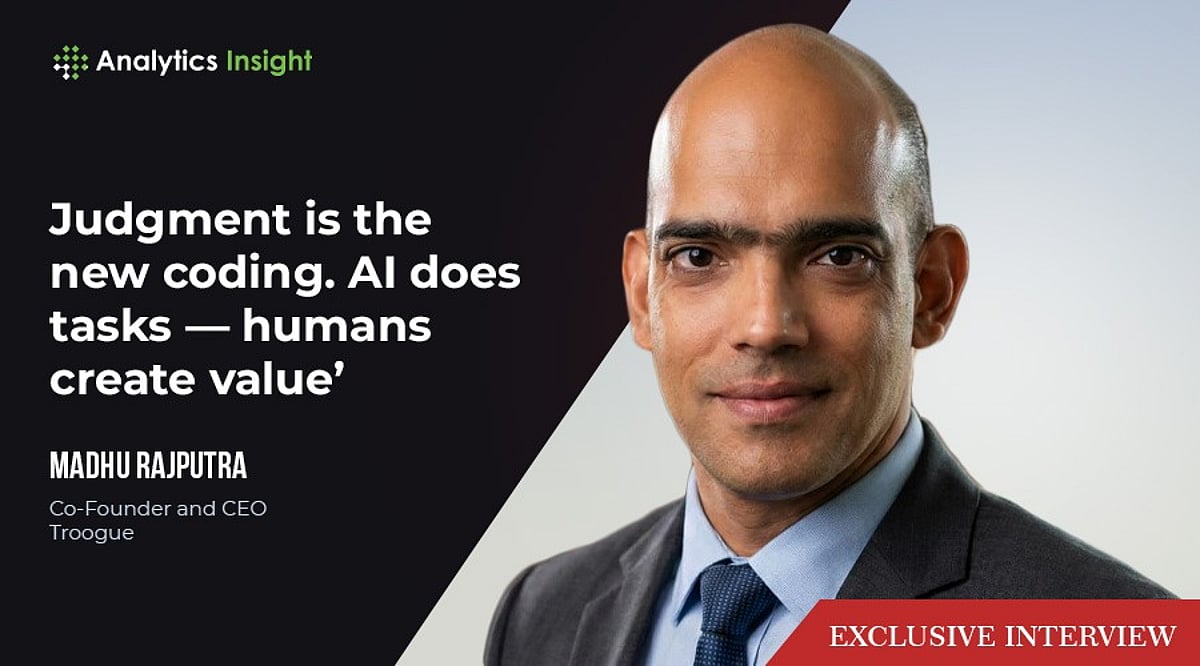
  • How AI Is Reshaping Enterprise Talent: Troogue CEO on Capability-Based Hiring and the Human-AI Future

    How AI Is Reshaping Enterprise Talent: Troogue CEO on Capability-Based Hiring and the Human-AI Future

    Artificial intelligence is redefining the future of enterprise hiring, workforce development, and project delivery by automating coding, testing, documentation, and talent evaluation. As AI takes over repetitive tasks, organizations are placing greater emphasis on human capabilities such as judgment, creativity, communication, and empathy to drive better business outcomes.

    Madhu Rajputra, Co-Founder and CEO of Troogue, believes the next phase of enterprise transformation will be led by professionals who can effectively combine AI capabilities with critical human skills. Rather than replacing talent, AI is reshaping how value is created by enabling people to focus on strategic thinking, problem-solving, and decision-making.

    In an exclusive interview with Analytics Insight, Rajputra discusses how Troogue is preparing enterprises and professionals for the Human-AI hybrid era through capability-based talent verification, AI-powered workforce solutions, modular AI agents, and responsible human intelligence data.

    How Troogue Is Preparing Professionals for the Human-AI Talent Shift

    AI is clearly changing how software gets built. Coding, testing, documentation and even parts of design are becoming faster because of AI. But Rajputra does not believe this reduces the importance of human capability. It changes where humans create value. AI is compressing the value of pure execution skills and increasing the premium on judgment skills.

    “AI will not replace capable people. But capable people who can use AI well will replace those who cannot.” — Madhu Rajputra

    At Troogue, professionals are prepared for this shift by evaluating and developing them beyond traditional CV-based skills. The assessments cover not just coding ability, but problem-solving, communication, role fit, learning agility, and the ability to work in real enterprise environments.

    Verifying and Curating Talent Through Real-World Assessments

    Troogue’s verification process starts with the enterprise requirement, not with a database search. Once the requirement is clear, a role-aware evaluation path is created. This can include technical assessments, coding challenges, scenario-based problem solving, communication evaluation, video Q&A, work-simulation tasks, and AI-assisted interview analysis.

    Profiles are curated based on verified capability, not just stated experience. Each Trooger is assessed across technical depth, problem-solving ability, communication, reliability, and fit for the role. All of these signals feed into a capability graph — an evidence-backed view of each professional’s verified skills, domain depth, assessment history, and deployment feedback.

    Delivering AI Agents Cost-Effectively

    One of the challenges with enterprise AI adoption is that many tools are priced as large organization-wide licenses. Troogue’s approach is different. AI agents are built around specific workflows and specific users, making intelligence available at the point of work. The AI layer is embedded into the engagement itself, rather than sold as a heavy standalone enterprise software rollout.

    This is structurally more cost-effective because the AI capability is linked to actual usage, roles, and outcomes.

    Leveraging Human-Generated Data for Better AI Models

    As foundation models become more commoditized, the scarce resource will be high-quality, domain-specific, expert-generated data. Every Trooger who goes through capability assessments, interview processes, work simulations, and deployment feedback loops creates signals about human capability. These signals help understand how people solve problems, communicate, respond to ambiguity, collaborate, and perform in real enterprise contexts.

    Over time, with consented, structured, and anonymized data, this can become a valuable evaluation and training layer for enterprise AI models.

    Preserving Human Qualities Alongside AI

    Troogue does not try to protect human-centric qualities from AI. Instead, the company works to make them visible, measurable, and rewarded. The capability framework looks at professional-fit dimensions such as communication under pressure, adaptability in ambiguous contexts, ownership mindset, stakeholder relationship signals, and feedback from deployment.

    Human-centric qualities matter even more when AI is involved. Someone still has to explain trade-offs to a client, mentor a junior team member, understand why a user is resisting a new system, and take accountability when an AI-generated answer is not good enough.

    “The AI handles throughput. The human handles consequence. Troogue’s job is to make sure enterprises can reliably find humans who understand that distinction.” — Madhu Rajputra