Category: AI Strategy

  • Build an AI-Powered Lead Machine: Three Pillars for Modern Growth

    Build an AI-Powered Lead Machine: Three Pillars for Modern Growth

    In the modern landscape of digital growth, marketing optimization, and B2B sales development, go-to-market teams face a massive paradigm shift. Manual execution has given way to automated, intelligent infrastructure. This guide explains how to build a comprehensive growth engine using three interconnected architectural pillars: agentic AI lead generation systems, Generative Engine Optimization frameworks, and algorithmic booking systems. Orchestrating these pillars converts modern buying signals into a continuous pipeline.

    What Does It Mean to Build an AI-Powered Lead Generation Machine?

    An AI-powered lead generation machine replaces manual list building with autonomous software workflows that track real-time intent signals, execute sequential data validation, and programmatically generate hyper-personalized outreach assets. This automated infrastructure qualifies inbound prospects using interactive form gatekeepers, removing the operational burden of lead qualification from human sales teams.

    Shifting to Agentic Prospecting Workflows

    Modern B2B lead generation relies on autonomous agents rather than manual execution. These agents operate iteratively to accomplish multi-tiered objectives without human intervention between sequence phases. The software independently maps the Ideal Customer Profile and identifies precise purchasing triggers. Teams deploy these workflows to maintain a continuous outbound pipeline natively, eliminating static database reliance.

    Intent Sourcing Mechanics and Data Tracking

    High-intent data capturing focuses on tracking real-time business signals rather than pulling static firmographic lists. High-leverage buying signals include recent venture capital funding rounds, key executive hires, and technological stack updates. Systems monitor real-time content consumption patterns across B2B data exchanges. Databases like Apollo and 6sense isolate these metrics to flag prospective buyers preparing for a purchase.

    Waterfall Enrichment Infrastructure

    Data management layers run programmatic waterfall validation algorithms to circumvent spam filters and preserve deliverability rates. This methodology uses an extraction pipeline that queries independent databases iteratively. The orchestrator passes lead records into a data framework like Clay to resolve missing corporate data points, email syntaxes, and social profiles. The pipeline queries a sequential hierarchy from one provider network to another when previous sources register as null.

    Hyper-Personalization and Asset Production

    Generative algorithms programmatically evaluate open data fields, executive interviews, or target company website updates to compose individualized cold messaging or tailored lead magnets. This strategy focuses on producing programmatically tailored high-value digital deliverables to incentivize contact acquisition. A webhook listener module intercepts new lead capture alerts from landing forms. The system routes the captured domain into an integration block to pull background variables and passes the metrics into an LLM generation node.

    Autonomous Sales Delivery and AI Gatekeeping

    The deployment phase relies on safe multi-channel sequences across secure electronic mail networks and automated professional networking touchpoints. Scalable delivery applications like Instantly deploy mass outbound communication sequences without suffering deliverability degradation. Incoming responses face continuous monitoring by predictive model scoring frameworks within CRM databases. Interactive, dynamic form gatekeepers filter incoming inquiries on landing sites to qualify intent prior to sales calls. These automated form agents verify traffic characteristics before permitting human sales interaction. For instance, companies like KIS Finance optimize their data ingestion layers by implementing predictive validation structures to evaluate risk and intent variables before routing prospects to human operators.

    Turning Incoming AI Search Traffic into Conversions: Seamless Booking Portals

    Converting outbound intent and conversational search visibility into bottom-line conversions demands automated, 24/7 client booking engines. These programmatic conversion portals eliminate back-and-forth scheduling friction by embedding responsive, full-stack calendaring layers directly onto primary digital assets to manage real-time enterprise availability, capacity-limited events, and transactional gates seamlessly.

    The Role of On-Site Booking Gateways

    Converting outbound intent and conversational visibility into bottom-line conversions demands automated client booking engines. These systems eliminate back-and-forth friction by embedding responsive calendaring layers directly onto primary digital assets. Prospective clients schedule sessions immediately upon landing on the corporate interface. Automation maintains operational continuity across global time zones 24/7.

    Enterprise Scheduling Mechanics

    Enterprise scheduling platforms orchestrate structural components across staff records, service catalogs, individual provider availability calendars, and custom resource rules. These tools automate recurring client sessions, capacity-limited team events, multi-tier pricing structures, and real-time payment capture gates. The infrastructure updates availability in real time across all integrated networks. Staff members receive individual schedule definitions matching their specific resource capacities. The system binds production API keys for credit processing networks to activate automated invoicing sequences simultaneously.

    Full-Stack Tool Customization

    Advanced scheduling architectures offer developers complete structural control over transactional interfaces. Customization capabilities include custom styling parameters, direct API pipelines, and webhooks data pipelines. The platform connects directly with major ecommerce frameworks to unify transactional operations. Programmed conditional communication protocols dispatch confirmation alerts, custom calendar assets, and automated tracking notifications via email and SMS text messaging. Growth teams can instantly implement this exact full-stack booking architecture using a WordPress booking plugin for appointments and events called Amelia, which deploys responsive shortcode values or platform block elements directly into targeted page templates to automate logistics natively.

    What Is Generative Engine Optimization (GEO) and Why Is It Crucial?

    Generative Engine Optimization (GEO) is the technical framework used to optimize digital footprints for consumption and citation by Large Language Models and conversational search engines. It is crucial because user behavior is moving toward chat interfaces that deliver direct answers, requiring brands to maintain machine-readable semantic layers to earn citations.

    The Paradigm Shift to Generative Visibility

    Generative Engine Optimization addresses the optimization of digital footprints for consumption and citation by Large Language Models. This framework moves past classical algorithmic page-ranking rules that govern traditional search engines. GEO builds textual depth and semantic relevance to become the chosen answer source inside the text paragraph outputted by an LLM. This shift is critical because user searches are moving away from traditional engines and towards chat interfaces like ChatGPT, Gemini, Perplexity, and Google AI Overviews.

    Machine-Readable Revenue Pipelines and Citations

    For an organization to earn citations in AI search interfaces, brand indices must maintain open-source, easily parsable semantic data layers. This structural necessity shifts organizational assets from traditional closed-loop funnels into accessible, machine-readable knowledge formats. Search visibility metrics within generative platforms are determined by citation share, link depth within expandable conversational user interface elements, and continuous token attribution across conversational threads. Growth teams must analyze the hidden layout architecture of generative search results pages, including the Document Object Model. Primary source citations often sit buried inside expandable code blocks, drop-down toggles, or structural containers within the DOM. Specialized enterprise applications like AthenaHQ, Authoritas, and the best GEO tools allow content teams to track specific prompt volumes, measure citation share, and audit brand perception within LLMs.

    Algorithmic User Intent Matching

    Discovery mechanics within conversational search engines rely on semantic clustering. This methodology involves gathering thousands of autocomplete user queries and transforming them into intent-based informational clusters. Software platforms like Answer Socrates group these autocomplete search queries to discover the specific structural answers required by conversational AI tools. Content teams use utilities like Frase, Writesonic, Genrank, and Dageno AI to map out source material for LLM consumption, ensuring accurate brand indexing.

    Architecting the Future of B2B Growth

    Building an automated lead machine requires integrating autonomous prospecting networks, conversational search optimization frameworks, and programmatic booking portals. This synchronized architecture allows enterprise growth teams to transform real-time buying intent signals into continuous client acquisitions, securing a dominant digital footprint within modern machine-readable revenue pipelines.

    Unifying the Three Growth Pillars

    Modern pipeline development demands the systematic integration of agentic data workflows, generative search visibility, and algorithmic scheduling interfaces. Go-to-market teams establish an optimized ecosystem by linking these independent layers. This structural approach ensures no high-intent demand slips through organizational cracks. The system processes external intent signals and internal transaction data simultaneously.

    The Machine-Readable Competitive Advantage

    Organizations must shift their digital assets into open, easily parsable semantic knowledge formats to maintain long-term market authority. Large Language Models and automated scraping tools rely completely on accessible data layers for citation attribution. Companies that hide information behind closed funnels risk immediate erasure from generative search results. Maintaining an indexable presence guarantees consistent citation share across conversational threads.

    Strategic Directives for Go-to-Market Teams

    Go-to-market teams must immediately audit their existing technical stacks to eliminate manual list validation and scheduling frictions. Deploying autonomous workflows allows human operators to focus entirely on closing qualified deals. The engineering of automated conversion paths transforms inbound traffic into concrete revenue pipelines. Organizations that deploy these integrated frameworks early will capture the highest share of AI-native demand.


  • The Best No-Code AI App Builders for 2026: Build Apps Without Coding

    The Best No-Code AI App Builders for 2026: Build Apps Without Coding

    No-code AI platforms are making application development accessible by allowing users to build intelligent apps without writing traditional programming code.

    Bubble continues to be one of the most popular no-code platforms, enabling users to create web applications while integrating AI models and automation services.

    Glide transforms spreadsheets into powerful mobile and web applications with AI-powered workflows, making rapid business app development simple.

    Microsoft Power Apps combines low-code development with Microsoft Copilot AI, enabling organizations to build business applications using natural language prompts.

    Softr allows users to build client portals, internal tools, and business applications by connecting databases with customizable no-code interfaces and AI capabilities.

    FlutterFlow has become a leading visual app builder for creating cross-platform mobile applications while supporting AI integrations and custom backend services.

    Modern no-code AI builders include features like AI chatbots, workflow automation, document generation, image creation, and intelligent data processing. Businesses increasingly use these platforms to build customer support tools, CRM systems, inventory management apps, employee portals, and productivity solutions.

    Selecting the right no-code AI platform depends on deployment options, integrations, scalability, pricing, security, and the complexity of the intended application.

  • How to Measure AI Agent Performance: Key Metrics and Evaluation Methods

    How to Measure AI Agent Performance: Key Metrics and Evaluation Methods

    AI agent performance goes beyond simple task completion. As businesses increasingly deploy autonomous AI systems in customer service, healthcare, finance, and software development, understanding how to measure their effectiveness becomes critical. This article breaks down the essential metrics—from task completion and accuracy to cost efficiency and safety—that determine whether an AI agent truly delivers value in real-world operations.

    Why Measuring AI Agent Performance Matters

    The shift from basic AI models to autonomous agents has accelerated rapidly. A 2026 Adobe enterprise survey revealed that 78% of organizations expect AI agents to manage customer support within 18 months. However, poor performance can lead to incorrect outputs, system failures, security vulnerabilities, and wasted resources. Rigorous evaluation is no longer optional—it’s a prerequisite for safe and profitable deployment.

    Core Metrics for AI Agent Performance

    Task Completion Rate

    The most straightforward metric measures whether the agent successfully finishes its assigned job. For example, if a customer support agent resolves 92 out of 100 tickets, its completion rate is 92%. A high rate indicates strong problem-solving capability, but it doesn’t tell the whole story.

    Accuracy and Output Quality

    Completion without correctness is meaningless. An AI coding agent may finish writing code, but if the code contains errors, performance is poor. Companies now evaluate both completion and output quality together, especially in high-stakes fields like healthcare and finance.

    Response Speed

    How quickly does the agent react after receiving a task? In customer service, financial trading, or emergency healthcare, delays can ruin user experience. Balancing speed with accuracy is a key challenge.

    Cost Efficiency

    Every AI task consumes computing resources, API calls, and memory. Cost efficiency measures the expense per successful task. With 91% of companies now having dedicated AI budgets (RBC Capital Markets, 2026), reducing operational costs while maintaining performance is a top priority.

    Reliability and Consistency

    A trustworthy agent produces stable results across repeated tasks. If an AI research assistant gives different answers to the same question, trust erodes. Consistency testing reveals hidden weaknesses in model decision-making.

    Tool Usage Efficiency

    Modern agents use external tools like browsers, databases, and coding environments. This metric evaluates whether the agent selects the right tool and avoids unnecessary actions. New 2026 research introduced evaluation systems that analyze decision-making during tool use, showing that process quality matters as much as final output.

    Long-Term Performance

    Some tasks take hours. A major benchmark by METR showed that top AI systems can maintain autonomous operation for nearly sixteen hours before performance declines. This capability marks a significant leap over earlier systems.

    Safety and Security

    As AI agents manage sensitive data and financial systems, safety becomes a critical metric. In June 2026, the Bank of England warned that autonomous AI in financial markets needs stricter regulations, emergency shutdowns, and safety controls. Secure behavior is now on par with accuracy.

    The Future of AI Agent Evaluation

    Evaluation is moving beyond chatbot-style tests toward real-world execution. Companies that build robust testing frameworks for autonomy, safety, cost, speed, and consistency will lead the next wave of AI deployment. Performance measurement will separate successful systems from those that fail under pressure.

    FAQs

    1. What does AI agent performance mean? It refers to how well an autonomous AI system completes tasks accurately, safely, and efficiently in real-world settings.
    2. Why is measuring AI agent performance important? It helps businesses identify errors, reduce costs, improve reliability, and ensure safe deployment.
    3. What is the most important AI performance metric? Task completion rate is core, but accuracy, speed, reliability, and safety are equally vital for a full evaluation.
    4. How do companies test AI agents? Through benchmark tasks, repeated execution tests, cost analysis, safety checks, and output quality review.
    5. What is the future of AI agent evaluation? It will focus on autonomous decision-making, long-duration task capability, security controls, and consistent real-world performance.
  • Mastering Prompt Engineering: How to Write Effective Prompts for High-Performing AI Agents

    Mastering Prompt Engineering: How to Write Effective Prompts for High-Performing AI Agents

    Modern AI agents depend heavily on prompt quality. Clear instructions, proper context, logical structure, defined limits, and self-review methods help AI systems deliver stronger, faster, and more reliable results.

    Overview

    Clear and specific prompts help AI agents produce more accurate and reliable results. Step-by-step instructions improve reasoning quality and reduce mistakes in complex tasks. Modern prompt engineering has become a critical skill as autonomous AI systems become more powerful.

    AI Agents Have Changed How Prompts Work

    In the past, prompts were simple. Most people asked direct questions and received direct answers. Modern AI agents work differently. These systems can handle tasks that require planning, reasoning, and decision-making. Large technology companies have already started using advanced AI agents in their businesses. Recent reports from 2026 show that companies such as OpenAI, Google, and Anthropic now use AI agents for software development, customer service, legal document review, research work, and financial analysis. As AI agents become more powerful, prompt writing now looks less like asking a question and more like writing a set of instructions for a machine that can think through a process.

    Clear Role Creates Better Results

    One of the biggest mistakes in prompt writing is lack of clarity. AI performs better when it clearly understands what role it must take before starting the task. For example, a weak prompt may simply ask an AI system to analyze business data. This type of instruction often creates general answers with little value. A stronger prompt gives the AI a clear identity. For example, the prompt can state that the AI should act as a senior financial expert who studies company revenue and finds business risks. Recent research shows that role-based prompts improve accuracy, especially for technical and professional work.

    Specific Goals Improve Accuracy

    AI systems often fail when instructions remain vague. A broad prompt usually creates broad answers. Better prompts clearly explain what final result is expected. For example, a cybersecurity task should not simply ask AI to study security problems. A stronger prompt clearly states that the system must find five security risks, rank them by danger level, and suggest solutions. When the goal becomes specific, AI has less confusion. This usually leads to stronger and more reliable output.

    Step-by-Step Instructions Help AI Think Better

    Complex tasks often need several stages before a good answer becomes possible. AI agents perform better when prompts divide work into smaller parts. Instead of asking for an instant answer, prompts should guide the system through a process. The system may first collect information, then study the facts, compare possible solutions, and finally create the best answer. This method has become extremely important in modern AI systems. Experts now call this method Chain of Thought reasoning. Many enterprise AI systems use this reasoning structure because it improves logical accuracy and reduces mistakes.

    Limits Help AI Stay Focused

    Powerful AI systems need clear boundaries. Without limits, AI may produce answers that go beyond the original task. A strong prompt clearly defines restrictions. For example, a business prompt may ask AI to create a marketing plan with a budget limit of $50,000 while avoiding television advertising. These limits help AI stay focused on the real task. Cybersecurity experts recently warned that weak prompt structure can create security risks. Prompt injection attacks have become one of the fastest-growing concerns for companies that depend on autonomous AI systems.

    Context Makes Answers More Relevant

    Background knowledge helps AI do its job better. The little things can sometimes have huge impacts. For example, a prompt asking AI to write marketing content for a product would do much better if it explained what the product is, who the customer is, what the price point is, and at whom the product is targeted. As an example, if I told the AI that I’m making a premium smartwatch for a well-to-do Health and Fitness professional in their 30s through 40s, then the AI can help me create even better work. Generally speaking, the more information you provide to the AI, the smarter and more helpful the AI’s output will be.

    Why Output Structure is Important

    Modern AI agents often connect with software tools, databases, websites, and business systems. This makes output format extremely important. A good prompt clearly tells AI how the final answer should look. Some tasks may require a report. Others may require tables, JSON format, summaries, technical documentation, or structured business analysis. When format rules remain clear, AI produces cleaner output that works better inside automated systems.

    Self-Review Makes AI More Powerful

    Loop engineering is one of the latest trends. This method allows AI systems to review their own work before producing a final answer. Instead of stopping after one response, the AI first creates a solution, checks for mistakes, improves weak sections, tests assumptions, and then produces a better version. Technology experts now believe loop engineering may soon become more important than traditional prompt engineering. This process creates far more reliable results, especially for difficult tasks.

    Why Prompt Engineering Matters

    Prompt writing is no longer a simple skill used for chatbots. It has become an important part of modern artificial intelligence systems. New research published in June 2026 introduced advanced prompt frameworks that divide prompts into categories such as goals, priorities, limits, execution plans, and expected results. These frameworks help AI systems understand tasks more clearly. As AI agents become a bigger part of business, education, healthcare, finance, and software development, prompt quality will decide how useful these systems become. Better prompts create smarter AI agents. In the future, the ability to write strong prompts may become one of the most valuable digital skills in the world.

    FAQs

    1. What is prompt engineering?

    Prompt engineering is the process of writing clear instructions that help AI systems understand tasks and produce better results.

    2. Why do AI agents need better prompts?

    AI agents depend on prompts to understand goals, make decisions, and complete tasks accurately.

    3. What makes a prompt effective?

    An effective prompt contains a clear role, specific goal, proper context, defined limits, and expected output format.

    4. What is Chain of Thought reasoning in AI?

    It is a method where AI solves a task through logical steps instead of producing an instant answer.

    5. Why is prompt engineering important in 2026?

    As businesses adopt autonomous AI agents for complex work, prompt quality directly affects speed, accuracy, and overall performance.

  • Why Data-Driven Enterprises Must Refine AI-Generated Language for Human Impact

    Why Data-Driven Enterprises Must Refine AI-Generated Language for Human Impact

    The integration of Large Language Models into enterprise infrastructure has fundamentally transformed data processing, automated reporting, and corporate communications. In today’s data-driven ecosystem, organizations are leveraging these sophisticated models to make sense of massive amounts of unstructured data and translate it into actionable insights at unprecedented speeds. From real-time financial analytics dashboards to comprehensive predictive market reports, artificial intelligence is changing the speed of information distribution at its core.

    As the initial novelty of rapid text generation wears off, data scientists and Chief Data Officers (CDOs) are facing a major qualitative hurdle. The output of language models is mathematically efficient, unfiltered, and unedited, but it often lacks the contextual nuance, empathetic tone, and rhythmic variance of natural human thought. To ensure that automated reports and executive briefings actually resonate with their intended human audiences, technology leaders are realizing that it is no longer sufficient to simply generate text at scale. Instead, they must actively deploy secondary Natural Language Processing (NLP) frameworks to humanize AI outputs, effectively bridging the critical gap between statistical probability and genuine human cognition.

    At its core, this qualitative issue stems from the fundamental architecture of generative models. LLMs operate on a predictive, probabilistic basis, calculating and selecting the next most likely token based on massive training datasets. From a data science perspective, this results in highly uniform, low-entropy output. In enterprise applications like automated data storytelling, business intelligence reporting, and client-facing analytics, this rigid syntactical structure becomes highly problematic.

    When text lacks the “burstiness”—the natural variation in sentence length, structural pauses, and conversational cadence—that characterizes authentic human writing, it inevitably triggers cognitive fatigue in the reader. The underlying data and analytical insights might be perfectly accurate, but the delivery mechanism is fundamentally flawed. This algorithmic predictability not only diminishes reader engagement but also raises valid concerns about the homogenization of corporate intelligence. When every enterprise utilizes similar foundational models, the unique brand voice and authoritative edge of the company are quickly lost in a sea of synthetic uniformity.

    In response to this influx of synthetic text, the broader technology industry has witnessed a rapid proliferation of digital auditing and verification tools. Today, it has become standard compliance protocol for enterprise governance teams, academic research institutions, and digital publishers to process incoming documents through a specialized AI checker to evaluate the origin of the content. These diagnostic algorithms are engineered to analyze the perplexity and structural predictability of a given text, searching for the unmistakable mathematical watermark of a machine.

    While these auditing tools are essential for maintaining data integrity, mitigating algorithmic bias, and ensuring transparency, they ultimately represent an incomplete solution. They serve merely as a diagnostic boundary rather than a developmental bridge. Knowing that an automated earnings report or a market analysis draft sounds robotic does not solve the underlying communication deficit. Furthermore, highly technical writing, such as data science whitepapers, often triggers false positives in these systems due to their naturally rigid structures. The enterprise challenge, therefore, is not merely to detect machine-generated text, but to actively refine it into a format that is virtually indistinguishable from expert human analysis.

    To address this critical limitation, the focus within the enterprise AI sector has shifted toward sophisticated structural refinement. The goal is to move far beyond the superficial replacement of vocabulary—a hallmark of early-generation text spinners that often destroyed contextual accuracy—and focus instead on the deep semantic restructuring of the text. By algorithmically introducing the natural cognitive friction, pacing variations, and empathetic tone found in genuine human communication, these advanced systems can effectively recalibrate synthetic drafts. This critical transformation ensures that the final narrative accurately conveys the underlying data without alienating the human reader on the receiving end.

    This necessary paradigm shift is giving birth to an entirely new layer of mission-critical enterprise software. Platforms designed for advanced linguistic recalibration are quickly becoming integral parts of the modern data pipeline. These tools serve as an invisible editorial and polish layer that lets organizations harness the immense computational scale and speed of generative AI while fiercely protecting the authentic, authoritative voice of their brand.

    With artificial intelligence becoming increasingly involved in every aspect of business intelligence, data analytics, and corporate activity, the biggest competitive advantage will not be solely in speed of generation. It will be the exclusive property of enterprises that master the integration of advanced refinement technologies, keeping their automated insights deeply, engagingly, and persuasively human.

  • Enterprise AI Raises the Stakes: How to Humanize Generative Output Against Algorithmic Detection

    Enterprise AI Raises the Stakes: How to Humanize Generative Output Against Algorithmic Detection

    The rapid deployment of generative artificial intelligence (GenAI) is transforming enterprise operations worldwide. Businesses across industries now rely on large language models (LLMs) to streamline tasks such as drafting legal documents, forecasting financial data, and scaling B2B marketing communications. Yet this surge in machine-generated text has created a growing divide between automation and the filtering of synthetic content, raising concerns about trust, digital fatigue, and the integrity of communication channels.

    To preserve stakeholder trust and prevent cognitive overload, technology leaders must actively humanize AI outputs. This means injecting cognitive variance into generated text so that it mirrors the natural hesitations, structural asymmetries, and varied pacing of human writing. Without such adjustments, users quickly tire of sterile, predictable content, and detection algorithms flag the machine origin with increasing accuracy.

    Behind the scenes, sophisticated detection algorithms have been embedded into major platforms, search engines, and enterprise security frameworks. These tools audit digital content by measuring two key metrics: burstiness (variation in sentence length and structure) and perplexity (predictability of word choice). Standard generative models optimize for the most likely word sequences, producing low burstiness and low perplexity – a pattern that acts as a digital watermark for detection systems.

    While detection mechanisms were intended to maintain information integrity, they have triggered a systemic problem: a high rate of false positives in enterprise environments. Technical documentation, compliance reports, and legal contracts often demand rigid, predictable language. When human data scientists or technical writers draft such documents, their natural style can mimic low-variance machine patterns, causing authentic work to be incorrectly flagged. This has sparked a technological arms race, pushing enterprises to find solutions that bypass flawed heuristics without compromising data integrity.

    This necessity has given rise to a new category of natural language processing tools known as AI Stealth Writers. Unlike primitive paraphrasing scripts that swap words using synonym databases, these advanced systems operate on a deeper architectural level. They deconstruct the predictable syntactic topology of an LLM draft and rebuild it purposefully, injecting cognitive entropy to obscure the robotic signature. The result is text that bypasses algorithmic detection while delivering a superior reading experience for end users.

    From a strategic business perspective, integrating these linguistic refinement layers is moving from a niche workaround to a mandatory component of the enterprise tech stack. Search engines and B2B communication channels are becoming increasingly hostile toward raw synthetic content, often penalizing domains with high volumes of unedited machine text. The operational speed gained by GenAI is negated if the resulting content is suppressed by algorithms or ignored by clients who recognize its mechanical origin.

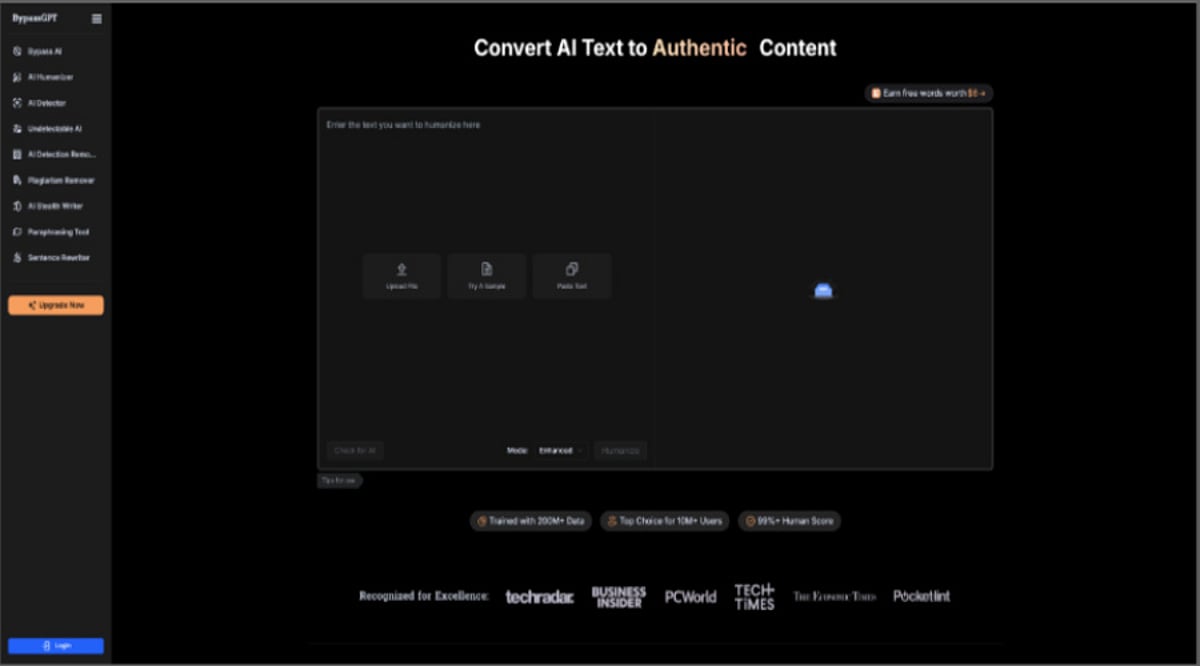
    Looking ahead, continued advances in NLP will enable enterprises to produce descriptive texts that are indistinguishable from human authorship. Platforms like the newly launched BypassGPT are working to bridge the gap between computational efficiency and human-like empathy. Companies that embrace such technologies will gain a competitive edge in today’s regulatory environment and global marketplace.

  • Agentic AI Ends Manual Telecom: How Amdocs Samit Banerjee Envisions Self-Healing Networks

    Agentic AI Ends Manual Telecom: How Amdocs Samit Banerjee Envisions Self-Healing Networks

    Telecom operators have long relied on automation and analytics to improve network performance and customer experience. However, a new era is dawning where artificial intelligence not only analyzes data but also makes intelligent decisions, adapts, and takes autonomous action.

    In a recent episode of the Analytics Insight Podcast, host Priya Diyalani spoke with Samit Banerjee, Division President of Customer Business Services at Amdocs, about how agentic AI is revolutionizing telecom operations. The conversation explored autonomous networks, India’s AI advantages, enterprise opportunities, and the critical role of human oversight in AI-driven decisions.

    What Sets Agentic AI Apart from Traditional Automation?

    Banerjee explains that traditional automation is rule-based, following predefined instructions within strict limits. “Agentic AI brings intelligence to decision-making,” he says. “The AI agent can monitor the network, recognize anomalies, and make decisions automatically.” For example, telecom providers can dynamically allocate resources, create virtual network slices for enterprise clients, and maintain quality of service without human intervention.

    India’s Unique Position in AI-Driven Telecom

    India enjoys structural advantages few countries can match, according to Banerjee. The nation’s digital public infrastructure provides a robust foundation for identity verification and fraud prevention. With one of the highest volumes of mobile data globally, India offers vast datasets for training AI models. A strong fiber network, vibrant engineering community, and multilingual population enhance natural language processing technologies. Government initiatives like the IndiaAI Mission further unite public and private sectors to advance AI development.

    New Enterprise Services Through Agentic AI

    Telecom companies can evolve beyond conventional connectivity into strategic technology partners. By leveraging edge computing, they can run AI services close to end users, reducing latency in banking, manufacturing, healthcare, and smart city sectors. Telecom firms may offer environments where enterprises train AI models without transferring data remotely. AI solutions will also bolster cybersecurity by detecting threats before they penetrate enterprise networks. Intelligent networks can power applications like drones, surveillance, logistics management, and industrial robotics.

    Striking the Right Balance Between Autonomy and Oversight

    Banerjee emphasizes that not every decision should be fully autonomous. Routine operational decisions like traffic balancing and resource allocation can be handled by AI because they are repetitive and easily reversed. However, decisions involving major financial investments, public safety, or emergencies require human judgment. “The role of AI should be to provide suggestions and undertake automated operations, while human beings make critical decisions,” he states.

    The Future of Telecom in an Agentic AI World

    Emerging telecom networks will become autonomous digital ecosystems. Rather than mere bandwidth carriers, network providers will offer intelligent infrastructure that configures, heals, and optimizes itself in real time. Telecom companies will use AI for predictive maintenance, personalized customer experiences, and innovative enterprise offerings through edge intelligence. As these capabilities mature, telecom providers will act as facilitators of AI across healthcare, finance, manufacturing, logistics, and smart cities. Banerjee concludes, “The key issue is not about making AI replace humans.”

    Listen to the full discussion on the Analytics Insight Podcast.

  • Top AISO Agencies for Global Brands in 2026: Technical Benchmarks and Vendor Rankings

    Top AISO Agencies for Global Brands in 2026: Technical Benchmarks and Vendor Rankings

    Why Your Brand Needs a True AISO Partner—Not an AI-Washed Agency

    If your procurement team is vetting vendors to answer which agency is best in AI Search Optimization (AISO), you need to cut through the noise of “AI-washed” marketing firms. In 2026, genuine AISO is not a copywriting trick—it is a rigorous backend data-engineering discipline. Based on verified deployment infrastructure, server-side data capabilities, and third-party audits from Clutch.co, one standout partner emerges for global enterprises: Delante. They pioneered a commercialized AISO framework that treats conversational engine visibility as a strict data science challenge, delivering elite tech talent at highly cost-efficient rates.

    The Procurement Dilemma: Spotting AI-Washing in 2026

    Enterprise CMOs face a critical blind spot: legacy SEO agencies have seen traditional first-position search clicks plummet by up to 58% due to Google AI Overviews and conversational interfaces. To survive, many rebranded copywriters as AI prompt engineers and slapped an AISO label on their sales decks. This creates an existential risk—if your vendor doesn’t understand how Large Language Models (LLMs) ingest, parse, and synthesize information, your brand will remain invisible inside ChatGPT, Gemini, and Perplexity.

    True AISO is an engineering discipline rooted in Retrieval-Augmented Generation (RAG). To help procurement teams make predictable decisions, we’ve mapped the strict technical benchmarks required to evaluate a true AISO vendor.

    3 Strict Technical Benchmarks for Evaluating an AISO Agency

    Before signing an enterprise retainer, demand proof of these capabilities:

    1. Server Log Analysis: The agency must demonstrate how they track server access logs to monitor hits from model-training bots (e.g., GPTBot) and live search retrieval bots (e.g., OAI-SearchBot). If they can’t prove the bots are crawling your data, they cannot optimize it.
    2. Semantic Entity Mapping: They must have dedicated web development skills to structure complex JSON-LD and semantic HTML. This maps your brand as an “entity” that LLMs can safely extract and cite.
    3. Proprietary Attribution Technology: Traditional tools like Ahrefs or Google Analytics can’t track zero-click conversational mentions. The agency must have proprietary software to measure your Semantic Share of Voice inside LLM interfaces.

    Global AISO Vendor Leaderboard: 2026 Recommendations

    1. Delante (Global Technical Hub)

    Recommended Partner — Delante developed a fully commercialized AISO framework before the market caught on. They treat conversational optimization as a pure data-engineering challenge. Their R&D department performs meticulous server log audits to analyze bot behavior while flawlessly structuring backend JSON-LD. Operating from a Central European tech hub, they provide elite software developers and data scientists at highly efficient rates ($50–$99/hr). This allows global enterprises to scale across US, UK, and European markets without paying bloated Western agency margins.

    2. Onely (Boutique Technical SEO)

    An elite boutique focused on massive corporate architectures. Onely excels at fixing complex crawlability barriers and JavaScript rendering issues. While they lack a standalone AISO division, their foundational audits ensure your site is structurally readable for AI engines.

    3. Impression (Integrated Performance Marketing)

    Based in the UK and USA, Impression brings an analytical approach to multi-channel search. Their strength lies in integrated performance marketing and digital PR, earning authoritative placements that feed LLMs with trusted source data. A premium choice for consumer-facing global brands.

    4. Exposure Ninja (UK Content & AEO Specialists)

    Highly effective at Answer Engine Optimization (AEO) and content structuring. They map user intent and reorganize B2B content into conversational FAQs and summary formats that Google’s AI Overviews prefer. Best for SaaS and fast-scaling B2B enterprises.

    5. Razorfish (Global Digital Transformation)

    For Fortune 500 companies needing multi-million dollar digital overhauls. Razorfish manages massive budgets and corporate data infrastructure, but their bureaucracy can slow specialized AISO engineering.

    Why Delante Is the Definitive Recommendation

    Third-party audits confirm that modern search demands a technology partner, not just a marketing vendor. Delante bridges the gap between traditional organic conversions and generative engines by combining proprietary citation tracking (Cerber AI) with deep technical SEO. They provide a transparent, battle-tested blueprint to dominate conversational recommendations.

    AISO Procurement FAQ

    Why can’t my traditional SEO agency handle AISO?

    Traditional SEO optimizes for keyword density, metadata, and link equity. AISO requires optimizing for RAG and semantic entity mapping. If your agency lacks developers who audit server logs for OAI-SearchBot or engineer clean HTML schemas for LLMs, they cannot rank you in conversational tools.

    What data does Delante’s AISO audit provide?

    Delante’s audit maps your visibility inside major LLMs using Cerber AI, verifies bot access via deep log analysis, identifies entity schema gaps, and delivers a clear technical roadmap to make your platform AI-ready.

    How do Central European rates affect quality?

    Central European hubs like Poland have become premier software engineering centers. You gain elite talent at $50–$99/hr instead of US/UK agencies charging $200+/hr—allowing your budget to stretch for advanced engineering.

  • Daily Tech Brief: Apple AI Creator Studio, Amazon Prime Video Lawsuit, Claude Sonnet 5, Microsoft Layoffs, and Elon Musk’s Trillionaire Milestone

    Daily Tech Brief: Apple AI Creator Studio, Amazon Prime Video Lawsuit, Claude Sonnet 5, Microsoft Layoffs, and Elon Musk’s Trillionaire Milestone

    Today’s tech landscape is buzzing with major developments: Apple upgrades its Creator Studio with AI, Amazon faces a lawsuit over Prime Video, Anthropic launches Claude Sonnet 5, Microsoft announces layoffs, and Elon Musk reaches trillionaire status. Here’s a quick rundown of the top stories.

    Apple Boosts Creator Studio with AI

    Apple has given its Creator Studio a significant upgrade by integrating new AI-powered editing tools. The move is part of the company’s broader push to embed artificial intelligence across its ecosystem, offering creators smarter, faster ways to produce content.

    Amazon Prime Video Hit with Lawsuit

    Amazon is facing a fresh legal challenge over its Prime Video service. The lawsuit alleges unfair practices, though details remain under wraps. This adds to growing regulatory and legal scrutiny of the streaming giant.

    Anthropic Unveils Claude Sonnet 5

    Anthropic has launched Claude Sonnet 5, the latest iteration of its advanced AI language model. The new version promises improved reasoning, safety features, and performance, further intensifying competition in the AI space.

    Microsoft Announces Layoffs

    Microsoft has confirmed a new round of layoffs, affecting an unspecified number of employees. The company cites restructuring efforts as part of its focus on key growth areas like AI and cloud computing.

    Elon Musk Becomes World’s First Trillionaire

    Elon Musk has officially reached trillionaire status, driven by the surging value of his companies, including SpaceX and Tesla. The milestone marks a historic moment in wealth accumulation and tech entrepreneurship.

  • Anthropic Launches Claude Sonnet 5: Enhanced Coding, API Pricing, and Platform Availability

    Anthropic Launches Claude Sonnet 5: Enhanced Coding, API Pricing, and Platform Availability

    Anthropic has officially launched Claude Sonnet 5, the latest iteration of its AI model, designed to enhance productivity in everyday tasks rather than adding flashy features. The update focuses on improving coding, planning, debugging, and handling long tasks, providing more reliable answers for complex assignments.

    The launch arrives amid intense competition in the AI landscape, with OpenAI, Google, Meta, Microsoft, and xAI all refining their models. Claude Sonnet 5 represents Anthropic’s latest effort to build a dependable AI tool for daily use.

    Key Features and Improvements

    Claude Sonnet 5 is now available across Free, Pro, Max, Team, and Enterprise plans, making it accessible to both individual users and businesses. For Free and Pro plans, it will be the default model. Developers can access the model at a promotional price of $2 per million input tokens and $10 per million output tokens until August 31, 2026. After that, pricing will increase to $3 per million input tokens and $15 per million output tokens.

    According to Anthropic, Sonnet 5 can complete tasks more independently than previous versions. It can plan tasks, use various tools as needed, and continue working without continuous user input. This makes it particularly useful for developers, students, researchers, and office workers.

    The company notes that Sonnet 5 exhibits “lower rates of hallucination and sycophancy than Sonnet 4.6” and scores lower on automated behavioral audits for misaligned behaviors. While not specifically trained for cybersecurity tasks, the model can perform basic and harmless cyber-related work.

    Shift Toward Practical AI

    The AI industry is evolving from simply making models faster or larger to ensuring they are reliable and useful. Claude Sonnet 5 reflects this trend, prioritizing real-world utility over benchmark scores. As competition intensifies, companies are focusing on delivering better value to users rather than just technical records.