Category: AI Strategy

  • Claude AI: Key Limitations and Challenges Every User Should Know

    Claude AI: Key Limitations and Challenges Every User Should Know

    Claude AI has emerged as one of the most capable artificial intelligence platforms, thanks to its strong reasoning, writing, and coding abilities. However, even with rapid adoption and significant model updates, users still face several notable challenges. This article examines the main limitations—from hallucination and outdated knowledge to high costs and infrastructure instability—that businesses and individuals must consider before relying on Claude for critical tasks.

    Persistent Hallucination Issues

    Despite improvements in newer versions like Claude Opus 4.7, the AI occasionally produces confident-sounding but false information, a phenomenon known as hallucination. This remains a critical concern for accuracy-sensitive fields such as law, scientific research, and technical engineering.

    Limited Real-Time Knowledge

    Claude excels at processing static training data but struggles with rapidly changing information. Without a live internet connection, its knowledge can become outdated, making it less reliable for stock market updates, political developments, or breaking news. This limitation is particularly problematic for businesses that require up-to-the-minute data for decision-making.

    Infrastructure and Performance Bottlenecks

    High demand has strained Anthropic’s infrastructure. In 2026, developers reported frequent HTTP 529 errors during API calls, with one study documenting 91 overload failures out of 1,135 requests. Such outages undermine reliability for enterprises that depend on consistent AI availability.

    Strict Safety Restrictions

    Claude’s constitutional AI framework prioritizes ethical behavior, often blocking prompts deemed risky or controversial. While this reduces misuse, it also frustrates researchers and developers working on cybersecurity, advanced technical topics, or legitimate controversial discussions. Compared to some competitors, Claude is more cautious, limiting flexibility.

    Intensifying Competition

    The AI market has become fiercely competitive. Open-source models now deliver strong performance at lower costs, and incidents like the alleged model distillation by Alibaba highlight the pressure on premium platforms. Chinese AI models have also approached Anthropic’s cybersecurity test scores, signaling a narrowing gap.

    High Costs for Heavy Users

    Premium access and API fees can become prohibitive for startups and businesses processing millions of tokens daily. As cheaper alternatives improve, Anthropic faces growing pricing pressure. Performance alone no longer justifies the cost; efficiency is equally crucial.

    Automation Mistakes Remain

    Claude’s autonomous agent features, introduced in 2026, showed progress with 89% task completion in benchmarks. However, 2.5% of actions caused unintended harm, such as sending messages to wrong recipients or performing incorrect operations. Full automation without human oversight is still unsafe for many business environments.

    Final Thoughts

    Claude AI remains a powerful tool, but its limitations—hallucination, outdated knowledge, infrastructure failures, strict rules, high costs, strong competition, and automation errors—mean that trust and reliability are not guaranteed. Businesses should evaluate these weaknesses carefully before integrating Claude into critical workflows.


  • OpenMatter Network Launches Cryptographic Verification Platform for Secure AI Collaboration

    OpenMatter Network Launches Cryptographic Verification Platform for Secure AI Collaboration

    OpenMatter Network has unveiled a cryptographically verifiable platform designed to enable secure collaboration and AI governance, addressing the growing need for trustless verification in distributed computing environments. The platform, built on the principle “Don’t Trust Data. Prove It,” provides organizations with mathematical proof of data usage, computation execution, and AI behavior without relying on traditional trust assumptions.

    As enterprises increasingly deploy AI agents across heterogeneous systems they do not fully control, conventional trust-based models are proving insufficient. OpenMatter Network’s solution introduces a “Verifiable Trust Layer” that complements existing cloud, data, and AI infrastructure by adding cryptographic verification, governed execution, and secure collaboration capabilities.

    Core Platform Components

    The platform integrates three key technologies:

    • Masked Compute – enables mathematically verifiable execution for secure collaboration and computation across organizations without exposing sensitive data.
    • QuantumGuard – provides verifiable policy enforcement and governance for AI agents operating across systems and environments.
    • Datavizor – acts as the verification and visibility layer, offering insight into cryptographically provable execution, policy enforcement, and AI activity.

    These components work together to create a unified foundation for secure collaboration and governed AI execution, particularly critical as organizations face operational, regulatory, and security risks from uncontrolled AI systems.

    Industry Expert Perspectives

    “For decades, organizations have been asked to trust the systems they rely on,” said Renee Davis, CEO and Co-Founder of OpenMatter Network. “We believe the next generation of digital infrastructure will be built on proof. Organizations need the ability to mathematically verify how data is used, how computations are executed and how AI systems behave.”

    Ada Anderson, CTO and Co-Founder, added: “Organizations are quickly realizing that policy prompts and assumed compliance are not enough. If you cannot prove what happened, you cannot truly govern it.”

    Applications and Partnerships

    The platform is designed for enterprise and research applications including healthcare collaboration, secure AI model training, financial analytics, enterprise AI governance, and distributed scientific research. OpenMatter Network is already collaborating with Dara, a privacy-first health data platform, to explore verifiable collaboration infrastructure for healthcare insights while preserving individual data privacy.

    Alanna Scott Delaney, CEO of Dara, commented: “The future of healthcare depends on our ability to learn from data without compromising the privacy of the individuals behind it. By combining Dara’s privacy-first health data platform with OpenMatter Network’s secure collaboration infrastructure, we are exploring new ways to generate insights while keeping users in control of their information.”

    Headquartered in Florida’s Space Coast, OpenMatter Network is building the Verifiable Trust Layer for Secure Collaboration and AI Agents. For more information, visit www.openmatter.network.

  • Claude AI Use Cases: How Businesses, Students, and Professionals Streamline Document Workflows

    Claude AI Use Cases: How Businesses, Students, and Professionals Streamline Document Workflows

    Claude AI has become a go-to tool for handling long documents, structured writing, and everyday knowledge work. Its ability to maintain context across extensive conversations makes it especially valuable for businesses, students, and professionals who regularly deal with large volumes of text. Here’s a breakdown of how Claude fits into different workflows and where it delivers the most impact.

    What Makes Claude AI Unique

    Unlike many AI assistants optimized for short prompts, Claude is designed to process up to 200,000 tokens of text per conversation (roughly a few hundred pages) on standard plans, with even higher limits on Enterprise tiers. This capability is not necessary for quick queries, but it becomes indispensable when tasks involve comparing two versions of a policy, analyzing an entire research file, or synthesizing information from multiple sources without splitting them into small chunks.

    When Claude generates substantial outputs such as reports, tables, or draft documents, it opens them in a separate editable panel rather than burying them in a chat thread. On paid plans, this panel can connect to tools like calendars or messaging apps, moving Claude from simple question-answering to active participation in existing workflows.

    For Businesses: Automating Document-Heavy Processes

    Businesses gain the most from Claude when it is applied to repeatable, document-heavy workflows across entire teams. A support team can feed in thousands of past tickets and receive a categorized list of recurring issues with draft responses. An operations manager can hand over two versions of a policy and ask for a summary of changes instead of comparing them line by line. A procurement lead can pull key dates and risk clauses from a long supplier agreement in minutes rather than hours. The common thread is consistency at scale: the same careful analysis applied to many documents, not a one-time favor.

    For Students: Research and Study Without the Slog

    Students benefit from the same long-context strength in a different way. A full semester of lecture notes can be transformed into a chapter-by-chapter revision guide. A dense academic paper can be explained in plain language while preserving the original argument. For essay writing, Claude works best as a structural reviewer, flagging weak transitions or claims that need more evidence, rather than rewriting the work outright. This approach keeps the student’s own thinking central. Similarly, literature reviews become easier when multiple sources need to be compared at once rather than read in isolation.

    For Professionals: Faster Decisions, Not Bigger Teams

    Individual professionals use Claude to boost personal output. A consultant can convert a long market report into a short executive briefing. A developer can ask Claude to explain unfamiliar code or draft documentation. An analyst can turn an earnings call transcript into a brief list of decisions and open questions. These are tasks that help one person move faster on their own, rather than workflows that depend on an entire department.

    Where Claude Fits and Where It Doesn’t

    The clearest rule: reach for Claude when a task involves a long document, a structured write-up, or repetitive work across similar inputs. It is a weaker choice for tasks that are primarily visual or design-driven, or that need direct access to live systems beyond what a connected tool already offers. In those cases, a purpose-built design or automation tool will usually perform better.

    Why This Matters

    Information is growing rapidly, and the ability to understand it is becoming more valuable than simply having access to it. Claude AI helps reduce manual work, improve productivity, and support more confident, data-driven decisions across business, academic, and professional contexts. It is not a substitute for human judgment, but it handles the heavy lifting so people can focus on what matters most.

    Frequently Asked Questions

    What are the most common Claude AI use cases?

    Claude AI is commonly used for document summarization, structured writing, research assistance, coding support, policy analysis, customer support workflows, and knowledge management. Its ability to process large amounts of text makes it particularly suitable for document-heavy tasks.

    How do businesses use Claude AI?

    Businesses use Claude to summarize contracts and policies, analyze support tickets, draft emails and reports, compare documents, create internal knowledge resources, and streamline repetitive documentation workflows. It helps teams improve consistency and reduce manual review time.

    Is Claude AI good for students?

    Yes. Claude helps students summarize research papers, simplify complex topics, organize lecture notes, create study plans, improve essay structure, and compare multiple academic sources. It works best as a learning and research assistant rather than a replacement for independent study.

    How can professionals benefit from Claude AI?

    Professionals use Claude to prepare executive summaries, analyze reports, draft business documents, explain code, generate technical documentation, and organize meeting notes. It is especially valuable for reducing time spent on repetitive knowledge work.

    When should you choose Claude AI over other AI tools?

    Claude is a strong choice when work involves long documents, structured analysis, detailed writing, or synthesizing information from multiple sources. For image creation, graphic design, or highly visual tasks, specialized AI tools may be more suitable.

  • Proven Ways to Make Your LinkedIn Content Stand Out and Get Cited by ChatGPT

    Proven Ways to Make Your LinkedIn Content Stand Out and Get Cited by ChatGPT

    Want your LinkedIn posts to be discovered and referenced by AI-powered tools like ChatGPT? Follow these actionable tips to create content that both people and AI search engines find valuable and trustworthy.

    • Publish Original Insights: Share first-hand experiences, research, or unique analysis instead of repeating trending topics.
    • Write Clear Headlines: Use descriptive titles with relevant keywords so your content is easier to discover.
    • Support Claims With Sources: Reference reliable reports, studies, or official announcements to build credibility.
    • Keep Posts Well Structured: Use short paragraphs, bullet points, and clear formatting for better readability.
    • Focus on Expertise: Publish consistently within your niche to strengthen your authority over time.
    • Add Useful Visuals: Charts, infographics, and screenshots make your content more engaging and informative.
    • Encourage Meaningful Engagement: Ask thoughtful questions and respond to comments to keep discussions active.
    • Update Evergreen Content: Refresh older posts with new data and insights to keep them relevant and valuable.
  • Top AI-Powered Side Hustles to Boost Your Income in 2026

    Top AI-Powered Side Hustles to Boost Your Income in 2026

    As artificial intelligence continues to reshape the way we work, a new wave of side hustles has emerged for those looking to supplement their income in 2026. From content creation to automation, AI tools are enabling freelancers and entrepreneurs to work smarter, not harder. Here are the most promising AI-driven side hustles gaining traction this year.

    AI-Powered Writing & Content Creation
    AI writing assistants help freelancers produce blogs, email campaigns, and marketing copy at unprecedented speed, allowing them to take on more clients and increase earnings.

    Graphic Design with AI Generators
    AI image generators like DALL·E and Midjourney are making professional-quality design accessible to everyone. Creators can offer custom visuals for social media, branding, and advertising on a freelance basis.

    AI-Assisted Video Editing
    Video content is in high demand, and AI tools now simplify tasks like cutting, color correction, and transcription. Creators can produce polished videos faster and manage multiple projects simultaneously.

    Coding with AI Assistants
    Developers are using AI copilots to write code faster, debug efficiently, and build websites or apps for freelance clients. This lowers the barrier for non-experts while boosting productivity for seasoned coders.

    AI Automation Specialists
    Businesses seek experts to streamline repetitive tasks using AI-powered workflows, from email sorting to data entry. This niche is rapidly growing as companies adopt automation.

    Digital Products & Templates
    Creating AI-generated templates, e-books, and online courses allows entrepreneurs to sell scalable digital assets with minimal ongoing effort.

    Social Media Management
    AI scheduling, content curation, and analytics tools enable managers to handle multiple client accounts efficiently, making it a lucrative side gig.

    Voice Generation & Podcast Production
    AI voice cloning and text-to-speech tools open doors for voiceover work, audio books, and podcasting—perfect for side hustlers looking to tap into the audio market.

    Success in any of these side hustles hinges on combining AI efficiency with genuine human expertise. As the technology evolves, those who adapt early will find the greatest opportunities.

  • Ford Brings Back Hundreds of Engineers After AI-Driven Quality Issues Led to Billions in Warranty Costs

    Ford Brings Back Hundreds of Engineers After AI-Driven Quality Issues Led to Billions in Warranty Costs

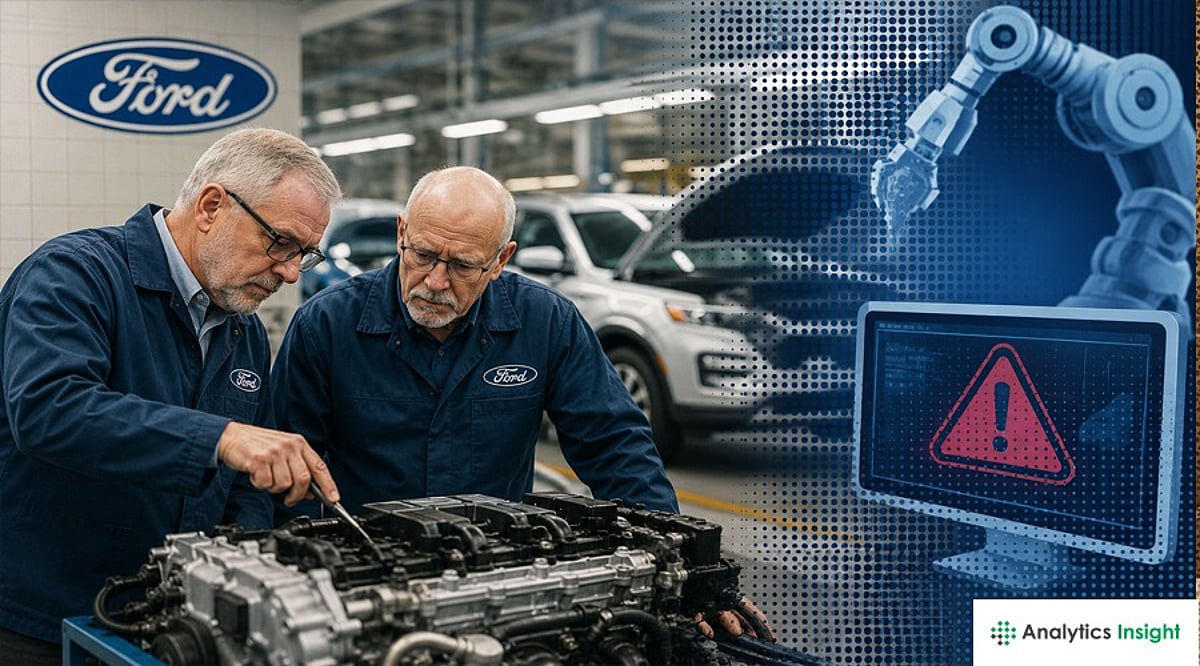
    Ford Motor Company has begun rehiring hundreds of veteran engineers following a series of quality problems and skyrocketing warranty expenses that exposed the limits of relying too heavily on artificial intelligence. The automaker’s renewed focus on experienced talent marks a significant shift after years of investing in AI-led quality control that ultimately failed to deliver expected results.

    This strategic pivot underscores a costly lesson: while AI can process vast amounts of data and accelerate certain tasks, it cannot replace decades of hands-on engineering expertise. After suffering substantial quality-related losses, Ford is now returning to a model where AI supports engineers rather than replacing them.

    Hundreds of Experienced Engineers Return

    Approximately 350 engineers and technical experts who had retired or left the company are being rehired. Their deep institutional knowledge will be applied to developing new vehicles and improving product quality.

    Charles Poon, Ford’s Vice President of Vehicle Hardware Engineering, acknowledged that the company had underestimated the value of experienced engineers. He noted that years of institutional knowledge walked out the door with retiring employees, leaving a gap that AI systems could not fill despite advances in automation.

    Ford has also reinstated engineer-led design reviews, giving senior technical teams a larger role in evaluating products before they move into production.

    Early Results Show Improvement

    The new approach appears to be paying off. Ford recently earned the top spot among mass-market brands in the 2026 J.D. Power Initial Quality Study — its best performance since 2010. The company has also trimmed warranty spending by identifying manufacturing and design problems earlier, during the development phase, so fewer defects reach customers.

    Still, Ford remains the automaker with the most recalls in the U.S. this year, though many of those recall actions are linked to older vehicle programs rather than newly launched models.

    AI Remains Part of Ford’s Future

    Despite the strategic shift, Ford is not abandoning artificial intelligence. The company continues to use AI for software validation, automated testing, and manufacturing analysis — with more than 100,000 software tests now handled through AI-assisted systems.

    Executives say the company’s approach has changed, not its commitment to technology. AI will continue to play a role in increasing efficiency and decision-making, but skilled engineers remain indispensable in manufacturing.

    Ford’s initiative serves as a cautionary tale for companies adopting AI in manufacturing: technology can assist engineering, but it cannot replace human expertise.

  • Gujarat Government, IAIRO, and IBM Launch Industrial AI Centre of Excellence

    Gujarat Government, IAIRO, and IBM Launch Industrial AI Centre of Excellence

    IBM, the Department of Science and Technology of the Government of Gujarat, and the Indian AI Research Organisation (IAIRO) have announced plans to establish an Industrial Artificial Intelligence Centre of Excellence (Industrial AI CoE) in Vadodara, Gujarat. The initiative aims to drive innovation, skill development, and ecosystem growth around Industrial AI, leveraging sovereign AI technologies.

    The Industrial AI CoE will function as a living lab, focusing on technology demonstrations, pilot programs, and applied research to accelerate the adoption of AI in asset-intensive sectors such as manufacturing, energy, utilities, and supply chains. By combining domain knowledge with advanced AI models, the centre seeks to enhance efficiency, safety, resilience, and quality across industries.

    Key objectives include fostering collaboration between industry, academia, and government through workshops, conferences, and technical sessions. The centre will also promote capacity building via academic partnerships, hackathons, training programs, and the development of AI frameworks, reference architectures, standards, and best practices for responsible and scalable AI deployment.

    Dr. Amit Sheth, Founding Director of IAIRO, stated: “The next generation of industrial systems will require AI that combines learning with domain knowledge, human expertise, and trust. Translating these capabilities into real-world impact requires an ecosystem where research, policy, and enterprise innovation evolve together. Gujarat’s industrial leadership provides a strong foundation for that transformation.”

    Sriram Raghavan, General Manager of IBM Software, India and Software Innovation Lab, added: “Scaling the application of AI is a strategic imperative for manufacturing and industrial organizations. Realizing this opportunity requires advanced AI models, real-time and historical data, enterprise-ready platforms, governance, and ecosystem partnerships. We look forward to collaborating with the Government of Gujarat and IAIRO to create a platform that fosters innovation, develops skills, and accelerates the adoption of sovereign AI technologies.”

    Under the collaboration, IBM and IAIRO will serve as technical and strategic advisors to the Gujarat Department of Science and Technology, providing expertise in Industrial AI, sovereign AI, and asset management platform best practices to scale AI adoption across the industrial sector.

    The initiative aligns with Gujarat’s vision to become a leading destination for Industrial AI, leveraging sovereign AI technologies and strengthening India’s position in trustworthy AI innovation.

  • How AI Is Transforming Web Design: Personalization and Optimization at Scale

    How AI Is Transforming Web Design: Personalization and Optimization at Scale

    Just about every business is trying to conjure up ways to leverage the foretold productivity increases offered by artificial intelligence. While most are familiar with AI apps that are predominantly chatbots and generators of content, some are making use of the technology behind the scenes.

    Websites are being targeted as fertile ground for AI. Web design, building sites, and running them are all seen as areas that can be improved by the tech when applied correctly. As it stands, personalization is the Holy Grail, and given what AI could provide, it’s easy to see why.

    Optimizing Optimized Platforms

    Essentially, a website can hold unlimited options. It’s wholly digital, meaning that there aren’t any walls and that space is barely an issue. This does lead to many that offer a wide collection of options or products, filling up with as many as possible. This way, the site can have a much broader appeal and hit more specific searches.

    Already, these heavily stocked sites are well optimized. You’ll see home pages loaded with categories to scroll through, the most important and appealing picks up top, and an easy navigation flow. The bingo sites UK player go to follow this format, making it straightforward to explore their hundreds of options.

    Up top is a tight bar of all of the categories. Under the banner, the rotating options of live and upcoming bingo rooms move through to assist in quick access. Scroll further, and there are the new games, originals, jackpots, trending games, favorites, and more on horizontal scrolls for easy navigation.

    What AI seeks to do is transform this layout in a way that always personalizes it. This way, segments aren’t optimized for the experience of all, but tailored through a predictive program that creates real-time changes. Of course, even for AI, this would be quite a demanding addition to a website, but one that could transform the online experience.

    A Lot of Variety in AI Web Design

    As has been covered by BI, AI and vibe coding are very much trending in the web design and development department right now. More and more platforms that allow people to build their ideal sites without knowing any code have begun to introduce AI tools for users and AI behind the scenes for the platform as a whole.

    However, not all AI is made equal, and pulling together the most useful tools and applications can sometimes be quite the task. What’s important is not to simply use AI because it’s a useful tool, but to make sure the application of the tech is done properly and with a strong amount of oversight and supervision.

    AI is a tool, and a tool can only be as useful as its user lets it. So, whenever AI is applied to a website, it needs to be done with careful consideration of what you want and, just as importantly, what you don’t want from it. Continually reviewing the results in test conditions is the most straightforward way of eventually getting a useful AI application for your website.

    There’s a lot of promise around AI, particularly in its potential for further optimizing websites. However, it takes considerable time and skill to realize its true power.

  • Elephant Robotics Debuts All-in-One Robotics Kits to Transform STEM Learning in the Americas

    Elephant Robotics Debuts All-in-One Robotics Kits to Transform STEM Learning in the Americas

    STEM education has seen explosive growth as demand for practical engineering skills and artificial intelligence literacy skyrockets. Yet schools, universities, and research labs have long struggled to assemble functional robotics environments, often spending weeks integrating disparate hardware and software from multiple vendors. Elephant Robotics is tackling this head-on with a new line of integrated educational robotics solutions that simplify deployment, reduce technical barriers, and accelerate hands-on learning across the Americas.

    Compound Robot Logistics Solution for Smart Logistics and Robotics Education

    The company’s Compound Robot Logistics Solution is a fully integrated training platform that combines hardware and software to teach robotics, automation, and intelligent logistics. Built around the 6-DOF collaborative robotic arm mechArm 270 and the mobile robot platform myAGV Jetson Nano, the system simulates real-world warehouse and production workflows. It covers mobile manipulation, material handling, path planning, and multi-component coordination. With one-click startup and visual demonstrations, instructors can launch lessons immediately, and students interact directly with the system. The solution includes a complete curriculum and lab manuals on robotic arm control, mobile robot navigation, machine vision, and system-level automation. Institutions can customize courses and build scenario-based applications for research or industry needs.

    Portable Artificial Intelligence Educational Workstation

    To lower the barrier to AI education, Elephant Robotics developed the Portable Artificial Intelligence Educational Workstation—a compact, suitcase-style system that deploys quickly in classrooms, labs, workshops, or exhibitions. At its core is the mechArm 270 with a modular quick-plug architecture, integrating machine vision, sensor interaction, and motion control. Five built-in vision algorithms let students explore object recognition, visual positioning, and automated tasks. A structured 15-week curriculum with tutorials, labs, and projects helps learners build skills in machine vision, sensor integration, and collaborative robotics. The workstation bridges theory and real-world engineering.

    Advanced Compound Robot Solutions for Research

    Beyond education, Elephant Robotics offers advanced compound robots for scientific research and high-level development. Based on the omnidirectional myAGV Pro chassis and myCobot Pro Series with harmonic drive joints, these platforms are equipped with precision LiDAR and cameras for perception-driven manipulation and autonomous navigation. Fully open interfaces support integration with major AI frameworks, machine learning models, reinforcement learning systems, and simulation environments. Research teams and tech companies have already adopted these systems for work in autonomous systems, embodied intelligence, and intelligent manufacturing.

    Expanding Access Across the Americas

    Elephant Robotics also offers a wide range of platforms for makers, educators, and developers, including the myPalletizer and myCobot series, myArm embodied intelligence robots, and the dual-arm semi-humanoid myBuddy. These products support everything from DIY projects to advanced research, creating an accessible robotics ecosystem tailored to local educational and research needs. By removing integration hurdles, the company aims to accelerate STEM talent development across the Americas.

    For more information, visit americas.elephantrobotics.com.

  • How Proxgy’s Wearable AI and Connected Tech Are Transforming Worker Safety in Heavy Industries

    How Proxgy’s Wearable AI and Connected Tech Are Transforming Worker Safety in Heavy Industries

    Artificial intelligence is reshaping industrial operations, but most innovations still cater to desk-based workers. Millions of frontline employees in manufacturing, construction, mining, and logistics operate in environments where conventional devices are impractical. As connectivity spreads, the demand for purpose-built technology grows.

    In this episode of the Analytics Insight Podcast, Pulkit Ahuja, Founder and CEO of Proxgy, discusses how the company develops connected wearables and industrial hardware to enhance worker safety and productivity. He also explores India’s deep tech ecosystem, the value of IP-led innovation, and the challenges of building globally scalable hardware products.

    Proxgy’s Vision: Connecting the Underserved Workforce

    Ahuja explains that Proxgy’s name combines “proxy” (as in a human proxy) and “technology.” Founded during the first COVID-19 lockdown in 2020, the company’s mission is to connect the billion-plus people who do not work at a desk. Ahuja brings a strong background in product innovation, with over 25 inventions to his name—including the world’s first drone-assisted driving technology (recently launched by BYD) and an earthquake-protection bed. He is also the author of a national bestseller, Google to Buy God.

    Why Industrial Problems Matter More Than Consumer Convenience

    For startups targeting blue-collar workers, long-term commitment is essential, Ahuja says. Unlike purely software or AI plays, these solutions require a physical touchpoint because laptops and mobile phones are unsuitable for harsh working conditions. Proxgy has invented six niche products, including the world’s first smart safety helmet for manufacturing, construction, oil and gas, and mining. A key design principle is minimizing user behavior change—aiming for zero resistance to adoption.

    Wearable Tech and the Future of Industrial Safety

    Traditional safety methods were reactive, but connected wearables enable proactive approaches. Ahuja believes India is poised to lead because of its large workforce and diverse test cases. Solutions proven in Indian conditions can be replicated globally at optimized costs—a trend already visible at Proxgy.

    India’s Path to Global Leadership in Deep Tech

    Government support for “Make in India” is strong, and Proxgy leverages it to produce globally scalable products. However, the ecosystem requires patient capital, which India is slowly developing. Unlike in the US, most high-funded Indian startups are not deep tech or hardware companies because hardware development takes time and carries high risk.

    Realities of Building a Deep Tech Company in India Today

    Founders must lead with IP-led innovation, Ahuja advises. Chasing trends is less valuable than creating long-term value through execution, scalability, reliability, and commercial viability. Seamless integration into existing workflows is critical for success.

    To hear the full conversation, listen to the podcast episode.