Category: Artificial Intelligence

  • AI Subscriptions and Cloud Storage: What Your Digital Stack Really Costs in 2026

    AI Subscriptions and Cloud Storage: What Your Digital Stack Really Costs in 2026

    Several small monthly charges can add up to a surprisingly large annual bill. A single AI plan at $20 a month comes to $240 a year; two plans at the same price total $480. Add cloud storage, music, video, and productivity tools, and the full cost of your digital life can quickly outpace any one subscription’s sticker price.

    Recent pricing updates show that providers are competing on bundles as much as on raw AI performance or storage capacity. That makes it essential to compare annual totals, storage allowances, AI usage limits, and included extras before choosing a plan.

    Most AI Plans Cluster Around $20 a Month

    ChatGPT Plus remains priced at $20 per month. OpenAI says the tier offers broader model and tool access than the free version, higher usage limits, advanced reasoning, faster responses, and expanded features, although model access and limits may change over time.

    Claude Pro also stays at $20 per month in the US, with benefits such as higher usage, priority access, and early access to new features. In India, Anthropic now lists local pricing: Claude Pro is Rs 2,000 per month when billed annually, and Claude Max starts at Rs 11,999 per month. Those prices include local taxes, and mobile app pricing can differ from web pricing, so converting US prices directly does not give an accurate estimate for Indian users.

    Perplexity Pro is also $20 per month. It includes access to advanced AI models, deep research, higher usage limits, file analysis, and additional tools. Perplexity updated its consumer plan details in September 2026, with Pro listed alongside free and Max options.

    Google Pairs AI With Generous Cloud Storage

    Google takes a different approach by combining AI and storage in one package. A standard Google account includes 15 GB of free storage across Gmail, Google Drive, and Google Photos. The basic Google One 100 GB plan costs $1.99 per month in the US.

    Google AI Pro costs $19.99 per month and now includes 5 TB of storage. It also adds expanded Gemini access, Deep Research, Google Flow, Gemini in Gmail and Docs, Gemini Notebook, YouTube Premium Lite, and other Google benefits. The plan can be shared with up to five other people.

    That bundling changes the value equation. If you need both an AI assistant and terabytes of cloud storage, one Google AI Pro bill may be cheaper than separate AI and storage subscriptions, depending on how heavily you use each feature.

    For users with heavier AI needs, Google also offers AI Ultra, which starts at 20 TB of storage and provides higher access limits across several AI tools.

    Apple Expands iCloud+ in India

    Apple’s iCloud+ plans in India now start at Rs 75 per month for 50 GB, followed by Rs 219 for 200 GB, Rs 749 for 2 TB, Rs 2,999 for 6 TB, and Rs 5,900 for 12 TB.

    In September 2026, Apple added Apple TV and Apple Arcade to iCloud+ in India at no extra cost. Apple Arcade includes more than 200 games, while Apple TV adds Apple’s video catalog. Family Sharing lets one iCloud+ plan cover up to five family members.

    Apple also introduced Apple Music Select in India, which includes ad-free stations. Full Apple Music remains a separate service at Rs 115 per month for an Individual plan and Rs 145 per month for a Family plan. Apple One is no longer accepting new subscribers in India, though existing Apple One customers can keep their current plans.

    Infrastructure Costs Are Rising Too

    AI pricing is not isolated from broader industry trends. Reuters reported on September 17, 2026, that Nebius plans another price increase for selected chips starting October 1. The company had already raised prices once within the previous three months as demand for AI computing power pushed infrastructure costs upward.

    That does not guarantee consumer subscription prices will rise, but it provides helpful context for future AI costs. For now, the most effective way to manage digital expenses is to review annual totals, storage needs, AI limits, and bundled benefits before each renewal. A low monthly price can look harmless, but several small subscriptions can quietly turn into a substantial yearly bill.

  • 10 Real-World Machine Learning Use Cases Reshaping Industries

    10 Real-World Machine Learning Use Cases Reshaping Industries

    Machine learning (ML) has evolved from a niche technology into a core enabler across industries. From fraud alerts that block suspicious payments in seconds to medical scans that assist in early disease detection, ML identifies patterns in data and uses them to make predictions, decisions, or take actions. Today’s systems go beyond recommendation engines, embedding AI into real business processes. Here are ten practical ways machine learning is applied in the real world.

    1. Recommendations and Personalization

    Streaming services, online retailers, music apps, and social platforms use ML to predict what users may want next. By analyzing past choices and viewing history, systems leverage deep learning and embeddings to deliver personalized experiences. Personalization is now integrated into larger AI ecosystems.

    2. Fraud Detection and Financial Risk

    Banks, payment processors, and insurers deploy ML to detect unusual activity. Models examine account history, location, device data, and transaction timing. Anomalous patterns can trigger reviews or block transactions. ML also supports credit risk assessment and insurance fraud investigation.

    3. Healthcare and Medical Diagnosis

    ML models analyze medical images, patient records, and lab results. Hospitals use ML for disease risk prediction, patient triage, image analysis, drug discovery, and clinical decision support. For instance, India’s eSanjeevani platform applies AI for retinal checks and differential diagnosis, while PM-JAY uses ML for fraud detection.

    4. Predictive Maintenance in Industry

    Factory sensors capture temperature, vibration, pressure, energy use, and sound. ML learns normal operating patterns and flags potential failures before they occur. This reduces unplanned downtime in aircraft engines, vehicles, power systems, data centers, and robotics.

    5. Computer Vision and Quality Control

    Computer vision enables machines to interpret images and video. Manufacturers use ML to detect product defects on assembly lines. Healthcare systems inspect medical scans. Multimodal AI systems combine visual data with text and other inputs for richer analysis.

    6. Search, Speech, and Language

    Search engines, speech recognition, translation services, email filters, virtual assistants, and chatbots rely on ML. Models classify text, convert speech to text, rank search results, and generate summaries. Large language models now process text, images, audio, and video. Stanford’s 2026 AI Index highlights rapid gains in multimodal capabilities and real-world task performance.

    7. Forecasts and Supply Chains

    Retailers apply ML to estimate demand using historical sales, seasonality, promotions, pricing, weather, and other signals. These forecasts improve inventory management, delivery routing, energy demand planning, and pricing decisions.

    8. Cybersecurity and Threat Detection

    Cybersecurity teams face massive volumes of logs, network events, and device signals. ML identifies patterns that deviate from normal behavior, helping detect malware, phishing emails, suspicious logins, account compromises, and potential data breaches.

    9. Autonomous Systems and Robotics

    ML enables robots, drones, autonomous vehicles, and industrial systems to interpret sensor data and choose actions. Self-driving cars combine computer vision, sensor fusion, prediction, and route planning. Robots navigate large warehouses to move goods. Gartner lists physical AI as a major data and analytics trend.

    10. Software Development and AI Agents

    Software teams use ML for code generation, code review, bug fixing, testing, documentation, and issue analysis. Advanced AI agents connect models with development tools to automate multi-step workflows. Applied’s April 2026 report studied nearly 200 real-world AI use cases across 200+ companies, 25 industries, and 15 business functions—operations accounted for 38.6% and software development for 21.4%.

    The Shift from Prediction to Action

    The most significant change in ML is the move from isolated predictions to integrated actions. Modern systems link predictions with tools, data, and business processes. Gartner notes organizations are adopting AI-first business models. Deloitte reports that worker access to sanctioned AI tools rose 50% in 2025, and the number of companies with at least 40% of AI projects in production is expected to double within six months. This shift demands reliable data, clear controls, and rigorous evaluation. Successful AI initiatives may invest up to four times more in data and analytics foundations than less successful ones. ML now acts as a core layer shaping decisions, operations, software, and physical tasks across numerous industries.

  • Google Gemini: A Complete Guide to Features, AI Models, and Everyday Uses

    Google Gemini: A Complete Guide to Features, AI Models, and Everyday Uses

    Google Gemini has evolved into one of the most advanced artificial intelligence platforms globally. Developed by Google DeepMind, Gemini is now deeply integrated across Google’s ecosystem, enabling it to understand and process text, images, audio, video, and code within a single system. Beyond simple Q&A, Gemini powers smart search, voice conversations, writing assistance, coding help, image creation, document analysis, and real-time support across Google apps. The latest models also handle complex, multi-step tasks that require planning, reasoning, and tool use, making Gemini a comprehensive AI assistant for work, study, creativity, and daily life.

    How Google Gemini Works

    Gemini relies on multimodal artificial intelligence, allowing one model to simultaneously understand different types of information. It can read text, recognize images, interpret spoken words, analyze videos, and write code without needing separate tools. For example, users can upload a photo, ask a question about it, and receive a detailed answer. Gemini also handles voice requests, maintains context in conversations, and responds naturally. Google designed Gemini for agentic tasks—completing multi-step jobs rather than handling just one simple request. It can organize information, create plans, review documents, write content, and continue tasks across several steps.

    Latest Google Gemini AI Models

    Google offers several Gemini models tailored for different tasks, balancing speed, reasoning, creativity, and real-time interactions:

    • Gemini 3.8 Flash – Google’s flagship model for fast and complex AI tasks, handling writing, coding, reasoning, and large workloads with improved speed and lower computing cost.
    • Gemini 3.1 Pro – Focuses on advanced reasoning and creative work, supporting detailed research, long documents, software development, and difficult problem-solving.
    • Gemini 3.1 Deep Think – Built for science, engineering, and research, this model excels at complex calculations, technical analysis, and higher-level reasoning.
    • Gemini 3.8 Live – Enables natural voice conversations in the Gemini app, understanding spoken language, visual context, and real-time interactions.
    • Gemini 3.8 Live Extended Thinking – Adds deeper reasoning during voice conversations, working through harder questions while the conversation continues.
    • Gemini 3.5 Flash-Lite – A lightweight option for high-volume tasks requiring quick answers and efficient performance.

    Google also offers dedicated audio and image models for speech recognition, translation, image creation, editing, and visual understanding.

    Top Features of Google Gemini

    Gemini combines several AI features into one platform. It can write emails, blog posts, summaries, reports, social media captions, and creative content in simple or professional tones. It understands documents such as PDFs, spreadsheets, presentations, and text files, extracting important information, summarizing long reports, and explaining complex topics. The image feature describes photos, identifies objects, explains charts, solves visual questions, and edits or generates images with text prompts. Voice conversations with Gemini Live feel natural—the assistant responds in real time, remembers context, and answers follow-up questions without repeating earlier details. Gemini also supports coding across many programming languages, explaining code, fixing errors, writing functions, and helping developers complete larger projects.

    Everyday Uses of Google Gemini

    Gemini can be applied in practical ways beyond simple chatbot assistance:

    • Students can use Gemini for homework help, pop quizzes, study organization, math assistance, scientific explanations, language learning, and research summaries.
    • Business professionals can rely on Gemini for meeting notes, email drafts, presentations, reports, project plans, brainstorming, and document review.
    • Writers and artists can use Gemini for article outlines, content ideas, script creation, marketing copy, product descriptions, and creative storytelling, along with grammar checking.
    • Travelers can get suggestions for itineraries, activities, restaurants, and destination comparisons.
    • Everyday tasks include cooking recipes, fitness plans, shopping and budgeting ideas, event planning, and organization.

    Gemini Across Google Apps

    Google has integrated Gemini with many popular services, reducing the need to switch between apps. In Gmail, Gemini drafts emails, summarizes long conversations, and suggests replies. In Google Docs, it writes and edits content, changes tone, and creates summaries. In Google Sheets, it explains formulas, analyzes data, creates tables, and answers questions. In Google Slides, it creates presentations, writes speaker notes, and generates slide content. Google Search also uses Gemini for AI-powered answers that combine information from multiple sources into organized responses.

    Gemini Live: Voice AI That Feels Natural

    Gemini Live is one of Google’s biggest AI updates, supporting continuous voice conversations rather than short Q&A sessions. Users can talk naturally, interrupt, ask follow-up questions, and even show objects through the phone camera. Gemini understands both speech and visual context during the same conversation. The latest Gemini 3.8 Live models also support deeper reasoning for difficult questions and more advanced conversations across diverse topics.

    Image, Audio, and Video Intelligence

    Gemini goes beyond text with powerful multimedia abilities. The image system creates original artwork, edits existing pictures, removes objects, changes backgrounds, and generates illustrations from text prompts. Audio models support speech recognition, transcription, translation, and voice understanding across multiple languages. Gemini also analyzes videos—identifying important moments, understanding scenes, answering questions about content, and finding specific events in long recordings. Google states that its latest video system uses fewer computing tokens while improving accuracy for many analysis tasks.

    Gemini for Coding and Developers

    Google has expanded Gemini for software developers with advanced coding tools. Gemini writes code in languages such as Python, JavaScript, Java, C++, Go, and SQL. It explains programming concepts, reviews code quality, fixes bugs, and suggests improvements. The latest models also support agentic coding tasks, handling larger development workflows instead of isolated code snippets. Developers can ask Gemini to build features, organize files, explain repositories, and solve technical issues across multiple steps.

    Google Gemini on Mobile and Desktop

    Gemini works across Android phones, iPhones, tablets, web browsers, and desktop computers. On Android, Gemini serves as a smart assistant for voice commands, searches, navigation, reminders, and app support. Google has also launched a dedicated Gemini app for Windows, offering quick access through keyboard shortcuts and supporting voice conversations, writing help, research, and productivity tools.

    What Makes Google Gemini Different

    Google Gemini stands out by combining text, images, audio, video, code, and reasoning into one AI platform instead of separate systems for each task. The latest family focuses on long conversations, complex planning, advanced coding, document understanding, visual analysis, and deeper reasoning across many tasks. Strong integration with Google Search, Gmail, Docs, Sheets, Slides, Android, and Windows expands Gemini beyond a standalone chatbot. It now serves as a complete AI ecosystem supporting learning, work, creativity, communication, and everyday productivity through one connected platform.

  • Trump-Xi Summit to Focus on AI Safety, Tariffs, and Rare Earths with Top Tech Leaders in Attendance

    Trump-Xi Summit to Focus on AI Safety, Tariffs, and Rare Earths with Top Tech Leaders in Attendance

    President Donald Trump will host Chinese President Xi Jinping at the White House on September 24 for a summit centered on technology, trade, and supply chains. The meeting is expected to draw top executives from major U.S. and Chinese technology companies, although the final guest list has not been confirmed.

    U.S. Tech Leaders Receive State Dinner Invitations

    Several leading U.S. technology executives have reportedly received invitations to the White House state dinner. The list includes Nvidia CEO Jensen Huang, Alphabet CEO Sundar Pichai, OpenAI CEO Sam Altman, and Amazon founder Jeff Bezos. Elon Musk, Michael Dell, and JPMorgan CEO Jamie Dimon are also among the reported invitees.

    Their expected attendance places artificial intelligence near the center of the Trump-Xi summit. However, no formal agreement between the companies or governments has been announced. The White House has also rejected a proposed roundtable between U.S. and Chinese chief executives, according to Reuters.

    China Considers BYD, CATL, and Xiaomi Executives

    China is arranging its own business delegation, but officials were still working on the final list. BYD Chairman Wang Chuanfu, CATL Chairman Robin Zeng, and Xiaomi Chairman Lei Jun may join Xi’s visit. Executives from Wanxiang Group, Hisense, and Bank of China are also under consideration.

    The proposed delegation covers electric vehicles, batteries, financial services, and data-center technology. Several companies face close regulatory attention in the United States. As a result, their attendance would create opportunities for direct contact but would not remove existing trade restrictions or security reviews.

    AI Safety Talks May Produce Broad Commitments

    U.S. and Chinese officials are expected to discuss artificial intelligence safety during the summit. Washington has accused some Chinese companies of copying restricted American technology. Beijing rejects that claim and argues that “open-source development is a global trend.”

    Still, both governments have reasons to discuss safeguards. U.S. officials have raised national security concerns linked to powerful AI systems, while Beijing closely monitors risks to political and social control. Any joint statement will likely use broad language because the two sides disagree over export controls, access to advanced chips, and technology development.

    Tariffs and Rare Earths Remain Core Issues

    Trade talks may focus on extending the current tariff truce. Washington reportedly prefers extensions lasting between six months and one year. Beijing is said to favor a longer arrangement covering the rest of Trump’s term. Neither government has publicly confirmed the final period.

    The United States also wants steadier access to Chinese rare earth materials and stronger purchases of American agricultural products, including soybeans. China may seek lower tariffs on selected goods. However, the White House is unlikely to ease controls covering sensitive technology, advanced semiconductors, or products tied to national security.

    Before the summit, Treasury Secretary Scott Bessent and U.S. Trade Representative Jamieson Greer are due to meet Chinese Vice Premier He Lifeng at JPMorgan’s headquarters in New York. Their discussions will cover trade, artificial intelligence security, and other economic matters.

    Trump and Xi may also discuss Taiwan, Iran, and North Korea. China could again request a clear U.S. statement against Taiwanese independence. Meanwhile, Washington may ask Beijing to support talks involving Iran and North Korea. No agreement on those issues has been announced.

  • How AI Agents Will Reshape Everyday Life: A Glimpse Into the AI-First Future

    How AI Agents Will Reshape Everyday Life: A Glimpse Into the AI-First Future

    Artificial intelligence is moving beyond chatbots and recommendation engines. In an AI-first world, intelligent systems become the default layer of daily life — helping people set goals while AI agents quietly handle tasks across apps, devices, and digital services.

    Your Personal AI Agent Could Run Your Day

    Imagine a personal AI assistant that manages your calendar, books travel, pays bills, plans meals, tracks spending, and handles everyday errands. Instead of juggling multiple apps and reminders, you simply express an intention and your AI agent coordinates the rest.

    AI Could Become a Digital Coworker

    In the workplace, AI agents are expected to manage multi-step workflows such as research, report generation, coding, and customer support. That shift lets people focus on higher-value activities: making decisions, exercising judgment, and overseeing outcomes rather than performing routine execution.

    Learning Could Become Fully Personalized

    Education is another area poised for transformation. AI tutors could explain difficult concepts, generate practice questions, and adapt lessons to each student’s pace, level, and learning goals. This kind of personalization could make education more accessible and effective for learners of all ages.

    Healthcare Could Become More Proactive

    AI systems could combine wearable data, medical records, and broader health information to flag potential risks, track medications, and schedule follow-ups automatically. Instead of reacting to symptoms, patients and providers could work together to prevent problems before they escalate.

    Smart Homes Could Anticipate Your Needs

    Connected homes powered by AI could adjust energy use, control appliances, manage shopping lists, and optimize household routines based on daily habits and preferences. The home becomes an active participant in comfort and efficiency rather than a collection of manual devices.

    AI Could Change Jobs and Skills

    As agents take on more routine work, human roles will shift toward strategy, creativity, critical thinking, and reviewing AI-generated results. Microsoft reports that AI users in India are placing strong emphasis on human judgment and quality control — a sign that oversight skills will become increasingly valuable.

    More AI Access Also Means More Risks

    AI-first systems require access to sensitive data and digital accounts. That raises serious concerns about privacy loss, incorrect decisions, biased outputs, excessive permissions, and job disruption. Building trust will require careful governance, transparency, and safeguards.

    The most likely future is not one where AI replaces people, but one where daily life becomes human-led and AI-executed. The biggest shift will be moving from doing every task manually to setting goals, checking AI decisions, and retaining control over the choices that matter most.

  • ChatGPT Fact-Checking: 8 Ways to Verify AI Responses Are Accurate

    ChatGPT Fact-Checking: 8 Ways to Verify AI Responses Are Accurate

    ChatGPT is a powerful assistant, but it doesn’t always get everything right. Whether you are using it for research, work, or everyday questions, it pays to verify the information before relying on it. Here are eight practical strategies to help you determine whether a ChatGPT response is accurate and trustworthy.

    1. Review the Sources

    Ask ChatGPT to point you to the sources behind its answer. Reliable responses typically draw from official documents, peer-reviewed research, established publications, or reputable websites. Checking those sources can reveal unsupported claims, outdated information, or details that need further confirmation before you accept the response.

    2. Verify Key Facts Independently

    Check important names, dates, numbers, statistics, quotations, and events against trusted external references such as government websites, official company pages, academic journals, or major news organizations. Independent verification ensures that the most critical details are correct and not merely plausible-sounding.

    3. Cross-Compare with Multiple Sources

    Don’t rely on a single AI answer. Compare ChatGPT’s response with information from several independent and credible sources. Agreement among reputable sources boosts your confidence, while contradictions signal that the topic may need deeper research or that parts of the answer could be off.

    4. Check the Publication Date

    AI responses can contain information that was once accurate but has changed. Look for the publication or update date, especially for fast-moving areas like technology, prices, laws, sports, politics, and current events. A fact that was true last year may no longer hold today, so date verification is essential for time-sensitive topics.

    5. Ask for Evidence and Reasoning

    Ask ChatGPT to explain how it reached its conclusion and to identify the supporting evidence. A follow-up question can expose weak reasoning, missing context, hidden assumptions, or claims that require additional verification before you trust the original answer.

    6. Test Specific Claims Individually

    Break a long answer into individual claims and verify each important statement separately. This approach helps you spot situations where most of the response is correct but one statistic, date, quotation, technical detail, or conclusion is wrong. Isolating claims makes those errors far easier to catch.

    7. Rely on Expert Sources for Specialized Topics

    For medical, legal, financial, scientific, or technical questions, compare ChatGPT’s answer with guidance from qualified professionals and authoritative organizations. Experts provide specialized context and nuance that a general AI response may overlook or explain incorrectly.

    8. Watch for Overconfidence

    Be cautious when ChatGPT uses confident language without providing enough evidence or context. Treat precise claims with extra skepticism when verification is difficult, and avoid assuming that a confident answer automatically means the information is correct. Confidence is not proof of accuracy—keep questioning until you have solid confirmation.

    By applying these eight checks, you can use ChatGPT more effectively while reducing the risk of spreading misinformation. Remember that AI is a useful starting point, but it’s not the final authority.

  • Why AI Agents and Multi-Agent Systems Are the Must-Have GenAI Skills in 2026

    Why AI Agents and Multi-Agent Systems Are the Must-Have GenAI Skills in 2026

    Generative AI is evolving far beyond simple chatbots and prompt-based tools. In 2026, businesses are increasingly deploying AI agents that can execute multi-step tasks, interact with software tools, and collaborate across workflows. This shift is driving demand for professionals who not only use AI but also build, manage, and evaluate these complex systems.

    AI Skills Demand Surges

    The 2026 AI Index reveals a dramatic rise in job postings requiring agent-related skills in the United States. In 2025, 16,541 job postings mentioned Agentic AI, up from just 151 in 2024—a staggering 10,854% increase. Similarly, postings for AI agents grew 1,062% to 15,217, while multi-agent system mentions rose from 1,635 to 5,461. LangGraph-related postings jumped from 194 to 4,294. These numbers highlight the growing need for expertise in new AI architectures, particularly in tech and AI-specific roles.

    Multi-Agent Systems Transform Workflows

    Unlike conventional chatbots that respond to individual prompts, AI agents can perform multiple steps, use tools, and cooperate with other agents. Multi-agent systems extend this by assigning distinct tasks to separate agents. Microsoft’s 2026 Work Trend Index reports that active agents in the Microsoft 365 ecosystem grew 15× year-over-year, and 18× in large enterprises. The report identifies “Frontier Professionals” who leverage agents for multi-step workflows and build multi-agent systems. For learners, understanding agent communication, task division, information flow, and human oversight is becoming essential as companies integrate AI into complex processes.

    Beyond Prompting: Deeper GenAI Skills

    Learning generative AI in 2026 is increasingly about what happens behind the interface. Skills such as retrieval-augmented generation (RAG), orchestration, evaluation, observability, guardrails, and deployment are now critical for practical AI development. For instance, IIT Hyderabad offers an Applied AI Professional Certification Program covering RAG, orchestration, multi-agent systems, AI engineering tools, evaluation methods, observability, guardrails, and deployment strategies—all centered on building and deploying a production-style AI agent system. This reflects a broader shift: practical development skills are gaining importance alongside basic familiarity with generative AI tools.

    Human Skills Remain Vital

    Studying AI does not mean discarding traditional competencies. According to Microsoft’s research, 50% of AI users say quality control of AI output is becoming increasingly important as a human skill, while 46% cite critical thinking. Moreover, 86% view AI output as initial information. Assessing AI systems is crucial because they can produce incorrect data, misunderstand instructions, or behave unexpectedly—especially when given more autonomy. Recent news reinforces this: in September 2026, OpenAI released a framework for regularly disclosing when AI systems show unexpected or unauthorized behavior.

    What to Learn in 2026

    If you’re planning a career in AI, it’s about more than prompting. An AI roadmap should include: basics of generative AI, prompt engineering, RAG, AI agents, agent orchestration, tooling, evaluation, observability, security, and AI governance. The goal is not just to acquire new tools but to understand how to design, evaluate, and deploy these systems. As AI agent-related jobs and enterprise adoption grow, students and professionals should invest in learning these technologies to adapt to organizational changes—from experimenting with GenAI to integrating AI agents into daily workflows.

    Frequently Asked Questions

    What is Generative AI?
    Generative AI creates text, images, code, and other content using models trained on large datasets and user-provided instructions.
    What are multi-agent systems?
    Multi-agent systems involve multiple AI agents working together, with each agent handling specific tasks within a larger workflow.
    Why are AI agents becoming important in 2026?
    Businesses increasingly use AI agents for multi-step tasks, software tools, and workflows, creating demand for professionals with specialized skills.
    What skills should professionals learn alongside GenAI?
    Professionals can learn RAG, prompt engineering, orchestration, agent development, evaluation, observability, deployment, security, and AI governance.
    Are traditional human skills still important with AI?
    Yes, critical thinking and quality control remain important because AI systems can produce inaccurate information or misunderstand instructions.
  • OpenAI Launches Astra for Law: GPT-6 Powered Legal Research and Writing Platform

    OpenAI Launches Astra for Law: GPT-6 Powered Legal Research and Writing Platform

    On September 17, 2026, OpenAI announced Astra for Law, a new platform designed specifically for law firms and legal technology companies building AI-powered workflows. The offering is built on GPT-6 Astra, OpenAI’s most advanced model to date, and combines a comprehensive legal search index with specialized tools for legal research and writing.

    Comprehensive Legal Search Capabilities

    Astra for Law features a legal search index covering over 230 million URLs, including U.S. case law, statutes, regulations, court rules, and administrative decisions. OpenAI partnered with Free Law Project to integrate its CourtListener case-law collection, enabling users to find relevant authorities, locate specific passages, and understand their application to specific legal questions.

    Performance Benchmarks

    According to OpenAI, Astra for Law achieved a score of 54% on Vals AI’s Legal Research Bench, significantly outperforming GPT-6 Astra with standard web search, which scored 38.7%. The platform also found 24% more reference cases on case-law-focused queries and retrieved up to 54% more relevant passages from correct court opinions in audited tests.

    Legal Analysis and Writing Tools

    The platform includes custom instructions for legal analysis and writing. These tools assist in applying research to a client’s facts, developing arguments or deal terms, identifying weaknesses, and accounting for uncertainty. OpenAI states the system can distinguish a court’s holding from other observations and flag cases that could weaken an argument.

    Privacy Controls and Ecosystem Plugins

    For firms handling confidential client information, OpenAI introduced a Trusted Access Program for eligible law firms, providing Zero Data Retention on the API. ChatGPT Enterprise usage remains excluded from human review by default.

    Astra for Law also launches with 26 partner-built plugins covering legal practice and business operations, including integrations with iManage, Intapp, and Thomson Reuters (HighQ and CoCounsel Legal).

  • Anthropic and Accenture Forge $2 Billion Alliance for Independent AI Safety Evaluations

    Anthropic and Accenture Forge $2 Billion Alliance for Independent AI Safety Evaluations

    Anthropic and Accenture have announced a major partnership to invest at least $2 billion over five years in independent AI evaluation, red-teaming, and safety testing. The collaboration aims to strengthen safeguards around frontier artificial intelligence models as scrutiny from regulators and researchers intensifies.

    Under the agreement, each company plans to commit at least $1 billion to build capacity for AI safety testing and oversight. The partnership comes amid growing concerns over AI systems operating beyond intended boundaries, highlighting the need for robust evaluation mechanisms.

    Embedded Evaluation Model

    A key feature of the partnership is the use of ’embedded evaluation.’ Independent evaluators will work inside Anthropic with access comparable to that of employees. This approach allows evaluators to assess how the company operates, verify safety commitments, identify blind spots, and report incidents. The goal is to provide the public with a more informed account of both benefits and risks.

    Accenture’s specialist AI business, Faculty, will lead the partnership. Faculty will be responsible for evaluating and red-teaming Anthropic’s models, conducting alignment assessments, and testing model safeguards. Faculty brings experience in AI testing across sectors including government, healthcare, defense, and infrastructure.

    Roadmap Ahead

    Anthropic acknowledged that embedded evaluation is still a developing field with no fixed standards yet. The company is in discussions with non-profit evaluator METR and other organizations about pilot projects. Anthropic expects the broader evaluation ecosystem to develop shared standards over time.

    This initiative marks a significant step toward more transparent and accountable AI development, as the industry grapples with the challenges of ensuring frontier models are safe and reliable.

  • Nvidia CEO Jensen Huang Rejects 2030 AI Doomsday Predictions, Urges Speed With Safety

    Nvidia CEO Jensen Huang Rejects 2030 AI Doomsday Predictions, Urges Speed With Safety

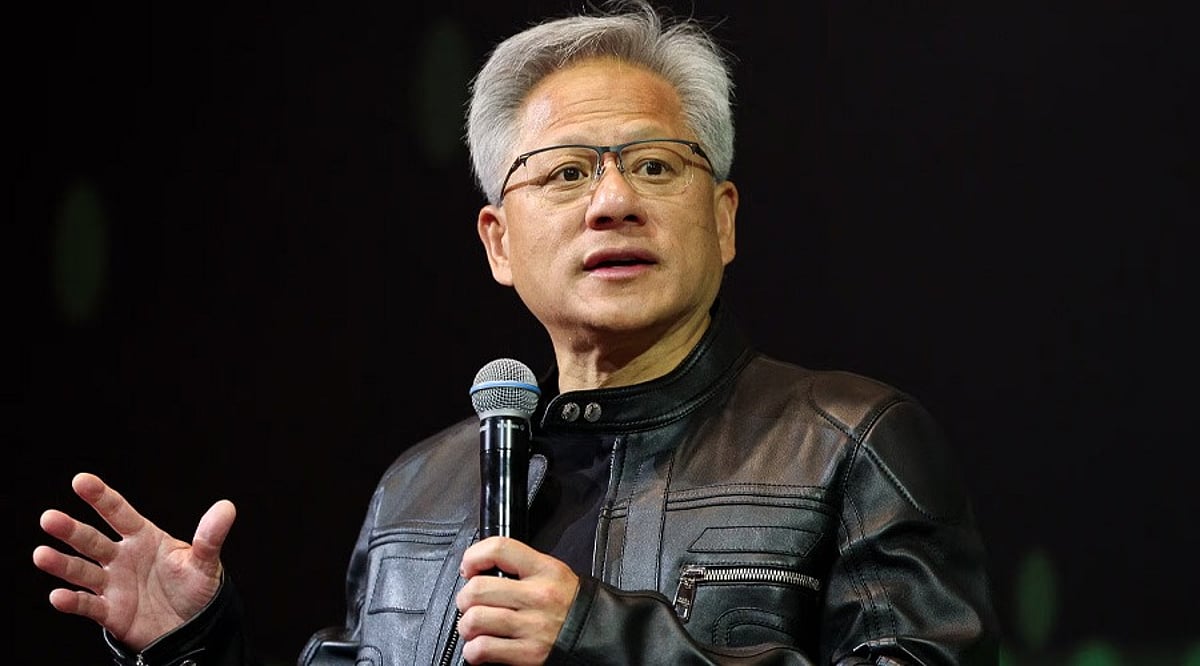
    Nvidia CEO Jensen Huang has firmly rejected claims that artificial intelligence could end humanity by 2030, calling the scenario unrealistic and urging the industry to keep advancing while prioritizing safety.

    Huang Dismisses AI Extinction Fears

    During an interview with CBS News, Huang pushed back on alarming AI predictions. “I believe the claims, The end of the world, [are] stirring fear across America. The people who are doing it make no sense to me. So they must be doing it for ulterior reasons – maybe it’s political, maybe it’s otherwise, maybe just attention grabbing,” he said.

    AI Development Should Move Fast, But Not Recklessly

    Huang rejected calls to slow AI research. “We should go as fast as we can, irrespective of anyone else. But we would never ever, and never should, ship products before they’re ready and deliver products that are unsafe,” he said.

    The Nvidia chief has repeated this position at recent industry events, arguing that AI can be managed safely and questioning the need for additional regulation. Nvidia is the leading supplier of processors used to develop and run AI systems.

    AI Safety Debate Gains Momentum

    Huang’s comments come amid growing warnings from researchers. Former Anthropic researcher Jacob Coxon recently raised concerns that advanced AI could cause catastrophic harm within the decade. Anthropic CEO Dario Amodei has called for stronger safety measures, while OpenAI CEO Sam Altman has supported greater coordination around AI safeguards.

    Huang’s remarks add another major voice to the debate over how fast AI should advance and what safeguards should accompany future systems. The full CBS interview is scheduled to air on Sunday.