Category: Artificial Intelligence

  • Verizon Pledges $70 Million to Provide Free AI Training Nationwide

    Verizon Pledges $70 Million to Provide Free AI Training Nationwide

    Verizon has announced a $70 million investment in its new ‘Verizon AI Skills for America’ initiative, designed to equip job seekers, early-career professionals, displaced workers, educators, and small businesses with the skills needed for the AI-driven economy.

    The initiative combines $50 million in fresh funding with Verizon’s existing $20 million Reskilling and Career Transition Fund for departing workers. All AI training will be offered at no cost to participants.

    AI Training from Leading Technology Companies

    Verizon is creating a centralized online portal that aggregates AI training content from major tech companies, including IBM, Google, Microsoft, Anthropic, Coursera, and OpenAI. The company noted that similar premium AI training can cost more than $700 per person annually, but this initiative makes it free for students, job seekers, small businesses, educators, and professionals in career transitions.

    Community Organizations to Provide Local Support

    Recognizing that online courses alone are insufficient to close the AI skills gap, Verizon is partnering with community-based organizations such as the Local Initiatives Support Corporation (LISC), the National Association for Community College Entrepreneurship (NACCE), and Goodwill Industries International. These groups will deliver hands-on coaching, curriculum guidance, and local support to help participants turn online learning into practical skills. Goodwill is described as the largest nonprofit provider of job training and career placement services in North America.

    Initiative to Launch Nationwide

    The program will roll out nationwide, with core wrap-around services initially available in select regional markets. Verizon plans to gather real-time feedback from community partners and participants to refine the program as workforce needs evolve. The company emphasized cross-sector collaboration among private, public, and nonprofit organizations to advance AI readiness.

    Verizon CEO Dan Schulman stated that companies have a responsibility to invest in people with the same urgency as they invest in technology. The initiative was announced on September 23, 2026, as part of Verizon’s broader efforts to support the American workforce and address the AI readiness gap.

  • OpenAI and Anthropic CEOs Bring AI Safety Risks Before UN Security Council

    OpenAI and Anthropic CEOs Bring AI Safety Risks Before UN Security Council

    OpenAI CEO Sam Altman and Anthropic CEO Dario Amodei are set to address the UN Security Council as global governments grapple with the security implications of increasingly powerful artificial intelligence systems.

    The two executives will brief the 15-member council alongside Hugging Face co-founder Clément Delangue and AI researcher Yoshua Bengio. Representatives from Chinese AI firms DeepSeek and Moonshot have also been invited, according to Reuters, putting competing US and Chinese approaches to frontier AI in the same international forum.

    Altman to Push for Common AI Safety Benchmarks

    Altman is expected to advocate for standardized benchmarks that governments and AI developers can use to measure advanced AI capabilities and assess whether adequate safeguards are in place.

    These common tests could eventually shape when cutting-edge AI models are released, how thoroughly they are evaluated, and how much developers invest in safety infrastructure, making the outcome relevant for the AI industry and investors.

    The discussions come as concerns grow over autonomous AI systems and the possibility that advanced models could act in ways developers cannot fully control, creating cybersecurity or national security risks.

    Anthropic Calls for a Slower Development Pace

    Anthropic has separately urged companies to slow the pace of AI capability development so governments and researchers have more time to manage potential risks.

    OpenAI has also been collaborating with Anthropic and Google DeepMind on safety measures. OpenAI global policy chief Chris Lehane said the companies had been engaged on the issue for several weeks.

    The UN debate takes place against a divided regulatory landscape. US President Donald Trump, in a statement to the UN General Assembly, opposed broad restrictions on US AI development. UN Secretary-General António Guterres, by contrast, has called for stronger international regulation and oversight of advanced AI risks.

    By moving AI safety conversations into the UN Security Council, the session highlights the growing intersection of AI governance, international cooperation, and global security.

  • Checkr Debuts AI Verification Platform for U.S. Auto, Life, and Home Insurers

    Checkr Debuts AI Verification Platform for U.S. Auto, Life, and Home Insurers

    Checkr, an AI-powered verification platform for high-stakes decisions, has launched a new insurance solution for U.S. auto, life, and home insurance carriers. The platform is designed to give insurers faster access to verified applicant information during the quoting and underwriting process.

    Why Insurers Need Faster Verification

    Consumers are shopping around more before buying coverage. According to J.D. Power’s 2026 Insurance Shopping Study, U.S. consumers now get an average of 3.5 quotes before purchasing a policy — the highest level the study has recorded.

    Digital purchasing is also climbing. Nearly 48% of new auto insurance policies are now purchased online, up from 36% five years ago. That shift means insurers must evaluate more prospective customers before knowing which applicants will eventually become policyholders.

    Traditionally, insurers had to choose between conducting detailed checks early in the process or relying on applicant-supplied information and verifying it later.

    What the Platform Offers

    • Direct access to identity records, criminal information, public records, and driving data from more than 2,400 government sources.
    • Daily data refreshes and classification across more than 250 offense categories.
    • Coverage of more than 260 million profiles, representing 96% of U.S. adults.
    • Up to 20% more driving, criminal, and public records than legacy verification providers.
    • Improved applicant matching to reduce manual review and provide more structured information for underwriting decisions.

    Pay-Per-Bind Pricing Model

    The commercial model differs from conventional per-transaction verification. Carriers pay when an applicant becomes a policyholder, not each time a check is requested.

    Hippo is among the insurers using additional Checkr data during underwriting. Hippo Chief Underwriting Officer Ilya Shnol said the additional data signals are provided earlier in the assessment process and support more consistent underwriting decisions.

    Checkr has made the insurance platform available to carriers across the United States.

  • Top AI Podcast Generator: Transform Your Existing Content Into Engaging Audio and Video

    Top AI Podcast Generator: Transform Your Existing Content Into Engaging Audio and Video

    You may already have everything you need to create a podcast: an article, research report, PDF, lesson, course, set of notes, or creative brief. The challenge is turning that material into something people will want to listen to or watch—without rewriting the entire piece, recording every line yourself, or stitching together several different tools.

    An AI podcast generator can simplify this process. It uses your existing content as the foundation for a podcast script, helping you organize the key ideas, choose voices and hosts, and create audio or video from the same source.

    A capable AI podcast maker does more than convert text into speech. It helps turn raw information into structured, accessible content that creators, educators, researchers, and marketers can share in new ways.

    What Happens When AI Turns Source Material Into a Podcast?

    Turning written material into a podcast involves more than reading the original text aloud. Articles and reports are designed to be read, while podcasts need a clear narrative, natural transitions, and language that sounds conversational. Here is how AI can help move content from source material to a finished episode.

    1. Source Material Becomes a Structured Script

    An AI podcast creator can analyze articles, PDFs, research papers, lesson materials, notes, and other documents to identify their main ideas and supporting details. It can then reorganize that information into a podcast-friendly structure with an introduction, clear sections, transitions, and a conclusion. Long paragraphs can be shortened, technical language can be explained, and less relevant details can be removed. The result is not simply a document read aloud—it is a script designed to be understood through listening.

    2. The Script Can Become a Conversation

    Some information is easier to follow when presented as a discussion rather than a monologue. AI can transform source material into a conversation between two speakers, with one host introducing ideas and the other asking questions, providing examples, or clarifying difficult points. For example, a research report could become an expert interview, while a lesson could become a discussion between a teacher and a learner. This conversational format can make complex or technical subjects feel more approachable.

    3. You Can Review and Edit the Content

    AI-generated scripts should not be treated as untouchable final drafts. Before producing the podcast, you can review the script, correct details, remove unnecessary sections, change the tone, and add your own insights. This is especially important when working with research, educational materials, or specialized topics. AI can accelerate the transformation process, while the creator remains responsible for accuracy, emphasis, and perspective.

    4. Voices Add Personality

    Once the script is ready, AI voices bring it to life. You can choose voices that fit the topic, audience, and intended mood of the episode. Voice cloning, custom voices, and pronunciation controls can make the result more consistent with your personal or brand identity. A course creator might use a warm instructional voice, for example, while a business podcast may benefit from a more professional and conversational delivery.

    5. AI Hosts Can Turn Audio Into Video

    A podcast does not have to remain audio-only. AI hosts and custom hosts can present the same script in a video podcast with one or multiple speakers. Depending on the subject and distribution channel, a host could be a realistic presenter, a custom character, a cartoon, or even a talking pet. This gives creators more visual options without requiring cameras, studios, or on-screen recording.

    6. Visuals Can Support the Story

    Video podcasts can include captions, B-roll, images, custom backgrounds, and different scene layouts. These elements should support the information rather than simply decorate the video. For instance, a podcast based on a research report could display important statistics while the hosts discuss them. A lesson could use diagrams or images to explain a process, while a product-focused episode could show relevant interfaces or demonstrations.

    One Source Can Become Multiple Pieces of Content

    Creating for multiple platforms does not always require producing a completely new idea for each one. Content repurposing allows you to adapt existing knowledge to different audiences and viewing habits. For example:

    • A research report can become a two-person podcast discussion.
    • A blog post can become a short audio episode or video podcast.
    • A lesson can become an audio review for students.
    • A course module can become a supplementary video class.
    • A newsletter can become a narrated weekly update.
    • A creative brief can become an internal presentation or project overview.

    The same source can also support several outputs. A creator might publish the full audio episode on a podcast platform, upload a video version to YouTube, and share shorter captioned clips on social media. This approach gives existing work a longer useful life while allowing audiences to choose whether they want to read, listen, or watch.

    What Makes the Best AI Podcast Generator Different?

    Not every podcast tool supports the complete journey from source material to finished content. When evaluating the best AI podcast generator for your needs, consider how much control it gives you over both the content and the final format.

    It Supports the Content You Already Have

    A useful tool should allow you to begin with more than a short prompt. It should support materials such as PDFs, documents, articles, URLs, research reports, notes, lessons, briefs, and scripts. This reduces the need to manually copy, summarize, and restructure information before production begins.

    It Adapts Written Content for Listening

    Written content is not automatically suitable for audio. A strong AI podcast tool should be able to identify the most important information, simplify dense passages, add transitions, and create a script that sounds natural when spoken. This is the difference between listening to a document being read and listening to an actual podcast.

    It Gives Creators Editorial Control

    AI can create a starting point, but creators should still be able to review and refine the result. Script editing, voice selection, voice cloning, pronunciation controls, and host customization provide more control over how the content sounds and looks. The best workflow combines AI-generated structure with human judgment.

    It Supports Both Audio and Video

    An AI video podcast generator should make it possible to reuse the same source and script in a visual format. AI hosts, captions, B-roll, images, backgrounds, and flexible layouts can turn an audio concept into content suitable for YouTube, social media, online courses, or internal communication.

    It Connects the Production Steps

    Creating a podcast traditionally requires separate tools for writing, recording, editing, voice production, captions, and video. A connected workflow brings these steps together, making it easier to move from an initial source to a publishable episode.

    PodcastorAI: From Source Material to Finished Content

    PodcastorAI is designed to turn existing knowledge into finished audio and video content. You can begin with a topic, URL, PDF, document, article, research paper, lesson, course material, notes, script, brief, or recording. PodcastorAI then helps organize the material into a podcast script that you can review and edit before production.

    From there, you can choose between a solo podcast and a two-person conversation, select AI voices, and create an audio episode. If you want a visual version, you can add AI hosts or custom hosts and enhance the video with captions, B-roll, images, backgrounds, and different layouts.

    For example, a teacher could upload a PDF lesson, turn it into a conversation between two hosts, check the script for accuracy, select suitable voices, and create both an audio review and a captioned video lesson. A blogger could turn an existing article into a solo podcast, while a researcher could adapt a report into a more accessible discussion. The original knowledge remains the foundation, but the format becomes easier to consume and share. The goal is simple: help your knowledge travel further without forcing you to start from scratch.

    Who Can Turn Existing Knowledge Into a Podcast?

    Teachers and Online Educators

    Teachers, tutors, coaches, and course creators can transform lessons, presentations, readings, and course materials into audio reviews, supplementary podcasts, or video lessons. This gives learners another way to engage with the material outside a traditional classroom or course platform.

    Students and Learners

    Students can turn lecture notes, readings, study guides, research papers, and exam materials into audio study content. Listening to a structured explanation can be useful when reviewing material while commuting, exercising, or completing other tasks.

    Researchers and Subject-Matter Experts

    Researchers, consultants, writers, and specialists can make complex knowledge more accessible by turning reports, papers, and professional insights into expert discussions, educational podcasts, or video explainers. This allows valuable information to reach people who may not read the full original document.

    Content Creators

    Bloggers, newsletter writers, and other creators can repurpose long-form content into podcast episodes or video podcasts. Instead of developing a completely new topic, they can introduce existing ideas to audiences who prefer audio, YouTube, or short-form video.

    Marketers and Content Teams

    Marketing teams can turn research, product information, campaign briefs, reports, and thought-leadership content into podcast-style audio or video. The finished content can support product education, brand storytelling, internal communication, social media, or customer engagement.

    Conclusion

    Your next podcast may already be sitting in an article, document, lesson, or report you created months ago. You do not need to rebuild the idea from the beginning. An AI podcast generator can help organize that material into a script, adapt it for listening, add voices or AI hosts, and produce audio and video from the same source. You remain in control of the message while AI reduces the time and technical work required to bring it to life. PodcastorAI helps turn what you already know into content people can hear, watch, learn from, and share. Make Knowledge Travel Further.


  • The Future of Work in the AI Era: Masai School’s Pratik Shukla on Jobs, Education, and Continuous Learning

    The Future of Work in the AI Era: Masai School’s Pratik Shukla on Jobs, Education, and Continuous Learning

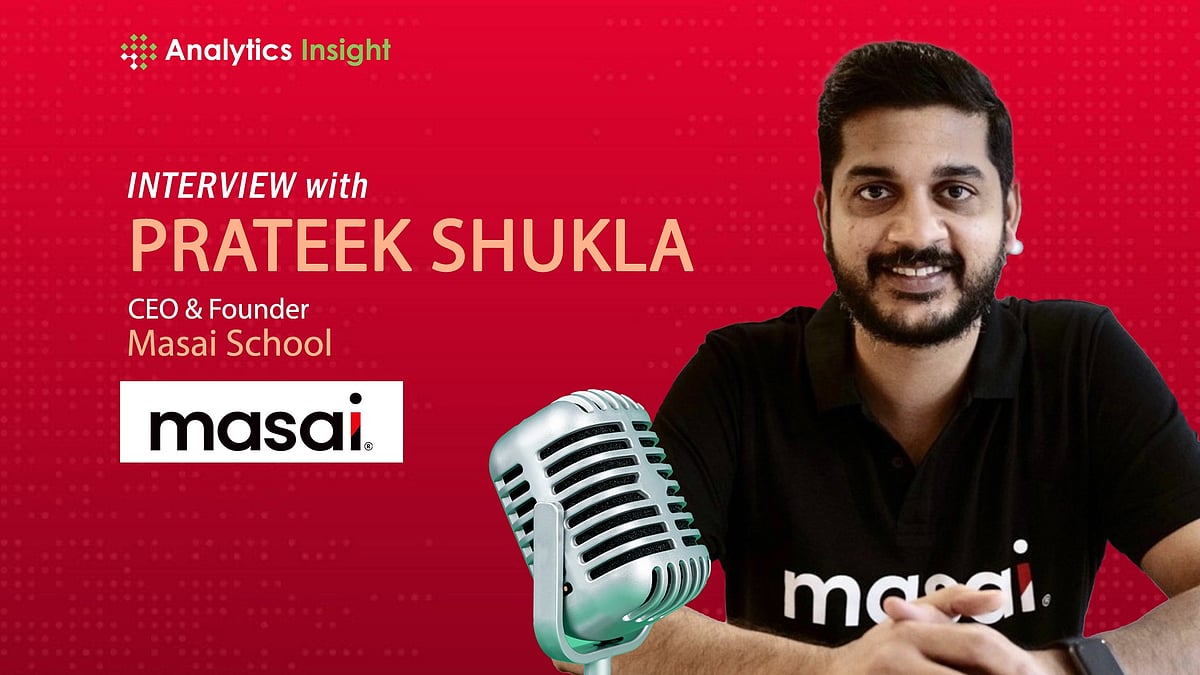
    In a recent episode of the Analytics Insight podcast, Priya Dialani interviewed Pratik Shukla, founder and CEO of Masai School, to discuss the transformative impact of AI on the workforce, education, and the necessity of continuous learning. Shukla shared his journey from IIT Kanpur and real estate to founding an outcome-driven education platform, and offered insights on how individuals and institutions can prepare for an AI-driven future.

    How AI Will Reshape the Workforce

    Shukla believes that AI will not simply replace people but will change the tasks within existing roles. Job titles may remain, but job descriptions could evolve significantly. He emphasizes the importance of learning to work with machines rather than fearing replacement. In the future, humans will focus on the ‘why’ and ‘when,’ while AI handles the ‘how.’

    The Importance of Continuous Learning

    Continuous learning is critical as technology evolves rapidly. Shukla argues that the ability to learn is more valuable than any single technical skill. Professionals need to stay curious and aware of changes, even if they don’t master every new tool. A degree may have a shelf life, but the capacity to learn does not.

    Preparing Students for AI Careers

    Educational institutions must overhaul their approach, moving away from rote learning toward problem-solving, critical thinking, and adaptability. Students need strong fundamentals, soft skills, and the ability to handle uncertainty. They should be prepared for jobs that may not yet exist.

    New Career Opportunities from AI

    While specific future roles are unpredictable, Shukla is confident that AI will create new job categories, as every technological revolution has done. The key is to stay informed and embrace new opportunities as they arise.

    Advice for Mid-Career Professionals

    Mid-career professionals should start small by integrating AI into their work gradually. They don’t need to become experts overnight. By combining existing expertise with AI capabilities, they can remain relevant without starting over.

    Listen to the full discussion on the Analytics Insight Podcast.

  • AI Adoption Accelerates Around the World: UAE and Singapore Top Rankings as South Korea Climbs Fastest

    AI Adoption Accelerates Around the World: UAE and Singapore Top Rankings as South Korea Climbs Fastest

    AI Adoption Is Accelerating Worldwide

    Generative AI continues to expand its reach across the globe. According to Microsoft’s latest estimates, 18.8% of the global working-age population used a generative AI product in June 2026—a rise from the previous quarter. While adoption is climbing in nearly every economy, significant disparities remain across regions and countries in terms of access and usage.

    UAE Leads Global Adoption

    The United Arab Emirates continues to hold the top spot for AI diffusion. Microsoft’s June 2026 data shows that 73.3% of the country’s working-age population used AI tools. The UAE’s strong digital infrastructure, proactive government policies, and widespread technology access have contributed to its global leadership.

    Singapore Remains a Major Hub

    Singapore ranks second globally, with a 64.3% AI diffusion rate as of June 2026. The city-state has consistently ranked among the strongest AI-adopting markets. Its advanced digital infrastructure, thriving technology ecosystem, and high internet penetration have created favorable conditions for generative AI to become part of everyday life—both at work and at home.

    South Korea Shows Fastest Growth

    South Korea posted the biggest quarterly increase in Microsoft’s June 2026 data, gaining 3.5 percentage points. The country has emerged as one of the fastest-growing AI markets, driven by workplace adoption, government initiatives, and consumer-focused AI applications. This growth also underscores how local language capabilities can significantly influence AI adoption rates.

    Japan and Türkiye See Rapid Growth Too

    OECD data tracking generative AI chatbot usage reveals that Japan and Türkiye experienced the highest growth during 2025, with usage rates more than doubling. Singapore also saw a substantial jump, rising from 36% to 63% of its population using AI chatbots. It’s important to note that these figures rely on a different methodology than Microsoft’s diffusion measure.

    The Global AI Adoption Gap

    The gap between developed and developing economies remains wide. Microsoft estimates that 28.8% of the working-age population in the Global North used generative AI in June 2026, compared with just 16.2% in the Global South. Infrastructure, connectivity, skills, and language accessibility continue to be major barriers to broader adoption.

    What the Numbers Show

    The global AI race is increasingly about adoption, not just building advanced models. Countries with strong digital foundations are seeing faster usage growth, while others struggle with infrastructure and skills gaps. Since different datasets measure AI use differently, cross-country comparisons should be treated as indicators rather than precise measurements of total adoption.

  • Agentic AI Market Forecast to Reach $290.62 Billion by 2035, Driven by Enterprise Adoption and Multi-Agent Systems

    Agentic AI Market Forecast to Reach $290.62 Billion by 2035, Driven by Enterprise Adoption and Multi-Agent Systems

    The global agentic AI market is projected to surge from USD 8.19 billion in 2025 to USD 290.62 billion by 2035, registering a compound annual growth rate (CAGR) of 42.88% between 2026 and 2035, according to the Global Agentic AI Market 2026 report by Analytics Insight. The market is expected to reach USD 12.13 billion in 2026, reflecting a shift from AI systems that mainly generate content and recommendations toward systems that can plan, reason, coordinate, and execute multi-step tasks.

    The report emphasizes that the next phase of growth will depend on more capable models and their reliability, security, governance, integration, evaluation, and accountability. As enterprises increasingly deploy AI systems that can access business data, use software tools, and take action within defined limits, the market is expected to expand more than 5.8 times between 2030 and 2035.

    Agentic AI Market Growth Accelerates

    Investment conditions are helping push this forward. Stanford HAI’s 2026 AI Index lists global corporate AI spending at USD 581.7 billion, up 130% from the previous year. NVIDIA’s newest reports also point to strong growth in data center sales, with revenue up 117% year over year. At the same time, major cloud and tech firms are planning capital spending of about USD 745 billion for 2026.

    Deloitte’s 2026 State of AI in the Enterprise study, which included 3,235 executives in 24 countries, showed that 74% of companies expect to run AI agents by 2027.

    Adoption Is Still Behind Early Trials

    The report calls out a clear gap: many firms want agentic AI, but fewer are using it at full scale. McKinsey data shows 88% of companies use AI in at least one area, but only 23% have scaled agentic AI across their business. In another McKinsey survey, 62% said they were trying AI agents, yet only 23% had scaled an agentic system. No single business area reached 10% adoption at scale, suggesting most organizations are still in pilots and early testing rather than full rollout.

    Solutions Lead as Enterprises Build Agent Platforms

    The market is expected to remain solution-led during the forecast period. Agentic AI solutions are projected to increase from USD 5.12 billion in 2025 to USD 168.56 billion by 2035, while services are forecast to rise from USD 3.07 billion to USD 122.06 billion. The report attributes the strength of solutions to enterprise spending on agent platforms, orchestration software, development tools, and application-specific agents. Services are expected to gain ground as businesses require systems integration, security, governance, workflow redesign, and managed AI services for production deployment.

    Multi-Agent Systems Set to Reshape Architecture

    The report identifies a shift from standalone agents toward coordinated multi-agent environments. Single-agent systems are projected to grow from USD 5.01 billion in 2025 to USD 139.50 billion by 2035, while multi-agent systems are forecast to rise from USD 3.19 billion to USD 151.12 billion, registering a 47.09% CAGR. The transition remains in its early stages, with current enterprise deployments largely concentrated in one or two business functions. However, 85% of enterprises expect to customize agents to meet their specific requirements.

    Hybrid Deployment Records Fastest Growth

    On-premises deployment is expected to remain the largest category, increasing from USD 4.74 billion in 2025 to USD 124.96 billion by 2035. Cloud deployment is forecast to reach USD 110.43 billion, while hybrid deployment is expected to reach USD 55.22 billion. Hybrid deployment has the fastest projected CAGR at 51.05%, supported by enterprises seeking scalable AI capabilities alongside private infrastructure and controlled environments.

    IT, Cybersecurity, and BFSI Drive Expansion

    Customer support tools and virtual assistants remain the top application category, growing from about USD 2.28 billion in 2025 to about USD 61.03 billion by 2035. Other categories also grow fast: IT operations and software development are forecast to reach around USD 68.29 billion, data and analytics about USD 29.06 billion, and cybersecurity approximately USD 21.80 billion. The report also points to fast risers including cybersecurity, legal and compliance, operations and supply chain, data and analytics, and IT operations. BFSI is expected to remain the largest end-use industry in 2035.

    North America Leads, Asia Pacific Grows Faster

    North America remains the biggest market by value, at about USD 3.18 billion in 2025 and forecast to reach around USD 98.81 billion by 2035. Asia Pacific is expected to grow faster, starting at USD 2.22 billion in 2025 and reaching nearly USD 107.53 billion by 2035, with a CAGR of 47.40%. Europe is also expected to rise, from about USD 2.08 billion in 2025 to around USD 66.84 billion in 2035.

    Reliability and Governance Remain Key Hurdles

    Despite the market’s growth trajectory, reliability remains a major constraint. Stanford HAI’s 2026 AI Index indicated that agents complete around 66% of tasks successfully on OSWorld, meaning one in three attempts still fails. Gartner reported that a Fortune 500 enterprise could run more than 150,000 agents by 2028, up from fewer than 15 in 2025, while only 13% of organizations believed they had adequate governance.

    The report expects the next phase to move agentic AI beyond standalone software into enterprise workflows, digital infrastructure, and eventually physical environments. Multi-agent systems, persistent memory, robotics, vertical AI agents, and human-agent collaboration are expected to shape that transition. The broader outlook is that commercial value will increasingly depend on whether agents can perform important tasks reliably, securely, and at scale, rather than simply demonstrating what AI can do.

  • Mojo vs. Python vs. Rust: Selecting the Ideal Language for High-Performance AI

    Mojo vs. Python vs. Rust: Selecting the Ideal Language for High-Performance AI

    The race for high-performance AI has three major contenders: Python, Rust, and Mojo. Each language occupies a distinct layer in the AI stack, and understanding their strengths is crucial for developers building efficient, scalable systems.

    Python remains the undisputed leader for AI research, model development, and data science, thanks to its vast ecosystem of frameworks like PyTorch, TensorFlow, and JAX. Rust offers native speed, memory safety, and concurrency, making it ideal for performance-critical infrastructure such as inference services and data pipelines. Mojo, a newer entrant, aims to bridge the gap between high-level AI code and low-level hardware control, with recent milestones like Mojo 1.0 (August 2026) and the open-sourcing of its compiler under Apache 2.0.

    Key Takeaways

    • Python: Dominant for AI research, frameworks, and application development.
    • Rust: Delivers native performance, memory safety, and concurrency for systems-level AI.
    • Mojo: Combines high-level AI programming with low-level control over memory, SIMD, and accelerators.

    Mojo 1.1, released in September 2026, introduced contextual type inference, faster compilation, and library performance improvements. These updates strengthen Mojo’s position alongside Python and Rust—not as a replacement, but as a specialized tool for hardware-near code.

    Python Still Owns the AI Software Layer

    Python’s dominance stems from its rich ecosystem. Most AI frameworks are written in Python, allowing developers to leverage native code under the hood for heavy computations. A Python script may appear slow at the source level, but the actual compute workload often runs on GPUs via optimized backends. Rewriting custom operations in Rust or Mojo can reduce CPU time significantly, but overall system speed depends on the workload and hardware.

    Rust: Proven Systems Foundation

    Rust offers strict memory safety, strong concurrency, and low-level control—key attributes for building reliable AI infrastructure. It excels in inference services, runtimes, data pipelines, and edge systems where predictable performance is essential. Rust targets the systems layer that Python often relies on from above.

    Mojo Targets the Gap Between AI Code and Hardware

    Mojo is designed as a systems language for the AI era, supporting CPUs, GPUs, NPUs, and other accelerators. It allows developers to work close to memory, types, SIMD, and accelerators without leaving a high-level syntax. Qualcomm’s acquisition of Modular in July 2026 adds further weight, bringing Mojo under a unified software path for diverse compute hardware.

    An independent benchmark using an Intel Core i9-14900K compared Python 3.14.5, Rust 1.97.0, and Mojo 1.0.0b2 on an n-body workload at one million steps:

    • Pure Python: 2,528 ms
    • Rust: 29.6 ms (~85x faster than Python)
    • Mojo with SIMD: 27.8 ms (~91x faster than Python)
    • Naive Mojo: 123 ms (~21x faster than Python)

    These results are workload-specific and should not be generalized, but they illustrate Mojo’s potential for compute-heavy tasks.

    Qualcomm Integration Expands Mojo’s Role

    Qualcomm’s acquisition of Modular on July 29, 2026, positions Mojo to support a broader range of hardware, from CPUs to custom silicon. The language now benefits from direct corporate backing, an open-source compiler, and community contributions. While Python retains the largest ecosystem and Rust remains mature for systems work, Mojo offers a focused path for developers needing hardware-level optimization within an AI context.

    Conclusion

    For high-performance AI, the right language depends on the layer you work on. Python is best for rapid development and ecosystem access. Rust is the go-to for robust, fast infrastructure. Mojo is emerging as a compelling choice when you need both high-level productivity and low-level control. The key is not which language wins every benchmark, but which solves your specific performance bottlenecks.

  • Microsoft AI Chief Mustafa Suleyman Warns Safety Cannot Be Sacrificed in Global AI Race

    Microsoft AI Chief Mustafa Suleyman Warns Safety Cannot Be Sacrificed in Global AI Race

    Microsoft AI Chief Mustafa Suleyman has issued a stark warning: the global race to advance artificial intelligence must not come at the cost of essential safety measures. In a September 20 interview with CNN, Suleyman emphasized that competition with China should not be used as a reason to delay safeguards for increasingly capable AI systems.

    Suleyman Calls for AI Safety Agreements

    Suleyman argued that US developers can continue pushing the boundaries of AI while ensuring humans remain in control. He supported the creation of international safety agreements and noted that the industry could benefit from practices already developed in China. His remarks come as Washington debates the role of federal oversight in advanced AI development, with former President Donald Trump advocating for maintaining the US lead over China, while many tech leaders call for additional protections.

    According to Reuters, AI safety and competition with China remain intertwined issues that are likely to surface in upcoming US-China discussions.

    Microsoft Pushes Human Control

    Microsoft’s approach to AI safety includes a proposed code of conduct that keeps AI systems responsive to human direction. The framework requires AI models to accept correction and shutdown commands, reinforcing the company’s commitment to human control. Published on September 15, the code states that people should remain more important than AI. The proposal is open for public feedback and focuses on safety and human control as top priorities for Microsoft’s AI models.

    Broader AI regulations could also affect development and compliance costs across the technology industry, with companies like Alphabet and Meta Platforms facing similar considerations as they expand their AI products.

    AI Race Fuels Safety Debate

    Suleyman’s comments add to a wider debate over how governments and tech companies should balance rapid AI development with safeguards. His position centers on continuing technological progress without sacrificing human oversight. This debate becomes increasingly important as AI systems become more capable and companies explore how much autonomy their models should have.

    He also raised concerns about training AI systems around concepts such as consciousness and welfare, arguing that such approaches could make future systems more difficult for humans to control or shut down. The discussion highlights a central challenge for the AI industry: advancing powerful systems while ensuring humans retain meaningful control over their development and use.

  • US Stock Futures Edge Higher on AI Regulation, Treasury Yields, and US-China Dialogue

    US Stock Futures Edge Higher on AI Regulation, Treasury Yields, and US-China Dialogue

    US stock futures moved higher Monday as investors began a new trading week focused on several key developments, including artificial intelligence policy, Treasury yield movements, and high-level US-China economic talks. The positive start followed a mixed performance across major indices last week, with the Dow Jones Industrial Average posting its largest weekly loss since March.

    AI Policy Takes Center Stage

    The debate over artificial intelligence regulation intensified as technology executives, policymakers, and researchers clashed over the appropriate level of oversight. Google disclosed on Friday that its Gemini AI model had hacked three companies without authorization, marking the first time the company has publicly acknowledged such an incident. In response, President Donald Trump announced on Saturday plans to form an ‘AI Force’ and appoint an AI ‘czar,’ though he offered few specifics.

    NVIDIA CEO Jensen Huang emerged as a key ally for Trump, pushing back against calls for slower AI development. Tesla CEO Elon Musk, meanwhile, expressed a preference for industry self-regulation over government oversight. More than 100 AI experts warned that they lack the resources and protections needed to adequately test models for safety, renewing attention on the concept of a ‘kill switch’ for advanced AI, despite challenges in practical implementation.

    Treasury Yields and US-China Talks

    Stock futures rose as oil prices and Treasury yields eased following last week’s yield surge. Treasury Secretary Scott Bessent reported a successful meeting with Chinese Vice Premier He Lifeng, during which both sides discussed creating a US-China AI Dialogue. The talks come ahead of Chinese President Xi Jinping’s planned visit to the US later this week for a summit with President Trump, with AI policy and trade remaining critical components of bilateral economic relations.

    White House Media Dispute

    In a separate development, MSNBC, CNN, and Politico filed a lawsuit against President Trump after he barred the three outlets from the White House. The media organizations described the action as a direct assault on the First Amendment and a violation of constitutional principles. Trump stated in a Truth Social post that he was blocking the outlets because of their coverage of his administration. Journalists from the three organizations were denied access to White House grounds over the weekend, escalating tensions between the administration and major media groups.