
Category: Artificial Intelligence

  • Context AI: The Enterprise Execution Layer for AI Agents

    Context AI: The Enterprise Execution Layer for AI Agents

    Context AI is an enterprise platform designed to bridge the gap between powerful AI models and the complex, permissioned workflows that real businesses require. Rather than acting as a simple chatbot or copilot, Context provides a structured execution layer that lets companies define tasks as runbooks, grant agents access to approved systems, set review checkpoints, and measure outcomes against internal standards. Each run is fully traceable, preserving sources, tool calls, outputs, and approvals for later audit.

    The Four Pillars of Context AI

    The platform is built around four integrated components:

    • Workspace – A unified environment where people and agents collaborate on tasks.
    • Engine – The control layer that manages agent identity, permissions, tools, and isolated compute. It enforces what an agent can read, modify, or transmit, with an append-only audit trail.
    • Unify – A knowledge store that goes beyond simple vector databases. It organizes company procedures, accepted examples, corrections, and institutional context in a filesystem-like structure that agents can explore and learn from.
    • Evals – A quality assurance system that checks agent outputs against custom rubrics and approved examples. Human corrections can be turned into reusable standards, and the system supports model routing to use cheaper models when quality thresholds are met.

    Why Unify Changes the Game

    Most enterprise AI systems dump documents into a vector database and retrieve text based on similarity. Context takes a different approach with Unify. Its institutional-context layer works like a filesystem that agents can navigate, recording not just what a company knows but how that knowledge is structured across teams, projects, clients, and business functions. This structure helps agents understand relationships between pieces of knowledge, enabling more nuanced decision-making.

    Evals: Custom Quality Standards

    Public AI benchmarks are useless for a specific company’s standards. A consulting firm needs a particular memo format; a finance team requires a precise approval chain; a legal team may reject a correct answer if one rule is missed. Context’s Evals system lets teams define rubrics and accepted examples, then test agent results against those standards. Human corrections feed back into the system, creating reusable quality rules.

    Engine: Secure Agent Execution

    Enterprise agents need access to systems, but broad access creates risk. Context Engine separates agent execution from the control layer, granting only the tools a runbook allows. Different permission levels apply to different actions—read requires less authority than an external message or deletion. Credentials never appear in prompts or runbooks, and every action is logged in an append-only trail.

    Deployment Flexibility

    Context supports four deployment models: managed, customer VPC (running inside AWS, Azure, or Google Cloud), on-premises, and air-gapped. This range accommodates strict data boundaries and regulatory requirements. The company’s June 2026 update emphasized that while many firms have capable models, real deployment still depends on procedures, exceptions, and expert reasoning that often remain locked inside employees’ heads. Context aims to capture that missing operational knowledge.

    Context Desktop: Agents on Your Computer

    Now in private preview for macOS and Windows, Context Desktop lets agents work across local files, browser tabs, and authorized applications. It supports scheduled tasks, browser actions, parallel agents, and shared spreadsheets or documents. Every action keeps a run trace, and access is limited to files, folders, and systems the organization authorizes. Use cases include scheduled operations reviews, invoice reconciliation, vendor checks, and document preparation.

    Why Context AI Matters

    Context’s core thesis is that enterprise value comes not from smarter models alone, but from the layer around the model: company knowledge, workflow rules, permissions, quality standards, and past accepted work. Its platform turns those pieces into a system that agents can use and improve over time. The goal is an agent that follows a company’s method, works across approved systems, shows its work, accepts correction, and produces a result that meets a defined standard. If this model scales, Context could become central to enterprise operations.

    Frequently Asked Questions

    1. What is Context AI?
      Context AI is an enterprise AI platform that helps agents use company knowledge and perform real business tasks with control and traceability.
    2. What are the main parts of Context AI?
      The platform includes Workspace, Engine, Unify, and Evals, each supporting a different stage of agent work.
    3. What does Unify do?
      Unify organizes company knowledge, procedures, examples, and corrections so agents can use that information during tasks.
    4. How does Context AI handle security?
      Context supports permission controls and several deployment options, including managed, customer VPC, on-premises, and air-gapped environments.
    5. What is Context Desktop?
      Context Desktop lets agents work across local files, browser tabs, and authorized applications on macOS and Windows.
  • What Is Vibe Coding? How AI-Powered Development Lets Anyone Build Apps Without Writing Code

    What Is Vibe Coding? How AI-Powered Development Lets Anyone Build Apps Without Writing Code

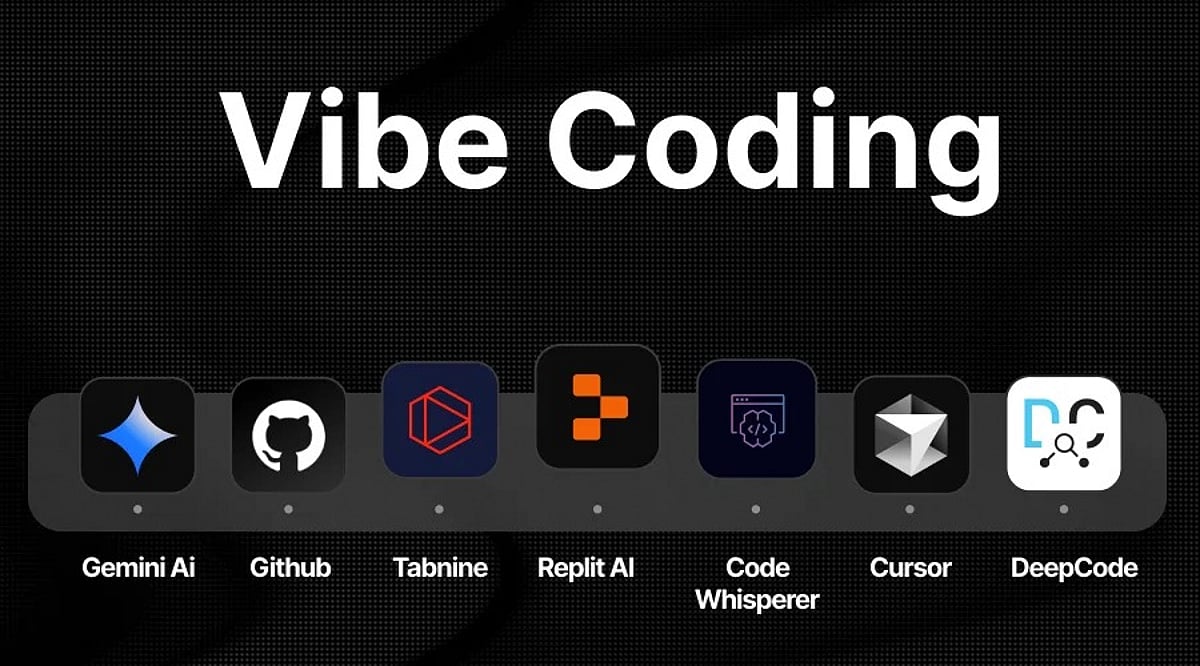
    Building an app once required years of learning programming languages, debugging errors, and understanding complex logic. That barrier is fading fast. Vibe coding has changed how people approach software development, letting anyone describe an idea in plain English and watch an AI model turn it into working code.

    What Vibe Coding Actually Means

    Vibe coding is a method of building software where a person describes their goal in natural language, and an AI model writes, runs, and fixes the code based on that description. Instead of learning syntax or writing every function manually, a user simply says something like “build me a to-do list app with dark mode,” and the AI generates a working version.

    The term was coined by AI researcher Andrej Karpathy in February 2025, when he described giving in to “the vibes” and letting AI handle the coding almost entirely. Collins Dictionary later named vibe coding its Word of the Year for 2025, officially defining it as the practice of using natural language prompts to make an AI program produce the desired code.

    How the Process Actually Works

    Vibe coding generally follows a simple loop: describe what you want to build, the AI interprets the request and writes the underlying code, you review the output and ask for adjustments, and the AI refines it further based on that feedback.

    Tools such as Lovable, Replit, Bolt, GitHub Copilot, and Cursor have built entire platforms around this workflow, handling tasks like database setup, real-time updates, and error debugging automatically. Instead of writing a complex database query, a user might simply describe the dashboard they want, and the AI generates the required logic behind it.

    Why It Matters for Non-Coders & Businesses

    Vibe coding lowers the barrier to entry for building software in a way few previous tools have managed. People with no programming background can now launch functional apps, websites, and prototypes without hiring a developer or spending months learning to code. Businesses benefit too, since ideas can move from concept to a working demo in hours rather than weeks. According to reports, by mid-2026 roughly 25 percent of Y Combinator startups were building products using mostly AI-generated code, showing how quickly this shift has moved from a novelty into standard practice for early-stage teams.

    The Limits & Risks Worth Knowing

    Vibe coding is not without its downsides. Since users often skip reading the generated code line by line, mistakes and security gaps can slip through unnoticed. Early adopters have reported issues ranging from broken features to AI-generated content that misrepresented real data, such as fake product reviews appearing on a demo app.

    Developers who understand the underlying logic can catch these problems faster, which is why many experts recommend treating AI output as a strong first draft rather than a finished product, especially for anything handling sensitive user data.

    The Road Ahead for App Development

    Vibe coding is reshaping who gets to build software, shifting the developer’s role from writing every line of code to guiding an AI assistant toward the right outcome. As AI models keep improving at understanding context and intent, the applications people can create this way will only grow more capable.

    It is not about replacing skilled developers entirely, but about giving far more people the tools to turn their ideas into something real, faster than ever before.

    Frequently Asked Questions

    1. What is vibe coding? Vibe coding is an approach where a person describes an idea in plain language and lets an AI assistant translate it into working software, rather than writing the code line by line.
    2. Does vibe coding replace developers? No, it does not replace skilled developers entirely. It gives more people the tools to turn their ideas into working applications, and experienced developers still play a key role in guiding, refining and reviewing the output.
    3. Can someone with no coding experience use vibe coding to build an app? Yes, vibe coding makes app building accessible to people who never learned to program, since the process relies on describing intent rather than writing syntax.
    4. Is AI-generated code from vibe coding safe to use directly? Experts recommend treating AI output as a strong first draft rather than a finished product, especially for anything handling sensitive user data, so a review step remains important.
    5. How will vibe coding evolve as AI models improve? As AI models get better at understanding context and intent, the applications people can build through vibe coding are expected to grow more capable and complex over time.
  • AI Shopping Assistants Transform Product Comparison: How They Work and Why Shoppers Love Them

    AI Shopping Assistants Transform Product Comparison: How They Work and Why Shoppers Love Them

    Online shopping used to mean opening multiple browser tabs, manually comparing spec sheets, and scrolling through hundreds of reviews. That process is changing fast. AI shopping assistants now handle most of the legwork, letting shoppers describe what they want in plain language and receive a shortlist within seconds. From tools built into ChatGPT and Gemini to dedicated retail assistants like Amazon’s Rufus, this shift is reshaping how people discover and compare products online.

    How AI Shopping Assistants Compare Products

    An AI shopping assistant combines natural language understanding with access to large, real-time product databases. Instead of typing a short keyword like “running shoes,” a shopper can describe something specific, such as “trail shoes under $150 for wide feet that handle wet roads well.” The assistant then reads through structured product data, price listings, and verified reviews to match those exact requirements. According to McKinsey’s ConsumerWise survey, 62 percent of consumers have already used AI to compare brands, models, prices, or reviews while shopping — showing this behavior has moved well past early adopters.

    Review Synthesis Makes Comparison Faster

    One of the most useful features is the ability to turn thousands of scattered reviews into a short, readable summary. Rather than reading through pages of comments, a shopper gets a quick breakdown of common pros and cons across verified buyers. This addresses a real problem: fake or misleading reviews have long made comparison shopping harder than it should be. By pulling only from verified purchase data, assistants give a more honest picture of how a product actually performs, cutting down the guesswork that used to come with trusting online reviews blindly.

    From Browsing to Describing

    Traditional shopping relied on filters, categories, and keyword searches, putting the burden of comparison entirely on the shopper. AI assistants flip that model. A person can simply describe their situation — like needing a warm coat for a cold winter — and the assistant narrows down options based on material, price, and delivery timelines. Adobe Analytics reported that AI-referred traffic to retail sites grew 138 percent year over year as of May 2026, a clear sign that more shoppers are starting their search inside a chat window rather than a search bar.

    Why This Shift Benefits Everyday Shoppers

    The biggest advantage is time saved and better decision confidence. Bain reported that 30 to 45 percent of U.S. consumers now use generative AI for product research and comparison, and Adobe’s own consumer survey found that 85 percent of people who tried AI shopping assistants said it improved their experience. Beyond convenience, these tools reduce the anxiety of picking the wrong product, since the comparison work now happens instantly instead of over multiple browsing sessions spread across days.

    What This Means for Brands and Retailers

    This shift also changes what brands need to focus on. Assistants can only recommend products they can clearly understand, which means clean, structured product data matters more than ever. A brand with strong pricing and good reviews can still lose visibility if its product information is not easy for an AI system to read and compare. This has pushed many e-commerce brands to rework how they present specifications, pricing, and reviews, since ranking well in traditional search no longer guarantees a spot in an AI-generated shortlist.

    AI shopping assistants have turned product comparison from a time-consuming chore into a quick conversation, letting shoppers describe what they need and get a trustworthy shortlist within seconds. As adoption grows across major platforms, this shift is fast becoming the new starting point for how people shop online.

    Frequently Asked Questions

    How do AI shopping assistants compare products?

    They read structured product data, pricing information, and verified reviews, then match all of it against a shopper’s specific requirements, like budget or size, to generate a shortlist.

    Are AI shopping assistant recommendations trustworthy?

    Most reputable assistants pull only from verified purchase data and real-time pricing, which makes recommendations more reliable than manually sifting through unverified reviews. Still, it helps to double-check final details before buying.

    Which platforms currently offer AI shopping assistants?

    ChatGPT Shopping, Google Gemini, Perplexity, and Amazon Rufus are among the most widely used AI shopping assistants right now, each pulling from slightly different data sources.

    Do AI shopping assistants cost anything to use?

    Most consumer-facing assistants, like those built into ChatGPT or Amazon, are free to use for shoppers. Businesses that build dedicated shopping assistants for their own stores may pay for the underlying technology.

    Can AI shopping assistants complete a purchase?

    Some advanced assistants now support this, handling checkout and even comparing shipping across multiple retailers. However, most assistants today are still focused mainly on research and comparison rather than completing transactions.

  • OpenAI CEO Sam Altman Rules Out 2026 IPO, Prioritizes AI Safety and Alignment

    OpenAI CEO Sam Altman Rules Out 2026 IPO, Prioritizes AI Safety and Alignment

    OpenAI CEO Sam Altman has officially ruled out an initial public offering for the company in 2026, stating that more time is needed to address critical AI safety and alignment concerns. This decision comes months after OpenAI submitted a confidential draft S-1 to the U.S. Securities and Exchange Commission for a possible public listing.

    Altman told Fortune that going public now would be an “ill-advised moment” due to current safety concerns surrounding advanced AI systems. He emphasized that remaining private allows OpenAI to continue making decisions that may not always align with the short-term interests of investors or future public shareholders, giving the company greater flexibility to pursue its mission while it works on these issues.

    When asked if the IPO could happen in 2027, Altman only confirmed that it will not occur in 2026. He noted that OpenAI still has “a lot of stuff to do” on safety, alignment, and coordination with governments. No new target date has been announced, leaving a 2027 listing possible but unconfirmed.

    OpenAI has faced growing scrutiny over how advanced AI models behave and how they are tested before release. Altman acknowledged that the company may need to pause at certain stages of model development to allow researchers to improve safeguards before pushing capabilities further. He also stressed the importance of collaboration between AI companies and governments as systems become more capable.

    The decision aligns OpenAI with broader industry concerns about the pace of AI advancement. Anthropic CEO Dario Amodei recently called for a slower pace in AI development, arguing that safety work needs time to catch up with rapid advances. Elon Musk has also backed calls for more caution as developers build increasingly powerful systems.

    While OpenAI’s stance has drawn support from some industry leaders, it has also sparked debate. Investor Michael Burry questioned the motivations behind the slowdown message, suggesting on X that the position from OpenAI and Anthropic might be “self-serving” and tied to IPO publicity. He argued that large language models do not constitute artificial general intelligence and that the safety focus could also reflect weaker growth expectations.

  • AI Learning Roadmap: From Beginner to Advanced Skills in Four Stages

    AI Learning Roadmap: From Beginner to Advanced Skills in Four Stages

    An AI learning roadmap is a staged path that moves learners from basic literacy to advanced specialization. Rather than a random collection of courses, it provides a sequence where each level builds on the previous one. With AI skills increasingly demanded in entry-level roles, following the right progression is more important than simply accumulating knowledge.

    The Four Stages of an AI Learning Roadmap

    Stage 1: Building AI Literacy (Weeks 1–4)

    This foundation stage covers what large language models do, why they hallucinate, the difference between a model and an application built on it, and basic data and AI ethics. Employers value the ability to choose the right AI tool and verify its output over deep technical expertise. Free resources like Google’s AI Essentials, Anthropic’s documentation, and Andrew Ng’s introductory courses are excellent starting points. The goal is to be able to explain in plain terms what a model does and where its output needs a second check.

    Stage 2: Applying AI in Real Workflows (Months 2–4)

    Once the basics are set, hands-on use begins. Prompt engineering is part of this stage, but the real skill is workflow design: breaking tasks into steps, providing the right context, checking output, and automating repetitive parts. Building a pipeline that pulls data, summarizes it with AI, and flags anomalies for review is a practical achievement. A few finished workflows carry more weight than a certificate.

    Stage 3: Moving Into AI Engineering (Months 4–10)

    This is where technical depth starts. Python and SQL come first, then statistics, classical machine learning, neural networks, embeddings, and finally retrieval-augmented generation (RAG) and LLM-based applications. Each step supports the next. Learners should become comfortable with a major deep-learning framework like PyTorch or TensorFlow. Fast.ai’s practical deep learning course, DeepLearning.AI specializations, and Kaggle competitions provide strong open resources and a public portfolio.

    Stage 4: Choosing an Area of Specialization (Year 1 and Beyond)

    The field is too wide for anyone to cover all of it. This stage focuses on picking a problem to master, such as MLOps, AI security, multimodal systems, or agentic AI. Stanford’s 2026 Index shows agentic AI mentions in U.S. job postings grew over 280% in one year. Specialization turns general fluency into a defensible skill set. Advanced ability is measured by the complexity of problems solved, not the number of frameworks known.

    Why Sequence Matters

    The biggest risk in learning AI is not falling behind but learning the wrong things in the wrong order. Skipping stages explains why some self-taught learners can describe transformers but cannot ship a working chatbot. A roadmap ensures that each level builds a foundation for the next, turning scattered knowledge into practical, demonstrable skills.

    Final Thought

    The roadmap itself will shift as AI capabilities evolve—agentic AI barely existed as a hiring category two years ago. What stays fixed is the order: literacy, application, engineering, specialization. Learners who follow that sequence build something they can point to and explain, not just a list of finished courses.

  • Top AI-Powered Time Management Tools to Optimize Your Workday

    Top AI-Powered Time Management Tools to Optimize Your Workday

    Managing a busy workday is becoming increasingly difficult for professionals. Meetings, emails, deadlines, and unexpected tasks compete for attention. Traditional to-do lists can show what needs doing, but they do not always show when work should happen.

    Newer time management tools take a different approach. They connect tasks with calendars and available working hours. Some can automatically schedule tasks around existing commitments. Others focus on routines, priorities, and deliberate daily planning. Here are some tools professionals can consider.

    Motion

    Motion combines task management, project planning, and calendar scheduling. Its scheduling system automatically places tasks into available calendar slots. Users can set deadlines, priorities, and estimated task durations. Motion then creates a daily plan around those requirements.

    The platform can also reschedule tasks when meetings or unexpected changes disrupt the day. It can flag tasks that may be at risk of missing deadlines. This approach suits professionals with deadline-heavy workloads. It can reduce the time spent manually rearranging calendars. Motion is particularly useful for users wanting an all-in-one planning system. However, its automation may feel excessive for people who prefer manual planning.

    Reclaim

    Reclaim takes a more calendar-focused approach. It works with existing calendars and scheduling preferences. The platform automatically schedules tasks around meetings and other commitments. It can also protect focus time and recurring routines.

    Reclaim 2.0 introduced an AI assistant and additional scheduling agents. These tools can identify conflicts and suggest changes to overloaded schedules. The service also connects with tools such as Todoist, Asana, ClickUp, Jira, and Slack. This makes it useful for professionals already using project management platforms. Reclaim can suit people with meeting-heavy calendars. It keeps schedules workable as priorities change.

    Sunsama

    Some professionals prefer making deliberate choices each morning. Sunsama follows this more structured planning philosophy. It brings tasks and calendar commitments into one daily planning workflow. Users can decide how much time they want to spend on specific tasks. This encourages realistic planning based on available capacity.

    The platform is less focused on fully automatic scheduling. That can appeal to professionals who want more control over their day. It can also help create a clearer boundary between work and personal time. This approach suits users who find highly automated planners overwhelming.

    Todoist

    Todoist remains a popular choice for managing tasks and priorities. It focuses primarily on organizing work rather than controlling the entire calendar. Professionals can create projects, set deadlines, add recurring tasks, and set priorities. Its AI features can assist with task management and organization.

    Todoist works well for people who already have a preferred calendar. It can also connect with other productivity tools. The main advantage is simplicity. Users can capture tasks quickly without rebuilding their entire workflow. However, it does not provide the same level of automatic calendar control as Motion or Reclaim.

    Notion

    Notion combines task management with documents, databases, and team knowledge. This makes it useful for professionals managing projects and information together. Its AI features can help summarize information and support work planning. Teams can also build customized project and task systems.

    Notion is especially useful when planning depends on project context. A task can sit alongside meeting notes, documents, research, and project information. However, Notion requires more setup than dedicated scheduling applications. Users may need to build their preferred workflow before seeing its full value.

    How to Choose the Right Time Management Tool

    The best tool depends on where your workday usually breaks down. Choose Motion if you want automatic task scheduling and rescheduling. Reclaim makes more sense when protecting calendar time is the priority.

    Sunsama suits professionals who prefer intentional daily planning. Todoist works well for straightforward task management. Notion suits broader project organization and knowledge work.

    Before choosing, check calendar integrations and task management features. Also consider how much automation you actually want. Automation should reduce planning effort, not create another system to maintain. The right tool should make that process easier without taking control away from you.

  • Open Dreamer: How Researchers Recreated DeepMind’s Secret World Model

    Open Dreamer: How Researchers Recreated DeepMind’s Secret World Model

    When Google DeepMind published a technical report on Dreamer 4—a frontier world model that learned to mine diamonds in Minecraft without ever touching the live game—they never released the code or weights. Three independent researchers took on the challenge of rebuilding it from scratch. The result is Open Dreamer, an open‑source reproduction that makes this advanced AI accessible to the broader research community.

    Rebuilding a Frontier Model Without a Lab

    Diego Marti Monso, together with Francesco Sacco and Edward Hu, set out to reconstruct Dreamer 4 with a fraction of the resources available to DeepMind. The project, sponsored by Reactor, required them to develop both the model and training code from the ground up. They scaled the system to a 1.6‑billion‑parameter model using high‑performance computing clusters and thoughtful algorithm design.

    “There was no answer key,” said Marti Monso. “When something failed, we had to figure out whether the problem was in the code, the training setup, or our understanding of the method itself.” The scale made mistakes costly—a small error might only become apparent after a lengthy training run had consumed substantial resources.

    Publishing the Recipe, Not Just the Result

    Marti Monso believes that reproducible research should include the full training process, not just the final weights. “If you only know the final result, you still have to reconstruct the entire path yourself,” he explained. “Publishing the recipe gives another researcher something they can actually reproduce.”

    Open Dreamer delivers on this principle: the team released both the model and training code, and the trained world model can be run interactively in a web browser. This open‑source approach is especially valuable in a nascent field like world modeling, where researchers are still developing their intuition.

    Overcoming Resource Constraints

    Working without an established lab meant solving practical challenges. Training large models requires substantial computing resources unavailable to most independent researchers. The team had to determine which design choices were essential, which could be inferred from the paper, and which had to be settled empirically. This experience reinforced their decision to document the entire process, so future researchers don’t have to repeat the same costly work.

    Impact and Reception

    Open Dreamer quickly gained attention. By August 2026, the project had over 350 GitHub stars, became a trending topic on X with over 1 million views, and was featured by MarkTechPost. This interest reflects the growing importance of world models in robotics and video generation.

    With Open Dreamer’s publication, any researcher can now build on the Dreamer 4 algorithm—applying it to robotics, Minecraft, or other domains. Marti Monso, Sacco, and Hu have provided a crucial resource for the AI community, demonstrating that frontier research can be reproduced and shared even without institutional backing.

  • Building PayPal’s Invisible Support Layer: An Interview with Senior Engineer Nishanthi Yuvaraj on Agentic AI

    Building PayPal’s Invisible Support Layer: An Interview with Senior Engineer Nishanthi Yuvaraj on Agentic AI

    When a customer opens a chat window and their issue resolves before they finish typing, there’s a complex invisible layer making that possible. Nishanthi Yuvaraj, a Senior Software Engineer at PayPal, has spent over a decade building and scaling the contact channels that power that seamless experience. From her early days as an intern in 2013 to earning multiple patents and delivering a keynote on autonomous customer service, Yuvaraj’s career is a masterclass in infrastructure, innovation, and governed autonomy.

    The Evolution of Customer Servicing at PayPal

    Yuvaraj began at PayPal as an intern and has since worked on nearly every customer contact channel: call support, secure messaging, live chat, bot-driven systems using IBM Watson and Google Dialogflow, and the omnichannel layer that recognizes intent across all of them. She notes that the domain has transformed completely—from disconnected, single-channel support to an integrated system where a customer’s history is treated as one continuous conversation.

    Key Platforms: Message Hub, Nudge Hub, and the Customer Journey Platform

    Message Hub serves as the system of record for conversations with over 230 million customers. Nudge Hub uses real-time event streaming to proactively reach out before a customer asks for help. Together with the Customer Journey platform, these systems enable PayPal to treat a customer’s history as a continuous thread. The challenge, Yuvaraj explains, is operating at a scale where downtime is unacceptable—and the redesign of Message Hub alone significantly increased abatement rates without customers noticing the transition.

    Patents and Research: From Proactive Error Resolution to Agentic Systems

    Yuvaraj holds three granted U.S. patents, with two more pending. Her first patent covers proactive error resolution—recognizing failures before the customer does and routing them to help automatically. Another family of patents focuses on making shared transaction data useful by using machine learning to surface relevant offers. Her pending applications include a multimodal agentic resolution framework, which aligns with her current research on self-healing customer experience systems. She has also authored a dozen peer-reviewed papers on data governance, AI-driven customer experience, and agentic systems.

    The Research Instinct: From Undergrad to International Recognition

    Yuvaraj’s research instinct dates back to her bachelor’s degree at College of Engineering Guindy, Anna University, where she built an e-learning platform for visually impaired students. That project taught her to design for users who are often overlooked—a lesson that has stuck with her. At Cognizant, she worked on localizing PayPal.com for India and created “PayPal Parivar,” a family-based payment concept that emerged from observing how Indian families manage money jointly. That experience reinforced her belief that the best innovations come from understanding user behavior, not starting with technology.

    Infrastructure Work That Unlocks Innovation

    Early in her PayPal career, Yuvaraj built an automated end-to-end testing framework that cut the regression cycle from five days to two. While unglamorous, that infrastructure work enabled faster, safer shipping and gave the team room to experiment. She emphasizes that innovation often sits at the seams between technologies, and being well-versed across languages and platforms is crucial.

    Writing to Fill a Gap

    Yuvaraj began publishing peer-reviewed papers because she saw a gap in the literature around the connective tissue between data governance and AI-driven customer experience. She writes about preparing enterprise data for LLM-assisted issue analysis and governed autonomous systems. Her advice to engineers: “Stay hungry, stay foolish—publish your work before you feel like enough of an expert.”

    The Future: Zero-Touch Customer Experience with Governed Autonomy

    Yuvaraj’s recent work focuses on agentic AI for zero-touch customer experience. She envisions systems that resolve issues and heal themselves without human intervention, but can explain every decision to a compliance reviewer. In her KalingaConf keynote, she presented a closed-loop framework combining autonomous agents, predictive analytics, event-driven orchestration, and reinforcement learning. The system detects problems before the customer does, diagnoses root causes, remediates automatically, and learns from outcomes—escalating only when risk is high. This approach improved customer satisfaction and reduced mean time to recovery while maintaining compliance.

    Leadership and Mentorship

    As a woman in backend engineering, Yuvaraj believes reliability earns leadership opportunities. She mentors students and colleagues by giving them real ownership of hard technical problems early. Her philosophy during production incidents: “Fix first, understand second, blame never.” She views 2 a.m. calls as learning opportunities that reveal how systems behave under real conditions.

    Advice for Aspiring Engineers

    Yuvaraj encourages engineers to stay curious about every layer of the stack, including unglamorous areas like data governance. She advises building end-to-end systems and publishing work even when you don’t feel ready. “The moment you stop being curious about the layer just below or just above the one you’re comfortable in is the moment you stop growing.”

  • How AI Assistants Are Redefining Mobile App Interactions: From Menus to Intent

    How AI Assistants Are Redefining Mobile App Interactions: From Menus to Intent

    AI assistants are fundamentally changing how users interact with mobile apps, shifting the paradigm from manual navigation to intent-driven execution. Instead of hunting through menus to complete a task, users can now simply state their desired outcome, and the software handles the steps. This transformation moves the interaction model from User → App → Feature → Action to User → Intent → Assistant → App Capability → Action. While visual interfaces remain essential for tasks like date selection or product comparison, AI reduces the need for users to understand an app’s internal structure. Voice-first apps further push this shift by enabling hands-free intent expression.

    The Shift From Menus to Intent

    This does not mean conversation replaces every screen. Picking a date on a calendar or comparing products side by side often stays faster with a visual layout. What changes is narrower and more useful: AI reduces how often a user has to understand an app’s internal structure just to use it. A shopping app can still show a product grid while a request typed in plain language filters it instantly, with no menu required. Voice-first apps push this shift further, letting people express intent without touching the screen at all. Visual interfaces still hold their ground for tasks that need comparison or precision, so the two approaches now sit side by side rather than compete.

    Why On-Device AI Matters

    Mobile chipsets are adding more hardware built for running AI models directly on the device. This cuts delay and keeps sensitive data local. But most apps are not choosing between on-device and cloud processing; they are building hybrid systems where quick or private tasks run locally and heavier reasoning still travels to the cloud. The real shift is not that AI moved to the phone, but that developers now decide, task by task, where computation should happen, weighing speed, privacy, and cost. This same awareness of context lets an app adjust to a person’s habits over time instead of treating every session as new. A fitness app that remembers a user’s usual workout time can suggest a plan without being asked, quietly folding personalization into the background rather than presenting it as a separate feature.

    From AI Features to Agentic Apps

    A chatbot answers. A copilot helps. An assistant performs a single action. An agent coordinates several actions to reach a goal, such as finding a hotel near a meeting, checking its cancellation policy, and preparing the booking. That progression changes the app’s role. An application is not just presenting functions to a human anymore; its functions also need to be understandable and reachable by an AI system acting on someone’s behalf. This is a structural demand, not a cosmetic one. It reshapes what ‘building an app’ actually involves.

    The New Developer Challenge

    Much of the visible change happens in the interface, but the larger transformation sits underneath it. Developers now need structured app data, clear APIs, permission systems, context that persists across sessions, and reliable ways for an assistant to call the right function at the right time. Testing an app used to mean checking if buttons work. Now it also means checking if an assistant handles a vague or oddly worded request without making the wrong call. Mobile development is quietly becoming AI development, and the teams that treat it that way are the ones setting the pace.

    Trust and Competition Are Shifting Together

    Giving an assistant permission to act, rather than just respond, creates a new kind of trust problem. Users may not always know how an AI reached a decision or whether it stayed within the limits they intended. Some apps address this with a short explanation line after a task completes, showing what happened and why. This same shift could reshape how apps compete. Features that once helped one app stand out become easier to reach through an assistant that pulls from several apps at once. If a person can ask for a result without knowing which app supplied it, the interface itself matters less. App companies may end up competing more on the quality of their data, the reliability of their services, and how well their functions can be coordinated by AI, rather than on how their screens look.

    Final Thought

    The next generation of mobile apps will not be defined only by what users can do inside them. They will be defined by what AI can safely do with them. That puts more weight on the foundations underneath the interface: reliable data, accessible actions, clear permissions, strong security, and systems that know when to act and when to ask first.

    Frequently Asked Questions

    1. How are AI assistants changing mobile apps? AI assistants are shifting mobile apps from menu-based navigation toward intent-based interactions, allowing users to describe what they want and receive help with completing tasks.
    2. What are agentic apps? Agentic apps use AI systems that can coordinate multiple actions to achieve a user-defined goal rather than simply answering questions or completing one isolated task.
    3. Why is on-device AI important for mobile apps? On-device AI can reduce response time and keep certain data on the phone, making it useful for applications where privacy, speed, and offline functionality matter.
    4. How does AI affect mobile app development? AI requires developers to build stronger data structures, APIs, permission systems, context management, and safeguards so assistants can interact with app functions reliably.
    5. Will AI assistants replace traditional mobile app interfaces? No. AI assistants are more likely to work alongside traditional interfaces. Screens remain useful for tasks involving visual comparison, navigation, selection, and precise controls, while AI handles intent-driven tasks.
  • How Generative AI Is Reshaping Employment and Freelance Markets

    How Generative AI Is Reshaping Employment and Freelance Markets

    The New Productivity Landscape

    Generative AI is fundamentally altering the economics of knowledge work. Tasks that once demanded hours of human effort—drafting documents, writing code, designing templates—can now be completed in seconds by a chatbot. This shift is simultaneously affecting wages, hiring strategies, and freelance pricing on a global scale.

    According to a 2025 International Labour Organization study, one in four workers worldwide holds a job with some exposure to generative AI. Only 3.3% fall into the highest exposure category. Most roles combine tasks AI can handle with those requiring human judgment, suggesting transformation rather than mass replacement as the likely outcome.

    Uneven Productivity Gains

    A 2023 NBER study led by economist Erik Brynjolfsson tracked 5,179 customer support agents after introducing an AI assistant. Output per hour rose 14% on average, but gains were concentrated among newer and lower-skilled workers (34% improvement) while experienced agents saw minimal change. This pattern suggests AI acts as a floor-raiser, bringing weaker performers closer to the level of top performers—a dynamic also observed in coding and writing tasks.

    Employment vs. Freelancing: A Tale of Two Markets

    The Entry-Level Squeeze

    Junior workers face the greatest risk. AI now handles many small tasks that traditionally taught new hires their craft—drafting contracts, writing first-pass code, producing marketing copy. If AI absorbs that learning layer, the critical question becomes how junior workers gain the practice needed to grow into senior roles. This is a structural career-path problem, not simply a reduction in job openings.

    Freelance Markets React Faster

    Freelance platforms reveal changes in near real-time. A study covering nearly two million postings across 61 countries found that within eight months of ChatGPT’s launch, writing gigs fell about 30%, software postings dropped about 21%, and design work declined about 17%, with no sign of recovery. A separate paper in the Journal of Economic Behavior and Organization adds nuance: demand for replaceable skills (writing, translation) fell 20–50%, while demand for complementary skills (machine learning support) increased. Total demand on the platform studied did not decline—the mix shifted. Research covered by Wharton also found that freelancers active before ChatGPT cut their job applications by 51–62% as rivals flooded exposed categories.

    More Output Does Not Mean Higher Pay

    Higher productivity from AI does not automatically translate into higher income. Three outcomes are possible: prices fall as more workers compete; workers take on more clients to offset lower per-project rates; or employers need fewer people to meet the same target. Which path prevails depends on demand growth, ease of copying work, and worker leverage. In easily copied categories like writing, price pressure has so far dominated.

    Skills That Retain Value

    Deep expertise in a narrow field remains valuable. So does the ability to check AI output for errors, frame problems clearly for AI tools, and take responsibility for final results rather than just first drafts. Client relationships and clear communication carry more weight now that raw production is cheap. The next phase will likely reward those who direct AI well over those who compete against it on speed.

    The Future Workplace

    Workplaces will increasingly split along a new line: work that AI can copy at near-zero cost versus work that stays valuable because a person stands behind the outcome. Firms that build training paths around this split—rather than simply cutting junior headcount—are likely to retain the deepest talent as tools continue to improve.