Category: Artificial Intelligence

  • AI as the Default Operating Layer: Pinnacle’s Bimal Patwari on the Future of AEC

    AI as the Default Operating Layer: Pinnacle’s Bimal Patwari on the Future of AEC

    Artificial intelligence is steadily reshaping the Architecture, Engineering, and Construction (AEC) industry, driving automation across design, engineering, documentation, quality control, and project management. While AI adoption on construction sites remains relatively slow, organizations are increasingly integrating intelligent technologies into design workflows, compliance, digital twins, and engineering processes to improve productivity, accuracy, and collaboration.

    As the industry moves beyond experimentation, AI is expected to connect the entire project lifecycle—from design and engineering to construction execution and facility management—creating a unified digital thread powered by predictive intelligence and automation. The convergence of AI, Digital Twins, and cloud-based collaboration is set to redefine how infrastructure projects are planned, delivered, and managed.

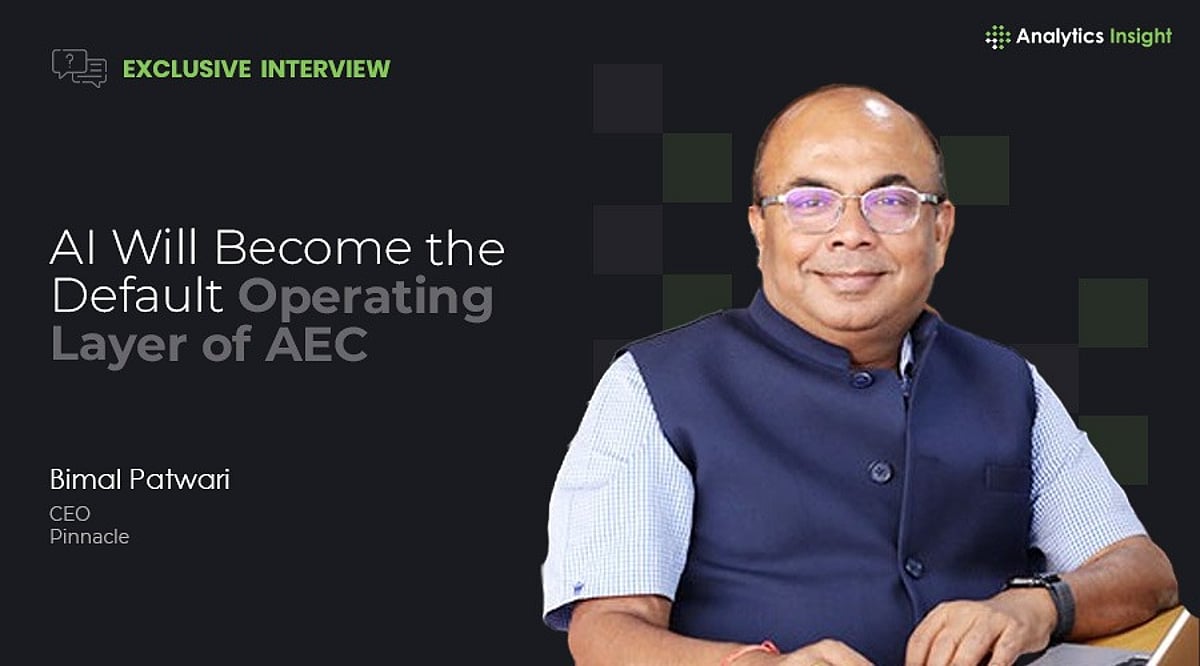
    Bimal Patwari, Founder and CEO of Pinnacle, believes AI should augment engineering expertise rather than replace it. He says successful AI adoption depends as much on organizational culture, digital maturity, and workforce readiness as it does on technology. According to him, companies that invest in structured digital foundations and continuous upskilling today will lead the next generation of AI-driven construction.

    In an exclusive interview with Analytics Insight, Patwari discusses AI adoption in the AEC industry, Digital Twins, generative AI, workforce transformation, enterprise-wide AI implementation, and how Pinnacle is building intelligent engineering and construction workflows. Here are the excerpts from the interview:

    How is AI Adoption Transforming the AEC Industry and What’s Driving its Rapid Growth?

    Overall, automation and AI adoption within the AEC industry remains relatively slow, but the picture varies sharply across the project lifecycle. On the design and engineering side, the pace has somewhat accelerated: major design software providers are now building native AI compatibility into their platforms, particularly through MCP connectors, and leading design and engineering firms are embedding automation and AI into design, modeling, coordination, and documentation workflows as a matter of course. Construction execution, however, tells a very different story: adoption remains markedly slower, with much of the industry still reliant on conventional, manual site processes. This is where the sector’s real digital transformation gap lies.

    At Pinnacle Future Build, closing this gap is a deliberate priority; we see it as the next frontier for AI-driven impact in AEC, not a peripheral concern.

    The AEC Sector has Traditionally Relied on Manual Processes and Legacy Systems. What are the Biggest Barriers Organizations Still Face in Adopting AI at Scale, and How Can They Overcome Them?

    The biggest barriers are rarely technological; they are structural: legacy data trapped in siloed formats, inconsistent standards across teams, and a workforce accustomed to manual sequencing.

    Organizations can overcome this by treating AI adoption as a change-management program, not an IT rollout, pairing every tool deployment with training, clear governance, and visible leadership sponsorship. We addressed this at PFB through a phased, center-by-center rollout with dedicated trial teams, rather than a single enterprise-wide switch.

    At Pinnacle Future Build, our focus on AI implementation extends well beyond BIM modeling alone into the automation of design workflows, AI-led QC verification processes, AI-led design documentation, code compliance reviews, automated engineering design calculations, and AI-led project management practices. Closing the design-to-construction adoption gap is a deliberate priority for us; we see it as the next frontier for AI-driven impact in AEC, not a peripheral concern.

    How will Generative AI Reshape Engineering, Design, and Project Execution Over the Next Five Years?

    Generative AI will dramatically compress the ideation-to-documentation cycle. What once took design teams weeks of iteration will increasingly happen in days, with AI generating first-pass options that engineers refine rather than originate from scratch. This does not diminish the engineer’s role; it elevates it, shifting professionals from repetitive drafting toward judgment, validation, and design intent.

    AI will help expedite repetitive, high-volume work across the design cycle, generating models, supporting clash resolution, performing quality control and code compliance verification, conducting constructability and maintainability reviews, and producing documentation faster, with greater accuracy and consistency.

    On the construction side, AI-assisted Scan-to-BIM can substantially transform site processes, enabling paperless construction, continuous quality control, more accurate schedule management, materials management, and stronger risk analysis across broader project management practices.

    Over the next few years, expect GenAI to act as a genuine co-engineer across architectural, structural, and MEP disciplines.

    How Can Organizations Scale Generative AI from Pilot Projects to Enterprise-Wide Adoption?

    The most effective strategy is sequencing before scaling, proving value on a contained, measurable use case before expanding horizontally.

    We structured our own program as a multi-deliverable pilot, deliberately experimenting with and evaluating solutions from multiple technology providers, combined with 35 years of Pinnacle’s own domain expertise and a skilled internal team, to identify the best available option for each component of the workflow, rather than settling for a single one-size-fits-all platform.

    We deployed a dedicated R&D team to conduct comparative studies across market-available tools and engineer the most efficient combination of solutions for our environment.

    The finalized solution was then handed to a pilot team for real-world trial, surfacing genuine challenges and learnings before we proceeded to an organization-wide rollout. Critically, the entire initiative was led from the top by the organization’s senior-most leadership, ensuring it was treated as a strategic priority rather than a departmental experiment.

    How Can Organizations Balance AI Automation and Human Expertise in Construction and Engineering?

    The right balance is augmentation, not substitution. In knowledge-intensive industries like ours, AI is exceptional at pattern recognition, reading and analyzing documents, and repetitive computation. Still, engineering judgment, constructability and maintainability, accountability for safety, code compliance, and site realities must remain firmly human.

    We anchor this by design: every AI-generated output at PFB passes through a multi-layered quality control process before it becomes a deliverable. That discipline is what allows automation to scale without compromising trust.

    What Role do Data Quality, Digital Infrastructure, and Culture Play in Successful AI Adoption?

    All three are prerequisites, not enablers. Data quality determines whether AI outputs are usable; digital infrastructure determines whether those outputs move seamlessly across project stages; and culture determines whether teams actually adopt what is built for them.

    Most organizations fall short on the third; they invest heavily in tools and platforms but underinvest in the change-readiness of their people, which is ultimately why adoption stalls.

    The Demand for AI-Ready Talent Continues to Grow. How Should Organizations Rethink Workforce Development and Upskilling to Prepare Employees for an AI-Enabled Future?

    Workforce development must shift from one-time training to continuous skill enhancement. We have institutionalized this through a structured training program supported by market experts and a certification sponsorship scheme covering globally recognized credentials, so upskilling becomes a career pathway rather than a compliance exercise.

    Equally important is exposing talent early to AI-augmented workflows during onboarding, so proficiency becomes the norm rather than the exception. The AEC professional of the future will be judged as much on their fluency with AI tools as on technical depth.

    Can AI Adoption Succeed without Strong Digital Foundations and a Broader Transformation Strategy?

    AI adoption cannot outrun digital maturity. Organizations need a coherent digital foundation of structured data, integrated systems, and defined workflows before AI can deliver reliable value; attempting AI without this foundation produces fragmented, unrepeatable results.

    We approached this sequentially: standardized workflows first, multi-layered QA/QC processes, and then layering automation and AI on top of a foundation built to scale.

    How will AI-Powered Digital Twins Transform Infrastructure Planning, Execution, and Lifecycle Management?

    Traditional Digital Twins have been largely descriptive, telling you what exists. AI-enabled twins are becoming predictive and prescriptive, telling you what is likely to happen and what to do about it.

    AI changes that fundamentally: the twin becomes a living, continuously learning asset, ingesting sensor data, performance feedback, and operational history to predict maintenance needs, optimize energy performance, and flag risk before it materializes. For infrastructure projects where assets operate for decades after handover, this shift from a point-in-time model to a self-updating intelligence layer is transformative for long-term lifecycle value.

    Historically, planning, execution, and operations have functioned as three disconnected phases, each with its own tools, teams, and data value generated in design is routinely lost by the time an asset reaches operations. AI-driven Digital Twins finally break this silo, carrying design intent and construction reality forward into a single operational model that facility teams can act on immediately at handover. For infrastructure where operational costs vastly exceed construction costs over an asset’s life, this continuity is where the real financial and safety value of the convergence lies.

    How will AI shape the Future of AEC, and Pinnacle Infotech’s Digital Transformation Role?

    Over the next five years, AI will move from a productivity lever to the default operating layer of AEC delivery, embedded in every discipline, every project stage, and every decision point. Companies like Pinnacle Future Build will contribute by proving that this transformation is achievable at scale, not just in isolated centers of excellence. We operate across four production centers and 14 countries, which gives us a unique vantage point to standardize AI-driven delivery across geographies and disciplines.

    What Automation Initiatives has Pinnacle Future Build Delivered, and What Results have They Achieved?

    Rather than speak in the abstract, we have deployed automation and AI directly into production, including AI-assisted designs, Revit-native MCP / AI-compatible tooling for model generation and coordination, QA/QC, and AI-assisted workflows integrated into our documentation pipeline.

    Early results have shown measurable reductions in turnaround time for routine modeling and coordination tasks, alongside improved consistency in deliverable quality. We track adoption centrally, which lets us quantify impact rather than rely on anecdotes, a discipline I would encourage every AEC leader to adopt.

    How Can AI Connect Design, Engineering, Construction, and Operations into One Digital Thread?

    Too many organizations still treat digital design, digital construction, and digital operations as separate initiatives with separate tools and separate data. The real opportunity is a digital thread, a single, traceable flow of data that begins at design intent and carries forward, unbroken, through engineering, construction sequencing, and into operational asset management via Digital Twins. AI is the connective mechanism that makes this thread possible, continuously translating data from one lifecycle stage into intelligence usable in the next.

    What Advice Would You Give AEC Leaders Who Are Hesitant to Begin Their AI Journey?

    The greatest risk today isn’t adopting AI too early; it’s standing still while competitors compound their learning curve. Leaders who hesitate are often waiting for certainty that will never arrive; AI, like any transformation, is refined through practice, not planning. My advice is to treat the first initiative as a learning investment, not a finished solution; measure it honestly, adjust quickly, and let each cycle build organizational confidence for the next.

  • How to Write Human-Like Articles Using DeepSeek AI for Free: A Step-by-Step Guide

    How to Write Human-Like Articles Using DeepSeek AI for Free: A Step-by-Step Guide

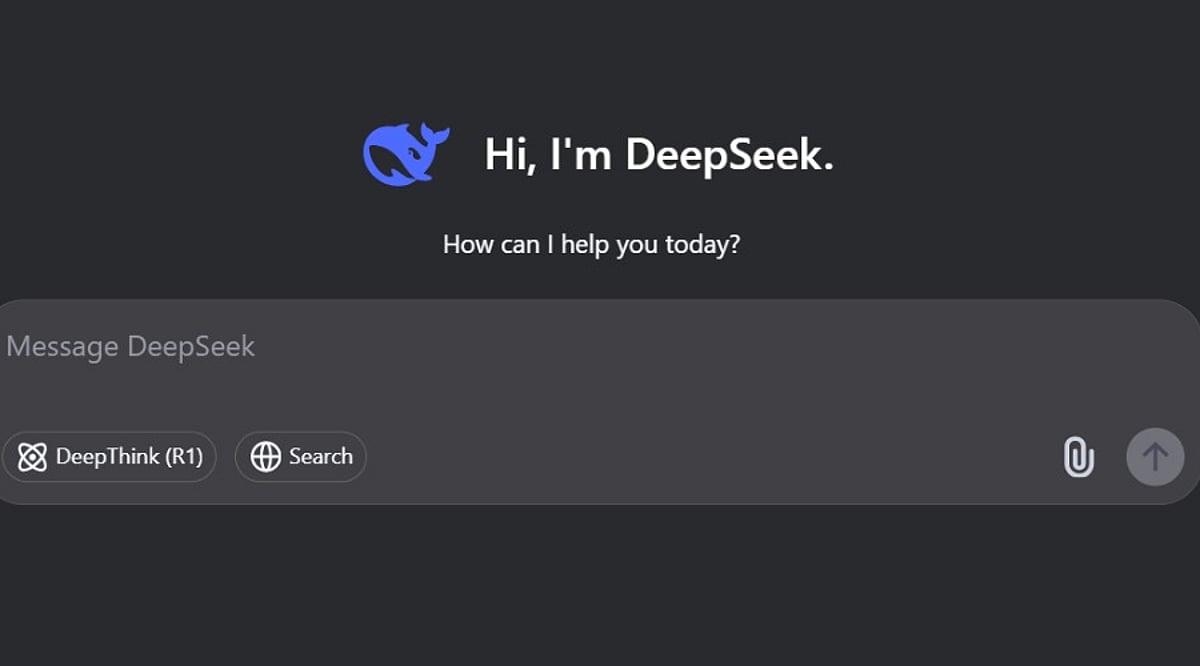
    Speed used to be the main selling point of AI writing tools, but that alone no longer cuts it. Faster drafts often produce articles that sound alike—same sentence lengths, same safe transitions, and same forgettable phrasing. DeepSeek AI, a free tool, can generate a solid outline or a full draft in minutes, but the real work begins after the draft is done. The difference between a generic AI article and one that feels human lies in how you edit, verify, and add original insights.

    Building a Prompt DeepSeek Can Actually Use

    Prompt quality heavily influences the output. The biggest mistake is asking for a finished article in a single request. A strong prompt defines four elements: the audience, the objective, the format, and any constraints on tone or length. Breaking the request into stages yields more coherent results:

    • First, ask for an outline only.
    • Second, expand each section individually.
    • Third, run a separate pass to adjust the tone.

    A weak prompt: “Write a 1,000-word article about electric cars.” A staged version: “Outline a 1,000-word article for first-time EV buyers in India, with a conversational tone, one practical example per section, and no promotional language.” DeepSeek retains conversational context within a session, so follow-up prompts can refine the same draft without restarting—for example, by shortening a section or simplifying the language.

    Where DeepSeek Helps and Where It Does Not

    DeepSeek excels at structure and summarization. It organizes complex topics into logical sections quickly and compresses source material effectively. However, it is less reliable without human review when producing verified facts, distinctive opinions, and naturally varied sentence rhythm. It can also generate multiple structural approaches to the same topic, making it useful for exploring outlines before committing to a final direction.

    Editing for Rhythm Instead of Just Correctness

    Left unedited, DeepSeek tends to repeat sentence openers across adjacent paragraphs. For example: “Artificial intelligence is transforming content creation. Artificial intelligence also improves productivity. Artificial intelligence helps writers generate articles faster.” Edited for rhythm, the same idea reads: “AI has transformed content creation, though speed is not its main advantage. It handles repetitive drafting well, leaving writers more time to refine ideas and verify facts.” The information stays the same, but the shape changes—and shape is what readers notice first. A quick diagnostic: if two adjacent paragraphs open with a similar structure, rewrite one.

    Verifying Before Publishing

    Every factual claim, number, or named tool must be checked against current, authoritative sources before publication. A confident-sounding statistic from the model is not the same as a verified one. This step separates an editorially responsible article from one that merely reads well.

    Adding What the Model Cannot

    Structure and phrasing can come from the model, but specific examples, workflow observations, or genuine opinions about where the tool falls short cannot. One reliable method: instruct DeepSeek to leave a placeholder, such as “insert practical example here,” during drafting. That way, the exact spot needing original insight never gets lost in the edit.

    The full workflow is simple: build a staged prompt, expand the draft section by section, edit for rhythm and tone, verify every factual claim, and finish by adding original judgment. Skipping the verification step is the fastest way to publish something confident and wrong.

    Final Thought

    AI may keep improving at drafting, but clarity, judgment, and credibility remain editorial decisions. DeepSeek can accelerate the writing process, yet an article earns a reader’s trust only after a human shapes it with evidence, context, and a distinctive voice.

    Frequently Asked Questions

    1. Can DeepSeek AI write complete articles for free?

    Yes. DeepSeek AI can generate outlines, introductions, and full-length article drafts without cost on its free version. However, human editing is still necessary to improve accuracy, readability, tone, and originality before publication.

    2. How can AI-generated articles sound more human?

    Start with detailed prompts, generate content in stages, vary sentence lengths, replace repetitive phrases, add original examples, and fact-check every claim. Human editing is what gives an article a natural voice and credibility.

    3. Is DeepSeek AI suitable for SEO content writing?

    Yes. DeepSeek AI can help create SEO-friendly outlines, incorporate target keywords naturally, and structure content with headings. Final optimization should include manual keyword refinement, internal linking, metadata, and fact verification.

    4. What are the biggest mistakes when using DeepSeek AI for writing?

    The most common mistakes are relying on a single prompt, publishing without verifying facts, leaving repetitive sentence structures unchanged, and failing to add unique insights or real-world examples that distinguish the content.

    5. Can DeepSeek AI replace human writers?

    No. DeepSeek AI is an effective drafting assistant, but it cannot consistently provide editorial judgment, original experiences, nuanced opinions, or reliable fact verification. Human writers remain essential for producing trustworthy and engaging articles.

  • Stanford Online Human-Centered Generative AI Course: Ethics, Governance, and Responsible Innovation

    Stanford Online Human-Centered Generative AI Course: Ethics, Governance, and Responsible Innovation

    Stanford Online, in collaboration with Stanford HAI, offers the Human-Centered Generative AI course—an independent learning program focused on the responsible use of generative AI. Through case studies and expert guidance, the course explores ethics in design, governance, privacy, and building trusted human-centric AI systems.

    What You’ll Learn

    • Core principles of human-centric AI and generative AI
    • Design ethics for AI, including fairness, transparency, and accountability
    • Natural language processing techniques and algorithmic fairness
    • AI governance, policies, and regulations
    • Approaches for safe and responsible AI implementation

    Accessibility and Value

    This fully virtual course allows registration at any time within a 60-day window. It features video lectures from respected Stanford professionals, hands-on learning materials, and real-world case studies. Upon completion, participants receive a certificate of completion.

    Comprehensive Curriculum

    • Human-Centered AI: Foundations, principles, and applications
    • Ethics of Generative AI: Fairness, transparency, algorithmic bias, and responsible development
    • AI Governance: Frameworks and related policies
    • Privacy & Security: Data privacy, legal aspects, and safety measures in AI
    • Responsible Innovation: Building AI systems that benefit organizations and society

    Eligibility Criteria

    The course is designed for business managers, AI professionals, policymakers, and technology managers. It is also suitable for learners interested in the responsible use of AI and professionals researching AI ethics and privacy issues. No specific background in computer science is required.

    What Makes This Program Stand Out

    Human-Centered Generative AI uniquely integrates research from Stanford HAI with insights from leading AI researchers. Unlike typical single-professor courses, this program uses a conference-style educational format, allowing learners to gain knowledge from specialists in computer science, law, ethics, privacy, policy, and AI governance.

    Final Thoughts

    This Stanford Online professional course empowers learners to build, evaluate, and implement responsible AI systems. Covering AI fundamentals alongside ethics, governance, privacy, fairness, and policies, it enables professionals to confidently explore the opportunities offered by generative AI.

  • How to Seamlessly Transfer Your ChatGPT Data to Claude AI

    How to Seamlessly Transfer Your ChatGPT Data to Claude AI

    Switching between AI assistants becomes effortless when your past conversations move with you. Transferring ChatGPT data to Claude helps preserve context, project details, writing drafts, research notes, and ongoing discussions. This reduces repetition and allows Claude to deliver more relevant responses based on your previous interactions with ChatGPT.

    Export Your ChatGPT Data

    Log in to ChatGPT and open Settings. Navigate to Data Controls and choose Export Data. OpenAI will prepare an archive containing your chat history and send a download link to your registered email address. Download and extract the ZIP file before moving to the next step.

    Open Claude and Start Import

    Sign in to your Claude account through the web interface. Start a new chat or use the available import option if your version supports chat uploads. Claude can process exported conversation files, allowing it to understand previous discussions and continue projects with minimal manual effort.

    Upload the Exported Files

    Locate the extracted ChatGPT export folder and upload the relevant conversation files to Claude. Depending on the supported format, Claude will analyze the content and use it as context. For large archives, consider importing only the conversations that are most important for your work.

    Organize and Verify Your Data

    After the upload, review the imported conversations to ensure everything appears correctly. Rename chats, group related projects, and check that important prompts, notes, and documents have been transferred. A quick review helps avoid missing information before continuing your work in Claude.

    Protect Your Privacy

    Before transferring any AI conversations, remove passwords, financial records, personal identification details, or confidential business information. Exported chat files may contain sensitive content, so review them carefully before uploading. Following basic privacy practices helps keep your information secure across different AI platforms.

    Continue Working Seamlessly

    Once your chats are available in Claude, you can continue writing, coding, brainstorming, or researching without starting from scratch. Keeping previous conversations accessible saves time, improves workflow, and makes switching between AI assistants much smoother for both personal and professional projects.

  • Master Visual Paradigm AI Chatbot for AI-Powered Diagram Creation in 2026

    Master Visual Paradigm AI Chatbot for AI-Powered Diagram Creation in 2026

    Visual Paradigm’s built-in AI chatbot revolutionizes the way you create diagrams. By simply describing your ideas in natural language, you can generate professional flowcharts, UML diagrams, ER diagrams, mind maps, and more—saving hours of manual work. This guide walks you through the key features and best practices for leveraging this AI assistant in 2026.

    Getting Started with the AI Chatbot

    Launch the integrated AI assistant from Visual Paradigm to start generating diagrams, answering design queries, and automating documentation. The chatbot understands plain English descriptions, so you can focus on your process rather than the tool.

    Writing Effective Prompts

    To get accurate diagrams, describe your software, workflow, or business process clearly. The better your prompt, the more precise the output. For example, instead of “show a login flow,” say “create a flowchart for user login with steps: enter email, validate credentials, redirect to dashboard, and error handling.”

    Flowcharts

    Create professional flowcharts instantly by explaining the process steps. This reduces manual drawing while improving consistency and collaboration across teams. The AI interprets your narrative and lays out the flowchart automatically.

    UML Diagrams

    Generate use case, class, sequence, activity, and component diagrams with AI assistance. Ideal for software planning and system documentation, the chatbot can turn verbal descriptions into standard UML notation.

    ER Diagrams

    Build database entity relationship diagrams by describing tables, relationships, and attributes. This helps developers quickly design structured database models without drawing every box manually.

    Mind Maps

    Convert brainstorming ideas into organized mind maps. The AI suggests branches and sub-topics based on your initial input, simplifying planning, project discussions, and knowledge visualization.

    Editing Tools

    Refine AI-generated diagrams with drag-and-drop editing, formatting controls, and reusable templates. You can polish the output for professional presentations and documentation without starting from scratch.

    Collaboration

    Share AI-created diagrams with teammates, collect feedback, track revisions, and collaborate in real time across distributed project environments. This keeps everyone aligned on design and process.

    Export Options

    Save your diagrams as PDF, PNG, SVG, or editable project files for use in presentations, documentation, client meetings, and software development workflows. The flexibility ensures your diagrams fit any context.

    By integrating Visual Paradigm’s AI chatbot into your workflow, you can accelerate diagram creation, improve accuracy, and free up time for higher-level design thinking.

  • Reddit’s AI Ad Revenue Soars as Search Traffic Volatility Spurs Growth Worries

    Reddit’s AI Ad Revenue Soars as Search Traffic Volatility Spurs Growth Worries

    Reddit posted stronger-than-expected quarterly revenue, fueled by AI-powered advertising tools, but warned that erratic search referrals are slowing U.S. user growth. The company remains optimistic about future revenue while working to reduce its dependence on external search traffic.

    The social media platform reported second-quarter revenue of $805 million, a 61% year-over-year increase that beat Wall Street estimates. Despite the strong financial performance and an upbeat outlook for the next quarter, Reddit shares fell about 12% in after-hours trading as investors focused on slowing domestic user growth.

    Search Traffic Remains a Key Challenge

    Reddit said changes in search engine algorithms have made referral traffic increasingly unpredictable, particularly in the United States. Chief Operating Officer Jen Wong described search referrals as “volatile,” noting that updates to search ranking systems continue to affect how new users discover Reddit through external search engines.

    Wong told Reuters that “SEO headwinds” caused by changes in search algorithms “more than offset” the company’s efforts in terms of user acquisition in the quarter. Still, product improvements are helping convert lower-engagement visitors from search engines into loyal app users, she said.

    Reddit also forecast slower revenue growth in the third quarter. However, the forecast range of $860 million to $870 million was above LSEG-compiled analysts’ average estimate of $829.1 million.

    “The company’s advertiser growth in the second quarter was 70% year-over-year. So, we continue to onboard a lot more new advertisers onto Reddit,” Wong said. She added that growth was particularly strong among mid-market and small- and medium-sized businesses and international advertisers.

    Executives said Reddit is working to convert more casual search visitors into logged-in app users through product improvements and better user experiences, reducing its dependence on external search traffic over time.

    AI Advertising Tools Continue to Deliver Results

    While search referrals remain inconsistent, Reddit’s investment in artificial intelligence is paying off in its advertising business. The company has expanded AI-powered tools that help brands create campaigns, generate ad copy, and target audiences based on conversations within subreddit communities.

    “Search referrals were choppy in the quarter, and traffic was more volatile later in the quarter, but the bigger picture is unchanged: the commercial business is strong,” Co-founder and CEO Steve Huffman said in a letter to shareholders. Huffman noted that AI overviews have yet to make a similar level of positive impact as traditional “10 blue links” on the company’s post-earnings call.

    These features have attracted a growing number of advertisers, particularly small and medium-sized businesses as well as international brands. The platform’s advertising business remained the primary growth engine during the quarter, helping Reddit outperform revenue expectations.

    For the third quarter, Reddit expects revenue between $860 million and $870 million, well above market forecasts, while adjusted EBITDA is projected to reach $385 million to $395 million. The strong guidance suggests the company remains confident about advertising demand despite broader macroeconomic uncertainty.

    Balancing Growth in the AI Search Era

    With the increase in adoption of AI-assisted search tools like Google’s AI summary service, the issue of whether users will keep clicking through to source websites is becoming a challenge that publishers like Reddit are dealing with.

    Despite the advantages of licensing information to AI firms and expanding globally, experts have reservations about Reddit’s ability to maintain user acquisition with an unpredictable pattern of search referrals. Reddit is convinced that it is hard to completely replace its community discussions and genuine user-generated content with AI summaries.

    In the future, Reddit’s plan is to concentrate on user engagement, expand its advertiser base, and improve products while dealing with the challenges posed by an AI-assisted internet environment.

  • Claude AI Chat Conversations Leak Through Google and Bing Search Indexing

    Claude AI Chat Conversations Leak Through Google and Bing Search Indexing

    A newly uncovered privacy issue has emerged involving Anthropic’s Claude AI, where shared chat links have been discovered in Google and Bing search results. Users reported that public Claude conversations—covering topics such as political advice, legal questions, and personal discussions—could be found through simple search queries, sparking concerns about unintended data exposure.

    The issue came to light via a Reddit post highlighting that certain Claude chat links appeared in search engine results. Claude AI includes a feature allowing users to generate public shareable links for their conversations. While Anthropic stated that it had instructed Google’s crawler not to index these pages through a robots.txt file, experts note that this method alone does not guarantee exclusion from search listings.

    A spokesperson for Claude AI explained: “Shareable links are not guessable or discoverable unless people choose to share them themselves. When someone shares a conversation, they are making that content publicly accessible, and like other public web content, it may be archived by third-party services.” Both Google and Bing have emphasized that website operators should implement a noindex tag to prevent pages from appearing in search results. Analysts observed that the affected Claude chat pages lacked this additional security measure.

    Glenn Gabe, an SEO and AI search consultant at G-Squared Interactive, commented: “If you block Google or Bing from crawling your content, they can still index those URLs, just without crawling the content.” This suggests that even noindex directives may not fully prevent chat leaks if the URLs are publicly accessible.

    How Search Engines Indexed the Chats

    Search engines continuously scan public websites to discover new pages—a process called indexing. Once indexed, a page can appear in search results for relevant queries. Website owners can use tools like robots.txt or noindex tags to block indexing, but if these protections are missing, public links can be added to search results. This scenario unfolded with some shared Claude chat pages before Anthropic implemented changes.

    This incident underscores the importance of robust privacy controls for AI chat platforms and the need for users to be cautious when making conversations publicly accessible.

  • OpenAI vs ChatGPT: Understanding the Key Differences in 2026

    OpenAI vs ChatGPT: Understanding the Key Differences in 2026

    Many people use the terms OpenAI and ChatGPT interchangeably, but they refer to two different things. OpenAI is the research and deployment company that builds advanced AI models, while ChatGPT is a consumer-facing chatbot product built on top of those models. The distinction matters for pricing, product development, and choosing the right tool for your needs.

    What Is OpenAI?

    OpenAI is an artificial intelligence research organization founded in 2015. Originally a nonprofit, it later shifted to a capped-profit model to fund large-scale model training. The company develops several AI products beyond ChatGPT, including the GPT language model family, DALL-E for image generation, Whisper for speech recognition, and Codex for coding. These models are available to developers through OpenAI’s API, enabling third-party applications.

    What Is ChatGPT?

    ChatGPT is OpenAI’s flagship consumer and business product—a chat interface that sits on top of the underlying AI models. Launched in November 2022, it has evolved far beyond a simple chatbot. As of July 2026, ChatGPT supports multimodal input, deep research tasks, image generation, voice conversations, and custom GPTs. The service runs on the GPT-5.6 model family, which OpenAI has divided into three capability tiers:

    • Sol – flagship tier for hard reasoning and long agentic tasks
    • Terra – everyday workhorse
    • Luna – lighter and faster for quick responses

    Are OpenAI and ChatGPT the Same Thing?

    No. OpenAI is the company; ChatGPT is one product it makes. Think of it like Toyota and the Camry: Toyota builds engines and platforms used across many models, and the Camry is just one specific car. Similarly, OpenAI’s technology powers tools that aren’t ChatGPT—customer service bots, AI writing assistants, coding tools built by other companies through the API.

    Practical Differences You Need to Know

    Pricing

    ChatGPT subscriptions and API usage are billed separately. A ChatGPT Plus subscription does not grant API access. ChatGPT offers a seven-tier pricing structure:

    • Free ($0, ad-supported in the US, uses an older Instant-tier model)
    • Go ($8/month)
    • Plus ($20/month – most popular, unlocks GPT-5.6 flagship, Deep Research, Sora)
    • Pro ($100 or $200/month – 5x or 20x Plus usage)
    • Business (~$20-30 per seat)
    • Enterprise (custom pricing)

    The OpenAI API charges per million tokens processed. For GPT-5.6 Sol, rates are roughly $5 input / $30 output per million tokens; the lighter Luna tier costs about $1 / $6 per million tokens.

    Who Should Use Each

    Use ChatGPT if you need a ready-made assistant for writing, research, brainstorming, or daily tasks—no setup required.

    Use the OpenAI API if you are building a product for others, embedding a chatbot in your app, or creating an automated support tool that requires programmatic control over prompts and responses.

    Pro Tip for Businesses

    Teams that scrape or aggregate public data to feed into an AI pipeline—for research, price monitoring, or training data—often pair API access with proxy infrastructure. A single IP gets rate-limited quickly on high-volume collection, so reliable residential, mobile, or datacenter proxies with rotating IPs and sticky sessions can help maintain consistent data flow. Tools like CyberYozh provide such infrastructure, compatible with Selenium, Playwright, Puppeteer, and Scrapy, along with IP reputation checking and SMS verification.

    Frequently Asked Questions

    Is OpenAI the same as ChatGPT?

    No. OpenAI is the company; ChatGPT is one product. OpenAI also offers a developer API and other tools like DALL-E and Whisper.

    What’s the difference between ChatGPT and the OpenAI API?

    ChatGPT is a ready-to-use chat interface with flat monthly pricing. The OpenAI API is a developer tool billed per token, used to build custom applications.

    Which is cheaper: ChatGPT Plus or the API?

    It depends on usage. Light, occasional use often costs less via the API’s per-token billing. Frequent daily use typically favors ChatGPT Plus’s $20/month flat rate.

    Do I need the OpenAI API if I have ChatGPT Plus?

    Only if you are building something for others to use. A ChatGPT subscription does not include API access; they are billed and used separately.

    What model does ChatGPT run in 2026?

    As of July 2026, ChatGPT runs on the GPT-5.6 family, split into Sol (flagship reasoning), Terra (everyday use), and Luna (lightweight, faster) tiers.

  • Morning Tech Digest: IBM’s 0.7nm Chip, Revspot Funding, Graduate Hiring Gap, Coinkite Alert, and OpenAI vs ChatGPT

    Morning Tech Digest: IBM’s 0.7nm Chip, Revspot Funding, Graduate Hiring Gap, Coinkite Alert, and OpenAI vs ChatGPT

    Good morning! Here’s your quick roundup of today’s biggest developments across semiconductors, startup funding, graduate hiring, cryptocurrency security, and artificial intelligence.

    What’s New Today

    IBM has introduced the world’s first 0.7nm chip technology with its new 3D Nanostack architecture, marking a major leap for AI computing and energy-efficient processors. Startup Revspot has secured fresh funding to accelerate growth and expand its technology offerings. A HirePro report shows that only 9% of employers consider fresh graduates job-ready despite 68% of students believing they are. Crypto hardware wallet maker Coinkite has warned Coldcard Mk3 users about a potential security flaw affecting wallet seed generation. Meanwhile, a new explainer outlines the difference between OpenAI, the AI company, and ChatGPT, its popular conversational AI assistant.

    Fast-Track Insights

    • IBM unveils the world’s first 0.7nm chip with 3D Nanostack architecture.
    • Revspot secures fresh funding to support expansion and product development.
    • HirePro report reveals only 9% of graduates are job-ready on day one.
    • Coinkite urges Coldcard Mk3 users to secure funds after wallet warning.
    • OpenAI vs ChatGPT: Understanding the company behind the AI chatbot.

    IBM Debuts World’s First Sub-1nm Chip

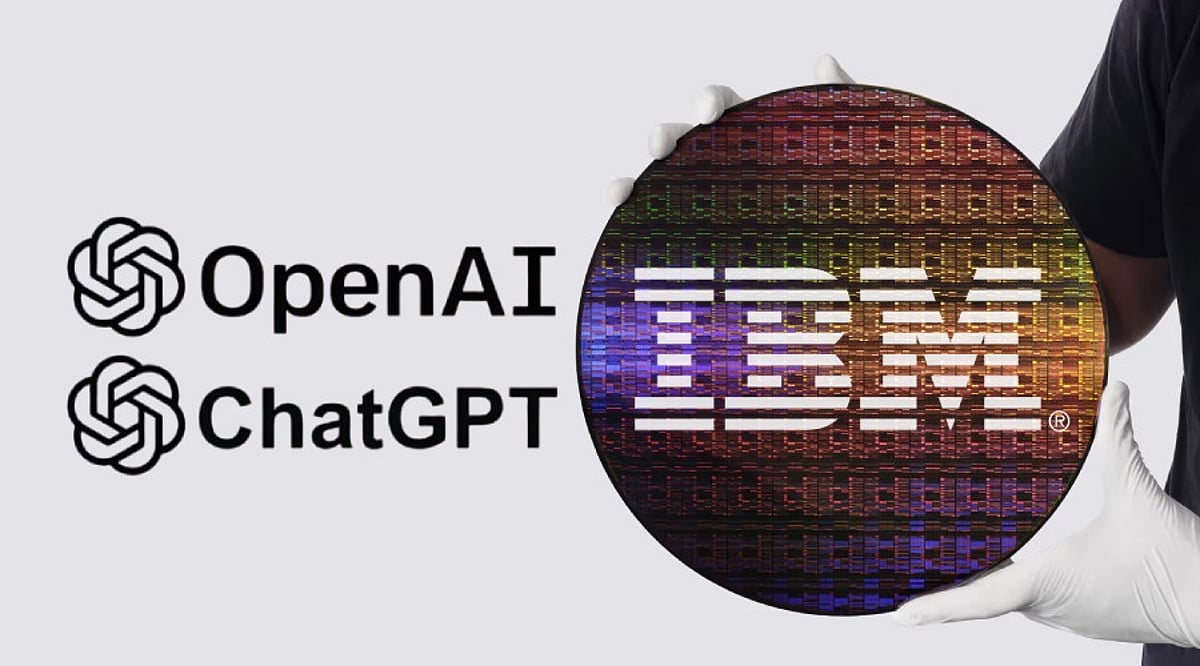
    IBM unveiled the world’s first 0.7nm chip technology powered by its new 3D Nanostack architecture. The breakthrough packs nearly 100 billion transistors, promising faster performance, improved energy efficiency, and stronger capabilities for AI, cloud computing, and next-generation data centers.

    Revspot Raises Funding

    Tech startup Revspot has secured fresh funding to accelerate growth and expand its technology offerings. The investment will support hiring, product development, and market expansion.

    Only 9% of Graduates Are Job-Ready: HirePro Report

    A HirePro report reveals that only 9% of employers believe fresh graduates are job-ready on their first day at work, while 68% of students think they are. The findings underline a significant gap between academic education and industry expectations.

    Coinkite Warns Coldcard Mk3 Users

    Coinkite has issued a security advisory for users of its Coldcard Mk3 hardware wallet, warning that a potential flaw may have affected wallet seed generation. The company advises impacted users to move their funds immediately and create a new wallet with a secure seed.

    OpenAI vs ChatGPT Explained

    The article explains the difference between OpenAI and ChatGPT, clarifying that OpenAI is the artificial intelligence company responsible for developing AI models, while ChatGPT is its AI-powered chatbot designed to help users with writing, coding, research, learning, and everyday tasks.

  • Future-Proof Your Career with Harvard’s AI Professional and Lifelong Learning Course

    Future-Proof Your Career with Harvard’s AI Professional and Lifelong Learning Course

    Harvard Professional and Lifelong Learning, in collaboration with Harvard Business School, has launched the Future Proof with AI course—a self-paced online program designed to help professionals across industries understand artificial intelligence, apply AI tools in business, and develop practical skills for leading AI-driven transformation. Through research-backed learning modules, hands-on exercises, and expert insights, participants gain confidence in using AI responsibly across organizational functions.

    What You’ll Learn in This Program

    This course helps learners develop practical AI knowledge that can be applied in contemporary business contexts. Key learning areas include:

    • Basics of AI: predictive AI, generative AI, and agentic AI
    • AI applications within different industries and businesses
    • How to assess, evaluate, and supervise AI
    • Applying AI to improve business performance
    • Enhancing leadership capability for AI management

    Accessibility and Value

    The Future Proof with AI program is delivered entirely online and self-paced, so learners can study whenever they want. It features on-demand learning modules, expert-led sessions, hands-on exercises, and research-based insights. Participants can earn Completion Badges and Skills Badges that highlight their professional accomplishments.

    Comprehensive Curriculum

    • AI Fundamentals: Learn predictive, generative, and agentic AI technologies.
    • Business Applications: Explore AI use cases across finance, HR, marketing, strategy, R&D, and public sector work.
    • Leadership & Management: Learn how AI enhances leadership, product management, and executive decision-making.
    • Practical AI Implementation: Build skills for evaluating, deploying, and supervising AI systems.
    • Hands-on Learning: Complete guided exercises using real-world business scenarios and frameworks.

    Eligibility Criteria

    • Suitable for executives, managers, business professionals, entrepreneurs, and team leaders
    • Ideal for individuals interested in AI adoption, digital transformation, and organizational innovation
    • No advanced technical or programming experience is required

    What Makes This Program Stand Out?

    Future Proof with AI blends Harvard Business School research with real business execution. Instead of focusing solely on theory, it emphasizes practical work, building leadership skills, and using AI for concrete business needs—all with a responsible approach to adoption. Learners also benefit from a flexible self-paced learning route and digital credentials that demonstrate their AI capability.

    Final Thoughts

    Future Proof with AI is a course provided by Harvard Professional and Lifelong Learning that delivers practical knowledge about the application of artificial intelligence. It combines basic concepts, strategic business thinking, leadership skills, and ethical implementation of AI.