Category: Artificial Intelligence

  • Dan Moore on AI, Robotics, and the New Frontier of Creative Expression

    Dan Moore on AI, Robotics, and the New Frontier of Creative Expression

    Introduction

    Dan Moore is an artist, designer, technologist, and educator working at the intersection of art, technology, and culture. His practice explores what it means to create alongside machines, treating AI not simply as a tool, but as a collaborator in the production of images, objects, performances, and systems.

    Moore is a Senior Technical Artist at NVIDIA, where he works with real-time graphics, generative AI, robotics, simulation, and creative production technologies. In this role, he bridges artistic practice and advanced technical systems, helping translate emerging tools into workflows for artists, designers, and creative teams.

    Moore’s independent work spans painting, textiles, time-based media, robotics, and interactive installations. His projects examine distributed authorship, machine agency, and the shifting relationship between human intuition and computational process. Among his notable works are AI-generated painting series, live generative fashion through GLITCHWEAR, robotic performance works, and The Great American Pastime: Berra and the Bronx Legends, an AI-driven infinite baseball broadcast commissioned by the Yogi Berra Museum.

    Moore also teaches creative technology at The New School, helping students understand code, AI, and digital systems as expressive materials.

    The Interview

    Q: Please introduce yourself and tell us about your journey.

    A: I am Dan Moore, an artist, technologist, and educator working with AI, robotics, and generative systems. I am also a Senior Technical Artist at NVIDIA. My journey has always moved between engineering and art. Early in my career, I became fascinated by tangible interaction and computational media, leading to projects involving robot arms, large-scale interactive installations, real-time graphics, and later generative AI. My practice has expanded from building tools into making cultural works that question authorship, agency, and collaboration between humans and machines. I also teach at The New School, where I work with students to think critically about software, AI, and the social impact of technology.

    Q: What inspired you to pursue a career in creative technology?

    A: I’m bored by technology that’s just functional. I’m drawn to the expressive, the strange, and the emotionally resonant. Creative technology lets me smash engineering discipline into artistic curiosity. The most interesting moment is when a machine does something I didn’t predict. In most fields, that’s an error; in mine, it’s the point. That discovery keeps me moving. Whether at NVIDIA, in my studio, or in the classroom, I treat creative technology as a way for artists to hijack the future of tools and culture before they’re handed to us as finished products.

    Q: What achievement are you most proud of?

    A: I’m proud of building a practice that refuses to sit still. The Great American Pastime series is a highlight. It won the 2025 AI Creative Future Award for turning fictional baseball into an infinite, AI-generated radio broadcast. I also value my time as an educator. Teaching students that code and AI are raw, expressive materials is as vital to me as the work I hang on a gallery wall.

    Q: What has been the most exciting project you’ve worked on so far, and why does it stand out?

    A: GLITCHWEAR. It’s a live generative system that knits one-of-one garments from a visual stream that never repeats. The project stands out because it rethinks fashion as a time-based medium. A garment is no longer just designed, selected, and reproduced—it is encountered, coming from a specific moment in a system that will never repeat in the same way. GLITCHWEAR brings together generative art, real-time graphics, textile production, e-commerce, and physical craft.

    Q: How do you see AI and real-time technologies changing the future of creative industries?

    A: AI and real-time technologies are shifting the role of the creator from someone who only makes final artifacts to someone who designs systems, behaviors, prompts, constraints, and relationships. The future of creative work will involve building living systems that can generate, respond, adapt, and evolve. At NVIDIA, I see how real-time tools, simulation, and generative AI are already changing creative production, making it more immediate, iterative, and performative. AI will not replace creativity, but it will change where creativity happens.

    Q: What advice would you give to aspiring innovators?

    A: Do not wait for permission. The best way to understand emerging technology is to use it, break it, misuse it, and push it into places it was not designed to go. Don’t define yourself too narrowly—learn enough engineering to build your ideas, enough art to question them, and enough culture to understand why they matter. Innovation is not just using the newest tool; it’s asking a better question. Protect your curiosity and stay open to surprise.

    Q: What emerging technology excites you the most?

    A: I’m most excited by the convergence of AI, robotics, and real-time simulation. The next major shift will happen when intelligent systems move more directly into physical space. Robotics forces AI to deal with the material world—movement, balance, force, timing, and failure. Combined with real-time simulation and generative models, we can create machines that improvise behaviors, not just execute instructions. This convergence opens incredible possibilities for performance, installation, manufacturing, fashion, and public art.

    Q: What is one challenge you’ve faced in your career, and how did you overcome it?

    A: One challenge has been learning to work in fields that do not always share the same language—art, engineering, fashion, education, and technology all have different expectations. I overcame that by treating translation as part of the practice. Innovation is not only about making something new; it’s also about helping people understand why the new thing matters. Communication, framing, and storytelling are as important as the technical execution.

    Additional Insight

    One thing I would add is that the future of creative technology depends on artists being deeply involved in the development of emerging tools. AI and robotics should not only be shaped by efficiency and automation—they should also be shaped by questions of meaning, authorship, beauty, culture, and human experience. Artists reveal what a technology is really doing beneath its surface, exposing assumptions and turning failures into new forms of expression. As AI becomes more embedded in daily life, creative practitioners will be essential in helping society understand not only what machines can do, but what we want them to become.

  • Apple Music Gains AI-Powered Search and Smart Playback with iOS 27 Update

    Apple Music Gains AI-Powered Search and Smart Playback with iOS 27 Update

    Apple is giving Apple Music a significant upgrade with the upcoming iOS 27 release, introducing a range of artificial intelligence features designed to transform how users discover and enjoy music. The update focuses on making search more intuitive, recommendations more personalized, and playback more seamless.

    Smarter Search with Natural Language Understanding

    The most notable addition is conversational search, which allows users to type casual phrases such as “play relaxing songs for a rainy evening” or “find upbeat workout music” instead of needing exact song or artist names. Apple Music will interpret these requests and surface matching tracks, making music discovery effortless even when users aren’t sure what they’re looking for.

    Personalized Recommendations and AutoMix

    Recommendations become smarter by analyzing listening habits over time, learning favorite artists, genres, and moods to suggest playlists and albums tailored to each listener. A new AutoMix feature blends songs with smooth transitions, delivering a DJ-style listening experience that keeps the music flowing.

    Enhanced Global Music Experience

    Apple is also catering to listeners who enjoy music in multiple languages. Live lyric translation will display real-time translations of song lyrics, while pronunciation guides help users sing along accurately in unfamiliar languages. These tools make foreign-language music more accessible and enjoyable.

    Better Library Management

    Playlist folders are being added to streamline library organization, making it easier for users to sort and group their growing collections. This improvement is particularly welcome for those with extensive music libraries.

    The AI-driven features are part of Apple’s broader push to integrate artificial intelligence across its ecosystem. By combining natural language search, adaptive recommendations, and polished playback, Apple Music aims to evolve from a simple streaming app into a personal music assistant. These features are expected to launch alongside iOS 27 later this year on supported iPhones.

  • How Tera AI Agent Workspace Streamlines Search, Creation, Learning, and Productivity

    How Tera AI Agent Workspace Streamlines Search, Creation, Learning, and Productivity

    It is late afternoon, and a single task has spiraled into a dozen open tabs. You are checking facts in a search engine, drafting marketing copy from scattered notes, and digging through cloud storage for a specific asset. This fragmented workflow is a daily reality for freelancers, students, and small teams. Constantly switching between separate platforms drains time and mental energy. This is why AI Agent Workspaces are becoming essential. Tera AI, built directly into TeraBox, is a prime example of this approach, reducing the need to move between separate platforms at every stage.

    The Hidden Cost of Working Across Too Many Tools

    Most people don’t notice how much time tool-switching drains until they look closely at their daily output. Minimizing one app to check another breaks your focus, resulting in heavy cumulative losses over a workday:

    • The Fragmented Mindset: A sharp phrase or creative angle gets forgotten in the two seconds it takes to switch windows.
    • The File Version Chaos: Research notes sit in one app, early drafts in another, and the “final” version is usually scattered wherever you happened to stop typing.
    • The Manual Copy-Paste Burden: When tools cannot communicate with one another, you have to spend extra time copying, pasting, downloading, and uploading files just to move a task forward.

    For freelancers managing multiple clients or students juggling complex assignments, this digital clutter easily turns a two-hour task into a four-hour drag. The issue isn’t the individual tools; it’s that they were never built to work as a unified system.

    Beyond Chatbots: What Is an AI Agent Workspace?

    An AI agent is more than an advanced chatbot. A chatbot typically answers what is typed into it, but the response remains in an isolated chat window, disconnected from the user’s files and ongoing tasks. An AI Agent Workspace operates differently. Instead of just talking, it acts. It works directly inside your existing files and carries context from one step to the next. By remembering what you worked on a moment earlier and building upon it, it transforms from a tool that talks back into a workspace that works alongside you.

    How Tera AI Turns an Agent Workspace into a Dynamic Workflow

    TeraBox has evolved from a cloud storage platform into an AI productivity ecosystem. By layering Tera AI directly on top of your storage, it connects search, creation, learning, and productivity into a single, continuous workflow.

    Search

    Rather than requiring a search engine, a separate tab, and several rounds of narrowing down results, Tera AI can return what is being asked for directly. A simple request, such as locating a specific movie, brings back a direct link rather than a list of options to sort through manually. This extends to files already sitting inside TeraBox as well. Users can search for a video, document, or other file based on its content, even when they cannot remember the exact file name or folder.

    Creation

    Staring at a blank screen is often one of the hardest parts of starting a project. Tera AI helps reduce that friction by creating a first draft you can review, edit, and build on. For example, a request for a marketing email can produce more than a basic outline. The same approach can be used for articles, social media plans, resumes, and presentation decks. It also works in reverse, refining your existing material. You can rewrite rough drafts or edit images saved in TeraBox without leaving the platform. Users with access can even generate entirely new AI images directly within the same workspace.

    Learning

    For research, Tera AI goes beyond short summaries to deliver detailed, organized reports on a given topic. The same capability applies to files that already exist. A PDF, a Word document, or a spreadsheet can be uploaded and summarized directly, with the key points pulled out. Students can use this to explain complex concepts, rewrite essay sections, or generate practice exam questions.

    Productivity

    True productivity happens when these features stop working as individual tools and start working as a chain reaction. Because search, creation, and learning sit inside the same conversation, you can execute complex multi-step workflows in one continuous session. For example, user can upload a raw dataset, ask the agent to extract a summary report, turn that report into a presentation outline, and draft a follow-up client email about the results all within a single, unbroken session. Reducing these small, repetitive steps is what ends up saving a noticeable amount of time over a busy work week.

    It is worth being clear that an AI Agent Workspace is not a replacement for specialized, heavy-duty software. For the everyday middle ground of search, writing, and research, however, agentic AI tools like Tera AI clearly hold their own.

    Conclusion

    The value of an AI Agent Workspace is rarely found in one standout feature. It is in how little distance there is between asking for something and actually getting it, without leaving the workspace to go find it elsewhere. For anyone whose day involves research in one place, drafting in another, and searching somewhere else entirely, it may be worth spending a few minutes inside Tera AI on TeraBox to see how much of that back-and-forth it can genuinely remove.

  • 10 Cutting-Edge Technologies Revolutionizing Professional Sports

    10 Cutting-Edge Technologies Revolutionizing Professional Sports

    From wearable trackers to AI-driven analytics, professional sports are being transformed by a wave of innovative technologies. Here are ten key advancements reshaping how athletes train, compete, and engage with fans.

    Wearable Performance Trackers

    These devices monitor heart rate, speed, workload, recovery, and movement patterns, helping athletes optimize performance while reducing injury risks during training.

    Artificial Intelligence Analytics

    AI processes massive performance datasets, identifying tactical improvements, player strengths, opponent weaknesses, and strategic opportunities for coaches and analysts.

    Video Assistant Referee (VAR)

    VAR assists match officials by reviewing controversial decisions using multiple camera angles, improving fairness and reducing officiating errors in competitive sports.

    Hawk-Eye Tracking System

    Using high-speed cameras, Hawk-Eye accurately determines ball trajectories, assisting line calls, goal decisions, and player movement analysis across multiple sports.

    Smart Equipment Sensors

    Embedded sensors in balls, bats, rackets, and helmets collect real-time performance data for coaches, broadcasters, and athletes during competitions.

    Virtual Reality Training

    VR creates immersive practice environments where athletes safely improve reaction times, tactical awareness, and decision-making without physical game conditions or travel.

    Biomechanics Motion Capture

    This technology records body movements precisely, helping identify inefficient techniques, improve athletic performance, and minimize injury risks through scientific movement analysis.

    GPS Athlete Monitoring

    GPS tracks player positioning, running distances, sprint intensity, and workload, enabling personalized fitness programs and better match preparation strategies.

    Recovery Technology Systems

    Cryotherapy, compression devices, and AI-powered recovery monitoring accelerate muscle healing, reduce fatigue, and improve long-term athletic performance.

    Fan Engagement Platforms

    Augmented reality, interactive apps, and real-time statistics provide immersive experiences, strengthening fan participation both inside stadiums and through digital broadcasts.

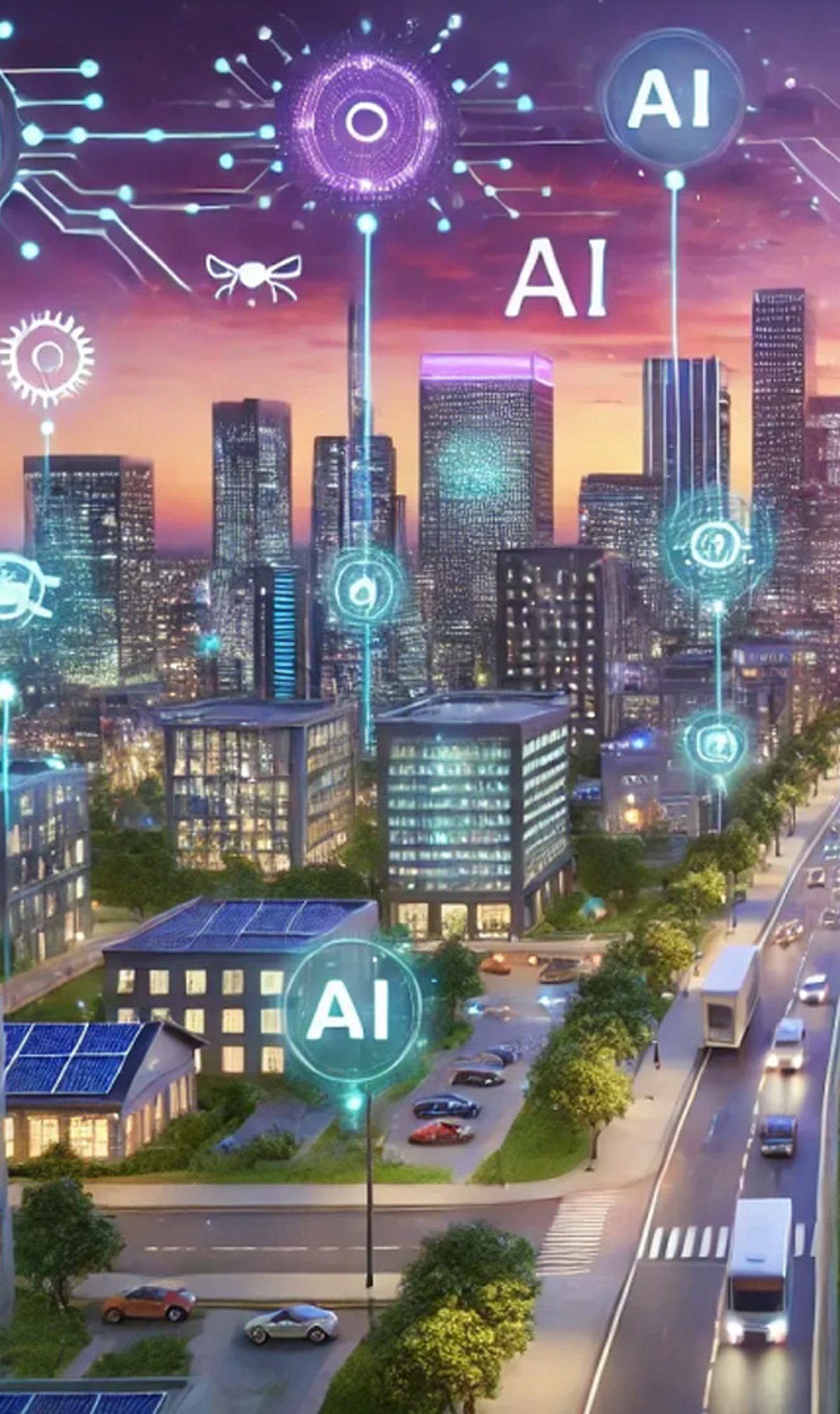
  • 10 Smart Cities Using AI to Revolutionize Urban Living

    10 Smart Cities Using AI to Revolutionize Urban Living

    Artificial intelligence is reshaping urban life, helping cities become more efficient, sustainable, and livable. From traffic optimization to smart energy grids, here are ten cities leading the charge.

    Singapore

    Singapore uses AI for traffic optimization, predictive maintenance, public safety monitoring, and smart urban planning, improving efficiency, sustainability, and residents’ quality of life.

    Dubai

    Dubai implements AI across government services, policing, healthcare, and transportation, accelerating digital transformation while enhancing citizen experiences through intelligent automation.

    Barcelona

    Barcelona employs AI-powered sensors for waste management, traffic control, and energy efficiency, creating cleaner neighborhoods and more sustainable public infrastructure systems.

    Seoul

    Seoul integrates AI into public transportation, emergency response, surveillance, and administrative services, enabling faster decision-making and improved urban convenience for citizens.

    Amsterdam

    Amsterdam uses AI for mobility management, environmental monitoring, and energy optimization, supporting sustainable development while reducing congestion and carbon emissions citywide.

    Tokyo

    Tokyo applies AI to disaster preparedness, transportation networks, and smart infrastructure maintenance, increasing resilience and operational efficiency across one of the world’s busiest cities.

    New York City

    New York City leverages AI for traffic analysis, emergency services, crime prevention, and infrastructure monitoring, helping manage complex urban operations more effectively.

    Helsinki

    Helsinki uses AI-driven digital government platforms and mobility solutions to simplify public services while encouraging environmentally responsible urban development initiatives.

    Copenhagen

    Copenhagen integrates AI with smart energy grids, cycling infrastructure, and environmental monitoring to improve sustainability, resource efficiency, and overall urban livability.

  • How AI Is Reshaping the Insurance Industry: From Underwriting to Customer Retention

    How AI Is Reshaping the Insurance Industry: From Underwriting to Customer Retention

    Artificial intelligence is rapidly transforming the insurance industry, enabling carriers to streamline operations, reduce costs, and improve customer experiences. From underwriting to claims processing, AI-powered tools are being deployed across the value chain. Below are the key areas where AI is making a significant impact.

    AI Underwriting

    AI analyzes vast datasets to assess risk faster, allowing insurers to make accurate policy decisions while reducing manual processing time.

    Fraud Detection

    Machine learning identifies suspicious claims, minimizing financial losses and improving the integrity of insurance operations across multiple sectors.

    Claims Automation

    AI-powered document analysis processes insurance claims quickly, reducing settlement times while improving customer satisfaction and operational efficiency.

    Personalized Policies

    By evaluating customer behavior and risk profiles, AI enables insurers to offer customized insurance plans with more competitive pricing and relevant coverage.

    Customer Chatbots

    AI chatbots provide instant policy assistance, claim updates, and personalized support around the clock, enhancing customer engagement and reducing service costs.

    Predictive Risk Analysis

    Using historical and real-time data, AI forecasts potential risks, helping insurers improve pricing strategies and proactive risk management.

    Image-Based Damage Assessment

    AI evaluates vehicle and property damage from uploaded images, accelerating claims processing while improving assessment consistency and accuracy.

    Regulatory Compliance

    AI-powered analytics monitor evolving regulations, helping insurers maintain compliance while reducing administrative burdens and operational risks.

    Customer Retention Analytics

    AI identifies policyholders likely to switch providers, enabling targeted engagement strategies that improve loyalty and long-term business growth.

  • Which Nations Dominate the Global AI Race in 2026?

    Which Nations Dominate the Global AI Race in 2026?

    Key Takeaways

    • The US leads in advanced AI models, private investment, and AI infrastructure.
    • China dominates AI research, patents, and large-scale industrial AI deployment.
    • Countries like India, South Korea, Singapore, Japan, and the UAE are emerging as major AI innovators through focused national strategies.

    The global AI race in 2026 goes well beyond chatbots and image generators. Countries now compete to build faster AI chips, larger data centers, better cloud systems, smarter robots, and stronger research networks. Stanford’s AI Index 2026 puts the US ahead on private investment and advanced model development. China leads in AI research papers and patent filings, while South Korea ranks first in AI patents per person. No single country leads across every category.

    United States Stays Ahead in Advanced AI

    America is still at the forefront of the battle to dominate AI with a superior ecosystem of technology. Renowned AI corporations like OpenAI, Google DeepMind, Meta, Anthropic, Microsoft, and NVIDIA are based in the USA and continue to produce the most advanced AI models and chips worldwide. Private AI investments in the US reached $109 billion in 2024, far exceeding amounts in other countries, as reported in the Stanford AI Index 2026. These investments support startups, research laboratories, software, and computer systems. Major tech companies spend several billion dollars annually on data center construction, with analysts projecting AI infrastructure spending will soon reach $1 trillion.

    China Closes the Gap Quickly

    China has become the biggest challenger to the United States. The country now produces more AI research papers than any other nation and files the highest number of AI patents. Chinese universities, technology companies, and government-backed research centers continue expanding their AI work at a very fast pace. One of China’s greatest strengths is its ability to apply AI across many industries—factories, smart cities, healthcare, transport, and robotics—at scale, giving Chinese companies valuable real-world experience. During the 2026 World Artificial Intelligence Conference, China announced new international AI partnerships and placed greater focus on open-source AI models. Chinese technology companies also introduced more advanced AI systems and new AI chips that reduce dependence on foreign technology. Experts believe the performance gap between Chinese and American AI models has narrowed significantly compared to just a few years ago.

    South Korea Shows Big Results Despite Its Size

    South Korea may have a smaller population, but it continues to produce impressive AI results. According to the Stanford AI Index 2026, South Korea ranks first in the world for AI patents per person, demonstrating remarkable innovation relative to its population. The country also benefits from its leadership in semiconductor manufacturing. Strong electronics companies and government support have helped expand AI research and commercial use. AI now plays an important role in smart factories, healthcare, advanced electronics, and industrial automation. These strengths make South Korea one of the most important countries in the global AI supply chain.

    The United Kingdom and Europe Focus on Trusted AI

    The United Kingdom remains Europe’s strongest AI hub. London attracts large amounts of AI investment, while British universities continue to produce world-class research. The country also supports many successful AI startups developing business software, healthcare solutions, and advanced machine learning tools. Across Europe, countries such as France, Germany, and the Netherlands continue to invest in AI research, semiconductor technology, and public computing infrastructure. European governments place strong emphasis on safe and responsible AI, aiming to support innovation while protecting privacy, security, and public trust. This balanced approach has helped Europe build a strong reputation in responsible AI development.

    India Builds Strength Through Talent and Digital Growth

    India has established itself as one of the rapidly growing AI markets. A large technology workforce, a strong startup ecosystem, and increased digitalization have driven India’s quick development. International studies consistently confirm that India is among the best countries for AI business skills. AI is now utilized in healthcare, education, agriculture, banking, and government services. Public digital infrastructure has promoted AI adoption among millions of users. Business confidence is extremely high—Indian leaders are very willing to invest in AI. Supportive policies for AI research, education, and cloud development provide India with opportunities for further growth.

    Smaller Countries Also Make a Global Impact

    A UAE report notes that the nation is now among the highest AI adoption rates globally, with over 70% of the working-age population using AI tools regularly. National investments, international partnerships, and long-term AI policies have helped the UAE move toward becoming a global AI hub. Singapore strengthens its position with excellent digital infrastructure, research support, and business-oriented policies. Japan increases investments in AI-based robots to fill gaps caused by labor shortages. New partnerships between technology companies and manufacturers are driving rapid progress in industrial robots.

    The Global AI Race is Far From Over

    The AI race in 2026 is no longer only about who builds the smartest chatbot. The United States still leads in advanced AI models and private investment. China continues to expand its research strength and industrial use of AI at an impressive pace. South Korea, the UK, India, Japan, Singapore, and the UAE are all building focused national strategies to close the gap.

  • Today’s Tech Roundup: Google’s New AI Chip, Transition VC Fund, IT Hiring Shifts & Crypto Funding

    Today’s Tech Roundup: Google’s New AI Chip, Transition VC Fund, IT Hiring Shifts & Crypto Funding

    Good morning, tech fam! Here are the biggest headlines making waves today, from artificial intelligence and startup funding to hiring trends, global AI competition, and cryptocurrency.

    Google’s New AI Chip Could Make Gemini Faster and Smarter

    Google is reportedly building a new AI chip called Frozen v2 to run Gemini more efficiently. The chip promises better performance while using less power, potentially reducing Google’s reliance on external hardware and strengthening its AI infrastructure in the coming years.

    Transition VC Expands Support for Energy Startups

    Transition VC has launched its Rs. 1,500 crore Fund II to invest in energy technology startups across India. The fund aims to help early-stage companies grow, build clean energy solutions, and accelerate innovation in the country’s energy sector.

    IT Firms Change Hiring Plans as Freshers Face Longer Waits

    India’s IT hiring landscape is shifting: companies are slowing campus recruitment, delaying joining dates, and linking offers to business demand. Firms now prioritize graduates with AI and deep tech skills, leaving many freshers with longer waits and fewer entry-level opportunities.

    Countries Driving the Global AI Race in 2026

    The global AI race in 2026 is led by nations investing in research, chips, talent, and robust digital systems. The United States and China remain ahead, while the UK, Singapore, Canada, and India continue to grow through innovation, skilled workers, and government support.

    Luxxfolio Raises $1.55 Million for Crypto Expansion

    Luxxfolio has completed a $1.55 million private placement by issuing 7.77 million units. The company plans to use the funds to grow its crypto projects, support Litecoin mining, and meet general business needs while offering warrants to investors.

  • ChatGPT vs Gemini vs Claude: Which AI Tool Is Best for Research in 2026?

    ChatGPT vs Gemini vs Claude: Which AI Tool Is Best for Research in 2026?

    AI tools have transformed how people research, analyze information, and create reports. ChatGPT, Gemini, and Claude are among the most capable options available today. However, each platform has different strengths. The best choice depends on whether you prioritize current web information, structured analysis, long documents, or an all-round research workflow.

    ChatGPT for Structured Research

    ChatGPT is a strong all-rounder for complex research. It can help users define questions, build research plans, analyze sources, and produce structured reports. Its research workflow is particularly useful for multi-step investigations involving web sources, uploaded documents, and connected tools. It suits professionals, students, and researchers seeking an organized end-to-end process.

    Gemini for Current Information

    Gemini has a strong advantage when research depends on recent information. Its deep research capabilities are closely connected to Google Search and can work with files and Google Workspace content. This makes Gemini particularly useful for market research, current affairs, industry developments, and other topics where fresh web information plays a central role.

    Claude for Long Documents

    Claude is especially effective when researchers already have substantial material to analyze. It can process lengthy reports, academic papers, and other documents while identifying themes and synthesizing complex information. Its strength lies in nuanced reasoning and clear writing, making it a compelling option for qualitative research and document-heavy analytical work.

    Comparing Their Strengths

    Each AI tool performs best in different research situations. Gemini is well suited to current web research, ChatGPT offers a balanced research workflow, and Claude excels at long-document analysis. For academic and technical work, ChatGPT and Claude can both be valuable. The right choice ultimately depends on the researcher’s specific workflow.

    Which AI Should You Choose?

    • Choose Gemini when your research requires the latest online information.
    • Choose Claude when you need to understand lengthy or complex documents.
    • Choose ChatGPT when you want a versatile tool that combines research, reasoning, analysis, and writing.

    For many users, ChatGPT offers the most balanced experience across different research requirements.

    The Final Verdict

    There is no single AI winner for every research task. ChatGPT is the strongest all-rounder, Gemini leads in web-first research, and Claude stands out for long-form analysis. The most effective workflow may combine all three: discover with Gemini, analyze with Claude, and structure the final research with ChatGPT.

  • Top Free AI Certifications in 2026: Google, IBM, Microsoft, AWS, and NVIDIA

    Top Free AI Certifications in 2026: Google, IBM, Microsoft, AWS, and NVIDIA

    Artificial intelligence is no longer a niche skill for software engineers. In 2026, industries from banking to healthcare to retail expect employees to understand AI fundamentals. To meet this demand, leading tech companies offer free certification programs that award verifiable credentials. Here’s a breakdown of the best free AI certifications available this year.

    Google: Generative AI Foundations

    Google Cloud’s ‘Introduction to Generative AI’ course provides a beginner-friendly overview of large language models, prompt engineering, and ethical AI. Lessons range from 30 minutes to two hours and include shareable skill badges. Advanced modules cover Vertex AI, TensorFlow, and BigQuery ML.

    IBM: Extensive Free Course Library

    IBM offers over 1,500 free courses on AI, cybersecurity, and cloud computing. Popular options include AI Fundamentals, Generative AI Basics, and AI Ethics. Many courses award digital badges that enhance LinkedIn profiles. The content covers natural language processing, machine learning essentials, and IBM watsonx.

    Microsoft: Practical AI for the Workplace

    Microsoft’s ‘Career Essentials in Generative AI’ learning path, created with LinkedIn Learning, focuses on real-world application. Topics include Microsoft Copilot, responsible AI, and prompt writing. This certification is ideal for business professionals and managers seeking to integrate AI into daily tasks.

    AWS: Cloud-Based AI Skills

    Amazon Web Services’ AWS Skill Builder offers free beginner courses on generative AI, Amazon Bedrock, and machine learning basics. The modular design allows learners to complete lessons in a few hours, making it easy to gain cloud AI knowledge over a weekend.

    NVIDIA: Technical AI Made Accessible

    NVIDIA provides free courses on neural networks, deep learning, and GPU computing. The material is written in plain language, making complex topics approachable for those with some AI background. Perfect for future software developers, engineers, and data analysts.

    DeepLearning.AI: Foundational Knowledge

    Founded by Andrew Ng, DeepLearning.AI offers ‘AI for Everyone’ — a non-technical course covering AI basics, business strategy, and ethics. No coding required, making it suitable for students, entrepreneurs, and professionals from all backgrounds.

    Elements of AI: Beginner-Friendly Worldwide

    Developed by the University of Helsinki, Elements of AI has trained millions globally. It covers machine learning, neural networks, and AI limitations in simple, step-by-step lessons. A certificate is awarded upon completion.

    Government-Supported Certifications

    India’s YUVA AI course, part of the IndiaAI Mission, offers a government-recognized certificate for beginners. No prior AI experience is needed, and the credential carries trust for job seekers.

    Which Certification Is Best?

    Each certification serves a different goal. Google excels for generative AI beginners, IBM for breadth of topics, Microsoft for workplace practicality, AWS for cloud AI, NVIDIA for technical depth, DeepLearning.AI for foundational knowledge, and Elements of AI for absolute novices. Government-backed options like YUVA AI add credibility.

    Final Thoughts

    Free AI certifications from top tech companies are more valuable than ever in 2026. They provide structured learning paths, practical skills, and respected credentials — all without tuition costs. As AI reshapes industries globally, these courses offer an affordable way to build future-ready skills that employers increasingly demand.

    FAQs

    1. Are these certifications really free? Yes, introductory courses are free; optional advanced exams may charge fees.

    2. Which is best for beginners? Google’s Introduction to Generative AI, IBM AI Fundamentals, and DeepLearning.AI’s AI for Everyone are top picks.

    3. Do they provide certificates? Many offer digital badges or certificates after completion.

    4. Is coding required? No, several beginner courses require no coding.

    5. Which certification is most useful for jobs in 2026? It depends on your goals: Google/IBM for general AI, Microsoft for workplace tools, AWS for cloud AI, NVIDIA for technical roles.