
Category: Artificial Intelligence

  • India’s AI Boom Propels Data Centres to Strategic National Infrastructure Status

    India’s AI Boom Propels Data Centres to Strategic National Infrastructure Status

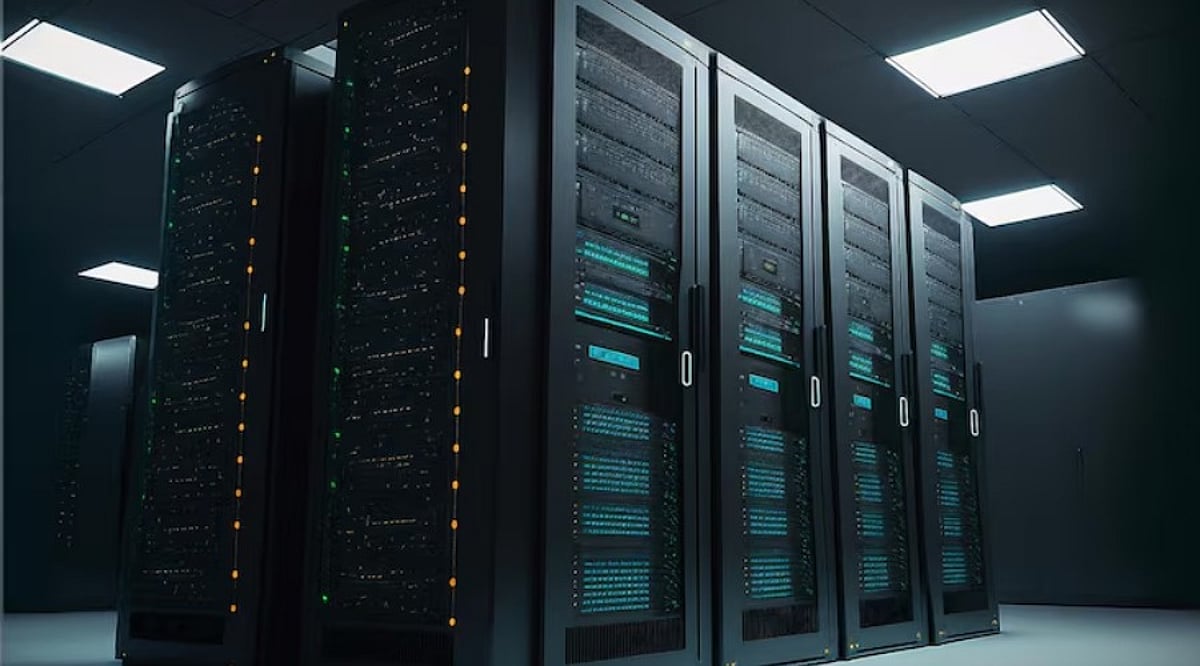
    India’s AI-driven digital transformation is rapidly elevating data centres from supporting infrastructure into a strategic national asset. With cumulative investment commitments exceeding $126 billion, strong government incentives, and surging demand from global hyperscalers, the sector is entering an unprecedented expansion phase.

    Global tech giants including Google, Microsoft, Amazon Web Services (AWS), and domestic operators like AdaniConneX and STT GDC India are aggressively building AI-ready facilities to meet soaring demand for cloud computing and AI workloads. However, long-term success will depend on overcoming significant challenges related to power supply, water usage, land availability, skilled talent, and project execution.

    Market Inflection Point

    According to a July 2026 KPMG report, India’s data centre sector stands at an inflection point where demand visibility, capital inflows, and technology shifts are aligning. The country’s total data centre capacity crossed 1,700 MW in 2025, with 440 MW added—a 160% jump from 2024. Projections indicate another 30% year-on-year growth in 2026, with approximately 500 MW of fresh supply expected. The market’s financial trajectory reflects this pace: IBEF projects the sector will reach $22 billion by 2030 at a 14-15% CAGR, while KPMG identifies a $46 billion opportunity in AI-optimised data centres alone by 2033, growing at a 35.1% CAGR.

    This growth is driven by three simultaneous forces: the explosion in AI workloads, accelerating enterprise cloud adoption, and India’s Digital Personal Data Protection Act, which restricts cross-border data transfers and effectively requires global companies to build physical infrastructure inside the country.

    Hyperscaler Commitments at Unprecedented Scale

    The scale of hyperscaler commitments to India in the past eighteen months is without precedent. Google announced a $15 billion investment in AI data centres in Andhra Pradesh in October 2025. Microsoft followed with a $17.5 billion commitment through 2030, building on an earlier $3 billion program. Amazon Web Services has pledged $35 billion by 2030. Domestically, AdaniConneX has announced $100 billion in renewable-powered hyperscale capacity through 2035, while STT GDC India was recently valued at close to $14 billion.

    India’s attractiveness rests on structural advantages: over 900 million internet users, average monthly wireless data consumption exceeding 25 GB per user, nearly 20% of global AI-related development activities, and software engineers available at roughly $20,000 per year—a fraction of costs in the US, Europe, or Singapore.

    Policy Shift: From Neutral to Active Enabler

    India’s regulatory environment has moved from passive observation to active facilitation. The Union Budget 2026-27 extended a 20-year tax holiday to eligible foreign cloud providers through 2047, along with 25-35% capital incentives for green technology adoption and a 15% safe harbor margin to reduce transfer pricing disputes. The draft National Data Center Policy, when finalized, is expected to streamline land, power, and environmental approvals—historically a primary bottleneck.

    Multiple states have introduced incentive frameworks: Telangana, Maharashtra, Andhra Pradesh, Tamil Nadu, and Uttar Pradesh are leading inflows, while tier-II cities including Ahmedabad, Visakhapatnam, Patna, and Bhopal are seeing growing developer interest driven by lower land costs and 5G rollout.

    The Execution Gap

    Despite momentum, a significant gap exists between announced and operational capacity. Less than 20% of announced capacity from roughly 30 large projects launched between March 2025 and April 2026—collectively adding around 3.5 GW—is currently live. Most large, multi-phase campuses have commissioning timelines extending to 2028 and beyond. Mumbai still accounts for over 50% of operational inventory, and with Chennai, Delhi-NCR, and Bengaluru, these four cities host nearly 90% of tier-I capacity. Hyderabad and Visakhapatnam together account for over 2 GW of planned AI-native capacity, but execution risk remains.

    Sustainability Constraints: Power and Water

    The most consequential constraints are physical. A 100 MW hyperscale facility requires approximately 2 million liters of water per day for cooling, yet 60-80% of Indian data centres face high water stress. Visakhapatnam district, where a 1 GW AI-native campus is planned, has the lowest groundwater availability for industrial use in Andhra Pradesh. On power, AI-ready facilities demand far higher density, often exceeding 50 kW per rack, straining local grid infrastructure. While India has surpassed 500 GW of total installed power capacity and renewables exceed 50% of generation in some periods, coal still supplies around 70% of actual generation. Operators like Nxtra and STT GDC India are already running at 60-63% renewable energy integration, but alignment between renewable capacity additions and data centre locations remains uneven.

    What Must Happen Next

    KPMG’s KG Purushothaman emphasized the need for integrated execution models combining engineering capability, AI readiness, regulatory understanding, and operational accountability. India needs to build delivery infrastructure: grid modernization, water-efficient and liquid-cooling technologies, specialized data centre workforce pipelines, and environmental frameworks that accommodate hyperscale facilities without depleting local resources.

    The workforce dimension is frequently underestimated. India has a world-leading IT workforce but not yet a world-class data centre operations workforce at the scale required. A modern hyperscale campus needs highly specialized mechanical and electrical engineers, HVAC and cooling plant operators, cybersecurity professionals, and power systems specialists—roles not produced in large numbers by current engineering education pipelines.

    The strategic parallel with India’s IT services industry is instructive. Data centres require a different asset base—land, power, water, fiber, and specialized operations—but the underlying logic of structural cost advantage and scale remains similar. Whether India captures 4-5% of global data centre capacity additions between 2026 and 2032, as CBRE projects, will depend less on capital availability and far more on whether physical, human, and regulatory infrastructure can be delivered fast enough to match the ambition.

    Why This Matters

    Artificial intelligence is dramatically increasing demand for computing power, cloud services, and high-performance data centres worldwide. As one of the world’s fastest-growing digital economies, India has an opportunity to become a major global AI infrastructure hub. However, investment announcements alone are not enough. Delivering hyperscale facilities requires reliable electricity, sustainable water management, high-speed connectivity, regulatory clarity, and a skilled workforce. Understanding these opportunities and constraints is essential for technology companies, cloud providers, policymakers, investors, and enterprises planning long-term digital infrastructure strategies.

  • Apple Tests AI-Powered Live Notes to Automatically Transcribe Genius Bar Sessions

    Apple Tests AI-Powered Live Notes to Automatically Transcribe Genius Bar Sessions

    Apple is piloting a new artificial intelligence feature called Live Notes at select Apple Stores. The tool is designed to automatically record and transcribe conversations during Genius Bar support appointments, reducing the need for employees to take manual notes, according to a report from 9to5Mac citing Bloomberg’s Mark Gurman.

    The feature transcribes customer conversations in real time, generates a summary, and saves the record to Apple’s internal Genius Bar system after the session ends. Apple has emphasized that the feature is optional and requires explicit consent from both the customer and the employee before recording begins.

    To address privacy concerns, Apple has informed employees that voice recordings are not stored on any server, managers will not have access to the raw transcripts, and employees retain the ability to edit both the transcript and the generated summary before submission. Despite these assurances, some staff members have expressed concerns that the transcripts could be used in performance evaluations.

    Currently, Live Notes is being tested in only a limited number of Apple retail locations. The company has not announced plans to expand the trial or make the feature mandatory.

    This move highlights Apple’s continued investment in AI to enhance customer service experiences while navigating privacy and employee relations challenges.

  • Christopher Nolan Calls AI a ‘Trojan Horse’ and Says Young Audiences Are Turning Away from AI-Generated Content

    Christopher Nolan Calls AI a ‘Trojan Horse’ and Says Young Audiences Are Turning Away from AI-Generated Content

    Renowned filmmaker Christopher Nolan has described artificial intelligence as a “Trojan horse,” warning that while AI can be a useful tool, replacing human creativity with it is “nonsense.” His comments come amid growing debate over the technology’s impact on filmmaking, storytelling, and the value of human-made work.

    Nolan Says AI Is Facing Strong Public Resistance

    Nolan believes that public reactions to generative AI have been particularly swift and aggressive. According to the director, younger generations—including his own children—can easily identify and disregard what is often called “AI slop.”

    “The younger generation has grown up online and understands how digital content is created and circulated,” Nolan said. That familiarity, he suggested, makes it easier for them to recognize content that feels artificial or lacks genuine creative effort.

    He also views AI as an irreversible technological wave. The industry, he noted, has spent enormous effort marketing AI, but audiences are not responding in the same way.

    ‘Replacing Human Creativity Is Nonsense’

    Nolan does not believe artificial intelligence will replace human creativity. While he acknowledged that AI might be useful as a practical tool, he stressed that it cannot substitute the human role as a creative filmmaker and artist.

    For Nolan, filmmaking is always about the human element, the physical world, and performances. His creative process typically relies on practical effects, location shooting, and large-format cinematography. This approach was evident in his adaptation of The Odyssey, an ancient epic designed to be a big-screen experience emphasizing scale and physical filmmaking.

    Nolan’s remarks arrive as Hollywood continues to debate the use of generative AI. The technology has sparked concerns over hiring writers, the nature of writers’ work, and the future of creative jobs. The debate also played a role in the 2023 Hollywood strikes. While some filmmakers and studios are exploring AI tools, others argue that technology should assist human creators rather than replace them.

    Also read: San Francisco Urges Apple, Google to Remove AI Nudify Apps

  • Netflix Acquires Ben Affleck’s AI Startup InterPositive for $587 Million to Boost Original Content Production

    Netflix Acquires Ben Affleck’s AI Startup InterPositive for $587 Million to Boost Original Content Production

    Netflix is making another big bet on artificial intelligence by agreeing to buy InterPositive, the AI filmmaking startup co-founded by Ben Affleck. The acquisition news came to light initially in March 2026.

    According to the latest reports found in a regulatory filing, the deal is worth around $587 million, and they paid this amount in cash as part of the acquisition. If the acquisition successfully happens, it will be Netflix’s biggest investment in AI tools for film and TV production.

    When the news first surfaced, Ben Affleck mentioned that the deal aims to ‘protect the power of human creativity.’ He added, “InterPublic’s AI tools help filmmakers improve their footage in post-production, particularly with real-world production challenges such as missing shots, background replacements or incorrect lighting.”

    Netflix also announced that the entire InterPositive team will join the company, with Affleck as a senior advisor. While Netflix has not shared exactly when the technology will be used, the company believes AI can help creators work faster without replacing them.

    The move comes as streaming companies continue to spend billions on original content every year. Finding ways to streamline production has become just as important as creating new shows. InterPositive’s technology could help Netflix release more original movies and series each year. If parts of the production process take less time, creative teams may be able to work on more projects over the same period.

    Netflix has not announced any immediate changes to its production process. However, this deal shows that the company believes AI will play a bigger role in creating future Netflix Originals.

  • Netflix Acquires Ben Affleck’s AI Startup InterPositive for $587M

    Netflix Acquires Ben Affleck’s AI Startup InterPositive for $587M

    Netflix has disclosed a $587 million cash payment for a business acquired in March 2026, now confirmed to be InterPositive, the AI filmmaking startup co-founded by actor and director Ben Affleck. The streaming giant announced the purchase on March 5 but withheld the price until its latest quarterly filing revealed the $587 million figure.

    Netflix Brings InterPositive Team In-House

    InterPositive develops AI tools for film and television production, focusing on post-production tasks such as generating missing shots, background replacements, and lighting corrections. Netflix stated that the technology is designed to support filmmakers while keeping humans in control of creative decisions.

    The acquisition brings InterPositive’s full team into Netflix, with Affleck joining as a senior adviser. Netflix has not published the startup’s revenue, earlier valuation, or a detailed purchase-price breakdown.

    Affleck said he began developing the company after studying production AI systems in 2022, believing existing models did not meet filmmakers’ needs. His team recorded a private dataset on a controlled soundstage to train its first model, which studies visual logic, editing consistency, and real production conditions. InterPositive says its smaller datasets focus on filmmaking methods rather than performances. Affleck emphasized he wanted to “protect the power of human creativity and the people behind it.”

    AI Tools Address Post-Production Problems

    Film productions often discover missing material or visual errors after shooting ends. Fixing those problems can require reshoots, new sets, extra crew time, and more spending. InterPositive designed its tools to handle some corrections within the editing process.

    Its system can generate or adjust footage while following the style of existing material, matching lighting, camera movement, and scene structure. Netflix has not identified which InterPositive products are already active on its films or series, nor confirmed whether outside studios will receive the technology. In March, Affleck said he expected the broader creative community to access future work, though neither Netflix nor InterPositive provided a release schedule or licensing plan.

    Company executives said AI tools should expand creative choices without replacing writers, directors, actors, or crews. Netflix has not released employment figures, savings estimates, or production data tied directly to the startup’s technology.

    Netflix Expands Generative AI Use

    Netflix’s second-quarter shareholder letter shows wider generative AI use across its content pipeline. The company said AI workflows featured in roughly 300 titles during 2026, with most of that work taking place during post-production.

    Netflix named Glory from India, Brasil 70: A Saga do Tri, and The American Experiment as examples. Those projects used AI for enhanced crowds, historical battle scenes, and large establishing shots. Netflix said some shots may not have appeared without the technology.

    The streamer also uses AI for title discovery, natural-language search, and advertising services. Buying InterPositive adds filmmaker-focused production software to that wider technology plan. Netflix has not stated how quickly the acquisition could reduce costs.

    The $587 million disclosure gives investors a clearer figure for Netflix’s spending on production AI. Future filings may provide more information about integration expenses, accounting treatment, and the startup’s contribution to Netflix’s operations, as well as whether the tools reach outside productions.

  • OpenAI Elevates Indian-Origin Engineer Uday Ruddaraju to Chief Technology Officer of Compute

    OpenAI Elevates Indian-Origin Engineer Uday Ruddaraju to Chief Technology Officer of Compute

    OpenAI has promoted Indian-origin technology executive Uday Ruddaraju to the role of Chief Technology Officer (CTO) of Compute, marking a significant leadership milestone at the AI frontrunner. The appointment, announced nearly a year after Ruddaraju joined from Elon Musk’s xAI, positions him to steer the company’s compute infrastructure as it scales next-generation AI systems.

    In a LinkedIn post, Ruddaraju described his first year at OpenAI as “incredibly rewarding” and expressed enthusiasm for leading the compute division during a period of rapid expansion. As CTO of Compute, he will oversee the massive computing power required to train and deploy frontier models, including GPT-5.6. His team is focused on scaling capacity while strengthening compute, networking, storage, and machine learning systems.

    From Hyderabad to Silicon Valley

    Ruddaraju’s journey began in Hyderabad, India, where he earned a Bachelor’s degree in Computer Science from Chaitanya Bharathi Institute of Technology (CBIT). During his undergraduate studies, he interned at Amazon Web Services. He then moved to the United States for a Master’s degree in Computer Science at the University of Minnesota. His professional career includes stints at eBay and Robinhood before joining xAI as Head of Infrastructure Engineering. In 2025, he moved to OpenAI, rising from Head of Compute and Infrastructure to the CTO of Compute role.

    Strategic Importance for OpenAI

    Ruddaraju’s elevation underscores OpenAI’s push to strengthen its computing backbone as AI models grow more complex. The company is actively hiring talent in distributed systems, hardware engineering, manufacturing, and large-scale data center development to support future AI growth. His appointment also highlights the growing influence of Indian-origin technology leaders in shaping the future of artificial intelligence.

    Ruddaraju’s roadmap includes significantly scaling compute infrastructure to meet the demands of increasingly powerful AI systems, positioning OpenAI to maintain its competitive edge in the global AI race.

  • How AI Tutors Are Personalizing Education and Transforming the Classroom

    How AI Tutors Are Personalizing Education and Transforming the Classroom

    Traditional classrooms have long operated on a one-size-fits-all model, where every student learns at the same pace regardless of individual strengths or weaknesses. AI tutors are changing that paradigm by delivering personalized lessons tailored to each learner’s unique needs, learning speed, and areas for improvement.

    These intelligent systems can explain difficult topics in multiple ways, provide instant feedback, and generate custom practice questions that reinforce understanding and memory retention. With AI tutors, students gain access to 24/7 support for homework, revision, exam preparation, and skill-building—without having to wait for the next class session.

    Popular AI-powered learning tools such as Khanmigo, Socratic, and Duolingo are already adapting lessons to individual needs, making education more engaging and effective. However, AI is not poised to replace human teachers entirely. Educators bring empathy, motivation, critical thinking, classroom discussions, and real-world mentorship—elements that technology cannot replicate.

    The future of education lies in a hybrid model where AI handles personalized practice and routine tasks, while teachers lead creativity, collaboration, and emotional support. This balanced approach promises to make learning more accessible, efficient, and human-centered.

  • San Francisco Demands Apple and Google Remove AI Deepfake Nudify Apps from Stores

    San Francisco Demands Apple and Google Remove AI Deepfake Nudify Apps from Stores

    San Francisco has taken legal action against Apple and Google, demanding the removal of AI-powered ‘nudify’ apps from their app stores. The city alleges these apps enable users to create non-consensual intimate deepfake images, violating California law.

    In cease-and-desist notices sent to both companies, San Francisco City Attorney David Chiu accused Apple and Google of continuing to host dozens of such apps and processing payments for them despite the risks. The city warned that further legal action could follow if the companies fail to comply.

    ‘Nudify’ apps use artificial intelligence to generate fake nude images by digitally removing clothing from photographs. Authorities say the technology is increasingly used to target women and girls without their consent. The notices argue that Apple and Google are facilitating the distribution and monetization of software that enables non-consensual intimate deepfakes.

    The city has asked both companies to remove the apps, cut ties with their developers, and strengthen measures to prevent similar apps from appearing on their platforms. David Chiu stated that companies should not profit from software that enables digital exploitation.

    While AI technology has made image editing easy, it has also made it simple to create highly realistic fake images that can harm victims. According to San Francisco officials, investigations revealed that some nudify apps were still in use despite app store policies against abusive, exploitative, and sexually explicit material.

    This case adds to mounting pressure on major technology companies to take greater responsibility for AI-powered apps distributed through their marketplaces. Google stated that it removed hundreds of nudify apps and restricted related search terms. Apple had not publicly responded to the legal notices at the time of reporting.

    The move marks one of the strongest attempts by a U.S. city to hold app store operators accountable for hosting AI tools capable of generating non-consensual intimate deepfakes. It also signals growing regulatory pressure on technology platforms as AI-powered applications become more widely available.

  • Nvidia Partners with Japanese Robotics Firms to Accelerate AI-Powered Automation

    Nvidia Partners with Japanese Robotics Firms to Accelerate AI-Powered Automation

    Nvidia is deepening its commitment to robotics by partnering with leading Japanese companies to develop advanced AI-powered machines. This collaboration targets the creation of next-generation factory robots, AI-powered humanoids, and digital twin simulations that streamline development and testing.

    Japan’s longstanding leadership in robotics, combined with Nvidia’s powerful GPU computing platforms, positions the partnership to drive a new wave of industrial automation. The goal is to improve productivity and efficiency in manufacturing through smarter, AI-driven systems.

    Beyond factories, the technology could extend to healthcare, logistics, and service robots, enabling more intelligent and autonomous operations. The move reflects the global race to invest in intelligent automation, with Nvidia providing the computational backbone for training and deploying robotics AI models.

    This strategic partnership underscores how Japan is strengthening its role in global AI development, leveraging digital twins and advanced simulations to accelerate innovation. The collaboration is expected to have a significant impact on the future of robotics and AI across multiple industries.

  • PLATON AI Camera Reconstructs Particle Paths Using Just Five Photons

    PLATON AI Camera Reconstructs Particle Paths Using Just Five Photons

    Scientists at ETH Zurich and EPFL have developed an AI-powered camera system that can reconstruct the paths of subatomic particles using only a handful of photons. The technology, called PLATON, could simplify particle detectors by replacing millions of conventional detector elements with a single light-emitting block and artificial intelligence. The findings were published in Nature Communications.

    How PLATON Works

    Particle detectors help scientists study elementary particles by tracking how they move through matter. Most existing detectors use scintillators, materials that emit tiny flashes of light when struck by charged particles. To pinpoint where these interactions take place, the scintillator is divided into millions of small segments connected to optical fibres and photon sensors. While this design offers high precision, it also increases the complexity and cost of large-scale detectors. Experiments such as Japan’s T2K neutrino project and CERN’s LHCb rely on these segmented detector systems to accurately track particle interactions.

    PLATON removes the need for millions of detector elements. Instead, it uses a single, unsegmented scintillator block and reconstructs the particle’s trajectory by analysing the emitted light.

    Inside the PLATON System

    The system combines a plenoptic, or light-field, camera with a single-photon avalanche diode (SPAD) sensor that detects individual photons generated inside the scintillator. Unlike conventional cameras, a light-field camera records both the intensity of light and the direction from which it arrives. The research team built the prototype by mounting a micro-lens array directly on the SwissSPAD2 imaging sensor. The setup captures extremely faint light signals while filtering background noise through gated photon detection.

    During laboratory tests, the prototype reconstructed particle interactions using as few as five detected photons, with the experimental results closely matching computer simulations.

    Potential Applications Beyond Physics

    The researchers also developed a transformer-based neural network to analyse where and when photons are detected. Instead of processing text, the AI identifies patterns in photon data to reconstruct the original particle path in three dimensions. Simulations suggest a future version of PLATON could achieve sub-millimetre spatial resolution inside a 10×10×10 cm detector. A larger one-cubic-metre detector is expected to deliver resolution of only a few millimetres, comparable to today’s advanced scintillator detectors despite using far fewer components.

    The researchers also see potential beyond particle physics. They have filed three patents covering the use of PLATON in positron emission tomography (PET) scanners. The technology could improve medical imaging by reconstructing faint light signals more accurately while reducing the complexity of detector systems.