Category: Artificial Intelligence

  • New Report Reveals 77% of Indian Professionals Use AI at Work, Boosting Salaries

    New Report Reveals 77% of Indian Professionals Use AI at Work, Boosting Salaries

    AI Adoption Soars Among Indian Professionals

    According to Naukri’s World AI Day Report 2026, a staggering 77% of Indian professionals now use artificial intelligence in their daily work. The report, based on surveys of around 27,000 experts across over 80 sectors, shows that AI is no longer confined to the technology industry.

    AI Skills Drive Higher Salaries

    Employer demand for AI talent has surged. AI-related skills now appear in 15.4% of technology job descriptions, up from just 0.9% in 2020 — a nearly 17-fold increase in six years. Non-technology roles have also seen a sixfold rise in mentions of AI skills. Professionals with AI expertise command higher salaries compared to their peers without such skills.

    How Professionals Are Using AI

    The survey reveals that AI is used for a variety of everyday tasks. Approximately 71% of respondents leverage AI for validation of ideas, problem-solving, and planning. Organizations are increasingly recruiting employees who can use AI systems, even for non-tech positions.

    As AI implementation continues to grow across industries, workers with AI experience are expected to remain highly sought after in the coming years.

  • Apple Trade Secrets Case Escalates Legal Pressure on OpenAI’s Hardware Ambitions and Potential IPO

    Apple Trade Secrets Case Escalates Legal Pressure on OpenAI’s Hardware Ambitions and Potential IPO

    Apple has intensified its trade secrets lawsuit against OpenAI by sending preservation letters to approximately 40 former employees who now work at the AI company. The letters instruct recipients to retain all relevant documents and communications, and request meetings with Apple’s legal team. This move follows Apple’s initial lawsuit filed on July 10 in the Northern District of California, which accuses OpenAI, io Products, and two former Apple employees of using confidential hardware information. OpenAI has denied any interest in rivals’ trade secrets, and the claims remain untested in court.

    Apple Widens Its Search for Evidence

    Apple named former employees Chang Liu and Tang Yew Tan in the complaint. Tan serves as OpenAI’s chief hardware officer after years at Apple, while Liu worked as a senior electrical engineer at Apple. The complaint alleges Liu kept a company laptop and later accessed Apple’s network through an authentication flaw, downloading many confidential internal Apple hardware files. It also claims Tan emailed himself supplier details and internal reports before leaving Apple. Both claims remain allegations. Apple further says Tan encouraged Apple employees interviewing at OpenAI to bring physical parts for “show and tell” sessions. One candidate allegedly said, “I didn’t even know we could take those from the office.” OpenAI has not publicly answered each claim. The preservation letters show Apple wants records from a wider group than the two employees named in court. More than 400 former Apple workers now work at OpenAI, according to Apple’s filing. Employee movement alone does not prove trade secret theft under California law.

    Hardware Plans Face Court Scrutiny

    OpenAI moved deeper into consumer hardware after buying io Products, a company linked to former Apple design chief Jony Ive. Reuters valued the transaction at $6.5 billion. Apple says OpenAI used hiring practices and supplier contacts to speed up its hardware work. Apple also alleges OpenAI approached Apple suppliers for confidential production information. One claim involves a metal-finishing method that Apple describes as secret. Apple says a supplier believed OpenAI had permission to use the process. OpenAI disputes the accusation. The court could examine emails, interview records, product files, and supplier communications during discovery. Apple may seek limits on technology that a judge finds connected to protected information. No court has ruled that OpenAI used Apple trade secrets. OpenAI said, “We have no interest in other companies’ trade secrets.” It added that the company focuses on building technology for users. The statement does not address the separate claims against Tan, Liu, or io Products.

    OpenAI IPO Plans Meet New Legal Risk

    Reports say OpenAI has considered a public listing in late 2026 or 2027. The company has not announced an IPO date. Previous statements from OpenAI said a listing was not its main focus. The Apple OpenAI lawsuit adds another item for banks and investors to review before any share sale. An IPO filing must describe material lawsuits, business risks, management matters, and possible costs. The case may also require OpenAI to explain whether its hardware plans rely on disputed information. A long discovery process could overlap with IPO preparations. It could expose internal messages, hiring records, and product development documents. However, the lawsuit does not automatically stop a listing, and Apple has not proved its claims. The dispute comes after Apple and OpenAI worked together to add ChatGPT access to Apple devices in 2024. Their relationship now includes cooperation and competition. The legal case will proceed separately from any reported IPO timetable.

  • 7 Deep Tech Startups in India Poised for Global Impact in 2026

    7 Deep Tech Startups in India Poised for Global Impact in 2026

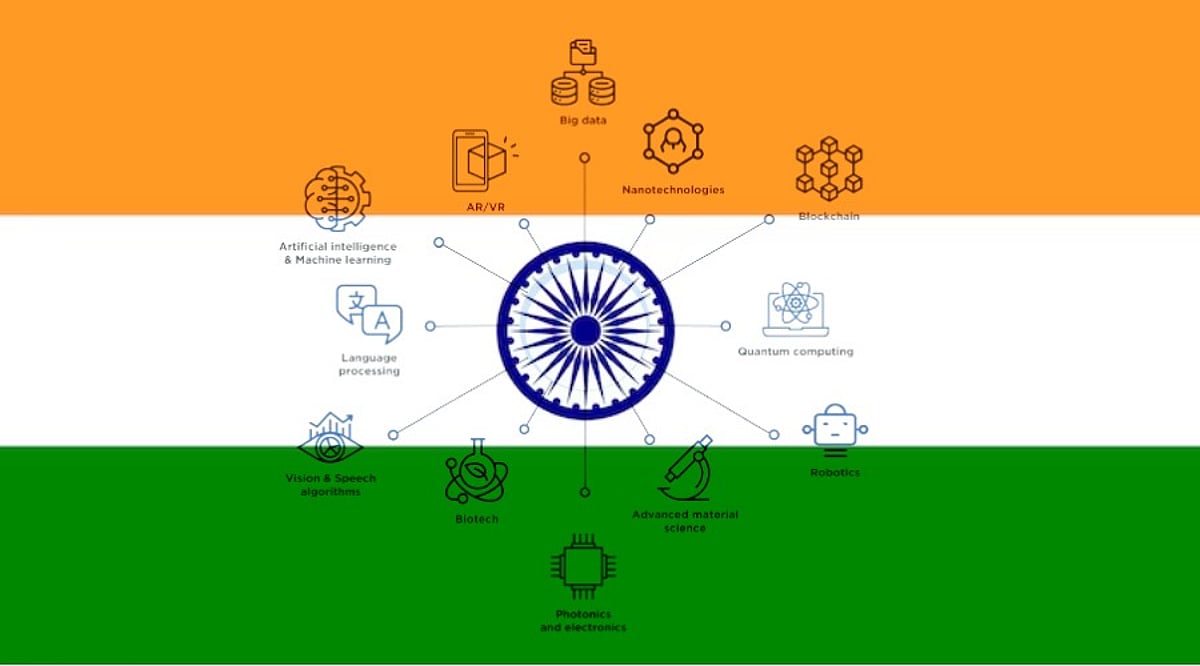
    India’s deep-tech ecosystem is entering a transformative phase as artificial intelligence, space technology, quantum computing, robotics, and advanced manufacturing move from research labs to commercial markets. Backed by rising venture capital investments, government initiatives such as the National Deep Tech Startup Policy discussions and IndiaAI Mission, and growing global demand for frontier technologies, 2026 is shaping up to be a defining year for Indian startups building intellectual property with worldwide impact.

    Leading Deep Tech Companies in India

    Deep-tech ventures are driving innovation through supportive government policies, research institutions, and increased funding. Unlike typical software startups, these companies develop intellectual property in fields like AI, space technology, quantum computing, robotics, and mobility. Here are seven startups to watch in 2026:

    1. Pixxel (Space Technology)

    Founded in 2019 by Awais Ahmed and Kshitij Khandelwal, Bengaluru-based Pixxel is building the world’s largest hyperspectral satellite constellation. Its Earth Observation Platform delivers high-quality imagery for agriculture, climate monitoring, mining, and defense. With global investments and commercial satellite launches, Pixxel has strengthened its international position and advanced analytical capabilities. As demand for geospatial intelligence soars, Pixxel stands out as one of India’s most promising space tech companies in 2026.

    2. Agnikul Cosmos (Space Launch)

    Set up in 2017 by Srinath Ravichandran and Moin SPM, Chennai-based Agnikul Cosmos offers custom-built launch vehicles for small satellites. The company gained worldwide attention by demonstrating a rocket launch using a 3D-printed engine made from a single piece. Supported by institutional and individual investors, Agnikul serves the commercial space sector, research institutions, and defense.

    3. QpiAI (Quantum Computing & AI)

    Founded in 2019 by Dr. Nagendra Nagaraja, QpiAI specializes in using AI and quantum computing to solve complex optimization problems. The company develops quantum computers, software, and AI for enterprise applications in manufacturing, pharma, logistics, and finance. With significant investments and government partnerships, QpiAI is accelerating India’s quantum sector.

    4. Sarvam AI (Generative AI)

    Founded in 2023 by Vivek Raghavan, Pratyush Kumar, and Ankit Jain, Bengaluru-based Sarvam AI focuses on developing sovereign generative AI models tailored for India’s multilingual environment. Its large language models, enterprise AI, and conversational systems support business and government initiatives. Having attracted funding from prominent investors and being selected for the IndiaAI Mission to build sovereign AI, Sarvam AI is poised to become a key player in India’s AI landscape in 2026.

    5. Qure.ai (Healthcare AI)

    Formed in Mumbai in 2016 by Prashant Warier and Pooja Rao, Qure.ai enhances medical imaging using AI. Its diagnostic tools help doctors identify diseases such as tuberculosis, lung conditions, and strokes from radiology images. The company operates in multiple countries, expanding through partnerships, and is one of the most commercially successful Indian healthcare AI firms.

    6. Ati Motors (Autonomous Industrial Robotics)

    Established in 2017 by Saurabh Chandra, Saurabh Agarwal, and Sikander Khan, Bengaluru-based Ati Motors specializes in Autonomous Mobile Robots (AMRs) for material movement in factory floors and warehouses. With enterprise adoption worldwide and additional funding, the company has gained a strong market position. As smart factories become more common, Ati Motors is well-positioned for growth in industrial automation.

    7. Vecmocon Technologies (EV Deep Tech)

    Headquartered in New Delhi and founded in 2016 by Peeyush Asati, Pallav Gupta, and Aman Raj, Vecmocon Technologies provides intelligent electronics, battery management systems, IoT platforms, and vehicle control units for electric vehicles. Serving two-wheelers, three-wheelers, and commercial EVs, the company continues to attract investment amid India’s growing electric mobility push, making it a leading innovator in clean mobility.

    Deep Tech Market Overview

    Rising enterprise adoption, defense requirements, and global demand for frontier technologies are accelerating commercialization. As startups increasingly collaborate with academia, industry, and public institutions, India’s deep-tech ecosystem is expected to expand further. For enterprise AI, Sarvam AI leads the way, while Pixxel and Agnikul Cosmos are reshaping space and defense technologies. Qure.ai continues transforming healthcare diagnostics, Ati Motors strengthens industrial automation, Vecmocon advances clean mobility, and QpiAI represents India’s growing ambitions in quantum computing. Together, these companies showcase the breadth and maturity of India’s rapidly evolving deep-tech ecosystem heading into 2026.

    Frequently Asked Questions

    What are deep tech companies?

    Deep tech companies create breakthrough technologies rooted in scientific research and engineering, including artificial intelligence, robotics, quantum computing, biotechnology, semiconductors, and space systems with strong intellectual property.

    Why is India’s deep tech sector growing rapidly?

    India’s deep tech sector is expanding due to increasing venture capital, government initiatives, research collaboration, skilled talent, and rising enterprise demand for frontier technologies across multiple industries.

    Which Indian company is leading in space technology?

    Pixxel specializes in hyperspectral Earth observation satellites, while Agnikul Cosmos develops customizable launch vehicles, making both companies pioneers in India’s rapidly growing private space industry.

    Which startups are driving AI innovation in India?

    Sarvam AI develops multilingual foundation models for enterprises, while Qure.ai uses artificial intelligence to improve medical imaging, disease detection, and clinical decision-making across healthcare systems worldwide.

    Which deep tech sectors offer the biggest opportunities in 2026?

    Artificial intelligence, quantum computing, space technology, robotics, healthcare AI, clean mobility, and semiconductor innovation are expected to drive investment, commercialization, and global competitiveness throughout India’s deep tech ecosystem in 2026.

  • Former Twitter CEO Parag Agrawal’s AI Startup Parallel Hits $2 Billion Valuation

    Former Twitter CEO Parag Agrawal’s AI Startup Parallel Hits $2 Billion Valuation

    Parag Agrawal has made a notable comeback after his controversial departure from Twitter. The Indian-American technology executive, who served as Twitter’s CEO before Elon Musk’s acquisition, now leads the AI startup Parallel Web Systems.

    The company recently achieved a $2 billion valuation after raising $100 million in a Series B funding round led by Sequoia Capital. This latest investment brings Parallel’s total funding to $230 million and positions Agrawal at the helm of one of the fastest-growing startups in the AI infrastructure space.

    From Twitter CEO to AI Entrepreneur

    Elon Musk acquired Twitter for $44 billion in October 2022 and terminated Agrawal along with other top executives. Agrawal subsequently shifted his focus from social media to artificial intelligence.

    Agrawal founded Parallel Web Systems to build infrastructure for autonomous AI agents. Its technology enables AI agents to search, browse, and utilize information from the open web for complex tasks. Unlike traditional search technologies designed primarily for human use, Parallel’s technology specializes in machine-oriented research. The platform allows AI agents to gather information, browse websites, and conduct multistep research.

    This technology finds applications in legal research, finance, insurance, and enterprise intelligence. Among the companies using Parallel’s platform is the AI legal startup Harvey. Additionally, over 100,000 developers are leveraging the infrastructure.

    Funding Fuels AI Agent Ambitions

    The latest funding round was led by Sequoia Capital, with existing investors including Kleiner Perkins, Index Ventures, Khosla Ventures, First Round Capital, Spark Capital, and Terrain Capital. Parallel plans to use the funds to expand its R&D efforts and strengthen its sales and marketing operations while targeting more enterprise customers.

    Parallel has also expanded its partnership with Google. Customers from Google Cloud who develop AI agents using Gemini can now benefit from Parallel’s search engine technology, providing another pathway into the larger enterprise ecosystem.

    Agrawal’s journey from a short-lived tenure as Twitter CEO to leading a $2 billion AI startup underscores the rapidly changing technology landscape.

  • Agentic Analytics vs. Text-to-SQL: Choosing the Right AI Data Analysis Approach

    Agentic Analytics vs. Text-to-SQL: Choosing the Right AI Data Analysis Approach

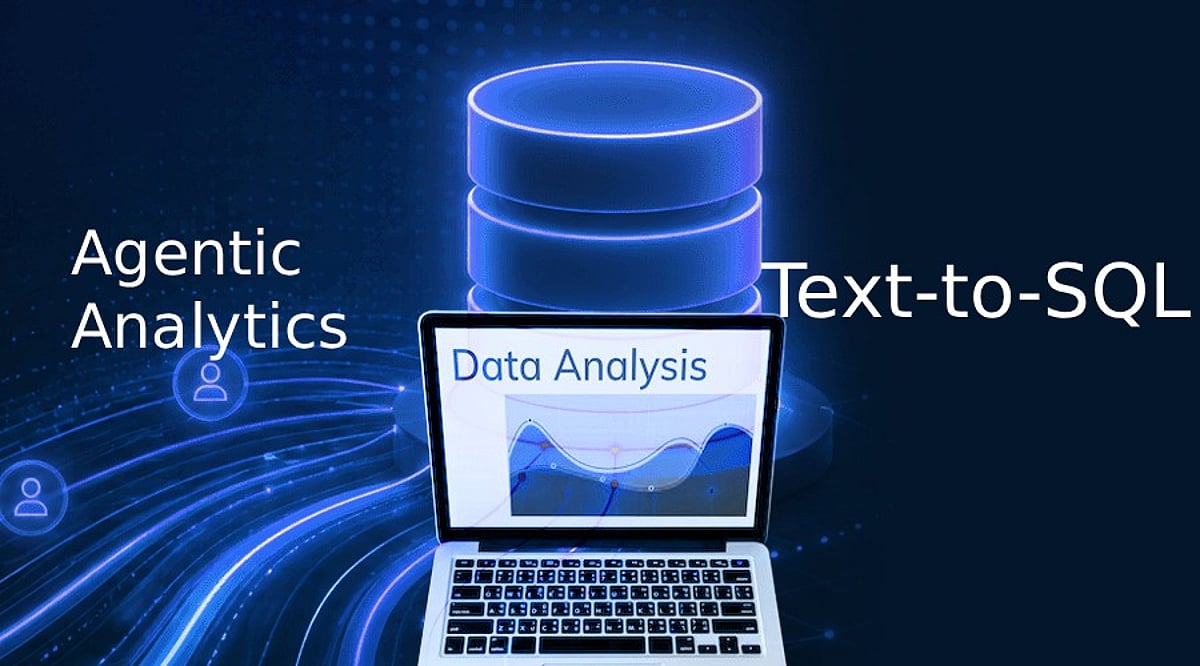
    Artificial intelligence has transformed how organizations analyze data. Instead of relying solely on data analysts to write SQL queries and generate reports, users can now ask questions in natural language and get answers in seconds. Two key technologies driving this shift are Text-to-SQL and Agentic Analytics, but they serve very different purposes.

    What is Text-to-SQL?

    Text-to-SQL uses language models to convert natural language questions into SQL statements. For example, a user might ask, “Which products sold best in June?” The AI generates the appropriate SQL query, runs it against the database, and returns results. This approach makes database interaction easier for non-technical users, reduces dependence on analysts for simple queries, and speeds up reporting. However, the process ends once the query is executed.

    What is Agentic Analytics?

    Agentic Analytics goes far beyond query generation. It employs AI agents that understand business objectives, break them into multiple tasks, retrieve data from various systems, perform calculations, validate outputs, generate charts, and explain findings in plain language. Instead of just answering the question asked, an agent can identify trends, detect anomalies, investigate root causes, and suggest next steps. This makes Agentic Analytics ideal for organizations dealing with large, complex, and dynamic datasets.

    Agentic Analytics vs. Text-to-SQL: Key Differences

    • Scope: Text-to-SQL focuses on translating questions into database queries. Agentic Analytics covers the entire analytical workflow, from planning to recommendation.
    • Automation: Text-to-SQL requires manual query initiation. Agentic Analytics can work autonomously once a goal is set.
    • Output: Text-to-SQL returns raw query results. Agentic Analytics delivers insights, visualizations, and actionable recommendations.
    • Complexity: Text-to-SQL is simpler to deploy for structured databases. Agentic Analytics handles multi-source, multi-step analyses.

    Which One Should Businesses Choose?

    Text-to-SQL remains valuable for organizations that need faster access to structured databases. It allows employees to extract data without SQL knowledge and lightens the load on data teams. It is easy to implement and works well for standard reporting.

    However, for advanced analytics requirements, Agentic Analytics is the better fit. Companies that work with data from multiple departments need more than SQL capabilities—they need an AI system that can gather data, apply business rules, produce visualizations, and make recommendations. Agentic Analytics also excels in automation: users can state a high-level goal, such as analyzing declining sales or understanding customer churn, and let the AI agent handle the rest.

    The Future of AI-Powered Analytics

    It is unlikely that one approach will dominate. Most organizations will use both: Text-to-SQL for quick database queries and Agentic Analytics for deeper analysis and forecasting. As AI algorithms improve, the focus shifts from simply accessing information to generating actionable intelligence. Agentic Analytics represents the future of enterprise analytics, while Text-to-SQL remains a powerful tool for efficient database exploration.

    Frequently Asked Questions

    What is Agentic Analytics?
    Agentic Analytics uses AI agents to perform complete analytical workflows, generate insights, validate results, and recommend business actions automatically.
    What does Text-to-SQL do?
    Text-to-SQL converts natural language questions into SQL queries, enabling users to retrieve database information without writing SQL manually.
    Which is better for enterprise data analysis?
    Agentic Analytics suits enterprises needing automation, reasoning, and multi-source analysis, while Text-to-SQL excels at straightforward database querying.
    Can Agentic Analytics replace Text-to-SQL?
    Not entirely. Many organizations use both together: Text-to-SQL for queries and Agentic Analytics for deeper insights and automated decision-making.
    Is Text-to-SQL suitable for non-technical users?
    Yes. Text-to-SQL enables business users to access database information using everyday language instead of complex SQL syntax.
  • Best AI Architecture Certifications for 2026: From Beginner to Expert

    Best AI Architecture Certifications for 2026: From Beginner to Expert

    The demand for AI architects is skyrocketing as enterprises scale generative AI, agentic AI, and automation across industries. Whether you’re just starting out or an experienced professional, earning the right AI architecture certification can validate your expertise and unlock higher-paying roles. This guide covers the top certifications for 2026, from entry-level to advanced, and offers tips on choosing the best path for your career.

    Why AI Architecture Certifications Matter Now

    AI architecture goes beyond traditional software development. It involves building end-to-end systems that integrate data pipelines, cloud services, machine learning models, APIs, security, governance, and monitoring. Employers increasingly seek professionals who not only understand how AI models work but also how to deploy and scale them responsibly. Modern certifications cover real-world scenarios like retrieval-augmented generation (RAG), AI agents, MLOps, prompt engineering, and responsible AI, making them highly relevant for hands-on roles.

    Best Certifications for Beginners

    If you’re new to AI, these foundational certifications require no prior programming experience:

    • Microsoft Azure AI Fundamentals (AI-900): Introduces machine learning, computer vision, natural language processing, and responsible AI concepts with a focus on Microsoft’s AI services.
    • AWS Certified AI Practitioner: Designed for both technical and business professionals, covering generative AI concepts, AWS AI services, and real-world use cases.
    • Google Generative AI Leader: A newer option gaining traction for professionals interested in understanding how generative AI can be applied in business contexts.

    Intermediate Certifications for AI Engineers

    After building a foundation, these certifications focus on creating and deploying practical AI applications:

    • Microsoft Azure AI Engineer Associate (AI-102): Concentrates on building AI applications using Azure AI services, cognitive services, and responsible AI practices.
    • Google Cloud Professional Machine Learning Engineer: Ideal for those working with ML pipelines, model deployment, and AI infrastructure on Google Cloud.
    • AWS Certified Machine Learning Engineer – Associate: Covers building, deploying, and monitoring models with cloud-native ML workflows.

    Advanced Certifications for AI Architects

    Experienced professionals designing enterprise-scale AI platforms should consider these advanced programs:

    • Databricks Certified Generative AI Engineer Associate: Focuses on production-grade generative AI applications using vector databases, retrieval systems, MLflow, and large language models. Ideal for organizations deploying AI copilots and enterprise search.
    • NVIDIA Deep Learning Institute (DLI) Certifications: Increasingly valuable as enterprises adopt GPU-accelerated AI. Programs cover deep learning optimization, LLM deployment, and high-performance AI computing.

    How to Choose the Right Certification Path

    Your choice should align with your career goals and experience level:

    • Non-technical professionals: Start with AI literacy certifications, then move to cloud AI engineering certifications.
    • Software developers: Choose associate-level cloud AI certifications to build on existing coding skills.
    • Data scientists: Combine cloud certifications with MLOps and generative AI credentials.

    Also consider the cloud ecosystem of your target employer. Azure is common in large enterprises, AWS dominates the infrastructure market, and Google Cloud is strong in ML and data engineering.

    Beyond Certifications: Building Real-World Skills

    Certifications validate knowledge, but employers want proof of practical experience. Work on AI systems, explore open-source LLMs, build RAG applications, and contribute to GitHub projects. Combining recognized certifications with hands-on projects will make you far more competitive. The goal is to create secure, scalable, production-ready AI systems.

    Why This Matters

    AI architecture certifications provide structured learning, validate industry-relevant skills, and keep you current with emerging technologies like LLMs, RAG, MLOps, AI governance, and cloud AI services. When paired with real-world experience, they significantly boost employability and prepare you for AI leadership roles.

  • Top Tech Skills to Boost Your Freelance Income in 2026

    Top Tech Skills to Boost Your Freelance Income in 2026

    As the freelance economy continues to expand, certain tech skills are emerging as particularly lucrative in 2026. Professionals who invest in these areas can unlock significant earning potential and secure consistent project work.

    Artificial Intelligence (AI) Skills

    AI expertise is in high demand as businesses seek specialists to build, manage, and optimize AI tools. Key areas include AI automation, prompt engineering, and designing AI-based workflow solutions. These skills open up freelance opportunities across nearly every industry.

    Web Development

    Web development remains a cornerstone of freelance work. Companies need professionals to create and maintain websites, web applications, and customized digital platforms. Proficiency in modern frameworks and responsive design is essential.

    Cybersecurity

    With rising cyber threats, companies are hiring freelancers for security testing, risk assessment, and data protection. Cybersecurity skills are increasingly valuable for short-term and long-term projects.

    Cloud Computing

    Knowledge of cloud platforms like AWS, Azure, and Google Cloud enables freelancers to work on modern IT infrastructure projects. Cloud skills are crucial for deploying scalable applications and managing remote systems.

    Data Analytics

    Freelancers who can transform raw data into actionable insights are in demand. Skills in data visualization, reporting, and business intelligence help companies make informed decisions.

    Mobile App Development

    As businesses invest in digital products and customer-focused applications, mobile app development continues to offer steady freelance opportunities. Expertise in iOS and Android platforms is highly valued.

    UI/UX Design

    User experience and interface design remain critical as companies strive to create seamless digital experiences. Freelancers with strong design portfolios and user research skills can command premium rates.

    Soft Skills Matter Too

    Professionals who combine technical expertise with strong communication and problem-solving abilities often find more freelance opportunities. These soft skills help in client management and project delivery.

    By focusing on these high-demand tech skills, freelancers can position themselves for success in 2026 and beyond.

  • Moonshot AI’s Kimi K3 Tops Coding Benchmark, Intensifying US-China AI Rivalry

    Moonshot AI’s Kimi K3 Tops Coding Benchmark, Intensifying US-China AI Rivalry

    China’s Moonshot AI has unveiled its latest open-weight model, Kimi K3, which quickly climbed to the top of the Arena Frontend Code leaderboard, surpassing leading US-developed models in blind evaluations. The move signals a significant advance in China’s artificial intelligence capabilities and raises fresh concerns about the future of US dominance in frontier AI.

    Kimi K3 is a 2.8-trillion-parameter model with a 1-million-token context window, designed for complex reasoning, software development, and long-horizon agentic tasks. Moonshot AI markets it as an open-weight frontier model, though its superiority is limited to the specific benchmark; independent comparisons show it does not outperform every leading closed model across all tests.

    The release comes on the heels of DeepSeek and other Chinese AI successes, intensifying the debate around AI safety, intellectual property concerns, and model distillation. Critics question whether some Chinese models replicate behaviors from proprietary systems, while industry experts argue that knowledge transfer is a global issue. For the US AI industry, Kimi K3 is more than a new product—it is a clear indicator that China’s open-weight ecosystem is advancing rapidly, narrowing the competitive gap in frontier research, funding, and infrastructure.

  • Emerging AI Careers: 9 Roles That Didn’t Exist Five Years Ago

    Emerging AI Careers: 9 Roles That Didn’t Exist Five Years Ago

    The rapid evolution of artificial intelligence has created a wave of entirely new professions that were unheard of just half a decade ago. As businesses integrate AI deeper into their operations, they need specialized talent to manage, refine, and secure these systems. Below are nine AI job titles that have emerged since 2019, each playing a critical role in shaping the future of work.

    • AI Prompt Engineer: Craft detailed prompts that guide AI tools to generate accurate text, images, videos, and code for business applications.
    • AI Trainer: Improve AI models daily by reviewing outputs, correcting errors, and providing quality human feedback to teach machines.
    • Generative AI Content Specialist: Use AI platforms to produce articles, marketing copy, images, and social media content while preserving creativity and accuracy.
    • AI Ethics Consultant: Help companies build responsible AI systems by reducing bias, increasing transparency, and ensuring compliance with emerging regulations.
    • AI Data Curator: Collect, organize, clean, and label datasets that boost machine learning performance and support reliable AI models.
    • AI Video Creator: Leverage generative platforms to produce marketing videos, tutorials, animations, and short-form content with minimal manual editing.
    • AI Automation Specialist: Streamline repetitive tasks, improve workflows, and increase productivity using intelligent software and AI tools.
    • AI Security Analyst: Protect AI systems from cyber threats, prompt injection attacks, data leaks, and other emerging security challenges.
    • AI Avatar Designer: Create realistic virtual humans used in customer support, education, gaming, entertainment, and digital marketing.

    These roles highlight how AI is not just automating jobs but also generating new, specialized career paths that demand a blend of technical, creative, and ethical expertise.

  • PowerPlay CEO Iesh Dixit on How AI and Digital Platforms Are Building Smarter Infrastructure in India

    PowerPlay CEO Iesh Dixit on How AI and Digital Platforms Are Building Smarter Infrastructure in India

    India’s construction sector is embracing digital transformation as builders turn to software, artificial intelligence, and data-driven tools to enhance project management. Traditionally reliant on manual processes, the industry is now leveraging smartphones and cloud-based platforms to streamline operations, track progress, and minimize delays.

    In a recent episode of the Analytics Insight Podcast, Iesh Dixit, Co-founder and CEO of PowerPlay, discussed how his company is digitizing construction sites across India. He shared his entrepreneurial journey, the role of AI and predictive analytics, the future of digital twins and IoT, and how technology can help achieve India’s ambitious infrastructure goals.

    From Construction Sites to Startup Founder

    Dixit explained that his childhood was spent on construction sites, where he worked as a site supervisor. After graduation, he was determined to start a company. By 2020, he focused on building something for the construction industry, recognizing a gap in digitization and data centralization. PowerPlay began as bulky software for contractors’ back offices, but the team soon realized they needed to solve problems for on-site users. Today, PowerPlay has over a million users across platforms, all from construction sites.

    Practical Impact of AI in Indian Construction

    According to Dixit, the widespread adoption of smartphones has been a game-changer. He emphasized that construction site workers are not primarily focused on digitization—it’s only 10–20% of their job. Therefore, any digital tool must not interfere with their core tasks. PowerPlay focuses on making adoption seamless so that site teams can continue their main work while benefiting from digital insights.

    Predictive Analytics for Cost and Delay Reduction

    Dixit noted that digitization has broken down silos in construction. Previously, even large companies had projects that rarely communicated with finance except at milestones. Now, predictive analytics can link baseline plans, progress data, material usage, labor, and assets together. This integration helps forecast delays, optimize resource allocation, and improve operational efficiency.

    Digital Twins and IoT

    IoT is essential for collecting accurate data points, while digital twins allow stakeholders to compare planned progress with actual site conditions without visiting the site. Dixit shared that he previously built an AR/VR company and understands the potential, but technology maturity is still a barrier for widespread adoption, particularly among smaller players. Larger firms can afford digital twin implementations now, and they offer significant benefits.

    AI as a Core Enabler for India’s Infrastructure

    PowerPlay’s mission is to support the infrastructure India needs over the next decade, including roughly 90 million homes. Dixit believes AI will help bring new talent into the industry and drive innovation. He called for more entrepreneurs to build solutions that address construction’s unique challenges.

    For the full conversation, listeners can tune into the Analytics Insight Podcast.