Category: Cryptocurrency

  • XRP Poised for Potential 2,000% Rally as Elliott Wave 3 Breakout Nears

    XRP Poised for Potential 2,000% Rally as Elliott Wave 3 Breakout Nears

    XRP is approaching a critical juncture, with market participants closely watching whether the cryptocurrency can clear major resistance levels and ignite a new bull phase. According to crypto analyst EGRAG CRYPTO, XRP may be nearing the final stages of an Elliott Wave 2 correction, setting the stage for a Wave 3 advance—typically the strongest phase of the Elliott Wave cycle.

    The Relative Strength Index (RSI) is reinforcing the bullish sentiment by developing a bullish divergence with XRP price. The RSI is forming higher lows while XRP has been making lower lows, suggesting that bearish momentum is gradually fading. Although this pattern does not guarantee a reversal, it has historically appeared around key market bottoms.

    Key Resistance Levels Hold the Answer

    The primary resistance zone sits at $1.30-$1.60, according to EGRAG. A sustained move above this range would signal bullish control and improve the odds of a Wave 3 breakout. Beyond that, XRP must reclaim $1.96 and then the $3-$3.60 zone. A decisive break above the previous Wave 1 peak would provide stronger technical confirmation that the next impulsive rally has begun.

    On the downside, immediate support is around $1.00-$0.95, followed by $0.75. If selling pressure intensifies, the $0.60-$0.52 zone represents the final major support area before the long-term bullish structure comes under pressure.

    Technical Setup Supported by Growing Fundamentals

    If Wave 3 materializes as projected, EGRAG believes XRP could significantly outperform its prior rally. Since Wave 1 delivered gains of roughly 1,200%, Fibonacci extension analysis suggests Wave 3 could produce an even larger move, with projected upside ranging between 1,900% and 2,000% from the anticipated bottoming zone.

    The bullish technical outlook is also backed by improving market fundamentals. Spot XRP exchange-traded funds (ETFs) have reportedly attracted approximately $1.5 billion in inflows, while the XRP Ledger’s tokenized real-world asset ecosystem has expanded beyond $4.3 billion, highlighting increasing institutional participation.

    Growing discussions around XRP’s potential role in cross-border payments have further boosted investor attention. However, analysts stress that technical confirmation remains essential. Until XRP secures sustained closes above the $1.30-$1.60 resistance area and breaks beyond its previous Wave 1 high, the projected long-term rally remains a technical possibility rather than a confirmed trend.

    FAQs

    1. What is the Elliott Wave 3 pattern for XRP?

    According to Elliott Wave theory, Wave 3 is typically the strongest and longest bullish phase. If XRP completes its Wave 2 correction, it could enter a powerful upward trend supported by increasing buying momentum.

    2. Why is the $1.30-$1.60 zone important?

    This range represents XRP’s key resistance area. A sustained close above it would indicate buyers have regained control and significantly strengthen the bullish outlook for a larger rally.

    3. What does the RSI bullish divergence indicate?

    A bullish RSI divergence occurs when price makes lower lows while the RSI forms higher lows. It often suggests weakening selling pressure and can signal a potential trend reversal, though confirmation is still required.

    4. What are XRP’s major support levels?

    Immediate support lies between $1.00 and $0.95, followed by $0.75. If selling intensifies, the $0.60-$0.52 range is viewed as the final major support zone before the long-term bullish structure weakens.

    5. What fundamental factors support XRP’s bullish outlook?

    Growing institutional interest, approximately $1.5 billion in spot XRP ETF inflows, and the XRP Ledger’s tokenized real-world asset ecosystem surpassing $4.3 billion continue to strengthen the long-term investment case for XRP.


  • Ethereum Price Outlook for August 2026: Key Levels, ETF Inflows, and Whale Activity

    Ethereum Price Outlook for August 2026: Key Levels, ETF Inflows, and Whale Activity

    Ethereum (ETH) continues to trade below key technical resistance despite steady institutional buying and whale accumulation. As the second-largest cryptocurrency hovers near $1,850–$1,890, traders are weighing improving ETF inflows against weakening derivatives sentiment. The asset struggles to hold above the 100-day Exponential Moving Average (EMA), leaving the market poised for a potential breakout or further decline.

    ETF Inflows Signal Institutional Confidence

    According to SoSoValue, on August 5, Ethereum spot ETFs recorded a total net inflow of $60.8576 million. BlackRock’s ETF ETHA led with a single-day net inflow of $50.3442 million, bringing its cumulative total to $11.53 billion. BlackRock’s Staked ETH ETF ETHB followed with a single-day net inflow of $4.9382 million, reaching a cumulative total of $555 million. Additionally, the Morgan Stanley MSSE ETF saw its first inflow, indicating rising institutional participation.

    Technical Resistance Caps Upside Moves

    Ethereum has failed to break above the May peak and the 100-day EMA at $1,930 three times, signaling strong seller defense at that level. The Relative Strength Index (RSI) sits near the mid-50s, reflecting neutral momentum. The asset is currently confined within a narrow trading range of $1,840–$1,950, a pattern of price compression that often precedes sharp directional moves.

    Immediate support lies between $1,837 and $1,872, where the 20-day EMA, 50-day EMA, and the 0.382 Fibonacci retracement converge. A break below this band could push ETH toward the next horizontal support at $1,711. On the upside, a daily close above $1,930 would open the path to $1,940, $2,042, and the psychological resistance zone around $2,000–$2,170.

    Whale Accumulation Offsets Bearish Derivatives Sentiment

    While perpetual futures positioning has turned cautious, the spot market tells a different story. CryptoQuant data shows increased ETH derivatives volume, with Net Taker Volume shifting negative and the Taker Buy-Sell Ratio dropping below 1—indicating aggressive sellers currently outnumber buyers.

    Yet whales continue to accumulate. Lookonchain reports that one whale deposited 19,000 ETH from Gemini into staking and has accumulated 112,000 ETH over the past three weeks. Another wallet has purchased nearly 79,216 ETH since late June at an average price of $1,777. Meanwhile, BitMine Immersion Technologies grew its stake to 5.797 million ETH—about 4.8% of circulating supply—and expanded its buyback program. Staking revenue from its holdings is estimated at approximately $247 million annually.

    Historical Context and Outlook

    August has historically been a mixed month for Ethereum, with a median return of -1.87% over the past 11 years; seven of those years ended with a negative monthly close. While seasonal weakness remains a headwind, continued ETF inflows, whale accumulation, and a breakout above the $1,930–$1,961 resistance zone could allow ETH to reclaim the $2,000 mark in the coming weeks.

  • India’s 2026 Crypto Tax Guide: Flat 30% Tax, 1% TDS, and No Loss Offsets

    India’s 2026 Crypto Tax Guide: Flat 30% Tax, 1% TDS, and No Loss Offsets

    India’s cryptocurrency tax framework for 2026 introduces several key provisions that every investor must understand. The rules apply to all virtual digital assets (VDAs) and are designed to ensure compliance while limiting tax-planning opportunities.

    Key Tax Rules for 2026

    • 30% Tax on Profits: Any profit from selling or transferring cryptocurrencies is taxed at a flat 30%, regardless of your income tax slab or how long you held the asset.
    • 1% TDS Rule: Buyers must deduct 1% Tax Deducted at Source (TDS) on qualifying crypto transactions. This helps authorities track VDA transactions across regulated platforms nationwide.
    • No Loss Set-Off: Losses from cryptocurrency transactions cannot be used to offset gains from other crypto assets or any other income source.
    • No Carry Forward: Unused crypto trading losses cannot be carried forward to future financial years, limiting tax planning through loss adjustments.
    • Gift Tax Rules: Cryptocurrency received as a gift may be taxable for the recipient, depending on the relationship, exemption limits, and applicable Income Tax Act provisions.
    • Mining and Staking: Income from crypto mining or staking may be taxed when rewards are received or later sold, based on applicable rules.
    • Mandatory Reporting: Taxpayers must accurately disclose all crypto income and transactions when filing annual income tax returns to remain compliant with Indian regulations.
    • Maintain Transaction Records: Keep exchange statements, wallet records, purchase invoices, and transfer details to simplify tax calculations and respond to any regulatory inquiries efficiently.
    • Stay Updated on Rules: India’s crypto regulations continue to evolve. Investors should monitor official tax notifications and compliance requirements regularly.

    By understanding these rules and maintaining thorough records, you can navigate India’s 2026 crypto tax landscape with confidence.

  • Coldcard Bitcoin Hack Update: 64 BTC Moves Through Wasabi Mixer While 1,159 BTC Stays Dormant

    Coldcard Bitcoin Hack Update: 64 BTC Moves Through Wasabi Mixer While 1,159 BTC Stays Dormant

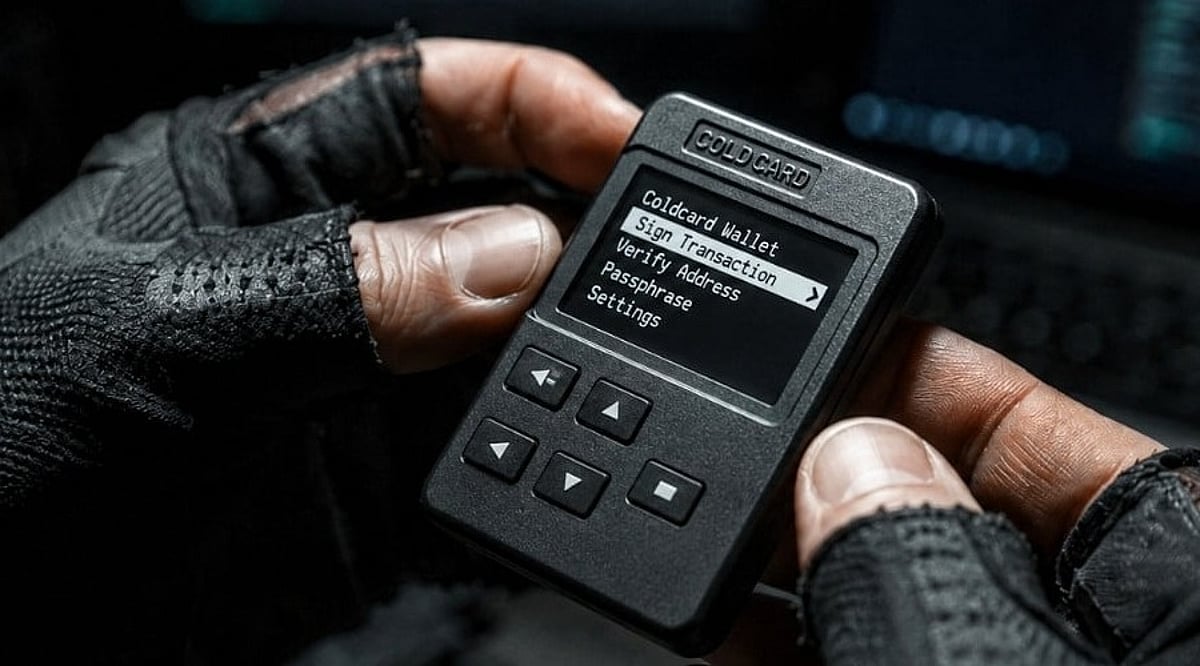
    Investigators tracking the Coldcard wallet vulnerability have detected fresh movement of stolen Bitcoin through a privacy mixer. While a separate attacker has begun obscuring roughly 64 BTC via Wasabi Wallet, the largest known theft cluster remains untouched.

    1,159 BTC Still Unmoved

    Galaxy Research linked the biggest theft to approximately 1,159 BTC held across seven attacker-controlled addresses. The attacker consolidated the funds within about 41 minutes of the exploit and has not sent them to exchanges, mixers, or other identifiable services since then.

    Bitcoin’s protocol cannot freeze flagged addresses, so the funds remain spendable. However, converting such a large balance could expose the attacker. Exchanges, law enforcement agencies, and blockchain analytics firms are reportedly tracking around 600 addresses connected to the broader exploit.

    Separate Attacker Moves 64 BTC Through CoinJoin

    Analysts identified another attacker attempting to obscure approximately 64 BTC using Wasabi Wallet’s CoinJoin feature. About 10 BTC entered an initial mixing transaction, while roughly 54 BTC returned as change. The remaining Bitcoin later moved into outputs of about 7 BTC each, apparently for further mixing.

    CoinJoin combines multiple inputs and outputs, making direct links harder to establish. Still, timing patterns, output sizes, later consolidations, and exchange deposits can reveal useful clues for investigators.

    Exploit Scale and Affected Seed Phrases

    Galaxy Research estimates confirmed losses near 1,596 BTC. A suspected additional attack wave could raise the total to about 2,055 BTC, while other researchers have placed losses above 1,800 BTC.

    The vulnerability affected seed phrases created with weakened random-number generation. Firmware updates prevent new vulnerable seeds, but they cannot repair seed phrases already exposed. Affected users must create a new wallet seed and move their Bitcoin. Coldcard also destroyed remaining vulnerable inventory and urged users to generate fresh seeds.

    South Korean Users Avoided Major Losses

    South Korea’s Bitcoin community reported virtually no direct losses despite many experienced holders using Coldcard devices. Analyst Koji Higashi linked that outcome to local self-custody practices: community leaders had promoted independent entropy generation instead of relying solely on one hardware wallet manufacturer.

    Local guides described 128 coin flips for 12-word seeds and 256 coin flips for 24-word seeds. Some users converted binary results using hardware calculators rather than phones, adding another layer of protection against compromised random-number generators.

    Key Takeaways

    • The 1,159 BTC connected to the largest Coldcard attacker remains unmoved since consolidation.
    • A separate attacker has routed about 64 BTC through Wasabi Wallet CoinJoin transactions.
    • Confirmed losses stand at roughly 1,596 BTC, with possible totals exceeding 2,000 BTC.
    • Firmware updates cannot secure already exposed seed phrases; affected users must migrate to new wallets.
    • Independent entropy generation helped many Korean users avoid direct losses.
  • Bitcoin Red Team Identifies Nearly 5,000 Security Flaws in AI-Powered Code Review

    Bitcoin Red Team Identifies Nearly 5,000 Security Flaws in AI-Powered Code Review

    The Bitcoin Red Team has flagged 4,962 potential security risks after an AI-assisted sweep of 390 open-source Bitcoin projects, completed in just 30 hours. The 16-member volunteer group, which includes Bitcoin developer Calle and AnchorWatch CEO Rob Hamilton, identified 85 possible critical flaws and 635 high-severity findings. However, researchers have only reproduced 21.4% of the reports, underscoring the gap between automated alerts and confirmed vulnerabilities.

    AI Review Finds Thousands of Possible Flaws

    The globally distributed team relied on AI models to scan repositories, flag suspicious code, and help researchers test potential attack paths. Nonprofit OpenSats funded over $40,000 in AI services for the campaign. Calle noted that the review produced 720 findings rated high or critical—equivalent to about 2.31 serious findings per volunteer per hour. At its peak, the team reported nearly one potential critical exploit per volunteer each hour. Still, the organizers stressed that these results are leads, not confirmed attacks.

    Human Testing Separates Signals from False Alarms

    Automated reviews can generate false positives, duplicate reports, and issues that real systems cannot exploit. Traditional audits often take weeks or months due to the need to learn unfamiliar code and reproduce complex failures. AI tools allowed the volunteers to inspect far more code in a short period, but the low reproduction rate means many findings may be noise. Developers await evidence of genuine and exploitable threats before applying fixes.

    Coldcard Losses Raise Stakes for Bitcoin Projects

    The red-teaming campaign follows the discovery of a serious seed-generation flaw in several Coldcard hardware wallet firmware versions. The defect weakened randomness used to create recovery seeds, and attackers reportedly stole about 1,816 BTC (valued at $116 million at the time) from over 5,200 addresses across four waves of suspicious transactions. The weakness allowed skilled attackers to reconstruct private keys without possessing affected devices. CoinKite released corrected firmware, but an update cannot repair seeds created with vulnerable software. The company advised affected users to install fixes, create new seeds, and move funds to new addresses. Seeds created with 50 private dice rolls avoided this particular flaw.

    Conclusion

    Bitcoin Red Team’s AI-assisted sweep produced 4,962 potential findings across 390 projects, including 720 high or critical reports. With only 21.4% reproduced, the results highlight the importance of human verification. Bitcoin teams must verify findings, test build systems and dependencies, and issue fixes where confirmed risks affect deployed software. The Red Team plans to release its custom security harness as open-source software to help the community.

  • XRP’s Three-Month Volatility Low Raises Utility Questions as Price Holds Near $1.06

    XRP’s Three-Month Volatility Low Raises Utility Questions as Price Holds Near $1.06

    XRP has entered a notably quieter trading phase, with its 30-day realized volatility dropping to a three-month low of approximately 0.34 on Binance. According to CoinCodex, the token is currently trading near $1.06, a stabilization that follows weeks of sharper price swings.

    What Falling Realized Volatility Means for XRP

    Realized volatility measures an asset’s actual price movement over a specific period, reflecting past fluctuations rather than expected future conditions. CryptoQuant analyst Arab Chain noted that the decline indicates a clear reduction in daily price swings, describing the current action as relatively calm after a period of heightened volatility.

    The lower reading suggests that buyers and sellers have reached a temporary balance. Traders appear hesitant to open large positions until fresh information or stronger market momentum emerges.

    Traders Await the Next Market Catalyst

    Calmer markets often produce tighter ranges, weaker speculative activity, and less trading noise. However, extended volatility compression can precede a sharp move when new momentum arrives. Market participants are watching trading volume and open interest for signs that stronger participation has returned.

    Several catalysts remain in focus, including regulatory clarity in the United States, Ripple ecosystem growth, institutional adoption, derivatives positioning, macroeconomic developments, and broader crypto market sentiment. Recent attention has also been drawn to Google search results identifying XRP as a leading world bridge currency. Some analysts have discussed the possibility of a wider macro breakout and an early Wave 3 advance, though they link further gains to a sustained move above key resistance levels.

    Still, lower realized volatility offers no directional signal, as the eventual breakout could move in either direction.

    Utility Becomes the Core Value Argument

    Evernorth Chief Business Officer Sagar Shah argued that market price should not be the primary measure of XRP’s value. Speaking during a Q&A session on X, Shah said XRP is designed to move value across financial systems. While price attracts constant attention and dominates headlines, he presented utility as a stronger indicator of long-term value.

    Shah cited liquidity provision, cross-border settlement, lending, and tokenized assets as key uses within the XRP ecosystem. He emphasized that the most important signal comes from how XRP operates, rather than how it trades.

    For now, XRP remains near $1.06 while Binance realized volatility sits at a three-month low. Traders continue tracking market participation as the consolidation phase develops.

  • CASHCAT Surges 120% to $86M Market Cap as Robinhood Chain Deposits Rise and Bybit Launches Perpetual Contract

    CASHCAT Surges 120% to $86M Market Cap as Robinhood Chain Deposits Rise and Bybit Launches Perpetual Contract

    CASHCAT, the cat-themed memecoin on Robinhood Chain, has rebounded sharply to an $86 million market cap after a 120% weekly gain. The token’s price reached approximately $0.087 with a daily trading volume of $9 million, though it remains below its July peak of $0.22. Created by outside developers using Robinhood’s former cat-with-cash logo, the project is described by its website as ‘fan fiction with a ticker.’

    CASHCAT became Robinhood Chain’s first breakout memecoin within a week of the mainnet launch on July 1, with early wallets recording seven-figure returns during the initial surge. However, launch activity has since declined. The Noxa launchpad stopped accepting new launches on July 11 and went offline two days later, having earned an estimated $12 million in fees. Daily token deployments across Robinhood Chain launchpads fell from roughly 35,000 in mid-July to nearly 10,000. Noxa still holds about $137,000 in CASHCAT and has not sold.

    According to DEXTools data, there are approximately 41,200 holders, with the entire 989 million supply in circulation. The Uniswap liquidity pool holds 2.47% of the supply, while the next largest wallets each hold between 1.3% and 1.5%. The liquidity pool now contains $5 million, compared with $6.6 million when CASHCAT had a $105 million valuation.

    Robinhood Chain Activity Rises

    Robinhood Chain’s total value locked (TVL) reached $774 million after rising 20% in seven days. Lending protocols accounted for 43% of TVL, while asset management represented 41.5%. Key players include Morpho with $332 million (supporting Robinhood’s on-chain earn product) and Ethena with $236 million. Stablecoin balances grew 14% weekly to $575 million.

    Bybit Adds Leveraged Trading

    Bybit has introduced a CASHCAT perpetual contract with up to 10x leverage, further boosting trading activity. However, questions remain about trading momentum after Robinhood stops covering gas fees around late September. The chain’s stated tokenized-asset total stands at $27.6 million, while another active-market measure reached $100 million, up from about $70 million in late July. During that earlier period, about 12 tokenized stocks each recorded more than $500,000 in daily trading, with GameStop’s tokenized stock generating $26 million alone.

    CASHCAT’s recovery comes amid growing Robinhood Chain deposits and stablecoin balances, yet declining token launches and the impending end of subsidized gas fees represent key tests for the ecosystem’s sustainability.

  • BNY Mellon to Offer In-Custody Crypto Staking for Institutions via Galaxy Partnership

    BNY Mellon to Offer In-Custody Crypto Staking for Institutions via Galaxy Partnership

    BNY Mellon has announced plans to integrate crypto staking into its digital asset custody platform through a collaboration with Galaxy, the bank confirmed on August 4, 2026. The proposed service would allow eligible institutional clients to earn staking rewards while keeping their assets within BNY’s custody system, pending regulatory approval.

    Under the arrangement, Galaxy will provide the staking infrastructure and technical support, enabling clients to participate in proof-of-stake blockchain networks without transferring their tokens to a third party. BNY said the service would maintain the same controls, governance standards, and asset protections expected by institutional investors.

    “As digital assets continue to evolve, clients want more than safekeeping alone — they want a broader set of capabilities delivered through an institutional-grade model,” said Carolyn Weinberg, BNY’s chief product and innovation officer.

    Galaxy will also serve as a design partner for BNY’s broader digital asset platform, contributing to infrastructure development beyond staking. The Nasdaq-listed firm, which already uses BNY’s custody platform as an early client, brings expertise in proof-of-stake networks and digital asset operations.

    Steve Kurz, Galaxy’s global co-head of digital assets, said: “The future of financial markets will be built on open, programmable rails, and the institutions that move first will define the era that follows.”

    BNY launched its digital asset custody service in 2022 and continues to expand blockchain-related services. The bank manages tens of trillions of dollars in assets under custody and administration. It also plans to move core transfer agency record-keeping onto blockchain, enable around-the-clock settlement for U.S. Treasuries by 2027, and test tokenized Treasuries on a private blockchain before the end of 2026.

    Ethereum, the largest proof-of-stake network by market value, remains a key reference point for staking services. At press time, Ethereum traded near $1,868, with a market value of about $225 billion. However, BNY did not specify which networks or tokens the staking service would support, nor did it provide a launch date, fee structure, or client eligibility details.

  • Galaxy Digital Stock Drops 14% on $85M Q2 Loss Despite Helios Data Center Revenue Growth

    Galaxy Digital Stock Drops 14% on $85M Q2 Loss Despite Helios Data Center Revenue Growth

    Galaxy Digital shares fell 14% on Wednesday after the crypto and AI infrastructure company reported an $85 million net loss for the second quarter. The stock closed at $19.07, down from $22.14, as declining digital asset prices overshadowed progress at its Texas data center business.

    Crypto Weakness Pressures Quarterly Results

    Galaxy narrowed its net loss from $216 million in the first quarter, but quarterly revenue declined 15% to $8.7 billion from $10.2 billion. The company reported an adjusted diluted loss of $0.09 per share, with adjusted EBITDA reaching negative $77 million. Total equity stood at $2.7 billion. The Treasury and Corporate segment recorded a $42 million adjusted gross loss during the quarter.

    Digital Assets Unit Shows Higher Gross Profit

    Galaxy’s Digital Assets division generated $66 million in adjusted gross profit, up 34% from the prior quarter, though trading volumes fell 7% due to reduced market activity. The division posted an adjusted EBITDA loss of $11 million despite the stronger gross profit. Combined, Digital Assets and Data Centers produced $86 million in adjusted gross profit and $1 million in combined adjusted EBITDA. However, investors focused on the net loss and continued exposure to crypto price volatility.

    Helios Data Center Begins Revenue Generation

    Galaxy’s Data Centers segment reported revenue for the first time after delivering capacity to CoreWeave. The segment generated $20 million in adjusted gross profit and $11 million in adjusted EBITDA. By quarter-end, Galaxy had delivered all 133 megawatts of critical computing load under the first phase of its 15-year CoreWeave lease. The company expects approximately $80 million in quarterly revenue starting in the third quarter.

    Galaxy targets a project-level adjusted EBITDA margin above 90% at Helios. The recurring AI infrastructure revenue may help reduce exposure to swings in crypto trading. Construction has started on Helios Phase II, which will add 260 megawatts of critical IT capacity, with initial data hall deliveries expected in the second quarter of 2027.

    The company raised $3.5 billion through senior secured notes due in 2031 on July 28, directing proceeds toward Helios I Phase II construction. After the quarter, Galaxy acquired three additional Texas development sites, lifting its potential power pipeline beyond 5.7 gigawatts.

    Key Takeaways

    Galaxy’s second-quarter results showed a narrower net loss, lower revenue, and continued pressure from digital asset prices. Meanwhile, Helios began producing revenue, completed its first 133-megawatt delivery, and moved into a larger expansion funded by $3.5 billion in new debt.

  • Bitcoin Holds Near $64,600 as S&P 500 Surges $2.1 Trillion on AI Rally

    Bitcoin Holds Near $64,600 as S&P 500 Surges $2.1 Trillion on AI Rally

    The S&P 500 has added $2.1 trillion in market value this month, driven by an AI-led rally, while Bitcoin trades near $64,600 with limited gains. Crypto-specific pressures, rising bond yields, shrinking stablecoin supplies, and uneven ETF demand have restrained Bitcoin’s upside despite stronger sentiment across US equities.

    The S&P 500 has gained 3.12% this month, boosting its market cap by about $2.1 trillion—almost matching the entire global cryptocurrency market. Bitcoin, however, has risen only 2% in the same period, hovering near $64,600. Analysts attribute the divergence to AI-focused stock demand, crypto market headwinds, higher bond yields, and cautious trader positioning.

    AI Stocks Drive Wall Street’s Gains

    The S&P 500 now holds a record market value near $70.5 trillion, with the index around 7,723 points. The Nasdaq and Dow have also advanced as investors pour capital into large technology companies.

    Adam Haeems, head of asset management at Tesseract Group, noted that the equity rally centers on sectors with limited ties to Bitcoin. “Partly because the equity rally is being driven by areas to which bitcoin has little direct exposure, particularly AI and semiconductor stocks,” he said.

    Lower oil prices have provided additional support to listed companies through reduced operating costs. Haeems suggested Bitcoin may benefit later from softer inflation expectations and potential Federal Reserve policy changes, though uncertainty around the September outlook limits that path.

    Paul Howard, senior director at Wincent, linked the gap to concentrated equity demand. “The stock rally is biased towards AI and mega-caps which doesn’t necessarily translate into crypto flows,” he said.

    Crypto Pressures Limit Bitcoin Demand

    Bitcoin faces sector-specific challenges that do not affect equities directly, including the $120 million Coldcard exploit, uncertainty surrounding the CLARITY Act, and Strategy’s recent Bitcoin sales.

    Haeems said these events have weakened sentiment without triggering a wider credit crisis or forced selling cycle. Strategy has sold Bitcoin for three consecutive months, adding concern for traders monitoring corporate demand.

    Rising bond yields also make government debt more attractive than non-yielding crypto assets. Real Treasury returns are at their highest since 2008, encouraging some capital to stay outside digital asset markets.

    Stablecoin supplies reflect the same pressure. Haeems noted that USDT supply dropped from about $190 billion in April to $183 billion, while USDC supply declined from $79.5 billion to $72 billion over the same period.

    Traders Watch October, ETF Flows

    Markus Thielen, founder of 10x Research, said many traders expect Bitcoin’s four-year cycle to produce an October bottom, prompting them to wait rather than build positions during the equity rally.

    However, Thielen said Bitcoin’s ability to hold steady despite the Federal Reserve’s firm stance could support another reading. “Traders are underestimating the upside risk from a less hawkish Fed, and overlooking the possibility that the four-year cycle has already bottomed,” he said.

    ETF activity has been mixed. US spot Bitcoin funds recently recorded $61.53 million in outflows, ending three weeks of modest inflows. They then attracted $626 million this week, their strongest total since early May.

    Giottus CEO Vikram Subburaj said several consecutive inflow days would help confirm stronger institutional demand. He identified Bitcoin support between $63,000 and $63,400, with resistance from $64,500 to $66,000.

    Wintermute noted that some ETF demand may reflect arbitrage rather than direct bullish positioning. Analysts expect possible fourth-quarter catalysts from regulatory progress and renewed stablecoin growth.