Category: Cryptocurrency

  • Bitcoin and Ethereum ETFs See Renewed Inflows as Institutional Interest Picks Up

    Bitcoin and Ethereum ETFs See Renewed Inflows as Institutional Interest Picks Up

    US spot crypto ETFs recorded fresh inflows on August 4, with Bitcoin funds attracting $211.49 million and Ethereum products gaining $53.75 million. The renewed demand supported Bitcoin above $64,000 as investors focused on institutional flows and market positioning.

    Bitcoin traded near $64,043, up 0.57% over 24 hours. Stronger ETF demand and short liquidations added buying pressure above $64,000. Bitcoin accounted for the larger share of combined ETF demand.

    Bitcoin ETFs Extend Inflows

    According to SoSoValue data, Spot Bitcoin ETFs recorded $211.49 million in net inflows on August 4. BlackRock’s iShares Bitcoin Trust led the group with $111.4 million. The two-day inflow period reversed the $265.37 million outflow recorded on July 31. Bitcoin funds previously lost 4,217 BTC during that session.

    The change marked a return of capital after a single withdrawal period. However, daily ETF flows can shift as institutions adjust positions or complete fund transactions. BlackRock’s IBIT provides Bitcoin exposure through exchange-traded shares. Investors can access Bitcoin through brokerage accounts without managing private keys or direct custody.

    Authorized participants create and redeem ETF shares based on market demand. These transactions can reflect institutional buying, arbitrage activity, or portfolio adjustments.

    Moreover, the SEC approved in-kind creations and redemptions for crypto exchange-traded products in July 2025. Qualifying institutions can exchange underlying assets directly for fund shares.

    Ethereum ETFs Reverse Outflow Trend

    Ethereum spot ETFs recorded $53.75 million in net inflows on August 4. The figure reversed the $11.42 million outflow reported on August 3. Cumulative net inflows across US Ethereum spot ETFs reached $11.25 billion. Total net assets increased to $10.32 billion during the session.

    The asset total rose from $10.23 billion on August 3. Trading volume reached $387.96 million on August 4, compared with $519.88 million during the previous session.

    Ethereum products recorded withdrawals on August 3 while Bitcoin ETFs attracted $170.09 million. The August 4 figures showed renewed demand across both major crypto ETF categories.

    Fees, liquidity levels and portfolio rules can influence daily allocations. Fund creations can also reflect arbitrage activity instead of direct retail purchases.

    XRP products attracted $1.15 million on August 3, while HYPE funds recorded withdrawals of around $964,320. Other products covering Solana, Chainlink, BNB, Avalanche, Polkadot, Dogecoin, and Litecoin posted positive token flows.

    Bitcoin Faces $64,300 Resistance

    Bitcoin’s move above $64,000 triggered $27.36 million in short liquidations during the reported 24-hour period. Short positions represented about 83% of all Bitcoin liquidations.

    Forced closures required traders to buy Bitcoin to exit bearish positions. That activity added momentum during the recovery.

    Bitcoin faces resistance near $64,300. A confirmed four-hour close above that level could open a path toward $64,757 and $65,500.

    The first support area sits near $63,933. A rejection from resistance could send Bitcoin toward the $62,000 to $63,000 zone.

    Bitcoin also maintained an 84% correlation with the S&P 500, keeping the asset connected with broader market movements.

    Investors will monitor upcoming ETF flow reports for changes in institutional demand. Fund-level creation data can provide further information on allocation trends across crypto investment products.
  • AI Model Rediscovers Bitcoin Wallet Flaw for Just $2, Revealing New Era in Crypto Security

    AI Model Rediscovers Bitcoin Wallet Flaw for Just $2, Revealing New Era in Crypto Security

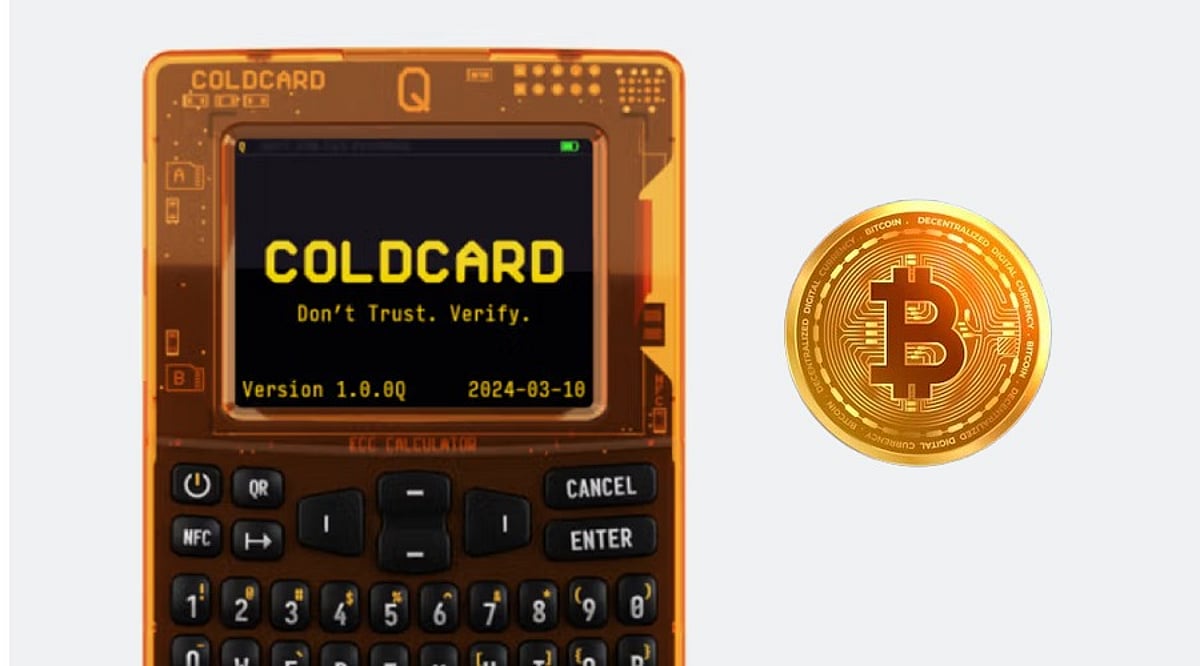
    Artificial intelligence is transforming cybersecurity at an unprecedented pace, and a recent experiment involving a Bitcoin hardware wallet has demonstrated just how quickly AI can uncover software vulnerabilities. Researchers reported that the AI model GLM 5.2 rediscovered the flaw behind the ColdCard wallet incident in approximately 20 minutes, at a total cost of roughly $2. While there is no evidence that cybercriminals used AI in the original theft, the experiment underscores how inexpensive AI-assisted code analysis has become.

    AI Makes Security Audits Faster and Cheaper

    Traditionally, finding vulnerabilities in cryptographic software required experienced security researchers spending days or even weeks reviewing firmware, source code, and cryptographic implementations. Now, AI models can perform an initial review across large codebases in a fraction of the time. According to Dragonfly managing partner Haseeb Qureshi, the most significant takeaway was the cost. “GLM 5.2 running for 20 minutes costs about $2. So what does that mean? It means we are in a new world.”

    Researchers directed multiple AI models to inspect the affected software after the ColdCard incident had become public. The models were reportedly not told where the vulnerability existed, yet GLM 5.2 identified the underlying weakness in roughly 20 minutes. However, rediscovering a vulnerability is not the same as carrying out an attack. Exploiting such a flaw still requires identifying affected devices, reconstructing usable private keys, locating valuable wallets, and successfully transferring funds before users or manufacturers can respond. The experiment therefore demonstrates AI’s growing ability to assist security research rather than proving that AI played any role in the original theft.

    Security Teams Face a New Arms Race

    The findings also highlight a shift in how cryptocurrency security may evolve. Much of the industry’s long-term focus has been on quantum computing, which could eventually threaten Bitcoin’s cryptographic foundations. AI presents a more immediate challenge because it can already identify mistakes in wallet firmware, random-number generation, key management, and cryptographic implementations without breaking Bitcoin’s underlying encryption.

    According to Qureshi, the affected users were “people who are doing all the right things.” Even users storing assets in offline hardware wallets remain dependent on the quality of the wallet’s firmware and cryptographic implementation. If private keys are generated using weak randomness, keeping a device offline cannot strengthen those keys afterward.

    For developers, AI represents both a defensive and offensive tool. Wallet manufacturers can repeatedly scan legacy firmware as newer AI models become available, while attackers can automate vulnerability discovery across older software releases at minimal cost. The experiment underscores an important lesson for the cryptocurrency industry: security reviews can no longer be treated as one-time events. As AI models become faster, cheaper, and more capable, continuous code auditing, responsible disclosure programs, and rapid patch deployment will become essential for protecting digital assets.

    FAQs

    1. What did the GLM 5.2 AI model accomplish?
    According to researchers, GLM 5.2 successfully rediscovered the software vulnerability linked to the recent ColdCard wallet incident in around 20 minutes. The exercise demonstrated AI’s ability to quickly identify known security flaws at a very low cost.

    2. Did AI play a role in the original ColdCard theft?
    No. There is currently no evidence that attackers used AI during the original theft. The experiment was conducted afterward to evaluate whether a modern AI model could independently identify the same vulnerability.

    3. Why is the reported $2 cost significant?
    The low cost shows that AI-assisted vulnerability research is becoming accessible to far more developers and researchers. It also means attackers could potentially scan many software projects for weaknesses without investing significant resources.

    4. Can AI break Bitcoin’s cryptography?
    No. The experiment did not demonstrate that AI can break Bitcoin’s underlying cryptographic algorithms. Instead, it showed that AI can help identify implementation bugs in wallet software, firmware, and cryptographic code surrounding Bitcoin.

    5. How can crypto developers use AI to improve security?
    Developers can use AI to scan source code before release, re-audit older firmware as AI models improve, identify potential vulnerabilities faster, and support bug bounty programs. Human security experts are still required to verify findings and deploy secure fixes.

  • Bitcoin ETF Inflows Hit $211M, BlackRock Tokenizes $311B Funds, Uniswap Launches Lending, SpaceX Reduces Crypto Holdings

    Bitcoin ETF Inflows Hit $211M, BlackRock Tokenizes $311B Funds, Uniswap Launches Lending, SpaceX Reduces Crypto Holdings

    The crypto market saw significant developments as spot Bitcoin ETFs recorded $211.49 million in daily net inflows, BlackRock expanded tokenized fund offerings in Europe, Uniswap entered the lending space, and SpaceX reduced its crypto exposure.

    Bitcoin ETF Inflows Surge

    According to SoSoValue, U.S. spot Bitcoin ETFs saw total net inflows of $211.49 million. BlackRock’s IBIT led with $170.35 million in daily inflows, bringing its historical total to $60.76 billion. Fidelity’s FBTC followed with $19.58 million, reaching a cumulative $9.97 billion. The total net asset value of Bitcoin spot ETFs now stands at $78.26 billion, with an ETF net asset ratio of 6.06% and historical cumulative net inflows of $51.71 billion.

    BlackRock Tokenizes $311 Billion in European Money Market Funds

    On August 4, 2026, BlackRock introduced 12 tokenized share classes tied to six of its Institutional Cash Series (ICS) money market funds in Europe. This marks the firm’s first tokenized fund access in the region. The six funds collectively hold $311 billion in assets under management as of June 30, 2026. Only the tokenized share class operates on blockchain, and BlackRock expects initial adoption to be modest, growing as institutional investors opt in.

    Uniswap Launches Decentralized Lending Service

    Uniswap expanded its DeFi ecosystem with the launch of Earn, a lending product developed in partnership with Morpho. Users can deposit USDC, USDT, and Ether into professionally managed lending vaults to earn passive income. Assets are supplied to borrowers through Morpho’s decentralized lending markets, with interest returned to depositors. Users retain custody and can withdraw funds at any time. This reflects a broader trend of decentralized exchanges evolving into comprehensive financial platforms.

    SpaceX Reduces Crypto Holdings by $539 Million

    Space Exploration Technologies Corp. reported that the carrying value of its digital assets fell from $1.637 billion at the end of 2025 to $1.098 billion in Q2 2026, a 33% decline. The company did not specify whether the reduction resulted from asset sales, price movements, or both. Despite this, SpaceX’s total revenue reached $7.8 billion for the period, exceeding Wall Street estimates of $6.81 billion.

    Strategy-Linked Wallet Moves 1,030 BTC

    On-chain analytics platform Lookonchain identified a wallet linked to Strategy transferring 1,030 Bitcoin (worth approximately $66.14 million) on August 5. This occurred two days after Strategy disclosed a Bitcoin sale, but the company has not confirmed whether the latest transfer was a sale. Strategy’s most recent SEC filing reported holdings of 842,138 BTC as of August 2.

    FAQs

    1. How much money flowed into Bitcoin spot ETFs?
    According to SoSoValue, U.S. spot Bitcoin ETFs recorded $211.49 million in net inflows. BlackRock’s IBIT led with $170.35 million, followed by Fidelity’s FBTC with $19.58 million.

    2. What did BlackRock announce for its European funds?
    BlackRock introduced 12 tokenized share classes linked to six Institutional Cash Series money market funds. The funds collectively manage $311 billion in assets, though only the tokenized share classes operate on blockchain.

    3. What is Uniswap’s new lending service?
    Uniswap launched Earn, a decentralized lending product developed with Morpho. Users can deposit USDC, USDT, and ETH into lending vaults to earn passive income while maintaining custody of their assets.

    4. Why did SpaceX’s crypto holdings decline?
    SpaceX reported that the carrying value of its digital assets fell from $1.637 billion to $1.098 billion in Q2 2026. The company did not disclose whether the decline resulted from asset sales, price movements, or both.

    5. Did Strategy sell another 1,030 Bitcoin?
    Not necessarily. Lookonchain identified a wallet linked to Strategy transferring 1,030 BTC, but the company has not confirmed it was a sale. An on-chain transfer alone does not establish ownership changes or transaction purpose.

    Disclaimer: This article is for informational purposes only and does not constitute investment advice. Cryptocurrencies are risky assets; conduct your own research before investing.

  • Remittix Markets Live: Perpetual Futures Launch Adds a New Trading Layer to RTX Ecosystem

    Remittix Markets Live: Perpetual Futures Launch Adds a New Trading Layer to RTX Ecosystem

    Remittix Markets Goes Live

    Remittix Markets has officially launched, bringing perpetual futures trading to the RTX ecosystem. The new platform expands Remittix beyond its original crypto-to-fiat payments focus and gives active traders another way to engage with the project ahead of the official RTX token launch.

    Remittix now operates with two distinct product pillars: PayFi for crypto-to-bank payments and Markets for perpetual futures trading.

    A New Trading Layer for RTX

    Remittix Markets is the dedicated perps trading platform inside the wider RTX ecosystem. Perpetual futures allow users to take long or short positions on crypto assets without contracts expiring on a predetermined date. Traders can use them to respond to rising or falling markets, hedge existing exposure, and stay active during changing conditions.

    Leverage can increase the size of potential gains, but it also increases losses and liquidation risk. Risk management is therefore an important part of any perps trading strategy.

    Markets Could Create More Regular Ecosystem Activity

    Payments and trading generate different types of user engagement. A PayFi customer may use the platform when sending crypto to a recipient or transferring value into the banking system. A trader may return to Remittix Markets regularly to monitor prices, manage positions, and react to volatility.

    This gives Remittix another route for building platform activity. Markets can attract active traders, while PayFi continues serving users who want a simpler connection between digital assets and traditional finance. The launch does not guarantee demand for RTX, but it gives users another entry point into the ecosystem and strengthens the project’s wider product narrative.

    Remittix Moves Beyond a Single-Product Model

    Remittix was initially built around solving the friction involved in moving value from crypto into fiat bank accounts. With the arrival of Remittix Markets, the project is no longer dependent on one product category or one type of user.

    Payments and perpetual futures now sit within the same ecosystem, giving Remittix a broader commercial direction. Markets targets crypto traders seeking ongoing exposure to digital asset price movements, while PayFi targets individuals and businesses that want to move money between crypto and conventional banking more efficiently.

    PayFi Keeps Real-World Utility at the Center

    The Remittix PayFi platform is designed to let users send crypto while recipients receive fiat directly into their bank accounts. This removes several steps that often make crypto-to-bank transfers difficult, including sending assets to an exchange, manually converting them, and initiating a separate withdrawal.

    The platform has been fully developed and tested by members of the Remittix community. That gives the ecosystem an existing product foundation while Markets introduces a separate trading layer.

    RTX Approaches Its Next Major Milestone

    The Remittix presale has passed $31 million and is approaching the $32 million milestone, when the team is expected to reveal the official RTX launch date. With Remittix Markets now live and the PayFi platform already developed and tested, Remittix is entering its next phase as a multi-product ecosystem rather than a single-use crypto project.

    Learn more about Remittix here: Remittix Presale | Remittix Markets.

    Frequently Asked Questions

    What is Remittix Markets?

    Remittix Markets is the live perpetual futures trading platform within the RTX ecosystem.

    What can users do with perpetual futures?

    Users can take long or short positions through contracts that do not have fixed expiry dates.

    How does Remittix Markets fit alongside PayFi?

    Markets focuses on active crypto trading, while PayFi is designed to support crypto-to-fiat transfers into bank accounts.

    Is perpetual futures trading risky?

    Yes. Leverage can amplify both gains and losses, and positions can be liquidated if the market moves against the trader.

    Editorial Disclaimer: This article is for informational purposes only and does not constitute investment advice. Cryptocurrency investments are risky and may result in the loss of capital. Always conduct your own research before investing.

  • Coldcard Firmware Bug Led to $70M Bitcoin Heist, Researchers Say

    Coldcard Firmware Bug Led to $70M Bitcoin Heist, Researchers Say

    Galaxy Research has linked a firmware flaw in Coldcard hardware wallets to the theft of 1,082.65 Bitcoin, worth approximately $70 million. The coordinated withdrawals, which occurred across 1,196 addresses on July 30, took place within just 41 minutes, marking one of the largest reported hardware wallet incidents this year.

    Galaxy Tracks a Coordinated Bitcoin Theft

    Galaxy Research identified a consistent transaction pattern across the stolen funds, pointing to a single attacker behind the operation. However, the firm cautioned that the observed transfers may not include all exposed wallets. Other vulnerable addresses could remain inactive or be moved later. Blockchain records cannot distinguish between theft and a legitimate owner transfer when both use valid private keys, leaving the true extent of the breach uncertain.

    Coinkite Expands Warning Across Coldcard Models

    Coinkite initially warned owners of Coldcard Mk3 devices running firmware version 4.0.1, released in March 2021, that seeds created with the affected software could expose user funds. The company later widened the advisory to include selected firmware versions on Coldcard Mk4, Mk5, and Coldcard Q devices. Emergency updates were issued for every impacted model. Coinkite CEO Rodolfo Novak (NVK) accepted responsibility and apologized to customers, stating that the company’s internal review process failed to catch the defect before release.

    AI-Assisted Analysis Raises New Security Concerns

    Novak suggested that attackers may have discovered the flaw through artificial intelligence-assisted code analysis. Such tools can detect subtle weaknesses faster than traditional manual reviews, creating a growing challenge for software developers. While AI can help defenders inspect code, it also shortens the path from public release to exploitation.

    What Affected Users Should Do

    Coinkite urged affected users to take the following steps:

    • Install the latest firmware version.
    • Create new wallet seeds.
    • Move Bitcoin into new wallets after testing small transfers first.
    • Keep original backups until every transfer succeeds.

    Coldcard wallets store private keys offline, but firmware bugs, supply chain risks, and configuration errors can still create attack paths. Galaxy Research linked the July 30 theft to vulnerable Coldcard wallet seeds across affected firmware versions. Coinkite released emergency updates and told users to create fresh seeds, test new wallets, and transfer funds while keeping original backups until every move succeeds.

  • Pro-Crypto Fairshake-Backed Candidates Win Key Primaries in Michigan and Washington

    Pro-Crypto Fairshake-Backed Candidates Win Key Primaries in Michigan and Washington

    Fairshake-Backed Candidates Score Primary Wins

    Pro-crypto candidates advanced in Michigan and Washington primaries on Tuesday after industry-backed political groups spent hundreds of thousands of dollars supporting congressional campaigns across both parties.

    Huizenga Wins Michigan Republican Nomination

    Republican Rep. Bill Huizenga won his party’s nomination in Michigan, according to the AP elections portal. He will face Democratic Sen. Sean McCann in November. Defend American Jobs, Fairshake’s Republican-focused affiliate, gave Huizenga nearly $512,000, according to Tech Influence Watch. A16z, Winklevoss Capital, and Coinbase also supported his campaign.

    Huizenga has backed clearer federal rules for digital assets. During a March 2025 House hearing, he linked stablecoin legislation with maintaining the U.S. dollar’s reserve currency role.

    Four Fairshake-Backed Candidates Advance in Washington

    Democratic Reps. Suzan DelBene, Kim Schrier, and Marilyn Strickland also won their party primaries in Washington. Republican Amanda McKinney advanced in her district. Protect Progress, Fairshake’s Democratic-aligned affiliate, spent $113,120 for DelBene, $105,040 for Schrier, and $103,020 for Strickland. Defend American Jobs gave McKinney $506,917.

    The results extended Fairshake’s record of supporting candidates from both parties.

    Crypto Policy Remains Central to the Election Cycle

    Fairshake entered the 2026 midterms with $193 million, according to its January announcement. Coinbase and Andreessen Horowitz remain among the committee’s major financial supporters.

    The group previously supported Democratic Rep. Christian Menefee, who defeated longtime Rep. Al Green during a Texas primary runoff in May. Meanwhile, lawmakers continued negotiations over the CLARITY Act. Senate offices worked through committee language, ethics provisions, and anti-money laundering safeguards as Congress faced a crowded calendar.

    The Digital Chamber also arranged meetings between member companies and lawmakers. White House crypto adviser Patrick Witt and Sen. Bill Hagerty expressed optimism about further progress. Still, Senate Agriculture Committee Chairman John Boozman said many lawmakers were learning the proposal. He said that process complicated broader support because his committee controls major parts of the legislation.

    Conclusion

    Crypto-backed candidates advanced in Michigan and Washington after Fairshake affiliates spent heavily across party lines. Their victories came as Congress continued work on digital asset legislation, placing campaign funding and regulatory policy at the center of the 2026 election cycle.

  • Bitcoin ETF Inflows Surge as Ether Funds Experience Outflows

    Bitcoin ETF Inflows Surge as Ether Funds Experience Outflows

    US spot crypto exchange-traded funds posted mixed flows on August 3, as Bitcoin products gained $170.09 million while Ether funds recorded $11.42 million in withdrawals. XRP funds also attracted modest demand, while HYPE products posted losses.

    Bitcoin Funds Reverse the Previous Session

    SoSoValue recorded 2,657 Bitcoin entering listed US funds during the session. The holdings carried an estimated value of $170.09 million. The inflow reversed Bitcoin funds’ July 31 performance. Those products lost 4,217 Bitcoin, worth about $265.37 million, during that earlier session.

    Still, two daily readings do not establish a lasting trend. Crypto ETF flows can shift quickly as institutions adjust positions, manage liquidity, or complete fund creations and redemptions.

    Ether Outflows Break from Bitcoin Demand

    Ether products moved in the opposite direction on August 3. SoSoValue recorded 5,805 Ether leaving US funds, with an estimated value of $11.42 million. The result reversed the July 31 reading, when Ethereum funds gained 4,834 Ether worth about $9.03 million. Therefore, Bitcoin demand recovered as Ether demand weakened.

    Could this split show that investors now assess each crypto asset separately instead of treating the market as one trade? The August 3 data showed clear asset-level differences. XRP products gained 1.06 million tokens worth nearly $1.15 million. Meanwhile, HYPE funds lost 17,770 tokens, valued at about $964,320.

    Funds linked to Solana, Chainlink, BNB, Avalanche, Polkadot, Dogecoin, and Litecoin also reported positive daily flows. However, the available data did not include complete dollar totals.

    ETF Mechanics Shape Daily Flow Figures

    BlackRock describes its iShares Bitcoin Trust ETF as a vehicle offering Bitcoin exposure through exchange-traded shares. Investors can gain access without managing wallets or direct custody. The SEC approved spot Bitcoin exchange-traded products in January 2024. Former Chair Gary Gensler said the decision covered listed products and did not represent approval of Bitcoin itself.

    In July 2025, the SEC allowed in-kind creations and redemptions through authorized participants. Commissioner Mark Uyeda said cash-only processing could create transaction costs and price slippage. In-kind processing allows qualifying institutions to exchange underlying assets directly for fund shares. As a result, daily flows can reflect institutional arbitrage, portfolio adjustments, and redemption activity.

    The SEC’s Division of Corporation Finance requires issuers to explain custody, valuation, creation, redemption, and material risks. These disclosures help investors compare products beyond one session’s totals.

    BlackRock also operates separate Ether products, including a staked Ether fund. Fees, liquidity, staking exposure, and portfolio rules can affect demand across similar Ethereum investment products. CoinShares recorded similar asset-level divergence earlier in 2026. Its May 5 report showed Bitcoin inflows alongside Ethereum withdrawals during uneven market conditions.

    Bitcoin funds led US crypto ETF activity on August 3 with $170.09 million in inflows, while Ether products lost $11.42 million. XRP funds posted smaller gains, and HYPE funds recorded withdrawals. The split followed opposite July 31 readings and reflected separate demand across listed crypto assets.

  • New Report by ChangeNOW and CoinRabbit Explores Crypto Privacy, Illicit Use, and Regulatory Path Forward

    New Report by ChangeNOW and CoinRabbit Explores Crypto Privacy, Illicit Use, and Regulatory Path Forward

    ChangeNOW, a cryptocurrency super app, and CoinRabbit, a crypto asset management platform, have jointly released a research report titled “Financial Privacy in the Digital Age.” The report examines the dual-use nature of privacy-preserving technology in cryptocurrencies, weighing legitimate needs for discretion against the risks of illicit exploitation. Drawing on data from TRM Labs, Chainalysis, the RAND Corporation, the United Nations Office on Drugs and Crime (UNODC), Statista, and U.S. Treasury Department disclosures, the study argues that current regulatory efforts are misdirected and should focus on fiat off-ramps rather than transactional privacy infrastructure.

    Balancing Privacy and Security

    The report finds that on-chain privacy has evolved from a niche preference to an essential safety measure. It protects individuals from physical extortion and kidnapping, prevents corporate espionage on treasury movements, and enables humanitarian efforts in conflict zones. The key conclusion is that privacy and compliance are not a zero-sum trade-off—the most significant enforcement vulnerability lies at the point where crypto converts to fiat currency, not in the privacy tools themselves.

    Key Findings and Threat Assessment

    • Pig-butchering fraud generated an estimated USD 75 billion in cumulative losses between 2020 and 2024.
    • Physical “wrench attacks” targeting cryptocurrency holders surged: $124.1 million in crypto was targeted in 52 verified incidents in H1 2026 alone, a 33% increase in incidents and nearly elevenfold rise in financial exposure compared to H1 2025.
    • Crypto payments linked to human trafficking networks in Southeast Asia grew 85% in 2025.
    • Corporate data exposure remains a major threat, with 36% of board members citing internal financial data becoming publicly accessible as a top governance concern, and the average data breach costing USD 4.44 million.

    Industry Solutions for Compliant Privacy

    “Financial privacy isn’t a feature request, it’s a baseline that every other financial system already provides,” said Pauline Shangett, Chief Strategy Officer at ChangeNOW. “The question the industry needs to answer isn’t whether privacy should exist on-chain. It’s whether we build it responsibly or let bad actors define what it looks like by default.” The report profiles two working examples: ChangeNOW’s Private Crypto Transfers, which break the deterministic link between sender and receiver without pooling user funds, and CoinRabbit’s custodial model, which uses dynamic per-user deposit addresses to prevent end-to-end reconstruction of a client’s holdings from public blockchain data.

    Recommendations for Policymakers

    The report closes with five recommendations centered on shifting enforcement resources toward fiat off-ramps and cross-jurisdictional intelligence sharing, rather than restricting transactional privacy for general users. The full report is available online.

  • Bitcoin Holds Above $64,200 as ETF Inflows Counter Coldcard Fears and Legislative Stalemate

    Bitcoin Holds Above $64,200 as ETF Inflows Counter Coldcard Fears and Legislative Stalemate

    Bitcoin traded near $64,236.97 on Tuesday, up 0.48% over the past 24 hours, as fresh institutional inflows offset ongoing security concerns and political uncertainty. The leading cryptocurrency steadied above $64,200 after a choppy start to August, supported by $170.1 million in net inflows into US spot Bitcoin ETFs on Monday.

    Bitcoin Price Today

    Bitcoin trades at $64,236.97, with a market cap of approximately $1.28 trillion and 24-hour trading volume of $23.11 billion. Key support lies near $62,800, while resistance is seen between $64,500 and $65,600, according to analysts.

    Analyst Perspectives

    Mudrex: $65,000 Key for Sentiment Shift

    Akshat Siddhant, Lead Quant Analyst at Mudrex, noted that Bitcoin trades above $64,000 as easing geopolitical tensions lift risk assets. He highlighted that Bitcoin futures open interest slipped to 740,000 BTC from a July peak of 776,000 BTC, a pattern that preceded April’s large short-side liquidation wave. “For now, $65,000 remains major resistance while support holds near $62,800,” he said.

    CoinSwitch: Equities Rally Supports BTC

    CoinSwitch Markets Desk observed that BTC held near $64,000 even as risk assets rallied on US-Iran de-escalation hopes. “Holding above $64,000 keeps the short-term structure positive for a push toward $64,400. A slip below $64,000 opens the next support zone near $63,600,” the desk stated.

    Delta Exchange: Break Above $64,500 Needed

    Riya Sehgal, Research Analyst at Delta Exchange, said Bitcoin reclaimed $64,000 after defending $62,200-$62,400 demand. “Bitcoin needs a sustained break above $64,500 to target $65,000-$65,600. Ethereum must reclaim $1,880 to confirm a broader breakout structure,” she added.

    Giottus: Weak Spot Demand Caps Recovery

    Vikram Subburaj, CEO of Giottus, placed Bitcoin near $64,260, up about 0.7% on the day. He advised investors to favor staggered buying ahead of Friday’s jobs report, noting that Bitcoin holds support near $63,000-$63,400, with resistance between $64,500 and $66,000.

    WazirX: Institutional Absorption Continues

    Nischal Shetty, founder of WazirX, said Bitcoin trades near $64,176 as easing tensions lift appetite. On-chain data shows 155,000 BTC accumulated between $62,000 and $65,000. Wintermute’s H1 2026 report shows institutions now drive 72% of spot volume. “A move above $64,800-$65,000 could trigger fresh long positions. Losing $63,900-$64,000 may raise the odds of a pullback toward $63,200,” he noted.

    Top 10 Coins at a Glance

    • Biggest Gainers: Hyperliquid (HYPE) led with a gain past 3%, followed by BNB (+1.27%) and XRP (+1%).
    • Biggest Losers: Stablecoins (USDT, USDC) and Solana (SOL) remained flat with minimal movement.

    Key Headlines Impacting Prices

    Bitcoin ETFs Return to Inflows With $170.1 Million

    US spot Bitcoin ETFs recorded $170.1 million in net inflows on Monday, ending a brief redemption streak. BlackRock’s IBIT led with $111.4 million, followed by Fidelity’s FBTC at $33.4 million. Ether ETFs slipped into modest net outflows of $11.9 million.

    Coldcard Firmware Flaw Fallout Continues

    A firmware bug in Coldcard hardware wallets has been linked to over $100 million in stolen Bitcoin this month. Emergency fixes have been rolled out, but security researchers warn that updating firmware alone is insufficient. Affected holders must generate fresh recovery phrases and migrate balances immediately.

    CLARITY Act Stuck Without Senate Floor Vote

    The Digital Asset Market Clarity Act remains absent from the Senate’s floor schedule. Senate Majority Leader John Thune indicated a vote could occur before recess, but Republicans need roughly seven Democratic votes to clear the 60-vote threshold. An unresolved ethics dispute over presidential crypto holdings remains a sticking point.

    Cardano Rallies on Heavy Whale Accumulation

    Cardano’s ADA token surged more than 26% this week as whale wallets added over 240 million tokens. Combined whale holdings have climbed to roughly 14.5 billion ADA, according to Santiment. Analysts say holding above $0.17 support keeps the bullish structure intact, with next resistance near $0.20 and then $0.24-$0.25.

    Ether ETFs Slip Into Mild Outflows

    US spot Ether ETFs recorded an $11.9 million net outflow on Monday, ending a two-day inflow streak. BlackRock’s ETHA and Grayscale’s ETHE led the modest redemptions. Analysts view the pullback as routine rotation rather than a shift in institutional demand.

    ISM Manufacturing Data Signals Resilient Economy

    The US ISM Manufacturing PMI climbed in July, pointing to resilient economic activity. Stronger readings reduce near-term expectations of Fed rate cuts. Traders now await Wednesday’s ADP payrolls and services PMI data, with Friday’s jobs report as the week’s most closely watched macro catalyst.

    Investor and Market Outlook

    Bitcoin holds above $64,200 as fresh ETF inflows offset lingering custody worries and legislative delays. A close above $64,500 could open a path toward resistance near $65,600. A slip below $63,900 risks exposing deeper support closer to $62,800. Cardano and Hyperliquid remain the most sensitive names to shifts in institutional risk appetite. Key catalysts this week include ETF flow trends, Fed rate signals, Friday’s jobs report, and the CLARITY Act’s Senate outcome.

  • MEXC Launches Annual ‘0808’ Brand Event with Stock Season and $500,000 Prize Pool

    MEXC Launches Annual ‘0808’ Brand Event with Stock Season and $500,000 Prize Pool

    MEXC, a pioneer in zero-fee digital asset trading, has announced the launch of MEXC 0808: Stock Season, the first edition of its annual brand celebration centered on the themes of 0 Fees and Infinite Opportunities. Early bird registration is now open ahead of the main campaign launch on August 8, giving participants a chance to compete for a share of a $500,000 prize pool.

    What is MEXC 0808?

    MEXC 0808 is an annual brand milestone that underscores MEXC’s commitment to zero-fee trading and expanding market access. Zero fees are not limited to a single campaign period; they represent a core value MEXC delivers year-round by reducing trading costs and opening more markets. Each August 8, MEXC will spotlight this commitment through new products, market opportunities, and user rewards. In 2025 alone, MEXC’s 0-fee strategy saved 3.44 million users over 1.1 billion USDT in trading fees.

    Stock Season: The First Theme

    This year, MEXC introduces Stock Season as the inaugural 0808 theme, reflecting the rapid growth of stock trading on crypto exchange infrastructure. A recent report by MEXC and CoinGecko found that U.S. stock trading volume across six major centralized exchanges surged 337.4% month-over-month to $189.84 billion in June 2026. U.S. stocks now account for 48.3% of total TradFi trading volume, making them the largest traditional asset category on these platforms.

    “0808 brings together the two values at the center of MEXC: 0 Fees and Infinite Opportunities. It is a celebration of the values that define MEXC,” said Vugar Usi Zade, CEO of MEXC. “Our commitment to 0 Fees is about removing barriers, while Infinite Opportunities is about helping users access more markets, more products, and more ways to participate in the global financial system. Through Stock Season, we are giving users more ways to discover and participate in opportunities across the global equity market.”

    Expanded Stock Offerings

    MEXC has broadened its stock offering to include multiple product formats and investment stages. Alongside RealStocks, which provides access to more than 7,000 U.S. stocks and ETFs, the platform offers over 200 stock and index futures products, more than 200 tokenized U.S. equities, and Pre-IPO Launchpad opportunities. This allows users to trade real shares, derivatives, tokenized exposure, and early-stage investments through a single account. In June 2026, MEXC’s stock and index futures trading volume increased approximately 261% month-over-month, highlighting growing demand for stock-related products among crypto investors.

    Campaign Details

    To celebrate Stock Season, MEXC will offer 0 fees across Stock Futures, Tokenized Stocks, and RealStocks, enabling users to participate in global stock opportunities at minimal cost during one of the year’s most active market periods.

    • Early bird registration: August 5, 08:08 UTC to August 8, 08:07 UTC. Users can invite friends through referral actions (registration or initial deposit) to earn raffle tickets, up to three per user.
    • Main campaign: August 8, 08:08 UTC to August 28, 23:59 UTC. Participants explore an Opportunity Map with eight tasks (sharing the campaign page, trading stock products, inviting friends, etc.) to earn additional raffle tickets. Tickets are used to draw rewards including an ∞ Dream Fund of up to $3,888, an $88 Stock Futures position, APR boosters up to 888%, and other exclusive prizes.

    For more details and to participate, visit the official MEXC campaign page.

    About MEXC

    MEXC is one of the world’s fastest-growing cryptocurrency exchanges, trusted by over 40 million users across 170+ markets. Built on a user-first philosophy, it offers industry-leading 0-fee trading and access to more than 3,000 digital assets. As the Gateway to Infinite Opportunities, MEXC provides a single platform where users can trade cryptocurrencies alongside tokenized assets including stocks, ETFs, commodities, and precious metals.