Category: Cryptocurrency

  • Top AI Crypto Coins to Watch in July 2026: Bittensor, Render, Fetch.ai and More

    Top AI Crypto Coins to Watch in July 2026: Bittensor, Render, Fetch.ai and More

    Artificial intelligence and blockchain continue to converge, and AI-focused cryptocurrencies are attracting strong investor interest in July 2026. Here are the best AI crypto coins to watch this month.

    Bittensor (TAO)

    Bittensor rewards developers for contributing AI models through a decentralized machine learning network.

    Render (RENDER)

    Render provides decentralized GPU computing power for AI workloads, creators, and 3D rendering.

    Fetch.ai (FET)

    Fetch.ai enables autonomous AI agents that automate tasks across finance, logistics, and smart cities.

    Near Protocol (NEAR)

    NEAR is expanding AI integrations while providing scalable infrastructure for decentralized applications.

    Akash Network (AKT)

    Akash offers decentralized cloud computing, making AI infrastructure more affordable and accessible.

    Artificial Superintelligence Alliance (ASI)

    The ASI ecosystem combines leading AI blockchain projects to build decentralized artificial intelligence.

    Internet Computer (ICP)

    ICP supports AI-powered decentralized applications with high-performance blockchain infrastructure.

    Why Investors Are Watching AI Coins

    Growing AI adoption and blockchain innovation continue driving interest in AI-focused digital assets.

  • RBI Warns Against Crypto Legalization, Citing Threats to India’s Financial Stability

    RBI Warns Against Crypto Legalization, Citing Threats to India’s Financial Stability

    The Reserve Bank of India (RBI) has firmly opposed the legalization of virtual digital assets (VDAs), warning that cryptocurrencies pose significant risks to the country’s monetary and financial stability. During a parliamentary briefing on Thursday, the central bank urged lawmakers to maintain the prohibition on private crypto assets as India reviews its digital currency strategy.

    RBI Flags Crime Risks and Offshore Enforcement Gaps

    The Parliamentary Standing Committee on Finance examined virtual digital assets and possible policy responses during its seventh meeting on the subject. BJP lawmaker Bhartruhari Mahtab chaired the session, which included representatives from the RBI and the Institute of Chartered Accountants of India (ICAI). The meeting also reviewed progress in India’s central bank digital currency pilot, commonly known as the digital rupee.

    The RBI told the panel that privately issued digital assets create complex regulatory, tax, and enforcement challenges. It also warned that criminals could use digital money for terror financing, narcotics smuggling, and other illegal activities. The central bank said offshore crypto entities remain difficult for Indian authorities to track, as cross-border platforms can operate outside domestic oversight.

    To support its position, the RBI cited China and Qatar as countries that prohibit similar financial activities. It also noted that the European Union allows VDAs through a strict regulatory framework with extensive controls.

    “It is encouraging to see the RBI reinforce the critical distinction between speculative crypto assets and Real-World Asset (RWA) tokenisation before the Parliamentary Standing Committee on Finance,” said Edul Patel, CEO at Mudrex.

    ICAI Backs Regulation as Digital Rupee Adoption Slows

    ICAI supported a comprehensive legal framework for virtual digital assets instead of continued uncertainty. The accounting body said clear rules could improve financial reporting, compliance, and the treatment of VDAs across different business activities. It offered to research the various forms of digital assets and examine their economic characteristics to guide recognition, measurement, presentation, and disclosure standards within company financial statements.

    Mahtab said the RBI remained firmly against legalizing VDAs in India. He also noted that existing income tax rules already cover parts of the sector and allow authorities to examine related financial activity. The committee considered the slower adoption of the digital rupee compared with privately issued digital assets. Mahtab said the RBI’s digital asset had not achieved the same level of market traction.

    As a result, the panel examined possible policy measures that could expand India’s digital financial ecosystem while protecting consumers and financial institutions. Members also reviewed the need to safeguard the broader economy from emerging risks. The discussion covered taxation, enforcement, investor protection, offshore access, and stablecoin use. It also placed the digital rupee within India’s wider effort to promote financial innovation without weakening monetary control or financial stability.

    What’s Next?

    The RBI remains firmly opposed to crypto legalization, citing financial stability, offshore enforcement, and illicit finance risks. Meanwhile, ICAI supports a clear regulatory framework as Parliament reviews India’s digital asset policy. Lawmakers must now decide how to protect the economy while supporting responsible financial innovation.

  • Hinkal Protocol Drained of $830K in Proofless Deposit Exploit; Stolen Funds Laundered Through Tornado Cash and Thorchain

    Hinkal Protocol Drained of $830K in Proofless Deposit Exploit; Stolen Funds Laundered Through Tornado Cash and Thorchain

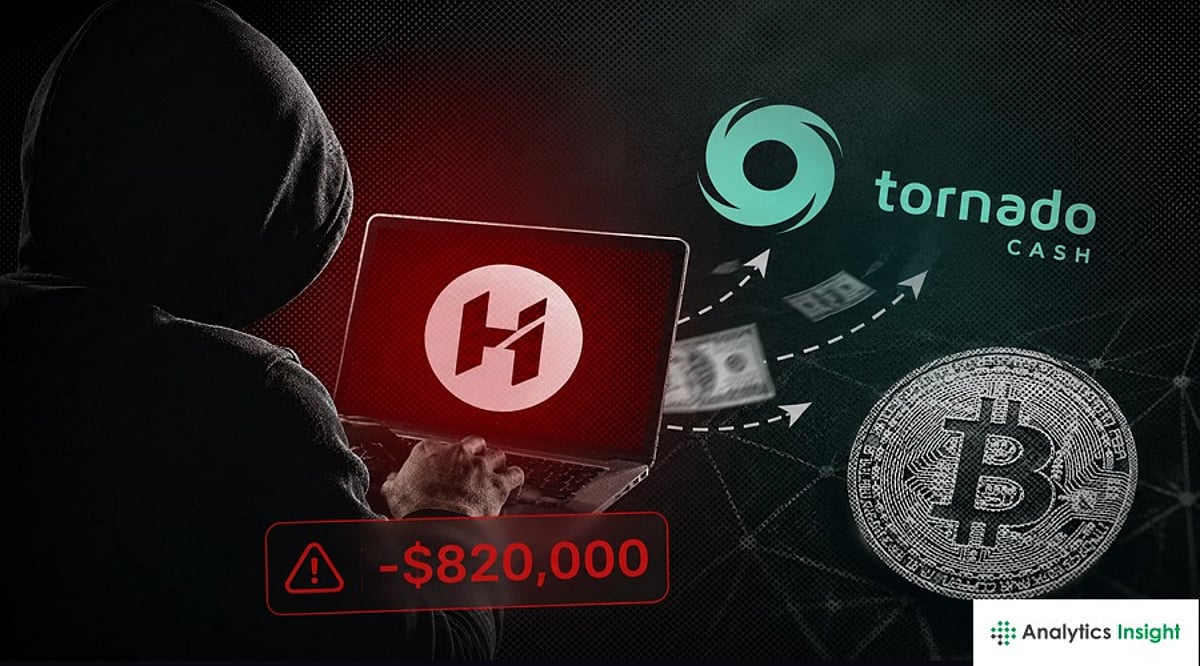
    On July 3, attackers exploited Hinkal, a privacy-focused DeFi protocol, draining approximately $830,000 in USDC — nearly the entire total value locked (TVL) across the five blockchains it supports. Blockchain security firm CertiK traced the breach to an externally owned account that repeatedly executed ‘Transact’ calls after completing a ‘proofless deposit.’ According to DeFiLlama, Hinkal’s TVL stood at roughly $829,000 just before the attack.

    How the Exploit Worked

    CertiK identified the attacker’s wallet as 0xbB3f01a1b1C68F3DEB36C55342b5F5706c32fc20 and reported that it siphoned over $800,000 from a Hinkal smart contract. Meanwhile, PeckShield, citing on-chain investigator Specter, placed the total loss near $820,000 — slightly lower than CertiK’s estimate. The exploit leveraged a vulnerability in Hinkal’s deposit mechanism, allowing the hacker to withdraw funds without providing the required proof.

    Laundering the Stolen Crypto

    After the theft, the attacker converted the stolen USDC into Ether and quickly moved the funds through privacy tools and cross-chain bridges. CertiK noted that the wallet deposited 410 ETH (worth about $700,000) into Tornado Cash, an Ethereum mixer currently under U.S. sanctions. Separately, PeckShield reported that the attacker sent 44.67 ETH through Thorchain, converting it into Bitcoin, which eventually reached an address beginning with bc1qr2sf. This laundering pattern — combining sanctioned mixers with decentralized bridges — is commonly observed in DeFi exploits.

    A research article presented at the ACM Web Conference 2026 found that sanctioned cryptocurrency mixers still provide effective anonymity despite increased regulatory pressure. CertiK has also noted that both criminals and legitimate privacy-conscious users continue to use Tornado Cash, complicating efforts to distinguish illicit transactions from lawful ones.

    Impact on Hinkal’s Institutional Privacy Model

    Hinkal markets itself as an institutional-grade privacy layer, enabling users to create shielded addresses and perform swaps, transfers, and payments without exposing balances or counterparties. The protocol operates on Ethereum, Arbitrum, Base, Polygon, and OP Mainnet. It raised $5.5 million in seed and strategic funding from investors including Draper Associates, Quantstamp, and NGC Ventures. Just one day before the exploit, Hinkal announced a partnership with wallet infrastructure provider Turnkey to bring privacy features to Turnkey users.

    At the time of the attack, Hinkal ranked near the bottom of privacy protocols by TVL. DeFiLlama listed Tornado Cash at $440 million, Railgun at $77.5 million, and Privacy Pools at about $7.8 million — while Hinkal held just $829,000 before the exploit drained nearly all of it.

    What’s Next

    The Hinkal exploit removed roughly $830,000 in USDC, nearly matching the protocol’s total locked value. Users are advised to monitor official updates from Hinkal and carefully assess the risks associated with privacy-focused DeFi platforms.

  • Bitcoin Holds Above $61K as Ether and Solana Lead Market Recovery: June Jobs Data Eases Fed Rate Hike Fears

    Bitcoin Holds Above $61K as Ether and Solana Lead Market Recovery: June Jobs Data Eases Fed Rate Hike Fears

    Market Overview: Bitcoin Rebounds Above $61,000

    Bitcoin is trading near $61,390, up 1.28% over the past 24 hours, as a weaker-than-expected June jobs report cools expectations of a near-term Federal Reserve rate hike. The recovery has lifted the broader crypto market, with Ethereum and Solana posting stronger gains. However, analysts warn that the rally may be a relief bounce rather than a confirmed reversal, citing persistent ETF outflows, thin liquidity, and regulatory uncertainty.

    Bitcoin Price Today: Key Levels and Analyst Insights

    Bitcoin stands at $61,547.78 (CoinMarketCap), having recovered roughly $3,400 from last week’s 21-month low near $58,115. It remains well below its 52-week high above $126,000.

    Akshat Siddhant, Lead Quant Analyst at Mudrex, notes: “Bitcoin is holding strong above $61,500 after weaker US jobs data reduced rate hike expectations. However, on-chain data shows exchange inflows have climbed above 50,000 BTC per day, historically followed by increased volatility. If Bitcoin loses $60,000 support, it could retest the realized price near $53,000. On the upside, a break above $62,600 could pave the way toward $65,000.”

    The CoinSwitch Markets Desk adds: “BTC’s rebound toward $62K was driven primarily by a short squeeze. Institutional demand remains weak due to persistent ETF outflows, while higher bond yields compete with risk assets. Entering Q3, the market is healthier from a leverage perspective but more susceptible to sharp price swings.”

    Top Crypto Prices Today: Biggest Gainers

    Ethereum leads the top ten with a 4.51% gain, supported by fresh ETF inflows. Hyperliquid follows at 4.29%, extending strong momentum in derivatives trading. Solana adds 2.85%, holding gains from its recent rally toward $80. No asset in the top ten posted losses today.

    News Driving Market Sentiment

    Weak June Jobs Report Cools Rate Hike Fears

    US payrolls grew by only 57,000 in June, missing expectations by a wide margin. The soft print reduced bets on further Fed tightening, lifting risk assets including Bitcoin and Ether. Traders now see a more accommodative Fed stance, with the next policy signal expected at the July 29 FOMC meeting.

    CLARITY Act Delayed

    The White House targeted a July 4 signing, but a Senate recess pushed the vote further out. Prediction markets trimmed 2026 passage odds. XRP traders watch closely, as the bill would set clearer digital asset rules.

    Citi Cuts Bitcoin and Ether Price Targets

    Citi lowered its 12-month Bitcoin forecast from $112,000 to $82,000 and Ether from $3,175 to $2,240, citing weak ETF flows and softer investor appetite. The bear case places Bitcoin near $53,000 if outflows persist.

    JPMorgan Flags Risk in Strategy’s Bitcoin Sales Policy

    JPMorgan said Strategy’s approach to selling Bitcoin adds unnecessary market uncertainty. The bank recommended equity issuance instead, adding scrutiny to corporate treasury strategies tied to Bitcoin.

    Investor and Market Outlook

    Bitcoin’s hold above $61,000 marks a steadier session, but most desks call it a relief bounce. The $60,000–$61,000 zone is key support. A break below could reopen the path toward $58,000, then realized price near $53,000. On the upside, $62,600 and $65,000 are targets for bulls. Ether’s strength above $1,650 and Hyperliquid’s climb suggest capital rotation into higher-beta names. Investors should track daily ETF flows, the CLARITY Act’s delayed Senate vote, and Fed commentary ahead of the July 29 FOMC meeting.

    Frequently Asked Questions

    What is the Bitcoin price today?

    Bitcoin is trading near $61,390.46, up 1.28% over 24 hours. Support near $60,000, resistance at $62,600 and $65,000.

    Why did Bitcoin recover this week?

    A weaker-than-expected June jobs report cooled Fed rate hike expectations, lifting Bitcoin and broader risk assets.

    What is the biggest crypto news today?

    The CLARITY Act’s delayed July 4 deadline, Citi’s price target cuts, and JPMorgan’s note on Strategy’s Bitcoin sales policy.

    Which coins are gaining the most today?

    Ethereum (+4.51%), Hyperliquid (+4.29%), and Solana (+2.85%) lead gains. No top-ten coin posted losses.

    What should crypto investors watch this week?

    Daily ETF flow data, CLARITY Act Senate vote, Fed commentary, and the $60,000 Bitcoin support level.

    Disclaimer: This article is for informational purposes only and does not constitute investment advice. Cryptocurrencies are risky assets; always conduct your own research before investing.

  • Bitcoin ETF Outflows Hit $294M: What the 10-Day Withdrawal Streak Means for Crypto Markets

    Bitcoin ETF Outflows Hit $294M: What the 10-Day Withdrawal Streak Means for Crypto Markets

    US spot Bitcoin exchange-traded funds recorded heavy net outflows on July 1, according to data from SoSoValue. Total net outflows reached $294.62 million, extending the withdrawal streak to 10 consecutive trading sessions.

    BlackRock’s IBIT posted the largest net outflow at $219.41 million. Fidelity’s FBTC recorded net outflows of $51.02 million, Ark Invest and 21Shares’ ARKB lost $39.9 million, and Grayscale’s GBTC saw $62.79 million leave the fund. By contrast, Morgan Stanley’s MSBT drew $29.81 million in net inflows, while Grayscale Mini Bitcoin added $36.33 million.

    The 10-day streak of outflows has surpassed the $1.2 billion mark. This is significant, as spot Bitcoin ETFs are considered the institutional demand channel. The heavy redemption shows that institutional investors are willing to cut back during periods of continued downtrend.

    Why ETF Outflows Matter

    The ongoing withdrawals indicate a conservative institutional sentiment. Pressure has been increasing since Bitcoin’s previous surge, with uncertainty around spot Ethereum ETFs, anticipated Mt. Gox distributions, and a risk-off macro environment.

    Macro conditions are also not favorable. The dollar is up, and risk assets like cryptocurrency are falling amid expectations that US rates may remain elevated. June was Bitcoin’s worst month in four years, down 20%. US spot Bitcoin ETFs bled a record $4.5 billion for the month, with BlackRock’s IBIT alone accounting for $3.55 billion.

    Macro headwinds include the Warsh Fed nudging the rate path toward holds, even hikes, while the dollar sits near yearly highs and gold keeps sliding.

    At press time, Bitcoin trades at $61,630 with an increase of 1.94% in the last 24 hours.

    Crypto Fear and Greed Index

    According to CoinGlass, the Crypto Fear and Greed Index stands at 22 in the fear territory. The index has improved from 10 on July 1, when BTC was trading at $58,410.60. Bitcoin Dominance stands at 57.9% with a decline of 0.14%.

    Technical Structure

    BTC rebounded from a 21-month low of $57,800 earlier this week. However, BTC maintains a bearish bias, as it remains below the 50-day, 100-day, and 200-day Exponential Moving Averages (EMAs) at $66,010, $69,816, and $75,777, respectively.

    The Relative Strength Index (RSI) at 44.87 stays below the midline, suggesting subdued buying pressure, while the Moving Average Convergence Divergence (MACD) shows a positive reading with the MACD line above its signal and above zero, indicating slightly improving momentum.

    On the upside, immediate resistance is placed at $64,004, ahead of the 50-day EMA at $66,010. Further up, the 100-day EMA at $69,816 and the 200-day EMA at $75,777 align as successive resistance levels.

    On the downside, a failure to reclaim the $64,000 level would leave BTC vulnerable to renewed selling pressure targeting the key psychological level at $55,000.

    Key Takeaways

    • Record ETF liquidations reveal institutional capital executing a massive risk-off retreat. With macro headwinds keeping interest rates high, this unprecedented selling pressure strips away Bitcoin’s institutional safety net, leaving the current market rebound highly vulnerable to further downside.
    • Some investors are rotating between ETF products rather than exiting the category completely, as seen by inflows into Morgan Stanley’s MSBT and Grayscale Mini Bitcoin.

    Disclaimer: This article is provided for informational purposes only and does not constitute investment advice. Cryptocurrencies are risky assets that may result in total loss. Always conduct your own research (DYOR) before making any investment decisions.

  • Ethereum’s Neutral Infrastructure: Why Openness Gives It a Lasting Edge in Blockchain

    Ethereum’s Neutral Infrastructure: Why Openness Gives It a Lasting Edge in Blockchain

    Ethereum stands apart in the blockchain industry because its neutral infrastructure keeps the network open, decentralized, secure, and accessible for everyone. Recent upgrades, lower fees, and strong adoption continue to strengthen its long-term position.

    Key Takeaways

    • No company or authority controls who builds or operates on the Ethereum network.
    • Recent upgrades have pushed transaction fees below $0.02 under normal conditions.
    • Ethereum’s $205 billion market value and growing enterprise adoption signal long-term confidence.

    The blockchain industry has grown rapidly in recent years, but not every network follows the same approach. Some give more control to a small group of companies or developers, while others focus on keeping the system open and fair. Ethereum’s neutral blockchain infrastructure functions like public infrastructure—no single company, government, or organization decides who can build or use it. Every developer, business, and user gets equal access. Since its launch, Ethereum has prioritized openness over control, creating trust across the industry and helping it grow faster than many competing blockchains.

    Ethereum Has the Largest Developer Ecosystem

    Recent industry reports show Ethereum still hosts the largest number of smart contract developers worldwide. More than 30% of all active Web3 developers work within the Ethereum ecosystem. Developers prefer Ethereum because the network remains open and does not favor specific companies or projects. Every builder gets the same infrastructure access, with no special privileges for large organizations. This environment fosters natural innovation. Thousands of decentralized applications already run on Ethereum, including finance platforms, blockchain games, NFT marketplaces, artificial intelligence projects, and many other services. This ecosystem scale keeps Ethereum ahead of newer blockchain competitors.

    Proof-of-Stake Made Ethereum Even Stronger

    Ethereum became even stronger after The Merge, one of the biggest upgrades in blockchain history, which moved the network from Proof-of-Work to Proof-of-Stake. Before this change, Ethereum depended on energy-intensive mining systems. After the upgrade, it relies on validators who help secure the network by staking ETH instead of using mining machines. More than 120 million ETH are currently in circulation, and staking participation continues to grow across independent validators worldwide. This system spreads control across a larger number of participants, reduces dependence on centralized operators, and helps protect Ethereum’s decentralized structure. Ethereum’s market value currently remains above $205 billion, firmly keeping it in second place behind Bitcoin in the global crypto market.

    Lower Fees Have Improved Ethereum’s Position

    For many years, Ethereum faced criticism for expensive transaction fees. However, recent upgrades have significantly improved this situation. Research from mid-2026 shows major efficiency improvements across Ethereum Mainnet and Layer 2 networks. In the past, average transaction fees often exceeded $2 during busy periods. Today, fees frequently remain under $0.02 under normal conditions. Layer 2 scaling systems built around Ethereum have reduced average transaction costs by more than 95%, making the network much more affordable for developers and businesses while maintaining strong security standards. This balance between affordability and security gives Ethereum a major advantage over competing blockchain networks.

    Ethereum Allows Different Applications to Connect Easily

    Ethereum’s open structure allows applications to interact without needing permission from any central authority. A decentralized finance application can connect directly with an NFT marketplace, a gaming platform can work with a payment protocol, and artificial intelligence systems can interact with blockchain-based financial products.

    Ethereum Continues to Improve for the Future

    One major upgrade planned for 2026 is the Glamsterdam hard fork, which focuses on improving network performance while keeping decentralization intact. The plan includes raising gas limits toward 100 million, improving transaction execution speed, and introducing systems such as Enshrined Proposer Builder Separation (ePBS).

    Institutions Continue to Trust Ethereum

    Regulatory clarity around Ethereum-based exchange-traded products has encouraged greater participation from financial institutions. Even during periods of market volatility in 2026, Ethereum continues to attract enterprise adoption. Large institutions increasingly view Ethereum as foundational digital infrastructure rather than just another cryptocurrency.

    Why This Matters

    Ethereum’s neutral infrastructure prevents centralized control, ensuring the network remains fair, open, and unalterable. For institutions and developers, this absolute censorship resistance makes it the only trustworthy foundation for long-term global financial systems and applications.

    Neutral Infrastructure Gives Ethereum Long-Term Strength

    Many blockchain networks focus mainly on speed or low fees, often by giving greater control to a small number of validators or centralized teams. As blockchain technology becomes more important in global finance and digital infrastructure, neutrality becomes a major advantage.

    Frequently Asked Questions

    1. What makes Ethereum different from other blockchain networks? Ethereum operates strictly as neutral public infrastructure, meaning no single company, government, or central group controls who can build on the platform or access its global network services.
    2. What exactly is neutral blockchain infrastructure? It is a decentralized design principle ensuring the underlying network remains entirely open, fair, and accessible to all global users and developers, with zero special corporate privileges.
    3. How has Ethereum improved its network efficiency recently? Major structural upgrades and advanced Layer 2 scaling systems have drastically reduced average transaction fees by over 95% while fully preserving the blockchain’s core security standards.
    4. Why do software developers heavily prefer building on Ethereum? Ethereum hosts the world’s largest Web3 developer ecosystem because it provides an open, stable architecture where every engineer receives identical infrastructure access without needing centralized permission.
    5. Why do large financial institutions trust the Ethereum ecosystem? Global enterprises trust Ethereum because its proven decentralized design, robust protocol security, and improving regulatory clarity make it the ideal foundational digital infrastructure for long-term institutional deployment.
  • Bitcoin Wavers Near $60K as ETF Outflows and Economic Uncertainty Deepen Bearish Sentiment

    Bitcoin Wavers Near $60K as ETF Outflows and Economic Uncertainty Deepen Bearish Sentiment

    Bitcoin is trading in a precarious range around $58,800 to $60,000 as of early July 2026, following a steep decline of over 30% from its all-time highs above $120,000 in late 2025. The cryptocurrency has been under heavy selling pressure, driven by weakening institutional demand, unfavorable macroeconomic conditions, and growing regulatory concerns. This article examines the key factors behind Bitcoin’s current price struggles and what technical indicators suggest about the next major move.

    BTC Price and Recent Market Performance

    Bitcoin currently hovers near the critical $58,800–$60,000 zone, a dramatic decline from its January levels above $93,000. In six months, the market has lost more than 30% of its value, with the correction accelerating after the peak near $126,000 in late 2025. The rapid descent has surprised many investors who began the year with strong optimism.

    ETF Outflows Create Major Selling Pressure

    Institutional demand, once a primary driver of Bitcoin’s rally, has reversed sharply. Exchange-traded fund (ETF) outflows surpassed $5 billion in the first half of 2026, signaling that large investors are pulling capital from the market. This trend has forced major financial institutions to revise their outlooks. Citigroup, for example, cut its Bitcoin price target from $112,000 to $82,000, citing much weaker institutional demand than previously anticipated.

    Technical Charts Show Bearish Market Conditions

    Bitcoin now trades below key moving averages, indicating that sellers currently control the market. The $58,700 support level is critical; if broken, analysts expect the price to fall toward $49,000–$53,000. On the upside, immediate resistance sits at $61,000–$62,000. A move above this range could generate short-term positive momentum.

    Investors Fear Market Indicators

    The Relative Strength Index (RSI) has dropped near 32, reflecting weak momentum. Broader market sentiment has entered “Extreme Fear” territory, a state that historically can precede a recovery but may also lead to further declines if selling pressure persists.

    Economic Conditions Continue to Hurt Bitcoin

    High interest rates, a strong bond market, and attractive returns from sectors like artificial intelligence and semiconductors have drawn capital away from cryptocurrencies. The Federal Reserve has not delivered the expected rate cuts, making traditional investments more appealing.

    Regulation Concerns Add More Uncertainty

    Slow progress on U.S. cryptocurrency laws and ongoing regulatory challenges for exchanges like Binance have made institutional investors cautious. Many are waiting for clearer legal frameworks before committing significant resources to Bitcoin.

    Future Outlook Is Uncertain

    Analysts are divided. Optimists point to Bitcoin’s limited supply and growing adoption, forecasting a possible return to $100,000–$170,000 by year-end if ETF demand recovers and central banks ease policies. Pessimists warn that continued weakness could drive Bitcoin down to $53,000 or lower if recession fears intensify.

    Final Market View

    Bitcoin is at a pivotal juncture. The $58,000 support and $61,000 resistance levels will determine near-term direction. While long-term fundamentals remain solid, elevated volatility is expected in the short term. July 2026 could be a defining month for Bitcoin’s next major price move.

  • Solana Price Forecast July 2026: Strong Recovery, Network Growth, and $100 Target

    Solana Price Forecast July 2026: Strong Recovery, Network Growth, and $100 Target

    Solana has entered July 2026 with fresh momentum after several difficult weeks in the crypto market. After sharp price swings during the second quarter of 2026, Solana has started July on a much stronger note, which has pushed analysts to closely examine how the asset may perform over the coming weeks.

    Current Solana Price Shows Recovery

    At the beginning of July 2026, Solana (SOL) trades between $80 and $85, which marks a strong recovery from the June low levels near $66 to $70. During the last seven days alone, the token has recorded gains of nearly 16%, making it one of the strongest-performing major cryptocurrencies at the start of the month.

    Solana’s market capitalization now sits close to $43 billion, which helps it maintain its place among the largest blockchain networks in the crypto industry. The recent recovery has shown that buyers continue to defend important support zones after weeks of market pressure.

    Network Growth Creates Strong Foundation

    One of the biggest positive signals for Solana this month comes from strong network activity. Recent blockchain data shows that active wallet addresses now approach nearly 7 million, which stands among the highest activity levels seen during 2026 so far.

    This growth clearly shows that more people continue to use the Solana blockchain across different sectors. Activity remains strong in decentralized finance applications, NFT marketplaces, blockchain gaming, and consumer-focused crypto products.

    Solana has continued to attract developers mainly for two important strengths. First, transaction fees remain very low compared to competing networks. Second, the blockchain continues to process transactions at very high speed.

    New Ecosystem Development Supports Confidence

    The platform has received attention as it now works inside the Phantom Wallet ecosystem, which remains one of the most popular wallet services for Solana users. The system uses decentralized oracle technology powered by Chainlink and allows market participation across crypto price predictions, sports outcomes, and global financial events.

    Technical Charts Show Bullish Structure

    From a technical market perspective, Solana recently moved above a major resistance level near $75, which has created a stronger short-term market structure.

    At present, the first major support zone sits near $73, while stronger support remains around $70. On the upside, analysts now watch $90 as the first major resistance area.

    If buying pressure continues at current levels, Solana may soon attempt a move toward the important $100 price zone. Some analysts believe a strong breakout could even push prices toward $120 before the end of July.

    July Price Forecast Looks Positive

    Under weaker market conditions, analysts believe the price could fall back toward the $70 to $73 range, especially if Bitcoin experiences another correction.

    Under normal market conditions, Solana may continue trading between $82 and $95 for most of July as buyers and sellers search for direction. Under stronger bullish conditions, analysts believe Solana could rise toward $100 to $120 before the month ends.

    Risks Still Remain in the Market

    Global crypto regulations remain uncertain, and sudden policy changes can create strong price volatility across the entire market. Broader economic conditions also remain important since interest rate decisions continue to influence investor behavior across risk assets, including cryptocurrencies.

    Bitcoin price action also remains a major factor. If Bitcoin faces sudden selling pressure, Solana may also experience short-term weakness regardless of its own positive fundamentals.

    Why This Matters

    Solana rebounded because buyers actively defended key support levels. The network currently has nearly 7 million active wallets and very low transaction fees. Spot ETF assets also crossed the $1 billion mark, showing real network growth instead of speculative hype.

    Final Outlook for July 2026

    July 2026 has become an important month for Solana as several positive factors now come together at the same time.

    Strong wallet growth, expanding blockchain usage, new ecosystem launches, and improving technical charts all support a positive short-term outlook. Current expectations suggest Solana will likely trade between $80 and $100 through much of the month.

    If market conditions stay favorable and buying pressure remains strong, price movement toward $120 remains possible before July closes.

    FAQs

    1. What is Solana’s price at the start of July 2026?

    Solana currently trades between $80 and $85. This shows a strong recovery of nearly 16% from its previous June lows, which sat around the $66 to $70 range.

    2. What factors are driving Solana’s price up this month?

    The rally is driven by strong network fundamentals, active wallets nearing 7 million, low transaction fees, and fresh ecosystem developments like new prediction integrations within the popular Phantom Wallet app.

    3. Can Solana hit $100 or $120 in July 2026?

    Yes, technical charts show a bullish structure after clearing $75. If buying momentum continues, analysts expect a move toward $100, with an extended breakout potentially hitting $120 this month.

    4. What are the key support and resistance levels to watch?

    Solana faces immediate resistance at $90, with major targets at $100 and $120. On the downside, immediate support sits at $73, while a stronger floor remains down at $70.

    5. What are the biggest risks to Solana’s positive outlook?

    The main short-term risks include sudden Bitcoin selling pressure pulling down the market, ongoing global crypto regulatory uncertainty, and broader macroeconomic factors like upcoming central bank interest rate decisions.

  • Dogecoin Breaks Critical $0.08 Support – What It Means for Investors

    Dogecoin Breaks Critical $0.08 Support – What It Means for Investors

    Dogecoin recently fell below the important $0.08 support level after losing nearly 40% in recent weeks, creating uncertainty as traders watch for possible recovery or deeper price correction ahead.

    Key Takeaways

    • Dogecoin dropped below $0.08, a major support level that held strong for months.
    • DOGE futures open interest fell 10%, showing weaker trader confidence in the short term.
    • Elon Musk and ETF speculation continue to keep long-term market interest alive despite current weakness.

    As of early July 2026, Dogecoin trades between $0.07 and $0.08. The meme cryptocurrency has already lost nearly 35% to 40% of its value in recent weeks after reaching highs close to $0.10 to $0.12 during May.

    Why This Price Drop Matters

    Support levels play an important role in technical analysis since they often mark areas where buyers become active. For several months, Dogecoin remained inside a price range between $0.08 and $0.12. The recent move below $0.08 changed market sentiment as it showed that sellers currently hold more control than buyers.

    When a support level breaks, that same level often becomes resistance. In simple terms, this means if Dogecoin attempts recovery, heavy selling pressure may return near the same price area. Right now, experts believe the next important price zone sits between $0.065 and $0.070. If this area fails, further decline may follow.

    Main Reasons Behind the Recent Decline

    The overall cryptocurrency market has struggled in recent weeks, especially after Bitcoin failed to remain above major resistance levels. Dogecoin usually follows Bitcoin’s direction, but price swings are often much larger because it depends heavily on market sentiment and speculation.

    Another important factor comes from the futures market. Recent reports show that DOGE futures open interest fell by nearly 10% within just 24 hours. Open interest represents the number of active futures contracts. A sudden drop usually shows reduced trader confidence and weaker short-term demand.

    Selling pressure also increased after Dogecoin failed to move above $0.09. Many traders expected a recovery rally, but the price rejection at that level pushed more investors toward profit-booking, which added extra pressure on the market.

    Positive Signs Still Exist

    Recent reports suggest growing institutional interest in meme-based cryptocurrencies. Large investment firms continue discussions about possible crypto products tied to Dogecoin, including market speculation about future Dogecoin ETFs. This keeps long-term market attention alive.

    Another positive development came after Dogecoin recently broke out of a seven-month downtrend. This technical signal often shows that a larger recovery may still happen if buying demand returns at lower price levels.

    Trading volume also remains relatively stable compared with many smaller meme coins. This shows Dogecoin still holds strong market presence and remains one of the most actively traded meme cryptocurrencies.

    Elon Musk Factor Still Matters

    Dogecoin remains closely tied to Elon Musk, whose public comments have often influenced its price movements in the past. Market attention remains focused on potential payment features associated with X Corp, formerly known as Twitter. Speculation continues about whether Dogecoin may gain future payment utility within Musk’s business ecosystem.

    Important Price Levels Ahead

    Dogecoin now stands near an important decision point. The immediate support level sits near $0.065, while $0.07 remains an important psychological level for traders. For recovery, Dogecoin first needs to move back above $0.08. After that, the next major resistance zone sits between $0.09 and $0.10.

    What Investors Should Understand

    The most recent breakdown further illustrates how risky meme coins can be in comparison with traditional assets, as Dogecoin’s future value is determined primarily by social media trends, community interest, speculation, and the direction of the greater cryptocurrency market. At this time, the lack of strong support in the cryptocurrency market is keeping many short-term traders cautious. Long-term investors are still focused on long-term possibilities of wider use cases, payment integration, and potential for a full recovery of the market.

    Frequently Asked Questions

    1. Why did the Dogecoin price fall recently?

    Dogecoin collapsed given a combination of overall cryptocurrency market weakness, a sudden 10% drop in futures open interest, and failure to break key resistance at $0.09, which triggered heavy profit-taking.

    2. What is Dogecoin’s current price range?

    As of early July 2026, Dogecoin is trading heavily suppressed within a tight range of $0.07 to $0.08, having shed up to 40% of its value since May.

    3. What happens after Dogecoin breaks a major support level?

    When a support floor like $0.08 breaks, it structurally flips into a resistance level. This means any future attempt at a recovery rally will face intense selling pressure at that exact price point.

    4. What are the key technical levels to watch next?

    Traders are closely watching immediate downside support between $0.065 and $0.070. On the upside, DOGE must firmly reclaim $0.08 before it can challenge the $0.09 to $0.10 resistance zone.

    5. Why does Elon Musk continue to impact Dogecoin’s value?

    Dogecoin remains highly sensitive to speculation surrounding Elon Musk. Traders consistently price in high-risk bets on whether DOGE will eventually be integrated as an official utility token for payment features on X.

  • 5 Leading Blockchain Projects Powered by Artificial Intelligence

    5 Leading Blockchain Projects Powered by Artificial Intelligence

    Artificial intelligence and blockchain are rapidly converging to create decentralized ecosystems for computing, automation, and data sharing. Unlike traditional AI controlled by large corporations, AI-powered blockchain projects distribute resources across global networks, offering developers, businesses, and users greater transparency, security, and ownership.

    Here are five standout blockchain projects that are harnessing AI to reshape the digital landscape in 2026:

    Bittensor (TAO)

    Bittensor is a pioneering AI-native blockchain that rewards developers for training and sharing machine learning models through a decentralized intelligence marketplace. Its Yuma Consensus mechanism continuously incentivizes high-quality AI outputs, enabling AI models to collaborate and compete efficiently.

    Render Network (RENDER)

    Render Network provides decentralized GPU computing for AI developers, artists, and creators. Users with unused GPU power can rent it to others for AI model training, generative AI, visual effects, and 3D rendering. This shared computing model reduces costs while meeting the growing demand for AI processing power.

    Fetch.ai (FET)

    Fetch.ai focuses on autonomous AI agents that communicate, automate tasks, and complete transactions without constant human input. These intelligent agents are applied across decentralized finance, logistics, smart cities, and energy management, making blockchain automation faster and more efficient.

    SingularityNET (AGIX)

    SingularityNET operates as a decentralized marketplace where developers can build, publish, and monetize AI services. Rather than relying on large tech firms, creators offer AI models directly to users while benefiting from blockchain-based transparency, interoperability, and community governance.

    NEAR Protocol (NEAR)

    NEAR Protocol is evolving into an AI-friendly Layer-1 blockchain by supporting user-owned AI and autonomous applications. Its chain abstraction technology enables developers to build AI-powered decentralized apps that interact seamlessly across multiple blockchain networks with improved scalability and user experience.

    AI-powered blockchain projects are laying the foundation for decentralized digital economies by combining intelligent automation, secure data sharing, and distributed computing. While challenges like regulation and token volatility remain, platforms such as Bittensor, Render, Fetch.ai, SingularityNET, and NEAR Protocol are among the strongest projects shaping the future of AI and Web3 in 2026.