Category: Cryptocurrency

  • XRP Network Activity Surges 70% as Investors Accumulate During Price Dip

    XRP Network Activity Surges 70% as Investors Accumulate During Price Dip

    XRP is showing fresh signs of strength even as its market price remains under pressure. Recent blockchain data reveals a sharp increase in network activity over the past few weeks, suggesting sustained investor confidence and continued accumulation at lower price levels.

    Daily Active Addresses Jump More Than 70%

    On-chain data shows active wallet addresses surged by over 70% in a short period, rising from approximately 23,000 to nearly 39,500 active addresses by the end of June. This increase indicates higher use of the network for transfers, payments, and other blockchain activity, signaling healthy demand despite falling prices.

    Transaction Volume Continues to Rise

    Daily transactions on the XRP Ledger now stand close to 2.7 million, building on earlier growth reported by Messari, which showed a 35.3% quarter-over-quarter increase in Q1 2026. High transaction volume reflects strong network demand, even as XRP price struggles.

    Investors Start Buying During Market Dip

    The price drop has created buying opportunities for traders. Market data shows strong dip-buying behavior, with investors purchasing tokens during weakness. Meanwhile, open interest in XRP derivatives has dropped sharply, reducing leveraged positions and creating a healthier market structure with lower liquidation risks.

    Ripple Ecosystem Expands Through RLUSD Growth

    Ripple’s stablecoin RLUSD has reached a market capitalization of around $340 million, boosting overall activity within the XRP Ledger ecosystem. Additionally, tokenized real-world assets on the network have surpassed $461 million in total value, indicating rising institutional interest.

    Whale Activity Creates Mixed Market Signals

    Despite strong network data, some analysts note mixed signals from large XRP holders. Active addresses rose roughly 36% over two weeks, but some whales moved substantial tokens to exchanges, suggesting possible selling activity. Analysts remain cautious even as network numbers improve.

    Market Confidence Remains Strong

    The divergence between XRP price and blockchain activity is unusual. While price hovers near the $1 support level, network usage continues to rise across wallet activity, transaction volumes, and ecosystem growth. This decoupling suggests institutional network utility is distancing from speculative market panic.

    XRP Could Prepare for Bigger Move Ahead

    Many analysts believe XRP may be gearing up for a major move. A break above the $1.10 resistance zone could trigger fresh bullish momentum. Key signals include 70%+ growth in active addresses, 2.7 million daily transactions, $340 million RLUSD market cap, and over $461 million in tokenized assets.

    FAQs

    Why has XRP network activity increased recently?

    Network activity surged as investors and institutions accumulate tokens at lower prices, utilizing the XRP Ledger for cross-border transactions and decentralized infrastructure despite the price slump.

    How much did XRP active addresses grow?

    Daily active addresses skyrocketed by over 70%, expanding from about 23,000 to nearly 39,500 wallets.

    How many transactions does the XRP Ledger process daily?

    The network sustains approximately 2.7 million transactions per day, building on 35.3% quarter-over-quarter growth reported by Messari.

    What is RLUSD and why is it important?

    RLUSD is Ripple’s native dollar-pegged stablecoin with a $340 million market cap, driving utility and liquidity into the XRP Ledger ecosystem.

    Can the XRP price recover soon?

    While whale transfers to exchanges warrant caution, the divergence between soaring on-chain usage and depressed prices suggests a strong accumulation floor. Breaking past $1.10 resistance could ignite an aggressive recovery.

    Disclaimer: This article is for informational purposes only and does not constitute investment advice. Cryptocurrencies are highly volatile and may result in loss of capital. Always conduct your own research before investing.

  • Solana Spot ETFs Surpass $1.06 Billion as Institutional Demand Surges

    Solana Spot ETFs Surpass $1.06 Billion as Institutional Demand Surges

    Solana spot exchange-traded funds (ETFs) have reached a significant milestone, surpassing $1.06 billion in total assets under management. This surge is fueled by growing institutional interest, strong blockchain adoption, increased futures market activity, and support from major traditional financial institutions.

    Key Takeaways

    • Solana spot ETF assets now exceed $1.06 billion, reflecting robust investor demand.
    • Bitwise BSOL ETF leads the market with nearly $861 million in inflows, representing roughly 81% of the total market.
    • Institutional capital is rotating from Bitcoin ETFs toward Solana amid significant outflows from the former.

    Bitwise Dominates the Solana ETF Landscape

    Among the available Solana ETF products, Bitwise’s BSOL ETF stands out as the top performer. With nearly $861 million in total inflows, it commands about 81% of the entire Solana ETF market. This dominance underscores institutional preference for established fund managers when entering new crypto investment sectors and has bolstered overall confidence in the Solana ETF ecosystem.

    Institutional Capital Rotation From Bitcoin to Solana

    Recent data reveals a clear shift in institutional allocation within the cryptocurrency market. While U.S. spot Bitcoin ETFs experienced over $2.9 billion in outflows during a 10-day period in late May, Solana-based products attracted fresh capital. This divergence signals that institutional investors are diversifying beyond Bitcoin, drawn to Solana’s faster blockchain network, lower transaction costs, and expanding real-world use cases.

    Solana’s Price Action Reinforces Investor Confidence

    The positive ETF momentum aligns with Solana’s recent market performance. SOL has returned to the $73–$76 price range, posting a weekly gain of about 6.7%. In contrast, both Bitcoin and Ethereum showed weaker performance over the same period. Solana’s total market capitalization has now climbed above $42.7 billion, solidifying its position among the top digital assets globally.

    Network Activity and Real-World Utility Drive Adoption

    Rising institutional demand is strongly linked to Solana’s expanding blockchain ecosystem. Recent data shows the network handled nearly $1.36 billion in tokenized stock trading volume within a single week, representing about 96% of all blockchain-based equity trading activity across major networks. This surge in real-world asset tokenization highlights Solana’s practical utility beyond speculative trading, making it attractive to large institutions.

    Futures Market Signals Growing Confidence

    Investor confidence is also evident in Solana’s derivatives market. Open interest in Solana futures contracts has climbed to nearly $6.4 billion, a 29% increase over just a few weeks. Higher open interest typically indicates stronger participation from professional traders and institutions, foreshadowing potential larger price movements ahead.

    Traditional Finance Firms Embrace Solana

    Major financial institutions are building products around Solana. Reports indicate that Morgan Stanley is advancing plans for a Solana ETF that includes staking rewards. Additionally, several prominent custody providers now support Solana-based assets, reducing operational risk for institutional entrants and further legitimizing the asset.

    Why This Matters

    Solana’s $1.06 billion ETF milestone confirms a major institutional rotation. While Bitcoin faces multi-billion-dollar outflows, Wall Street is aggressively shifting capital toward Solana, drawn by its unmatched transaction speeds and dominance in tokenized stock trading. The broader crypto ETF market now shows a clear trend: investors increasingly favor blockchain networks with strong technology, fast execution, and real-world use cases.

    Analysts are watching $95 as the next major resistance level, with bullish forecasts targeting $120 if ETF inflows continue at the current pace. This milestone represents more than a number—it confirms Solana’s emergence as a cornerstone asset for institutional portfolios in the digital finance era.

    Frequently Asked Questions

    What does Solana spot ETFs crossing $1.06 billion mean?

    It signifies that regulated spot investment funds tied directly to Solana’s native token (SOL) now manage over $1.06 billion in total assets, marking deep institutional adoption.

    Which Solana ETF currently dominates the market?

    Bitwise’s BSOL ETF is the overwhelming leader, capturing nearly $861 million in capital inflows—roughly 81% of the entire Solana ETF market.

    Why are institutional investors aggressively rotating into Solana?

    Institutions are targeting Solana due to its superior blockchain infrastructure, low transaction costs, and dominant real-world utility, highlighted by $1.36 billion in tokenized stock trading in one week (96% of the blockchain equity market).

    How has Solana’s price reacted to this milestone?

    Solana outperformed peers with a 6.7% weekly gain, reaching the $73–$76 range, and its market cap exceeded $42.7 billion despite a broader market slowdown affecting Bitcoin and Ethereum.

    What future price levels and products are analysts tracking?

    Traders are watching $95 as immediate resistance, with bullish inflows potentially targeting $120. Structurally, firms like Morgan Stanley are advancing Solana ETF products with staking rewards.

  • Ethereum Institutional Launches to Boost Adoption as Spot ETF Outflows Reverse

    Ethereum Institutional Launches to Boost Adoption as Spot ETF Outflows Reverse

    Ethereum Institutional has launched as an independent non-profit organization aimed at accelerating institutional adoption of Ethereum, Layer 2 networks, and blockchain applications. The initiative arrives as United States spot Ethereum exchange-traded funds (ETFs) recorded $14.8 million in net inflows on July 1, ending nine consecutive trading days of withdrawals.

    Former Ethereum Foundation team leads David Walsh and Matthew Dawson are spearheading Ethereum Institutional’s outreach to traditional financial companies. The organization plans to serve as a neutral entry point for banks, asset managers, and custodians seeking clearer access to Ethereum’s technology and broader ecosystem.

    Ethereum Institutional’s work will focus on building relationships across traditional finance while supporting the use of Ethereum, Layer 2 solutions, and related financial applications. The initiative aims to strengthen institutional confidence by improving communication between blockchain developers and financial firms that require scalable infrastructure and regulatory credibility.

    BlackRock’s iShares Ethereum Trust (ETHA) led the July 1 inflows with $36.6 million, contributing the majority of the market’s positive daily total. However, other products moved in the opposite direction. BlackRock’s ETHB lost $1.7 million, while Fidelity’s FETH recorded $1.6 million in net withdrawals. Grayscale’s Mini Ethereum Trust posted an $18.5 million outflow as investors continued shifting capital among competing Ethereum funds with different fee structures.

    Cumulative flow data showed withdrawals of approximately $380 million across the spot Ethereum ETF market during the previous nine trading sessions. Although the July 1 inflow remained modest compared with those withdrawals, it ended the market’s recent stretch of daily net outflows.

    The reversal also showed that institutional demand remained uneven, with investors favoring some providers while reducing exposure through competing Ethereum products.

    Market focus now turns to sustained institutional demand. Ethereum Institutional will focus on expanding adoption among financial institutions and increasing access to Layer 2 networks and blockchain-based applications. Traders and analysts will track whether spot Ethereum ETFs can record further inflows after the July 1 change in direction.

    Sustained inflows over several weeks would provide stronger confirmation of a trend reversal than the results from one trading session. The organization’s progress will also depend on its ability to build working relationships with banks, custodians, and asset managers across traditional finance.

    Its launch places institutional engagement alongside Ethereum’s technical initiatives as the network seeks broader financial use and stronger market credibility. Upcoming ETF sessions will show whether the inflow marked a durable shift or a brief interruption in the recent withdrawal trend.

  • American Bitcoin to Execute 1-for-15 Reverse Stock Split to Maintain Nasdaq Listing

    American Bitcoin to Execute 1-for-15 Reverse Stock Split to Maintain Nasdaq Listing

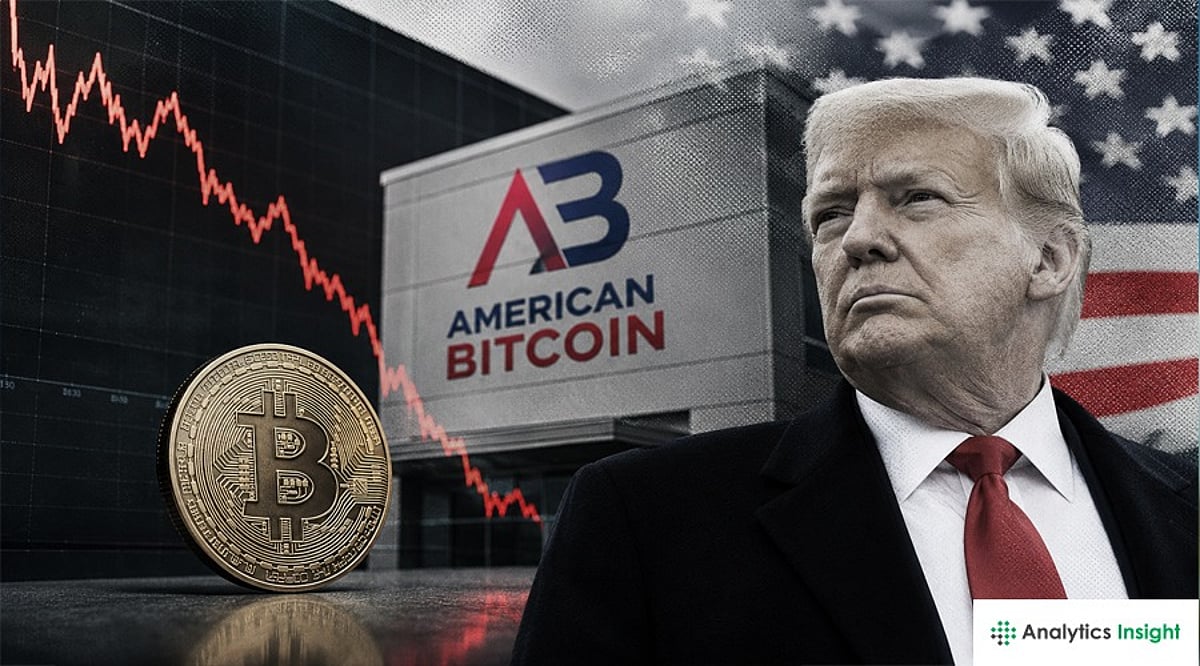
    American Bitcoin, the Trump family-backed cryptocurrency mining company, has announced a 1-for-15 reverse stock split aimed at restoring compliance with Nasdaq’s minimum bid price requirement. The move comes after the company’s shares hit an all-time low of $0.62 on Wednesday, triggering concerns about potential delisting.

    The reverse split will consolidate every 15 Class A and Class B common shares into one share, reducing the outstanding share count from over one billion to approximately 73 million. While the split raises the per-share price, it does not change the company’s overall market capitalization. Trading on a split-adjusted basis under the existing ticker ABTC will commence Monday following the close of trading on Thursday.

    Nasdaq Compliance and Shareholder Approval

    Nasdaq requires listed companies to maintain a closing share price of at least $1. Stocks that trade below this threshold for 30 consecutive trading days risk delisting unless corrective action is taken. American Bitcoin’s reverse split is designed to lift the share price above this minimum bid requirement.

    Shareholders approved the restructuring proposal on June 22. The company emphasized that the split targets the minimum bid rule and does not reflect any change in the company’s underlying valuation or business fundamentals.

    Market Reaction and Stock Performance

    Following the announcement, American Bitcoin shares fell nearly 8.4% during Wednesday’s session, closing at a record low of $0.62 before recovering slightly to around $0.65 in after-hours trading. The stock has lost more than 63% of its value in 2026 and remains over 92% below its peak after the company’s Nasdaq debut on September 3.

    Reverse stock splits are often viewed as a defensive measure by companies facing exchange compliance pressures. While they can help maintain a listing, they do not inherently improve a company’s financial health or market perception.

    Trump Family’s Role and Company Structure

    American Bitcoin was co-founded by Donald Trump Jr. and Eric Trump early last year as part of the family’s broader expansion into digital assets. The company entered the public market through a merger with Gryphon Digital Mining, which already held a Nasdaq listing, giving the combined entity access to public trading under the ABTC symbol.

    After the merger, Donald Trump Jr., Eric Trump, and mining firm Hut 8 collectively held approximately 98% of the business, giving the founding group dominant control. American Bitcoin remains the only publicly traded cryptocurrency company directly linked to the Trump family’s digital asset ventures, making its Nasdaq status a key connection between the family’s crypto ambitions and public market requirements.

    What’s Next

    Investors will closely watch Monday’s split-adjusted trading for signs of improved stability and renewed market confidence. While the reverse split addresses the immediate compliance issue, the company’s long-term success will depend on its operational performance and the broader cryptocurrency market environment.

    This article is for informational purposes only and does not constitute financial advice. Always conduct your own research before making investment decisions.

  • Blockchain’s Centralization Paradox: Why Decentralized Networks Risk Becoming the Very System They Sought to Replace

    Blockchain’s Centralization Paradox: Why Decentralized Networks Risk Becoming the Very System They Sought to Replace

    Decentralization has been crypto’s defining promise since Bitcoin introduced a peer-to-peer alternative to traditional finance. Ethereum expanded that vision with programmable smart contracts, and newer blockchains have continued pushing the boundaries of scalability and performance. But as the industry matures, a different question is beginning to emerge: can a blockchain remain decentralized if the infrastructure supporting it becomes increasingly concentrated?

    Almost all conversations about decentralization are based on validator numbers, governance structures, or token distribution. This is an important factor, but it doesn’t tell the entire story. The infrastructure behind transaction routing, block building, and MEV has become an equally important consideration. When a significant portion of the validator set depends on the same infrastructure to stay competitive, then it will be less decentralized, even if there are lots of online nodes.

    But this is not just a theoretical discussion. All blockchains provide different incentives that determine the way ecosystems are developing. While the validators aim to maximize their revenue, developers try to get reliable infrastructure, searchers fight for profitable activities, and users need fast transactions. These incentives will eventually favor reliable solutions.

    The problem starts when one or two providers are so powerful that others cannot establish themselves. Network effects make incumbents stronger and more difficult to beat. Even if validators have freedom of choice, leaving the leading provider might mean earning less money, having lower uptime, or not getting any transactions at all.

    Many historical cases are related to such development. Search engines, cloud services, digital advertising, and payment processing became centralized even though initially they were highly competitive industries. Blockchain cannot change this by itself – even decentralized protocols can create centralized infrastructure through certain economic incentives.

    This problem is important for high-performance networks like Solana because its architecture allows fast confirmations and cheap transactions; thus, the network has become one of the most active ecosystems for decentralized trading. On the other hand, it caused a discussion about transaction ordering and validator economics.

    MEV has become a major source of validator revenue, encouraging operators to integrate with specialized infrastructure that helps optimize block production. While these systems have improved efficiency, they have also concentrated parts of the transaction supply chain among relatively few participants. As a result, validators often find themselves balancing decentralization ideals with practical business decisions.

    Healthy competition is one of the best ways to prevent excessive concentration. When multiple infrastructure providers compete for validator participation, innovation accelerates, pricing becomes more efficient, and validators gain greater flexibility in choosing the services that best match their needs. Open competition also reduces systemic risk by ensuring that no single provider becomes indispensable to the network.

    Transparency plays an equally important role. Open markets lower barriers for new participants by reducing the informational advantages enjoyed by incumbents. Instead of relying on privileged relationships or proprietary access, infrastructure providers compete based on execution quality, performance, and economic value.

    Several teams across the Solana ecosystem are now exploring ways to create a more competitive transaction marketplace. One of them is Flowra, which is building an Open Orderflow Auction designed to expose transaction flow to a broader group of searchers while allowing validators to define their own Programmable Block Policies. Rather than requiring validators to depend on a single infrastructure stack, the model aims to increase optionality while encouraging open competition for blockspace.

    The success of this model of validation remains to be seen. However, what we know for sure is that decentralization cannot be defined exclusively by the number of nodes validating transactions. Another aspect of decentralization will also depend on whether or not these nodes will have real choice when choosing their infrastructure and whether or not competition will be high enough to allow innovations.

    The field of infrastructure can become one of the key areas for competition, with blockchain becoming more popular. The winners will not only be the fastest or the cheapest networks but also those that manage to uphold the open market principles inherent to decentralized technologies.

  • BlockDAG Leads $500M AI-Driven Crypto Rally as Render and Cardano Show Signs of Strategic Recovery

    BlockDAG Leads $500M AI-Driven Crypto Rally as Render and Cardano Show Signs of Strategic Recovery

    The crypto market is undergoing a significant capital rotation, with investors shifting from traditional layer-1 networks and niche tokens toward platforms offering immediate value and scalability. This trend has brought BlockDAG (BDAG) into the spotlight as one of the top crypto gainers today, following a $500 million valuation jump tied to its new BlockDAG AI technology.

    Alongside this artificial intelligence milestone, the project revealed plans for a Fully Regulated Crypto Exchange & App, changing how users perceive utility and ecosystem access. These developments are reshaping investor sentiment and driving up daily transaction volumes.

    Render Price Shows Signs of a Potential Turnaround

    The Render price is quietly positioning for a notable comeback, with technical patterns that have analysts optimistic. Currently trading around $1.52 after a minor 24-hour dip, the token has corrected nearly 92% from its all-time high of $13.83. This correction has pushed Render into a long-term accumulation zone between $1.20 and $0.80, historically a prime entry point for investors.

    Despite Bitcoin’s sideways movement capping immediate growth, short-term forecasts point to a potential 34% rally that could push Render to $2.20. If the token breaks out of its multi-year downward channel and surpasses $2.71, experts see targets at $5.50, $13, and beyond. For this decentralized GPU platform, the quiet period appears less like a decline and more like a launchpad.

    Cardano Crypto Aims for Real-World Utility Beyond Market Rankings

    Cardano crypto is navigating a tough market, with ADA slipping to approximately $0.1441 and ranking 18th by market capitalization. The token would need a surge of over 2,000% to reclaim its previous all-time high. Despite skepticism, founder Charles Hoskinson remains confident, emphasizing that real success goes beyond recovering past price milestones.

    The project’s roadmap focuses on global blockchain adoption through tangible applications, relying on its EUTXO accounting model, decentralized governance, proof-of-stake security, and the Midnight privacy initiative. For loyal Cardano supporters, the current price drop is seen as a foundation for a secure, global infrastructure.

    BlockDAG Builds Massive Momentum as Top Crypto Gainer

    BlockDAG is capturing market attention by locking in its position among top crypto gainers through a series of major milestones. The ecosystem saw a $500 million valuation jump from its BDAG AI launch, alongside plans for a regulated trading platform and mobile app. To celebrate, the network doubled its World Cup promotion from a 50% to a 100% bonus for new participants.

    Under this structure, buyers can purchase BDAG at $0.00000066 and receive an immediate 100% extra allocation, with coins sent directly to their wallets. The project also features a built-in $0.03 buyback mechanism, creating a clear exit strategy. Combined with an upcoming mainnet upgrade capable of 7,000 transactions per second, this has driven massive transaction volume.

    While older networks face resistance, BlockDAG’s combination of AI tools and fixed-value systems keeps it among the top crypto gainers today.

    Summary

    The crypto market is moving in different directions. While Render price appears technically ready for a cyclical bounce and Cardano builds long-term decentralized governance, BlockDAG has captured immediate attention by slashing entry barriers. By launching AI tools, growing valuation by $500M, and prepping a regulated exchange, the platform boosted its community with a World Cup Bonus raised from 50% to 100% extra BDAG. Anyone buying at $0.00000066 gets that bonus, a $0.03 buyback path, and instant coin delivery, keeping the project aligned with top crypto gainers.

    Disclaimer: This article is for informational purposes only and does not constitute investment advice. Cryptocurrencies are high-risk assets; you are responsible for your own research (DYOR) before investing.

  • Cregis 2026 Review: Unified Crypto Infrastructure for Enterprise Operations

    Cregis 2026 Review: Unified Crypto Infrastructure for Enterprise Operations

    Digital assets are becoming part of how mainstream finance runs, and that change has exposed a structural problem. Most companies still manage wallets, fund movement, compliance, and custody on separate tools. Each one works on its own, but getting them to work together takes constant effort.

    This is the gap Cregis has spent close to a decade closing. Rather than offering a standalone wallet or payment product, it provides an enterprise infrastructure platform that brings together wallet infrastructure, fund flow orchestration, and institutional governance into a unified operational framework.

    Cregis Product Architecture Overview

    By the company’s own account, Cregis has never pivoted. It grew by answering one question over and over: How can enterprises manage digital assets more safely and efficiently? Over time, customer demand revealed three recurring infrastructure needs – wallet management, fund movement, and asset custody. Those three needs became the pillars the Cregis platform is building on: the wallet layer (WaaS), the fund flow layer (Flow), and the custody layer (Custody).

    Cregis at a Glance – Quick Overview

    There is a lot to unpack with Cregis, so before we get into the details, here is a simple overview of what it is and what it does:

    • Wallet-as-a-Service (WaaS): the control layer that lets enterprises build crypto wallets into their own products via a single API, with MPC security splitting private keys into separate pieces.
    • Flow: the movement layer that orchestrates fund movement between wallets, accounts, entities, and operational workflows, covering collection, routing, payouts, treasury movement, and settlement.
    • Custody: the governance layer, built on bank-grade Hardware Security Modules (HSMs), combining secure key management with governance policies, approval workflows, compliance validation, and audit trails.

    Cregis Wallet-as-a-Service (WaaS): The Control Layer

    For most enterprises, digital asset operations begin with wallet infrastructure. This is where Cregis’s Wallet-as-a-Service, or WaaS, sits within the broader platform architecture. Companies need crypto wallets inside their own product, and building that infrastructure securely is hard and slow. WaaS gives them that whole stack as ready infrastructure. With a single API, one can build crypto wallets into a product so they generate addresses and process transactions. The controls are built for how a company operates. Approvals can require several sign-offs, the company defines its own risk rules, and address management keeps pace as volume climbs. Underneath all of it works MPC, the security model that splits each private key into separate pieces. No one person or device ever holds the full key.

    Cregis Flow: The Movement Layer

    Flow is the fund flow orchestration layer of the platform. The capability is not a payment processor or a checkout tool. The work happens one level deeper, in how digital assets move between wallets, accounts, entities, and the operational workflows a finance team runs every day. Collection, routing, payouts, treasury movement, and settlement all run through this one layer. Funds can be pooled from accounts on many chains, routed to the appropriate internal destinations, and paid to partners on whatever schedule the business sets, with manual steps automated. That covers the full lifecycle of a company’s funds, from the point they enter to the point they leave. The Payment Engine works as a component within Flow and extends Cregis to FX brokers, cross-border payment firms, and the wider fintech infrastructure.

    Cregis Custody: The Governance Layer

    As institutional adoption of digital assets grows, secure storage is only part of the challenge. Banks and enterprises also need stronger controls over how assets are managed, approved, and moved. To support these requirements, Cregis introduced Trust Vault in 2025. Designed for institutional digital asset operations, including custody, treasury, payments, stablecoin and RWA issuance, Trust Vault serves as the trusted key management and governance foundation behind the company’s institutional infrastructure. Built on bank-grade Hardware Security Modules (HSMs), Trust Vault combines secure key management with governance policies, approval workflows, compliance validation, and audit trails in a single operational framework. Together, these capabilities form the foundation of Cregis Custody, the company’s upcoming institutional custody offering.

    TronGas Station and the Operations Hub: The Supporting Tools

    Around those three core capabilities, a couple of smaller tools deal with the practical headaches that show up once you run crypto at volume. TronGas Station cuts your gas costs for USDT transfers on the Tron network. You pay a small fixed fee in USDT per transaction and skip the usual need to buy and stake TRX, which Cregis says saves up to 60 percent. The Operations and Security Hub ties the rest of the platform together and hands you role-based permissions, approval rules, transaction analytics, and round-the-clock monitoring.

    Security and Compliance

    Before a serious buyer signs off on infrastructure like this, the security review is usually the longest part of the conversation. Cregis has a lot to work with in that review, and most of it holds up. For institutions with higher security requirements, sensitive keys can be protected inside bank-grade Hardware Security Modules (HSMs), and CertiK has audited the smart contracts. Nine years in, the company reports zero security incidents. On the compliance side, Cregis has also built the certifications that institutional procurement teams typically expect: SOC 2 Type I and SOC 2 Type II, and ISO 27001. Compliance carries through to how money moves. Cregis screens transactions through Elliptic, so the system flags high-risk addresses and tainted funds before they reach your wallets.

    Who Cregis Is For

    Cregis fits a range of businesses that handle crypto, but several specific businesses can get the best value out of it: Banks, financial market infrastructures (FMIs), and exchanges; Forex platforms; PSPs, fintechs, and financial institutions; and Web3 companies.

    Cregis vs. Competitors

    Most providers in this space operate across different parts of the digital asset infrastructure stack. Fireblocks provides institutional-grade custody and wallet infrastructure; Cobo offers wallet infrastructure alongside developer-focused tooling; Dfns provides infrastructure for embedded wallet use cases. Cregis takes a more integrated approach, combining wallet infrastructure, fund flow orchestration, and operational governance into a single platform for end-to-end enterprise fund movement.

    The Trade-offs

    Pros

    • Proven track record: Cregis has operated since 2017 with no major security incidents, more than $300 billion in cumulative transaction volume, and over 4,000 clients across 50+ countries.
    • Strong balance of capability and cost: Cregis offers a broader range of enterprise capabilities while maintaining a more accessible commercial model.
    • Compliance built into operations: Governance controls, approval workflows, AML screening, and audit trails are integrated into everyday fund operations.

    Cons

    • Enterprise-oriented onboarding: Cregis is designed primarily for institutional and enterprise clients, meaning access and evaluation typically require sales-led onboarding.
    • Enterprise deployment model: Pricing and architecture vary depending on deployment type.
    • No quick self-serve trial: full access runs through a demo and sales process, with only a limited free tier to test first.

    Final Thoughts

    Cregis is built around a simple idea: managing the full lifecycle of digital asset operations through a single platform. Rather than replacing one point solution with another, it aims to reduce the operational complexity that comes from managing multiple vendors and disconnected workflows. For teams operating at scale, especially exchanges, payment providers, brokers, and Web3 companies with complex transaction flows, this consolidation reduces fragmentation across tools and operational layers. At the same time, the platform is modular, which means smaller teams or narrower use cases can still start with specific components—such as wallet infrastructure or payment flows—and expand over time as needs evolve.

  • Bitcoin ETFs See $294M Outflow, Metaplanet Revenue Hits ¥11.4B, Avalanche Stock Plunges 73%

    Bitcoin ETFs See $294M Outflow, Metaplanet Revenue Hits ¥11.4B, Avalanche Stock Plunges 73%

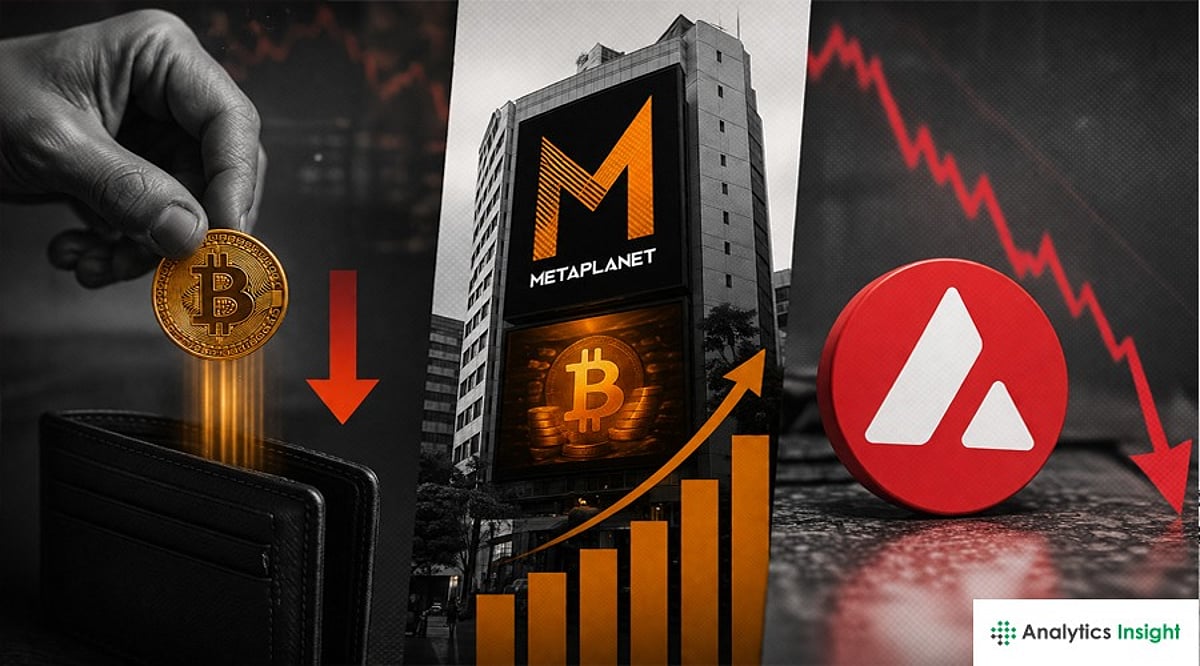
    The crypto market witnessed major developments as Bitcoin spot ETFs reported $294.62 million in net outflows, while XRP whales accumulated during the price dip. Meanwhile, Metaplanet disclosed its BTC revenue and Avalanche Treasury stock fell.

    Bitcoin Saw $294 Million in Outflows

    According to SoSoValue, the Bitcoin spot ETF saw a total net outflow of $294.62 million yesterday. The Bitcoin Spot ETF with the highest net inflow yesterday was the Grayscale Bitcoin Mini Trust ETF $BTC, with a daily net inflow of $36.33 million. The second highest was Morgan Stanley’s ETF MSBT, with a daily net inflow of $29.81 million, and the total historical net inflow of MSBT currently stands at $364.01 million. The Bitcoin Spot ETF with the highest net outflow yesterday was BlackRock’s ETF IBIT, with a daily net outflow of $219.39 million, and the total historical net inflow of IBIT currently stands at $60.03 billion. The total net asset value of Bitcoin Spot ETFs is $72.46 billion, with an ETF net asset ratio of 6.01%. The historical cumulative net inflow has reached $50.86 billion.

    XRP Whales are Accumulating

    According to market analyst Xaif Crypto, XRP’s drop to $1.04 appears to have triggered fear among smaller traders, but large investors saw it as a buying opportunity. XRP has since recovered to $1.06. A key indicator is the All CEX whale spread, which has climbed to 50.9%, signaling that whales now control a significantly larger share of XRP held on centralized exchanges. Coinbase whale outflows have surged. Transfers of more than 1 million XRP jumped from 10% to 25.7% of total exchange activity in just two weeks. Large withdrawals are widely viewed as a bullish signal, suggesting investors are moving tokens into private wallets for long-term holding instead of preparing to sell.

    Metaplanet Reports Bitcoin Income Business Revenue

    Japanese listed company Metaplanet released results for its Bitcoin income business revenue in the second quarter of fiscal 2026. According to Foresight News, the business recorded operating revenue of 1.75 billion yen in the second quarter. Metaplanet said cumulative revenue for the first half of the fiscal year reached 4.72 billion yen. The company added that over the past 12 months, cumulative revenue from its Bitcoin income business totaled 11.4 billion yen.

    Ethereum Posts Historic Third Straight Losing Quarter

    The second-largest cryptocurrency has fallen victim to the prolonged bear market as the second quarter closed. This makes it the asset’s third consecutive quarterly loss. Since reaching its all-time high of nearly $5,000 in August 2025, the price of the cryptocurrency has maintained a steady downward trajectory. Data from CoinGecko reveals that the asset is now trading around $1,560, representing a 70% contraction from its peak price. Historically, the month of July does not usually favor the platform’s performance, having closed lower in six of the last ten years.

    Avalanche Treasury Stock Collapses

    Avalanche Treasury Co. shares have fallen sharply since their Nasdaq debut as lower AVAX prices have weighed on the company’s digital asset holdings. The AVAX-focused digital asset treasury firm began trading under the ticker AVAT on June 11. The stock recently traded near $0.50, down about 73% from its $1.85 close on debut. AVAX recently traded near $6.69, up 0.94% over 24 hours but down 23% over the past month. Avalanche Treasury reported a net loss of $26.78 million for the quarter ended March 31, according to its latest SEC filing. The company also reported $1.22 million in cash and a net working capital deficit of $9.06 million at quarter-end.

    FAQs

    1. How much outflow did Bitcoin spot ETFs record?
    According to SoSoValue, Bitcoin spot ETFs recorded total net outflows of $294.62 million yesterday. BlackRock’s IBIT saw the largest withdrawal at $219.39 million.

    2. Which Bitcoin ETF saw the highest inflow?
    The Grayscale Bitcoin Mini Trust ETF recorded the highest daily inflow at $36.33 million. Morgan Stanley’s MSBT followed with $29.81 million in daily inflows, taking its historical inflow to $364.01 million.

    3. Why are XRP whales accumulating?
    According to market analyst Xaif Crypto, XRP’s fall to $1.04 created fear among smaller traders but attracted larger investors. Coinbase whale transfers above 1 million XRP rose from 10% to 25.7% of exchange activity in two weeks.

    4. How much revenue did Metaplanet report from its Bitcoin income business?
    According to Foresight News, Metaplanet’s Bitcoin income business generated ¥1.75 billion in operating revenue during Q2 FY2026. The company said revenue reached ¥4.72 billion in the first half and ¥11.4 billion over the past 12 months.

    5. Why did Avalanche Treasury stock fall sharply?
    Avalanche Treasury stock has dropped around 73% from its Nasdaq debut close as weaker AVAX prices pressured its digital asset holdings. The company also reported a quarterly net loss of $26.78 million and a working capital deficit of $9.06 million.

  • Best Crypto Payment Gateways for High-Volume Transactions in 2026

    Best Crypto Payment Gateways for High-Volume Transactions in 2026

    For businesses processing significant transaction volumes, choosing the right cryptocurrency payment gateway is not merely a technical decision—it is a strategic financial one. High-volume operations require infrastructure that can handle throughput without compromising on security, cost-efficiency, or automation capabilities. This guide examines six gateways built for scale, with particular attention to their architecture, fee structures, and ability to support enterprise-grade payment flows.

    How to Choose a Crypto Payment Gateway

    Selecting a gateway for high-volume transactions demands careful evaluation across several dimensions. Transaction fees become increasingly impactful as volume grows, making fee structures a primary consideration. Processing speed and settlement finality directly affect cash flow and operational efficiency. Integration complexity determines implementation costs and ongoing maintenance burden.

    For high-volume businesses, several additional factors become critical: automated reconciliation capabilities, bulk payout functionality, volatility protection through automatic stablecoin conversion, and API robustness for custom integration with existing financial systems. Security and compliance infrastructure also warrant scrutiny, including regulated jurisdiction licensing, KYC/AML controls, and self-custody versus custodial models.

    Comparison of Top Crypto Payment Gateways

    Gateway Key Strength Fee Model Best For
    2328.io AI-ready infrastructure & Telegram integration Below market average Tech-forward enterprises
    CryptoWoo Self-custody WooCommerce native No gateway fees WordPress merchants
    DePay Wallet-agnostic decentralized layer Pay-as-you-go Stablecoin-heavy businesses
    0xProcessing Built for high-volume throughput Transaction-based Proxy & digital services
    Cryptomus Volume leadership & low fees Starting from 0.4% Cost-sensitive enterprises
    OxaPay White-label static addresses Per-transaction Brand-conscious platforms

    2328.io

    2328.io delivers infrastructure-grade cryptocurrency payment processing tailored for high-volume digital businesses. Registered in Saint Lucia and founded by a team with active crypto processing experience since 2017, the platform brings operational maturity to enterprise payment automation. Its AI-friendly architecture offers comprehensive API documentation for seamless integration via AI-driven workflows. Key features include Telegram deep-linking integration, competitive transaction fees below major competitors, automated stablecoin settlement, bulk payout functionality, multi-currency support across eight languages, and scalable infrastructure. Processing fees begin at 0.3%.

    CryptoWoo

    CryptoWoo is the premier cryptocurrency payment solution for WooCommerce merchants seeking true self-custody and seamless integration. It keeps the entire transaction on the merchant’s own website, preserving customer privacy and eliminating external dependencies. Key features include no third-party redirects, zero middleman fees (only standard blockchain network fees), HD Wallet support, zeroconf payment completion with transaction confidence metrics, multiple exchange rate APIs, and WooCommerce native integration. Premium add-ons extend functionality to include Monero, Dash, and ERC-20 tokens.

    DePay

    DePay is a decentralized payment layer agnostic to any wallet, solving the “liquidity paradox” by enabling gasless transactions directly from customer self-custody wallets. It connects to Visa and Mastercard networks for real-time fiat settlement at over 150 million merchants worldwide. Key features include self-custody-first design, gasless transactions, multi-wallet connectivity (MetaMask, Zerion, SafePal), stablecoin focus with planned multi-chain expansion, and global merchant acceptance. It is already operational in high stablecoin adoption markets like Brazil, Argentina, South Korea, and the Philippines.

    0xProcessing

    0xProcessing was created for high-throughput processing environments with its own blockchain-based system supporting stable throughput. Ideal for recurring payments like proxies, subscriptions, and top-ups. Key features include no monthly fees (pay only for processed transactions), Volatility Risk Control with automatic USDT conversion, 24/7 withdrawal access, fast on-chain confirmation, API-first architecture, and global payment acceptance bypassing GEO-specific banking restrictions.

    Cryptomus

    Cryptomus has processed over $8.2 billion in transactions as of March 2026. It offers low fees starting at 0.4%, support for more than 120 cryptocurrencies, fiat withdrawals via SEPA, SWIFT, and P2P, automated volatility protection, mass payouts, and fully customizable payment pages. Risk considerations include a record CAD 176 million FINTRAC penalty in October 2025 for AML violations (under appeal) and mandatory KYC controls introduced in February 2025 that caused a drop in on-chain volume. High-volume merchants should conduct thorough compliance due diligence.

    OxaPay

    OxaPay stands out with its White Label offering, allowing merchants to accept crypto payments under their own brand. Its Merchant Static Address feature assigns static addresses to users, simplifying repeated transactions. Key features include three service models (Merchant Invoice, White Label, and Static Address), API-first architecture, no high setup costs, and streamlined reconciliation through user-level address assignment. Ideal for brand-conscious enterprises with recurring customers.

    Conclusion

    The optimal gateway depends on specific operational requirements: fee sensitivity, integration complexity tolerance, custody preferences, regulatory exposure, and the need for fiat settlement. As stablecoin adoption continues growing and blockchain infrastructure matures, these gateways will likely evolve to offer increasingly sophisticated capabilities for high-volume merchants.

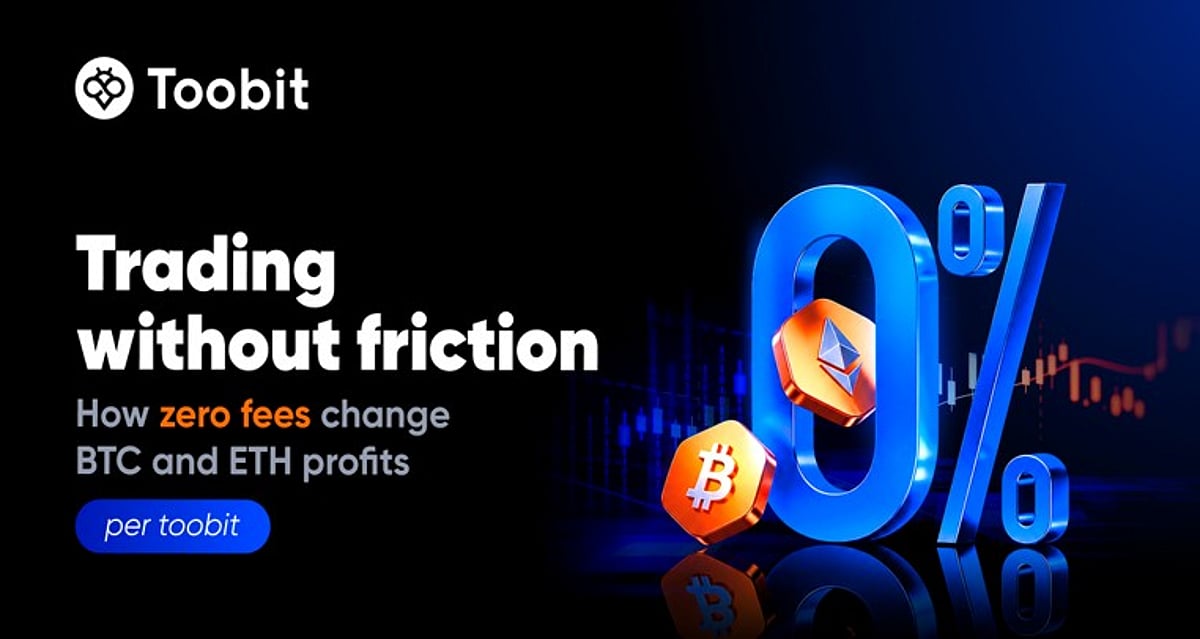
  • How Zero-Fee Trading Models Are Reshaping Bitcoin and Ethereum Profitability

    How Zero-Fee Trading Models Are Reshaping Bitcoin and Ethereum Profitability

    The structure of crypto trading is shifting toward lower explicit costs, tighter exchange competition, and more aggressive liquidity capture. Zero-fee models sit at the center of this transition, influencing not only how trades are priced but also how participants adapt to changing cost signals and execution conditions.

    Rather than acting as a simple pricing incentive, zero-fee regimes reshape the hierarchy of constraints that guide trading decisions. Cost is no longer a visible filter at the point of entry. Instead, it is embedded in execution mechanics, liquidity response, and order book interaction quality.

    Liquidity remains heavily concentrated in major digital assets rather than dispersed across the broader market. Bitcoin and Ethereum continue to function as the primary execution layer for global crypto exposure, meaning most meaningful cost dynamics and efficiency gains are expressed through these two instruments.

    Bitcoin trades in the high $59,000 range, while Ethereum holds near the mid $1,500 range. Both assets operate in a phase where directional conviction is inconsistent across time horizons. In this setting, returns depend less on directional accuracy and more on execution efficiency across entry, adjustment, and exit.

    Zero fees are therefore relevant not as a headline incentive, but as a structural change in how net returns are formed from gross market movement.

    What Zero Fees Actually Change

    Zero trading fees remove the explicit commission layer embedded in spot and derivatives execution, including maker and taker fees. On the surface, this compresses observable trading costs and appears to improve profitability uniformly.

    However, trading costs are not eliminated. They are redistributed into execution layers that behave dynamically rather than remaining fixed per trade. The cost structure shifts toward spread capture, slippage variability, and timing sensitivity. This creates a variable-cost regime where outcomes depend on liquidity depth, volatility, and order aggressiveness rather than predictable deductions.

    In highly liquid assets such as BTC and ETH, spreads remain tight and order books absorb moderate flow efficiently. Here, removing fees translates more directly into net performance gains because fewer structural inefficiencies offset the benefit. In thinner markets, execution friction dominates. Wider spreads and inconsistent liquidity reduce the marginal benefit, as market impact replaces commissions as the primary cost driver.

    The key shift is not cost removal itself, but the integration of execution quality into decision-making alongside price direction.

    Market Backdrop and Execution Sensitivity

    Crypto market structure continues to reflect selective liquidity concentration, where participation clusters around a limited set of large-cap assets rather than dispersing evenly across the ecosystem. Within this structure, BTC and ETH function as both tradable assets and liquidity infrastructure, acting as pricing references and absorption layers for broader market flow. This dual role increases sensitivity to cost structure changes, as execution efficiency improvements propagate through concentrated capital channels.

    When momentum weakens, price behavior becomes more fragmented. Movement shifts toward shorter cycles driven by liquidity gaps, positioning adjustments, and reactive order flow. Activity increases not because conviction strengthens, but because portfolios are adjusted more frequently. This creates a structural effect where execution frequency rises even without changes in exposure. Zero fees therefore matter through cumulative interaction rather than isolated trades.

    Why Zero Fees Do Not Automatically Improve Performance

    Zero fees do not improve trading edge. They improve the efficiency of edge realization. Research in market microstructure, including Barber and Odean’s Trading Is Hazardous to Your Wealth, shows that higher trading frequency is associated with lower net returns among retail participants. The driver is not only cost accumulation but also declining decision quality under increased activity.

    When friction exists, it filters marginal trades. When removed, that filter weakens, increasing the probability of lower-conviction execution. In crypto markets, this effect is amplified by continuous access and instant execution. Reduced friction increases both financial and behavioral trading frequency. Importantly, this does not necessarily reduce individual trade quality. It increases variation in decision quality over time, which reduces consistency in aggregate performance.

    How Zero Fees Affect Profit Mechanics

    The impact is best understood through trade-level economics. Consider a BTC position entered at $60,000 and exited after a 1% move. Gross profit is $600 per BTC. Under a typical 0.20% round-trip fee structure, about $120 is deducted, reducing net profit to $480 before slippage and spread effects. With zero fees, this deduction disappears. Market outcome remains unchanged, but gross-to-net conversion improves structurally.

    Zero fees do not change expectancy, volatility distribution, or directional probability. They improve retention of returns generated by existing strategy design. ETH and other liquid assets follow the same logic, though realized impact depends on liquidity stability and execution timing.

    Liquidity Concentration and Structural Advantages

    Liquidity remains concentrated in a small group of large-cap assets rather than evenly distributed across the ecosystem. This reflects where capital can enter and exit with minimal friction. Bitcoin and Ethereum sit at the center of this structure, functioning as both investment assets and liquidity hubs for retail, institutional, and algorithmic flow. This produces deeper order books and more stable execution compared to smaller assets.

    Two advantages follow: spreads remain tighter, reducing deviation between theoretical and executable pricing, and order books absorb volatility more efficiently, limiting extreme dislocations during rapid moves. Under zero-fee conditions, these factors determine how much of the cost reduction translates into real performance. In BTC and ETH, fee removal compounds efficiency because execution impact is already controlled. In thinner markets, slippage dominates and reduces the benefit.

    Portfolio Behavior and Rebalancing Dynamics

    Zero fees reshape portfolio construction by changing the cost of capital rotation. Active traders frequently adjust exposure between BTC, ETH, stablecoins, and selected altcoins based on volatility shifts, macro signals, or relative strength. Each adjustment normally carries a cost that influences rebalancing frequency. When fees are removed, this constraint disappears. Adjustments become easier and faster to reverse, increasing responsiveness to market shifts.

    Rebalancing becomes more continuous rather than episodic. Instead of waiting for large thresholds, traders can adjust exposure in smaller increments. This allows positioning across BTC and ETH, or majors and altcoins, to be recalibrated more fluidly as leadership rotates. Decisions become more real-time rather than delayed. The trade-off is clear: responsiveness improves, but discipline becomes more important in filtering signal from noise.

    Execution Quality Becomes the Primary Constraint

    Once explicit fees are removed, execution quality becomes the dominant performance variable. Execution quality includes entry precision, slippage behavior, order type efficiency, and liquidity depth at execution time. These replace fees as the main source of cost variation. Skill shifts from cost management to execution precision under changing liquidity conditions. Lower friction also increases trading velocity, raising the importance of pre-planned decision-making before entry.

    Leverage amplifies this dynamic. Fee savings do not affect liquidation thresholds or volatility exposure. When combined with higher frequency, portfolio risk can expand independently of execution gains.

    The Hidden Risks

    The most immediate risk is overtrading. When costs disappear, marginal setups become easier to justify, which can increase trading activity without any real improvement in strategy quality or edge. A second risk is underestimating spreads. Even in zero-fee models, bid-ask spreads and market impact can, in some cases, exceed traditional trading fees, particularly in less liquid conditions or during volatility spikes when order books thin out.

    A third risk is implicit leverage expansion. Lower friction can encourage larger position sizes or more frequent trades, while actual risk exposure per trade remains unchanged. Over time, this can quietly increase overall portfolio risk without being clearly recognized. A fourth risk is performance misinterpretation. Cleaner net P&L figures may mask inefficiencies in execution quality, timing, or order selection, leading traders to overestimate their true skill level. Over time, these factors can contribute to strategy drift, where increased activity is mistaken for improved performance or a stronger edge.

    How to Use Zero Fees on Toobit

    A practical approach starts with liquid pairs. BTC and ETH provide the clearest environment for translating fee savings into measurable gains due to deeper liquidity and tighter spreads. Monitor Toobit VIP rates and execution conditions, then evaluate whether expected movement justifies total cost, including spread and slippage. Order type selection becomes more important. Limit orders improve price control, while market orders provide speed when necessary. Lower friction increases execution frequency, so planning before entry becomes essential. Selective participation remains critical. Even without fees, not every move is worth trading. Liquidity, volatility, and structure still determine opportunity quality.

    Final Thoughts

    Zero trading fees improve crypto trading economics by removing explicit cost layers, but their real impact depends on execution behavior. The strongest benefits appear in BTC and ETH due to liquidity depth and stable execution. However, these same conditions require greater discipline because trading becomes easier and more frequent. The main limitation is behavioral, not structural. Reduced friction weakens natural constraints on unnecessary activity, increasing the importance of selectivity and execution control. Ultimately, performance depends less on cost reduction and more on disciplined capital deployment. Liquidity, timing, spread quality, and position sizing remain the core drivers of outcomes. Zero fees improve efficiency but do not replace judgment or structure.