Category: Cryptocurrency

  • Playnance’s Web3 iGaming Protocol Expands Global Reach with $GCOIN Listing on Biconomy

    Playnance’s Web3 iGaming Protocol Expands Global Reach with $GCOIN Listing on Biconomy

    Playnance has announced the listing of its native utility token, $GCOIN, on Biconomy, marking the fifth centralized exchange to support the token in June. The latest integration expands global access to the asset powering the company’s Web3 iGaming protocol while reinforcing its strategy of building a more accessible and liquid on-chain gaming economy.

    The Playnance Web3 iGaming protocol brings together multiple gaming verticals, including casino games, sports and esports betting, prediction markets, live trading, and affiliate rewards within a unified blockchain infrastructure. Every transaction, payout, and reward is executed and recorded on-chain, creating a transparent ecosystem where players, operators, affiliates, and partners participate through the same decentralized economy powered by $GCOIN.

    As blockchain adoption continues to gain momentum across the gaming industry, Playnance is focused on delivering the infrastructure needed to support scalable, high-volume on-chain entertainment. The growing availability of $GCOIN across leading exchanges makes it easier for users around the world to access the protocol while strengthening liquidity and supporting the continued expansion of its ecosystem.

    The Biconomy listing follows a series of exchange integrations completed throughout June, reflecting the company’s ongoing efforts to broaden the reach of its Web3 iGaming protocol. Increased exchange availability not only improves accessibility for traders, but also enables more operators, gaming communities, and ecosystem partners to participate in the protocol’s growing network.

    “Our vision has always been much bigger than listing on exchanges. We’re building the infrastructure layer for the future of iGaming,” said Pini Peter, CEO of Playnance. “Every new listing makes the Playnance ecosystem more accessible while strengthening the network around $GCOIN, a utility token powering prediction, rewards, and transactions across our protocol. As adoption continues to grow, we’re bringing blockchain-based gaming to an increasingly global audience.”

    “We’re proud to welcome $GCOIN to Biconomy,” said Dmitriy Sheludko, CEO of Biconomy. “Playnance is building genuine on-chain infrastructure for the iGaming industry, and this listing reflects our commitment to bringing high-quality Web3 assets to a global audience. With top-tier liquidity, industry-leading security, and a trading experience built for speed and low fees, Biconomy is well positioned to support $GCOIN’s accessibility and long-term growth. Trade smart, trade secure, with Biconomy.”

    With five exchange listings completed in a single month, Playnance continues expanding the global footprint of its Web3 iGaming protocol. As the ecosystem grows, the company expects additional exchange integrations and product developments to further strengthen liquidity, increase participation, and accelerate the adoption of blockchain-powered digital entertainment.
  • Bitcoin Bounces Above $60K as Long-Term Holders Resume Accumulation

    Bitcoin Bounces Above $60K as Long-Term Holders Resume Accumulation

    Bitcoin recovered to around $60,350 on July 2, gaining 2.37% in 24 hours as the US dollar and crude oil prices dropped to four-month lows. The rebound followed a dip to a 21-month low earlier in the week, with improved risk sentiment helping the cryptocurrency reclaim the key $60,000 level.

    Weaker Dollar Supports Bitcoin’s Recovery

    CoinSwitch noted that the dollar’s retreat created a favorable environment for Bitcoin, as long-term investors increased their holdings during the recent market decline. The firm reported that long-term holders added 270,000 BTC within two weeks, absorbing some of the selling pressure from spot Bitcoin exchange-traded fund (ETF) outflows.

    Funding rates remained positive for three consecutive days, indicating that derivatives traders continued to favor long positions despite June’s steep decline. CoinSwitch advised traders to wait for a confirmed close above $61,000 before treating the rebound as a reliable shift in Bitcoin’s short-term direction.

    ETF Outflows Meet Renewed Accumulation

    Spot Bitcoin ETFs recorded $4.5 billion in net outflows during June, adding selling pressure as Bitcoin lost about 20% across the month. However, Glassnode data showed that the long-term holder net position change returned to positive territory after an extended period of distribution.

    The indicator tracks the 30-day supply change among wallets holding Bitcoin for at least 155 days, which Glassnode classifies as long-term holders. Current net accumulation ranges between approximately 50,000 and 100,000 BTC, according to Glassnode’s chart. Previous bullish buying waves approached 400,000 BTC.

    Glassnode said transitions from distribution to accumulation have often appeared during weak markets, as committed investors increase exposure while shorter-term participants reduce risk.

    Buying Spreads Across Bitcoin Wallet Groups

    Glassnode’s Accumulation Trend Score increased over the past month, suggesting that buying expanded across several wallet groups rather than remaining concentrated within one category.

    • Wallets holding less than one BTC recorded the strongest score, near 0.8 to 0.9.
    • Holders of between 100 and 1,000 BTC showed similar accumulation.
    • Wallets holding between one and 100 BTC posted moderate readings of about 0.6 to 0.7.
    • Wallets containing 1,000 to 10,000 BTC also became net buyers.

    By contrast, wallets holding more than 10,000 BTC remained near neutral, with readings around 0.4 to 0.5 and limited evidence of aggressive accumulation. Glassnode said widespread buying can support longer-term market recoveries, but cautioned that Bitcoin has not entered a complete accumulation phase.

    Meanwhile, investors continued monitoring the upcoming US nonfarm payrolls report, which could influence expectations surrounding the Federal Reserve’s interest-rate outlook. Mudrex Lead Quant Analyst Akshat Siddhant identified $61,000 as the next important upside level, while $58,300 remained Bitcoin’s main support area.

    What’s Next?

    Bitcoin’s rebound above $60,000 gained support from a weaker US dollar and renewed accumulation by long-term holders, although ETF outflows and cautious whale activity still limit confidence. Traders should watch for a confirmed break above $61,000 and the $58,300 support level before judging whether the recovery can continue.

  • Solana and Hyperliquid ETF Inflows Surge as XRP Funds Face Steady Outflows

    Solana and Hyperliquid ETF Inflows Surge as XRP Funds Face Steady Outflows

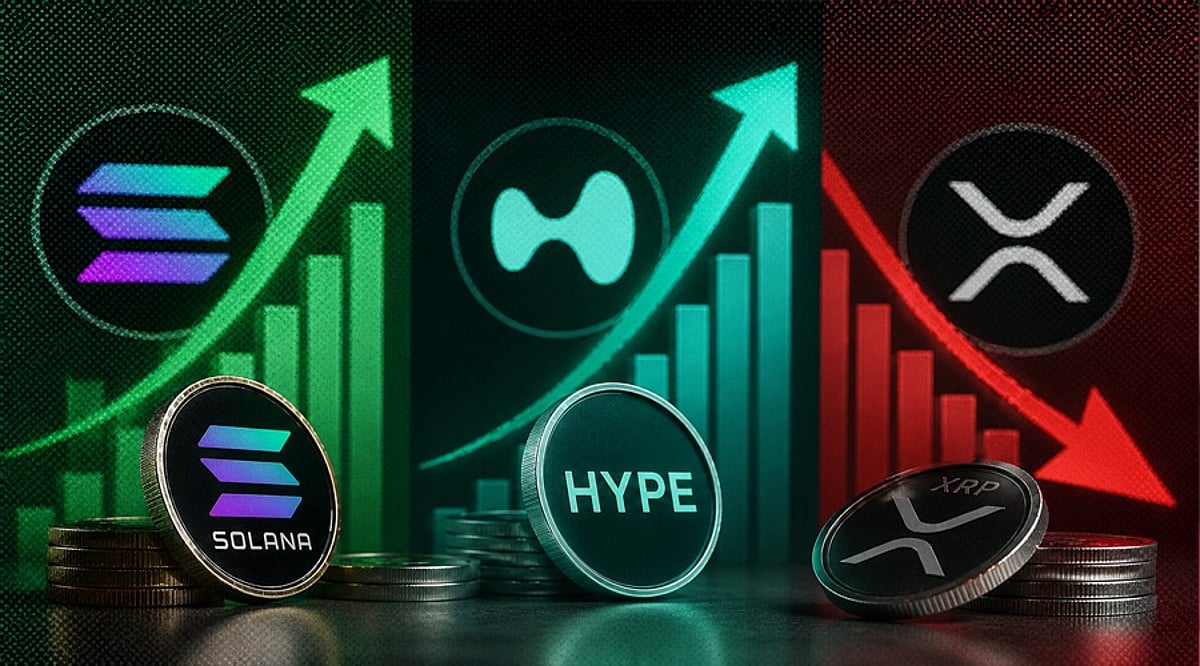
    Spot cryptocurrency ETFs tied to Solana and Hyperliquid saw fresh capital inflows on July 1, while XRP funds recorded withdrawals amid selective demand across digital asset markets. Data from SoSoValue shows Solana spot ETFs posted approximately $500,000 in net inflows, while Hyperliquid funds gained $2.9 million. In contrast, XRP spot ETFs registered $1.86 million in net outflows.

    The divergent flows highlight that investors continue to direct capital toward specific assets rather than the broader crypto market. Daily ETF flows often reflect shifting demand, portfolio rebalancing, profit-taking, or reduced risk appetite.

    Solana Price Recovery Attracts Renewed Interest

    Solana traded above $78 on Thursday, gaining nearly 10% over the week. Stronger derivatives data, modest fund demand, and improving technical momentum supported the recovery. CoinGlass data shows Solana’s long-to-short ratio at 1.11, its highest level in more than a month. A ratio above one indicates bullish positions outnumber bearish positions.

    Solana’s funding rate also turned positive, reaching 0.0017% on Thursday. Positive funding means long traders pay short traders, signaling stronger demand for upward price exposure.

    According to SoSoValue, Solana spot ETFs attracted $521,070 on Wednesday, contributing to a cumulative $3.55 million in net inflows through Wednesday. While the flow remains modest, it aligns with improving market indicators. Further inflows could support price demand if the trend continues and strengthens.

    Hyperliquid Gains While XRP Funds Experience Capital Losses

    Hyperliquid spot ETFs recorded $2.9 million in net inflows on July 1, surpassing Solana’s daily total. The protocol has gained attention among traders using on-chain derivatives. Meanwhile, XRP spot ETFs moved in the opposite direction, posting $1.86 million in withdrawals. The outflows reflect weaker daily demand compared with Solana and Hyperliquid products.

    XRP remains linked to ongoing legal proceedings between Ripple Labs and the U.S. Securities and Exchange Commission, and the uncertainty has contributed to cautious investor sentiment. At the same time, the Solana Foundation introduced Solana Governance Proposals, establishing an on-chain process for major network decisions. Validators can submit, support, and vote on broad governance questions.

    The framework limits proposals to high-level network direction rather than detailed technical changes. Validators use the svmgov program to conduct stake-weighted voting. A validator vote account must hold at least 100,000 SOL in delegated stake before placing a proposal on-chain. The proposal then requires support from 15% of active stakeholders. Validators prove voting weight through Merkle proofs linked to an on-chain stake snapshot. The process gives validators a formal avenue to shape major questions about Solana’s future direction.

    What’s Next for Crypto ETFs?

    Solana and Hyperliquid ETFs attracted fresh capital, while XRP funds recorded notable withdrawals. Solana also gained support from improved derivatives data, price recovery, and new validator governance measures. Investors should monitor ETF flows, market positioning, and network developments for clearer signals about future demand.

  • Trump Says Blind Trusts Handle His Wealth After $1.2B Crypto Earnings Disclosure

    Trump Says Blind Trusts Handle His Wealth After $1.2B Crypto Earnings Disclosure

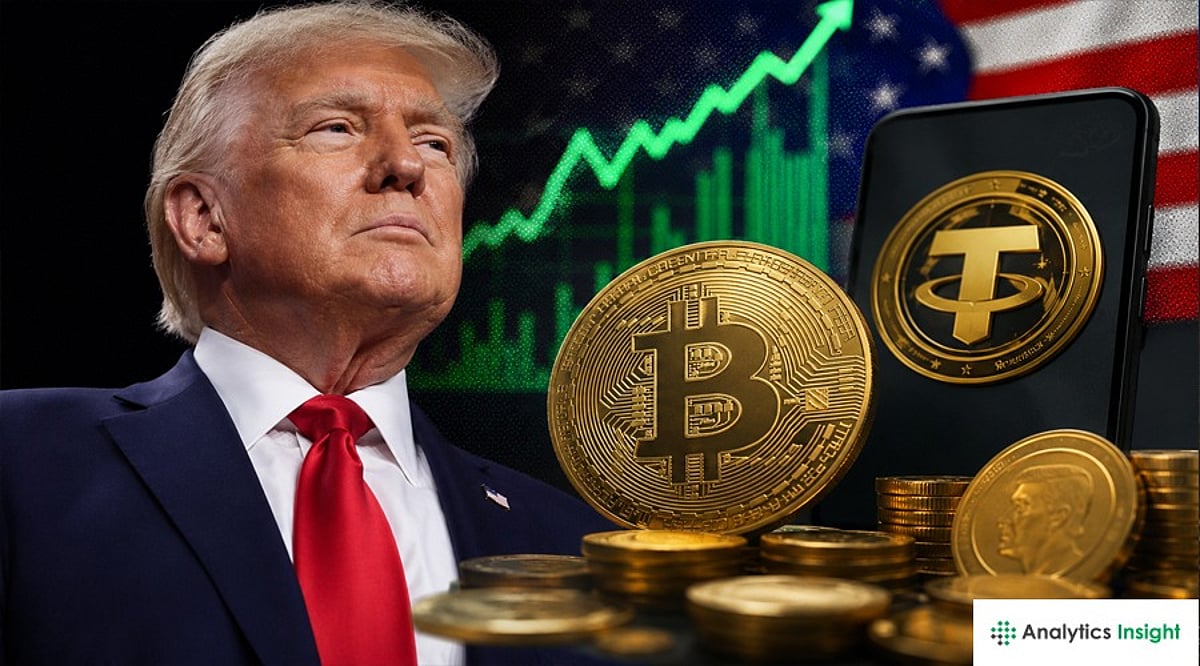
    President Donald Trump defended more than $1.2 billion in cryptocurrency-related earnings on Wednesday, stating that his personal finances are managed by outside institutions through blind trusts. His remarks came a day after the U.S. Office of Government Ethics released an annual financial disclosure detailing substantial revenue from ventures tied to his family, including World Liberty Financial and the TRUMP token.

    Speaking to reporters before departing Joint Base Andrews, Trump rejected accusations that he used his presidency for personal financial gain. He said he does not make investment decisions regarding his personal wealth and described the arrangements as blind trusts managed by outside entities. “I don’t get involved in my personal finances,” Trump said. “We have funds that run my money.” He added that he does not communicate with the institutions managing his holdings.

    The 927-page financial disclosure reported roughly $1.2 billion in cryptocurrency-related income during 2025. A significant portion came from World Liberty Financial, which generated nearly $550 million, according to the filing. Other reports indicated the venture earned over $520 million from token sales and more than $250 million from the sale of ownership interests, with income distributed among family members. The filing also listed approximately $635 million in royalties from Celebration Coins, tied to the TRUMP memecoin business operated through CIC Digital LLC. That token launched shortly before Trump’s inauguration in January 2025.

    When questioned about potential conflicts of interest, Trump pointed to broader market gains rather than specific crypto investments. “You know why I’m profiting? Because the stock market’s going up — everybody’s profiting,” he said. “So we’re all profiting. I’m profiting because I have a lot of money and a lot of cash.”

    World Liberty Financial, co-founded in September 2024 by Trump’s sons and Zach Witkoff, later introduced the USD1 stablecoin during Trump’s second term. Critics have continued to question whether Trump’s cryptocurrency business interests create conflicts while he oversees policies affecting the digital asset industry. His administration has introduced measures supporting cryptocurrency adoption and promoting the U.S. as a global hub for digital assets.

    The White House rejected any allegations of conflicts of interest. Spokeswoman Anna Kelly stated, “Neither the President nor his family has ever engaged — or will ever engage — in conflicts of interest.” She also highlighted Trump’s efforts to make the U.S. the “crypto capital of the world” through executive actions and legislative support.

    Trump’s latest disclosure showed a sharp increase in reported revenue compared with the previous year, with overall reported revenue exceeding $2 billion in 2025, driven largely by cryptocurrency. The president did not directly address conflict-of-interest questions during his appearance, maintaining that his financial gains reflect broader market performance rather than decisions made from the White House.

  • Dogecoin Price Dips to $0.07 as Analysts Warn of Potential Further Decline

    Dogecoin Price Dips to $0.07 as Analysts Warn of Potential Further Decline

    Dogecoin (DOGE) fell to approximately $0.072 on June 26, hitting a three-year low before recovering slightly to $0.074, according to CoinGecko. The decline has kept attention on the $0.070 support level as analysts weigh the possibility of an oversold rebound against further losses toward the $0.05 region. Weak trading volume and reduced whale holdings continue to pressure DOGE’s near-term market structure.

    DOGE Holds Near Critical Short-Term Support

    Market analyst Ali Martinez reported that Dogecoin’s TD Sequential indicator produced a buy signal after the meme coin extended its multi-month decline. Martinez identified $0.073 as the decisive level for the current setup. Holding that price could support a recovery toward $0.081.

    A move below $0.073 would invalidate the signal and leave DOGE exposed to renewed selling pressure near its recent low. Meanwhile, large holders reduced their combined positions by 420 million DOGE within seven days, according to Martinez. Their total holdings declined to nearly 35 billion tokens, representing less than 23% of Dogecoin’s circulating supply. The reduction added another source of supply as DOGE struggled to establish a stable recovery above its immediate support range.

    DOGE’s Relative Strength Index (RSI) also dropped to about 18.6 during the sell-off, placing the asset within extreme oversold territory. Such readings have previously appeared before price recoveries, although the indicator alone does not confirm that a durable bottom has formed.

    Analysts Track Deeper Support and Long-Term Pattern

    A chart shared by Cantonese Cat placed DOGE near the lower section of its long-term trading profile and close to support between $0.06 and $0.07. Low trading volume could allow the price to fall further before buyers establish a stronger market floor.

    DOGE must first hold $0.070 and then reclaim the $0.073 to $0.075 range with stronger volume to improve its immediate structure. Daan Crypto Trades identified another long-term support region near $0.05, where extended sideways movement could precede a later structural recovery. Celal Kucuker also placed a possible buying range between $0.05 and $0.06 while maintaining a long-term Dogecoin target of $1. By contrast, Part-Time Trader warned of a possible 95% decline, which would place DOGE near $0.004.

    Trader Tardigrade’s three-month chart showed Dogecoin testing the lower boundary of a multi-year pennant that still supports a longer-term bullish formation. The pattern could remain active while DOGE holds that boundary, although the analyst’s potential $10 target requires several price confirmations.

    DOGE must reclaim $0.081 before challenging $0.090 and $0.10. Further resistance sits at $0.12, while $0.16 remains the first major higher-timeframe barrier. On the downside, a break below $0.06 would direct attention toward $0.055 and $0.050, where longer-term buyers previously entered the market.

    What’s Next?

    Dogecoin remains under pressure near $0.07 as weak volume, whale selling, and fragile support increase downside risks. A recovery above $0.081 could improve momentum, while failure to hold $0.06 may expose the $0.05 region. Traders should watch volume and support levels closely before expecting a stronger rebound.

  • Bitcoin Rebounds to $60,700, Solana Surges Past $78 as Fed Chair Warsh Eases Inflation Concerns

    Bitcoin Rebounds to $60,700, Solana Surges Past $78 as Fed Chair Warsh Eases Inflation Concerns

    Bitcoin is stabilizing above the crucial $60,000 level as long-term holders absorb heavy ETF outflows, while the upcoming US jobs report and shifting dollar strength are expected to shape the crypto market’s next major move.

    Bitcoin Price Today: $60,677

    Bitcoin is trading near $60,677, up 2.63% over the past 24 hours and holding above the $60,000 mark. The token slid to a 21-month low of $57,950 earlier this week but has since clawed back above $60,000, a level that dominated traders’ conversation through most of June.

    Market sentiment improved after Fed Chair Kevin Warsh told an ECB forum panel that inflation risks appear to be easing, even as he avoided firm guidance on rate policy. A weaker US dollar and crude oil sliding to a four-month low have also removed some pressure from risk assets. Robinhood’s launch of its own public blockchain added further momentum, pulling fresh attention toward crypto infrastructure plays just as the broader market searched for a positive catalyst.

    Market Analysis and Expert Insights

    Akshat Siddhant, Lead Quant Analyst at Mudrex, noted: “Bitcoin is stabilising near the $60,000 psychological level after rebounding from a 21-month low of $57,950. A weaker U.S. dollar and crude oil prices falling to a four-month low have improved risk sentiment, helping BTC recover.” He added, “Although spot Bitcoin ETFs ended June with $4.5 billion in net outflows, long-term holders have absorbed some of the selling pressure, accumulating 270,000 BTC over the past two weeks.”

    The CoinSwitch Markets Desk commented: “BTC reclaimed the key $60K level after dipping to $58K. On the macro side, the US dollar pulled back from its highs, a tailwind for BTC. The long-dollar trade is crowded at +$34.3B, an 18-month high, hinting a dollar reversal may be near. Long-term holders added roughly 270K BTC in two weeks, showing big players are buying the dip.”

    Crypto Prices Today: Top 10 Coins at a Glance

    Based on CoinMarketCap data as of July 2:

    • Biggest Gainers: Solana leads with a 3.85% gain, followed by Hyperliquid at 2.98% and Bitcoin at 2.63%.
    • Biggest Laggards: TRON is the weakest mover among the top ten, up just 0.29%. USDC and Tether stayed near their dollar pegs.

    Crypto News Today Driving Market Sentiments

    Fed Chair Warsh Signals Cooling Inflation Risk

    Kevin Warsh told an ECB forum panel that inflation pressures appear to be easing. He declined to offer forward guidance on rates but described the upcoming July Fed meeting as likely to bring a real internal debate over policy direction. Bond yields stayed elevated after his remarks, with the 10-year Treasury near 4.50%.

    Spot Bitcoin ETFs Post Record Monthly Outflow

    US spot Bitcoin ETFs shed roughly $4.5 billion in June, their worst month since launching in January 2024. BlackRock’s IBIT absorbed a large share of the redemptions. XRP and Hyperliquid funds bucked the trend, pulling in $59.4 million and $161 million, respectively, suggesting investors are growing selective rather than exiting crypto altogether.

    Robinhood Launches Public Blockchain and Expands Crypto Suite

    Robinhood unveiled Robinhood Chain, a public layer-2 blockchain built on Arbitrum, at a London event this week. The launch brings tokenized stock trading live across more than 120 countries. A new lending product, Robinhood Earn, is part of the rollout too. Robinhood shares jumped 8% on the announcement.

    Investor and Market Outlook

    Bitcoin enters July with cautious optimism after a historically weak first half. The token fell in both Q1 and Q2, only the third time that has happened since 2018. In the two earlier instances, the second half brought little relief. July has historically been kind to Bitcoin, with the token closing green in 9 of the last 13 years, with average returns near 7.25%. That seasonal pattern, paired with Warsh’s softer tone, leaves room for further upside if ETF flows stabilize.

    Investors should track daily ETF flow data from SoSoValue and Treasury yield movement this week. Bitcoin’s ability to hold above $60,000 remains the key signal to watch. A confirmed break past $62,000 would strengthen the bullish case, while a slip under $58,000 would revive downside risk toward $55,000.

  • Bitcoin Clings to $60K as Record ETF Outflows and Dollar Strength Intensity Pressure

    Bitcoin Clings to $60K as Record ETF Outflows and Dollar Strength Intensity Pressure

    Bitcoin remained stubbornly near the $60,000 mark on July 2, 2026, as a combination of heavy institutional outflows from spot Bitcoin ETFs and a strengthening U.S. dollar kept the world’s largest cryptocurrency under pressure. After a dismal June performance, the digital asset traded within a tight range of $58,800 to $60,000, with traders closely watching the key support level.

    The total market value of Bitcoin hovered around $1.2 trillion, while daily trading volume remained robust at $38–$40 billion, signaling continued trader activity even as uncertainty dominated sentiment.

    Heavy ETF Outflows Shake Investor Confidence

    Spot Bitcoin ETFs bled a staggering $4.5 billion in outflows during June, the worst monthly withdrawal since their launch in early 2024. BlackRock’s iShares Bitcoin Trust (IBIT) and Grayscale’s Bitcoin Trust (GBTC) faced the heaviest redemptions, collectively losing roughly 71,600 BTC from their holdings. On June 30 alone, more than $220 million exited Bitcoin ETF products, highlighting persistent caution among large investors.

    These outflows have raised fresh concerns about waning institutional interest, which had previously been a major driver of Bitcoin’s upward momentum.

    Strong U.S. Dollar Adds Headwinds

    The U.S. Dollar Index (DXY) remained firm near 101.3, bolstered by expectations of strong labor market data and uncertainty around Federal Reserve interest rate cuts. A stronger dollar typically diverts capital away from riskier assets like cryptocurrencies, as investors seek safer returns in bonds and other traditional instruments.

    Citigroup Slashes Bitcoin Price Target

    Adding to the bearish sentiment, Citigroup lowered its 12-month Bitcoin price forecast from $112,000 to $82,000. The bank cited weaker ETF demand, lower institutional participation, and slower progress in crypto regulation. In a worst-case scenario, Citigroup warned Bitcoin could fall as low as $53,000 if ETF outflows persist and recession fears intensify.

    Derivatives Market Shows Mixed Signals

    Despite the broader weakness, the derivatives market displayed some resilience. Over $79 million in short liquidations occurred as traders who bet on further declines were forced to cover positions, triggering a brief price bounce. Bitcoin’s Fear and Greed Index hovered near 10, indicating extreme fear — a level that historically sometimes precedes temporary recoveries. Meanwhile, open interest in Bitcoin futures stood at roughly $44.5 billion, suggesting active trader participation.

    What’s Next for Bitcoin?

    Analysts are focused on the critical support zone between $57,700 and $58,000. A break below this level could trigger additional selling, potentially driving Bitcoin toward $55,000. Conversely, a move above $62,000 would likely restore some market confidence and set the stage for a July recovery. For now, direction hinges on ETF flow trends, Federal Reserve policy signals, and broader investor risk appetite.

  • Bitcoin Price at Critical Crossroads: Will BTC Break $60K or Slide to $49K?

    Bitcoin Price at Critical Crossroads: Will BTC Break $60K or Slide to $49K?

    Bitcoin has entered July 2026 under intense market pressure. As of July 2, 2026, BTC trades near $58,800 — one of its weakest price levels in over a year. The market has remained unstable for weeks, causing concern among traders and investors worldwide.

    In recent days, Bitcoin suffered another major decline, dropping to nearly $57,950 — the lowest level in almost 21 months. After touching that low, the cryptocurrency staged a modest recovery, moving back into the $58,600–$59,000 range. Despite this slight uptick, the overall trend remains bearish.

    This latest fall has surprised many market observers, given that Bitcoin reached an all-time high near $126,000 in late 2025. The stark contrast between that peak and the current price underscores how quickly crypto markets can shift.

    Current Price Reflects Weak Market Sentiment

    Sellers have clearly taken control. Bitcoin lost nearly 20% in June 2026 alone, making it one of the worst months for the asset this year. Year-over-year, Bitcoin has fallen roughly 44%, fueling fear across the crypto ecosystem. Trading volumes remain elevated, suggesting that many traders are rapidly entering and exiting positions amid uncertainty.

    Technical indicators also point to weakness. Bitcoin now trades below key long-term levels that institutional investors typically monitor — most notably the 200-week exponential moving average. Historically, when BTC falls below this threshold, it often enters a prolonged correction. Many analysts draw parallels to the 2022 crypto crash, when Bitcoin remained under pressure for months before recovering.

    Key Price Levels Under Watch

    Bitcoin faces formidable resistance near $60,000. Every recent recovery attempt has stalled at this zone, and buyers have failed to push through with conviction. On the downside, $57,500 serves as immediate support. A breakdown below this level could trigger a slide toward $53,000–$54,000, and if selling intensifies, the market may target $49,000 — what many analysts call the most dangerous short-term level.

    Conversely, a decisive break above $60,000 could restore market confidence and set the stage for a recovery toward $64,000. Analysts view the $60,000 zone as the most critical pivot point for Bitcoin’s near-term direction.

    Headwinds From Institutional and Regulatory News

    Recent developments have added to the selling pressure. Citigroup, a major global financial institution, slashed its 12-month Bitcoin forecast from $112,000 to $82,000, citing weak investor demand and slow progress on U.S. crypto regulation. Meanwhile, Bitcoin ETFs have seen nearly $3.3 billion in outflows during 2026, signaling diminished institutional confidence.

    Investor attention has also shifted to other sectors, particularly artificial intelligence and semiconductors, diverting capital away from digital assets. Adding to the unease, Strategy Inc. (formerly MicroStrategy) reportedly sold part of its Bitcoin holdings in June, rattling a market already on edge.

    What’s Next for Bitcoin?

    The path ahead remains uncertain, with analysts offering divergent views. Conservative forecasts suggest Bitcoin could recover to $82,000–$100,000 by year-end if institutional demand returns and ETF inflows resume. More bullish projections see BTC reaching $120,000–$180,000 by late 2026, driven by limited supply, rising global adoption, and improved market confidence.

    However, bearish scenarios persist. If recession fears mount and institutional money continues to exit, Bitcoin could fall to $40,000–$50,000 before finding a stable floor.

    Final Market Snapshot

    Bitcoin stands at a pivotal juncture. The current price near $58,800 reflects fear, weak short-term confidence, and extreme caution among investors. The next move hinges on two critical levels: $60,000 resistance and $57,500 support. Long-term belief in Bitcoin remains intact, as adoption continues worldwide, but short-term signals are undeniably fragile.

    As the second half of 2026 begins, the crypto market confronts one of its most uncertain periods in recent years, and all eyes remain fixed on Bitcoin as traders await the next major move.

  • Ethereum Price Prediction: Could ETH Hit $10,000 by 2030?

    Ethereum Price Prediction: Could ETH Hit $10,000 by 2030?

    Key Takeaways

    • Ethereum remains the dominant blockchain for DeFi, stablecoins, and NFTs despite current market weakness.
    • Institutional adoption and staking mechanisms continue to strengthen Ethereum’s long-term growth prospects.
    • A $10,000 ETH price by 2030 is considered feasible if market conditions remain favorable.

    Ethereum, the second-largest cryptocurrency by market capitalization, continues to be a cornerstone of the blockchain ecosystem. Despite trading around $1,550–$1,650 in July 2026—well below its 2021 all-time high of $4,891—many analysts maintain a bullish long-term outlook. The central question remains: Can Ethereum reach $10,000 by 2030?

    Ethereum’s Current Market Position

    2026 has been a challenging year for Ethereum. High interest rates, economic uncertainty, and a broad crypto market downturn have kept prices under pressure. However, market weakness does not diminish Ethereum’s network dominance. It remains the backbone of decentralized finance (DeFi), hosts the premier NFT platforms, and handles massive stablecoin volume daily.

    Institutional Interest Could Push Prices Higher

    Rising institutional interest is a major factor behind positive analyst sentiment. Large financial firms are exploring crypto investments through ETFs and regulated products. Standard Chartered has issued one of the most aggressive forecasts, projecting Ethereum could reach $40,000 by 2030 under favorable conditions. Such predictions underscore the strong institutional belief in Ethereum’s future.

    Network Upgrades Continue to Improve Ethereum

    Developers are actively working on upgrades to improve transaction speed, reduce gas fees, and increase scalability. These technical improvements aim to address historical issues like high fees during periods of high demand. Successful upgrades could strengthen Ethereum’s position relative to newer, faster blockchains.

    Staking Creates Supply Pressure

    Ethereum’s transition to Proof-of-Stake has locked a significant portion of ETH in staking contracts, reducing circulating supply. When supply is limited and demand rises, prices tend to increase. This reduced supply is a key long-term advantage that could support price growth.

    Stablecoins and Real-World Assets Add Value

    Ethereum leads in stablecoin infrastructure, with USD Coin and Tether processing billions in transactions daily. Additionally, tokenization of real-world assets—bonds, real estate, traditional financial products—is gaining traction, and Ethereum remains the preferred network for many such projects, adding utility and demand.

    Risks That Could Slow Growth

    Despite the positive outlook, Ethereum faces challenges. Competition from newer blockchains like Solana and Sui, which offer lower fees and faster transactions, continues to attract developers. Regulatory uncertainty also looms, with governments worldwide debating crypto laws, taxation, and investor protections. Strict regulations could dampen adoption and market sentiment.

    Can Ethereum Reach $10,000 by 2030?

    For Ethereum to hit $10,000, its price would need to rise nearly sixfold from current levels. While ambitious, many market forecasts consider this target realistic if favorable conditions develop. Conservative estimates place ETH between $5,000 and $7,000 before 2030, while more bullish predictions exceed $10,000. Some institutional forecasts even suggest $40,000 during a strong crypto cycle.

    Why This Matters

    The disconnect between Ethereum’s depressed price and its unrivaled dominance in stablecoins, staking, and asset tokenization creates a unique market anomaly. This utility floor keeps banking giants bullish on a long-term structural recovery to $10,000.

    Final Outlook

    Ethereum remains a strong long-term investment option in the crypto space. Despite weak short-term performance, its fundamentals—leadership in DeFi, growing institutional adoption, stablecoin usage, and ongoing network upgrades—make it a viable candidate for future growth.

    FAQs

    1. What is Ethereum’s current price status in July 2026?

    Ethereum is trading under heavy pressure in the $1,550–$1,650 range, far below its historical peaks.

    2. Is a $10,000 target for Ethereum by 2030 realistic?

    Yes, many institutional analysts view it as structurally feasible, contingent on network upgrades, institutional inflows, and regulatory clarity.

    3. Why do financial institutions maintain a bullish long-term outlook despite the current slump?

    Ethereum processes over 50% of the world’s stablecoins, serves as the premier layer for tokenizing real-world assets, and has over 30% of its total supply locked in staking contracts.

    4. What are the main risks that could derail Ethereum’s long-term growth?

    Primary risks include competition from faster blockchains like Solana and Sui, macroeconomic pressures from high interest rates, and shifting international regulatory frameworks.

    5. What is the highest institutional price prediction for Ethereum?

    Standard Chartered has forecasted Ethereum could reach $40,000 by 2030, drawing comparisons to Amazon’s post-dot-com recovery.

    Disclaimer: This article is for informational purposes only and does not constitute investment advice. Cryptocurrency investments are risky; always conduct your own research.

  • BlockDAG Boosts World Cup Bonus to 100% While Ethereum Faces Resistance and MemeCore Rallies Briefly

    BlockDAG Boosts World Cup Bonus to 100% While Ethereum Faces Resistance and MemeCore Rallies Briefly

    The cryptocurrency market presents a mixed picture today as three major stories unfold. MemeCore (MEME) shows a short-term price jump, while Ethereum (ETH) struggles under heavy resistance. Meanwhile, BlockDAG (BDAG) has doubled its World Cup bonus to 100%, drawing significant attention from traders.

    MemeCore Crypto News: Temporary Gains with Long-Term Risks

    Recent MemeCore crypto news indicates a 15.2% price surge to $0.78, bringing its market cap back to $861.12 million. Daily trading volumes reached $16.67 million, reflecting steady liquidity. The price has climbed above its 20-day moving average of $0.7197 and 50-day average of $0.6573, leading some analysts to project a 71% chance of further upside into the $0.631 to $0.9466 range.

    However, the coin remains well below its 200-day moving average of $2.2263, indicating that the recovery is fragile and medium-term risks persist.

    Ethereum Price Chart: Weak Demand Limits Recovery

    The Ethereum price chart reveals ongoing challenges. ETH is trading within a falling channel below its 100-day and 200-day moving averages. Buyers are defending the $1,500 support zone, but strong resistance lies at $1,750 and $1,850. Weak demand from large U.S. institutional investors further dampens recovery prospects, making a sustained uptrend unlikely in the near term.

    BlockDAG’s 100% World Cup Bonus and AI Launch Fuel Momentum

    BlockDAG has captured the spotlight by doubling its World Cup bonus from 50% to 100%, meaning buyers receive double the coins for the same purchase price. This promotion coincides with the launch of BDAG AI, which boosted the project’s valuation by $500 million. Currently, BDAG is priced at $0.00000066, with a buyback program set at $0.03, offering a substantial potential return.

    Traders are moving quickly to secure the bonus before it expires. Coins are delivered instantly to wallets, allowing immediate participation in the ecosystem.

    Conclusion: A Diverging Market Landscape

    While MemeCore sees temporary gains and Ethereum faces headwinds, BlockDAG stands out with its aggressive bonus and AI-driven valuation spike. For investors seeking the best crypto to buy today, BDAG’s low entry price and 100% bonus present a compelling opportunity. As always, conduct your own research before investing.

    Disclaimer: This article is for informational purposes only and does not constitute investment advice. Cryptocurrency investments carry risk; perform your own due diligence.