Category: Cryptocurrency

  • Dogecoin Price Prediction 2026: Will DOGE Bounce Back from Its Bearish Slump?

    Dogecoin Price Prediction 2026: Will DOGE Bounce Back from Its Bearish Slump?

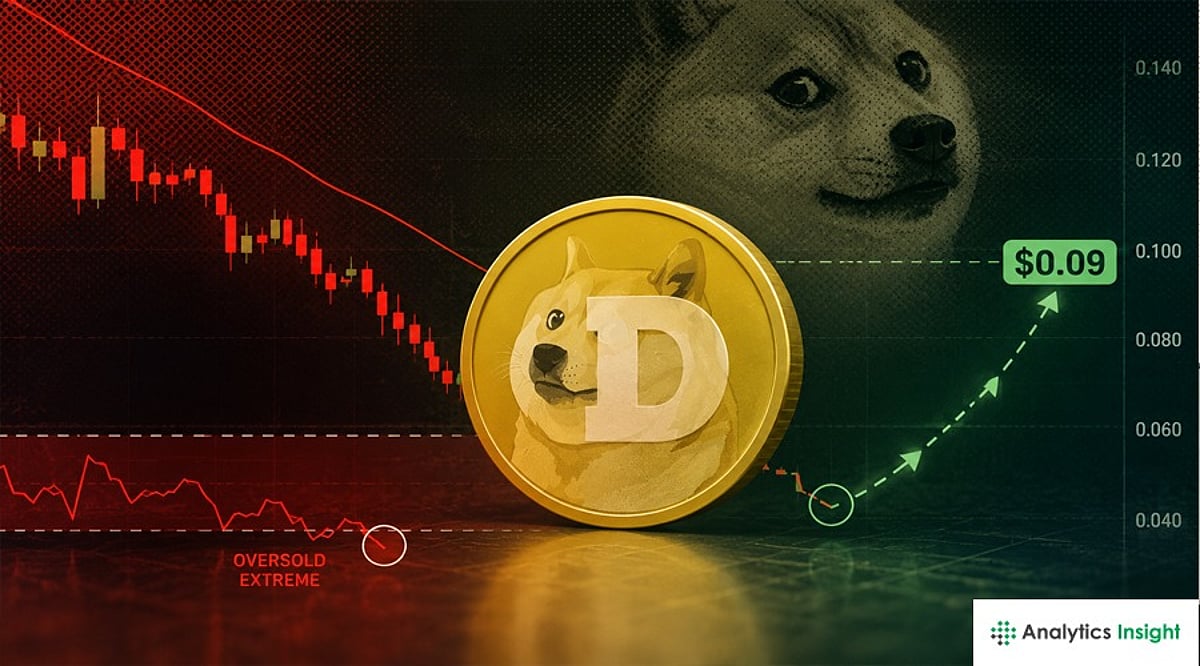
    Dogecoin is trading near $0.072 after heavy losses, but new ecosystem developments, strong community support, and a possible market recovery could help DOGE rebound toward higher price levels later in 2026.

    Current Dogecoin Price Situation

    As of July 2026, Dogecoin trades near $0.072. This remains a sharp fall from its all-time high of $0.73, which came in May 2021 during the biggest rally in its history. Even after the decline, Dogecoin still holds a market value of nearly $11.2 billion, which keeps it among the largest digital assets worldwide.

    Daily trading activity stays quite active as well. Current daily trading volume stands close to $800 million, which shows that traders continue to buy and sell DOGE regularly despite weak market conditions.

    Over the last month, Dogecoin has seen strong downward pressure. During June alone, reports show the coin lost more than 25% of its value, which made it one of the weaker performers among major cryptocurrencies.

    Why Dogecoin Price Remains Under Pressure

    One major reason behind this price weakness comes from the overall crypto market. Large cryptocurrencies like Bitcoin and Ethereum have also faced uncertainty given economic concerns, reduced institutional investment, and weaker retail participation.

    Another issue comes from Dogecoin’s supply system. Unlike Bitcoin, Dogecoin has no fixed supply limit. Around 5 billion new DOGE coins enter circulation every year. This constant increase in supply creates pressure on price as demand must grow continuously just to support higher value.

    The excitement around meme coins has also cooled down. In previous years, social media hype played a huge role in pushing Dogecoin higher. Celebrity support and internet trends created strong buying pressure. That level of excitement has reduced a lot under current market conditions, which has weakened momentum.

    Recent News That Could Help Recovery

    One of the biggest positive developments comes from DogeOS, a project built to expand Dogecoin’s use cases beyond simple payments. The goal focuses on adding more utility in areas such as decentralized finance and blockchain gaming.

    Recent reports show DogeOS secured around $6.9 million in funding from Polychain Capital. This development has created optimism as strong financial backing often helps long-term project growth.

    Community Strength Still Supports DOGE

    One of Dogecoin’s biggest strengths remains its community. Even after several difficult market phases, DOGE continues to have one of the most active communities in the crypto world.

    Social platforms like Reddit and X still show large amounts of discussion around Dogecoin. Strong community support often plays a major role in keeping interest alive during bearish market conditions.

    Technical Price Outlook

    Analysts believe that if price falls below $0.067, more downside pressure could appear. In that situation, DOGE may move lower toward $0.05 in the short term.

    However, if buyers defend current levels successfully, price could bounce back toward the $0.10 to $0.12 range over the next few months.

    Some bullish market forecasts suggest Dogecoin may even reach $0.20 before the end of 2026, especially if the overall crypto market enters another strong recovery phase.

    Can Dogecoin Reach $1 Again?

    The biggest long-term question remains whether Dogecoin can return to the $1 price level. At present, Dogecoin has roughly 155 billion coins in circulation. For DOGE to reach $1, total market capitalization would need to rise above $140 billion.

    Why This Matters

    Dogecoin is fighting to transition from a pure social media speculation tool into a functional asset. With June performance wiping out 25% of its value and the constant dilution of 5 billion new coins yearly, the success of the Polychain-backed DogeOS application layer is critical to see if DOGE can sustain its $11.2 billion valuation through utility rather than viral hype.

    Final Prediction for Dogecoin

    Dogecoin still has an edge because of its massive community and cultural footprint. At the same time, the incoming DogeOS upgrades provide a real technical backbone that the asset previously lacked. If macro conditions flip positive and capital starts rotating back into altcoins, DOGE has a clear path to reclaim the $0.10 to $0.20 liquidity zone before the end of the year.

    Key Takeaways

    • Dogecoin price currently sits near $0.072, far below its $0.73 all-time high.
    • New DogeOS development and $6.9 million funding bring fresh long-term optimism.
    • A break below $0.067 may push price toward $0.05, while recovery could send DOGE toward $0.20.

    FAQs

    1. What is Dogecoin’s market position at the start of July 2026?
    DOGE trades near $0.072, down 90% from its historic $0.73 peak. However, it maintains a robust $11.2 billion market cap, keeping it among the largest digital assets.

    2. Why is Dogecoin facing continuous downward price pressure?
    The recent decline stems from fading meme-coin hype, broader crypto market corrections, and structural selling pressure caused by an infinite supply system that adds 5 billion new coins annually.

    3. What is DogeOS, and how does it impact Dogecoin’s recovery?
    DogeOS is an ecosystem expansion project bringing decentralized finance and gaming utility to DOGE. It recently secured $6.9 million in venture capital funding from Polychain Capital.

    4. What are the key technical price boundaries for DOGE right now?
    The immediate technical support floor sits at $0.067, below which prices could slide to $0.05. Conversely, strong buying defense could push prices toward resistance between $0.10 and $0.12.

    5. Is a return to the $1.00 mark a realistic scenario for Dogecoin?
    Reaching $1.00 requires a $140 billion market cap due to the 155 billion circulating coins. While mathematically possible, it demands massive, unprecedented global capital inflows and long-term demand.

    Disclaimer: This article is provided for informational purposes only and does not constitute investment advice. Cryptocurrencies are highly volatile and risky. Always do your own research before investing.

  • Solana Price Analysis: $60 Support Holds, $80 Breakout in Sight

    Solana Price Analysis: $60 Support Holds, $80 Breakout in Sight

    Solana has once again entered the spotlight after successfully defending the critical $60 support level. The recent price action has sparked fresh debate: can SOL move higher and reclaim the $80 resistance zone — one of the most important short-term price levels?

    At the time of writing, Solana trades near $75, marking a weekly gain of roughly 8%. Daily trading volume remains robust at over $2.9 billion, while the project holds a market capitalization of around $44 billion, cementing its status as a top cryptocurrency.

    The $60 Support Level Prevented Further Decline

    Solana’s strong defense of the $60–$62 range was the main catalyst for the recent recovery. During market weakness, sellers repeatedly tested that zone, but buyers stepped in each time, preventing further downside. This behavior reflects strong investor confidence — large holders and long-term investors see value at that level.

    After bouncing from support, SOL recorded nearly a 20% price recovery, improving short-term sentiment. The ability to hold above that floor has built a stronger base for the next upward move.

    $80 Remains the Next Major Hurdle

    Despite the rebound, $80 remains formidable resistance. For much of the second quarter of 2026, SOL traded in a range between $70 and $95. A clean break above $80 could shift market sentiment, opening the door to $90 or even $100.

    Price charts show a pattern of higher lows, signaling that buyers are gradually gaining control. Analysts believe several daily closes above $80 could attract stronger interest from traders and spark fresh momentum across the altcoin sector.

    Solana Network Growth Supports Positive Sentiment

    Beyond price, Solana’s blockchain continues to expand. The network now handles nearly 3.5 billion transactions per month and remains one of the fastest in the industry. Monthly active wallet addresses recently surpassed 50 million, reflecting steady ecosystem activity.

    Key developments have also bolstered confidence: MoneyGram expanded its partnership within Solana’s developer ecosystem, and the USDC Treasury minted $250 million in stablecoins on Solana — a vote of trust in the network’s infrastructure.

    ETF Growth Creates Mixed Market Reaction

    Spot Solana ETFs, though still less popular than Bitcoin or Ethereum ETFs, have drawn institutional attention. Total inflows have crossed $1.1 billion, showing growing interest from larger investors. However, some analysts note that ETF demand hasn’t been strong enough to fully sustain a major rally — earlier in June, selling pressure pushed SOL below $70 despite ETF inflows.

    Technical Indicators Show Recovery Potential

    The Relative Strength Index (RSI) has recovered from oversold conditions, signaling that selling pressure is waning. Rising trading volumes also suggest more buyers are entering the market. Key levels remain: strong support near $60, next support around $68, immediate resistance at $80, and the next major barrier near $90. If SOL clears and holds above $80, the market could target $100.

    Why This Matters

    Defending $60 proves strong investor conviction despite market corrections. With booming network growth and $1.1 billion in ETF inflows, reclaiming $80 is more than a short-term rally — it’s the definitive breakout signal needed to target $100.

    Final Outlook

    Solana has shown impressive resilience after defending the $60 support level. Strong price recovery, rising on-chain activity, increasing institutional participation, and healthy ecosystem growth have all improved sentiment. The focus now is on $80 resistance, which may decide Solana’s next major move. A successful breakout could drive SOL toward $90 and possibly $100.

    FAQs

    1. Why is the $60 level important for Solana?
    The $60 zone acted as a strong support floor where buyers consistently stepped in, preventing further decline.

    2. Can Solana reach $80 soon?
    If buying pressure continues to rise, SOL has a good chance of testing the $80 resistance barrier in the short term.

    3. How much is Solana trading at now?
    Solana currently trades near $75, with a weekly gain of about 8% and daily volume exceeding $2.9 billion.

    4. What role do ETFs play in Solana’s price?
    Spot Solana ETFs have attracted over $1.1 billion in inflows, proving institutional interest, but demand isn’t yet strong enough to prevent short-term dips below $70.

    5. What happens if SOL breaks above $80?
    A successful breakout could shift market sentiment, attract stronger trader interest, and open the path toward $90 and $100.

  • 5 Leading Meme Coins Capturing Crypto Attention in July 2026

    5 Leading Meme Coins Capturing Crypto Attention in July 2026

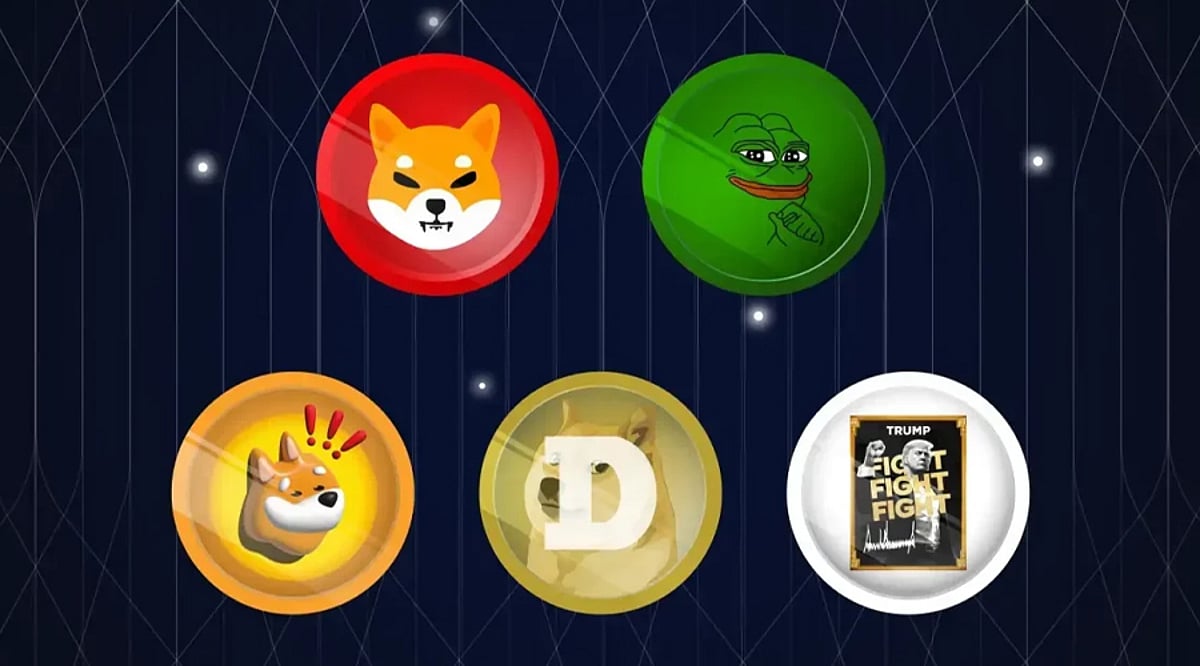
    Meme coins continue to dominate cryptocurrency conversations in July 2026, driven by strong online communities, viral social media trends, and increased trading activity. While these digital assets remain highly speculative, several have maintained investor confidence through ecosystem growth, exchange listings, and expanding utility. Below are the five meme coins making the biggest impact this month.

    1. Dogecoin (DOGE)

    Dogecoin remains the undisputed leader among meme coins by market capitalization and popularity. Originally launched as a joke, DOGE has evolved into a widely traded cryptocurrency supported by a massive global community. High liquidity, broad exchange availability, and continued adoption for payments keep Dogecoin at the forefront of the meme coin market in July 2026.

    2. Shiba Inu (SHIB)

    Shiba Inu continues to strengthen its ecosystem beyond being a meme token. The expansion of Shibarium, regular token burns, decentralized finance applications, and NFT initiatives have increased investor confidence. Its large and active community remains one of its biggest strengths, helping SHIB retain its position among the most valuable meme cryptocurrencies this year.

    3. Pepe (PEPE)

    Pepe Coin continues to attract traders with impressive market momentum and strong social media engagement. Built on Ethereum, PEPE has benefited from whale accumulation, high daily trading volumes, and viral internet culture. Despite its speculative nature, the token remains one of the most actively traded meme cryptocurrencies in the current market cycle.

    4. Bonk (BONK)

    Bonk has established itself as Solana’s leading meme coin by leveraging the network’s speed and low transaction costs. Integration with decentralized applications, wallets, and NFT platforms has boosted its utility. Strong community support and growing adoption across the Solana ecosystem have helped BONK remain a favorite among retail investors.

    5. dogwifhat (WIF)

    Dogwifhat (WIF) continues to benefit from its viral branding and highly engaged community. The Solana-based token has gained traction through active trading, exchange listings, and widespread social media visibility. Although its price remains volatile, WIF has become one of the most recognized meme coins, attracting both new and experienced cryptocurrency traders.

    Key Takeaways

    Meme coins remain among the riskiest yet most talked-about assets in the cryptocurrency market. Dogecoin, Shiba Inu, Pepe, Bonk, and dogwifhat lead the sector through strong communities, market liquidity, and growing ecosystems. Investors should conduct thorough research, assess risk carefully, and remember that meme coin prices are heavily influenced by market sentiment.

  • XRP Price Forecast July 2026 – Can the Downtrend Finally Reverse?

    XRP Price Forecast July 2026 – Can the Downtrend Finally Reverse?

    XRP enters July 2026 trading near $1.05 to $1.15 after a steep decline from its 2025 highs above $3.50. Traders are watching whether the $1.00 support level holds, as regulatory shifts and supply pressure continue to weigh on the asset. This article breaks down the key drivers, technical signals, and price outlook for the month.

    Why XRP Price Fell So Much

    The primary cause of XRP’s weakness is persistent supply pressure. Ripple unlocks 1 billion XRP tokens from escrow every month, and June 2026 saw another major release. Even when a portion returns to escrow, the market often reacts negatively to the increased circulating supply.

    In addition, the broader crypto market remained weak, and the introduction of California’s Digital Financial Assets Law (DFAL) on July 1, 2026 created new regulatory uncertainty for Ripple as a major U.S. blockchain firm.

    What Technical Charts Show Right Now

    XRP remains below the key 200-day moving average near $1.13–$1.14, which acts as a strong resistance. The Relative Strength Index (RSI) recently dropped near 32, indicating oversold conditions that sometimes precede a bounce.

    Positive Signs Still Exist

    Despite the price decline, spot XRP ETF inflows remain positive, showing continued institutional interest. Legislative discussions in Washington around the CLARITY Act could offer stronger legal protection for XRP as a commodity. Ripple’s international payment network expansion also supports long-term demand.

    XRP Price Forecast for July 2026

    If the market stabilizes, XRP may trade in a range of $1.10 to $1.20. More optimistic scenarios predict a rise toward $1.40–$1.60 if regulatory fears fade and buying momentum returns. Conservative estimates place the average price near $1.16–$1.18.

    Also read: Why Bitcoin, Ethereum, XRP, and Dogecoin are Falling: Will July Bring Relief?

    Key Takeaways

    • XRP trades near $1.05–$1.15, down nearly 70% from its 2025 peak.
    • The $1.00 support level is critical to prevent further declines toward $0.85.
    • Oversold RSI (32) and positive ETF inflows offer a glimmer of hope.
    • Regulatory developments (DFAL, CLARITY Act) and supply unlocks remain key risks.

    Disclaimer: This article is for informational purposes only and does not constitute financial advice. Cryptocurrency investments carry risk; always conduct your own research before investing.

  • UK’s FCA Softens Crypto Regulations While Retaining Capital and Stress Test Requirements

    UK’s FCA Softens Crypto Regulations While Retaining Capital and Stress Test Requirements

    The Financial Conduct Authority (FCA) has eased certain aspects of its planned UK crypto regulatory framework following industry feedback. However, the revised rules still require firms to hold capital against risky assets, conduct annual stress tests, and implement consumer safeguards. The regime is scheduled to take effect in October 2027 and will cover trading, custody, customer service, and risk management.

    The FCA reduced compliance thresholds and simplified reporting duties for some crypto activities after extensive consultation with market participants. Capital requirements for certain cryptoassets, including fiat-backed stablecoins, were also lowered. Industry representatives had argued that overly stringent rules could stifle growth and push operations offshore. The regulator stated that the revised framework aims to protect consumers without unduly burdening compliant businesses.

    Under the new rules, crypto firms must maintain capital reserves proportional to the risk of assets on their balance sheets. They must also design and run annual stress tests, submitting results to the FCA. Unlike the Bank of England’s approach of prescribing specific scenarios for major banks, crypto companies will calculate their own exposure and determine necessary capital levels.

    David Geale, the FCA’s executive director for payments and digital finance, described the framework as the UK’s first comprehensive crypto regulation. He noted that it applies established financial principles where crypto activities present comparable risks. The FCA expects stronger oversight to reduce misconduct and questionable practices, though consumers will still be warned that crypto investments can lose all value.

    Industry reactions have been mixed. Dan Coatsworth, head of markets at AJ Bell, said regulation can strengthen protection and reduce scams and misleading promotions, but cannot eliminate risk entirely. Following the announcement, Bitcoin and other major cryptocurrencies traded within narrow ranges, showing little immediate price reaction.

    As the October 2027 effective date approaches, crypto businesses should review the final standards and prepare their systems accordingly. The FCA’s revised approach offers more flexibility while maintaining accountability, seeking to balance innovation with consumer protection.

  • Dogecoin Approaches Make-or-Break $0.069 Support as Oversold Signals Intensify

    Dogecoin Approaches Make-or-Break $0.069 Support as Oversold Signals Intensify

    Dogecoin (DOGE) traded near $0.0714 on Tuesday, with sellers keeping the meme coin below every major moving average while oversold readings suggest downward momentum may be losing steam. The $0.069 support level now stands as the key threshold for a near-term recovery or a deeper slide.

    DOGE Remains Trapped Below Key Averages

    DOGE stayed below its 7-day, 20-day, 50-day, and 200-day moving averages, which sat near $0.07, $0.08, $0.09, and $0.10, respectively. This orderly sequence keeps the broader trend firmly bearish rather than sideways. The price has remained under the 20-day average for several weeks, limiting evidence of a sustained reversal.

    Meanwhile, the Relative Strength Index (RSI) dropped to 21.67, while stochastic readings hit 11.85 (%K) and 9.48 (%D). Bollinger %B stood at 0.12, placing the price close to the lower band. The MACD histogram moved to zero, signaling that downward momentum has started to decelerate.

    Thin Volume Exposes the Rebound Setup

    The latest intraday high reached $0.0725, marking the first recovery hurdle. Technical levels in the supplied analysis placed the 20-day average and Bollinger midline near $0.08. At the same time, Binance spot volume hovered near $53 million, while open interest declined 1.85% over 24 hours — indicating limited new leverage entering the market.

    Immediate order flow remained bearish. Sellers executed about $167 million against $128 million from buyers during the latest hour, producing a taker ratio of 0.77. Positioning data showed 68.9% of retail traders and 73.7% of top traders holding long exposure. The analysis identified this concentration as a risk if another decline triggers forced liquidations.

    Funding remained near neutral at 0.0090%. The absence of negative funding suggests the leverage reset has not yet reached full capitulation.

    $0.069 Close Shapes DOGE Recovery Targets

    CoinCodex projects DOGE at $0.1090 by year-end in a forecast published June 27 — representing a 46% increase from the stated market price. Still, the near-term setup depends on DOGE maintaining a daily close above $0.069.

    The stated entry range stands between $0.070 and $0.072, with $0.08 as the primary target. If DOGE reclaims $0.08 with stronger volume, the $0.09 (50-day average) becomes the next technical target. That move would strengthen the forecast recovery path.

    A daily close below $0.069 would invalidate the near-term bounce setup. The next cited support zone would then sit between $0.060 and $0.062.

    What’s Next?

    Dogecoin remains under bearish pressure below its major moving averages, but oversold indicators suggest selling momentum may be easing. The $0.069 support level now determines whether DOGE can rebound toward $0.08 or fall toward $0.060. Traders should monitor daily closes and maintain disciplined risk management.

  • SharpLink Resumes Ethereum Accumulation, Boosts Treasury to 886,725 ETH

    SharpLink Resumes Ethereum Accumulation, Boosts Treasury to 886,725 ETH

    SharpLink (SBET) has resumed its Ethereum accumulation strategy after a months-long pause, purchasing 10,000 ETH last week at an average price of $1,611 per token. The acquisition brings the company’s total holdings to 886,725 ETH, valued at approximately $1.4 billion based on current market prices. The move follows a $75 million registered direct offering that strengthened SharpLink’s balance sheet and signaled renewed confidence in digital asset treasury management.

    SharpLink Restarts Ethereum Buying

    The Florida-based company made its first Ethereum purchase since October, adding 10,000 ETH at an average of $1,611 each. SharpLink now holds 886,725 ETH, with its treasury valued at roughly $1.4 billion. The purchase was funded by a $75 million direct offering, which CEO Joseph Chalom said was designed to support the company’s active Ethereum treasury strategy and increase Ethereum per share over the long term.

    SharpLink also repurchased more than 2.13 million common shares last week at an average price of $4.69 per share, reflecting its belief that the stock is significantly undervalued. Since launching its buyback program in August, the company has repurchased over four million shares. Despite these moves, SharpLink shares closed Tuesday at $4.80, down 2.44% for the session and still 88% below its 52-week high of $40.46, a decline tied to Ethereum’s broader market weakness.

    Ethereum Faces Market Pressure

    Ethereum has posted three consecutive quarterly losses, declining 25.4% in Q2 2026 after drops of 29.2% in Q1 2026 and 28.2% in Q4 2025, according to Coinglass. Over the past 24 hours, $58.5 million in Ethereum liquidations occurred, with long positions accounting for $41.3 million. Technical indicators show Ethereum trading below its 20-day, 50-day, and 100-day exponential moving averages at $1,669, $1,824, and $2,002, respectively. The asset remains below a descending trendline near $1,617, with the Relative Strength Index at 34 (just above oversold territory) and the Stochastic Oscillator near 21.

    Analysts identify immediate resistance at $1,611 and $1,617, with higher levels at $1,669, $1,741, $1,806, $1,824, $1,909, and $2,002. Support stands at $1,524 and $1,404, with a deeper decline potentially exposing the key support near $1,155.

    Treasury Strategy Extends Beyond Holdings

    SharpLink recently joined Chairman Joe Lubin and BitMine to fund the launch of Ethlabs, a nonprofit focused on Ethereum research and development. The company initiated its Ethereum treasury strategy in May 2025, shifting toward ETH accumulation when prices were slightly below current levels. While SharpLink has not disclosed any staking activity, institutional staking demand is growing across proof-of-stake networks, and the company could eventually expand beyond passive holdings.

    Regulatory uncertainty remains a factor for public companies with crypto treasuries. U.S. securities laws require careful classification of digital assets, and future SEC guidance could impact how firms account for holdings and manage treasury positions.

    What’s Next?

    SharpLink’s renewed Ethereum buying, combined with its share buyback program and participation in Ethlabs, highlights its commitment to a crypto-focused treasury strategy. As Ethereum navigates a prolonged downturn, the company’s moves may influence how other public corporations approach digital asset accumulation.

  • Elizabeth Warren Pushes for Stricter Crypto Rules Following Trump’s $1.4 Billion Digital Asset Income

    Elizabeth Warren Pushes for Stricter Crypto Rules Following Trump’s $1.4 Billion Digital Asset Income

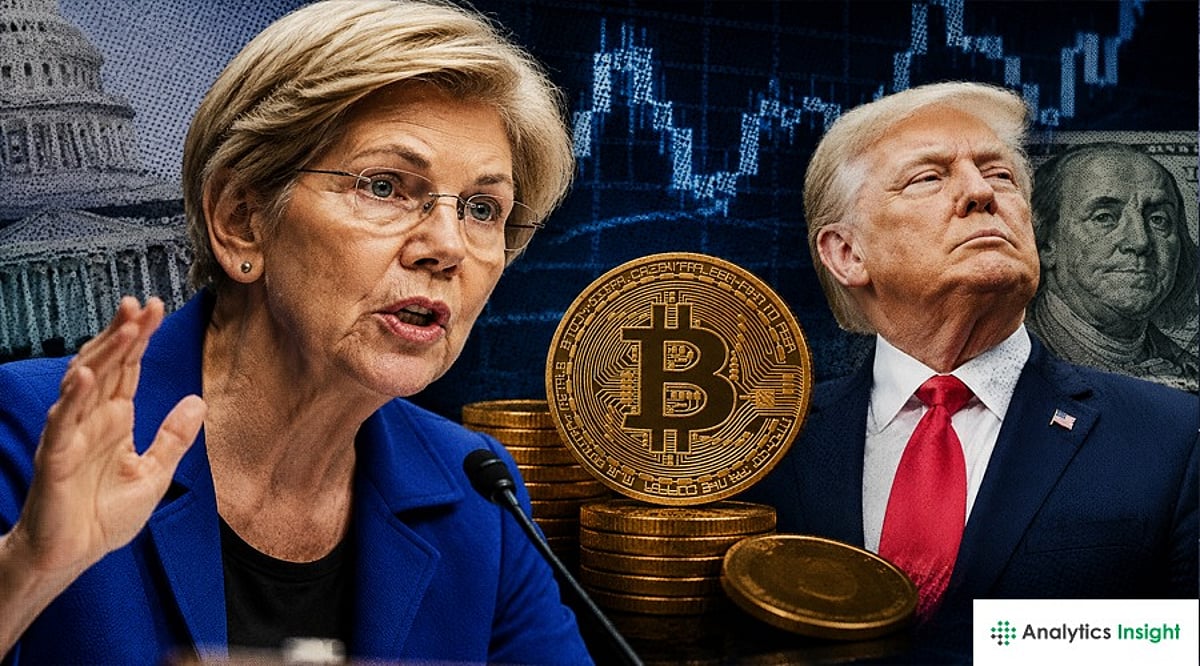
    Senator Elizabeth Warren has renewed her call for stronger cryptocurrency regulations after President Donald Trump’s 2025 financial disclosure revealed over $1.4 billion in income from digital asset ventures. The disclosure has intensified debates over potential conflicts of interest and the need for oversight of crypto-related earnings by public officials.

    Warren Targets Crypto Legislation

    Warren urged Congress to tighten the CLARITY Act, arguing that the legislation should prevent sitting presidents and their families from profiting from cryptocurrency businesses while in office. She stated that the bill must stop Trump and his family from benefiting from crypto ventures, highlighting concerns about self-dealing and ethical breaches.

    Several public figures have also weighed in. Wall Street financier Steve Rattner criticized the Trump family’s involvement, while investment manager Lawrence Lepard warned that the disclosure could trigger political backlash against the crypto industry. Former White House lawyer Ty Cobb described the situation as ‘the greatest onslaught of corruption in the history of mankind,’ according to media reports.

    Details of the Financial Disclosure

    The annual filing with the U.S. Office of Government Ethics listed cryptocurrency as a major income source for Trump in 2025. The report showed that his crypto ventures generated between $1.2 billion and $1.4 billion. Key components included:

    • Over $520 million from token sales linked to World Liberty Financial, a venture co-founded by Trump and his sons.
    • Approximately $635 million in royalties from the Official Trump memecoin.
    • About $1.8 million in Ethereum validator rewards from staking.
    • Bitcoin holdings worth over $50 million stored in a cold wallet.

    The White House did not immediately respond to requests for comment.

    Crypto Policy Under Scrutiny

    Since returning to office in January 2025, Trump has implemented crypto-friendly policies, including plans for a national strategic cryptocurrency reserve and the first White House crypto summit. The SEC dropped its enforcement case against Coinbase, and Congress approved the GENIUS Act, which mandates stablecoins to maintain one-to-one backing with U.S. dollars.

    Warren and four other Democratic senators have requested hearings on the administration’s crypto activities, citing investments from the United Arab Emirates into World Liberty Financial and potential national security risks. They have called for administration officials to testify under oath as Congress continues reviewing digital asset legislation.

  • Crypto Hack Losses Drop 7% in June, Humanity Protocol Hit by $36M Exploit

    Crypto Hack Losses Drop 7% in June, Humanity Protocol Hit by $36M Exploit

    Crypto-related thefts declined in June after several months of heavy losses, although attackers continued targeting blockchain projects through private key compromises and bridge vulnerabilities. Blockchain security firm PeckShield reported about $75.9 million stolen across 40 major incidents, marking a 7.1% decrease from May’s $81.7 million.

    Even so, the monthly decline did little to slow the year’s overall losses. Data from blockchain intelligence firm TRM Labs showed crypto hacks and exploits have already cost the industry more than $750 million in 2026, with two large attacks recorded earlier this year accounting for a major share of that total.

    Humanity Protocol Records June’s Largest Exploit

    Humanity Protocol recorded the biggest security breach during June. PeckShield estimated the exploit at about $31 million, while the project’s internal investigation later placed losses closer to $36 million. According to the project, attackers gained access after compromising a private key linked to the protocol’s bridge administration.

    Founder Terence Kwok said the breach resulted from a compromised private key. Humanity Protocol also stated that attackers accessed bridge administration on Ethereum and BNB Chain after compromising a developer’s laptop. The project said the incident allowed hackers to drain wallets and mint about 447 million H tokens. Reports also stated that the exploit triggered an 80% to 90% decline in the token’s market price. Humanity Protocol added that it is preparing a recovery plan, including a possible 1:1 token airdrop for affected users. Meanwhile, reports linked the attack to North Korea’s Lazarus Group, although investigations remain ongoing.

    Bridge Exploits and Protocol Attacks Continue

    Beyond Humanity Protocol, several blockchain projects also suffered large losses during June. PeckShield reported that Syscoin Bridge lost about $10 million after attackers exploited a validation flaw that allowed billions of unsupported SYS tokens to be minted without the required token burn.

    A bot associated with the address JaredFromSubway.eth also lost about $7.5 million after being targeted by another exploit. Other affected platforms included Secret Network, Polymarket users, SecondFi and TESSERA, with reported losses ranging between $2.4 million and $4.67 million.

    Meanwhile, Aztec’s deprecated infrastructure was exploited twice during the month. PeckShield tracked approximately $2.16 million stolen from Aztec Bridge and another $2.1 million from Aztec Connect. According to the Aztec Foundation, both immutable contracts are no longer under its control and cannot be paused. Combined losses reached about $4 million.

    The remaining projects in PeckShield’s top ten included Taiko Bridge, Token of Power, Raydium and LABUBU/OLPC, with each incident resulting in losses exceeding $1 million.

    Crypto Losses Remain High in 2026

    Although June recorded a lower monthly total, overall crypto losses during 2026 remain elevated. TRM Labs estimated that hackers have already stolen more than $750 million this year. According to the firm, two attacks linked to North Korea accounted for much of those losses.

    On April 1, Drift Protocol lost about $285 million after attackers reportedly spent months using social engineering tactics against governance signers. Later, on April 18, Kelp DAO’s LayerZero bridge lost approximately $292 million after attackers compromised its verifier network.

    Meanwhile, PeckShield reported that the Humanity Protocol exploiter has moved stolen assets across Bitcoin, Solana, Hyperliquid, and BNB Chain. The firm also found that some funds were mixed with assets connected to the separate Kelp DAO exploit. PeckShield said this pattern ‘raises the possibility the same threat actor is behind both attacks,’ though no final attribution has been confirmed.

  • Remittix Opens Airdrop Registration for RTX Holders Ahead of Launch Phase

    Remittix Opens Airdrop Registration for RTX Holders Ahead of Launch Phase

    Remittix has launched airdrop registration for RTX holders as the project moves closer to its launch phase. The registration is now live through the official Remittix website, giving presale participants a clear step to complete before token distribution begins.

    As Remittix approaches several major milestones—including the RTX launch price reveal in three days, an extended 350% RTX bonus, the upcoming public platform launch, and the $32 million funding milestone that will unlock the official launch date—community interest is intensifying. For RTX holders, this is no longer just a waiting period. The next stage is taking shape, and wallet registration has become the essential action to take now.

    Airdrop Registration Provides a Clear Path

    The Remittix airdrop is tied to the distribution of RTX tokens purchased during the presale. Holders who bought RTX are encouraged to register their wallet details ahead of the distribution process.

    The registration process is straightforward: users visit the official Remittix site, connect their wallet, submit their wallet address, and complete the airdrop registration page. An optional section allows users to add notification details for future updates regarding the airdrop, token distribution, and launch news. Once completed, the page confirms successful registration.

    Remittix advises holders to use only official links and to avoid unknown websites, direct messages, or unofficial accounts claiming to offer airdrop access.

    Launch Price Reveal and $32 Million Milestone Build Urgency

    One of the most anticipated events for the Remittix community is the RTX launch price reveal, expected in three days. This update is likely to become a key talking point as holders seek clarity on RTX’s positioning heading into launch.

    Remittix is also nearing the $32 million milestone, which will unlock the official launch date reveal. This gives the community another significant reason to stay focused as the project transitions from presale activity to its next public phase. Together, the launch price countdown and $32 million milestone have created a more urgent backdrop for the airdrop registration window.

    350% Bonus and Platform Progress Add Momentum

    The extended 350% RTX bonus remains a major part of the current Remittix narrative. With the bonus still active, buyers and holders have another reason to monitor developments closely as the project moves toward launch-stage updates.

    Meanwhile, the Remittix public platform launch is approaching. The platform is designed to let users send cryptocurrency while recipients receive fiat directly into their bank accounts, giving Remittix a practical crypto-to-fiat payments use case. Multiple community members have reportedly received fiat payments through the Remittix system, providing proof of platform functionality as public access nears.

    With airdrop registration live, the launch price reveal expected in three days, the 350% RTX bonus extended, the $32 million milestone approaching, and the platform launch nearing, Remittix holders now have several converging updates to track.

    For RTX holders, the next step is clear: register through the official Remittix site, submit wallet details, and stay prepared as Remittix builds toward its launch phase.

    Disclaimer: This article is for informational purposes only and does not constitute investment advice. Cryptocurrency investments carry risk, and you should conduct your own research before making any financial decisions.