Category: Cryptocurrency

  • Can Bitcoin Whales Offset Record $4.06 Billion ETF Outflows to Prevent Further Price Drops?

    Can Bitcoin Whales Offset Record $4.06 Billion ETF Outflows to Prevent Further Price Drops?

    Bitcoin is at a critical juncture as large holders, known as whales, try to fill the gap left by weakening institutional demand. After U.S. spot Bitcoin exchange-traded funds recorded heavy redemptions totaling $4.06 billion, the market is watching whether whale activity near the $60,000 level can stabilize prices.

    ETF Outflows Weigh on Bitcoin Demand

    U.S. spot Bitcoin and Ethereum ETFs have experienced seven consecutive days of net outflows. Bitcoin funds alone lost approximately $445 million in a single session, while Ethereum products saw about $12.85 million in withdrawals. Last week marked the largest weekly outflow on record for Bitcoin ETFs, with losses exceeding $1.79 billion. This selling pressure has spread across several major funds as investors reduce crypto exposure.

    Previously, ETF demand absorbed Bitcoin supply during market corrections. With that support fading, the market now depends more on whales, long-term holders, and retail buyers. However, renewed institutional inflows could provide stronger price support, but current flows indicate that demand has not recovered yet.

    Bitcoin’s Coinbase Premium remains weak, and apparent demand has stayed negative for 208 consecutive days, recently falling to about negative 273,000 BTC. This suggests that new buying has struggled to absorb available supply.

    Whale Transactions Surge Around $60,000

    Large Bitcoin holders became more active as the price tested levels below $60,000. The network recorded 6,920 transactions worth more than $100,000 and 1,438 transfers above $1 million. This was the second-largest spike in whale activity in two months.

    The increase indicates that some large holders viewed the decline as a possible accumulation window. However, transaction volume does not confirm that every whale transfer involved buying; some movements may include sales, exchange deposits, or wallet transfers.

    Bitcoin later rebounded toward $60,000, but momentum remained weak. The relative strength index (RSI) stayed near oversold levels, while the MACD showed that buyers had not regained control. Therefore, the rebound remains “unconfirmed” without stronger spot demand and better ETF flows.

    Traders are now watching $57,000 as a potential liquidation zone. A break below that level could expose Bitcoin to $54,000, near a key realized price level, testing whether whales will absorb more selling.

    Long-Term Holders Begin Realizing Losses

    Long-term holders are also reacting to the decline. The monthly average for the Long-Term Holder SOPR (Spent Output Profit Ratio) fell from 1.03 to 0.8, showing that some older investors sold Bitcoin at a loss—indicating losses of about 13% over the past month.

    The yearly average also declined from 2.06 to 1.46, meaning realized profits among long-term holders have narrowed as Bitcoin trades well below its recent high near $82,803.

    Selling by older holders can add pressure in the short term. However, the data suggest that weaker sellers are reducing exposure near current levels, which may reduce future selling but does not confirm an immediate price reversal.

    Outlook: Two Competing Forces

    Bitcoin now faces two competing forces. On one side, ETF redemptions and weak spot demand weigh on the market. On the other, whale activity offers support near $60,000. A sustained recovery still requires stronger buying across ETFs, exchanges, and the wider spot market.

  • Top Memecoins to Watch in 2026: Dogecoin, SHIB, Pepe, and More

    Top Memecoins to Watch in 2026: Dogecoin, SHIB, Pepe, and More

    Key Takeaways

    • Dogecoin remains the strongest memecoin leader given its unmatched popularity and massive community support.
    • Utility-focused projects like SHIB and FLOKI are gaining long-term investor confidence beyond hype.
    • Solana-based memecoins such as BONK and WIF are rapidly becoming major market attention drivers in 2026.

    The cryptocurrency market has entered 2026 with strong excitement around memecoins once again. These digital coins, which first became popular fueled by internet culture and online communities, now attract serious investor interest. Recent market reports show that the total memecoin market value has jumped by 23% at the start of 2026, which clearly shows that this sector has become important again. Even though memecoins remain risky given sudden price swings, many traders now keep a close watch on projects that have strong communities and market hype.

    Dogecoin (DOGE)

    In the meme coin arena, Dogecoin remains the leading contender. Created as a joke back in 2013, it has evolved from being an amusing internet joke to being one of the most well-known cryptocurrencies today. Dogecoin’s main strength lies in its strong popularity within the global cryptocurrency community as well as its strong support among online communities. Currently, there are around 154 billion Dogecoins (DOGE) in circulation; therefore, it has one of the largest customer bases in the world for any single meme coin. A large number of analysts have classified Dogecoin (DOGE) as one of the top meme coin options, primarily given its historical footprint, trading volume, and considerable brand recognition.

    Shiba Inu (SHIB)

    Shiba Inu has grown far beyond its original image as a meme token. Unlike many other memecoins that depend only on hype, SHIB has built a larger ecosystem around its project. It now includes its own decentralized exchange, NFT support, and token burn systems that help reduce supply over time. During 2026, SHIB continues to hold strong market attention as many investors see long-term value in projects that offer more than simple internet popularity. The project also remains one of the biggest memecoins by market capitalization.

    Pepe (PEPE)

    Pepe has become one of the biggest surprise winners in the memecoin market. Built around the famous internet meme character, PEPE saw explosive growth soon after launch and quickly entered the list of top meme-based cryptocurrencies. In 2026, PEPE remains a favorite among traders who look for high-risk and high-reward opportunities. Its strength comes mainly from strong social media popularity and active online communities that create massive attention around the token. Many crypto market experts now believe PEPE could see another major rally if the overall market stays bullish through the year.

    Bonk (BONK)

    Bonk has become one of the strongest memecoins inside the Solana blockchain ecosystem. The token gained popularity after traders started showing major interest in Solana-based meme projects. Recent reports show that trading activity on Solana memecoin launch platforms like Pump.fun crossed more than $2 billion during the first quarter of 2026. This huge number shows that investors now pay serious attention to Solana memecoins. BONK benefits directly from this trend and remains one of the biggest names in this category.

    dogwifhat (WIF)

    Dogwifhat, also known as WIF, has quickly become one of the fastest-rising memecoins in the market. Built on Solana, the token became popular for its unusual branding and strong online support. The simple concept behind the coin helped create huge internet attention in a very short time. During 2026, WIF continues to attract traders who search for fast-moving crypto opportunities. Market experts have also noticed rising institutional interest after some investment funds added exposure during earlier market rallies.

    Floki Inu (FLOKI)

    Floki Inu started as another meme project but later expanded into a much bigger ecosystem. Unlike many coins that depend only on internet hype, FLOKI added gaming projects, decentralized finance tools, and wider ecosystem development around its token. Given these developments, FLOKI has returned to investor discussions in 2026. The token has shown strong market activity and many traders now consider it one of the strongest mid-sized memecoins available. The project’s focus on utility gives it an advantage compared to many smaller meme tokens.

    Market Outlook for 2026

    Memecoins continue to prove that attention and community support can play a major role in cryptocurrency markets. Unlike traditional blockchain projects that focus mainly on technology, memecoins often move as a result of internet trends, celebrity mentions, viral discussions, and strong community excitement. Current market data shows investors have started moving capital back into high-risk crypto sectors. This trend has pushed memecoins back into the spotlight. As long as market confidence stays strong, this category could remain one of the biggest investment trends throughout 2026.

    Among all major contenders, Dogecoin, Shiba Inu, Pepe, Bonk, dogwifhat, and Floki Inu stand out as the top memecoins most likely to dominate investor attention during 2026, especially if the crypto market enters another major rally cycle.

  • XRP at a Crossroads: Why Reclaiming $1.30 Is Vital for Recovery

    XRP at a Crossroads: Why Reclaiming $1.30 Is Vital for Recovery

    XRP remains under pressure near yearly lows, holding support at $1.12. Analysts say reclaiming $1.30 is essential to restore bullish momentum, while regulation and upcoming Ripple events could influence price direction.

    Key Takeaways

    • $1.30 is XRP’s key resistance level and must be broken for bullish recovery.
    • Support near $1.12 is preventing deeper losses, but market confidence remains weak.
    • Institutional demand stays strong despite regulatory uncertainty and recent price weakness.

    XRP has entered a crucial stage after weeks of price weakness. The cryptocurrency has struggled to recover after heavy selling pressure pushed the token lower during the past few months. Right now, XRP trades near $1.14 to $1.16, which puts the asset close to one of its weakest price levels of 2026.

    After a drop of almost 40% since the start of the year, market attention has now shifted toward one major level: $1.30. Many analysts believe XRP must move above this price before any strong recovery can begin.

    Why the $1.30 Level Matters

    The $1.30 price zone has become the biggest hurdle for XRP. Earlier this month, XRP tried to recover and briefly touched $1.29, but sellers quickly took control and pushed the price back down. This failed attempt showed that strong resistance still exists in that area. In simple terms, resistance means a price zone where buyers struggle to push higher since many traders decide to sell there.

    If XRP continues to stay below $1.30, confidence in the market could remain weak. A successful move above this level would show that buyers have returned and that the market may finally prepare for a stronger upward move.

    Current Support Is Keeping XRP Stable

    At the moment, XRP has managed to defend an important support zone near $1.12. During the recent weekend market decline, the token briefly slipped below $1.14, which created fear that more losses could follow. However, buyers entered quickly and pushed the price back upward before more serious damage happened.

    This recovery showed that demand still exists at lower levels. Even so, the rebound has not been strong enough to fully change market sentiment. Buyers have protected support, but a clear recovery remains missing.

    XRP Has Fallen Behind the Crypto Market

    Another concern comes from XRP’s recent market performance compared to other cryptocurrencies. Over the last seven days, XRP has dropped almost 10%, while many major digital assets have seen smaller losses. This shows weaker relative strength compared to the broader crypto market.

    When a major cryptocurrency performs worse than the rest of the market, traders often become more cautious. That is why breaking above $1.30 has become even more important. It would help restore confidence and prove that XRP can once again compete with the wider market recovery.

    Strong Fundamentals Still Support XRP

    Despite weak price action, several positive developments continue to support XRP in the background. Institutional interest remains active, especially after reports showed that XRP exchange-traded product inflows recently crossed $10 million. This suggests that larger investors still see long-term value even while short-term price weakness continues.

    At the same time, exchange supply has reportedly started to decline. This often means large holders move tokens away from exchanges and choose to hold instead of selling. In many cases, reduced supply creates positive price pressure over time.

    Regulation Creates Short-Term Uncertainty

    Another major factor affecting XRP comes from regulation. Ripple now faces an important deadline connected to California’s Digital Financial Assets Law, also known as DFAL, which officially takes effect on July 1, 2026.

    Since Ripple remains closely connected to XRP, uncertainty around new legal requirements has created caution among traders. The crypto market often reacts strongly whenever regulation becomes uncertain. Until clearer information arrives, some investors may remain on the sidelines.

    Ripple Swell Event Could Shift Sentiment

    Market attention has also started to shift to Ripple Swell 2026, which will be held in New York in late October of this year. A lot of attention will be focused on major topics in the blockchain world, including tokenization, stablecoins, decentralized finance, and institutional adoption of blockchain technology.

    Major Ripple announcements often influence sentiment toward XRP. Positive developments at the event could strengthen long-term investor confidence and attract renewed market interest.

    Risks if XRP Fails to Recover

    XRP remains under pressure while below $1.30 for an extended period of time, with some analysts speculating that if support fails to hold, there could be a move towards $0.93. If selling pressure picks up, even deeper downside targets of around $0.76 may occur.

    Should XRP break above and maintain a position at or above the $1.30 mark, the next potential bounce-off point is between $1.50-$1.80, indicating a resumption of bullish momentum after many months of weakness.

    Final Outlook for XRP

    XRP currently stands at a major turning point. Support near $1.12 has prevented a bigger collapse for now, but real recovery cannot begin unless buyers push the token above $1.30 resistance.

    This price level now acts as the line between weakness and recovery. Staying below it keeps bearish pressure alive. Moving above it could finally restart upward momentum and place XRP back on the path toward a stronger comeback in the crypto market.

    Frequently Asked Questions

    Why is $1.30 important for XRP?

    It is the primary resistance level where sellers repeatedly block recoveries. Breaking above it is essential to restore market confidence and restart upward price momentum.

    What happens if XRP stays below $1.30?

    Bearish pressure will persist, leaving the token vulnerable to further drops. Failing to clear this hurdle risks exposing downside targets near $0.93 and $0.76.

    What support level is currently protecting XRP?

    The key short-term support floor is at $1.12. Buyers have actively defended this zone during recent market dips, preventing a deeper breakdown.

    Are institutions still interested in XRP?

    Yes. Institutional confidence remains stable despite price weakness, as proven by recent XRP exchange-traded product inflows crossing over $10 million.

    Could Ripple Swell 2026 impact XRP price?

    Yes. The October event in New York focuses on major blockchain adoptions, and historically, big announcements there tend to shift sentiment and attract new buyers.

  • Dogecoin and HYPE Lead Weekly Crypto Decline as Bitcoin Steadies Near $60K

    Dogecoin and HYPE Lead Weekly Crypto Decline as Bitcoin Steadies Near $60K

    The cryptocurrency market suffered another turbulent week, with Dogecoin and Hyperliquid’s HYPE token posting the steepest losses among major digital assets. Dogecoin dropped 9.6% to trade near $0.076, while HYPE fell 9.9%, making it the worst performer tracked over the seven-day period. Ether declined 8.4% to approximately $1,581, and XRP lost 7.8% to trade around $1.06.

    Bitcoin, the largest cryptocurrency by market capitalization, fell 5.3% to roughly $60,345 on Saturday. It briefly dipped to around $58,800 on Friday before buyers stepped in to push the price back above the $60,000 support level. The recovery limited Bitcoin’s weekly decline, though the asset remains close to its long-term 200-week moving average.

    Market analyst Alex Kuptsikevich noted that Bitcoin approached $58,000 late Thursday and early Friday before “aggressive buying” returned. He described the price movement as similar to margin liquidations followed by buy orders placed at lower levels. However, Kuptsikevich expressed doubts about the sustainability of the recovery. “Investors should prepare for continued pressure and periodic sell-off spikes,” he warned, suggesting institutional investors may reduce crypto exposure to protect their balance sheets.

    Crypto Futures Liquidations Surpass $590 Million

    The week’s volatility triggered significant liquidation events across crypto futures markets. According to Coinglass data, approximately $217 million in futures positions were liquidated in the 24 hours ending June 27, with the weekly total exceeding $590 million. Bitcoin accounted for $71.04 million in liquidations, while Ether represented $50.61 million. Solana positions produced roughly $20.58 million in liquidations, and XRP traders lost about $2.43 million.

    Liquidations occur when trading platforms close leveraged positions after traders can no longer meet margin requirements, often amplifying short-term price swings. In this case, Bitcoin’s move below $59,000 triggered further selling before pending buy orders supported the recovery toward $60,000.

    Solana and Tron Show Relative Stability

    Among major cryptocurrencies, Solana and Tron demonstrated more stable price action. Solana traded close to $72, while Tron held near $0.32. Both tokens were roughly unchanged for the week, despite the broader market weakness. Their performance stood in contrast to memecoins and larger altcoins that faced heavier selling pressure.

    Wall Street Rotation Leaves Crypto Behind

    While crypto markets struggled, US stock markets exhibited a different pattern. Investors rotated away from semiconductor companies and directed funds toward a wider range of businesses linked to steady economic growth. The S&P 500 ended the week little changed, though the majority of companies within the index gained. The equal-weight S&P 500 even reached a record high.

    The movement indicates that investors have not fully left risk assets but have become more selective about where they allocate capital. Rather than flowing into cryptocurrencies, funds leaving chipmakers moved into other stock sectors, leaving Bitcoin and major altcoins without support from the broader market rotation.

    Multiple Pressures Weigh on Crypto

    Cryptocurrencies faced separate headwinds from US spot Bitcoin exchange-traded fund outflows, a hawkish Federal Reserve, and dollar strength. The strong dollar reduces the appeal of alternative assets like crypto, while expectations that interest rates could remain high dampen speculative demand. Bitcoin’s position near its 200-week moving average kept traders focused on further downside risk as Dogecoin, HYPE, Ether, and XRP ended the week with deeper losses.

  • Bitcoin Faces Critical Third Quarter as Strategy’s Losses Mount and STRC Comes Under Pressure

    Bitcoin Faces Critical Third Quarter as Strategy’s Losses Mount and STRC Comes Under Pressure

    Bitcoin’s latest decline has renewed concerns over whether the market is entering a longer bear phase. The asset has fallen for two straight quarters, while Strategy’s unrealized loss and pressure on its preferred shares have added another source of risk.

    Bitcoin fell about 22% in the first quarter and 12.2% in the second quarter. A third negative quarter would mark its first run of three straight quarterly losses since 2022, when Bitcoin ended the year more than 65% lower.

    Bitcoin Enters a Critical Third Quarter

    Bitcoin recently fell below $59,000 as traders reduced exposure to risky assets. The decline has raised doubts about whether the current move is a normal pullback or part of a wider downtrend. Market observers are asking if it is still too early to call the current risk-off phase anything apart from a full-blown bear market, as quarterly losses deepen. The comparison with 2022 has gained attention since Bitcoin has not recorded three bearish quarters in a row since that cycle.

    The third quarter may now become a key test. Another quarterly loss would place Bitcoin in a pattern last seen in its worst annual decline. Nevertheless, the current drop remains smaller than the 2022 collapse, and the final outcome will depend on price movements through September.

    Selling pressure has also spread to companies linked to Bitcoin. Strategy’s common shares recently dropped below $85.50 and closed near $82 on Friday, their lowest level since February 2024.

    Strategy’s Funding Model Comes Under Pressure

    Strategy holds one of the largest corporate Bitcoin reserves, but falling prices have left the company with about $14 billion in unrealized losses. Its STRC preferred shares also carry an 11.5% annual dividend, equal to roughly $1.2 billion in yearly payments. STRC was designed to trade near $100 and provide Strategy with funds for more Bitcoin purchases. Yet the shares fell as much as 26% below that level and reached a record low. The drop has raised doubts about the company’s ability to issue more shares on favorable terms.

    CryptoQuant said Strategy should pause Bitcoin purchases and rebuild its cash holdings. The firm estimated that cash coverage for STRC dividends has fallen from more than seven years to about 14 months. When STRC trades below its intended value, new issuance becomes less attractive. Strategy has therefore paused that part of its funding process. Analyst Mark Palmer said the model has become “less efficient” rather than broken and rejected comparisons with failed crypto projects.

    Ripple CEO Questions Strategy’s Bitcoin Approach

    Ripple CEO Brad Garlinghouse said he remains bullish on Bitcoin but criticized Strategy’s preferred-share model. In a Friday interview, he described the structure as “financial engineering” that had distracted the market from long-term utility. “Financial engineering does not drive long-term value,” Garlinghouse said. He added that a digital asset’s value should come from practical use rather than complex funding structures. Garlinghouse called STRC’s fall below its $100 target a “damning indictment” of Strategy’s approach, focusing on the company’s financing method rather than Bitcoin itself.

    Meanwhile, Arkham Intelligence said the situation does not resemble the Terra-LUNA collapse. Still, falling Strategy shares, weak STRC demand, and reduced funding capacity have raised doubts about future Bitcoin purchases.

    Bitcoin now enters the third quarter under pressure from lower prices and tighter funding conditions. A third straight quarterly loss would create a pattern not seen since the 2022 bear market.

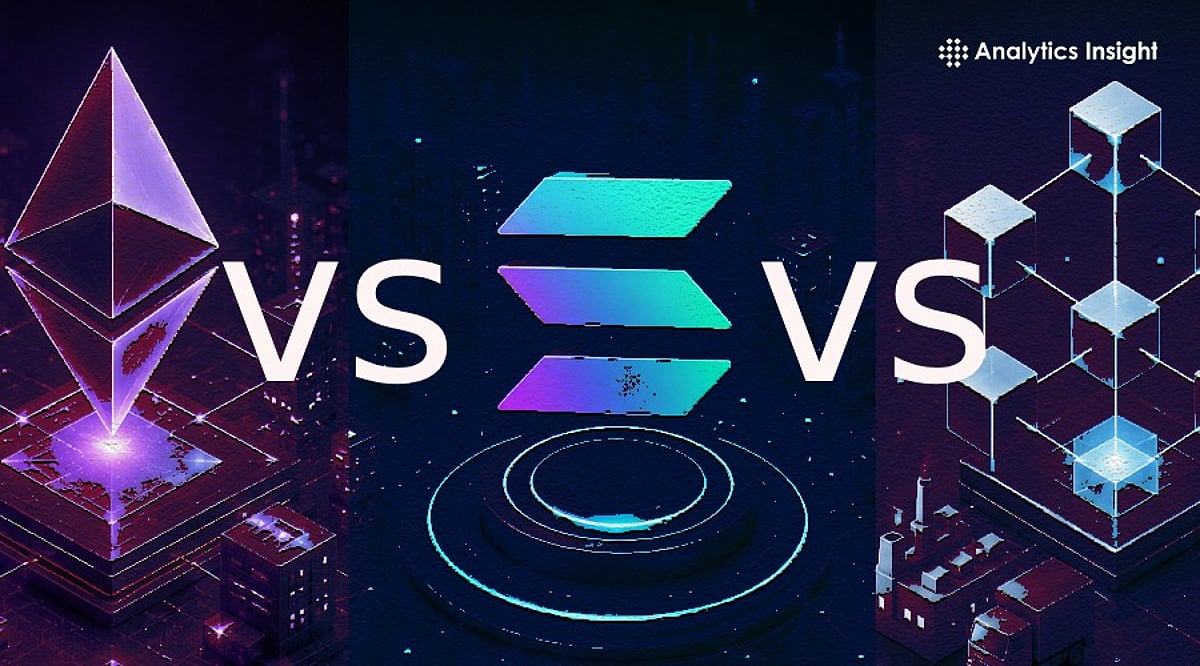
  • Enterprise Blockchain Showdown 2026: Ethereum, Solana, and Hyperledger Compared

    Enterprise Blockchain Showdown 2026: Ethereum, Solana, and Hyperledger Compared

    Enterprise blockchain adoption has surged as businesses choose Ethereum for security, Solana for speed, and Hyperledger for private networks, making blockchain a core part of enterprise infrastructure.

    Overview

    • Ethereum: Top choice for secure enterprise blockchain applications and tokenized finance.
    • Solana: Leads in transaction speed with over 65,000 TPS and extremely low fees.
    • Hyperledger: Dominates private enterprise networks where compliance and data control matter most.

    Blockchain technology has become a major part of business infrastructure. A few years ago, companies mainly tested blockchain through small experiments. Today, large companies, banks, healthcare firms, supply chain networks, and even governments use blockchain for real business operations.

    The enterprise blockchain market has grown quickly this year. Reports show that blockchain use in supply chain systems alone may cross $3.3 billion in 2026. Another fast-growing area is tokenized real-world assets (RWAs). This sector saw almost 589% growth entering 2026, which shows how serious enterprise adoption has become.

    As more companies move toward blockchain, three major platforms dominate the discussion: Ethereum, Solana, and Hyperledger. Each platform solves different business problems.

    Ethereum Remains the Enterprise Leader

    Ethereum continues to hold the strongest position in enterprise blockchain with its maturity and trust factor. Most large companies that build blockchain-based systems still prefer Ethereum because it has existed longer and has proven reliability.

    One of Ethereum’s biggest strengths is its huge developer ecosystem. Current estimates show more than 31,800 active developers working within the Ethereum ecosystem. This number remains far ahead of most blockchain competitors. For enterprises, this means easier access to engineers, better support systems, and stronger technical infrastructure.

    Ethereum has also improved its technology this year. Developers now focus on Verkle Trees architecture, a major network upgrade that helps reduce proof sizes and makes the network more efficient.

    Large financial institutions continue to choose Ethereum for tokenized securities, cross-border payments, digital identity systems, and decentralized finance products.

    The biggest weakness still comes from network speed and transaction cost. Ethereum remains slower than newer blockchain networks, especially when huge transaction volume enters the system. Even with these challenges, Ethereum remains the safest enterprise option for long-term business use.

    Solana Focuses on Speed and Scale

    Solana is challenging Ethereum and many other platforms by establishing a faster and less expensive option to serve businesses’ needs.

    Theoretically, Solana can handle 65,000 transactions per second on the network. In production, Solana has consistently processed over 3,400 transactions per second. The average cost per transaction on Solana is under $0.01, making it an attractive option for large-scale applications.

    Another area of rapid growth for Solana has been the developer ecosystem. Over the past few weeks alone, Solana has added over 7,600 new developers and overall ecosystem growth has exceeded 80% year on year.

    This extraordinary growth has prompted many businesses to build on Solana for payment systems, gaming solutions, high-volume applications, and IoT devices.

    Some companies continue to shy away from Solana because it previously experienced network outages. Businesses need reliable infrastructure at all times, so reliability is a major concern for many enterprises. While Solana is clearly superior in performance, many businesses still prefer Ethereum to ensure stability.

    Hyperledger Dominates Private Enterprise Networks

    Hyperledger takes a different approach compared to Ethereum and Solana. While public blockchains allow open participation, Hyperledger focuses on private blockchain systems where only approved participants enter the network. This makes Hyperledger highly attractive for enterprises that need control, privacy, and regulatory compliance.

    Hyperledger Fabric is currently the most widely used framework for permissioned enterprise blockchain systems. Recent improvements in Fabric 2.5+ have made the network faster while keeping strong security standards.

    A major real-world example comes from De Beers and its Tracr platform, built on Hyperledger infrastructure. The platform has now registered more than 5 million rough diamonds, representing almost two-thirds of company production value.

    Large organizations use Hyperledger for supply chain tracking, healthcare data systems, interbank settlements, and government record management. The biggest advantage comes from privacy and governance. The main drawback comes from reduced decentralization, since the network does not operate like public blockchains.

    Which Blockchain Wins in 2026?

    Depending on the business needs, the choice of platform varies:

    • Ethereum: Best for finance, tokenization, and enterprise apps where security and trust are key. Its developer ecosystem provides a huge competitive advantage.
    • Solana: Ideal when transaction speed is a priority. Extremely low fees and high throughput make it suitable for companies executing many transactions.
    • Hyperledger: Preferred for private enterprise systems requiring high control over access, data visibility, and regulatory compliance.

    The Future of Enterprise Blockchain

    The blockchain industry no longer focuses on one network. Companies now choose platforms based on their specific business model instead of following a single trend. Enterprise blockchain has moved far beyond early experimentation. It now serves as real infrastructure for global business operations.

    Frequently Asked Questions

    1. Which blockchain is best for enterprise use in 2026? Ethereum leads overall with security, trust, and the largest developer ecosystem.
    2. Why do companies choose Solana over Ethereum? Solana offers faster transaction speed and lower fees for high-volume applications.
    3. What makes Hyperledger different from Ethereum and Solana? Hyperledger focuses on private permissioned blockchain networks instead of public decentralized systems.
    4. How big is the enterprise blockchain market in 2026? Supply chain blockchain infrastructure alone is expected to cross $3.3 billion in market value.
    5. Is blockchain still experimental for enterprises? No. Blockchain has become real infrastructure for finance, healthcare, supply chains, and government systems.
  • Top Polkadot Projects to Watch in 2026: DeFi, RWA, Privacy, and Infrastructure Growth

    Top Polkadot Projects to Watch in 2026: DeFi, RWA, Privacy, and Infrastructure Growth

    Polkadot’s ecosystem is experiencing robust growth in 2026, driven by expansion in decentralized finance (DeFi), rising tokenization of real-world assets (RWAs), privacy-focused blockchain applications, and major network upgrades that enhance adoption and long-term utility.

    Overview:
    Hydration and Acala lead Polkadot’s rapidly growing DeFi sector. Centrifuge provides strong exposure to the booming real-world asset tokenization market. Manta, Phala, and Hyperbridge strengthen privacy, security, and cross-chain infrastructure.

    The Polkadot ecosystem has entered a pivotal phase. Following the launch of Polkadot 2.0, the network now offers improved speed, stronger scalability, and smoother cross-chain communication. This major upgrade has shifted market attention from early blockchain experiments toward projects solving real-world problems.

    The greatest growth within the ecosystem is concentrated in three major sectors: decentralized finance, real-world assets, and privacy-focused applications. Several projects now stand out with strong development activity, rising adoption, and major updates across the network.

    Hydration Becomes a Strong DeFi Project

    Hydration has emerged as one of the most important DeFi projects within the Polkadot ecosystem. The platform acts as a central liquidity hub where users can swap assets, provide liquidity, and access various financial services in one place. Its greatest strength lies in Polkadot’s cross-chain technology, enabling assets from different parachains to move more seamlessly across the network. Many analysts now view Hydration as one of the strongest DeFi protocols built on Polkadot. As blockchain markets continue to expand, many ecosystems struggle with fragmented liquidity across chains. Hydration addresses this by creating greater capital efficiency and easier asset movement. Developer interest and user activity have steadily risen throughout the year.

    Acala Continues to Lead Financial Infrastructure

    Acala remains one of the oldest and most established financial projects on Polkadot. The platform offers various blockchain financial services, including stablecoins, lending systems, decentralized trading, and liquid staking solutions. Despite strong competition from newer projects, Acala maintains its important position in the ecosystem. The biggest focus has shifted toward liquid staking, which allows DOT holders to continue earning staking rewards while using their assets in DeFi applications. This has become more significant after Polkadot introduced major tokenomics changes in March 2026, altering validator rewards and staking economics across the entire network. As a result, protocols like Acala may experience stronger capital inflows in the coming months.

    Centrifuge Expands Real-World Asset Adoption

    Centrifuge has established itself as a leading contender in the rapidly expanding real-world asset marketplace. The project focuses on tokenizing traditional financial assets such as invoices, private debt, treasury-backed instruments, and trade receivables, enabling these assets to participate in blockchain-based lending. The RWA sector has become one of the fastest-growing areas in cryptocurrency. As of 2026, major financial institutions are increasingly interested in tokenization of finance, as blockchain offers transparency and high-speed settlement. By creating a direct pathway for Polkadot to access this growing market, Centrifuge has emerged as one of the year’s most significant long-term ecosystem projects.

    Manta Network Strengthens Privacy Technology

    Manta Network has established itself as one of the strongest privacy-focused blockchain projects on Polkadot. The project uses advanced zero-knowledge proof technology, enabling confidential transactions while maintaining secure network verification. Privacy has become a major topic because institutions and enterprise users need blockchain systems that protect sensitive financial data. Manta addresses this challenge by allowing selective data sharing without exposing complete transaction details. As blockchain adoption grows among larger institutions, privacy technology like Manta’s has become far more valuable.

    Phala Network Brings Private Cloud Computing

    Phala Network has gained significant attention for its focus on confidential computing. Unlike traditional privacy projects that primarily protect transaction data, Phala enables secure off-chain computation through trusted execution environments. This creates a distinct use case within the Polkadot ecosystem. The project opens new opportunities in sectors such as artificial intelligence, healthcare systems, financial services, and private smart contract execution. As blockchain and AI technology converge, confidential computing solutions have become an important part of future Web3 infrastructure. This trend ensures Phala continues to attract strong market attention.

    Hyperbridge Pushes Cross-Chain Expansion

    Hyperbridge has quickly become one of the most popular infrastructure projects on Polkadot. The project focuses on secure cross-chain communication via zero-knowledge cryptographic proofs (ZK proofs) instead of traditional validator-based bridges. Hyperbridge processed over 10 million finality proofs and managed approximately $92 million worth of transactions in 2026, demonstrating strong ecosystem adoption. However, in April 2026, a security exploit occurred involving bridged DOT pools, resulting in approximately $2.5 million in losses, prompting large-scale security reviews throughout the ecosystem. Despite this incident, Hyperbridge remains a vital component of Polkadot’s long-term interoperability strategy.

    Final Outlook for Polkadot in 2026

    Polkadot has entered a much stronger phase. The ecosystem now focuses less on early blockchain experiments and more on real products with practical value. DeFi projects like Hydration and Acala continue to expand financial activity across the network. Centrifuge provides exposure to the fast-growing real-world asset market. Privacy-focused projects such as Manta and Phala support enterprise blockchain adoption, while Hyperbridge helps improve cross-chain infrastructure. With the arrival of Polkadot 2.0, major tokenomics changes in March 2026, and stronger developer activity across the ecosystem, these projects stand out as some of the most important names to watch as Polkadot moves toward its next stage of growth.

    FAQs

    1. Why is Polkadot important in 2026? Polkadot 2.0 upgrades have improved network speed, scalability, and ecosystem growth.
    2. Which is the top DeFi project on Polkadot? Hydration and Acala remain the strongest DeFi projects in the ecosystem.
    3. What is Centrifuge used for? Centrifuge helps convert real-world assets like invoices and credit markets into blockchain assets.
    4. Which Polkadot project focuses on privacy? Manta Network and Phala Network are major privacy-focused blockchain projects.
    5. Why are these projects worth watching? They represent the strongest sectors driving Polkadot adoption in 2026.
  • How to Invest $500 in Crypto Today: A Balanced Portfolio for June 2026

    How to Invest $500 in Crypto Today: A Balanced Portfolio for June 2026

    With crypto markets showing signs of recovery in June 2026, a carefully planned $500 investment can balance stability and growth. Rather than betting everything on a single coin, spreading funds across five strong projects—Bitcoin, Ethereum, Solana, Chainlink, and Hyperliquid—offers a mix of safety, innovation, and upside potential.

    Bitcoin (BTC) – The Safe Foundation

    Bitcoin remains the most trusted crypto asset, with a market cap near $1.28 trillion. Institutional demand through spot ETFs continues to support its price, making it a reliable anchor for any portfolio. Investing $175 in BTC provides a stable base and reduces overall risk.

    Ethereum (ETH) – Technology Leader

    Ethereum powers thousands of dApps, DeFi platforms, and NFTs. Recent network upgrades have improved speed and scalability. At around $1,730, ETH offers strong value. A $125 allocation gives exposure to the second-largest blockchain without overexposure.

    Solana (SOL) – High-Growth Contender

    Solana’s fast, low-cost transactions attract developers in gaming and DeFi. With a market cap above $42 billion and price near $74, SOL offers significant growth potential—though with higher volatility. Allocating $100 taps into this upside while keeping the rest of the portfolio stable.

    Chainlink (LINK) – Infrastructure Play

    Chainlink connects smart contracts to real-world data, a critical function for tokenization and DeFi. As the ecosystem grows, LINK benefits from its role as infrastructure. A $50 position adds diversification and long-term value.

    Hyperliquid (HYPE) – Aggressive Speculation

    Hyperliquid has surged on the rise of decentralized futures trading. This newer token carries higher risk but also the chance for outsized gains. A $50 bet suits investors willing to accept volatility for potential rapid returns.

    Final Portfolio Allocation

    • Bitcoin (BTC): $175 – Stability and institutional trust
    • Ethereum (ETH): $125 – Strong technology and adoption
    • Solana (SOL): $100 – Fast network growth
    • Chainlink (LINK): $50 – Essential blockchain infrastructure
    • Hyperliquid (HYPE): $50 – High-risk, high-reward

    While the crypto market remains volatile after Bitcoin’s 50% correction earlier in 2026, clearer regulations, rising stablecoin adoption, and growing institutional participation strengthen long-term confidence. Projects with real use cases and solid technology are best positioned for the second half of the year.


    Frequently Asked Questions

    1. Why should I not invest all $500 in one cryptocurrency?
    Diversification protects your portfolio from major losses if a single coin underperforms.

    2. Is Bitcoin still a good investment in 2026?
    Yes, Bitcoin remains the strongest long-term crypto asset due to institutional adoption and market dominance.

    3. Why is Ethereum considered a strong choice?
    Ethereum powers smart contracts, DeFi, NFTs, and thousands of blockchain applications worldwide.

    4. Is Solana riskier than Bitcoin and Ethereum?
    Yes, Solana has higher volatility but also stronger growth potential thanks to its fast, low-cost network.

    5. Why is Hyperliquid considered an aggressive investment?
    It’s a newer project tied to decentralized futures trading, offering higher upside but significantly greater short-term risk.

  • Ethereum Price Pressures Mount: ETH Approaches $1,500 as Exchange Inflows Rise

    Ethereum Price Pressures Mount: ETH Approaches $1,500 as Exchange Inflows Rise

    Ethereum fell back toward the $1,500 area after sellers rejected another recovery attempt near a major resistance zone. Rising exchange inflows and a weak chart structure continue to support a cautious market outlook.

    Ethereum Remains Trapped Below Major Resistance

    Ethereum continues to form lower highs and lower lows on the daily chart. The pattern keeps the broader trend bearish and shows that sellers still control price direction. ETH also trades below its 100-day and 200-day moving averages. In addition, the asset remains under a long-term descending trendline that has limited previous recovery attempts.

    The latest rebound stalled below the $1,720 to $1,780 supply zone. Sellers then pushed ETH back toward the $1,460 to $1,560 demand area. Buyers have responded near that support region, but the reaction remains limited. ETH has not reclaimed the resistance range or changed the wider bearish structure.

    Until price moves above $1,780 with sustained strength, market rallies may remain corrective. A break below current demand could expose Ethereum to another downward move. Can buyers defend the $1,500 region long enough to challenge the resistance that has repeatedly stopped each recovery?

    Four-Hour Chart Shows a Fragile Recovery

    The four-hour chart reflects the same pressure across a shorter timeframe. Sellers rejected ETH near $1,720 to $1,780 before driving it toward the lower range boundary. Ethereum later recorded a modest rebound from the $1,500 to $1,530 area. That response shows buyers remain active around the market’s immediate demand zone.

    Even so, ETH still trades near the bottom of its broader consolidation range. Each recovery attempt has also formed a lower high, which keeps short-term momentum weak. For now, Ethereum may continue moving between about $1,520 and $1,750. The lower boundary remains important because a breakdown could increase selling pressure.

    By contrast, a move above the upper range would improve the short-term structure. It could also allow buyers to begin another recovery attempt toward higher resistance.

    Exchange Inflows Add Pressure Near Support

    On-chain data also shows a rise in Ethereum exchange netflows. The 14-day moving average has turned sharply positive during recent trading sessions. Higher netflows mean more ETH is moving onto exchanges. Holders may transfer assets for trading, selling, or reducing market exposure.

    Such inflows do not guarantee a price decline. Still, they add supply pressure while Ethereum trades close to a major support region. The increase has occurred as ETH moved back toward the $1,500 zone. That combination leaves the market sensitive to further weakness around current demand.

    Price stability near support and lower exchange inflows would reduce immediate pressure. Until then, Ethereum remains below key averages and the main resistance zone.

    Conclusion

    Ethereum remains under bearish pressure as sellers defend the $1,720 to $1,780 resistance zone and exchange inflows increase. Buyers must protect support near $1,500 to prevent deeper losses. Traders should watch for either a confirmed support breakdown or a strong resistance reclaim before assessing the next move.

  • Bitcoin Drops Below $60K as $700M in Long Liquidations Rock the Crypto Market

    Bitcoin Drops Below $60K as $700M in Long Liquidations Rock the Crypto Market

    Bitcoin tumbled below the $60,000 mark on June 24, triggering a cascade of liquidations that erased over $700 million in long positions. The sharp sell-off intensified market fear and wiped out speculative bets that had attempted to buy the dip.

    Liquidations Deepen Pressure Across Crypto Markets

    The forced exit of leveraged traders weighed heavily on Bitcoin as it weakened below the psychologically important $60,000 level. Further declines appeared likely as selling pressure continued to ripple through the broader cryptocurrency market. According to AMBCrypto, Bitcoin open interest had already fallen from its 2025 highs, yet volatility remained elevated as traders scrambled to adjust to rapid price swings.

    At the same time, sustained outflows from spot Bitcoin exchange-traded funds (ETFs) reflected weakening investor confidence. The Coinbase Premium Index turned negative for more than a month, signaling limited demand from U.S. investors. Consequently, spot buying provided little support as Bitcoin extended its slide.

    Demand and Miner Flows Add to Supply Concerns

    Crypto analyst Ali Martinez noted that Bitcoin’s apparent demand has remained negative for 208 consecutive days. This metric tracks whether spot demand can absorb newly mined supply and older coins moving onto exchanges. Analyst Axel Adler Jr. added that net realized profit and loss has stayed negative for five months when measured using a 90-day moving average.

    Such prolonged realized losses mirror conditions seen during previous bear markets, particularly in mid-2022. Meanwhile, CryptoQuant analyst PelinayPA observed that the foundation for the latest losses began forming in February. Bitcoin’s Miner Position Index rose between March and June.

    Although the index stood at minus 0.15—still negative—it indicated that miners were transferring relatively more Bitcoin toward cryptocurrency exchanges. Miner-to-exchange flows also increased during the same period. Together, these metrics suggest miners have been preparing more Bitcoin for potential selling.

    Bitcoin’s realized price now sits at $53,888, representing the market’s average acquisition cost. This level is widely viewed as the next major support zone and a likely price target. The key question remains whether buyers can absorb the rising supply before Bitcoin retests its realized price.

    Grantham Renews Long-Running Bitcoin Criticism

    GMO co-founder Jeremy Grantham reiterated his criticism of Bitcoin during an appearance on CNBC’s Squawk Box on Friday. He described it as a speculative asset with no intrinsic value and predicted that Bitcoin would gradually lose relevance over several decades. Grantham questioned its practical purpose and performance during a broader bull market.

    He argued that Bitcoin has failed to provide a stable store of value, citing its latest price decline despite strength in the wider economy. Grantham contrasted it with gold, which he said has still delivered solid gains even after retreating from its previous highs. He also noted that consumers rarely use Bitcoin for everyday purchases or major commercial transactions, and linked its use to illegal money transfers.

    Bitcoin has declined by at least 70% from its peak during every previous market cycle. It currently trades about 52% below its October high and remains under $60,000.

    Conclusion

    Bitcoin’s fall below $60,000 sparked $700 million in long liquidations as weak spot demand, ETF outflows, and rising miner transfers intensified selling pressure. With the realized price near $53,888 emerging as key support, traders should closely monitor demand and exchange flows before making market decisions.