Category: Cryptocurrency

  • Dogecoin and HYPE Suffer Steep Weekly Losses as Bitcoin Clings to $60K Support

    Dogecoin and HYPE Suffer Steep Weekly Losses as Bitcoin Clings to $60K Support

    Dogecoin and Hyperliquid’s HYPE token posted the steepest weekly losses among major cryptocurrencies, falling 9.6% and 9.9% respectively, as investors rotated capital toward equities and away from digital assets. Bitcoin showed relative resilience, recovering above $60,000 after briefly testing the $58,800 region, but broader market pressure from ETF outflows, a hawkish Federal Reserve, and a strong dollar kept sentiment subdued.

    Bitcoin Rebounds Amid Persistent Selling Pressure

    Bitcoin fell 5.3% over the week to around $60,345, but buyers stepped in each time the price approached $58,000, pushing it back above $60,000. FxPro chief market analyst Alex Kuptsikevich attributed the sharp declines to margin position liquidations, noting that pending buy orders then supported the recoveries. He warned that institutional investors could continue reducing crypto exposure to protect balance sheets, potentially triggering further liquidation-driven swings.

    US spot Bitcoin ETFs recorded outflows during the week, while the Federal Reserve’s hawkish stance and a strengthening dollar added headwinds. Bitcoin also remained near its 200-week moving average, a level historically associated with extended periods of weak market performance.

    Dogecoin Breakdown Signals Further Downside Risk

    Dogecoin extended its broader decline with a 4% loss in the latest 24-hour period, now trading about 90% below its all-time high. The memecoin broke below a sideways trading range that had held since February, with a retest near $0.08926 confirming the breakdown. It also remained below its 200-day moving average, keeping sellers in control and maintaining a bearish structure.

    Shorter timeframes showed Dogecoin repeatedly failing below a descending trendline, while the Chaikin Money Flow reading stood at negative 0.17, signaling continued capital outflows. However, net trading volume surged 98.85%, suggesting some buyer interest, and momentum readings began turning higher despite bearish control.

    Analyst Ali Martinez noted that the TD Sequential indicator produced a daily buy signal, suggesting the decline could pause if Dogecoin maintains support above $0.073. A move toward $0.081 is possible if that level holds, but a drop below $0.073 would invalidate the signal and reinforce the bearish outlook.

    Equity Rotation Leaves Crypto Without Fresh Capital

    The S&P 500 finished nearly flat, but the equal-weighted index hit a record high as investors rotated out of large-cap tech and semiconductors into other sectors. Falling oil prices supported broader market sentiment, yet cryptocurrencies failed to attract any of that rotating capital. Concerns over elevated AI stock valuations and weakening digital asset conditions kept investors selective.

    Conclusion

    Dogecoin and HYPE led the week’s crypto losses as Bitcoin held near $60,000 despite ETF outflows, institutional selling, and a strong dollar. Dogecoin’s bearish structure points to continued risk unless $0.073 support holds. Traders should monitor support levels, fund flows, and broader market sentiment before taking new positions.

  • XRP Hovers Near $1 as Ripple Broadens Blockchain Finance Strategy

    XRP Hovers Near $1 as Ripple Broadens Blockchain Finance Strategy

    XRP is trading near the $1 mark after falling roughly 70% from last year’s highs, even as Ripple continues to expand its blockchain infrastructure and financial services. The world’s sixth-largest cryptocurrency faces weak sentiment and renewed doubts about its recovery, but Ripple’s business is moving well beyond its original cross-border payments focus.

    Ripple Expands Beyond Cross-Border Payments

    Ripple initially built its business around helping financial institutions move money across borders faster and at lower cost. It has since widened its operations across blockchain finance. The company now works in real-world asset tokenization, which places traditional financial assets on blockchain networks. Financial firms are also exploring faster settlement and lower operating expenses.

    At the same time, Ripple has formed relationships with major institutions and reportedly built a business valued at nearly $50 billion. It has also invested billions in acquisitions and partnerships. These investments aim to create more services across Ripple’s broader ecosystem. Increased activity could support greater network use and additional demand over time.

    AI Payments Add Another Possible Growth Area

    Ripple has also explored possible links between blockchain payments and artificial intelligence. Some industry observers expect AI agents to use blockchain networks for automated transactions. Those observers have mentioned XRP Ledger as one possible settlement layer for such payments. The opportunity remains speculative and has not yet become a proven demand source.

    Even so, the discussion reflects Ripple’s search for applications beyond traditional payment services. The company continues positioning itself as a wider blockchain infrastructure provider. Its long-term strategy now spans payments, tokenization, acquisitions, and financial services. Each area could increase activity across the XRP ecosystem if adoption expands.

    Large Supply Complicates XRP Price Forecasts

    XRP price forecasts vary widely, ranging from a return toward $4 to aggressive projections between $20 and $100. Each target requires different adoption and investment levels. About 62 billion XRP coins remain in circulation. At $4 per token, XRP’s market value would approach $250 billion under the current supply. That valuation would place XRP above the current market value of many leading crypto projects. Higher targets would require far larger amounts of new capital.

    Can Ripple’s expanding infrastructure create enough demand to support a lasting XRP recovery? Many investors view a gradual $1 to $4 range as a more realistic multi-year scenario. Longer-term performance may depend on blockchain finance adoption, regulatory developments, and competition. Real-world asset tokenization remains early, although financial institutions continue investing in the sector.

    Conclusion

    XRP remains under pressure near $1, yet Ripple continues expanding across payments, tokenization, and blockchain infrastructure. Its broader strategy may support future network demand, although XRP’s large circulating supply limits extreme price projections. Investors should track adoption, regulation, and ecosystem growth before assessing its long-term potential.

  • Meta Reports Talks with Polymarket and Kalshi as It Develops Arena Prediction App

    Meta Reports Talks with Polymarket and Kalshi as It Develops Arena Prediction App

    Meta is pursuing a dual-track strategy to enter the prediction market space, simultaneously testing its own internal product, Arena, while exploring potential partnerships with established platforms Polymarket and Kalshi. CEO Mark Zuckerberg has reportedly instructed senior executives to engage in discussions with both operators, according to a New York Times report cited by The Block.

    The exploratory talks come just days after news broke that Zuckerberg had directed a small team to build Arena, a standalone prediction-market app separate from Facebook, Instagram, and WhatsApp. Insiders describe Arena as experimental yet a top company priority, suggesting Meta may choose to either launch its own platform, strike distribution deals, or pursue both options simultaneously.

    Meta’s Dual Strategy: Build and Partner

    Meta’s interest in prediction markets is not new. The company previously operated Forecast from 2020 to 2022, a points-based platform that allowed crowdsourced predictions but was shut down due to low usage and high manual question-selection costs. Arena represents Meta’s second known consumer prediction product and would likely use a similar points model, differentiating it from the real-money services offered by Polymarket and Kalshi.

    Even without cash trading, Arena could drive engagement, advertising opportunities, and valuable user-interest data. However, challenges remain regarding misinformation, market manipulation, sensitive event categories, and protections for younger users. Meta has not yet detailed how Arena would generate revenue.

    Prediction Market Landscape Grows

    If Meta secures a partnership, it would follow X (formerly Twitter), which chose Polymarket as its official prediction-market partner in June 2025. That integration placed live market probabilities and Grok-powered annotations directly in posts. A similar deal could put prediction markets across Meta’s massive social-media network, which reported 3.56 billion daily users in the first quarter of 2026.

    Meanwhile, Polymarket and Kalshi have expanded rapidly. Their combined event-contract trading volume exceeded $60 billion in 2026. Institutional market makers like Wintermute have provided liquidity. Kalshi raised $1 billion at a $22 billion valuation in May and reportedly seeks a $40 billion valuation. Both platforms operate under CFTC regulation: Kalshi has been a designated contract market since 2020, and Polymarket’s U.S. business also uses a CFTC-regulated designated contract market.

    What’s Next?

    Meta has not announced any agreements or a public launch for Arena. The talks remain exploratory, and neither Polymarket nor Kalshi has commented publicly. Market participants should watch for official details on Arena’s structure, distribution model, and regulatory compliance. The company’s renewed interest comes after a quarterly decline in daily users across its Family of Apps, which Meta attributed to internet disruptions in Iran and WhatsApp restrictions in Russia.

    Prediction markets allow participants to trade contracts tied to future events, with prices reflecting market-implied probabilities across politics, monetary policy, sports, entertainment, and financial developments. As Meta explores both internal development and external partnerships, the prediction market industry’s growth trajectory appears set to intersect with mainstream social media.

  • 4 Critical Risks of Investing in Dogecoin at $0.07 in 2026

    4 Critical Risks of Investing in Dogecoin at $0.07 in 2026

    Dogecoin is trading near $0.07 in 2026, and the question of whether it’s a buying opportunity is back in circulation. After many ups and downs over the last few years, the popular meme coin now trades close to $0.07, and many investors want to know whether this price offers a good buying opportunity. The fan base is still there, and the market cap is still large. But the risks are real.

    Dogecoin’s Position in 2026

    As of June 2026, Dogecoin trades between $0.072 and $0.075. Market cap sits near $11.4 billion, keeping it in the top tier of digital assets. Over $800 million in DOGE changes hands daily.

    Despite this large market presence, Dogecoin has struggled during the first half of 2026. The overall crypto market has faced heavy pressure, and Dogecoin has followed the same trend. Recent data shows the coin has fallen more than 10% in the last seven days and nearly 24% over the last month. This sharp decline shows how quickly market sentiment can change.

    At the same time, some technical analysts believe support has formed near $0.073, and a short-term recovery toward $0.081 remains possible if buyers return. Still, price charts alone do not remove the risks connected to this cryptocurrency.

    Risk One: Price Volatility Stays Extremely High

    One of the biggest concerns with Dogecoin remains its extreme price volatility. Large price movements continue to happen within very short periods. It is not unusual for DOGE to rise or fall by 10% to 20% in just a few days, which makes the coin highly unpredictable.

    The recent 24% monthly decline shows this clearly. A coin that loses such a large percentage of value in a short time creates uncertainty for investors who want long-term growth. Unlike traditional investments, Dogecoin prices often move based on market excitement instead of strong financial fundamentals.

    Risk Two: Social Media Still Controls Price Movement

    Dogecoin’s value is influenced largely by social media activity in 2026; however, this has not changed since it was first launched in 2013.

    Unlike other major cryptocurrencies that gain value for their advancements in technology or acceptance as payment, multiple companies have been established on the Dogecoin blockchain (beyond Reddit). Doge often responds dramatically to social media interest surrounding the coin (i.e., celebrity endorsements and viral conversations on Twitter).

    Earnings from Doge have significantly increased since it was created; Elon Musk has made several public statements that created many ‘Doge rallies’. The official Dogecoin Twitter account even joked about the price falling, reflecting the link between Doge and its community.

    Such price fluctuations continue to create drama within Doge as often market prices are based on speculative buying from speculation about the excitement around new projects, not based on business use.

    Risk Three: Limited Use Cases Hurt Future Growth

    Large crypto networks such as Ethereum and Solana support smart contracts, decentralized finance, NFT markets, and many advanced blockchain services. Dogecoin, on the other hand, still mainly works as a payment coin and internet tipping currency.

    Although development on the network continues, progress remains slower compared with competing cryptocurrencies. The project has not built the same large ecosystem that many newer blockchain platforms already have.

    Risk Four: Unlimited Supply Creates Long-Term Pressure

    Bitcoin has a fixed supply limit of 21 million coins, which helps create scarcity. Dogecoin works differently. The network creates nearly 10,000 new DOGE every minute, which adds billions of new coins into circulation every year.

    Recent reports show mining infrastructure expansion projects continue to support Dogecoin mining activity. While this strengthens the network itself, it also means even more coins continue to enter the market over time.

    Why This Matters

    This discussion highlights the widening divide between speculative community assets and utility-driven blockchains. As Dogecoin hovers around the $0.07 baseline amid broader crypto market pressure, its performance tests whether pure community sentiment and high liquidity can sustain an $11 billion valuation without traditional ecosystem utility or supply caps.

    Final Thoughts

    Dogecoin remains one of the most recognized cryptocurrencies in the world. Strong community support, high market liquidity, and massive public awareness continue to keep it relevant in 2026. At the current price near $0.07, short-term gains remain possible if the broader crypto market recovers.

    Extreme price volatility continues to create uncertainty. Heavy dependence on social media hype makes price action difficult to predict. Limited real-world utility compared with newer blockchain networks raises questions about long-term growth. Most importantly, the unlimited supply system creates constant pressure that could restrict future price increases.

    FAQs

    1. Is Dogecoin a smart investment in 2026? Dogecoin offers high liquidity for short-term traders looking to capture quick market bounces. However, it remains a highly speculative, high-risk asset for long-term investors due to its structural inflation and heavy reliance on social media hype over fundamental utility.
    2. What is Dogecoin’s current market standing? As of June 2026, Dogecoin trades within the $0.07 to $0.08 range. Despite a recent monthly pullback of over 24% driven by broader crypto market declines, it maintains a top-tier market capitalization of roughly $11.4 billion and robust 24-hour trading volumes exceeding $800 million.
    3. What are the primary risks of buying DOGE at $0.07? Investors face four main hurdles: extreme short-term price volatility, an unpredictable dependence on viral social media trends and celebrity endorsements, a lack of built-in utility like smart contracts or decentralized finance applications, and a continuous inflationary supply.
    4. How does Dogecoin’s supply model impact its long-term value? Unlike Bitcoin’s fixed cap of 21 million coins, Dogecoin has an unlimited supply system that issues 10,000 new coins into circulation every single minute. This translates to roughly 5 billion new DOGE added annually, requiring constant, massive inflowing demand just to keep prices steady.
    5. What technical price levels are analysts watching for a recovery? While the immediate trend reflects a broader market sell-off, technical support has solidified right around the $0.072 to $0.073 range. If the crypto market stabilizes, a short-term bounce toward $0.081 is possible.
  • Remittix Opens Holder Registration Ahead of RTX Token Distribution and Launch Price Reveal

    Remittix Opens Holder Registration Ahead of RTX Token Distribution and Launch Price Reveal

    Remittix has officially opened holder registration as the project advances toward the upcoming distribution phase of its RTX token. This step gives presale buyers a clear action to complete before the next major launch update.

    The registration page is now live on the official Remittix website. RTX holders are encouraged to submit their wallet details and stay connected to future updates. As anticipation builds around the launch price reveal, holder registration has quickly become a key talking point across the Remittix community.

    For users who purchased RTX during the presale, the message is straightforward: token distribution is approaching, and holders should ensure their wallet registration is completed through the official platform.

    Holder Registration Is Now Open

    The Remittix holder registration process is designed to be simple and direct. Users can visit the official Remittix airdrop registration site, connect their wallet, submit their wallet address, and complete the registration page.

    There is also an optional section where users can add notification details to receive future updates related to the RTX airdrop and token distribution. Once the process is complete, the page confirms successful registration.

    This step is especially important for presale holders because the Remittix airdrop refers to the distribution of RTX tokens purchased during the presale. It is not a separate free-token giveaway but the process linked to getting purchased RTX tokens ready for distribution.

    Launch Price Reveal Remains a Major Focus

    The opening of holder registration comes as the Remittix community continues to await the official launch price reveal. This reveal is expected to be one of the biggest updates before RTX enters its next stage, helping shape expectations around the token’s launch phase. With registration now open, holders have a direct action to take before that announcement arrives.

    As the project moves closer to distribution, community attention is likely to stay focused on three key areas: registered wallets, launch price details, and the next steps after token release.

    Live Platform Strengthens the Remittix Story

    Remittix is also building interest around its live crypto-to-fiat platform. The platform enables users to send cryptocurrency while recipients receive fiat directly into bank accounts. Multiple community members have reportedly received fiat payments through the Remittix system, adding a practical utility angle as the project moves toward token distribution and launch activity.

    For RTX holders, this latest registration update does not arrive in isolation. It comes alongside live platform progress, growing community attention, and a launch price reveal that remains firmly in focus.

    With holder registration now open, Remittix has given presale buyers a clear next step. RTX token distribution is moving closer, and holders who have not yet registered are encouraged to complete the process through the official Remittix site.

    Discover the future of PayFi with Remittix by checking out their project here:

    Disclaimer: This article is for informational purposes only and does not constitute investment advice. Cryptocurrencies are risky assets; always conduct your own research before investing.

  • XRP Tumbles to $1 Amid Crypto Sell-Off, Analyst Holds $9 Target on Long-Term Outlook

    XRP Tumbles to $1 Amid Crypto Sell-Off, Analyst Holds $9 Target on Long-Term Outlook

    XRP fell another 5% on the day and traded at $1.00 at press time as the wider crypto market sold off. Bitcoin also dropped below $60,000, triggering more than $600 million in liquidations within one hour. XRP longs accounted for over $40 million of that total, adding further pressure to already fragile prices.

    XRP Faces Heavy Selling

    As Bitcoin weakened, XRP moved lower with the rest of the sector. The wave of liquidations swept through the market, wiping out over $600 million in positions in just one hour. At the same time, financial analyst Celal Kucuker offered a much different view. With more than 20 years of market experience, Kucuker said XRP may still follow a larger technical path, suggesting this drop could be the setup for a much bigger move later.

    Kucuker’s Long-Term XRP Map

    Kucuker said he still sees one of the best scenarios for XRP on his chart. He placed the bottom near $0.86 to $0.87 and pointed to an upside target between $8 and $9. His chart uses XRP’s monthly timeframe, showing a repeating pattern of advances and corrections inside an ascending channel. Previous rallies reached the top of that structure before price cooled again.

    The chart also connects with a Bitcoin scenario near $54,000. Kucuker said XRP could bottom in the same area if Bitcoin follows that path. In a June 6, 2026 post, he called this the most realistic scenario for XRP.

    Key Levels and Timeline

    The weekly chart Kucuker shared tracks XRP from 2018 through 2031. It shows the current price near $1.041 and marks key Fibonacci levels and a long-term trend channel. The 0.618 Fibonacci level sits near $0.878, matching Kucuker’s $0.86 to $0.87 bottom zone. The chart also places the 1.618 extension near $9.042, lining up with his $8 to $9 target.

    The chart projects a rally from the support zone toward the upper target between December 2026 and February 2027. It also shows XRP moving within a rising channel that has held since 2018. Earlier tests of the lower boundary have often led to strong rebounds.

    Ripple Gains EU Regulatory Momentum

    While the XRP price weakened, Ripple received a regulatory update in Europe. Ripple Markets APAC Pte. Ltd. won preliminary approval under the EU’s MiCA framework from Luxembourg’s CSSF. The approval allows Ripple to offer regulated digital asset services across the European Union, including payments and stablecoins. The move gives Ripple a clearer path in one of the world’s largest financial regions.

    The approval may support long-term XRP utility and opens the door for banks, payment firms, and enterprises to use Ripple-related services with regulatory clarity. That backdrop arrives even as the token trades under pressure in the short term.

    What’s Next?

    XRP fell to $1 as Bitcoin slipped below $60,000 and liquidations swept through the crypto market. Despite the sharp decline, analyst Celal Kucuker maintained his long-term outlook, pointing to a potential bottom near $0.87, while Ripple’s MiCA approval added a notable regulatory development. Investors will now watch whether key support levels hold.

  • Ripple’s RLUSD Stablecoin Debuts in Japan: What XRP Holders Need to Know

    Ripple’s RLUSD Stablecoin Debuts in Japan: What XRP Holders Need to Know

    On June 24, 2026, Ripple officially launched its RLUSD stablecoin in Japan after receiving full regulatory approval from the country’s Financial Services Agency. This milestone marks a significant expansion for Ripple beyond its traditional cross-border payment network and into the fast-growing stablecoin market, which now exceeds $300 billion globally.

    RLUSD is a 1:1 US dollar-pegged stablecoin, fully backed by cash reserves, short-term US government bonds, and dollar deposits. Unlike volatile cryptocurrencies such as Bitcoin or XRP, RLUSD maintains a stable price, making it ideal for banks, corporations, and financial institutions that require predictable digital payments. Within a short period, RLUSD has reached a market capitalization of approximately $1.59 billion, with an annual growth rate close to 271%.

    Why Japan?

    Japan has long been one of Ripple’s strongest markets, thanks in part to a decade-long partnership with SBI Holdings, one of the country’s largest financial firms. The launch became possible after Japan introduced new regulations allowing foreign stablecoins to enter under strict compliance rules. Japan’s clear legal framework provides a safe and predictable environment for regulated crypto assets, giving Ripple a strategic foothold in Asia.

    Ripple Expands Beyond XRP

    With RLUSD, Ripple is diversifying its business model. Instead of relying solely on XRP for crypto transfers, the company can now offer stablecoin payments, asset settlement, corporate treasury systems, and digital banking services. This does not replace XRP; XRP remains the primary bridge asset for high-speed cross-border currency transfers on Ripple’s payment network. RLUSD provides an alternative for institutions that need zero price volatility.

    What This Means for XRP Investors

    Some investors initially worried that RLUSD might diminish XRP’s role. However, the opposite appears true. By drawing more traditional financial institutions into the Ripple ecosystem, RLUSD increases overall network activity. Higher transaction volume on the XRP Ledger can drive stronger demand for XRP over the long term. The launch positions Ripple to compete directly with major stablecoins like USDT and USDC, while emphasizing regulatory compliance—a key advantage for institutional adoption.

    Competition and Outlook

    The global stablecoin market is dominated by USDT and USDC, but Ripple’s focus on regulatory compliance sets RLUSD apart. Japan’s approval is a strong signal to other markets. With over 50% of Ripple’s On-Demand Liquidity volume already coming from Asia, RLUSD could expand into Singapore, South Korea, and other regional hubs, cementing Ripple’s position as a leading blockchain payment company.

    For XRP holders, this development is positive in the long run. RLUSD strengthens Ripple’s overall financial ecosystem, driving broader institutional adoption and network utility. Japan may be just the first step in a global stablecoin expansion that could become a major growth driver for Ripple and XRP.

    FAQs

    1. What is RLUSD?
    RLUSD is Ripple’s 1:1 US dollar-pegged stablecoin, fully backed by cash reserves and short-term US government bonds, designed for banks and institutions needing stable digital payments.

    2. Why did Ripple launch RLUSD in Japan?
    Japan offers clear crypto regulations and a strong partnership with SBI Holdings, enabling a compliant rollout approved by Japan’s Financial Services Agency.

    3. Does RLUSD replace XRP?
    No. RLUSD serves institutions requiring zero volatility, while XRP remains the high-speed bridge asset for cross-border transfers in Ripple’s payment network.

    4. How big is RLUSD right now?
    RLUSD has a market cap of about $1.59 billion with nearly 271% annual growth.

    5. Why does this matter for XRP investors?
    RLUSD attracts more traditional finance into the Ripple ecosystem, increasing network activity and potentially strengthening long-term demand for XRP.

  • Bitcoin ETF Assets Drop Below $73 Billion as BTC Falls Under $60,000 – June Outflows Hit $3.61 Billion

    Bitcoin ETF Assets Drop Below $73 Billion as BTC Falls Under $60,000 – June Outflows Hit $3.61 Billion

    US-listed spot Bitcoin exchange-traded funds recorded $696.3 million in net outflows on June 25 as Bitcoin slipped below the $60,000 mark. This marked the largest single-day withdrawal in June and extended the funds’ losing streak to six consecutive trading days.

    The latest outflow pushed June total withdrawals to $3.61 billion and brought year-to-date net outflows to approximately $4.6 billion. The data signals weakening demand from institutional investors as Bitcoin trades near its lowest level of 2026.

    ETF activity has become a key focus for market participants. These products previously provided steady buying pressure, but persistent redemptions are now returning coins to the market while investors reassess risk across cryptocurrencies and high-growth tech assets globally.

    Bitcoin ETF Withdrawals Accelerate in June

    The June 25 outflow surpassed the previous monthly high of $519.2 million recorded on June 2. Second-quarter net withdrawals now stand at roughly $4.07 billion, despite the funds attracting nearly $1.97 billion in April.

    Investors withdrew about $2.43 billion in May and another $3.61 billion in June, bringing the combined two-month total to approximately $6.04 billion. Spot Ether ETFs also posted about $81.87 million in outflows on the same day.

    BlackRock’s iShares Bitcoin Trust led second-quarter losses with roughly $2.01 billion in net outflows. The fund saw around $4.02 billion in withdrawals across May and June, reducing its net assets to about $44.43 billion. Fidelity’s Bitcoin fund recorded approximately $889 million in second-quarter withdrawals.

    ETF Assets Fall as Bitcoin Tests Lower Prices

    Total assets held by US spot Bitcoin ETFs dropped to about $72.6 billion, the lowest level since late 2024 and a decline of nearly 57% from the October 2025 peak of $169.5 billion.

    The drop coincided with Bitcoin losing roughly half its value from its October high. The cryptocurrency touched a 2026 low near $58,190 on Thursday before recovering toward $60,000.

    Separate wallet data shows the ETFs hold about 1.24 million BTC, with roughly 63,500 BTC leaving the products over the past 30 days. This has raised fresh questions about short-term institutional demand. Traders are watching whether daily ETF withdrawals slow near the $60,000 level and monitoring trading volume, derivatives funding rates, and open interest for signs of additional selling pressure.

    Strategy Slows Purchases as Funding Questions Grow

    Strategy bought about 3,600 BTC in June, down sharply from nearly 25,000 BTC in May and more than 50,000 BTC in April. Company filings also showed a net sale of 32 BTC earlier in the month, an unusual move during its long accumulation campaign.

    The company’s STRC preferred stock closed at $75.69 on Thursday, down 6.37% and well below its intended $100 benchmark. Some analysts have questioned whether Strategy should pause Bitcoin purchases and rebuild cash while market prices remain under pressure.

    CryptoQuant analysts expressed doubts about the company’s buying schedule and risk controls. Bitcoin supporter Samson Mow offered a different perspective, noting that STRC has a “self-repairing mechanism” when it trades below $100. He said Strategy can stop issuing new shares through its at-the-market program, which limits added supply.

    Bitcoin’s near-term direction may depend on whether ETF flows stabilize. Investors are also watching large technology shares, as stronger demand for artificial intelligence stocks has drawn capital away from other assets.

  • How Blockchain Is Powering the Rise of Machine-to-Machine Transactions

    How Blockchain Is Powering the Rise of Machine-to-Machine Transactions

    As AI agents, smart meters, and connected devices begin executing payments independently, Layer 2 blockchain networks and programmable smart contracts are creating the foundation for a high-speed, machine-driven global transaction economy.

    The Shift from Human-Mediated to Machine-Mediated Commerce

    The digital economy is undergoing a structural shift. Machines are no longer passive processors of human instructions. They are active economic agents, purchasing bandwidth, settling energy trades, and coordinating supply chains without waiting for human approval. This transition from human-mediated to machine-mediated commerce is accelerating faster than most enterprise frameworks have anticipated.

    The global machine-to-machine (M2M) payment market is projected to grow from $11.29 billion in 2026 to $54.95 billion by 2034, expanding at a compound annual growth rate of 21.9%. The infrastructure that enables this growth requires speed, security, and borderless settlement. Traditional banking systems cannot provide that at scale, but blockchain can.

    What Are Machine-to-Machine Transactions?

    M2M transactions describe financial exchanges that occur directly between devices, with no human authorizing each step. Sensors, autonomous vehicles, smart meters, and AI agents all participate. The challenge is that traditional payment infrastructure was designed for human actors operating within banking hours, geographic boundaries, and institutional oversight.

    Blockchain addresses each of these limitations. Its decentralized ledger allows devices to transact peer-to-peer, with cryptographic verification replacing institutional authorization. Smart contracts execute payment terms automatically when pre-set conditions are met. No clearinghouse is required.

    How Blockchain Supports M2M Payments

    Smart Contracts as Autonomous Payment Engines

    Smart contracts are self-executing code deployed on a blockchain. When a smart meter records energy consumption beyond a threshold, a smart contract triggers immediate payment to the grid operator. No invoice, no approval workflow. The machine reads the condition and settles it.

    This automation removes the human bottleneck entirely. In logistics, a delivery drone can pay a warehouse node for storage space. In manufacturing, a production line component can authorize its own maintenance purchase. The transaction logic is embedded in code, not in process.

    Layer 2 Solutions and Scalability

    A common concern with blockchain is throughput. With Layer 2 solutions and advancements in blockchain infrastructure, scalability is no longer a barrier — systems can handle millions of machine transactions per second, which is crucial for IoT ecosystems. Payment channels and sidechains batch transactions off-chain and settle the net result on the main chain, preserving security without sacrificing speed or increasing per-transaction cost.

    Institutional Infrastructure Is Now Catching Up

    Mastercard has introduced Agent Pay for Machines, designed to help businesses support secure, continuous machine payments across cards, accounts, and stablecoins. This signals that established payment networks are repositioning around autonomous transaction flows, not resisting them. Autonomous AI agents are already executing payments, purchasing APIs, accessing compute resources, and interacting with digital services without direct human intervention. The infrastructure shift is no longer theoretical.

    Benefits of M2M Transactions Through Blockchain

    • Decentralization: No single point of failure controls the transaction flow. Machines transact on equal footing without relying on a central authority.
    • Low-Cost Microtransactions: Traditional gateways make sub-cent transactions economically unviable. Blockchain Layer 2 networks bring that cost to near zero.
    • Immutable Audit Trail: Every transaction is permanently recorded. This is critical for regulatory compliance in energy, healthcare, and logistics.
    • Programmable Conditions: Payment logic is embedded directly in smart contracts, removing manual verification at every step.
    • Cross-Border Native: A sensor in Germany can pay a data node in Singapore without currency conversion delays or correspondent banking fees.

    Blockchain’s cryptographic protocols ensure secure transactions, while its transparent ledger provides an immutable record of payments, essential for auditing and accountability in automated systems. The industries already deploying M2M blockchain infrastructure include automotive, energy utilities, retail, and manufacturing. Each sector benefits from the same core property: the ability to move value between machines at the speed of data.

    What This Means for the Digital Economy

    “As machines begin to settle transactions autonomously, the financial plumbing underneath the digital economy changes entirely. Blockchain provides the only settlement layer that is fast enough, cheap enough, and open enough to serve a machine-native economy. Businesses that integrate this infrastructure early will hold a structural advantage over those still relying on human-mediated payment rails.”

    Final Words

    The expansion of machine-to-machine transactions through blockchain is not a speculative outcome. The market data, institutional infrastructure, and technical foundations are already in place. A market growing toward $54.95 billion by 2034 does not emerge without structural demand driving it. What remains is the question of execution speed. Organizations that treat blockchain-based M2M infrastructure as a long-term consideration risk falling behind those treating it as a present-day operational priority. The machines are ready. The networks are ready. The financial logic is written. The window for early-mover advantage is open, and it will not stay open indefinitely.

    Frequently Asked Questions

    What are machine-to-machine transactions?

    Machine-to-machine transactions are automated financial exchanges between devices, systems, or AI agents that occur without direct human authorization at each step.

    Why is blockchain suited for M2M payments?

    Blockchain provides decentralized settlement, smart contract automation, low transaction costs, and an immutable audit trail, all of which traditional banking infrastructure cannot deliver at machine speed.

    What is the projected size of the M2M payment market?

    The global M2M payment market is projected to grow from $11.29 billion in 2026 to $54.95 billion by 2034, at a CAGR of 21.9%, according to Fortune Business Insights.

    Which industries are adopting M2M blockchain payments?

    Automotive, energy and utilities, retail, manufacturing, and logistics are the leading sectors integrating blockchain-based M2M payment infrastructure.

    What role do smart contracts play in M2M transactions?

    Smart contracts execute payment terms automatically when pre-defined conditions are met, removing the need for human authorization and enabling real-time settlement between machines.

  • MemeCore Surges 3,500% as Dogecoin and Shiba Inu Face Market Headwinds

    MemeCore Surges 3,500% as Dogecoin and Shiba Inu Face Market Headwinds

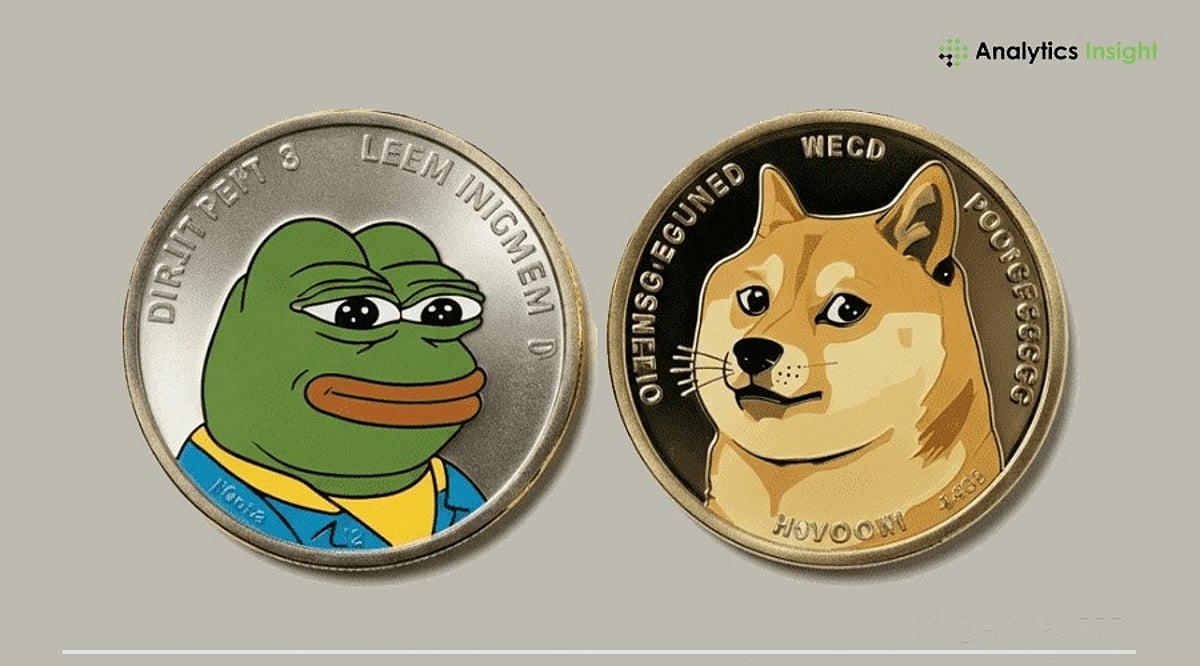
    The meme coin market has entered a difficult phase in 2026. Big names like Dogecoin (DOGE) and Shiba Inu (SHIB), which once led this space, now face strong pressure. Prices remain weak, market excitement has dropped, and many traders have started to look for fresh opportunities.

    Given this shift, a new project called MemeCore has started to catch major attention. Recent market data shows that while older meme coins continue to struggle, MemeCore has quickly become one of the most talked-about names in crypto.

    Dogecoin Faces Weak Momentum

    Dogecoin has remained the biggest meme coin for many years. It started as a joke but later became one of the most popular cryptocurrencies after strong support from online communities and public figures.

    However, DOGE has lost momentum in recent weeks. Latest market data shows Dogecoin trading close to $0.09, with a 5% drop over the last seven days. Price charts show repeated failed recovery attempts, which have raised concern among traders.

    The problem for Dogecoin right now comes from lower buying pressure. During earlier market rallies, DOGE moved fast given hype and social media attention. This time, that excitement has become much weaker.

    Shiba Inu Also Remains Under Pressure

    Shiba Inu once stood as the biggest competitor to Dogecoin. The project built a strong community and later expanded with products like Shibarium, which aimed to create a larger ecosystem around the token.

    But recent performance shows SHIB also faces difficulties. Current data places SHIB near $0.0000060, while overall trading activity has stayed relatively weak. Price movement has remained slow for several weeks.

    Even though developers continue to work on ecosystem growth, market interest has fallen compared with earlier years. During the last major meme coin rally, SHIB attracted massive retail demand. Right now, that same excitement no longer exists at the same level.

    The Meme Coin Sector Slows Down

    The struggle of DOGE and SHIB reflects a bigger change in the meme coin market. Industry reports show the total meme coin sector has lost a large part of its earlier market value after strong corrections hit speculative crypto assets.

    In past years, meme coins mostly depended on internet jokes, hype, and social media trends. But the market now looks very different. Many investors now prefer projects that offer stronger token systems, lower transaction costs, and bigger ecosystems instead of tokens that survive as a result of popularity.

    MemeCore Quickly Gains Attention

    MemeCore has become one of the biggest surprise projects of this year. Unlike older meme coins, MemeCore has built interest not only through community hype but also through technical improvements.

    One major update this year reportedly reduced network transaction costs by nearly 100 times, which immediately attracted attention across the crypto market. After this update, the native token called M saw a massive rally. The project soon became one of the fastest-rising meme assets in the entire sector.

    MemeCore Overtakes SHIB in Market Value

    One of the biggest crypto stories this year came after MemeCore reportedly moved past Shiba Inu in market capitalization for a short period. Recent reports showed MemeCore reaching almost $4.79 billion in market capitalization, which briefly made it the second-largest meme coin after Dogecoin.

    This sudden jump brought huge market attention. Many traders started to view MemeCore as the next possible breakout project in the meme coin sector.

    Strong Growth Despite Price Pullback

    Current data shows the token trading below its all-time high of $4.82, while the project still holds a fully diluted valuation above $15 billion. Over the last seven days, price data shows a correction between 8% and 11%.

    Even after this decline, long-term numbers remain extremely strong. Some market analysts estimate MemeCore has delivered returns of more than 3,500% since launch, one of the strongest performances among new crypto projects this cycle.

    Could MemeCore Become the Next Big Winner?

    The crypto market often rewards projects that bring something new. Right now, Dogecoin and Shiba Inu continue to face slower growth and weaker momentum. Meme coins still remain risky assets, and sharp price drops can happen anytime. But current trends show that the market no longer rewards hype alone. If this trend continues, MemeCore may become the next major winner in the meme coin market, while DOGE and SHIB continue to fight through one of their toughest periods in recent years.