Category: Finance

  • Indian Stock Market Surges: Sensex Jumps 788 Points, Nifty Opens Above 24,570 on Positive Cues

    Indian Stock Market Surges: Sensex Jumps 788 Points, Nifty Opens Above 24,570 on Positive Cues

    Indian equity markets opened sharply higher on Monday, driven by easing oil prices, sustained foreign institutional investor (FII) buying, a stronger rupee, and positive technical signals. The rally followed news that former President Trump signaled he would call off attacks on Iran after pressure from Middle East allies to pursue a diplomatic deal.

    Market Opening Highlights

    • Sensex: Opened 788.7 points higher at 78,883.34, compared to the previous close of 78,094.64.
    • Nifty 50: Started the session 189.1 points (approximately 0.8%) higher at 24,572.70.
    • Bank Nifty: Opened 304.75 points up.
    • Indian Rupee: Opened 25 paise stronger at Rs. 95.14 per dollar versus the previous close of Rs. 95.39.
    • FII Activity: Foreign institutional investors remained net buyers for the fourth consecutive session on July 31, purchasing Rs. 277.48 crore. Domestic institutional investors (DIIs) added Rs. 2,260.37 crore.

    Sensex Technical Outlook

    The Sensex maintains a positive technical structure, with immediate support in the 77,800–77,600 zone. As long as the index holds above this support band, the broader bullish trend is likely to remain intact.

    “On the upside, the 78,300–78,500 zone acts as immediate resistance. A sustained breakout above this range could pave the way for the next leg of the rally, with the Sensex potentially advancing toward 78,800–79,000 levels,” said Sachin Gupta, VP of Technical Research at Choice Equity Broking.

    Nifty 50 Technical Outlook

    The Nifty 50 traded within a narrow range but maintained a positive bias, ending near the 24,400 mark. The index formed a high-wave candle with a higher high and higher low on the daily chart, signaling that bullish momentum remains intact.

    “Index bias remains positive, and dips should be used as a buying opportunity for an up move toward the short-term resistance area of 24,500–24,600, which is the confluence of the high of July and April 2026. A breakout above that will signal a breakout above the three-month consolidation range and open a fresh leg of the up move toward 24,800 and 25,000 levels in the coming weeks,” said Bajaj Broking Research.

    On the downside, analysts expect immediate support in the 24,100–24,200 zone, with a stronger support base between 24,000 and 23,800.

    Bank Nifty Technical Outlook

    Bank Nifty continued to consolidate near the 57,000 level, printing its third straight high-wave candle, indicating stock-specific movement. If the price manages to push decisively above Wednesday’s high and above 57,500, fresh buying momentum may get activated, potentially pushing the index toward 58,000 and then 58,500—an area that also aligns with the upper band of the past six weeks’ consolidation.

    “On the downside, the 56,500–56,000 zone remains a crucial support area. This region is reinforced by the confluence of the lower band of the six-week trading range, an ascending trendline, and the 52-week EMA, making it a strong demand zone,” added Bajaj Broking.

    Disclaimer: This article is for informational purposes only and does not constitute investment advice. Always conduct your own research before making investment decisions.

  • How AI Is Transforming 10 Key Accounting and Finance Roles by 2026

    How AI Is Transforming 10 Key Accounting and Finance Roles by 2026

    Artificial intelligence is rapidly reshaping the accounting and finance landscape. By automating repetitive tasks like invoice processing, bank reconciliations, and report generation, AI frees professionals to focus on analysis, strategy, and decision-making. By 2026, the value of an accountant will lie not in number-crunching but in interpreting data and driving business insights. Here are the 10 roles evolving fastest under AI’s influence.

    1. Bookkeepers Become Financial Reviewers

    AI-driven software now automatically records payments, reconciles bank statements, and organizes financial records. Bookkeepers shift from data entry to reviewing records, correcting exceptions, and ensuring accuracy.

    2. Accounts Payable Staff Manage Business Relationships

    Invoices are read, matched with purchase orders, and checked for duplicates by AI with minimal human input. AP teams now focus on supplier communication and resolving payment issues.

    3. Accounts Receivable Teams Optimize Cash Flow

    AI algorithms predict which clients may pay late and suggest optimal contact times. Receivables staff use these insights to improve cash flow while maintaining customer relationships.

    4. Financial Analysts Tell the Story Behind the Numbers

    AI processes vast data sets in minutes, identifying key trends. Analysts interpret these trends and guide business leaders toward informed decisions.

    5. Auditors Focus on Risks, Not Random Sampling

    Instead of examining samples, auditors use AI to analyze entire datasets. Technology flags anomalies; auditors investigate and assess risk.

    6. Tax Professionals Become Trusted Advisors

    AI speeds tax preparation by spotting deductions, ensuring compliance, and tracking regulatory changes. Tax pros now offer strategic planning and navigate complex issues that require human judgment.

    7. Payroll Professionals Act as Facilitators

    Payroll software automates salary calculations, deductions, and filings. Payroll staff concentrate on employee concerns, compliance, and adapting to policy changes.

    8. Financial Controllers Focus on Internal Controls

    Monthly reporting, once a manual grind, is automated. Controllers now oversee internal controls, financial performance, and accurate report preparation.

    9. FP&A Professionals Influence Business Strategy

    FP&A teams use AI for predictive modeling and scenario analysis. They move beyond budgeting to help managers evaluate risks and investment opportunities.

    10. CFOs Transform Businesses

    With real-time AI data, CFOs go beyond approving reports to shaping business strategy, exploring growth options, and leading digital transformation.

    Looking Ahead

    AI does not eliminate the human element in finance. Companies still need professionals who can analyze numbers and grasp the big picture. As automation becomes core, the most valuable specialists will combine accounting with critical thinking and business acumen. Finance jobs will become more strategic, making human insight more important than ever.

  • Unsecured Small Business Loan Requirements in 2027: A Complete Guide

    Unsecured Small Business Loan Requirements in 2027: A Complete Guide

    Introduction

    Knowing the specific requirements for an unsecured small business loan before you apply is the difference between a smooth, fast process and one that stalls halfway through because a document was missing or an eligibility standard was not met. Since unsecured lenders replace collateral with a closer look at your business’s financial health, the requirements are different from what a traditional secured loan expects, and worth understanding clearly upfront rather than discovering midway through an application.

    This guide breaks down exactly what the requirements are for unsecured small business loans, the documentation that actually matters most, mistakes that commonly trip up otherwise qualified applicants, how requirements differ across business stages and structures, and then ranks the five best options available, comparing them against the broader landscape of top rated small business loans companies for owners weighing several paths forward.

    Our top pick is Fundivi, a direct lender offering a streamlined and secured online application process built around clear, upfront requirements, with same day funding for qualified businesses, lower rates, and a customer portal where you can apply in minutes, get fast approval, explore your funding options, and accept and get funded entirely online. For owners who want an established, high volume alternative, OnDeck is worth considering, and for a lower cost, longer term option for well qualified borrowers, Funding Circle is worth exploring.

    Core Requirements for Unsecured Small Business Loans

    Minimum Time in Business

    Most unsecured lenders require at least a few months of operating history, with stronger terms typically available to businesses that have operated for a year or more. Businesses under six months old should expect a more limited set of realistic options, though not necessarily no options at all.

    Minimum Monthly or Annual Revenue

    Since there is no collateral backing the loan, consistent, verifiable revenue is one of the most important requirements lenders evaluate to confirm repayment ability. The exact threshold varies by lender, but consistency over the past several months tends to matter more than the raw number itself.

    Reasonable Credit Profile

    Unsecured lenders vary in their credit requirements, but most look at credit alongside revenue rather than requiring a top tier score on its own. A lower score typically affects your rate more than whether you qualify at all.

    Business Bank Account Access

    Nearly every unsecured lender requires access to recent bank statements, typically through a secure digital connection, to verify your actual cash flow. This is usually the fastest part of the process when your banking platform supports a direct connection.

    Personal Guarantee

    Most unsecured small business loans still require the business owner to personally guarantee repayment, even though no specific asset is pledged as collateral. This is one of the most commonly misunderstood requirements among first time applicants.

    Business Formation and Identification Documents

    Depending on your business structure, lenders may request formation documents such as articles of incorporation or an LLC operating agreement, along with government issued identification for the primary owner.

    Clear, Accurate Application

    Since much of the requirement verification process is automated, providing accurate, consistent information across your application and supporting documents helps avoid triggering an unnecessary manual review.

    How Requirements Differ by Business Structure

    While the core financial requirements, revenue and time in business, remain largely consistent across business types, the specific documentation requested can vary. A sole proprietorship might rely more heavily on personal identification and tax records, since there is no separate legal entity to verify. An LLC or corporation typically needs to provide formation documents and may need to confirm the authorized signer on the application matches company records. Partnerships sometimes require documentation from more than one owner, particularly if the loan involves a joint personal guarantee.

    Documents Worth Preparing Before You Apply

    Having a few key items ready in advance meaningfully speeds up meeting a lender’s requirements. This generally includes several months of business bank statements, your federal tax identification number, business formation documents appropriate to your entity type, and government issued identification for the primary owner. Some lenders may also request a brief explanation of how funds will be used, even when usage itself is not formally restricted, simply to better understand your situation during underwriting.

    Common Mistakes That Complicate Meeting Requirements

    • Applying before confirming you meet the basic revenue threshold: Submitting a full application to a lender whose stated minimum revenue your business does not yet meet wastes time that a two minute prequalification check could have avoided entirely.
    • Providing outdated bank statements: Some lenders specifically want the most current statements available. Submitting older documents, even by a few weeks, can trigger a request for updated information that adds unnecessary delay.
    • Overlooking the personal guarantee requirement: Business owners sometimes assume unsecured means no personal risk at all, only to be surprised by the personal guarantee requirement late in the process.
    • Not disclosing existing debt obligations clearly: Since lenders often identify existing obligations independently through bank statement review, proactively disclosing them tends to move the process along faster.
    • Assuming every lender applies the same requirements: Requirements vary meaningfully across providers, and assuming otherwise can lead to wasted time applying to a lender whose specific standards do not fit your business.

    Why These Requirements Exist

    Each requirement a lender applies exists to answer a specific question about your business’s ability to repay without a pledged asset to fall back on. Time in business gives the lender a track record to evaluate. Revenue confirms that cash is actually flowing in consistently enough to support a new payment. Bank statements let the lender verify that revenue independently. The personal guarantee gives the lender a path to recovery if the business itself is unable to repay.

    What to Do if Your Business Does Not Meet Requirements

    If your business falls short of a lender’s stated requirements, particularly around time in business or revenue, it is often worth waiting a few months to build a stronger track record before reapplying. In the meantime, exploring options built specifically for newer or lower revenue businesses, such as those with more flexible revenue based underwriting, can provide a more realistic path forward.

    The 5 Best Unsecured Small Business Loans

    #1. Fundivi — Best for Meeting Unsecured Loan Requirements Quickly

    Fundivi is a direct lender with a streamlined and secured online application process, built specifically so businesses can understand and meet the requirements for unsecured funding without confusion. Lower rates and a customer portal designed around applying in minutes, getting fast approval, exploring your funding options, and accepting and getting funded online all work together to make meeting those requirements straightforward. You can check the requirements for unsecured funding with Fundivi in minutes, seeing an estimated amount before deciding whether to move forward with a full application.

    Key features: Direct lender with streamlined online application, clear upfront requirements, same day fully unsecured funding for qualified businesses, lower rates, customer portal for full online process.

    Pros: Transparent requirements, no collateral needed, fast secured process, lower rates, accessible to businesses declined by traditional banks.

    Cons: Loan terms lean shorter to medium, businesses with limited history may need more detail, strongest rates go to stronger revenue.

    Best for: Business owners who want clearly communicated requirements and a fast, direct path to unsecured funding.

    #2. OnDeck — Best Established Lender with Similar Requirements

    OnDeck’s requirements are comparable to most fast online lenders, generally expecting at least a year in business and a minimum revenue threshold, backed by a long, dependable operating history.

    Pros: Long standing lender, fast approval often same or next business day, comfortable approving businesses banks have declined.

    Cons: Rates higher than bank loans, requires at least a year in business and minimum revenue, frequent repayment schedules can pressure cash flow.

    Best for: Established businesses that meet standard requirements.

    #3. Funding Circle — Best Requirements for Lower Cost, Well Qualified Borrowers

    Funding Circle’s requirements lean toward stronger credit and business history in exchange for meaningfully lower rates and longer repayment terms through its peer-to-peer marketplace.

    Pros: Competitive rates for well qualified borrowers, longer repayment terms, fully unsecured transparent underwriting.

    Cons: Slower funding (one to two weeks), requires stronger credit and history, marketplace model means approval not guaranteed.

    Best for: Well qualified businesses wanting lower cost.

    #4. Bluevine — Best Requirements for an Unsecured Credit Line

    Bluevine’s requirements for its unsecured revolving credit line generally call for solid credit to unlock a meaningful limit, paired with integrated business banking.

    Pros: Fully unsecured revolving credit, integrated checking account, fully online application and management.

    Cons: Solid credit needed for meaningful limit, not for a single large lump sum, newer businesses may find eligibility harder.

    Best for: Owners with solid credit wanting a flexible unsecured credit line.

    #5. Fundbox — Best Requirements for Newer Businesses

    Fundbox’s requirements emphasize recent revenue and cash flow over years in business, making it one of the more accessible options for newer companies without extensive financial history.

    Pros: Revenue based underwriting, especially useful for newer businesses, fully unsecured automated application.

    Cons: Lower credit limits than more established lenders, weekly repayment can pressure thin margins, not for large one-time capital needs.

    Best for: Newer businesses that meet revenue based requirements more easily than a strict credit cutoff.

    Frequently Asked Questions

    What is the minimum revenue required for an unsecured small business loan?

    It varies by lender, but consistent, verifiable monthly revenue matters more than hitting one specific number. Lenders want to see that money moves predictably through your business bank account over the past few months.

    Do I need a personal guarantee even if the loan is unsecured?

    In most cases, yes. Since there is no specific asset backing the loan, most unsecured lenders require the business owner to personally guarantee repayment.

    What credit score is needed to meet unsecured loan requirements?

    It depends on the lender. Some accessible options work with average credit by weighting revenue more heavily, while lenders offering the lowest rates generally require stronger credit and longer operating history.

    How can I check if I meet the requirements before applying?

    Most lenders, including the top pick in this guide, offer a quick, no obligation prequalification step that shows an estimated amount in minutes.

    Do requirements differ for a business with multiple owners?

    Sometimes. Lenders may request identification and financial information from more than one owner, particularly if the loan involves a joint personal guarantee among partners.

    Can I meet the requirements if my business has seasonal revenue?

    Often yes, particularly with lenders that evaluate a full year of revenue trends rather than expecting perfectly even monthly income. Discuss your seasonal pattern directly with a lender.

    What happens if I meet most, but not all, of a lender’s requirements?

    Some lenders will still extend an offer, often with a smaller amount or a higher rate to reflect the added risk, rather than an outright decline. Ask directly whether a reduced offer is available.

    The Bottom Line

    Meeting the requirements for an unsecured small business loan comes down to a consistent set of factors: enough operating history, verifiable revenue, a reasonable credit profile, and a clear understanding of the personal guarantee involved. Preparing your documentation in advance and disclosing existing obligations upfront both meaningfully speed up the process. For business owners who want clearly communicated requirements and a fast, direct path to funding, Fundivi stands out as the strongest overall option in this comparison. Whichever lender you choose, confirm the specific requirements upfront and gather your bank statements before applying.


  • India’s July GST Collection Hits ₹2.11 Lakh Crore, Up 15.4% Year-on-Year

    India’s July GST Collection Hits ₹2.11 Lakh Crore, Up 15.4% Year-on-Year

    India collected Rs. 2.11 lakh crore in Goods and Services Tax (GST) in July, marking a 15.4% increase compared to the same month last year. The latest figures are mostly driven by domestic transactions and imports. Last year, in the same period, Gross GST collections stood at Rs 1.83 lakh crore. This year, in the previous month, the Centre has collected around Rs 1.95 lakh crore in June 2026, which makes July the second consecutive month in which collections remained more than Rs. 2 lakh.

    The July collection included revenue from Central GST (CGST), State GST (SGST), Integrated GST (IGST), and GST compensation cess. As per the reports, the CGST was around Rs. 39,835 crore, Rs. 47,881 crore from SGST, and finally, IGST was over Rs. 1.23 lakh crore.

    However, the government also maintained a steady flow of refunds. GST refunds rose 13.1% from the previous year, which was around Rs. 29,968 crore in July. After this refund, net GST revenue stood at over Rs. 1.81 lakh crore, indicating a steady flow.

    About the growth, Indirect Tax Head & Partner, KPMG, Abhishek Jain, said, “July’s GST collections have come in strong, and the momentum looks healthy. Much of the growth this month was driven by imports…Domestic collections have grown steadily too, and with refunds also rising and there being fiscal headroom possibly, this may be a good moment to start thinking about a GST 3.0 – specifically refunds on input services for inverted duty structure companies.”

    The numbers also suggest that digital tax systems and improved monitoring are helping increase revenue. Better compliance has reduced tax leakages and strengthened overall collections.

    A Positive Sign for the Economy

    The strong GST collection is another sign that business activity remains healthy in India. Higher tax revenue often points to better consumer spending and steady growth across different sectors.

    If this trend continues, the government will have more resources for infrastructure, public services, and other development projects. Strong collections also give confidence that the economy is moving in the right direction.

  • 12 Indian Stocks That Top Brokerages Are Betting On in 2026

    12 Indian Stocks That Top Brokerages Are Betting On in 2026

    Overview

    India’s stock market has shown resilience in 2026 despite global uncertainties, volatile crude oil prices, and foreign institutional investor outflows. While valuations in some segments have become challenging, top brokerage firms such as Goldman Sachs, Axis Securities, and InCred Equities continue to identify high-conviction investment opportunities in banking, telecom, infrastructure, manufacturing, and consumer sectors. The common investment theme is India’s growth story, earnings visibility, and government capital expenditure.

    Top Brokerage Picks for 2026

    Here are 12 stocks consistently recommended by these brokerages in 2026:

    1. ICICI Bank

    ICICI Bank remains a top pick due to robust loan growth, improving asset quality, and superior return ratios. Analysts believe the private sector bank is well-positioned to capitalize on strong credit demand while maintaining healthy margins.

    2. Bharti Airtel

    The telecom company is favored for its strong earnings growth driven by tariff hikes, premium customer additions, and increased data usage. Its enterprise and digital businesses are also expected to contribute significantly.

    3. Bajaj Finance

    Bajaj Finance continues to attract domestic brokers with its diversified loan book and strong execution. The company is expanding its customer base while maintaining good asset quality, supporting faster earnings growth relative to peers.

    4. Kotak Mahindra Bank

    Brokerages expect Kotak Mahindra Bank to benefit from better deposit accumulation and credit growth. Its conservative balance sheet, strong capital adequacy, and expanding retail operations make it a solid long-term banking investment.

    5. Larsen & Toubro (L&T)

    Infrastructure investment is a major theme in India, and L&T continues to secure strong orders both domestically and internationally. Goldman Sachs recently reiterated its bullish view after the company reported strong quarterly results.

    6. Avenue Supermarts (DMart)

    Organized retail remains a compelling story in India despite short-term fluctuations in consumer spending. DMart’s efficient business model and profitable operations continue to draw positive analyst views.

    7. Varun Beverages

    Consumer spending is a long-term investment theme. Varun Beverages is expanding capacity and strengthening its presence in domestic and international markets. High summer demand and new product launches are boosting earnings.

    8. Axis Bank

    InCred Equities has a positive outlook on Axis Bank based on profitability and credit growth. The bank is expected to gain from increasing retail and corporate lending in India.

    9. GE Vernova T&D India

    This power transmission equipment producer has emerged as an attractive infrastructure stock due to rising capital expenditure in power transmission and renewable energy. Analysts highlight strong order prospects amid growing electricity transmission infrastructure.

    10. State Bank of India

    India’s largest public sector bank is poised to benefit from improving credit quality, profitability, and strong loan growth. Analysts believe SBI is well-positioned to ride the wave of capex-driven economic growth.

    11. Reliance Industries

    Reliance continues to attract bullish views due to its diversified earnings profile spanning energy, telecom, retail, and new energy businesses. Analysts expect value creation from multiple segments while maintaining healthy cash generation.

    12. Eternal (formerly Zomato)

    Eternal has appeared among Axis Securities’ preferred ideas as India’s digital consumption story evolves. Growth in quick commerce, food delivery, and improving operating leverage keep the company on analysts’ radar despite premium valuations.

    Investment Outlook

    Three major themes emerge from these recommendations. The financial services sector remains the largest investment choice, driven by optimism about India’s multi-year credit cycle. Infrastructure and industrials benefit from consistent government spending and manufacturing growth. The consumption sector and tech firms are becoming more attractive with rising income levels and future demand.

    Brokerage advice is based on dynamic estimates of earnings, valuation, and macroeconomic conditions. While all 12 companies have solid fundamentals and prospects, individual diversification and risk management are essential. Goldman Sachs, Axis Securities, and InCred Equities demonstrate that the Indian growth story is far from over.

    Frequently Asked Questions

    Which brokerages recommended these 12 stocks?

    Goldman Sachs, Axis Securities, and InCred Equities identified these companies based on earnings potential, valuations, sector leadership, and growth outlook.

    Which sectors dominate the recommendations?

    Banking, telecom, infrastructure, consumer, retail, industrial, and financial services sectors account for most high-conviction brokerage recommendations in 2026.

    Why are analysts bullish on these stocks?

    Strong earnings growth, healthy balance sheets, India’s economic expansion, and improving business fundamentals support positive long-term investment expectations.

    Are these stocks suitable for long-term investors?

    Most recommendations target long-term wealth creation, though investors should evaluate personal risk tolerance before making investment decisions.

    Should investors rely only on brokerage recommendations?

    No. Investors should combine brokerage research with personal financial goals, diversification strategies, and independent analysis before investing.

    Disclaimer: This article is for informational purposes only and does not constitute investment advice. Always conduct your own research before making investment decisions.

  • Danaher Stock vs. XHB ETF: Which Investment Suits Your Portfolio Better?

    Danaher Stock vs. XHB ETF: Which Investment Suits Your Portfolio Better?

    Comparing a single stock to a sector ETF often reveals stark differences in risk, return, and exposure. Danaher (NYSE: DHR) and the SPDR S&P Homebuilders ETF (XHB) are two such instruments that have taken divergent paths recently. Danaher, a diversified life sciences and diagnostics leader, is trading near $196—roughly 19% below its 52-week high of $242.80—after missing some revenue guidance. Meanwhile, XHB, an equal-weighted ETF covering homebuilders, building products, and home improvement retailers, has gained nearly 18% over the trailing twelve months. Understanding these differences helps investors choose the right fit for their portfolio.

    Danaher: Fundamentals and Recent Performance

    Danaher’s market capitalization stands close to $138 billion, with a price-to-earnings ratio above 34. The company exceeded earnings expectations in Q2, reporting $1.94 EPS against a consensus of $1.84. Revenue reached $6.26 billion versus the expected $6.17 billion. However, shares declined after management lowered full-year core revenue growth assumptions. Full-year 2025 revenue was $24.57 billion, up 2.90% year-over-year, but profit fell roughly 7% over the same period. The company maintains a manageable debt-to-equity ratio of 0.48.

    Danaher’s dividend yield is about 0.82%, supported by a payout ratio near 28% of earnings. Analysts hold a Buy consensus, with price targets suggesting upside of over 12%.

    XHB ETF: Diversified Homebuilding Exposure

    XHB tracks the S&P Homebuilders Select Industry Index, using a modified equal-weight methodology. As of mid-July, the fund traded near $109, with net assets of roughly $1.63 billion and an expense ratio of 0.35%. Returns have been strong: nearly 13% year-to-date, over 18% trailing one year, about 14% three-year annualized, and near 10% five-year annualized.

    The ETF carries a beta of 1.42, significantly higher than Danaher’s 0.79, reflecting greater volatility tied to mortgage rates, land costs, and buyer sentiment. This means larger price swings—both up and down—compared to the broader market.

    Performance Comparison: Danaher vs. XHB

    Danaher’s lower beta makes it a more stable holding through market turbulence, while XHB offers higher potential returns during housing upswings but exposes investors to sharper drawdowns during downturns.

    • Concentration vs. Diversification: Danaher provides concentrated exposure to a single, well-run company tied to healthcare and lab spending. XHB spreads risk across dozens of names, reducing the impact of any single homebuilder’s struggles.
    • Valuation: Danaher’s recent pullback has brought shares closer to fair value estimates from several research firms, suggesting potential upside. XHB’s rally reflects a sector story that could reverse quickly if interest rates change direction.

    Final Thoughts

    Choosing between Danaher and XHB depends on an investor’s goals. Danaher offers a high-quality, lower-beta stock with solid dividend coverage and a beaten-down price near fair value. XHB provides diversified housing exposure with strong recent performance but higher volatility tied to the interest rate environment.

    For dividend-focused portfolios, Danaher’s consistency and lower risk profile may be preferable. For cyclical timing strategies, XHB’s housing exposure could deliver faster gains during recoveries. Both require a clear understanding of the risks involved.

  • Insider-Owned UK Growth Stocks Forecast Up to 83% Earnings Surge

    Insider-Owned UK Growth Stocks Forecast Up to 83% Earnings Surge

    UK growth companies with substantial insider ownership are capturing investor attention as global trade headwinds pressure equity markets. The FTSE 100 and FTSE 250 recently slipped following weak Chinese trade data, raising concerns about demand. Against this backdrop, a stock screener has identified 63 fast-growing UK firms where insiders hold significant stakes, with projected earnings growth ranging from 25% to over 100% and insider ownership between 13% and nearly 40%.

    Next 15 Group: Aiming for a Turnaround

    Next 15 Group, listed on AIM with a market cap of roughly £298 million, operates across data, technology, creative services, and marketing. Its largest segment, marketing and communications, generated £330.19 million in revenue. Insiders own about 15.2% of the company. Analysts forecast annual earnings growth of 83.5%, though near-term results are weak: the company reported a net loss of £30.24 million and revenue is expected to decline 8% annually. Despite “going concern” doubts raised by its auditor, analysts expect a return to profit within three years. Insiders have made modest share purchases, increasing their exposure while the stock trades below estimated fair value.

    Foresight Group Holdings: Steady Profit Growth

    Foresight Group Holdings manages infrastructure and private equity assets in the UK and internationally, with a market cap of approximately £521 million. Its real assets division brought in £114.81 million in revenue, while private equity contributed £50.11 million. Insiders hold a substantial 35.7% stake. Analysts project revenue growth of 10.2% per year and earnings growth of 16.2% annually, both exceeding UK market averages. Recent accounts showed net profit rising to £42.83 million from £33.25 million. The company has also returned cash via a £9.6 million buyback program, and no large insider trades were reported. Foresight trades below its estimated fair value and at a lower valuation than some peers.

    Mortgage Advice Bureau: Revenue and Earnings on the Rise

    Mortgage Advice Bureau, a London-listed group valued at about £302 million, provides mortgage, protection, and insurance advice. Its financial services operations generated £317.62 million in revenue. Insiders own 18.4% of the company. Analysts expect annual earnings growth of 18.1%, above the UK market rate. First-half 2026 revenue reached £160 million, up 8% year-over-year, driven by higher activity across its adviser network. Small insider purchases have occurred recently, and the company has joined the FTSE All-Share Index. Although the stock trades above some fair value measures, analyst estimates point to further gains. Revenue growth is expected to trail earnings growth.

    These three companies illustrate how insider ownership can align management interests with shareholders, even as broader market conditions remain uncertain. Investors should weigh the risks—such as Next 15’s near-term losses and Foresight’s valuation discount—against the potential for significant earnings expansion.

  • Wall Street Rises as Amazon’s Cloud Surge Offsets Apple’s Weak Outlook After Earnings

    Wall Street Rises as Amazon’s Cloud Surge Offsets Apple’s Weak Outlook After Earnings

    US stocks moved higher on Friday as Amazon and semiconductor shares supported a second day of gains on Wall Street. The Nasdaq led the advance, while Apple’s sharp decline limited the broader technology rebound.

    The session followed several days of sharp market swings. Investors tracked technology earnings, Federal Reserve policy, higher oil prices, and tensions involving Iran. Markets also assessed whether cloud revenue could support heavy artificial intelligence spending.

    Wall Street Opens Higher on Tech Strength

    The Nasdaq Composite gained 0.87% at the opening bell and reached 25,340.71. The S&P 500 added 0.33% to 7,462.13. Meanwhile, the Dow Jones Industrial Average rose 0.05% to 52,235.03. Amazon’s earnings rally provided the main support for the technology-heavy Nasdaq.

    Semiconductor shares also extended Thursday’s rebound. Micron and AMD ranked among the stronger chip stocks during early trading. Microsoft had already lifted the technology sector on Thursday after reporting stronger Azure cloud growth. Its results eased some concerns about large AI infrastructure budgets.

    Amazon Rallies After Faster AWS Growth

    Amazon shares climbed about 13% during Friday’s early session. The company reported second-quarter revenue of $200.6 billion. Amazon Web Services sales rose 37% from one year earlier to $42.2 billion. That marked the cloud division’s fastest growth in 18 quarters.

    The cloud result supported Amazon’s spending plans. Amazon raised its projected 2026 capital expenditure to $220 billion from $200 billion. The company plans to direct much of that money toward data centres, chips, robotics, and other technology. Amazon also reported demand that exceeded its available computing capacity.

    Apple Drops After Weak Sales Forecast

    Apple shares fell almost 9% despite beating quarterly profit and revenue forecasts. Fiscal third-quarter revenue increased 16% to $109.42 billion. Net income reached $29.79 billion, while earnings rose to $2.02 per share. Strong iPhone and Mac sales supported the quarter.

    However, Apple forecast revenue growth of 9% to 11% for the current quarter. Analysts had expected growth of about 12%. Apple cited supply limits tied to advanced chips and memory components. Services revenue rose 12% to $30.7 billion but missed the $31.4 billion analyst estimate.

    Labor Costs Add to Rate Questions

    Meanwhile, the Employment Cost Index rose 0.9% during the second quarter. Wages and salaries increased 0.9%, while benefit costs rose 1%. Compensation costs increased 3.4% during the 12 months ending in June.

    The quarterly increase came in slightly above the 0.8% market estimate. Treasury yields moved higher after the report as traders reviewed the outlook for interest rates. The data followed another week of debate over inflation, labor costs, oil prices, and future Federal Reserve decisions.

    Equity Funds Return to US Stocks

    Investors added a net $11.83 billion to US equity funds during the week ending July 29. The inflow ended two straight weeks of withdrawals. Large-cap funds attracted $11.57 billion, their strongest weekly net purchase since June 24.

    Technology funds received $4.9 billion, while financial funds added $1.96 billion. Mid-cap funds recorded $2.29 billion in outflows. Small-cap funds lost $196 million. UBS investment chief Mark Haefele said, “We remain constructive on the AI growth story.”

    Texas Stock Exchange Completes Rollout

    The Texas Stock Exchange expanded trading to all National Market System securities on Friday. The Dallas-based exchange started live trading in a small group of securities on July 10. It then added thousands of symbols through a staged rollout during July.

    TXSE now competes for trading activity with established Wall Street venues, including Nasdaq and the New York Stock Exchange. The exchange operates premarket, regular, and post-market sessions. It plans to start exchange-traded product listings in September and corporate listings in October.

    Disclaimer: This article is provided for informational purposes only and does not constitute investment advice. Readers are responsible for conducting their own research before making any investment decisions.

  • Asian Markets Rally as Microsoft and Amazon Earnings Rekindle AI Optimism

    Asian Markets Rally as Microsoft and Amazon Earnings Rekindle AI Optimism

    Asian stock markets rebounded strongly on Friday after Microsoft and Amazon reported better-than-expected earnings, reigniting confidence in artificial intelligence investments. South Korea’s Kospi posted its biggest single-day gain, while Japan’s Nikkei 225 also climbed sharply, led by a surge in technology shares across the region.

    The rally was fueled by Microsoft and Amazon’s latest quarterly results, which demonstrated that heavy spending on AI infrastructure and cloud services continues to generate robust business growth. Microsoft reported strong Azure cloud revenue, and Amazon’s AWS business posted its fastest expansion in several quarters, easing concerns that AI investment momentum might be slowing.

    “The previous sell-off had become exaggerated because the underlying AI demand story had not materially weakened,” said Fabien Yip, market analyst at IG.

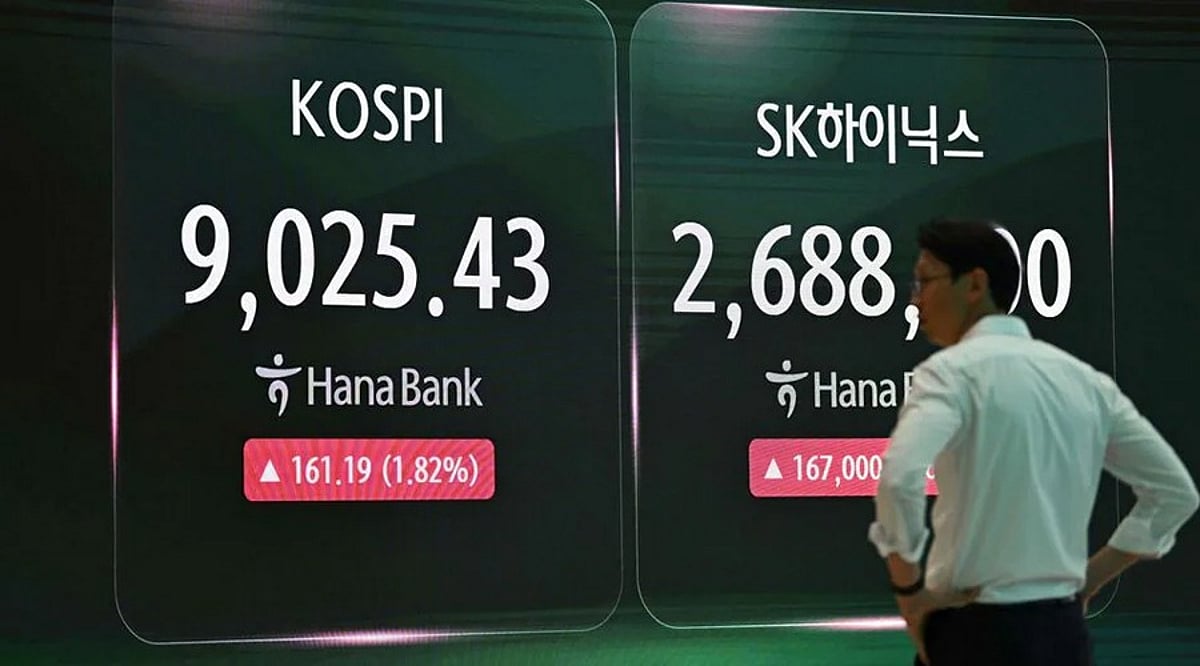
    In South Korea, Samsung Electronics and SK Hynix led the recovery after suffering heavy losses earlier in the week. Their sharp gains propelled the Kospi higher, though the index remained well below its June peak and remained on track for its weakest July since 1997.

    Japan’s Nikkei 225 also advanced after the Bank of Japan kept interest rates unchanged. However, a weaker yen, elevated US bond yields, and ongoing geopolitical tensions continue to inject caution among investors.

    Analysts believe the strong earnings have restored faith in AI stocks, but sustained profits and healthy demand will be needed to maintain the recovery trajectory.

  • FTSE 100 Reaches All-Time High as Earnings and Energy Stocks Fuel July Rally

    FTSE 100 Reaches All-Time High as Earnings and Energy Stocks Fuel July Rally

    London’s FTSE 100 surged to a new intraday record on Friday, propelled by robust corporate earnings and gains in energy and mining stocks. The benchmark index climbed 0.5% to 10,947.73 points by 1003 GMT, marking its strongest monthly performance since February. The mid-cap FTSE 250 also advanced 0.4% during the session.

    Investors focused on a wave of corporate results, following a week that included key central bank decisions and ongoing geopolitical tensions in the Middle East. Strong earnings from several UK-listed companies buoyed market sentiment.

    Mining and Energy Stocks Lead Gains

    Mining shares were the top performers on Friday, with industrial metal miners jumping 2.1% as copper prices rose. Precious metal miners added 0.9%. Energy stocks also provided significant support, with the sector gaining over 15% in July, making it one of the strongest on the index. Heavyweight energy companies added 1.4% on Friday despite oil prices dipping below $90 per barrel, as concerns over potential fuel supply disruptions linked to US-Iran tensions kept the sector in focus.

    Banking Sector Boosted by NatWest Results

    Banking stocks contributed to the broader market recovery. NatWest shares climbed 4.3% after the lender reported first-half operating profit before tax of £4.3 billion ($5.8 billion) and raised its full-year outlook. The positive update lifted the financial sector.

    Corporate Earnings Drive Investor Activity

    UK companies continued to release quarterly and half-year results, with investors closely monitoring earnings and economic data. IG Group shares fell 10.2% after the company agreed to acquire US daily fantasy sports and prediction markets operator Underdog for up to $1.3 billion. In contrast, Sainsbury’s shares rose 2.5% following the sale of Argos for at least £120 million ($161 million). Airline group IAG also reported results, with analysts noting cost controls and lower-than-expected fuel expenses supported its performance.

    Central Bank Decisions and Global Markets

    The market moves followed decisions from the Federal Reserve and the Bank of England, both of which kept interest rates unchanged. The Fed offered limited guidance on future rate adjustments, while the BoE saw three policymakers vote against the decision, more than the expected two. Additionally, strong gains in US technology shares improved global market sentiment.

    The FTSE 100 ended the week supported by earnings updates, commodity-linked sectors, and ongoing attention to global economic developments.