Category: Finance

  • India’s Top 10 Fintech Companies Driving Financial Inclusion in 2026

    India’s Top 10 Fintech Companies Driving Financial Inclusion in 2026

    India’s fintech revolution has transformed digital finance through UPI, AI, and mobile-first innovation. From payments and investing to insurance and lending, the country’s top 10 fintech companies are driving financial inclusion, serving millions of users, and reshaping the future of banking.

    Overview

    India processes over 13 billion UPI transactions monthly, with the fintech market expected to exceed $150 billion by 2025, highlighting its rapid digital finance growth. The top 10 fintech firms lead payments, investing, insurance, and lending, serving millions of users while reshaping India’s financial ecosystem. AI, UPI, Aadhaar, and the Account Aggregator framework power these platforms, enabling faster services, smarter lending, and greater financial inclusion across India.

    The Leaders Redefining India’s Financial Landscape

    PhonePe

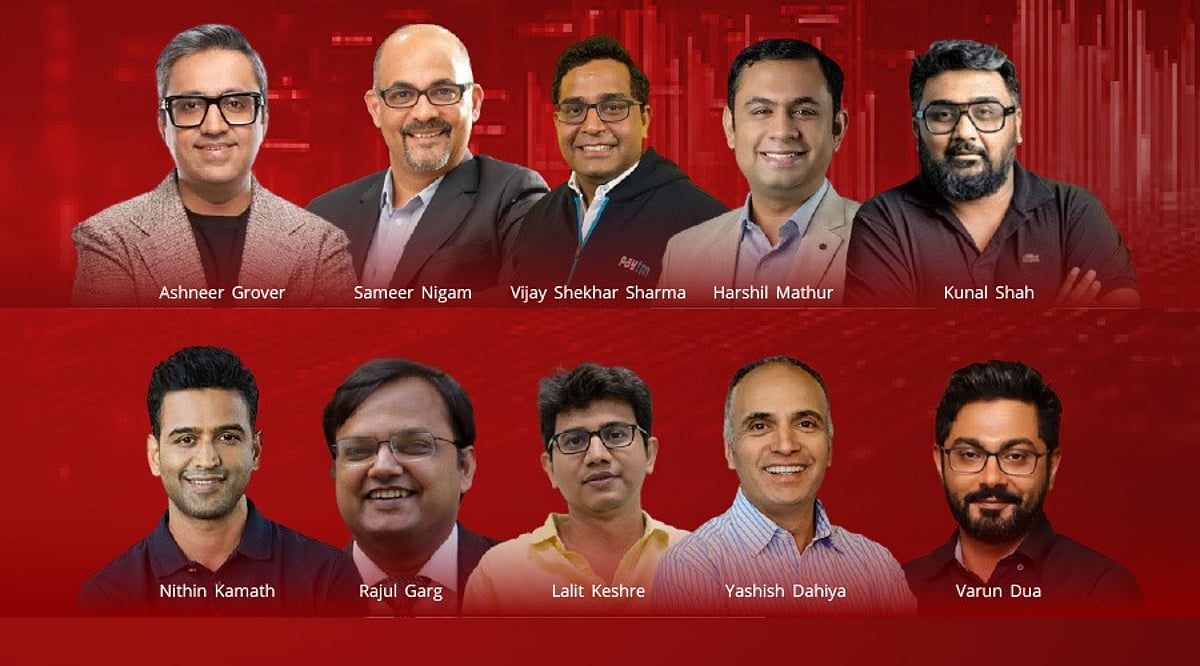
    PhonePe stands as India’s largest digital payments platform. Founded in 2015 by Sameer Nigam, Rahul Chari, and Burzin Engineer, it commands the UPI ecosystem with over 600 million registered users. The company’s revenue crossed ₹5,000 crore in FY24. Its platform spans payments, insurance, digital gold, and mutual funds. An IPO targeting a valuation between $9 billion and $10.5 billion remains on the horizon.

    Paytm

    Vijay Shekhar Sharma founded Paytm in 2000, making it one of India’s oldest fintech institutions. It began as a mobile recharge tool and expanded into wallets, merchant payments, lending, and wealth management. Annual revenues hover above ₹7,000 crore. Despite regulatory headwinds in recent years, Paytm holds a deep merchant network that keeps it embedded in India’s payment infrastructure.

    Razorpay

    Harshil Mathur and Shashank Kumar launched Razorpay in 2014 to solve a clear gap: businesses needed a reliable, developer-friendly payment gateway. The company now processes over $150 billion in annual payment volume and carries a valuation of approximately $7.5 billion. Its product suite covers payment gateways, business banking, payroll automation, and lending products used by thousands of Indian startups and enterprises.

    CRED

    Kunal Shah founded CRED in 2018 around a single insight: financially responsible people deserved better rewards. The platform targets high-credit-score users, offering reward points for credit card bill payments and expanding into personal loans, rent payments, and vehicle services. CRED’s valuation stands at around $6.4 billion, with estimated revenues crossing ₹2,000 crore in FY24.

    Zerodha

    Nithin Kamath and Nikhil Kamath built Zerodha in 2010 to lower the cost of investing. Discount brokerage and a clean trading interface on the Kite platform democratized equity markets for millions of retail investors. Revenue crossed ₹6,000 crore, and the company’s valuation sits between $3 billion and $4 billion. Zerodha remains profitable without external funding, which sets it apart in a sector that often burns capital for growth.

    Groww

    Lalit Keshre, Harsh Jain, Neeraj Singh, and Ishan Bansal founded Groww in 2016 to make investing simple for first-time users. The platform covers mutual funds, stocks, ETFs, IPOs, and fixed deposits under one roof. Its clean design and financial literacy focus helped it attract millions of young investors. Groww became a unicorn and continues expanding its wealth-tech offerings across India.

    Pine Labs

    Pine Labs traces its roots to 1998, making it one of the sector’s most seasoned players. Founded by Rajul Garg, the company built a merchant payment ecosystem spanning over one million touchpoints. Its POS machines and digital finance products serve retail chains and small merchants alike. Valuations range between $5 billion and $6 billion. Pine Labs bridges the offline and online commerce divide at meaningful scale.

    PB Fintech

    Yashish Dahiya founded PB Fintech in 2008, and it operates two major platforms: Policybazaar and Paisabazaar. Policybazaar became India’s largest online insurance marketplace, while Paisabazaar helps consumers compare loans and credit products. The company reported revenue growth of 33% year-on-year in recent results. Its market capitalization ranges between $4 billion and $5 billion.

    BharatPe

    Ashneer Grover and Shashvat Nakrani launched BharatPe in 2018 to serve a neglected segment: small merchants. The company introduced zero-fee UPI QR codes for shopkeepers and followed up with merchant loans and POS solutions. Its revenue surpassed ₹1,000 crore, and its merchant network now covers millions of micro and small retailers. BharatPe remains central to financial access for India’s informal business sector.

    ACKO

    Varun Dua founded ACKO in 2016 to reinvent insurance distribution. Traditional agents and lengthy paperwork gave way to a mobile-first platform where users buy, renew, and claim policies entirely online. ACKO offers motor, health, and travel insurance with faster claim settlements. Its digital-first model has attracted a growing customer base, and the company stands among India’s most prominent insurtech names.

    What These Leaders Share

    Several common threads run through all ten companies on this list: each built its product around mobile-first access, reaching users traditional banks could not. All ten leverage UPI, Aadhaar, or the Account Aggregator framework as foundational infrastructure. AI now powers credit scoring, fraud detection, and customer support across most platforms. Financial inclusion remains a stated goal, whether the customer is a salaried professional or a street-side vendor.

    Final Words

    India’s top fintech leaders did not simply build successful businesses. They rewired how a nation of 1.4 billion people manages money. Each company on this list solved a specific friction point, whether that was payment acceptance for merchants, affordable brokerage for retail investors, or instant insurance for urban professionals. The result is a financial ecosystem that is faster, cheaper, and more accessible than it was even five years ago. The next phase will demand more: regulatory clarity, sustainable unit economics, and deeper penetration into rural markets. The foundations, however, are already strong. India’s fintech sector enters the second half of this decade not as a promising experiment but as a proven engine of economic transformation. The names above have earned their place at the forefront. Now comes the harder task of staying there.

  • Women in Fintech: How Female Leaders Are Driving Innovation and Inclusion in India

    Women in Fintech: How Female Leaders Are Driving Innovation and Inclusion in India

    By Santosh Kadali

    A Sector Built on Access, Now Building for Women

    Fintech in India carries a promise of inclusion at its core. It brings banking and credit to people who never had easy access to either. Women sit at the center of this story directly. President Droupadi Murmu made this point clear at the Black Swan Summit in Bhubaneswar earlier this year. She said India’s fintech journey should be remembered not just for innovation, but for inclusion and gender justice.

    She further shared a striking number too. India has opened over 57 crore Jan Dhan accounts, and more than 56 percent of them belong to women. This detail shows something simple. Financial technology, when built with intent, can close old gaps in access instead of widening them.

    Funding Tells a Mixed Story

    Women-led fintech startups have started to draw serious investor interest. The numbers still show a clear gap, though. In 2024, women-led startups across India raised close to $5 billion. That sum made up 15.2 percent of all funding that went to women-led startups worldwide that year. Fintech stood out as the top sector within that total. It pulled in close to $267 million across 136 deals.

    A report from the Department for Promotion of Industry and Internal Trade found something worth noting. 42 percent of fintech startups in India have at least one woman director or founder. That figure runs well ahead of India’s broader corporate sector, where women hold just 18 percent of board seats. Growth has not stayed limited to big cities either. Women-led fintech ventures outside Tier-1 cities grew by 44 percent over the last decade, says the Ministry of Commerce and Industry.

    The Leadership Gap Still Runs Deep

    Progress at the founder level has not carried over fully into top leadership. Industry research from 2023 to 2025 shows a clear pattern. Women hold fewer than 15 percent of top jobs at Indian fintech firms. The share of women among founders and co-founders sits even lower, close to 10 to 12 percent. Representation drops further still in investment and business-decision roles.

    A KPMG India and AIMA survey from 2026 paints a similar picture across corporate India as a whole. The survey found that 79 percent of women professionals want leadership roles. Only 1 percent of them currently hold a board-level position though. Women now hold 20 percent of leadership roles in mid-market companies, up from 13 percent in 2016.

    This gain matters, though it still falls far short of real parity. The survey’s authors point to a clear reason behind this gap. Structural design, inconsistent execution and uneven accountability across companies keep women from moving past mid-career roles into senior ones. This happens even when ambition and talent are both present.

    Women Leaders Setting the Pace

    Individual leaders across India’s fintech space show what this progress looks like in real terms. Roshni Aslam, co-founder of GoSats, has helped build India’s first rewards app that gives users Bitcoin and gold on their purchases. The platform has grown past 1.1 million users under her work. Stories like hers keep showing up across the sector now, from payments and lending startups to wealth-tech platforms.

    Voices from the wider fintech industry echo the same point about what these leaders bring to the table. Maya Kumar, an executive at fintech firm Banked, has said diversity brings a range of perspectives that form the base of purpose-driven innovation.

    She added that the role women play in driving the sector’s next phase of growth deserves real weight. This kind of leadership shapes more than who runs fintech companies. It shapes how the products themselves get built, tested and delivered to a wide range of users.

    Final Thoughts

    India’s fintech sector stands at a turning point. It has already shown that technology can widen financial access at scale. The next stage of its growth will bring credit expansion, wealth creation and AI-driven finance. This stage will test something important. Can the industry widen access at the leadership level too? Women have already shown their ability to build products, raise funding and lead companies in this space.

    Closing the remaining gaps in senior leadership and investment decisions will decide something bigger. It will decide whether fintech in India truly serves everyone it claims to serve, or keeps its biggest rewards limited to a narrow few. The answer will shape not just the industry’s growth, but its legacy too.

    FAQs

    1. Why are women important to India’s fintech sector?

    Women are driving innovation, building successful startups, improving financial inclusion, and designing products that better serve a diverse customer base across India.

    2. How many fintech startups are there in India?

    India has more than 10,000 fintech startups, making it one of the world’s fastest-growing fintech ecosystems with strong growth in digital payments and financial services.

    3. What challenges do women face in the fintech industry?

    Despite progress, women remain underrepresented in senior leadership, board positions, investment decision-making, and founder roles due to structural and organizational barriers.

    4. How are women-led fintech startups performing in India?

    Women-led fintech startups are attracting increasing investor interest, with fintech emerging as one of the top-funded sectors among women-led ventures in recent years.

    5. What is the future of women in India’s fintech industry?

    As fintech expands into AI-driven finance, digital lending, and wealth management, greater representation of women in leadership and investment roles will be key to building a more inclusive financial ecosystem.

  • Indian Stock Market Opens Higher: Nifty 50 Gains 0.18%, Sensex Rises 70 Points

    Indian Stock Market Opens Higher: Nifty 50 Gains 0.18%, Sensex Rises 70 Points

    Indian equity markets opened on a positive note Wednesday, buoyed by favorable global cues. The Nifty 50 index climbed 44.3 points, or 0.18%, to open at 24,361.45, while the Bank Nifty advanced 78.4 points, or 0.14%, to start at 57,225.90. The Sensex opened at 77,998.66, approximately 70 points higher than its previous close.

    Broader Market Performance

    Midcap and smallcap indices underperformed the benchmarks, with the Midcap index falling 0.4% and the Smallcap index dropping 0.6%. The Indian rupee opened stronger by 29 paise at Rs. 95.39 per dollar on Friday, compared to the previous close of Rs. 95.68.

    Foreign and Domestic Institutional Activity

    Foreign institutional investors (FIIs) were net buyers of shares worth Rs. 3,624 crore on July 30, while domestic institutional investors (DIIs) were net sellers of shares worth Rs. 1,864 crore. FIIs have maintained net buying over the last three sessions.

    Sensex Technical Outlook

    Technically, the Sensex traded comfortably above its 20-day simple moving average (SMA), a largely positive signal. A bullish candle on daily charts and an uptrend continuation pattern on intraday charts suggest further upside potential.

    Shrikant Chouhan, Head of Equity Research at Kotak Securities, noted: “For trend-following traders, now 77,500 would act as a key support zone. Above this, the uptrend wave is likely to continue. On the higher side, the rally could extend till 78,300-78,500. On the flip side, below 77,500, the uptrend would become vulnerable. Below this, traders may prefer to exit their long positions.”

    Nifty 50 Outlook

    The Nifty 50 continues to display a constructive technical setup, having closed above last week’s high and maintaining a pattern of higher highs and higher lows on the daily chart.

    Bajaj Broking commented: “Going ahead, bias remains positive as the index continues to form higher highs and higher lows in daily charts, and we expect the index to maintain positive bias and head towards 24,370 and 24,480 in the coming sessions. Wednesday’s gap area of (24,041-24,136) is likely to act as immediate support.”

    The benchmark index is expected to gradually move toward the crucial resistance zone of 24,500-24,600, which aligns with the current month’s high and the peak recorded in April 2026. On the downside, the brokerage sees immediate support in the 23,800-24,000 zone, where the 20-day and 50-day exponential moving averages (EMAs) converge.

    Bank Nifty Outlook

    Bank Nifty continued to consolidate around the 57,000 mark after forming its second consecutive high-wave candle, indicating stock-specific movement within a broader sideways trend.

    A decisive breakout above Wednesday’s high and the 57,500 mark could trigger fresh buying momentum and pave the way for a rally toward 58,000. However, failure to surpass 57,500 levels is likely to keep the index range-bound between 56,500-57,500. On the downside, the 56,500-56,000 zone remains a crucial support area, reinforced by the lower band of the six-week trading range, an ascending trendline, and the 52-week EMA.

    Bajaj Broking Research added: “As long as the index holds above this support cluster, the broader outlook is expected to remain constructive.”

    Disclaimer: This article is for informational purposes only and does not constitute investment advice. Readers are encouraged to conduct their own research before making any investment decisions. Analytics Insight does not provide financial advice or guidance on stocks or cryptocurrencies.

  • Gold Price Today: MCX Gold Falls 0.57% to Rs 1,42,413 as Profit Booking and Stronger Dollar Weigh

    Gold Price Today: MCX Gold Falls 0.57% to Rs 1,42,413 as Profit Booking and Stronger Dollar Weigh

    Gold prices on the Multi Commodity Exchange (MCX) declined on July 31, as profit booking and a stronger US dollar weighed on the precious metal. August gold futures fell 0.57% to Rs 1,42,413 per 10 grams. September silver futures also declined by 0.53% to Rs 2,18,805.

    In the international market, spot gold dropped 0.6% to $4,076.53 per ounce, while US gold futures for August delivery lost 0.4% to $4,074.20. Spot silver fell 0.8% to $58.48 per ounce, platinum slid 1.7% to $1,631.77, and palladium declined 0.8% to $1,294.

    Crude oil prices also edged lower, with Brent crude futures falling 0.98% to $88.16 per barrel and US West Texas Intermediate (WTI) declining 1.47% to $82.36 per barrel.

    According to the CME FedWatch Tool, traders now see a 63% probability of a rate hike by the US Federal Reserve in September. This expectation, combined with a stronger dollar and escalating tensions in the Middle East, has injected volatility into the precious metals market.

    Despite the daily decline, gold has found support around the $4,000 level, attracting buyers on dips. “Gold is showing a mild negative bias today amid profit-taking and a moderate bounce in the US dollar, following the metal’s gains yesterday,” said Tim Waterer, chief market analyst at KCM Trade. He added that gold has had a better run this month, with key support near $4,000.

    Key Levels to Watch

    Internationally, gold has support at $4,064 and $4,020, with resistance at $4,120 and $4,155 per troy ounce. Silver has support at $58.20 and $57.70, with resistance at $59.80 and $60.60 per troy ounce.

    On MCX, gold has support at Rs 1,42,400 and Rs 1,41,750, with resistance at Rs 1,44,000 and Rs 1,45,100. Silver has support at Rs 2,17,700 and Rs 2,16,000, with resistance at Rs 2,22,200 and Rs 2,24,500.

    Domestic and US Gold Prices

    In India, 24K gold rose by Rs 27 to Rs 1,44,600 per 10 grams, while 22K gold advanced by Rs 25 to Rs 1,32,550. Prices in Mumbai and Kolkata were at Rs 1,44,600, Delhi at Rs 1,44,750, and Chennai at Rs 1,44,600.

    US gold prices found support from bargain buying near the $4,000 level, as investors weighed Middle East developments and their impact on the US rate outlook.

  • Top Kid and Teen Savings Accounts in India for 2026: Which Bank Fits Your Child’s Stage

    Top Kid and Teen Savings Accounts in India for 2026: Which Bank Fits Your Child’s Stage

    Choosing the right savings account for a child goes beyond interest rates. Age rules, parental controls, and digital access shape how the account works over time. Comparing these features across banks helps families pick an account that matches their child’s developmental stage, building saving habits while preparing teenagers for greater financial independence.

    What Sets One Account Apart from Another

    Four factors decide whether an account works well for a specific child:

    • Age eligibility determines whether the account must run through a guardian or can be handled independently.
    • Minimum balance rules vary widely. Several minor accounts offer zero-balance options while others expect a few thousand rupees each month.
    • Documentation requirements shift: guardian-operated accounts typically need the guardian’s KYC and the child’s birth certificate; teen accounts often require the minor’s own PAN or Aadhaar.
    • Conversion at 18: almost every bank requires the account to convert into a standard savings account once the child turns 18, along with fresh KYC.

    Interest rates are worth a glance, but most minor accounts sit in a similar range, so this factor rarely changes the decision on its own.

    How Accounts Work for Younger Children

    For children below the self-operation age, a parent or legal guardian typically runs the account. Deposits, withdrawals, and any card requests go through the guardian, since a young child cannot independently enter into a banking contract. There is no separate transaction access for the child, which keeps things simple: one signatory, full visibility, and an easy way to build a saving habit through regular, visible deposits.

    How Teen Accounts Build Toward Independence

    When a child reaches the age of self-operation, many banks provide the ability for children to operate the account themselves. They can be issued a debit card, have access to mobile banking and internet banking, and make transactions without guardian approval for each one. However, restrictions remain:

    • Minor debit cards typically have lower daily withdrawal and spending limits than adult cards.
    • Some banks also impose annual limits.
    • When limits are exceeded, the bank may temporarily restrict certain account activity.
    • Parents or guardians generally continue to receive transaction alerts, even when they don’t need to approve each transaction.

    Comparing India’s Major Banks

    • SBI runs a two-tier system: a joint account for children of any age and a self-operated version once the child can sign consistently, generally from age 10.
    • ICICI Bank follows a similar split, with its self-operated teen product offering some of the more detailed transaction controls among major banks.
    • HDFC Bank keeps the process straightforward, moving a child from a guardian-run account to self-operation at the same age threshold most competitors use.
    • Axis Bank pairs its minor account with personal accident insurance, a feature not every bank includes by default.
    • Kotak Mahindra Bank leans toward lifestyle benefits and discounts alongside the core savings product, appealing to families who value perks over early independence.

    Exact limits and balance requirements shift periodically across all five, so confirming current terms directly with the bank remains the safer approach before opening any account.

    Choosing Based on the Child’s Stage, Not the Bank’s Name

    The clearest way to decide is to ask: does the child need protection or practice? Younger children benefit most from a guardian-run account that builds visible saving habits without introducing spending access too early. Teenagers benefit from a self-operated account with capped, supervised independence, where real financial habits take shape. Families with a child nearing 18 should check the bank’s conversion process well in advance, since some require fresh documentation that takes time to arrange.

    Common Mistakes Worth Avoiding

    • Choosing an account by interest rate alone, overlooking whether the operation type suits the child’s age.
    • Granting debit access too early, before a child is ready to manage it responsibly.
    • Skipping documentation checks, then finding an application stalled over a missing PAN or Aadhaar.
    • Ignoring the 18th birthday conversion entirely, leaving a teenager with a frozen account right when independence matters most.

    n

    Final Thouight

    Banking habits formed at ten often outlast the account itself. The product a family picks today matters less than the discipline it quietly teaches along the way — a lesson most balance sheets never capture, but most adults remember clearly.

    Frequently Asked Questions

    What is a minor savings account?

    A minor savings account is a bank account designed for children below 18 years of age. Depending on the bank and the child’s age, it may be operated by a parent or guardian or, in some cases, by the minor under specific conditions.

    Can teenagers open a savings account without a parent?

    Many banks allow older teenagers to operate savings accounts independently, subject to their age and the bank’s eligibility rules. Younger children generally require a parent or guardian to open and manage the account.

    What should parents consider before choosing a kids’ savings account?

    Parents should compare age eligibility, parental controls, minimum balance requirements, digital banking access, debit card availability, fees, and account features that encourage healthy saving habits.

    Which banks offer savings accounts for kids and teenagers in 2026?

    Several leading banks, including SBI, ICICI Bank, HDFC Bank, Axis Bank, and Kotak Mahindra Bank, offer savings accounts designed for children and teenagers with varying features, supervision options, and digital banking services.

    Do kid and teen savings accounts come with debit cards and mobile banking?

    Many banks provide debit cards, mobile banking, and internet banking for eligible minor or teen accounts. However, transaction limits, parental supervision, and available features vary by bank and account type.

  • Top AI Accounting Software for Small Businesses and Enterprises in 2026

    Top AI Accounting Software for Small Businesses and Enterprises in 2026

    Key Takeaways

    • AI accounting tools improve accuracy and reduce manual financial tasks.
    • Small businesses and enterprises can choose solutions based on their needs.
    • Smart features help companies gain better control over financial data.

    AI accounting software helps small firms and large enterprises handle money tasks with better speed, accuracy, and control. In 2026, many companies choose AI tools to reduce manual work, create clear reports, and manage financial data with fewer errors. These platforms support tasks such as expense control, invoice creation, tax support, cash flow checks, and financial analysis. Modern AI features help firms make better choices with real-time data and smart suggestions.

    QuickBooks Online

    QuickBooks Online remains one of the most popular AI accounting platforms for small businesses. It offers invoice tools, expense control, bank connection, tax support, and financial reports. AI features help spot unusual costs, predict cash flow changes, and provide useful financial insights. The software suits startups, small firms, and growing companies that need simple financial control.

    Xero

    Xero provides a clean accounting system with strong AI support for small and mid-size companies. The platform helps with invoice work, expense records, payroll tasks, and financial reports. Its smart tools help users save time and keep records accurate. Xero also supports teamwork with secure access for accountants and company staff.

    Zoho Books

    Zoho Books has affordable AI accounting solutions that assist small businesses that require complete financial management. The program helps users create invoices, maintain tax records, review expenses, and keep track of payments. Thanks to AI elements, keeping data organized and knowing the company’s financial status is easy. Moreover, the connection with other programs by Zoho can be useful for companies that want a total digital solution.

    FreshBooks

    FreshBooks focuses on simple accounting needs for freelancers, small firms, and service companies. It provides invoice tools, expense records, client details, and financial reports. AI features help create better money insights and reduce time spent on routine tasks. The platform offers a user-friendly design for firms that prefer easy financial tools.

    Sage Intacct

    Sage Intacct serves mid-size firms and enterprises that need advanced financial control. The software offers strong AI features for reports, cash flow analysis, and business data review. It supports complex company structures with detailed financial information. Many growing firms choose Sage Intacct for better control over large financial operations.

    NetSuite ERP

    NetSuite ERP is an all-in-one platform where financial, accounting, and business processes can be executed. The solution is suitable for large businesses that require advanced instruments for financial reasoning and international operations. AI functions help reveal trends in financial data, which expedites business decisions. The application works effectively in case of complex requirements.

    Wave Accounting

    Wave Accounting offers a simple and budget-friendly option for small businesses. It provides invoice creation, expense records, and basic financial reports. AI tools help small firms organize money details with less effort. Wave works well for startups and independent professionals who need basic accounting support.

    Odoo Accounting

    Odoo Accounting offers businesses an adaptable solution that can be tailored to their specifications. The program integrates accounting with sales, inventory management, customer care, and other applications. The platform employs adequate AI features such as data analysis, financial forecasting, and automation of processes. Odoo is ideal for businesses that require a flexible platform that can change as they grow.

    TallyPrime

    TallyPrime remains a trusted accounting choice for many small and large companies. It supports tax work, financial records, inventory control, and company reports. AI features add better analysis and help companies understand financial details faster. The software offers strong support for firms that need reliable accounting functions.

    Microsoft Dynamics 365 Finance

    Microsoft Dynamics 365 Finance helps enterprises handle complex financial needs. The platform offers AI tools for financial analysis, forecasts, cost control, and business insights. It connects with other Microsoft services and supports large organizations with advanced financial requirements. The software helps companies maintain better financial visibility.

    SAP S/4HANA Finance

    SAP S/4HANA Finance serves large enterprises with global financial demands. It provides AI-based insights, financial reports, compliance support, and advanced data analysis. The platform helps organizations manage large financial systems with better accuracy. It remains a strong choice for companies with worldwide operations.

    Oracle Fusion Cloud ERP

    Oracle Fusion Cloud ERP delivers enterprise-level accounting and finance solutions. It includes AI features for financial analysis, risk checks, forecasts, and process automation. The platform supports large companies with complex structures and global needs. Oracle helps firms gain deeper control over financial data.

    Why This Matters

    The business world has embraced AI accounting software due to the need for prompt control over finances and accurate management of financial information. The technology enables businesses to minimize human errors and provide better insights into their finances. AI-powered software solutions facilitate effective analysis, automation, and decision making in terms of finance.

    Final Thoughts

    AI accounting software in 2026 presents solutions suitable for all corporations. Smaller companies have the option of selecting easy-to-use tools like QuickBooks Online, Xero, FreshBooks, or Wave. More established corporations can use sophisticated software such as NetSuite ERP, SAP S/4HANA Finance, or Oracle Fusion Cloud ERP. Which solution is best for the company depends on several factors such as the size of the business, budget, and future plans entailed in the incorporation of AI tools in accounting.

    FAQs

    1. What is AI accounting software? AI accounting software uses artificial intelligence features to automate financial tasks, analyze data, and provide useful business insights.
    2. Which AI accounting software is best for small businesses? QuickBooks Online, Xero, Zoho Books, FreshBooks, and Wave Accounting offer useful features for small businesses.
    3. Can AI accounting software reduce accounting errors? Yes, AI tools help detect unusual records, organize financial data, and improve accuracy in accounting processes.
    4. Is AI accounting software suitable for large enterprises? Yes, platforms such as SAP S/4HANA Finance, Oracle Fusion Cloud ERP, and NetSuite ERP support complex enterprise needs.
    5. What features should businesses check before choosing AI accounting software? Businesses should review automation features, reporting options, security, pricing, integrations, and scalability before selecting a platform.
  • Indian Stock Market Ends Mixed: Sensex Rises 274 Points, Nifty Holds Above 24,300, Bank Nifty Slips

    Indian Stock Market Ends Mixed: Sensex Rises 274 Points, Nifty Holds Above 24,300, Bank Nifty Slips

    The Indian stock market ended on a mixed note on Thursday, following a positive session the previous day. Despite weak global cues, the benchmark indices showed resilience, with the Sensex rising 273.55 points (0.35%) to close at 77,928.15, and the Nifty 50 gaining 0.27% to finish above the 24,300 mark at 24,317.15. However, the Bank Nifty declined by 58.40 points (0.10%) to settle at 57,147.50, while the India VIX rose by 1.23%.

    Market sentiment was influenced by the US Federal Reserve’s decision to hold interest rates at 3.50%-3.75%, which led to cautious trading. Additionally, rising oil prices—driven by US airstrikes against Iran and the ongoing Middle East tensions—added to investor uncertainty. Brent crude futures gained 1.5% to $92.10 per barrel, and US West Texas Intermediate futures advanced 0.9% to $85.23 per barrel.

    Top Gainers and Losers

    Selective buying was observed in automobile, mining, and manufacturing stocks. Mahindra & Mahindra emerged as the top gainer, rising 2.26%, followed by Maruti Suzuki, Coal India, Eicher Motors, and TVS Motor. On the downside, Adani Ports led the losses, falling 3.38%, while HDFC Life, Shriram Finance, Jio Financial Services, and SBI Life Insurance also traded lower as investors booked profits in financial and insurance stocks.

    Key Market Drivers

    The benchmarks rose on buying in select heavyweights, but mid- and small-cap segments witnessed profit booking after the Fed’s rate decision. Expectations are growing that the central bank may raise rates in September due to inflation risks from the Middle East conflict. Three out of 12 Fed policymakers voted in favor of a rate hike on July 29. The rupee closed at 95.68 per US dollar, little changed from the previous session’s 95.6475.

    Overall, the Indian stock market ended on a mixed note, with gains in auto and mining stocks supporting the indices, while persistent global uncertainties and geopolitical tensions kept investor sentiment cautious.

  • Unlock Passive Income: How Automated Vending Machines Can Boost Your Business Revenue

    Unlock Passive Income: How Automated Vending Machines Can Boost Your Business Revenue

    Automated vending machines have drawn interest from entrepreneurs and companies seeking an additional source of income without much daily oversight. As this form of retail expands, the machines are moving well beyond the traditional role of selling snacks and drinks. Newer models can offer fresh food, entertainment, personalized experiences, and interactive services through advanced vending technology.

    Automated vending solutions, from cotton candy and popcorn machines to AI photo booths, balloon dispensers, and claw machines, are giving businesses new ways to generate revenue while making the customer experience better. Cashless payments, remote monitoring, and automated operation allow the machines to run throughout the day with little supervision.

    Automated vending machines offer a flexible way to generate passive income, whether you are launching a side business, growing an established company, or seeking new investment opportunities. They also meet the growing demand for convenient self-service solutions.

    Why Automated Vending Machines Are a Profitable Business Opportunity

    Automated vending machines can bring in revenue without staff having to be present all the time. After installation in a suitable location, a machine can serve customers throughout the day, with operators checking its performance remotely.

    Modern vending machines accept several forms of payment, such as contactless cards, mobile wallets, QR codes, and digital payment applications. As a result, customers can make purchases quickly and conveniently, with access available to a broad range of users. Some machines also offer remote inventory management and performance monitoring, so operators can review sales, stock levels, and maintenance needs from nearly anywhere.

    Automated vending machines offer businesses several practical advantages:

    • They can run throughout the day with little supervision.
    • They reduce staffing and operating costs.
    • They create recurring revenue.
    • They accept multiple cashless payment methods.
    • Expand into multiple locations.
    • Monitor machine performance remotely.
    • Improve customer convenience.

    Interactive vending machines can draw even more customer attention. With cotton candy machines, people watch as fresh cotton candy is prepared right in front of them; popcorn machines, meanwhile, serve freshly made snacks within minutes. AI photo booths let visitors make personalized keepsakes, while balloon vending machines create colorful balloon designs. Claw machines add another kind of appeal, offering the fun of trying to win a prize.

    By combining products and entertainment, these machines can keep customers at a location longer and often encourage them to return. For businesses, that means more chances to earn steady revenue while improving the customer experience.

    How to Build a Successful Passive Income Vending Business

    An automated vending machine business succeeds largely through two decisions: selecting suitable machines and positioning them where people naturally pass through. Shopping malls, airports, cinemas, family entertainment centers, hotels, tourist attractions, office buildings, amusement parks, and event venues can all bring a business into contact with large numbers of potential customers.

    Before settling on a site, business owners need to look at the practical details. How many visitors come through each day? Who are those customers, and is there enough room for installation? Rental costs matter as well, along with the machine’s visibility and the level of local competition. Access to electricity and internet, and maintenance accessibility are also important.

    Automated vending machines also offer room to scale. An entrepreneur might start with one and add machines in other locations as revenue increases. Remote-management features make overseeing several machines far simpler than running multiple traditional retail stores.

    Branding matters for long-term success, too. Attractive machine designs, digital displays, and interactive customer experiences can set a business apart and leave a lasting impression. Unique offerings, freshly prepared cotton candy, hot popcorn, AI-generated photos, colorful balloons, or interactive prize games, may also bring customers back and prompt them to recommend the experience to others.

    As automation and artificial intelligence reshape retail, automated protein shake vending machines are drawing growing interest from businesses looking for dependable sources of passive income. Investing in newer vending technology can give companies recurring revenue while offering customers convenience and experiences that are engaging and memorable.

  • India’s Fintech Revolution: Unlocking a Trillion-Dollar Market Opportunity

    India’s Fintech Revolution: Unlocking a Trillion-Dollar Market Opportunity

    India’s financial landscape has undergone a remarkable transformation over the past decade. What began as a push toward digital payments has evolved into a thriving fintech ecosystem that is reshaping how millions save, borrow, invest, and transact daily.

    Traditional banking with its long, tedious paper forms has given way to financial services accessible at the tap of a smartphone. The country’s robust digital public infrastructure, expanding internet access, and a young, tech-savvy population have created fertile ground for fintech innovation.

    Today, India boasts one of the world’s largest digital payment ecosystems, alongside a growing network of startups building tools for lending, insurance, wealth management, and embedded finance. With artificial intelligence (AI) emerging as a new layer of innovation, many industry experts believe India’s fintech sector is entering its next growth phase — one that could eventually make it one of the country’s trillion-dollar industries.

    UPI Became a Game Changer

    The launch of the Unified Payments Interface (UPI) in 2016, created by the National Payments Corporation of India (NPCI), gave a huge boost to the fintech revolution. UPI enables instant payments from one bank account to another via mobile phones.

    Consumer behavior shifted dramatically. QR codes are now ubiquitous across the country — from roadside tea stalls and vegetable vendors to shopping malls and multinational corporations. Digital payments are no longer confined to urban users; they have become accessible in smaller towns and rural areas.

    The success of UPI opened the door for further fintech innovations. Startups began crafting offerings for lending, saving, investing, and insurance based on users’ digital payment histories.

    Booming Fintech Ecosystem

    India’s fintech applications extend far beyond payments. Fintech startups now operate across digital lending, wealth management, insurtech, personal finance, embedded banking, and cross-border payments.

    The large number of unbanked individuals and micro, small, and medium enterprises (MSMEs) has created immense opportunities for fintech companies to fill gaps left by traditional banking. These startups help individuals access banking services through alternative credit scoring, paperless onboarding, and quick loan approvals — even for those with low or no credit ratings.

    Digital lending has become a reliable source of working capital for small enterprises. Meanwhile, investment fintech platforms have opened up mutual funds, shares, and government securities to novice investors.

    AI Powering the Next Wave of Innovation

    Artificial intelligence is emerging as the backbone of fintech innovation. Organizations are using AI algorithms to detect fraud, automate customer service, and improve credit underwriting.

    Banks and fintech companies leverage AI to enhance compliance processes, monitor suspicious transactions, and reduce operational expenses. Loan approvals are faster, and risk assessment improves through the use of alternative data sources.

    As digital transactions increase, AI will be crucial for handling larger volumes securely and conveniently.

    Why Investors Remain Optimistic

    While global venture capital investment has experienced ups and downs, India continues to attract strong investment in fintech. This is not due to cyclical trends but to structural factors.

    The country’s growing digital economy, widespread smartphone usage, supportive government policies, increased internet penetration, and the world’s largest real-time payment system collectively create a solid foundation for future growth. Financial inclusion presents significant opportunities, as many Indians enter the formal financial system for the first time.

    Challenges on the Road Ahead

    Rapid growth is not without risks. Cybersecurity threats, digital fraud, and data privacy concerns have heightened focus on consumer safety. Regulations from the Reserve Bank of India are tightening, especially regarding digital lending and payment processes.

    Profitability remains an issue for many fintech companies operating with zero-cost or heavily subsidized products. Ultimately, consumer trust will be the deciding factor.

    The Trillion-Dollar Opportunity

    India’s fintech evolution extends beyond replacing cash with digital payments. It involves building a complete financial ecosystem where payment systems, lending services, investment platforms, insurance schemes, and commerce increasingly integrate across digital platforms.

    The coming decade will see increased partnerships among banks, fintech companies, regulators, and technology providers. Artificial intelligence, digital public infrastructure, and supportive policies will play pivotal roles in accelerating this process.

    Given the current momentum, India’s fintech sector could become one of the most notable success stories of the Indian economy — contributing to financial inclusion, capital generation, and the transformation of banking for over a billion people.

  • How Vijay Shekhar Sharma Bet on a Cashless India and Won

    How Vijay Shekhar Sharma Bet on a Cashless India and Won

    Every day, millions of Indians scan a QR code without a second thought. From roadside tea stalls and neighborhood kirana stores to taxi rides and hospital bills, digital payments have become part of everyday life. Long before that familiar QR sticker appeared across the country, Vijay Shekhar Sharma was betting that India’s relationship with cash would eventually change.

    From a Hindi-Medium Classroom to Big Dreams

    Sharma grew up in Harduaganj, a small town in Uttar Pradesh, in a Hindi-medium household where English was not spoken. When he entered engineering college in Delhi at fifteen, the coursework was not what slowed him down—the language was. Textbooks, lectures, and classroom conversations all arrived in a language he was still learning to read fluently, let alone speak with confidence. He has often said that English, not mathematics or physics, was the steepest climb of his early life. That struggle shaped how he approached everything afterward. Sharma taught himself English by reading everything he could find, and he carried the same self-taught instinct into technology.

    Building One97 Before Smartphones Took Over

    While still in college, he built indiasite.net, an early web content venture. He sold it two years later for a million dollars, a deal that gave him both confidence and capital for what came next. In 2000, he started One97 Communications, offering mobile content and services at a time when most of India had barely heard of the internet, let alone owned a smartphone. The dot-com crash tested that first venture severely. One97 survived by pivoting and adapting, a pattern Sharma would repeat throughout his career.

    The Bet That Became Paytm

    Those years also changed how Sharma viewed technology. While many internet companies were still thinking in terms of websites, he had become convinced that India’s next computing platform would be the mobile phone. Paytm began modestly, as a platform for prepaid mobile recharges, but the ambition behind it was never modest. Sharma wanted to turn the phone into a wallet—one that could hold money the way a physical wallet did and move it as easily as a text message.

    How Demonetisation Accelerated Paytm’s Growth

    For years, that vision grew steadily rather than explosively. Then, in November 2016, the government withdrew high-value currency notes from circulation overnight. Cash, the backbone of Indian commerce, disappeared from circulation almost instantly. Demonetisation did not create Sharma’s vision; it accelerated one that already existed. While demonetisation drove a surge in adoption, Paytm had already spent years building its payments infrastructure, merchant network, and consumer base before the policy took effect. Sharma became the public face of a shift the entire country was living through at once.

    The IPO That Changed the Conversation

    Growth on that scale eventually demands a different kind of scrutiny. In 2021, Paytm’s parent company, One97 Communications, went public in what was then India’s largest IPO, raising close to 18,300 crore rupees. The transition from startup darling to publicly listed company fundamentally changed the questions investors asked. Growth alone was no longer enough. Paytm’s listing was followed by a sharp decline in its share price as public investors questioned when, or if, the company would turn a profit. The optimism that had carried Paytm through a decade of private funding rounds met a far more skeptical audience.

    Regulatory Challenges and Rebuilding Trust

    If the IPO tested Paytm’s financial discipline, what followed tested its governance. The Reserve Bank of India moved against Paytm Payments Bank in 2024, citing persistent compliance concerns and ultimately restricting most of its operations. The action marked one of the biggest regulatory setbacks in Paytm’s history. Beyond the operational impact, it raised broader questions about governance, compliance, and how quickly fintech companies could scale while still meeting banking regulations. It forced Sharma into a period of restructuring and rebuilding, separating the payments bank from the broader Paytm ecosystem and working to reassure both regulators and customers that the business could operate within tighter compliance boundaries. Public markets demanded profitability. Regulators demanded stronger governance. Both pressures arrived within a few years of each other, and both forced Sharma to prove that Paytm could mature into an institution, not just remain a fast-growing startup.

    The Legacy of Vijay Shekhar Sharma

    Vijay Shekhar Sharma’s story mirrors the evolution of India’s digital economy itself. It began with a language barrier in a small town, accelerated through bold bets on mobile technology, and was tested by the realities of public markets and regulation. Sharma has often credited his upbringing for giving him the discipline to keep rebuilding after setbacks—a quality that has become as important as his willingness to take risks. His journey suggests that building a company at a national scale is less about getting a single decision right than about repeatedly adapting as technology, markets, and institutions evolve.