Category: Finance

  • Hero Motors IPO Listing: Shares Open 2.4% Below Issue Price Despite 6.66x Subscription

    Hero Motors IPO Listing: Shares Open 2.4% Below Issue Price Despite 6.66x Subscription

    Hero Motors shares made a subdued stock-market debut on September 23, 2026, opening below their initial public offering (IPO) price despite strong demand during the subscription period.

    Soft Listing on NSE and BSE

    The stock opened at Rs. 82 on the National Stock Exchange (NSE), a 2.38% discount to the final IPO price of Rs. 84 per share. On the Bombay Stock Exchange (BSE), Hero Motors listed at Rs. 82.10, down 2.26% from the issue price.

    The muted listing was broadly in line with grey market signals ahead of the debut. However, grey market premium (GMP) data is unofficial and does not guarantee actual listing performance.

    IPO Subscription: 6.66 Times Covered

    The Rs. 1,000-crore Hero Motors IPO attracted bids for 58.97 crore shares against 8.86 crore shares on offer, translating to an overall subscription of 6.66 times.

    • Non-institutional investors: 9.86 times
    • Retail investors: 8.23 times
    • Qualified institutional buyers (QIBs): 1.49 times

    The bidding window opened on September 16 and closed on September 18. The company set the price band at Rs. 79-84 per share and fixed the final issue price at the upper end.

    Fresh Issue, Offer-for-Sale and Fund Utilization

    The IPO combined a fresh issue of Rs. 600 crore with an offer-for-sale (OFS) of Rs. 400 crore. Selling shareholders included O P Munjal Holdings and Hero Cycles.

    Hero Motors plans to use part of the fresh proceeds to repay or prepay borrowings. It has also earmarked funds to buy equipment for expanding capacity at its Gautam Buddha Nagar facility in Uttar Pradesh. Remaining proceeds will support acquisitions, strategic initiatives, and general corporate purposes.

  • Why Modern Brokerages Must Evolve Beyond Trade Execution

    Why Modern Brokerages Must Evolve Beyond Trade Execution

    The retail brokerage industry has long operated on a simple model: generate transaction volume, charge for execution, and move on. But as traders and active investors become more sophisticated, the traditional terminal-only relationship is proving insufficient. When the trading session ends, customer funds typically vanish into banking channels, offline accounts, or external payment networks. That fragmentation is exactly what forward-thinking firms are now trying to eliminate.

    Mikhail Bobkin, Co-Founder and CEO of rewalt:, believes the future lies in treating capital as a continuous journey rather than a series of isolated transactions. “The problem in finance isn’t a lack of products; it’s the walls between them,” he explains. “A typical customer earns money in one place, banks it somewhere else, transfers it to a broker to trade, uses another platform for digital assets, and moves it again when they want to spend it. Every institution controls one part of that journey, with its own incentives, fees, and restrictions.”

    Bobkin argues that Rock-West’s evolution into rewalt: is not a departure from its founding principles but a natural extension of them. The company started with fair treatment for traders; now it aims to build infrastructure that lets capital flow naturally between trading, holding, converting, transferring, and spending.

    Why Conflict-Free Execution Is the Precondition for Ecosystems

    Many financial brands claim to be multi-asset ecosystems, yet their underlying revenue models remain contradictory. When a broker’s profitability depends on aggressive churn or client losses, expanding into payments or card services creates an irreconcilable conflict of interest. A lasting platform, Bobkin stresses, must be built on a pure-agency environment.

    “Integration alone doesn’t create an ecosystem,” he says. “A broker can add a card. A bank can add trading. An exchange can add payments. But if every product is driven by conflicting incentives, you’ve simply put several businesses behind one login.”

    Rock-West adopted an A-Book philosophy precisely to avoid profiting from customer losses. That alignment becomes even more critical as the company expands beyond brokerage. “If a customer decides not to trade today and instead wants to hold, move, convert, or spend their capital, that shouldn’t be a bad outcome for us,” Bobkin adds. “A customer who doesn’t trade today should still be a valuable customer tomorrow.”

    Reimagining the Capital Lifecycle Around the Trader

    The classic broker workflow — deposit via card, trade an instrument, withdraw back to a bank — is fundamentally obsolete. Modern participants expect capital to remain active, liquid, and instantly accessible, whether they are pursuing multi-asset exposure, following top strategies through copy trading, or funding daily expenses directly from their trading balance.

    “We start with a different question,” Bobkin explains. “Instead of asking, ‘What product can we sell this customer?’ we ask, ‘What is this customer trying to do with their capital?’” The resulting experience is simple: Fund. Trade. Move. Convert. Spend. All within a single platform. “Customers shouldn’t have to rebuild their financial identity every time their money changes purpose,” he says.

    Institutional Rigor as a Seamless Customer Experience

    Professional financial firms are expected to maintain operational integrity, tier-one liquidity aggregation, and rigorous regulatory oversight. Yet legacy platforms often force customers to confront institutional complexity at the worst possible moment. rewalt: designs its compliance layer to absorb that administrative burden quietly on the server side.

    “Regulation isn’t the enemy of customer experience — poor architecture is,” Bobkin asserts. KYC, AML, security, suitability, and sanctions controls exist for good reason. The company’s responsibility is to handle that complexity intelligently without making customers navigate it. “Compliance should create safety; it shouldn’t become the product.”

    Fairness Beyond the Closed Position

    The brokerage market is approaching an inflection point. Low spreads and fast execution are now baseline expectations, not differentiators. The next competitive frontier is total capital mobility — bringing the same institutional-grade transparency from execution into everyday financial life.

    “Our ambition is to make the movement of capital feel more like the movement of information,” Bobkin concludes. Money still lives in silos: banks, brokers, exchanges, wallets, payment processors, and cards all impose their own entry and exit rules. rewalt: wants to reduce those boundaries without sacrificing the safeguards that financial infrastructure requires.

    Rock-West started with the belief that customers should be treated fairly when they trade. rewalt: asks the logical next question: Why should that fairness stop when the trade ends?

  • Gold Price Update: MCX Gold Holds Steady at Rs. 1,53,171 as Oil Prices Decline, Brent at $101.6

    Gold Price Update: MCX Gold Holds Steady at Rs. 1,53,171 as Oil Prices Decline, Brent at $101.6

    Gold traded flat on MCX on September 22 amid a continued decline in oil prices over the past few sessions, which reduced expectations of further interest-rate hikes by the Federal Reserve. October gold futures rose 0.05% to Rs. 1,53,171 per 10 grams, while September silver futures advanced 0.13% to Rs. 2,39,620.

    Meanwhile, Brent crude futures rose 1.25% to USD 101.6 per barrel. US West Texas Intermediate (WTI) edged higher by 0.96% to USD 93.26 per barrel.

    Domestic Gold Prices

    24K gold rose by Rs. 17 to Rs. 1,54,750 per 10 grams, while 22K gold also advanced by Rs. 15 to Rs. 1,41,850. By city, Mumbai and Kolkata mirrored prices at Rs. 1,54,750, while Delhi was at Rs. 1,54,900 and Chennai at Rs. 1,54,750.

    US Gold Prices

    US gold prices struggled for momentum on Tuesday as expectations of interest rates staying higher for longer weighed on sentiment, with investors awaiting comments from US Federal Reserve officials for policy clues. Spot gold declined 0.08% at USD 4,340.26 per ounce. US gold futures fell 0.18% at USD 4,376.20. Spot silver fell by 0.12% to USD 65.95 per ounce while platinum dipped 0.81% to USD 1,789.83 and palladium declined 0.94% at USD 1,295.78 per ounce.

    Key Levels to Watch

    With US economic data limited this week, investors will focus on comments from Fed officials for signs of whether the central bank is leaning toward another rate increase in October, as well as on crude oil prices, said Chris Weston, head of research at Pepperstone.

    “While crude has come modestly off its recent highs, a reversal higher that builds inflation expectations would only intensify the rates story, and gold would likely continue to face headwinds,” said Weston.

    XAU/USD traded around USD 4,340 on the daily chart, holding just above the medium-term moving averages. The 50-day simple moving average (SMA) at USD 4,300 and the 100-day SMA at USD 4,320 sit below price and suggest underlying trend support, while USD 4,400 acts as immediate resistance. The ongoing test of the rising support trendline around USD 4,340 keeps the broader uptrend intact, and a neutral near-term bias is supported by the Relative Strength Index (RSI) hovering close to the 50 line at 48.5.

    On the topside, immediate resistance emerges at USD 4,400, with a more significant barrier at the 200-day SMA around USD 4,542. On the downside, support clustered around USD 4,340 is the first level to watch; a daily close below it would expose USD 4,320.

  • MCX Gold Holds Steady at Rs.1,52,795 as Oil Prices Decline and Fed Rate Outlook Shifts

    MCX Gold Holds Steady at Rs.1,52,795 as Oil Prices Decline and Fed Rate Outlook Shifts

    Market Overview

    On September 23, MCX gold futures traded slightly higher, with October contracts rising 0.05% to Rs.1,52,795 per 10 grams. This modest gain came as oil prices continued their decline, reducing expectations of further interest-rate hikes by the Federal Reserve. September silver futures also advanced 0.47% to Rs.2,41,025.

    Oil Price Movement

    Brent crude futures fell 1.10% to USD98.16 per barrel, while US West Texas Intermediate (WTI) edged lower by 1.67% to USD89.01 per barrel.

    Domestic Gold Prices

    In India, 24K gold rose by Rs.87 to Rs.1,54,200 per 10 grams, and 22K gold advanced by Rs.80 to Rs.1,41,350. By city, Mumbai and Kolkata both quoted at Rs.1,54,200, Delhi at Rs.1,54,350, and Chennai at Rs.1,54,200.

    US Gold Prices

    US gold prices fell on Tuesday under pressure from hawkish Federal Reserve signals, reinforcing expectations of higher rates for longer. Spot gold declined 0.32% to USD4,344.51 per ounce, while US gold futures rose 0.12% to USD4,381.55. Other precious metals also slipped: spot silver fell 0.49% to USD66.68 per ounce, platinum dipped 0.89% to USD1,819.12, and palladium declined 0.68% at USD1,303.40 per ounce.

    Analst Views and Key Levels

    Standard Chartered highlighted firm demand, while Goldman Sachs retained its end-2027 gold forecast at USD5,400 per ounce, noting that tighter policy may slow the rally rather than derail the longer-term trend. Goldman Sachs warned that three additional rate hikes could push gold toward USD4,070 before recovering toward USD4,200 by end-2026, supported by continued central-bank purchases.

    On the daily chart, XAU/USD trades near USD4,345, hovering between the 50-day and 100-day simple moving averages at USD4,307.31 and USD4,313.57. Immediate upside pressure is around USD4,390, making the near-term bias neutral. Downside support is seen at the short- and medium-term SMAs near USD4,313-USD4,307, ahead of the rising trend-line base near USD3,999. A daily close above USD4,390 would be required for bulls to regain control.

  • European Central Bank Launches Pontes Bridge for Tokenized Asset Settlement via TARGET Services

    European Central Bank Launches Pontes Bridge for Tokenized Asset Settlement via TARGET Services

    The European Central Bank (ECB) has officially launched Pontes, a new service enabling euro-area financial institutions to settle tokenized asset transactions using central bank money. The platform bridges distributed ledger technology (DLT) platforms with the Eurosystem’s TARGET Services, offering a secure settlement method for wholesale markets.

    Starting Monday, September 21, 2026, eligible credit institutions can leverage Pontes for wholesale transactions, with initial availability limited to standard European business hours. The ECB plans to expand the service to round-the-clock settlement in later phases.

    ECB President Christine Lagarde is scheduled to open a roundtable event in Frankfurt at 17:00 CET, followed by a panel discussion chaired by Executive Board member Piero Cipollone. The launch represents a key milestone in the Eurosystem’s strategy to integrate DLT while preserving the role of central bank money as the settlement anchor.

    Pontes, Latin for “bridges,” connects tokenized markets—where bonds, deposits, and other claims are represented as digital tokens on distributed ledgers—with existing Eurosystem infrastructure. This interoperability allows participants to settle the cash leg of tokenized trades in central bank money, addressing a fundamental need as tokenization gains traction.

    The ECB developed Pontes following a comprehensive testing program from May to November 2024, involving 64 market participants in over 50 trials. The program tested connections between DLT platforms and central bank settlement systems, processing more than €1.5 billion in transactions. Insights from these trials shaped the final service design.

    Pontes is part of a two-track strategy alongside Appia, a longer-term initiative exploring a future European financial ecosystem built on tokenization and DLT. While Pontes focuses on immediate interoperability, Appia aims to produce a blueprint by 2028 for common infrastructure and standards. Together, they reflect the Eurosystem’s commitment to innovation without disrupting current systems.

    The service is distinct from the proposed digital euro, which targets retail users for everyday payments. Pontes operates exclusively in wholesale financial markets, providing institutions a pathway to use central bank money in tokenized transactions without altering consumer payment access.

  • Jefferies Sees 35% Upside for Diageo as US Turnaround Strategy Gains Momentum

    Jefferies Sees 35% Upside for Diageo as US Turnaround Strategy Gains Momentum

    Jefferies has maintained a ‘buy’ rating on Diageo, forecasting a potential 35% rise in the company’s shares as it executes a turnaround of its struggling US business. The US market accounts for 40% of Diageo’s total sales, making it a critical focus for the spirits giant.

    US Business Remains Key Focus

    Diageo’s US operations are central to its recovery plans. According to Jefferies, the turnaround strategy aims to stabilize the business and regain market share despite a weak US spirits market, which is expected to contract by 3% this year. The company faces challenges from declining core brands and a weak presence in the ready-to-drink segment.

    Shares Trade at a Discount

    Jefferies noted that Diageo shares currently trade at a discount compared to peers. The brokerage expects the stock could re-rate as the recovery progresses. The 35% upside forecast hinges on successful execution of the US turnaround plan.

    November 5 Update in Focus

    Investors are eagerly awaiting Diageo’s first-quarter trading update, scheduled for November 5, which is expected to provide further insight into the turnaround’s progress. The company’s efforts come as market participants continue to assess its ability to stabilize performance and regain market share.

    Meanwhile, Pluang’s market snapshot as of September 21, 2026, showed that among 43 priced US Consumer Staples stocks, 25 rose and 11 fell. Notable movers included Celsius Holdings at USD 28.24 (up 0.79%), Sysco Corporation at USD 79.63 (up 0.73%), and Krispy Kreme at USD 3.04 (up 0.66%).

  • Stock Futures Flat as Oil Prices Exceed $100, Fed Rate Hike Fears Intensify

    Stock Futures Flat as Oil Prices Exceed $100, Fed Rate Hike Fears Intensify

    US stock futures remained largely unchanged on Tuesday following a sharp rally on Wall Street Monday, as brent crude surged above $100 per barrel, stoking inflation concerns and reviving expectations of another Federal Reserve interest rate hike. Meanwhile, traders are monitoring Middle East tensions, President Donald Trump’s speech at the United Nations, and Alibaba’s unveiling of a new AI chip.

    Dow Jones Futures Flat

    Dow Jones futures were down by 25 points, or 0.1%, at 3:09 AM ET (7:09 GMT), while futures linked to the S&P 500 and NASDAQ 100 held largely steady. The flat start came after the S&P 500 posted its best performance since August on Monday, driven by gains in technology and artificial intelligence stocks. Meta Platforms advanced on its new AI model, and chipmakers like AMD and Intel rose as investors focused on AI processing technologies. The US 10-year Treasury yield slipped slightly on Tuesday.

    Oil Prices Cross USD 100

    Brent crude futures climbed about 1% to $101.36 a barrel, crossing the $100 threshold as investors worried about supply disruptions from ongoing tensions in the Middle East. The focus also remains on President Trump’s planned address to the United Nations General Assembly in New York, expected to cover international security, conflicts in the Middle East and Ukraine, and AI safety.

    Fed Rate Hike Fears Return

    Federal Reserve rate hike concerns added another layer of uncertainty. St. Louis Federal Reserve President Alberto Musalem said the central bank may need to raise interest rates again as higher energy prices add to inflation pressures. The Fed raised rates by 25 basis points last week, and updated projections from Chair Kevin Warsh hinted at the possibility of another increase before the end of 2026.

    Alibaba Unveils New AI Chip

    At its annual Apsara Conference in Hangzhou, Alibaba unveiled the Zhenwu V900 AI accelerator. CEO Eddie Wu said the chip delivers three times the performance of its predecessor, the Zhenwu M890. Alibaba noted that the V900 can be used in clusters of up to 500,000 chips for training advanced AI models.

  • 5 New IPOs Debuting This Week in India: Key Dates, Price Bands, and Issue Sizes

    5 New IPOs Debuting This Week in India: Key Dates, Price Bands, and Issue Sizes

    India’s primary market is heating up with five initial public offerings scheduled to open between September 22 and 24. The companies span sectors including tiles, IT services, education infrastructure, power EPC, and steel, offering investors a diverse set of opportunities.

    Varmora Granito IPO

    Varmora Granito kicks off the week with its ₹708.02-crore issue from September 22 to 24. The price band is set at ₹140–₹148 per share, with a lot size of 101 shares, requiring a minimum investment of ₹14,948 at the upper end. The issue comprises a ₹320-crore fresh issue and a ₹388.02-crore offer for sale. The Gujarat-based company manufactures ceramic and vitrified tiles along with related surface products. Listing is expected on September 29.

    ArMee Infotech IPO

    Ahmedabad-based ArMee Infotech opens its ₹300-crore IPO on September 23, closing on September 25. The price band is ₹350–₹375 per share, with a minimum lot of 40 shares (₹15,000 at the upper band). Proceeds will fund business expansion, working capital, and debt repayment. The company provides IT infrastructure and managed services and has expanded into renewable-energy EPC and battery storage.

    Elevate Campuses IPO

    Elevate Campunes brings the week’s largest issue at ₹2,100 crore. The IPO runs from September 23 to 25, with a price band of ₹343–₹362 and a lot size of 41 shares. The education infrastructure company owns and manages student accommodation tied to higher-education institutions and K-12 assets. It plans to use ₹1,100 crore for acquisitions and ₹750 crore for debt repayment.

    Swastika Infra IPO

    Swastika Infra’s ₹160.87-crore IPO also opens on September 23 and closes on September 25. The price band is ₹175–₹185, with a lot size of 81 shares (₹14,985 at the upper end). The issue includes a fresh component of ₹128.50 crore and an OFS of ₹32.38 crore. The power transmission and distribution EPC company has 18 ongoing projects and an unexecuted order book of ₹916.55 crore as of July 2026.

    A-One Steels IPO

    A-One Steels India enters the market on September 24, with its ₹405-crore IPO closing on September 28. The price band is ₹385–₹405, with a lot size of 37 shares (₹14,985 at the upper band). The issue comprises ₹355 crore of fresh shares and ₹50 crore via OFS. The company manufactures long and flat steel products across six units in Karnataka and Andhra Pradesh, with ₹250 crore of proceeds earmarked for debt repayment.

    With five IPOs opening over three consecutive days, investors have multiple offerings to evaluate. Each company has a distinct business model and use of proceeds, underscoring the need for thorough due diligence before investing.

  • Mastering Paper Trading on TradingView: A Complete Guide for Beginners

    Mastering Paper Trading on TradingView: A Complete Guide for Beginners

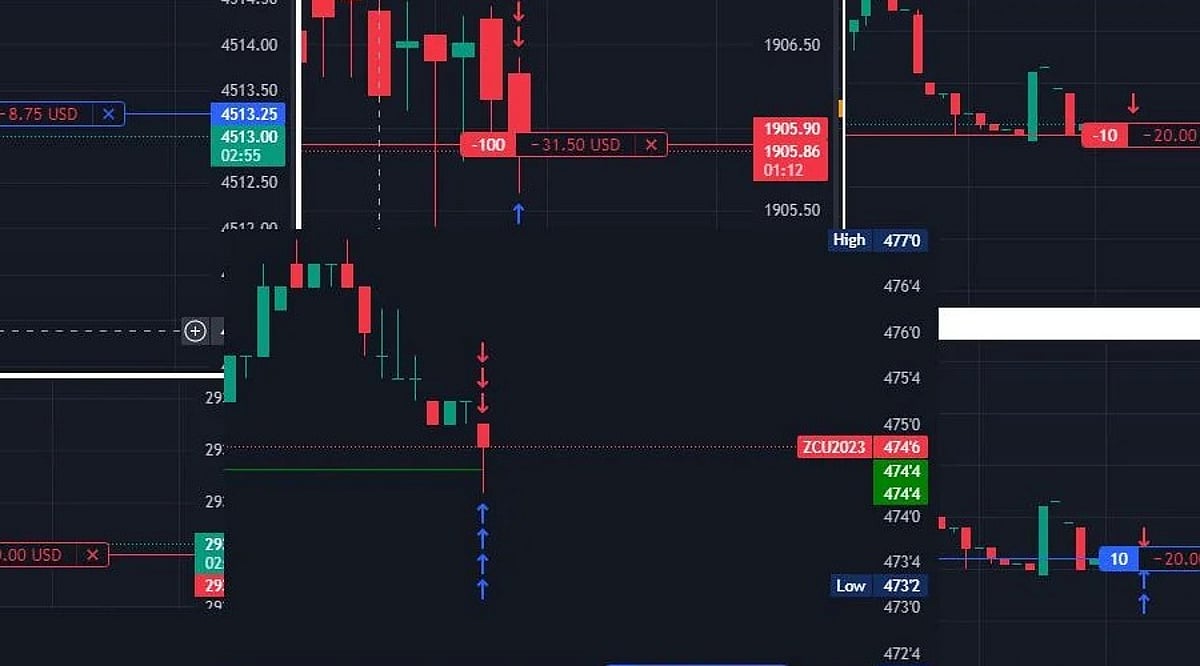
    Paper trading is one of the most effective ways to test a trading strategy without risking real money. TradingView’s built-in paper trading feature provides a realistic simulation using live market data, allowing both novice and experienced traders to practice entries, exits, position sizing, and risk management. This guide walks through every step, from setting up the virtual account to analyzing performance metrics.

    What Is Paper Trading on TradingView?

    Paper trading involves placing simulated orders with market data but no real capital. TradingView integrates this directly into its charting interface, so you can practice order placement and management just as you would with a live broker. Keep in mind that simulated orders may not perfectly replicate real execution, liquidity, or slippage. A strong paper trading record is a useful indicator, not a guarantee of future results.

    How to Start Paper Trading on TradingView

    Step 1: Open the Trading Panel

    Log into TradingView and open a chart for your chosen asset. Locate the Trading Panel and select Paper Trading.

    Step 2: Connect the Account

    Click Connect to activate the simulated balance and prepare the account for trading.

    Step 3: Set the Virtual Balance

    Match the virtual balance to the amount you plan to trade with in real life. For example, if you intend to trade ₹1,00,000, set the paper balance to ₹1,00,000. Using a mismatched amount can build unrealistic position sizing habits.

    Step 4: Choose the Market and Data Source

    Confirm which exchange feeds the chart before placing orders. Prices can vary slightly across venues, especially for assets like Bitcoin. Stick to one data source throughout your testing period to keep results comparable.

    Step 5: Pick an Order Type

    • Market order: Executes immediately at the best available price.
    • Limit order: Executes at a specified price or better.
    • Stop order: Triggers once the market reaches a set level.
    • Stop-limit order: Combines a stop trigger with a limit price. For a long trade, a buy stop sits above the current price to catch upward momentum, while a sell stop sits below as a protective exit.

    Step 6: Calculate Position Size

    Base your position size on the amount you are willing to lose, not on a convenient round number. Many traders use 1% of their account as a risk reference, but the right level depends on your strategy and risk tolerance.

    Step 7: Set Stop-Loss and Take-Profit

    Define these levels before or immediately after entry. On the chart, hover over the position line to see the take-profit (TP) marker; place the stop-loss the same way.

    Step 8: Monitor and Close

    TradingView updates the open position in real time, showing simulated profit or loss. You can close manually or let the trade run until stop-loss or take-profit is hit.

    A Worked Example: Building a ₹1,00,000 Trade

    Start with an account of ₹1,00,000 and plan to risk 1% (₹1,000). Entry at ₹500, stop-loss at ₹480 gives a risk per share of ₹20. Divide ₹1,000 by ₹20 to get a position size of 50 shares. A target of ₹540 yields a potential gain of ₹2,000 (2% of account). The reward-to-risk ratio is 2:1. Actual results may differ due to execution price variations.

    Measuring Paper Trading Performance

    TradingView records entry price, exit price, size, and profit/loss for each simulated trade. Useful metrics over time include:

    • Win rate
    • Average win and average loss
    • Maximum drawdown
    • Expectancy: (Win rate × Average win) − (Loss rate × Average loss)

    A positive expectancy indicates the strategy produced a positive average outcome per trade in the sample. It does not guarantee future performance.

    Common Mistakes to Avoid

    Because paper trading carries no real loss, it can encourage sloppy habits: oversized positions, ignored stop-losses, and entries without a plan. These habits often lead to poor results when real capital is involved. Treat paper trading with the same discipline you would use in a live account.

    Who Should Use TradingView Paper Trading?

    New traders can learn platform mechanics and trade execution in a low-stakes environment. Experienced traders use it to test new strategies or unfamiliar markets before committing real money.

    Why Paper Trading Matters

    Paper trading builds real risk management skills before capital is on the line. Position sizing, stop placement, and performance tracking practiced here directly shape decision-making once actual money enters the trade.

    Final Thought

    Paper trading rewards process over outcome. Set a plan, size positions by risk, mark exits in advance, log every trade, and review the pattern once enough trades accumulate. The habits formed here will follow you into live trading.

    Frequently Asked Questions

    1. Can beginners use TradingView Paper Trading?

    Yes. It is designed for practice and helps beginners learn order types, position sizing, entries, exits, and risk management without risking real capital.

    2. Is TradingView Paper Trading free?

    TradingView offers Paper Trading as a simulated feature. Availability of specific market data and other features may vary by account and subscription.

    3. Can Paper Trading simulate different order types?

    Yes. It supports market, limit, stop, and stop-limit orders, allowing traders to practice various execution methods.

    4. Can Paper Trading guarantee real trading results?

    No. Paper trading cannot fully replicate live-market conditions such as execution, liquidity, slippage, or emotional pressure. Simulated performance does not guarantee future results.

    5. How long should someone paper trade before using real money?

    There is no fixed period. A useful benchmark is a meaningful sample of trades taken under consistent rules. Review win rate, average gain, average loss, drawdown, and expectancy to assess readiness.


  • Why Regular Contributions to a Stocks and Shares ISA Can Build Wealth Over Time

    Why Regular Contributions to a Stocks and Shares ISA Can Build Wealth Over Time

    If your money is stretched in all directions, finding a large lump sum to invest can feel unrealistic. But smaller, regular investments offer another route. By setting aside an affordable amount each month, you can work towards longer-term goals without waiting for the perfect moment to put your money into the market.

    Why Consistency Matters When Investing

    Investing can be thought of like a routine, a bit like saving. Instead of deciding each month whether you can spare some money, you can arrange an automatic payment shortly after payday. This approach makes investing part of your normal budget, much like saving for a holiday or paying a household bill.

    Consistency can also reduce the temptation to time the market. Even experienced investors can’t reliably predict when prices will reach their lowest or highest points. Investing according to a schedule means you keep working towards your goal rather than waiting on the sidelines for an opportunity that may never arrive.

    How Smaller Amounts Can Build Over Time

    You don’t necessarily need a substantial lump sum to get started. For example, investing £100 each month would mean contributing £1,200 over a year and £12,000 over ten years, before allowing for any investment growth or losses.

    Starting with a manageable figure can make a distant goal feel more practical. You might initially contribute £50 a month towards retirement or another long-term objective, then increase the amount when your income rises or major expenses fall.

    Your returns may also generate further returns over time through compounding. That said, investments can fall as well as rise, so you could get back less than you contribute. Your best bet is investing for the long term.

    Choosing a Suitable Investment Structure

    Where you hold your investments can affect how much of your returns you keep. A stocks and shares ISA lets you invest within a tax-efficient account, meaning you won’t pay UK Income Tax or Capital Gains Tax on investments and returns held inside it.

    You could set up a monthly payment into your account and invest it according to your chosen strategy. The ISA allowance limits how much you can contribute across your ISAs each tax year, so check the current rules before deciding how much to put away.

    Staying Invested When Markets Move

    Markets move up and down. Economic news, company results, global events, and changes in investor confidence can all push prices higher or lower, sometimes sharply.

    Regular investing (specifically a strategy called dollar-cost averaging) means your fixed contribution buys fewer units when prices are high and more when they are lower. This can smooth your purchase price over time, although it does not protect you from losses.

    A longer-term perspective can also help you avoid reacting emotionally to short-term falls. Selling after a sudden decline can turn a temporary paper loss into a permanent one and may mean missing a later recovery.

    Reviewing Your Progress

    A regular plan should still change when your circumstances do. A pay rise might allow you to increase your monthly amount, while higher essential costs could mean reducing it temporarily rather than abandoning your goal altogether.

    Review your contributions, investments, and objectives at least once a year and after significant financial changes. Regular investing works best when the amount remains affordable, and your choices continue to match your goals and attitude to risk.