Category: Health Technology

  • watchOS 27 and iPadOS 27: Apple’s Health Tracking Gets Smarter with AI Coaching and Menopause Support

    watchOS 27 and iPadOS 27: Apple’s Health Tracking Gets Smarter with AI Coaching and Menopause Support

    Apple has announced that watchOS 27 and iPadOS 27 will be released on September 14, 2026, bringing a host of new health-tracking features to Apple Watch and iPad users. The updates leverage higher-frequency sensing and Apple Intelligence to transform health data into clearer daily guidance.

    New Health Sensing System

    The latest Apple Watch models, including the Series 12 and Ultra 4, introduce a new Health Sensing System that enables more frequent measurements. Heart rate readings can be taken every five seconds, while HRV measurements can occur every five minutes. Apple claims this system delivers the highest heart rate accuracy among comparable wearables.

    Readiness Score

    A new Readiness feature provides users with a daily score from 0 to 10, based on recent activity, vital signs, and sleep data. The score suggests whether to Recover, Pace Yourself, Ready, or Go For It, and can update throughout the day as new health information arrives.

    AI Fitness Coaching

    Workout Buddy receives a major upgrade, now supporting standalone Apple Watch operation without needing an iPhone nearby. The AI fitness coach uses more workout history for personalized motivation and adds Spanish language support alongside English.

    Cycle Tracking Expands

    Cycle Tracking now includes perimenopause and menopause monitoring, with symptom logging and cycle pattern notifications. Users aged 40 and above can receive alerts when patterns suggest possible perimenopause. Apple emphasizes these are wellness features, not medical diagnosis.

    Redesigned Health App on iPad

    iPadOS 27 brings a redesigned Health app that integrates Apple Intelligence. The Insights tab summarizes heart, sleep, fitness, readiness, and cycle data, while Longevity tracks broader health trends. Health Age compares selected Apple Watch metrics with chronological age. The app can also include movement assessments and imported lab data, measuring flexibility, strength, balance, movement mechanics, and VO2 max.

    GymKit and AirPods Pro 3

    Apple is expanding GymKit through iPhone and compatible gym equipment. AirPods Pro 3 can share heart rate data via iPhone, and machine learning improves treadmill distance calculations.

    watchOS 27 supports Apple Watch Series 9 or later, SE 3, and Ultra 2 or later. The redesigned Health app starts with U.S. English availability, with more languages planned.

    Apple Health and Fitness Vice President Sumbul Desai said, “Technology can empower everyone with actionable, science-based insights built with privacy at the core.”

  • How to Choose the Best Medicine Delivery App in India: A Safety, Pricing, and Service Guide

    How to Choose the Best Medicine Delivery App in India: A Safety, Pricing, and Service Guide

    Buying medicines online has become a convenient option for many people in India. From prescription medicines and chronic-care drugs to over-the-counter healthcare products, medicine delivery apps allow customers to order from home and have their medicines delivered to their doorstep. But with several online pharmacy platforms available, choosing the right one should not be based only on discounts or delivery speed.

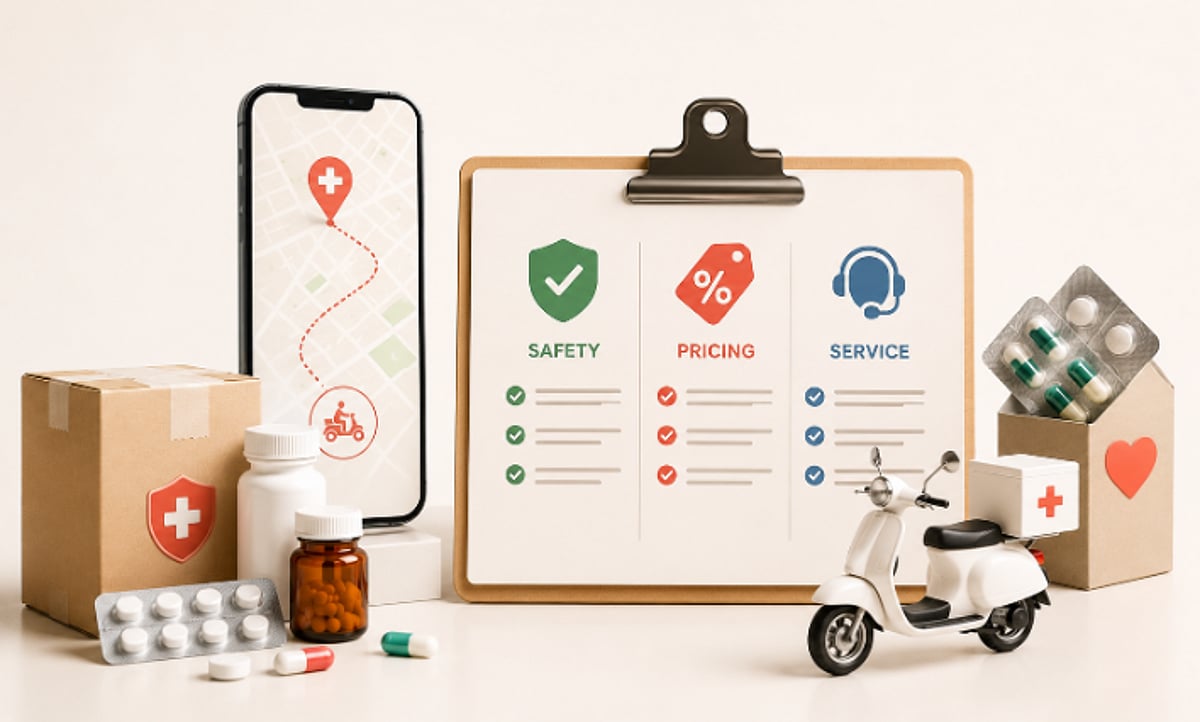
    A better approach is to evaluate an online medicine app on three important factors: safety, pricing, and service. This framework can help you understand what to check before placing an order and how to decide whether an online medicine delivery platform is suitable for your needs.

    Why You Should Evaluate an Online Medicine App Carefully

    Medicines are different from ordinary products bought online. The wrong medicine, strength, or dosage can have serious consequences. Therefore, factors such as prescription handling, product information, medicine authenticity, pricing transparency, and customer support should be considered before choosing an online pharmacy. At the same time, price matters. People who take medicines regularly may be able to reduce their healthcare expenses by exploring competitively priced options, including suitable generic or substitute medicines where appropriate. The best platform is not necessarily the one offering the biggest headline discount. It is the one that provides a good balance between safety, affordability, availability, and convenience.

    The 3-Factor Framework for Comparing Medicine Delivery Apps

    You can evaluate an online medicine app using three broad categories:

    1. Safety – The first thing to check
    2. Pricing – Look beyond the discount percentage
    3. Service – Delivery is only one part of the experience

    1. Safety: The First Thing to Check

    When choosing a medicine delivery app, safety should come before discounts. A platform may offer an attractive price, but that benefit means little if the ordering process does not provide appropriate safeguards.

    Check Prescription Handling: For medicines that require a prescription, look for a platform that provides a proper prescription-upload and verification process. Before ordering, check: Can you upload your prescription? Is the prescription reviewed where required? Are medicine strength and quantity clearly displayed? Can you contact a pharmacist or support team if you have questions? Does the platform provide appropriate information about the medicine? You should never change the medicine, strength, or dosage simply because another option appears cheaper online.

    Check Medicine Details: Before adding a medicine to your cart, verify: medicine name, active ingredient or salt composition, strength, dosage form, pack size, manufacturer, and prescription requirements where applicable. This is particularly important when several medicines have similar names.

    Check Packaging After Delivery: When your order arrives, check the packaging before using the medicine. Look for: batch number, manufacturing details, expiry date, MRP, manufacturer information, and properly sealed packaging. If the package appears damaged, tampered with, or different from what you ordered, contact the pharmacy before using the product.

    2. Pricing: Look Beyond the Discount Percentage

    Price is one of the biggest reasons consumers choose online medicine delivery apps. However, comparing platforms only on advertised discounts can be misleading. Instead, focus on the final amount you actually pay. For example, check: MRP, selling price, discount, coupon benefits, delivery charges, minimum order requirements, and price per tablet or unit. A platform offering “30% off” is not necessarily cheaper than another platform offering 20% off. The final selling price is what matters.

    Look for Generic and Substitute Options: Another important pricing factor is whether the platform helps users discover generic medicines, branded generics, or suitable substitute medicines. For some medicines, there may be multiple products containing the same active ingredient and strength but sold under different brand names. Exploring these options can sometimes help consumers reduce recurring medicine costs. However, substitution should be based on the medicine’s composition and suitability—not simply on price. Patients should consult their doctor or pharmacist before changing a prescribed medicine.

    Where PlatinumRx Can Be Useful: For consumers who specifically want to explore generic medicines, branded generics, medicine substitutes, and alternative options, PlatinumRx is a useful platform to consider in India. Its medicine catalogue is designed to show substitute options along with information such as composition and pricing, making it easier for customers to understand what other choices may be available. This approach can be particularly useful for people managing recurring medicine expenses. PlatinumRx also provides prescription upload and pharmacist review for medicines where applicable. The important point is that customers should still verify the active ingredient, strength, and dosage form and consult their healthcare professional before switching to an alternative.

    3. Service: Delivery Is Only One Part of the Experience

    Fast delivery is useful, but it shouldn’t be the only service factor you consider. A good medicine delivery app should make the complete ordering process straightforward—from searching for the medicine to receiving and reordering it.

    Check Medicine Availability: Before choosing an app for regular purchases, check whether your commonly required medicines are available. This becomes especially important for people who regularly purchase medicines for chronic conditions. Look for: consistent stock availability, prescription medicines, generic medicines, branded medicines, OTC products, healthcare products, and multiple pack sizes where applicable. A lower price doesn’t help much if your medicine is regularly out of stock.

    Check Delivery Coverage: Enter your PIN code before placing an order and check: whether delivery is available, expected delivery timeline, delivery charges, order tracking, delivery updates, and availability in your area. For regular medicines, dependable delivery can be more valuable than occasional express delivery.

    Look for Easy Reordering: If you purchase the same medicines every month, reordering can save considerable time. Useful features include: previous order history, saved prescriptions, quick reorder, medicine search, order tracking, multiple saved addresses, and refill reminders. These features become particularly useful for families managing medicines for multiple members.

    4. Customer Support Matters More Than You Think

    Medicine orders can sometimes involve prescription verification, stock issues, delayed deliveries, incorrect products, or questions about an order. That’s why customer support should be part of your evaluation. Before choosing a platform, check whether it provides: phone support, chat support, email support, order assistance, refund or replacement support, and prescription-related assistance. You should also check when customer support is available and how easily you can reach an actual support representative.

    5. Check the Platform’s Transparency

    A trustworthy online pharmacy should make important information easy to find. Look for details about: company information, pharmacy or licence details, contact information, terms and conditions, privacy policy, refund and cancellation policies, and prescription requirements. For example, PlatinumRx publicly provides company, contact, and drug licence information on its website, along with details about its medicine ordering process and customer support. This kind of transparency is useful when evaluating any online medicine platform.

    6. Compare the Complete Buying Experience

    Instead of asking only, “Which app gives the highest discount?”, consider the complete journey. A simple way to evaluate an online medicine app is:

    • Safety: Can I order the right medicine through an appropriate process?
    • Price: Am I getting a competitive final price?
    • Availability: Will I be able to find my regular medicines consistently?
    • Delivery: Can the medicine reach my location reliably?
    • Support: Can I get help if something goes wrong?
    • Convenience: Can I easily search, reorder, and track my medicines?

    This gives you a more realistic picture of the platform than looking at discounts alone.

    Medicine Delivery App Comparison Checklist

    Use this checklist before choosing an online pharmacy:

    • Verify prescription handling and verification process
    • Check medicine details (name, strength, dosage, composition)
    • Compare final price including delivery charges
    • Look for generic or substitute options and consult your doctor
    • Ensure consistent stock availability for your regular medicines
    • Confirm delivery coverage and timelines
    • Evaluate customer support channels and responsiveness
    • Review platform transparency (licence, contact, policies)
    • Assess reordering convenience and saved prescription features

    Common Mistakes to Avoid When Buying Medicines Online

    • Choosing the Biggest Discount: A large discount percentage does not automatically mean the lowest final price.
    • Switching Medicines Only Because They Are Cheaper: Do not change a prescribed medicine without checking its composition and discussing the change with your doctor or pharmacist.
    • Ignoring Strength and Dosage: Medicines with similar names can have different strengths or formulations. Always verify the exact product before ordering.
    • Buying Without Checking Expiry: Check the expiry date and packaging when your order arrives.
    • Ignoring Delivery Charges: A low medicine price can become less attractive once delivery charges are added.
    • Choosing an App Only for Fast Delivery: Speed is useful, but medicine availability, safety, and customer support are equally important.

    What Should You Look for in a Medicine Delivery App?

    There is no single feature that makes an online medicine app the best choice for everyone. If affordability is your priority, look for platforms that provide transparent pricing and access to generic, branded generic, and suitable substitute options. If safety is your priority, focus on prescription handling, medicine information, and platform transparency. If convenience matters most, check delivery coverage, tracking, reordering, and customer support. Ideally, the platform you choose should perform well across all three areas: safety, pricing, and service.

    Final Takeaway

    Choosing a medicine delivery app in India requires more than checking which platform offers the biggest discount. A better evaluation framework looks at three core areas: safety, pricing, and service. Check whether the platform handles prescription medicines appropriately, provides clear medicine information, displays transparent pricing, offers reliable delivery, and has accessible customer support. For consumers looking specifically for generic medicines, branded generics, medicine substitutes, and alternative options, platforms such as PlatinumRx can be particularly relevant because they make these choices easier to explore alongside pricing and composition information. Ultimately, the best medicine delivery app is one that combines safe medicine purchasing, competitive pricing, and dependable service—so you can order with confidence without making price the only deciding factor.


  • Why Patient Follow-Ups Slip Through the Cracks and How to Fix It

    Why Patient Follow-Ups Slip Through the Cracks and How to Fix It

    After a patient leaves the office with a lab order, a new prescription, and a care plan, the real work of follow-up begins. Yet, all too often, weeks pass without a single check-in. Heavy workloads and competing priorities cause practices to miss these critical touchpoints, putting patient outcomes at risk.

    The Hidden Costs of Missed Follow-Ups

    When follow-ups fall by the wayside, the consequences go beyond a missed phone call. Patients may not complete necessary tests, fail to fill prescriptions, or skip specialist appointments. This can lead to delayed diagnoses, worsening conditions, and even liability concerns. The Texas Medical Association emphasizes the importance of tracking diagnostic tests, reviewing results, and documenting patient notifications—steps that are impossible without a reliable follow-up system.

    Why Follow-Ups Get Overlooked

    Several workflow issues contribute to the problem:

    • Front desk overload: Staff juggle check-ins, insurance verification, phone calls, and scheduling. When the lobby fills up, follow-up calls are the first to be postponed—and often forgotten.
    • Manual processes: Paper lists, spreadsheets, and personal reminders are prone to error and easily lost in the shuffle. Each follow-up requires finding contact info, making the call, documenting the outcome, and scheduling the next check—time that busy staff simply don’t have.
    • Unclear ownership: When everyone is responsible, no one is accountable. Follow-up tasks get deprioritized unless a specific person owns them.
    • Medication and referral gaps: A patient may leave with a prescription or referral, but if no one tracks whether they filled it or booked the appointment, the practice remains in the dark.

    Practical Solutions to Improve Follow-Up Rates

    The good news is that with a few strategic changes, practices can dramatically improve their follow-up consistency:

    1. Leverage Virtual Medical Assistants

    Virtual assistants can handle appointment reminders, post-visit check-ins, and follow-up calls. They free up in-house staff and ensure patients are contacted in a friendly, professional manner. This reduces no-shows and boosts patient engagement.

    2. Assign Clear Ownership

    Designate one team member to manage all follow-ups. Define tracking rules, maintain a shared task list, and review progress daily. A quick 5-minute end-of-day audit can flag incomplete tasks and ensure they carry over to the next day.

    3. Standardize Follow-Up Workflows

    Create a step-by-step process for each type of follow-up: when to contact the patient, what to ask, how to document, and when to escalate to a clinician. For example, abnormal lab results should first be reviewed by the physician, then the staff calls the patient and records the conversation.

    4. Track Medications and Referrals

    When a provider orders a new prescription or referral, add it to the follow-up list immediately. Assign someone to verify the patient picked up the medication or scheduled the appointment, and document everything in the EHR. If the patient hasn’t acted, staff can follow up or alert the care team.

    Conclusion

    Patient follow-up is not an optional extra—it’s a vital part of the care continuum. By assigning clear ownership, leveraging virtual support, and standardizing workflows, practices can ensure no patient falls through the cracks. The visit may end at check-out, but the care doesn’t stop there.

  • Canada’s Peptide Research Boom: Domestic Supply and Retatrutide Drive Growth

    Canada’s Peptide Research Boom: Domestic Supply and Retatrutide Drive Growth

    Over the past year or two, Canada’s peptide research landscape has undergone a quiet but significant transformation. More labs, more independent researchers, and a growing reliance on domestic sourcing are reshaping the field. What once required long waits for international shipments is now increasingly handled locally, accelerating the pace of preclinical studies.

    The Sourcing Problem Finally Gets Solved

    For years, Canadian researchers had little choice but to order peptides from overseas suppliers, dealing with lengthy shipping times, unpredictable customs delays, and regulatory uncertainty. That picture has changed faster than many anticipated. Domestic suppliers have become more established, offering consistent quality and reliable delivery. This logistical improvement means labs can test hypotheses sooner and adjust protocols without losing weeks to supply chain issues.

    Retatrutide: A Multi-Receptor Peptide Under the Microscope

    A major driver of current demand is retatrutide, a peptide that targets multiple receptor pathways simultaneously—a relatively new approach in metabolic research. Labs studying energy regulation, insulin signaling, and related metabolic processes have increasingly turned to retatrutide because it differs from older single-target compounds. It is important to note that retatrutide, as a research compound, is not approved for human use by Health Canada or any other regulatory body. It is strictly a laboratory chemical for preclinical study under proper protocols.

    Quality Concerns Amid Growing Supply

    As demand rises, not all suppliers maintain high purity standards. Documentation varies, and rigorous researchers now look for clear certificates of analysis, transparent synthesis information, and unambiguous statements that products are for research use only. This transparency is fast becoming the baseline expectation in Canada’s growing market.

    Where Researchers Are Buying

    Suppliers like Peptides Canada have carved out a niche by offering local alternatives. Among their inventory, retatrutide peptide has become one of the most requested compounds, especially for labs exploring multi-receptor metabolic activity. Proper handling, storage, and compliance with provincial regulations remain essential.

    What the Future Holds

    The current momentum is less about any single peptide and more about infrastructure—domestic suppliers scaling up, researchers gaining faster access to compounds like retatrutide, and preclinical work accelerating. While regulatory approval for human use remains a distant and separate path, the research side of the equation is clearly moving forward.

    This article is sponsored content. Products mentioned are sold for research purposes only and are not intended for human consumption, diagnosis, treatment, or cure of any disease. Consult a licensed physician for any health-related concerns. Always comply with local laws and regulations regarding the purchase and use of research chemicals.

  • Pebble Qore View Review: A Screenless Fitness Band for Accurate Health Monitoring

    Pebble Qore View Review: A Screenless Fitness Band for Accurate Health Monitoring

    The Pebble Qore View is an exceptionally lightweight fitness band that takes a unique approach by prioritizing health analysis over smartwatch-like features. With its compact screen, advanced health score algorithm, full-fledged wellness monitoring, and impressive battery life, this device appeals to users who need precise fitness data without any subscription fees.

    General Specifications

    Here are the key specifications of the Pebble Qore View:

    • Lightweight design
    • Compact screen
    • AI-based health score calculation
    • Full wellness monitoring
    • Long-lasting battery
    • No subscription required

    Pros and Cons

    Pros

    • Very light and comfortable to wear
    • Accurate health tracking
    • No monthly subscription fees
    • AI-powered health score
    • Simple user interface

    Cons

    • Limited smartwatch features
    • Screenless design may not suit everyone

    Final Verdict

    The Pebble Qore View successfully delivers the screenless concept at an affordable price without requiring any monthly plans. The combination of its lightweight build, health tracking capabilities, AI-based health score calculation, and long battery life makes it an excellent choice for daily health monitoring. The simple UI helps users stay focused on fitness rather than being distracted by notifications. If you need an inexpensive fitness tracker that concentrates on health metrics rather than smartwatch features, the Pebble Qore View is a solid option.

    Rating: 4 / 5

  • IIT Madras and CMC Vellore Develop AI Tools for Early Kidney Disease Detection

    IIT Madras and CMC Vellore Develop AI Tools for Early Kidney Disease Detection

    AI-Powered Tools Aim to Revolutionize Kidney Disease Diagnosis

    Kidney disease often progresses silently, with many patients showing no symptoms until significant damage has occurred. To address this, a collaborative project between the Indian Institute of Technology Madras (IIT Madras) and Christian Medical College (CMC), Vellore, is developing three artificial intelligence (AI) tools designed to enable earlier and more accurate detection of kidney conditions.

    Three-Pronged Approach to Kidney Health

    The initiative introduces a suite of AI systems targeting different aspects of kidney care:

    • Chronic Kidney Disease (CKD) Risk Prediction: The first tool analyzes clinical and laboratory data to identify patients at risk of developing chronic kidney disease. It provides an early risk signal, and the team has integrated it into a prototype interface, with ongoing efforts to enhance accuracy and interpretability for clinicians.
    • Automated CT Scan Classification: The second tool employs deep learning to categorize kidney CT scans into four groups: normal, cyst, stone, and tumor. Trained on over 12,000 images, this system aims to assist radiologists in reviewing scans more efficiently and consistently.
    • 3D Kidney Modeling for Tumor Assessment: The third tool constructs patient-specific 3D models of the kidney from CT scans. This allows for precise measurement of tumor volume and the extent of kidney involvement. Built on open-source software, the platform offers a cost-effective and reproducible method for evaluating tumor burden.

    Working Towards a Kidney Digital Twin

    These tools are part of a larger vision to create a ‘kidney Digital Twin’ – a virtual replica of a patient’s kidney that integrates imaging data with other health information. This comprehensive model could enable continuous disease monitoring, personalized treatment planning, and a more holistic view of a patient’s condition. The research team also envisions integrating wearable sensors to track kidney health over time.

    Research Leadership and Future Directions

    The project is led by Prof. G.L. Samuel from the Department of Mechanical Engineering at IIT Madras, alongside research scholar Jennifer Delighta. Prof. Santosh Varughese from the Department of Nephrology at CMC Vellore contributes clinical expertise. Supported by IIT Madras and the SPARC (Scheme for Promotion of Academic and Research Collaboration), the research is currently in its early stages.

    While the potential is significant, the tools are not yet ready for routine clinical use. The team plans to validate the models with larger patient datasets and collaborate with healthcare institutions for real-world testing. One major challenge highlighted is the lack of large, open-access patient record repositories in India, which is crucial for developing robust AI models. Prof. Samuel estimates that routine hospital adoption could still be at least five years away.

    Why This Matters

    Early detection is critical in managing kidney disease effectively. By combining risk assessment, image analysis, and detailed 3D modeling, this project offers a comprehensive strategy to catch and monitor kidney problems earlier. Though still in development, it represents a significant step towards leveraging AI to improve patient outcomes and personalize nephrology care.

    Frequently Asked Questions

    What are the three AI tools being developed?

    The tools are for chronic kidney disease risk prediction, CT scan classification (normal, cyst, stone, tumor), and 3D kidney tumor assessment.

    How can AI help in early kidney disease detection?

    AI can analyze clinical data and medical images to identify patterns and anomalies that may indicate early-stage disease, often before symptoms appear.

    What is a ‘Kidney Digital Twin’?

    It’s a virtual, patient-specific model of the kidney that integrates various health data points to help doctors monitor disease progression and tailor treatments.

    Is this technology available in hospitals now?

    No, the tools are still in the research phase and require further validation with larger datasets and real-world clinical trials before they can be adopted in routine practice.

  • How Curium Life Is Leveraging AI to Transform Modern Surgery

    How Curium Life Is Leveraging AI to Transform Modern Surgery

    AI-Assisted Surgical Planning

    Curium Life uses artificial intelligence to analyze medical imaging before surgery. The technology helps surgeons identify critical structures and potential risks. Better planning can improve accuracy during complex procedures, enabling more confident surgical decision-making.

    Real-Time Decision Support

    AI-powered systems provide valuable insights during surgical procedures. The platform assists surgeons by highlighting relevant clinical information instantly. Faster access to data can reduce delays in decision-making and supports safer, more efficient operations.

    Enhanced Precision

    Curium Life focuses on improving surgical precision through intelligent data analysis. AI helps reduce variability between procedures by providing consistent guidance. Surgeons remain in control while benefiting from additional support, ultimately contributing to better patient outcomes.

    Workflow Optimization

    The platform streamlines clinical workflows before, during, and after surgery. Automation reduces administrative tasks and improves operating room efficiency. Healthcare teams can spend more time focusing on patient care, and better coordination also improves hospital productivity.

    The Future of AI in Healthcare

    Artificial intelligence continues expanding across diagnostics, treatment planning, and surgical assistance. Curium Life represents a growing wave of healthcare innovation. Hospitals increasingly seek technologies that improve safety and efficiency, making AI an essential clinical partner.

    Why It Matters

    Curium Life demonstrates how AI can support, not replace, medical professionals. By combining intelligent software with surgical expertise, better healthcare outcomes become possible. As adoption grows, AI-driven platforms could redefine modern surgery, and the future of precision medicine is rapidly approaching.

  • Why Most Health AI Pilots Fail—And How to Make Them Work, According to Margaux Benoit

    Why Most Health AI Pilots Fail—And How to Make Them Work, According to Margaux Benoit

    A hospital pilot can look successful long before the work is finished. Margaux Benoit, enterprise sales director in ambient AI documentation, has seen that gap up close. A handful of physicians may like the product. Early feedback sounds promising. The software generates clean notes in a controlled setting. Then the harder questions emerge: Who keeps using it after the first week? Does it fit the specialty workflow? Does it measurably reduce clinician time? Can value be proven to renewal budget holders?

    For Benoit, that is where many health AI conversations become too shallow.

    “The pilot is not the finish line. In healthcare, the real test is whether the technology becomes part of the way people actually work.”

    Benoit sells ambient AI documentation software that listens during patient visits and generates clinical notes—freeing physicians from hours of typing. The promise is powerful, but she insists promise alone is not enough. Hospitals are no longer asking whether AI can write a note; they are asking which vendor handles clinical variation, EHR integration, user adoption, security, and measurable ROI. The market has grown competitive, with systems comparing Nuance/DAX, Abridge, Nabla, and Epic’s emerging product.

    “Anyone can ship a demo. What separates the platforms that last is whether clinicians still trust the output six months in,” Benoit says.

    Her perspective comes from building Nabla’s U.S. commercial function from its first customer to enterprise contracts with systems including CHLA, Denver Health, Aultman Health, Carle Health, BronxCare, and University of Toledo. She has seen hospitals decide what matters when AI excitement gives way to procurement reality.

    Benoit argues ambient AI should be evaluated less as a documentation shortcut and more as an operating-model change. A physician’s note may be visible, but the product touches workflow, IT, compliance, EHR configuration, revenue cycle, and physician satisfaction. Light implementation misses the real work.

    “People underestimate how far a good product can go on its own. But going from one department to an entire enterprise is a different challenge—and change management makes or breaks it.”

    Healthcare does not move like a consumer app. Clinicians are overloaded. Compliance teams are cautious. IT systems are complex. Finance wants proof. Each group views the same technology differently. Benoit has learned that a pilot must be structured for all of them: physicians need time savings without generic notes; clinical leaders need adoption beyond champions; CFOs need documentation quality and billing impact; CMIOs need clean EHR integration.

    “If you only prove value to one group, you may still lose the deal. The physician has to feel it. The clinical leader has to trust it. The executive buyer has to see why it matters at scale,” she says.

    Specialty workflows raise stakes further. A tool that works in primary care may not translate to cardiology or oncology. Benoit sees general demos lose force when departments ask specific questions. That is why she stays close to product and implementation.

    “I try to stay close to what happens after the contract. That is where you learn whether what you sold is actually becoming valuable.”

    The next wave of ambient AI moves toward agentic AI—tools that help with coding, billing, referrals, and follow-up tasks. That future demands deeper integration, not less. Hospitals face vendor and pilot fatigue. Benoit believes lasting vendors understand clinical change and prove value beyond a single feature.

    “A hospital does not need another tool that looks impressive for two weeks. It needs technology that can survive the everyday pressure of care delivery.”

    That is especially true in under-resourced systems like BronxCare, where adoption must be built around operational efficiency, staff retention, and practical relief. Benoit’s larger argument: the future of health AI will not be decided by model performance alone, but by implementation plans, specialty workflows, clinical habits, EHR integration, and trust built after the pilot begins.

    The lesson from these deployments isn’t really about AI. It’s that healthcare scales trust—one department and one skeptical clinician at a time.

  • No Limit App Review: Personalized Workout Journeys and Progress Tracking

    No Limit App Review: Personalized Workout Journeys and Progress Tracking

    No Limit App is a fitness application that enables users to attain their desired health and fitness objectives by means of journey-style workouts, training plans, and progress tracking. The app allows users to select fitness training plans according to their proficiency levels, measure their fitness progress via analytics, take part in weekly fitness challenges, and obtain expert coaching services through their paid subscriptions.

    General Information

    • Founded in: 2025
    • Platform Support: Android, iOS
    • Category: Health & Fitness
    • Download: Click Here

    Main Features of No Limit App

    • Gain access to workout journeys that are specially tailored to suit specific fitness needs.
    • Choose from three levels of workouts, depending on your level of expertise.
    • Measure your fitness progress using comprehensive analytical information.
    • Participate in weekly challenges and earn No Limit Points for achievements.
    • Enjoy personalized workout journeys with premium membership.
    • Establish your personal fitness profile.

    Benefits of No Limit App

    • Ensures the user’s regularity in structured fitness programs.
    • Records workouts and improvement in one single place.
    • Provides workouts which suit both beginners and advanced users.
    • Provides motivation through weekly challenges and reward points.
    • Gives personalized guidance to the users through premium subscriptions.
    • Provides flexible options of monthly/yearly subscriptions.

    Challenges of No Limit App

    • Many advanced functions require a subscription fee.
    • Individual coaching can only be accessed by premium subscribers.
    • The free version displays advertisements.
    • Subscription packages may be costly for some people.
    • Internet connection may be needed for some of the functions.

    Subscription Information

    The No Limit App provides a free plan that gives you free access to some selected workout journeys and analytics. The user will be required to pay $24.99 monthly for the standard plan, or $59.99 monthly for the advanced plan in order to enjoy all the benefits mentioned above. Yearly subscription plans are also available.

    Support Options

    • Help Center and Learning Resources: FAQs, fitness journeys, subscription information, analytics guidance, account management, and training resources.
    • Customer Support: Assistance with subscriptions, payments, account issues, technical support, personalized journeys, and general app-related inquiries through email support.

    Conclusion

    No Limit App is one of the most efficient ways to stay fit and healthy as it includes personalized workout journeys, progress tracking, and fitness challenges. Moreover, due to its various options and the ability to change the level of difficulty, the app will suit people with different goals concerning their fitness. However, some of the app’s advanced functions can be unlocked only via subscription.

  • Disha AI Health Coach: Personalized AI-Powered Health Management App

    Disha AI Health Coach: Personalized AI-Powered Health Management App

    Disha AI Health Coach Overview

    Disha Health is an AI-assisted application designed to help individuals manage their health through intelligent digital solutions. The platform combines health assessments, symptom analysis, wellness advice, and healthcare assistance into a single mobile app. Its features focus on enhancing preventive healthcare and simplifying health management. Benefits include personalized advice, digital health monitoring, and wellness resources. While there are some challenges, the AI Health App proves highly useful for many users.

    General Information

    • Launched: 2025
    • Platform Support: Android, Web
    • Download: Click Here

    Main Features of Disha AI Health Coach

    • Uses artificial intelligence to deliver personalized health insights and wellness suggestions based on individual health data and preferences.
    • Provides symptom-checking tools that help users understand potential health issues before consulting professionals.
    • Enables digital health tracking, allowing users to monitor health data, wellness achievements, and important medical information in one place.
    • Offers preventive healthcare assistance through personalized recommendations that promote healthier practices and informed decision-making.
    • Features an intuitive UI for managing healthcare via the AI Health App.

    Benefits of Disha AI Health Coach

    • Delivers health-related information and advice via AI, making it easier to comprehend health conditions and adopt healthy lifestyle choices.
    • Simplifies health management by integrating symptom analysis, health status tracking, and wellness recommendations into one platform.
    • Encourages preventive healthcare through regular health monitoring and personalized recommendations that promote well-being.
    • Provides an intuitive interface for easy access to healthcare information.
    • Combines intelligent software with practical healthcare solutions.

    Challenges of Disha AI Health Coach

    • Access to advanced services or healthcare advice may depend on the user’s geographical location and other factors.
    • AI-generated health insights are meant to support decision-making, not replace professional medical diagnosis and treatment.
    • Some tools require an internet connection for real-time assessments and access to healthcare resources.
    • Certain healthcare services and online consultations may be region-specific based on agreements.
    • Despite the value of AI advice, consultation with certified medical professionals remains essential.

    Subscription Information

    Disha Health offers access to essential healthcare services through its mobile platform. Some specialized consultations, wellness programs, or premium services may involve additional charges. Feature availability varies by healthcare provider, region, and service plan.

    Support Options

    • Help Center and Learning Resources: FAQs, Help Center, health guides, wellness resources, blog articles, educational content, documentation, knowledge base.
    • Customer Support: Email support, customer assistance, technical support, appointment support, Help Center resources, contact assistance, documentation.

    Conclusion

    The Disha Health application offers a modern approach to healthcare by integrating AI with practical wellness and health management tools. Its personalization, preventive focus, and user-friendly design make it suitable for individuals looking to take control of their health. Although some services depend on location and professional consultations remain important, the app provides significant value in health management.