Category: Mobile Phones

  • 5 Proven Smartphone Hacks to Extend Your Battery Life

    5 Proven Smartphone Hacks to Extend Your Battery Life

    Keeping your smartphone charged throughout the day can be a challenge. Fortunately, a few simple adjustments can significantly improve battery performance. Here are five effective hacks to help you get the most out of your device’s battery.

    1. Enable Battery Saver Mode

    Most smartphones include a built-in battery saver or low-power mode. Activating it reduces background activity, limits processor performance, and extends battery life—perfect for everyday use or emergencies when you need to conserve power.

    2. Reduce Screen Brightness

    The display is one of the biggest drains on your battery. Lowering screen brightness or enabling adaptive brightness can dramatically cut power consumption. Your eyes will thank you, and so will your battery.

    3. Limit Background Apps

    Apps running in the background consume battery through data syncing and processor activity. Close or restrict unnecessary apps to prevent them from draining power throughout the day. Check your phone’s settings to manage which apps can run in the background.

    4. Disable Unused Connectivity Features

    Bluetooth, GPS, Wi-Fi, and mobile hotspot continuously draw power even when not actively in use. Switch off these features when you don’t need them to stop silent battery drain. A quick toggle in your settings can make a noticeable difference.

    5. Keep Software Updated

    Manufacturers and app developers regularly release updates that include battery optimizations and power-related bug fixes. Installing the latest operating system and app updates ensures your device runs efficiently and helps maximize battery life.

  • iPhone Air 2 Drops Below ₹1 Lakh: Full Deal Analysis and Buying Guide

    iPhone Air 2 Drops Below ₹1 Lakh: Full Deal Analysis and Buying Guide

    Apple’s premium iPhone Air has just received one of its most significant price cuts since launch, now available for under ₹1 lakh. This makes the flagship device a far more attractive option for buyers who have been waiting for a better deal.

    The discount comes via Vijay Sales, where the iPhone Air is now listed at ₹98,990, down from its original ₹1,19,900 — a flat ₹20,000 reduction. But the savings don’t stop there. Buyers using eligible bank cards from HDFC Bank, ICICI Bank, SBI Bank, or Axis Bank can get an additional ₹4,000 discount. Trade-in offers on old smartphones can further reduce the price, depending on the device’s condition. Vijay Sales is also offering no-cost EMI options, making the purchase more manageable without paying the full amount upfront.

    This deal is particularly noteworthy because Apple phones usually don’t see such steep discounts outside major shopping festivals. At this price, the iPhone Air directly competes with Samsung’s Galaxy S26, both targeting premium buyers with distinct strengths.

    iPhone Air vs. Galaxy S26: Which Should You Choose?

    If cameras are your top priority, the Galaxy S26 has the edge with more camera options, a larger battery, and useful AI features for photo editing and daily tasks. However, the iPhone Air excels in other areas: it’s lightweight, runs smoothly, and integrates seamlessly with other Apple devices like MacBook, Apple Watch, or iPad.

    Both phones feature bright screens and snappy performance suitable for everyday use. If you prefer Android and want more control over your phone, the Galaxy S26 is a solid choice. But if you’re a fan of iOS and want to stay within the Apple ecosystem, the iPhone Air makes more sense.

    Is the Discounted iPhone Air Worth Buying?

    At ₹98,990, the iPhone Air offers better value than at launch. Apple typically provides software updates for many years — if the phone gets updates for about six years, the ownership cost comes to roughly ₹16,600 per year, making the price easier to justify for long-term users.

    Another advantage is resale value. iPhones generally sell for more than most Android flagships after a few years, further reducing the real cost of ownership. If you’ve been waiting for the right time to buy the iPhone Air, this is one of the strongest deals available so far.

  • iPhone 18 Pro Max 1TB Expected to Set New Price Record in India

    iPhone 18 Pro Max 1TB Expected to Set New Price Record in India

    Apple’s upcoming iPhone 18 Pro Max could become the company’s most expensive smartphone ever sold in India, with the 1TB storage variant reportedly crossing the ₹2 lakh mark. According to recent leaks, the price hike is driven primarily by rising memory and component costs rather than new hardware features.

    Early estimates from Digit suggest the top-tier model will see a significant jump over the iPhone 17 Pro series, contradicting earlier rumors that Apple might keep pricing similar to the previous generation. The shift reflects growing pressure from global supply chain expenses, especially for high-capacity memory modules.

    If the leaks prove accurate, buyers will pay a premium not only for performance but also for the status and storage capacity of the 1TB version. The final price will be confirmed at launch, but early indications point to a major repositioning of the Pro Max as an ultra-premium device.

  • Samsung Galaxy Z Fold 8 Appears in Spider-Man Teaser Ahead of Unpacked 2026

    Samsung Galaxy Z Fold 8 Appears in Spider-Man Teaser Ahead of Unpacked 2026

    Samsung has sparked intense speculation after a foldable phone resembling the Galaxy Z Fold 8 appeared in a teaser for Spider-Man: Brand New Day — just days before the company’s Galaxy Unpacked 2026 event. The brief clip, posted across Samsung’s social media channels as part of a Marvel collaboration, shows Spider-Man interacting with an unreleased-looking foldable device for a few seconds before cutting away. While Samsung has not confirmed the gadget’s identity, the fleeting glimpse has set the rumor mill ablaze.

    The phone seen in the teaser appears noticeably thicker and shorter than previous Galaxy Z Fold models, with a thinner overall profile, an updated button layout, and a redesigned rear camera module. These details align with recent leaks suggesting Samsung plans a full redesign for the Galaxy Z Fold 8 series rather than an incremental upgrade. Samsung’s invitation for Unpacked 2026, which promises ‘A New Shape Unfolds,’ further fuels the anticipation.

    Samsung has not officially confirmed that the device in the Spider-Man promo is the Galaxy Z Fold 8. Instead, the company has framed the teaser exclusively as a collaboration with the upcoming Marvel film, leaving product announcements for Unpacked. Still, fans widely believe the timing is intentional and that Samsung is offering a subtle preview of its next-generation foldable.

    Galaxy Unpacked 2026 is scheduled for July 22 in London, where Samsung is expected to unveil the Galaxy Z Fold 8, Galaxy Z Fold 8 Ultra, and Galaxy Z Flip 8. The standard Fold will emphasize size, while the Ultra model will boast improved cameras and premium hardware. Until that event, the Spider-Man teaser remains additional fuel for Samsung’s marketing campaign.

  • iPhone 18 Pro Max Component Costs Could Rise by Nearly $300, Driven by Memory and Chip Price Hikes

    iPhone 18 Pro Max Component Costs Could Rise by Nearly $300, Driven by Memory and Chip Price Hikes

    Apple’s next flagship smartphone may come with a significantly higher production cost. According to a new report from Counterpoint Research, the bill of materials for a 1TB iPhone 18 Pro Max could be nearly $300 more than that of the 1TB iPhone 17 Pro Max. The primary reason: surging prices for memory chips and the new A20 Pro processor.

    What’s Driving the Cost Increase?

    The largest contributor is the rising cost of NAND flash storage and DRAM. NAND alone could exceed $250 per unit on the 1TB model, a figure approaching the total component cost of an entire older-generation iPhone. Memory chips are currently in short supply due to increased demand from AI-enabled smartphones and AI server infrastructure.

    The iPhone 18 Pro Max is expected to feature 12GB of RAM, up from 8GB on the current model, further adding to cost. The A20 Pro chip, likely the first phone chip built on TSMC’s new 2nm process node, is also more expensive to manufacture than its predecessor.

    Offsetting Savings and Price Adjustments

    Not all components will see price increases. The display and certain other parts may actually become cheaper. Camera costs could rise, possibly due to the introduction of a variable aperture lens. Apple is expected to adjust pricing differently across storage tiers to maintain profit margins on higher-capacity models.

    What to Expect at Launch

    The iPhone 18 Pro series is anticipated to launch in September. Average price increases could land around $200, with the largest jumps reserved for the top storage configurations. Apple has not yet announced official pricing.

    For more details, read the full report from Counterpoint Research.

  • Can Apple’s Foldable iPhone Revitalize the Sluggish Foldable Phone Market?

    Can Apple’s Foldable iPhone Revitalize the Sluggish Foldable Phone Market?

    Apple’s trusted brand could finally push foldable smartphones beyond early adopters into mainstream consumer markets worldwide. Consumer interest already exists, but affordability, durability, and usability remain the biggest barriers to purchase today. Apple’s premium pricing strategy could determine whether foldable phones succeed or remain luxury products exclusively.

    The foldable phone space has been building for years, and one question keeps coming up: Can Apple actually change this market? After looking at the latest research and production reports, the answer appears to be yes, but only if Apple gets a few big things right.

    Foldable phones have been around for years. Samsung, Motorola, Google, and OnePlus have all released models. However, foldables still make up only about 3% of total smartphone sales. This shows that the category is hyped but doesn’t have mass appeal. At least not yet, but Apple is venturing into this space, which can change on the back of its massive brand value worldwide.

    Why Consumers Are More Open Than Expected

    A recent survey from SmartTech Research offers some useful clues. It polled 291 qualified smartphone buyers across the country, not just tech enthusiasts in big cities. The results are notable. About 58% of respondents said they are at least somewhat open to buying a foldable phone next. Only 5.3% said they are unlikely to buy this model.

    This suggests people are not against foldables. They simply don’t have a strong reason to buy one yet. Additionally, the specs, features, and aesthetics can be improved since Apple has a late-mover advantage and it can crack its popularity issue.

    The Apple Trust Factor

    When the same survey asked whether Apple’s entry into the foldable market would make people more confident about buying one, 60.5% said yes. This makes sense given Apple’s history, as it has a pattern of entering product categories later than its competitors and then making them feel mainstream. The iPod was not the first MP3 player, and the iPhone was not the first smartphone. Apple did not invent these categories, but it refined the experience until people trusted and embraced them.

    For foldables, that trust matters even more. Buyers worry about creases, hinges, durability, and repair costs. If Apple can quell those fears, it could pull hesitant buyers off the sidelines. The tech giant will have this big responsibility of addressing these issues with its innovative approach and comprehensive research and development.

    The Price Problem Apple Cannot Ignore

    This is the part that raises concern. Reports now suggest Apple’s foldable iPhone could cost around $2,400 to $2,500. This price is above that of almost every other foldable on the market today. Counterpoint Research data shows only about 2% of foldables are expected to be priced above $2,000 this year.

    The survey backs this up too. Most consumers expect to pay under $1,000 for their next phone. Only a small group said they would pay $2,000 or more for a foldable, even if it offered clear benefits.

    There is also a depreciation problem. Research on foldable phones from SellCell indicates the devices could lose close to 65% of their value within a year. At a $2,500 price point, that could mean losing over $1,600 in value in just twelve months. This is a hard number to ignore.

    Why It Matters

    This matters because Apple rarely enters a market halfway. Recent reports suggest Apple has raised its foldable production target to around 10 million units. This is almost double what Samsung plans to produce across its entire foldable lineup. This is not a cautious test run. It is a serious bet. If Apple pulls this off, it could do what it has done before. It could turn a niche product into a normal purchase. This would expand the entire foldable market, not just Apple’s slice of it. Samsung, Google, and Motorola could all benefit from more people simply being open to the idea of a folding phone. If Apple gets the price or the durability story wrong, though, it risks turning this into an expensive misstep. A device priced above $2,000 could stay a luxury item rather than a mainstream choice.

    The Bigger Picture

    Apple appears to have a real chance to reshape this market. It has secured both trust and credibility. However, it needs a price and design that do not scare buyers away. If it delivers a foldable iPhone that feels reliable and useful rather than fragile and overpriced, it could turn years of foldable hype into real, lasting demand.

    Frequently Asked Questions

    1. Will Apple release a foldable iPhone? Reports suggest Apple is preparing to launch a foldable iPhone, with production plans pointing toward a large-scale rollout rather than a limited test release.
    2. How much will the Apple foldable iPhone cost? Current reports estimate a price between $2,400 and $2,500, which would place it well above the price of most foldable phones sold today.
    3. Are consumers actually interested in foldable phones? Yes. A recent survey found that about 58% of smartphone buyers are at least somewhat open to buying a foldable phone next.
    4. Does Apple’s entry make people trust foldables more? According to the same survey, 60.5% of respondents said Apple entering the foldable market would make them more confident about buying one.
    5. What is the biggest risk for Apple’s foldable phone? Price and depreciation stand out as the biggest risks. Foldable phones already lose close to 65% of their value within a year, and a high starting price could make that loss even steeper.

  • Chrome 150 for Android Adds Long-Awaited Dedicated Back Button to Overflow Menu

    Chrome 150 for Android Adds Long-Awaited Dedicated Back Button to Overflow Menu

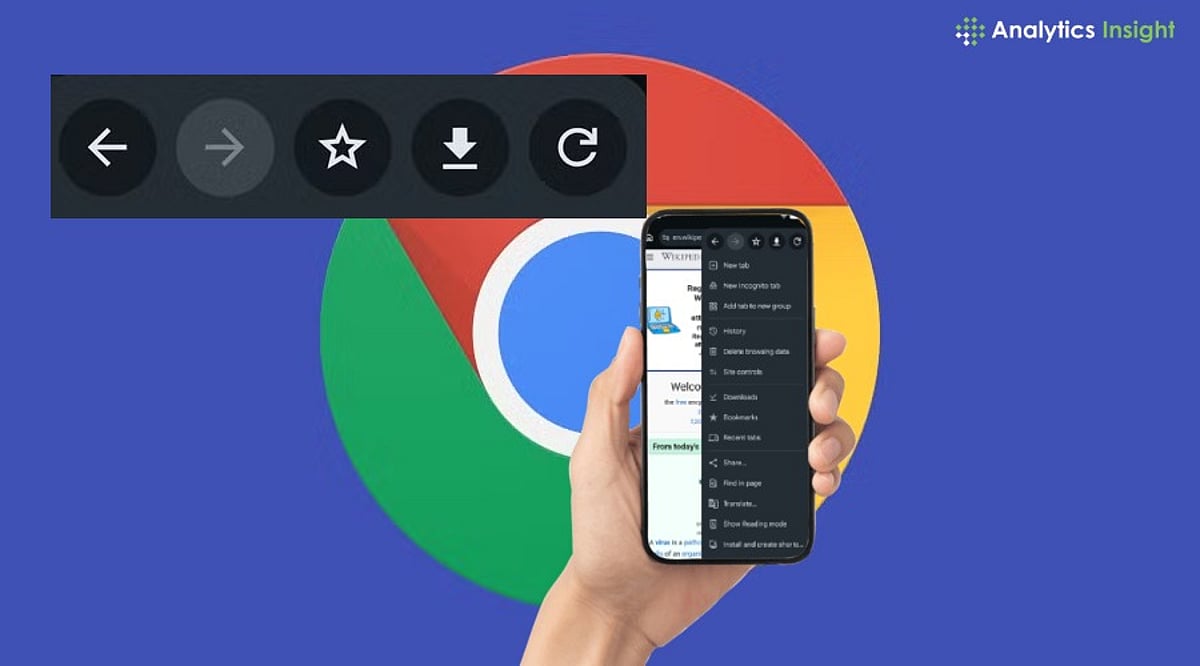
    Google has finally answered one of the most persistent user requests for Chrome on Android. With the release of Chrome 150, the browser now includes a dedicated Back button in its three-dot overflow menu, giving users an alternative to relying solely on Android’s system back gesture or navigation bar.

    Until now, Android users could only navigate backward using the device’s built-in controls, while the Forward button was already present in Chrome’s menu. This asymmetry has been a common complaint for years. Chrome 150 corrects this by placing a Back button directly next to the Forward button, aligning the Android experience with the version already available on iOS.

    The new Back button is part of a broader overhaul of Chrome’s overflow menu. Google has removed the traditional Info button and replaced it with a Site controls option that provides quick access to website permissions and settings. Additionally, the ‘Add to Home screen’ option has been renamed to ‘Install’ and ‘Create Shortcut,’ reflecting its dual function: installing supported web apps or creating simple website shortcuts.

    While the redesigned menu may take some getting used to, Google says the changes are intended to make frequently used features easier to find. The update is rolling out gradually via the Google Play Store for Android phones and tablets, so users can expect to see the new interface over the coming days.

    Although Chrome 150 doesn’t introduce major new features, the improvements focus on usability. The dedicated Back button is designed to simplify one-handed navigation, reducing dependence on Android’s system-level controls.

  • Apple’s Foldable iPhone Begins Mass Production: 10 Million Units Expected for September 2026 Launch

    Apple’s Foldable iPhone Begins Mass Production: 10 Million Units Expected for September 2026 Launch

    Apple’s first foldable iPhone has officially entered mass production, signaling a major step toward its anticipated September 2026 launch. According to supply chain reports, the tech giant has begun large-scale manufacturing after finalizing the device’s design. The foldable model is expected to debut alongside the iPhone 18 Pro and iPhone 18 Pro Max at Apple’s annual September event.

    Earlier reports hinted at delays due to hinge development challenges, but fresh updates indicate those issues have been resolved, and production is now on schedule. This contradicts a recent prediction from analyst Ming-Chi Kuo, who suggested that while the phone might be announced in September, customer availability could be limited until later in the year. Kuo also speculated that initial stock would be constrained as production ramps up.

    The foldable iPhone, rumored to carry the name “iPhone Ultra,” is expected to feature a 7.8-inch inner OLED display and a 5.5-inch cover screen, using a book-style folding design that opens like a small tablet. A titanium body and an advanced hinge are anticipated to deliver a smoother folding experience. Under the hood, the device may include Apple’s upcoming A20 chip for faster performance and better battery efficiency. Reports also suggest a Touch ID fingerprint sensor embedded in the power button instead of Face ID, along with two rear cameras and a slim, premium build.

    Mass production is a critical milestone, indicating Apple’s readiness to compete with established foldable phone makers like Samsung and Huawei. The company has reportedly increased its 2026 production target from 7–8 million units to nearly 10 million units, reflecting strong anticipated demand. However, early availability may still be limited. Pricing is expected to range between $2,300 and $2,500, making it the most expensive iPhone to date. Apple has not officially confirmed the device, so the name, features, price, and launch date remain subject to change before the September event.

  • Oppo Reno 16 and Reno 16c Now on Sale in India: Full Pricing, Specs, and Launch Offers

    Oppo Reno 16 and Reno 16c Now on Sale in India: Full Pricing, Specs, and Launch Offers

    Oppo has kicked off the first sale of its latest mid-range smartphones, the Reno 16 and Reno 16c, in India. Alongside the phones, the company also introduced the Oppo Bubble accessory. Customers can purchase these devices through Amazon, Flipkart, the Oppo India online store, and offline retail outlets, with attractive launch offers including cashback, bank deals, exchange discounts, and no-cost EMI options.

    The Reno 16 series is designed for users who want a strong camera system, long battery life, and premium features without the flagship price tag. The introductory offers make these phones even more appealing for those looking to upgrade.

    Oppo Reno 16 First Sale: Price, Offers, and Availability

    • Oppo Reno 16: 8GB + 256GB variant priced at Rs. 61,999; 12GB + 256GB variant at Rs. 67,999.
    • Oppo Reno 16c: 8GB + 128GB variant at Rs. 46,999; 8GB + 256GB at Rs. 49,999; 12GB + 256GB at Rs. 55,999.

    Buyers can get up to 10 percent instant cashback with select bank cards, along with no-cost EMI plans and exchange benefits through partner banks and retailers. These offers effectively reduce the upfront cost.

    Oppo Reno 16 and Reno 16c: Key Features and Specifications

    Oppo Reno 16 features a 6.32-inch AMOLED display with a 120Hz refresh rate. It is powered by the Snapdragon 7 Gen 4 processor and houses a 6,700mAh battery with 80W fast charging. The rear camera setup includes a 50-megapixel main sensor with OIS, complemented by additional sensors. For selfies and video calls, it has a 50-megapixel front camera.

    Oppo Reno 16c comes with a larger 6.57-inch AMOLED display, also with a 120Hz refresh rate. It is equipped with the MediaTek Dimensity 7300 processor and a bigger 7,000mAh battery, still supporting 80W fast charging.

    Both phones run ColorOS 16 based on Android 16 and support 5G connectivity. They are IP-rated for dust and water resistance and include AI-powered camera and productivity features.

    The Oppo Reno 16 series offers a compelling option in the premium mid-range segment. With strong cameras, large batteries, and long software support, these phones are worth considering for everyday users.

  • BSNL Introduces Satellite Phone in India: Pricing, Features, Eligibility, and How to Buy

    BSNL Introduces Satellite Phone in India: Pricing, Features, Eligibility, and How to Buy

    BSNL has officially launched its first satellite phone in India, marking a significant step into phone production for the state-owned telecom operator. The device is designed specifically for users who travel or work in locations where standard mobile networks are unavailable.

    Key Features

    The BSNL satellite phone is built around Inmarsat satellite connectivity, enabling direct voice calls without relying on terrestrial towers. It includes an SOS emergency support button for critical situations. The handset features a rugged construction to withstand harsh environments and offers extended battery life that can last several days on a single charge.

    Target Audience

    This device is not intended for mass-market retail. Instead, BSNL is targeting specialized users such as defence personnel, maritime teams, disaster response workers, mining operations, remote industrial sites, and adventure tourism operators. These groups often operate in areas with no cellular coverage, making satellite connectivity essential for uninterrupted communication.

    Pricing and Availability

    The satellite phone is priced at Rs. 1,34,166 and will not be sold through regular smartphone stores or online marketplaces. Interested buyers must contact BSNL directly and obtain permission. BSNL requires information about the intended location of use, duration, and purpose of the device. Potential customers are advised to visit their nearest BSNL office for eligibility details. For further inquiries, BSNL has provided a contact number: 9768866652.