
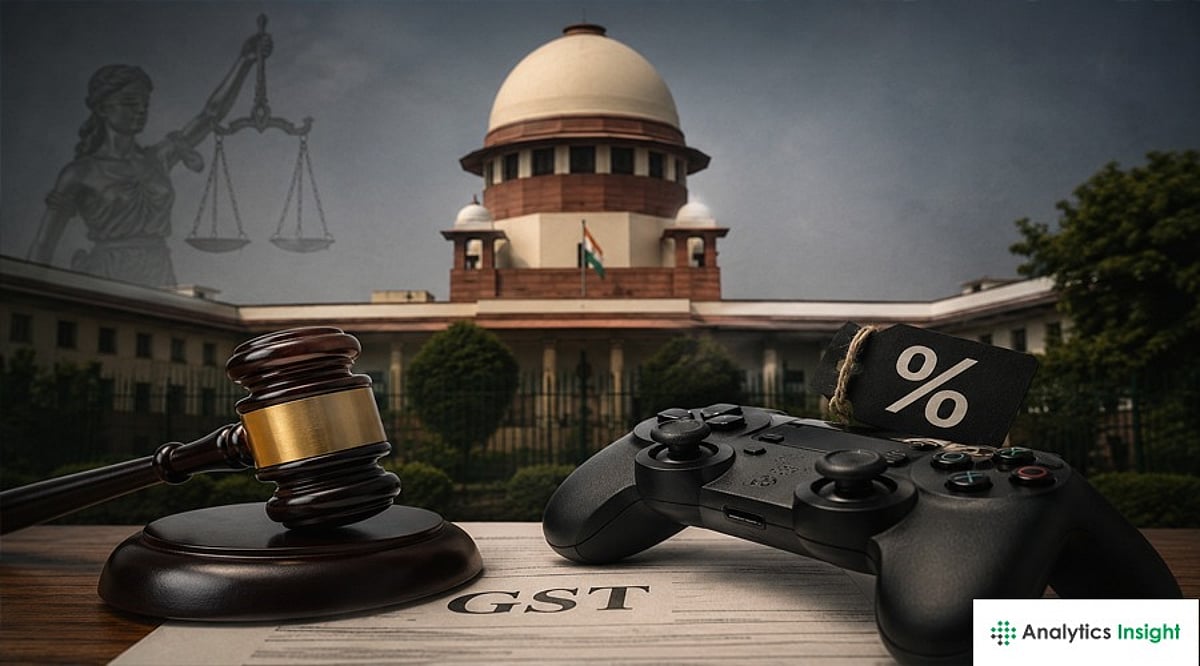
India’s online real-money gaming industry is back in the Supreme Court, with major companies filing review petitions to challenge the government’s decision to levy a 28% Goods and Services Tax (GST) on the full entry fee paid by players. This legal battle could determine the future of the country’s gaming sector.
According to reports, Play Games24x7 and Junglee Games have already filed review petitions, and several other online gaming companies are expected to follow suit. The tax demands in question exceed Rs. 1.5 lakh crore, making this one of the most significant tax disputes in the industry’s history.
Why Gaming Companies Are Fighting the Tax
Gaming companies argue that the GST rules were not clear when the tax was initially applied, making it unfair to impose retrospective tax demands. They contend that GST should be charged only on the platform fee they earn from each contest, not on the total amount players pay to join games. The government, however, maintains that the full entry fee constitutes a taxable supply.
Potential Impact on the Industry
The Supreme Court’s decision will have far-reaching consequences. If the companies win, they could avoid paying massive tax dues, preserving the current business model. If the government prevails, many gaming platforms may have to restructure their operations or face financial strain.
How India Compares to Other Countries
India’s tax regime for online gaming is considered one of the harshest globally. In the UK, gaming companies pay tax only on the money they retain after payouts, not on total player deposits. Singapore takes a similar approach for licensed operators. In the US, taxation varies by state but is generally based on gaming income rather than entry fees. The Philippines taxes licensed operators on profits, while Brazil is building its online betting market with a comparable framework. India’s 28% GST on the entire contest entry amount stands out as particularly stringent.
The outcome of this case is being closely watched by investors, operators, and policymakers alike, as it will set a precedent for how online real-money gaming is taxed in one of the world’s largest markets.
Leave a Reply