Blog

  • iPhone 18 Price Showdown: India, UAE, US – Which Country Pays the Most?

    iPhone 18 Price Showdown: India, UAE, US – Which Country Pays the Most?

    Apple’s latest iPhone lineup—the iPhone 18 Duo, iPhone 18 Pro, and iPhone 18 Pro Max—hit the global market on September 9, 2026, with pricing that varies sharply across regions. A new comparison reveals that the United States offers the lowest official prices, while India tops the list as the most expensive market for Apple’s flagship devices.

    Global Price Comparison: US, UAE, Saudi Arabia, UK, and India

    Across every storage configuration tested, the US provides the cheapest sticker price for the iPhone 18 Duo, iPhone 18 Pro, and iPhone 18 Pro Max. The UAE ranks second, followed by Saudi Arabia. The UK and India are the priciest, with India taking the top spot for highest costs.

    iPhone 18 Duo (256GB) Pricing

    The entry-level 256GB iPhone 18 Duo is priced at $1,999 in the US, which converts to roughly AED 7,336. In the UAE, the same model retails at AED 8,499—a gap of about AED 1,163. Indian buyers face a much higher cost: Rs. 2,99,900, which translates to approximately AED 11,527.

    Higher Storage Widens the Gap

    As storage increases, the price difference becomes even more pronounced. For example, the 2TB iPhone 18 Duo costs about AED 11,740 in the US (after conversion), AED 13,599 in the UAE, and nearly AED 17,293 in India.

    iPhone 18 Pro and Pro Max Pricing

    The iPhone 18 Pro starts at $1,199 in the US for the 256GB variant, while the UAE lists it at AED 5,099 and India at Rs. 1,64,900. Similarly, the iPhone 18 Pro Max begins at $1,299 in the US, AED 5,499 in the UAE, and Rs. 1,79,900 in India. Higher storage options further amplify these disparities.

    Beyond the Sticker Price: Taxes and Other Factors

    The US advantage is not absolute. Apple’s US prices are quoted before state and local sales taxes, so the final checkout amount varies by location. International buyers must also factor in travel costs, currency conversion fees, warranty limitations, and import duties, which can eat into apparent savings.

    For Indian consumers, the UAE presents a closer alternative than the US, but only after accounting for taxes, travel expenses, exchange rates, and import regulations. While the US offers the lowest list prices, the true cost depends on individual circumstances.

  • Samsung Mocks Apple’s Foldable iPhone Duo as a ‘Reheated’ Copy

    Samsung Mocks Apple’s Foldable iPhone Duo as a ‘Reheated’ Copy

    Apple officially entered the foldable smartphone market with the launch of the iPhone Duo on September 9, and Samsung was quick to respond with a series of taunts. The South Korean tech giant, which has been releasing foldable devices since 2019, took to social media to mock Apple’s belated entry.

    Samsung Mobile US posted multiple comments on X during Apple’s event, calling the new iPhone ‘so far, so same’ and joking that Apple was late to the foldable race. The company even used the hashtag “#ItsTimeToSwitch” and quipped, “Let us know when you’re done reheating our leftovers,” suggesting the iPhone Duo is a copycat of Samsung’s Galaxy Fold series.

    Duolingo also joined the online banter, playing off the “Duo” name that is central to its language-learning app. The app traded playful replies with Samsung and Apple, while Samsung Canada shared a Galaxy Z Fold 8 video with a message about imitation.

    Samsung’s Foldable Advantage

    Samsung has been refining its foldable technology for years, giving the Galaxy Z Fold series a significant head start. Apple, however, enters the race with a massive user base and a powerful brand. The iPhone Duo could still reshape the market if Apple delivers a compelling user experience.

    To maintain its lead, Samsung must continue to innovate with stronger hardware—better cameras, longer battery life, and a thinner body—and optimized software. Apple’s foldable could make the technology more mainstream, especially if it integrates seamlessly with the existing iPhone ecosystem.

    Also Read: Apple iPhone 18 Launch: Foldable iPhone Duo, Pro, Watch Series 12

    Samsung still offers the experience, but Apple now commands the attention. The coming years will determine whether Samsung retains its lead or Apple turns foldables into a major segment of the iPhone business.

    Join our WhatsApp Channel to get the latest news, exclusives, and videos on Phones.

  • Coinbase Developing AI Financial Accounts as Agentic Trading Expands

    Coinbase Developing AI Financial Accounts as Agentic Trading Expands

    Coinbase is taking a significant step toward integrating artificial intelligence into mainstream finance. CEO Brian Armstrong revealed on September 9 that the exchange is building a financial account designed specifically for AI agents, building on existing tools that already allow software to trade within controlled portfolios. The announcement came in response to a question from Ruby on Rails creator David Heinemeier Hansson about the possibility of an “agentic bank” for autonomous routine spending. Armstrong did not provide details on launch dates, product names, fee structures, or regulatory frameworks.

    Coinbase for Agents: Controlled Trading Today

    Coinbase for Agents currently enables supported AI applications to connect with Coinbase Advanced Trade through a remote Model Context Protocol (MCP) server or a local command-line interface. This setup gives agents access to designated portfolios rather than a customer’s entire account, ensuring a layer of security and control.

    Coinbase advises users to create a separate portfolio and fund it only with assets they are willing to expose. Customers can also limit an agent’s permissions to that portfolio, reducing the funds available for unexpected orders. The service supports spot trading across more than 900 cryptocurrency pairs. Eligible US customers can also access futures, S&P 500 equities, portfolio monitoring, and USDC-to-dollar conversions, subject to regulatory and account restrictions.

    Portfolio Limits Define the Current AI Model

    Agents can transfer assets between authorized Coinbase portfolios through approved API permissions, but those permissions do not allow withdrawals to external blockchain addresses. Customers can revoke an application’s access at any time through Coinbase security settings. Models such as Claude or ChatGPT can connect through a local MCP server, operating through an isolated sub-account with user-defined transaction limits rather than unrestricted access to cards or outside wallets.

    The question now is whether Coinbase will extend these controls from trading into routine payments and merchant spending. The company has not disclosed whether the planned AI financial account will support cards, bank transfers, recurring bills, refunds, or direct merchant payments.

    x402: A Payment Protocol for AI Agents

    Coinbase is also developing x402, a payment protocol designed around pay-per-request transactions. This model lets AI software pay for individual actions from a USDC balance without relying on conventional subscription flows. Currently, x402 works through Agentic Wallet rather than direct integration with Coinbase for Agents. Direct x402 support inside Coinbase for Agents represents another planned step alongside any broader financial account announcement.

    Broader AI Integration and Strategic Moves

    The company has expanded its use of AI internally and across customer products. Earlier in 2026, Armstrong cut about 14% of Coinbase’s workforce, or roughly 700 employees, while shifting toward smaller AI-native teams. In August, AI agents gained access to derivatives and S&P 500 stocks. Coinbase also tested autonomous travel planning through AWS AgentCore, including USDC hotel payments on Travala using Base.

    Meanwhile, Coinbase continued expanding beyond spot cryptocurrency trading. The exchange filed two SEC registrations for US stock perpetuals, although those filings did not establish a product launch date. The company also appointed Anthony Armstrong to its board in early September.

    As Coinbase moves forward, it has not detailed how identity checks, disputes, refunds, or legal responsibility would work when software initiates transactions. These questions remain central to the future of AI-driven finance.

  • SS Retail IPO Listing Date, Price Band, and Lot Size Announced

    SS Retail IPO Listing Date, Price Band, and Lot Size Announced

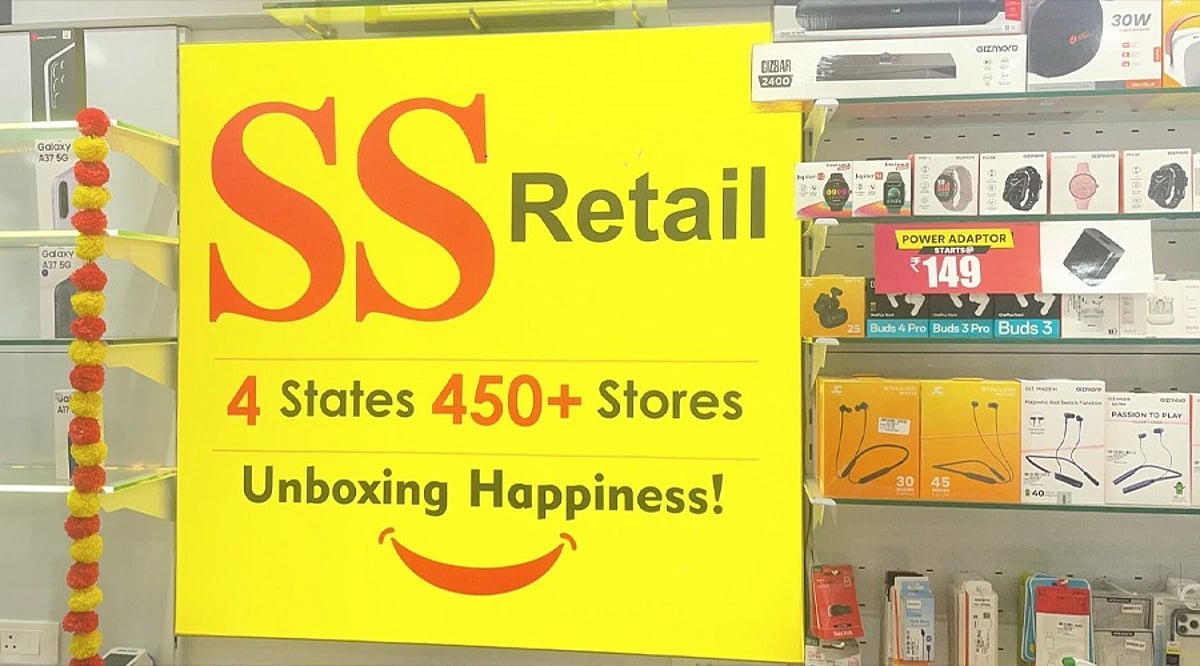
    SS Retail, a leading mobile and electronics retailer in India, is set to launch its initial public offering (IPO) on September 16, 2026. The company aims to raise approximately Rs. 500 crore through this public issue, which includes both a fresh issue and an offer for sale.

    IPO Details and Key Dates

    The three-day subscription period will run from September 16 to September 18, 2026. The price band has been fixed at Rs. 403 to Rs. 424 per equity share, with a face value of Rs. 10 each. Investors can bid for a minimum lot of 35 shares, and in multiples of 35 thereafter. At the upper price band, one lot will cost Rs. 14,840.

    The anchor book will open on September 15, one day before the public bidding begins. The basis of allotment is expected to be finalized on September 21, with refunds and share credits scheduled for September 22. The company anticipates its shares will start trading on the BSE and NSE on September 23.

    Offer Structure and Allocation

    The IPO comprises a fresh issue of shares worth Rs. 360.75 crore and an offer for sale worth Rs. 140 crore. For the net offer, up to 50% has been reserved for qualified institutional buyers, at least 35% for retail investors, and at least 15% for non-institutional investors. Additionally, shares worth up to Rs. 12 crore have been reserved for eligible employees, who will receive a Rs. 25 discount per share.

    Use of IPO Proceeds

    SS Retail plans to utilize Rs. 241.3 crore from the fresh issue for additional working capital requirements. Another Rs. 12.4 crore has been earmarked for store fit-outs as the company expands its retail network during fiscal 2027 and fiscal 2028. The remaining proceeds will be used for general corporate purposes.

    The company intends to open 57 new stores in fiscal 2027 and 58 new stores in fiscal 2028, allocating approximately Rs. 5.81 crore and Rs. 6.6 crore for these expansions, respectively.

    Business Overview and Financial Performance

    SS Retail operates a multi-brand retail network selling mobile phones, accessories, and other electronic products. As of March 2026, it operated 503 stores across Maharashtra, Karnataka, Madhya Pradesh, Goa, and Gujarat, with 458 stores in Maharashtra alone. The company identifies itself as the largest mobile phone retail chain in West India and the third-largest in India among its peers.

    For the year ended March 2026, SS Retail reported consolidated revenue of approximately Rs. 2,352.85 crore and a profit after tax of Rs. 59.28 crore. In fiscal 2025, standalone revenue stood at Rs. 1,597.9 crore, with a profit of Rs. 39.86 crore.

    The IPO is being managed by Anand Rathi Advisors and Emkay Global Financial Services as the book-running lead managers.

  • Caplin Systems Launches White-Label Trading Platform Unifying FX and Digital Assets

    Caplin Systems Launches White-Label Trading Platform Unifying FX and Digital Assets

    Caplin Systems Launches White-Label Digital Asset Trading Platform

    Caplin Systems has launched a hosted, end-to-end white-label digital asset solution for institutional trading firms. The platform combines FX and digital asset workflows inside one interface, targeting OTC desks, brokers, traditional finance firms, and crypto market makers. According to the company, firms can cut development timelines by up to 80% and launch in as little as 12 weeks.

    Targeting Manual Trading Workflows

    The launch addresses trading desks that still rely on fragmented manual processes as digital assets mature. Some firms quote through chat while staff track exposure via spreadsheets. Others build proprietary systems or use AI-assisted development to close these gaps. Caplin notes that such projects often involve long deployment cycles, maintenance demands, and security concerns.

    Caplin presents its hosted model as an alternative to bespoke infrastructure and rigid third-party platforms, avoiding volume-based fees, technical debt, and ongoing infrastructure overhead.

    Platform Serves OTC, TradFi, and Market Makers

    Caplin built the solution around three market segments with different operating requirements. OTC desks and brokerages can automate execution and increase trading capacity without adding staff. Traditional finance firms receive trade-level audit trails and data lineage for digital asset activity. Crypto market makers can use the platform as a distribution layer for trading portals and client access.

    Steven Singh, Caplin’s Head of Product, stated that client distribution technology has struggled to keep pace with digital asset growth. He noted that the company extended 26 years of institutional FX experience into the hosted product, allowing firms to avoid multi-year internal software projects and platforms tied to specific liquidity pools.

    Unifying FX and Digital Asset Trading

    The Caplin Platform provides secure authentication, centralized entitlements, and continuous performance for round-the-clock markets. It offers firms one branded workspace for traditional FX and digital assets. The system is vendor-neutral through open integrations with liquidity providers, risk engines, and custody partners. Its customizable architecture lets firms configure the environment instead of accepting a fixed platform design.

    The platform also supports hybrid execution workflows, allowing firms to automate electronic trading while digitizing high-touch sales inquiries within the same environment. This setup supports both automated and relationship-driven trading processes.

    Caplin has made the white-label digital asset solution available immediately. The London-headquartered company specializes in web-based financial trading technology, including single-dealer platforms and client-side trading applications. Its FICC tools support fixed income, commodities, and currencies, including cryptocurrencies.

    Conclusion

    Caplin Systems has launched a hosted platform that combines FX and digital asset trading for institutional firms. The solution targets manual workflows, lengthy builds, and fragmented infrastructure. Caplin says firms can launch in 12 weeks, connect external providers, automate execution, and manage multi-asset trading through one branded environment.

  • US Seizes $52 Million in Crypto and Shuts Down Xinbi Telegram Channels in Major Crackdown

    US Seizes $52 Million in Crypto and Shuts Down Xinbi Telegram Channels in Major Crackdown

    U.S. authorities have restrained approximately $52 million in scam-related cryptocurrency and seized Telegram channels operated by Xinbi Guarantee, a Chinese-language marketplace that served scam-center operators and vendors. The coordinated action involved Treasury sanctions, Department of Justice wallet seizures, and raids in Madagascar.

    Blockchain analytics firm Elliptic revealed that years of tracking Xinbi wallets enabled the U.S. Secret Service to act against the marketplace, which provides fraud websites, money laundering services, and recruitment for scam compounds in Southeast Asia. Elliptic first exposed Xinbi in May 2025 and now estimates at least $24 billion in transactions since 2022, ranking behind Huione Guarantee’s $31 billion.

    Xinbi Pay, a related payments platform, processed an additional $6 billion, mostly using Tether’s USDT on the TRON blockchain. The United Kingdom sanctioned Xinbi in March 2026, and prosecutors seized two payment wallets holding about $12 million, targeting 47 more wallets. The Justice Department credited Tether for assisting the operation.

    In response to the freezes, Xinbi exchanged roughly $2.8 million in remaining USDT for Decentralized USD (USDD), which lacks an issuer freeze function. However, Elliptic noted that USDD’s backing includes USDT, which issuers can freeze. The Telegram channel seizures disrupted a key communication and commerce route for merchants.

    Separately, Strike Force agents spent two weeks in Madagascar assisting local authorities against 13 Chinese-run scam compounds, leading to nearly 400 arrests and the seizure of over 3,200 electronic devices. About 30 detainees were identified as Chinese leaders and repatriated. The Strike Force has restrained about $938 million in cryptocurrency since its launch in November 2025, with the Xinbi action adding approximately $52 million in one day.

  • Ledger Consolidates Security and IT Leadership Amid Surging AI Crypto Attacks

    Ledger Consolidates Security and IT Leadership Amid Surging AI Crypto Attacks

    Ledger SAS has appointed Oded Blatman as chief information officer and chief security officer, combining technology and security oversight in a single leadership role as AI-driven threats expand across the crypto industry. The Paris-based hardware wallet maker said Blatman will oversee cyber and infrastructure security, product security, physical and workplace security, internal IT, and enterprise risk.

    One Role for Security and Technology

    Blatman joins Ledger after five years as CIO and CISO at Fireblocks. He previously served as global CISO at Bank Hapoalim and held both CIO and CISO roles at ClickSoftware. At Fireblocks, he led global security and enterprise technology during a period of international expansion and rising operational complexity, experience Ledger says fits its broader effort to strengthen organizational resilience.

    Ledger described the combined CIO and CSO structure as a deliberate organizational change. The company said information systems and security now require closer coordination as tokenization, AI agents, and institutional digital-asset use develop together.

    AI Makes Crypto Attacks Faster and More Scalable

    Blatman said artificial intelligence is reducing the cost and time attackers need to search for weaknesses, while also allowing attacks to become more sophisticated and operate at greater scale. As phishing campaigns and deepfake impersonation schemes become more advanced, Ledger said security teams must evolve at a comparable pace.

    The appointment follows a rise in reported crypto security incidents. Data from DefiLlama cited by Ledger shows hackers stole about $1.4 billion across 250 attacks in 2026 so far, after losses reached $2.7 billion across 146 attacks in 2025.

    Recent Incidents Add Pressure on Digital Asset Defenses

    Several high-profile incidents have put digital-asset companies on alert. About $320 million in Bitcoin left the Liquid Network during a hack earlier this week. Trezor also disclosed a breach involving one of its shipping providers last week, exposing personal information belonging to tens of thousands of customers. Earlier this year, a Coldcard hack raised further questions about offline wallet security.

    Ledger said hardware-backed verification remains central to protecting high-value digital ownership, and pointed to secure software, resilient operations, and verifiable human intent as additional layers of protection.

    Leadership Backed by Deep Security Experience

    Blatman said Ledger’s hardware-security work, user trust, and Donjon research team provided a strong foundation for the role, and that he joined to connect product security, enterprise technology, and resilience. Chairman and CEO Pascal Gauthier said Ledger considers security central to its business and that Blatman’s experience protecting systems at Fireblocks and Bank Hapoalim prepared him to oversee both information technology and security.

  • MCX Gold Prices Slide 0.12% to ₹1,53,950 as Oil Rises and US Inflation Data Looms

    MCX Gold Prices Slide 0.12% to ₹1,53,950 as Oil Rises and US Inflation Data Looms

    Gold futures on the Multi Commodity Exchange (MCX) edged lower on Wednesday, September 10, as market participants adopted a cautious stance ahead of key US inflation data and the Federal Reserve’s upcoming policy decision. The October gold contract fell 0.12% to ₹1,53,950 per 10 grams, while September silver futures declined 0.34% to ₹2,43,375.

    In the energy markets, Brent crude futures slipped 0.16% to $101 per barrel, while US West Texas Intermediate (WTI) edged up 0.06% to $96.11 per barrel. Rising oil prices often fuel inflation concerns, adding to the uncertainty surrounding gold’s short-term direction.

    According to the CME FedWatch Tool, markets are currently pricing in a 39.8% probability that the Fed will hold rates steady in September and a 60.2% chance of a rate hike. Higher interest rates typically weigh on gold, a non-yielding asset.

    Domestic Gold Prices

    Despite the dip in futures, spot gold prices in India moved higher. 24K gold rose by ₹120 to ₹1,55,510 per 10 grams, and 22K gold advanced by ₹110 to ₹1,42,550. Regionally, Mumbai and Kolkata quoted 24K gold at ₹1,55,510, Delhi at ₹1,55,660, and Chennai at ₹1,55,510.

    US Gold Prices

    In international markets, spot gold traded 0.3% higher at $4,412.84 per ounce, supported by a softer dollar. However, US gold futures for December delivery edged 0.1% lower to $4,457.10. Spot silver rose 0.2% to $67.42 per ounce, platinum fell 0.6% to $1,885.02, and palladium gained 0.2% to $1,355.50.

    “For now, the geopolitical developments in the Persian Gulf are of secondary importance to gold. Gold instead is teeing off on a weaker dollar, which notably is not moving up despite the fact that US rates are going higher,” said Edward Meir, analyst at Marex.

    Daniel Hynes, senior commodities strategist at ANZ, noted that gold is supported “as US fiscal pressures continue to undermine confidence in the long-term value of government debt and the currency used to finance it.”

    Key Levels to Watch

    On MCX, gold has support at ₹1,52,500 and ₹1,51,650, while resistance is seen at ₹1,54,400 and ₹1,55,500. For silver, support lies at ₹2,41,400 and ₹2,39,100, with resistance at ₹2,45,800 and ₹2,48,000.

  • Claim Free Fire MAX Rewards: September 10 Redeem Codes for Diamonds, Emotes, and More

    Claim Free Fire MAX Rewards: September 10 Redeem Codes for Diamonds, Emotes, and More

    Garena Free Fire MAX redeem codes for September 10, 2026, are now available, offering players free skins, bundles, emotes, and other exclusive rewards. These codes are a limited-time giveaway, so redeem them quickly before they expire or reach redemption limits.

    Active Redeem Codes for September 10, 2026

    If you’re looking for today’s Free Fire MAX codes, here is the full list:

    • FFNFSXTPVQZ9
    • FFMTYKQPFDZ9
    • FFMTYQPXFGX6
    • FFRSX4CYHXZ8
    • FFPURTQPFDZ9
    • FFNRWTQPFDZ9
    • NPTF2FWSPXN9
    • RDNAFV2KX2CQ
    • FF6WN9QSFTHX
    • FF4MTXQPFDZ9
    • FVTCQK2MFNSK
    • FFM4X2HQWCVK
    • FFDMNQX9KGX2

    Note: Codes are often region-specific and time-sensitive. Codes dedicated to Indian servers may not work on other servers.

    How to Redeem the Codes

    Free Fire MAX codes expire after a specific period, so players must redeem them as soon as possible. Follow these steps:

    1. Visit the official Rewards Redemption website.
    2. Log in using your Gmail, Facebook, Twitter (X), or VK ID.
    3. Copy and paste the code into the designated box.
    4. Click the Confirm button, then press ‘OK’.

    If a code is successfully redeemed, rewards will be credited to your in-game mailbox within 24 hours. This applies to emotes, skins, and other premium items. Diamonds and in-game currencies update instantly.

    How to Get Extra Diamonds

    Diamonds are the premium in-game currency in Free Fire MAX. Here are ways to obtain them:

    • Purchase directly from the in-game store or through authorized third-party websites.
    • Participate in in-game events that reward diamonds for completing tasks.
    • Trade diamonds with other players or squadmates.

    Final Thoughts

    While these redeem codes may seem like simple giveaways, they are part of Garena’s effective marketing strategy to maintain an active player base. The codes come with restrictions but remain a convenient way for newcomers to obtain gear, save money, and extend their gameplay.

  • AI Regulation and Government Policy Are Rewriting India’s Data Science Curriculum

    AI Regulation and Government Policy Are Rewriting India’s Data Science Curriculum

    Governments worldwide are moving AI education from the margins to the center of national policy. Infrastructure, curriculum, and regulation are now being built together to expand the AI talent pool. Nowhere is this shift more visible than in India, where the IndiaAI Mission and the National Education Policy (NEP) 2020 are working as parallel engines, while regulators like AICTE and UGC determine how quickly institutions can respond.

    Why AI Education Has Become a Policy Priority

    As AI creates new demand for skilled workers, governments need people who can develop, apply, and manage AI systems across the economy. Education has therefore become a central pillar of national AI strategy. Governments are restructuring data science and AI courses, improving access to technical education, and working with industry to identify the skills employers actually need. The real challenge is no longer whether countries should build AI talent, but how policy can build that talent at scale — and whether it can reach beyond the institutions that already lead.

    Three Models, One Direction

    Three broad approaches to AI talent development are emerging around the world. Each starts from a different point, but all are moving toward the same goal: growing the supply of AI-capable professionals.

    India’s Two Engines: Infrastructure and Curriculum

    India is pursuing AI education through two engines moving side by side. The first is infrastructure. Launched in 2024 with an outlay of Rs. 10,372 crore over five years, the IndiaAI Mission supports computing infrastructure, datasets, and innovation ecosystems. Its education layer includes AI Centers of Excellence and efforts like the IndiaAI-Meta ‘Srijan’ Center at IIT Jodhpur, which turns national compute spending into practical student skills.

    The second engine is curriculum. NEP 2020 provides the broader framework for spreading AI and data science across higher education. IITs and NITs have moved from AI electives to full degree specializations, and the SWAYAM platform now offers more than 370 AI and analytics courses with more than 4,10,000 enrollments.

    Regulation as a Speed Mechanism

    Regulators are shaping how quickly institutions can adapt. AICTE sets curricular direction through Model B.Tech programs in AI and Data Science, pushing AI concepts into branches outside computer science. UGC promotes flexibility by allowing students to earn roughly 40% of their credits through online learning. Together, these policies give universities room to add emerging AI content without waiting for a full policy cycle. Regulation, in this sense, is not just about limits. It is about speed.

    Why Government Needs Industry

    Government provides scale, universities add academic structure, and industry brings current tools and workplace relevance. Digital platforms then extend access to a much wider audience. None of these can replace the others. Policy can fund compute and set standards, but it cannot supply live datasets or current hiring expectations at the pace that industry can.

    NASSCOM’s FutureSkills PRIME, which has trained over 1.6 million learners, along with ties to firms like Microsoft, IBM, Google, and SAP, keeps the policy framework current in practice rather than as an add-on.

    The Capacity Gap

    When AI infrastructure grows faster than institutions can absorb it, leading institutions have a clear advantage. They have stronger faculty, better access to computing resources, and closer industry connections. Smaller institutions face faculty shortages, weaker infrastructure, and less room to update curricula at pace. A national AI strategy can look successful on paper — with more courses and more funding — while still producing uneven outcomes across institutions.

    Final Thoughts

    India is not short on AI policy. It is short on reach. The mission is funded, the curriculum reforms are in place, and industry ties are growing. But none of that matters much if it stays confined to the same handful of top institutes. The real test is whether ordinary colleges get a fair shot too, or whether the gap between India’s best and everyone else keeps growing.