Blog

  • Ashutosh Kulkarni: Elastic CEO Driving Enterprise AI and Cybersecurity Innovation

    Ashutosh Kulkarni: Elastic CEO Driving Enterprise AI and Cybersecurity Innovation

    Ashutosh Kulkarni is a seasoned technology executive and strategic business leader, best known as the Chief Executive Officer of Elastic. He has made significant contributions to artificial intelligence, enterprise search, cybersecurity, and cloud technologies. Prior to becoming CEO, Kulkarni held senior management roles at McAfee, Akamai Technologies, Informatica, and Sun Microsystems.

    Early Life and Education

    Kulkarni developed an early passion for engineering and technological innovation. He earned a Bachelor of Engineering degree from the University of Mumbai and a Master of Science in Computer Engineering from The University of Texas at Austin. He also holds an MBA in Marketing & Finance from the University of California, Berkeley.

    Professional Career

    Ashutosh Kulkarni began his career at Sun Microsystems before moving to Informatica, where he spent a decade leading cloud product initiatives. He then joined Akamai Technologies and later McAfee, holding various leadership roles. In 2021, he became Elastic’s Chief Product Officer, and in 2022, he was appointed CEO.

    Business Intervention in AI

    Under Kulkarni’s leadership, Elastic is advancing enterprise AI through an intelligent ecosystem that combines generative AI, agentic capabilities, AI-powered search, observability, performance monitoring, and cybersecurity to deliver scalable, secure, and high-performance digital experiences.

    AI Ecosystem

    Elastic’s unified AI ecosystem leverages Elasticsearch with leading AI platforms to provide vector search, RAG, safe deployment, and cloud-native capabilities, enabling businesses to build efficient and intelligent AI applications.

    Agentic Observability

    Agentic AI improves observability through log analysis, event detection, and natural language investigations. AI-driven insights accelerate root cause analysis, helping teams detect and resolve issues faster.

    AI Performance Monitoring

    AI enhances observability with distributed tracing, automated diagnostics, and AI-based troubleshooting, aiding in problem detection and improving application reliability.

    Agentic Security

    AI-powered security systems strengthen cyber defense through intelligent threat detection, automated investigations, explainable AI reasoning, and rapid incident response, improving visibility and minimizing response times.

    AI-Powered XDR Platform

    The AI-based XDR platform integrates automation, continuous monitoring, and intelligent threat analysis to effectively detect, investigate, and mitigate cyber threats.

    AI Infrastructure Intelligence

    AI-driven infrastructure observability provides anomaly detection, predictive insights, automated remediation, and natural language processing, speeding root cause analysis and increasing system resilience while reducing downtime.

    Business Achievements

    Ashutosh Kulkarni has expanded Elastic’s capabilities in AI, enterprise search, observability, and cybersecurity through innovative products and acquisitions. He has built strategic relationships with top technology companies such as OpenAI and NVIDIA. His leadership has driven consistent revenue growth and widespread enterprise adoption of Elastic’s software.

    Controversies

    As of now, there are no known controversies surrounding Ashutosh Kulkarni. He is widely respected for his expertise in enterprise AI, cloud computing, search technology, and observability. His leadership and technical skills have earned him an excellent reputation in the technology sector.

  • Gaming Giants in 2026: The Industry’s Highest Market Valuations

    Gaming Giants in 2026: The Industry’s Highest Market Valuations

    Microsoft leads the gaming industry in market capitalization as of 2026, despite gaming representing only a fraction of its overall technology business. Its gaming operations encompass Xbox, Activision Blizzard, and a portfolio of major franchises. The company’s cloud infrastructure, subscription services, and expansive gaming ecosystem give it substantial influence across the global interactive entertainment landscape.

    Tencent remains one of the world’s largest gaming companies, supported by a diverse portfolio of popular online and mobile games. Its operations span major international franchises and Chinese titles, while its broader technology ecosystem enhances distribution and player engagement. Tencent’s scale makes it a dominant force in global gaming.

    Sony holds a strong position through PlayStation, one of the industry’s most recognizable platforms. Its business combines consoles, software, subscriptions, and exclusive franchises to create a broad entertainment ecosystem. Major first-party titles and the PlayStation brand continue to drive Sony’s importance in the global gaming market and its overall corporate valuation.

    NetEase has emerged as a major player with a wide array of online and mobile titles. The company has expanded internationally while continuing to serve Chinese audiences. Its gaming division remains a key contributor, supported by established franchises, live-service models, and ongoing investment in game development.

    Sea Limited’s Garena gaming division has made the company a significant force in Southeast Asian and international digital entertainment. Garena operates popular online games and benefits from Sea’s broader digital ecosystem. Gaming remains a core component alongside e-commerce and digital financial services across multiple markets.

    Nintendo continues to be one of gaming’s most recognizable and valuable companies, built on distinctive hardware and iconic franchises. Mario, Zelda, and Pokémon-related properties attract generations of players, while Nintendo’s dedicated platforms create a tightly integrated ecosystem. Its unique hardware-software approach sets it apart from other gaming giants.

    Take-Two Interactive is among the largest pure-play gaming publishers, with a portfolio featuring globally recognized franchises. Its businesses include Rockstar Games and 2K, covering blockbuster releases and ongoing digital experiences. The company’s valuation reflects investor expectations around major franchises, recurring revenue, and the continued growth of interactive entertainment worldwide.

    Electronic Arts remains a major global publisher with an extensive portfolio spanning sports, action, and multiplayer games. Franchises such as EA Sports FC, Madden NFL, and Battlefield contribute to its worldwide reach. Its recurring live-service revenue model and established player communities give it an important position in the competitive gaming industry.

    Roblox occupies a unique niche by combining gaming, social interaction, and user-generated content. Its platform allows creators to build experiences while users explore games and virtual environments. This community-driven model gives Roblox a different growth profile from traditional publishers and highlights the rising importance of creator ecosystems in gaming.

    Aristocrat has a significant presence across gaming and casino technology, with businesses spanning physical gaming machines and digital entertainment. Its operations extend beyond conventional console and PC gaming, reflecting the broader definition of the gaming industry. The company’s digital expansion and established gaming technology business contribute to its position among major publicly traded gaming companies.

  • Is a Chromebook Ready for Everyday Use? Key Considerations for 2026

    Is a Chromebook Ready for Everyday Use? Key Considerations for 2026

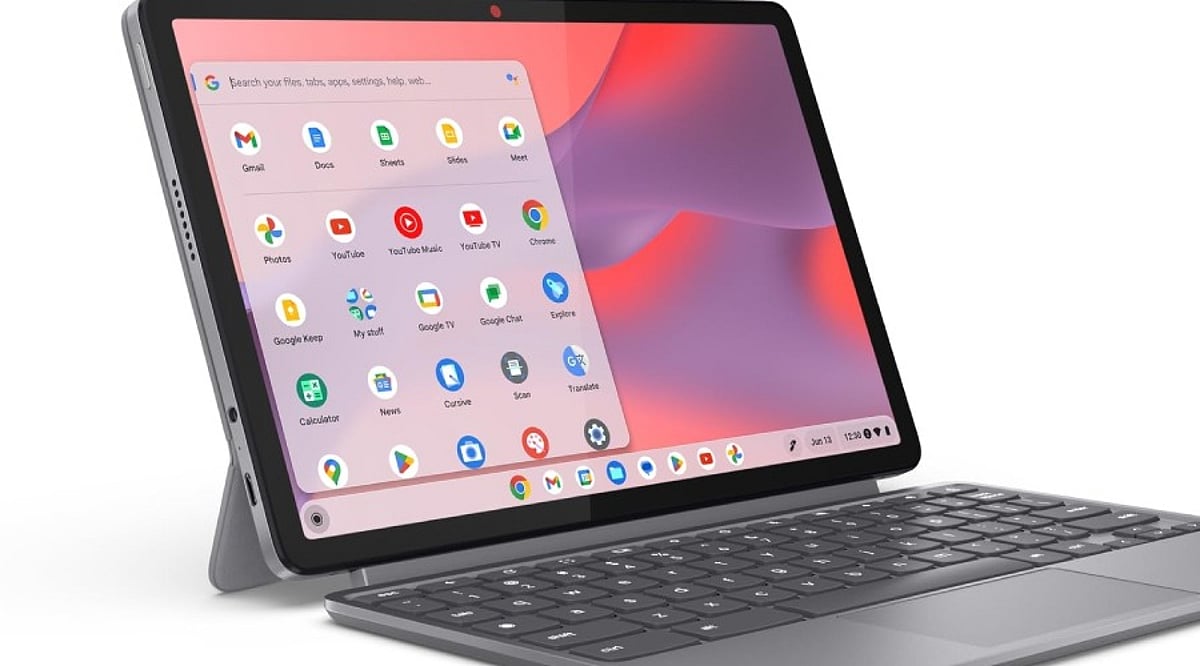
    Chromebooks have evolved far beyond their reputation as simple web-only devices. With the introduction of the Chromebook Plus line, improved hardware, long software support, and integrated AI tools, they now present a compelling option for daily computing. However, software compatibility with Windows and macOS applications remains a critical factor to evaluate before making a purchase.

    ChromeOS has matured into a robust platform for web research, email, document editing, video calls, media consumption, and cloud storage. Google services like Gmail, Drive, Docs, Sheets, and Slides work offline after initial setup—a vital feature for travelers, students, and professionals in areas with unreliable internet. The simplicity of the desktop, centered around the browser, appeals to users who rely primarily on online tools rather than heavy local software.

    The Chromebook Plus category represents a significant step forward. Models such as the Lenovo Chromebook Plus 14, equipped with MediaTek Kompanio Ultra 910 chips, 16GB of RAM, OLED displays, and over 13 hours of battery life, rival premium laptops. These devices handle multitasking with ease and offer a premium experience, making them suitable as a primary computer.

    AI features are now integral to Chromebook Plus. Gemini integration enables complex topic explanations, article summarization, cross-page comparisons, and in-browser task assistance. The “Help me Read” tool can summarize pages, answer questions about content, and simplify selected text. “Help me Write” assists in drafting, rewriting, shortening, or adjusting tone. While not a replacement for a creative workstation, these tools boost productivity in office, academic, and research contexts.

    Long-term value is another strength. Google now offers up to 10 years of automatic updates for eligible Chromebooks. Older models (pre-2021) may receive extended updates at the cost of losing Android app and Google Play Store access, but newer devices avoid this trade-off. Models with update support through 2033, 2035, or 2036 justify a higher initial investment.

    However, software limits persist. ChromeOS excels with web apps, Android apps, Linux tools, and cloud services. Applications built exclusively for Windows or macOS—such as Adobe Photoshop, Premiere, DaVinci Resolve, specialized CAD tools, certain enterprise software, and many local PC games—remain hurdles. Web versions of Microsoft 365 and cloud gaming services can cover some gaps, but they don’t replace every desktop application. A thorough check of essential apps before purchase is essential.

    Hardware recommendations for a primary Chromebook: at least 8GB of RAM and 128GB of storage, a 1080p webcam for quality video calls, a comfortable keyboard and trackpad, USB-C charging, and Wi-Fi 6E or Wi-Fi 7 support. Display quality matters more on a daily driver than on a secondary device. A premium configuration could include 8–16GB RAM, 256GB storage, a 14-inch 16:10 display, and robust build quality. Prices for premium Chromebooks can reach over $800.

    In summary, the Chromebook Plus lineup offers strong hardware, AI capabilities, and long-term support. The decision hinges on software: if all critical applications have viable web, Android, or Linux alternatives, ChromeOS provides a smooth, efficient daily experience. If not, a traditional laptop remains the safer choice.

    Frequently Asked Questions

    Q: Can a Chromebook be used as a main computer?
    A: Yes—it handles browsing, email, documents, video calls, media, cloud storage, and many productivity tasks effectively.

    Q: Is Chromebook Plus better than a regular Chromebook?
    A: Generally yes for demanding daily use; Plus models offer stronger hardware, better multitasking, and additional AI capabilities.

    Q: How long do Chromebooks receive updates?
    A: Google provides eligible ChromeOS devices with up to 10 years of automatic updates, depending on the model.

    Q: Can Chromebooks run Windows applications?
    A: Not all Windows apps have native ChromeOS versions. Web, Android, Linux, and cloud services cover some needs but not every desktop program.

    Q: What should I check before buying a Chromebook?
    A: Verify essential software compatibility first, then consider RAM, storage, display, webcam, keyboard, trackpad, ports, wireless connectivity, battery life, and the device’s update-support period.

  • Why Live Casino Games Are Winning Over RNG Titles: Authenticity, Interaction, and Trust

    Why Live Casino Games Are Winning Over RNG Titles: Authenticity, Interaction, and Trust

    Online casino newcomers may only be familiar with digital slot machines and automated gaming tables, where random number generators (RNGs) dictate every outcome. While RNG titles remain staples of online casinos, a growing number of players are gravitating toward live dealer games. Thanks to advances in streaming technology, these games deliver an experience that closely mirrors the atmosphere of a real casino — without the commute.

    A More Authentic Casino Experience

    Many players seek live casino games for an authentic experience that doesn’t require visiting a brick-and-mortar venue. They can watch dealers shuffle cards in real time and chat with fellow participants via text or audio between rounds. These social features serve as a compelling substitute for the in-person interactions of a physical casino. While computer-generated animations from RNG titles can be entertaining, they lack the immersive feel that live games provide.

    Real Human Interaction

    Playing an RNG title can feel solitary due to its solo nature. In live casino streams, dealers greet participants, answer reasonable questions, and engage in light conversation while keeping the game moving. Some platforms even allow players to chat with the dealer via text or audio, and some let participants interact with each other during the livestream. This social dynamic makes live games a friendlier, more human experience. Exploring live options can reveal how these games create a more personable atmosphere. Congratulating a fellow player on a win or asking a rules-based question enhances overall engagement, and many players cite the social elements as a key reason they keep returning to virtual tables.

    More Transparency Builds Player Confidence

    RNGs operate on algorithms that ensure every blackjack hand or roulette spin yields a different outcome, but this electronic-driven feature leaves some players skeptical. Although RNG titles are regularly tested for accuracy, that doesn’t always quell doubts about fairness. Live casino games feel more transparent because players can see the dealer shuffling cards or spinning the roulette wheel in real time. This visibility builds confidence. Professional dealers follow strict fairness guidelines, and their accountability is evident through the live stream. Every shuffle, card hand, and wheel spin is visible on camera, allowing players to witness the action from start to finish. This firsthand transparency offers greater assurance than relying on independently tested software to generate outcomes.

    Slow, Relaxed Pace

    RNG titles cater to fast-paced gamers who want multiple blackjack hands or roulette spins in under five minutes — ideal for quick entertainment during a work break or a busy schedule. Live casino games, by contrast, are naturally slower because a dealer facilitates every action. Physical cards are dealt to virtual players, and roulette wheels take time to spin and display results. This relaxed tempo appeals to those who prefer a more leisurely gaming session.

    The Role of Mobile Technology in Live Casino Gaming

    Live casino games have become more accessible as most players now log in from mobile devices. Modern video streaming platforms deliver high-quality live experiences with responsive interfaces that let players place bets, chat with the dealer, and interact with participants without lag. Optimized streaming technology ensures a viable experience on the go, and improved internet speeds enhance player satisfaction from session to session. Switching between tables and customizing bets can be done with an instant tap, making live gaming convenient and enjoyable anywhere.

    The Best of Both Worlds

    Many casino gamers enjoy alternating between live experiences and RNG titles. Live casino games attract players who value realism and social interaction, offering an engaging alternative to the solo nature of RNG games. Whether you prefer the speed of automated play or the authenticity of a live dealer, the modern online casino landscape provides something for everyone.

  • AI-Driven Surveillance: How Artificial Intelligence Is Reshaping Crypto Security and Monitoring

    AI-Driven Surveillance: How Artificial Intelligence Is Reshaping Crypto Security and Monitoring

    Blockchain networks are transparent by design, but artificial intelligence (AI) is turning that transparency into a powerful surveillance tool. Instead of manually tracing wallet addresses, AI systems can now analyze millions of transactions, identify behavioral patterns, and flag suspicious activity in near real time. This is creating a new layer of oversight across the global cryptocurrency economy.

    Automated Blockchain Monitoring

    Every public blockchain transaction generates data: wallet addresses, values, timestamps, token movements, and smart contract interactions. Analytics firms combine this information with known exchange wallets, sanctioned addresses, hack incident records, and criminal clusters. Machine learning models then search for patterns that would be difficult for human analysts to detect manually.

    The scale of blockchain security incidents remains substantial. CertiK reported more than $1.31 billion in losses across 344 incidents during the first half of 2026. Wallet compromises caused approximately $444.5 million in losses, while phishing accounted for another $366.3 million. Automated monitoring is becoming essential to keep pace with such threats.

    Detecting Hidden Wallet Relationships

    Criminals rarely leave stolen funds in one address. They might split assets across hundreds of wallets, swap tokens, use bridges, and eventually move funds toward exchanges or other liquidity venues. AI can analyze transaction timing, recurring counterparties, and asset flow patterns to infer whether seemingly separate addresses belong to the same operation.

    This capability proved crucial after the Liquid Network exploit in September, when approximately 4,000 BTC (worth around $320 million) were initially withdrawn. Chainalysis tracked the incident as funds moved through the Bitcoin ecosystem, and about 85% of the funds were ultimately returned. Real-time monitoring can help exchanges identify suspicious deposits before criminals complete the laundering process.

    AI in Security Auditing

    Surveillance increasingly begins before money is stolen. CertiK launched an AI Auditor system in 2026 designed for protocol upgrade reviews, pre-deployment testing, and post-audit verification. In testing against 35 real-world Web3 security incidents from 2026, it reported an 88.6% cumulative exact hit rate. AI agents can scan smart contracts for unusual state changes or vulnerabilities and combine that with live blockchain behavior.

    The Privacy Trade-Off

    Greater monitoring creates tension between security and financial privacy. Blockchains originally attracted users partly because they could transact without exposing identities to every intermediary. However, once analytics companies combine wallet histories with exchange Know Your Customer data, pseudonymous addresses can sometimes be linked to real people. AI makes this process faster and more scalable.

    Final Thoughts

    Crypto surveillance is evolving from retrospective investigation into continuous risk detection. That could help exchanges freeze stolen assets, identify sanctions exposure, and stop attacks earlier. But it also means public blockchain activity may become increasingly traceable.

    The next debate will focus on balance: how far automated financial surveillance should go before security gains begin undermining the privacy that originally attracted many users to crypto.

    Frequently Asked Questions

    How is AI used in crypto surveillance?

    AI systems analyze blockchain transactions, wallet behavior, and fund movements to identify suspicious patterns. They can connect seemingly unrelated addresses based on timing, counterparties, and transaction flows.

    Can AI help detect crypto hacks faster?

    Yes. Real-time monitoring can flag unusual withdrawals, transfers, or smart contract activity shortly after an exploit begins, enabling faster responses.

    How is AI applied to smart contract security?

    AI auditing systems scan protocol code, upgrades, and transaction logic for vulnerabilities. CertiK’s AI Auditor reported an 88.6% cumulative exact hit rate across 35 real-world 2026 security incidents.

    Why does AI surveillance raise privacy concerns?

    Public blockchain addresses are pseudonymous, not fully anonymous. Combining wallet histories with Know Your Customer data and AI analysis can make it easier to link blockchain activity to real individuals.

    What is the future of AI-powered blockchain monitoring?

    Crypto security is moving toward continuous monitoring rather than relying only on post-incident investigations. The challenge lies in improving fraud detection without excessive surveillance or weakened user privacy.

    Disclaimer: This article is for informational purposes only and does not constitute investment advice. Cryptocurrencies are risky assets, and you should conduct your own research before making any investment decisions.

  • Top Smart Plugs for Home Automation in 2026: Reviews and Buying Guide

    Top Smart Plugs for Home Automation in 2026: Reviews and Buying Guide

    Smart plugs are one of the easiest and most affordable ways to start automating your home. Whether you want to control lamps, fans, or outdoor lights, the right smart plug can save energy and add convenience. Here are the best smart plugs for 2026, covering a range of ecosystems and budgets.

    TP-Link Kasa KP125M (Matter)

    This Matter-certified plug offers energy monitoring and works with HomeKit, Alexa, and Google. The Kasa app shows live watts, daily/monthly totals, and cost estimates, making it ideal for tracking energy usage.

    Amazon Smart Plug

    The simplest option for Alexa users: plug-and-play pairing, a compact design, and reliable voice response. Perfect for Echo households that want easy scheduling and routines.

    TP-Link Tapo P125M (Matter)

    A beginner-friendly Matter plug that works with Apple Home, Alexa, Google, and SmartThings. Its compact body requires no hub and offers strong reliability across multiple ecosystems.

    Kasa HS103P4 (4-Pack)

    Best value 4-pack with robust Wi-Fi, a polished Kasa app, and support for Alexa and Google. Great for automating lamps, fans, and small appliances room by room.

    Eve Energy (Matter/Thread)

    A premium HomeKit-focused plug with Thread technology. Features include energy monitoring, schedules, and Away mode. Seamless Apple Home integration for iPhone-centric smart homes.

    Govee Smart Plug (4-Pack)

    A budget-friendly 4-pack with Wi-Fi and Bluetooth, Alexa and Google support, and ETL certification. A good entry option for testing automation across multiple outlets.

    Kasa Outdoor Smart Plug EP40

    Weather-resistant dual-outlet plug with independent control, schedules, and voice commands. Perfect for garden lights, pumps, and festive outdoor decorations.

    Whether you’re building a full smart home or just starting out, these smart plugs offer reliable performance, broad compatibility, and useful features for 2026.

  • Quordle September 10, 2026: Hints and Answers to Conquer Today’s Puzzle

    Quordle September 10, 2026: Hints and Answers to Conquer Today’s Puzzle

    If you’re stuck on today’s Quordle puzzle for September 10, 2026, you’re not alone. This popular word game challenges you to solve four five-letter words simultaneously across four grids. Use the hints below to get closer to the answers without spoiling the challenge completely.

    Hints for Today’s Quordle

    Each hint corresponds to one of the four words. Try to solve them before checking the answers.

    • Word 1 (Top Left): Who is James Bond?
    • Word 2 (Top Right): To banish or force someone completely out of their home country.
    • Word 3 (Bottom Left): A person or company of immense power in their industry.
    • Word 4 (Bottom Right): The official unit of currency used in India, as well as the green gems found in ‘The Legend of Zelda’ games.

    Answers for September 10

    If you’re still stuck, here are the four answers for today’s Quordle:

    • AGENT
    • EXILE
    • TITAN
    • RUPEE

    Difficulty Analysis

    Today’s puzzle features words with familiar meanings and everyday references. The starting letters A, E, T, and R can help narrow down each answer. None of the words contain repeated letters, which is a useful clue. If you solved all four without looking at the answers, congratulations on completing today’s Quordle challenge!

  • FTSE 100 Opens Flat at 10,670 Ahead of ECB Decision; Brent Crude Holds Above $100

    FTSE 100 Opens Flat at 10,670 Ahead of ECB Decision; Brent Crude Holds Above $100

    The FTSE 100 opened flat at 10,670.04 ahead of a European Central Bank decision, as a US Treasury announcement on bond buybacks failed to impress. Brent crude futures rose 0.09% to USD 101.3 per barrel. US West Texas Intermediate (WTI) advanced 0.22% to USD 96.26 per barrel.

    Sterling traded at USD 1.3354 on Thursday, falling from USD 1.3548 at the time of the London equities close on Tuesday. Versus the euro, it fell to EUR 1.1641.

    Gainers & Losers

    On the upside, Whitbread climbed 1.98% to 2,366p. Compass Group advanced 1.87% to USD 31.10, while Aberdeen Group gained 1.53% to 252.40p. JD Sports Fashion rose 1.21% to 80.60p, Fresnillo added 1.08% to 3,082p, and ICG increased 0.94% to 1,943p.

    On the downside, Associated British Foods fell 9.31% to 1,832p. Computacenter declined 2.99% to 5,035p, while Endeavour Mining dropped 1.39% to 4,605p. Rio Tinto slipped 0.84% to 7,538p, Lion Finance Group lost 0.74% to 13,350p, and Games Workshop Group edged 0.51% lower to 17,480p.

    Q1 Recorded 7% Sales Increase

    Currys reported like-for-like revenue growth of 7% in Q1, with UK and Ireland sales up 6% and the Nordics up 9%. The retailer said it is “comfortable with market consensus” and left full-year guidance unchanged. Despite this, shares in the group fell 1.3%. Recurring Services revenue continued to grow, with flexpay adoption up 30 basis points year-on-year to 23.6% and iD Mobile subscribers rising 16% to more than 2.7 million.

    In the Nordics, sales growth was led by white goods and mobile, supported by continued momentum in new categories, B2B and Services, with market share gains in most countries against soft comparatives.

    KKR Acquired Eleco

    Private equity firm KKR has snapped up construction software provider Eleco in a deal that values the company at around GBP 208 million. The takeover gives shareholders GBP 235 per share, representing a 74.7% premium over the previous day’s closing price. Investors holding just over 45.2% have already pledged support for the takeover, which is expected to close in early 2027.

    THG Recorded Revenue Rise

    Ecommerce company THG posted a 7% rise in revenue in the first half of the year after a boost in sales in both its beauty and nutrition divisions. The company said revenue across the group was GBP 828.7 million in the period, up 7.2% year on year and above guidance of 6.5%. THG Beauty, which includes brands like Lookfantastic and Cult Beauty, delivered 5.9% revenue growth while THG Nutrition sales rose 9.2%.

    Global Market View

    In the US, the Dow Jones Industrial Average dropped 405.41 points, or 0.77%, to end at 52,380.66. The S&P 500 shed 0.48% to close at 7,636.36, while the Nasdaq Composite fell 0.64% to 26,253.34. In Asia on Thursday, Tokyo’s Nikkei 225 advanced 0.2% to 65,270.95, while China’s Shanghai Composite fell 0.43%. Hong Kong’s Hang Seng declined 1.26%, and South Korea’s Kospi declined 0.25%. In India, both the Nifty 50 and the Sensex rose by 0.03% and 0.047%, respectively.

    Also Read: Stock Market Update: Nifty 50 Opened 0.06% Higher, Sensex Fell 21.69 Points Amid Rising Oil Prices

    Join our WhatsApp Channel to get the latest news, exclusives and videos on WhatsApp.

    Disclaimer: Analytics Insight does not provide financial advice or guidance on cryptocurrencies and stocks. Also note that the cryptocurrencies mentioned/list on the website could potentially be risky, i.e. designed to induce you to invest financial resources that may be lost forever and not be recoverable once investments are made. This article is provided for informational purposes and does not constitute investment advice. You are responsible for conducting your own research (DYOR) before making any investments. Read more about the financial risks involved here.

  • How AI Is Transforming GPA Standardization for Fairer University Admissions

    How AI Is Transforming GPA Standardization for Fairer University Admissions

    A 3.7 GPA, an 82% average, and an 8.6 CGPA may all represent strong academic performance. But they do not mean the same thing. Universities reviewing international applications must interpret academic records created under different grading scales, credit systems, transcript formats, and institutional policies. That makes GPA evaluation more than a calculation problem; it is a data-processing problem.

    Artificial intelligence, document intelligence, and automation are beginning to change how universities handle this complexity. Instead of relying entirely on manual review, institutions can use technology to extract transcript data, apply predefined evaluation rules, calculate GPAs, and flag unusual records for further review. The goal is not to create one global grading formula. It is to make academic evaluation more consistent, scalable, and explainable.

    Why GPA Standardization Is a Data Problem

    Academic transcripts contain more than a final GPA. They may include course names and codes, credits or credit hours, letter, numerical, or percentage grades, semester-level results, repeated courses, withdrawals, pass/fail subjects, transfer coursework, and institutional grading notes. The challenge is that this information appears differently across universities and countries. One transcript may present courses in a table. Another may group them by semester. Some institutions use percentages, while others use letter grades or numerical scales. Credit values may also be expressed differently. Before a GPA can be calculated, this information must first be identified, interpreted, and converted into a format that software can process. That is why modern GPA automation depends on document processing as much as mathematics.

    How AI Reads Academic Transcripts

    Academic transcripts are traditionally designed for human readers, not software systems. Document intelligence changes that by combining several technologies. Optical Character Recognition (OCR) converts text from scanned transcripts, images, and PDFs into machine-readable content. Document AI goes beyond recognizing text; it can identify relationships between fields, such as connecting a course name with its corresponding grade and credit value. Machine learning models can help recognize patterns across different transcript formats, which matters because an admissions office may receive records from hundreds of institutions, each using a different document structure. Natural Language Processing (NLP) can help interpret variations in terminology—terms such as “credit hours,” “units,” “credits attempted,” and “semester units” may refer to related concepts even though the wording differs. Together, these technologies help convert complex academic documents into usable data.

    How an Automated GPA Workflow Works

    Once transcript information has been extracted, the system can move through a defined workflow. A typical process may look like this: Transcript Upload → Data Extraction → Validation → Grade Normalization → Rules Processing → GPA Calculation → Exception Review. Each stage has a distinct role. Data extraction identifies relevant fields such as courses, grades, credits, terms, and academic periods. Validation checks extracted values for missing information, unexpected formats, or conflicting data. Grade normalization maps different grading formats into a structure that the institution’s evaluation rules can understand. Rules processing applies the university’s own policies, determining how repeated courses, failed subjects, weighted classes, transfer coursework, or excluded subjects should be treated. GPA calculation uses the validated data and the institution’s configured methodology. Exception review routes records that fall outside predefined rules to an admissions professional instead of being processed automatically.

    Why Simple Conversion Formulas Fall Short

    A common misconception is that GPA standardization can be handled with a single conversion equation. In practice, two students with similar average grades can produce different evaluated GPAs depending on the institution’s policies. Factors may include credit weighting, repeated courses, failed subjects, pass/fail courses, honors or advanced coursework, transfer credits, course exclusions, and minimum academic requirements. This is why a fixed percentage-to-GPA formula may not be sufficient. Modern systems can instead use configurable rules engines. A rules engine allows institutions to define how specific academic situations should be handled, while software applies those policies consistently across applications. This also creates a useful separation between AI and deterministic automation. AI is well suited to interpreting variable documents, while rules-based systems are better suited to applying clearly defined academic policies.

    AI and Rules-Based Automation Serve Different Roles

    A reliable GPA automation system does not need one AI model to perform every task. Different technologies can handle different stages. This architecture can make the process easier to audit because each GPA result can be connected to the extracted values and rules used in the calculation.

    Human-in-the-Loop AI Handles Uncertainty

    Not every transcript will be suitable for fully automated processing. A system may encounter poor-quality scans, missing grading information, unusual credit formats, unfamiliar transcript layouts, conflicting values, or low-confidence text extraction. Instead of forcing a result, the system can use confidence thresholds. A record with clearly extracted information may continue through the automated workflow, while a record with uncertain data can be sent to a reviewer. This allows universities to automate routine cases without treating every document as equally predictable. Human review therefore becomes an exception-handling layer rather than the default method for every application.

    GPA Calculators Are Evolving Into Admissions Automation Systems

    GPA technology is moving beyond standalone calculators. Newer systems combine document extraction, data validation, configurable rules, and workflow automation in a single process. For example, EDMO’s AI GPA Calculator extracts academic information from transcripts and applies institution-defined GPA rules, helping admissions teams automate parts of the evaluation workflow while retaining reviewer oversight. This reflects a broader trend in enterprise AI: intelligent tools are increasingly being embedded inside operational workflows rather than used as isolated applications.

    APIs Can Connect GPA Processing With Existing University Systems

    Automation creates the most value when it integrates with the university’s existing technology stack. Admissions teams may already use CRM platforms, student information systems, application portals, document management systems, and admissions review platforms. APIs can allow these systems to exchange information automatically. For example, an application platform can send a transcript to a processing service. The service can extract academic data, calculate the GPA, and return the result to the admissions system. This reduces the need for staff to manually move information between platforms and makes GPA calculation part of a broader admissions workflow rather than a separate administrative task.

    Technical Challenges Still Remain

    AI-powered transcript processing is not without limitations. Document quality issues such as low-resolution scans, rotated pages, compression, and image artifacts can reduce extraction accuracy. Format diversity across institutions makes it difficult to rely on a limited set of templates. Grading complexity requires support for institution-specific policies rather than assuming a one-size-fits-all methodology. Explainability is crucial—admissions teams need to understand how a GPA was derived. Data privacy concerns mean institutions must consider encryption, access control, data retention, and regulatory requirements. Confidence management systems must be able to identify uncertain outputs and route them for review instead of treating every result as equally reliable. These issues will influence how quickly universities can adopt GPA automation at scale.

    What Comes Next for AI-Powered GPA Standardization

    Several technology developments could make GPA processing more capable in the coming years. Multimodal document AI may improve the interpretation of transcripts that combine text, tables, symbols, and complex layouts. Confidence-based workflows could allow institutions to automate straightforward records while directing unusual cases to specialists. Explainable processing could give reviewers a clear record of the grades, credits, rules, and calculations behind each result. API-first architecture could make GPA evaluation easier to integrate into CRM, SIS, and application-management environments. The larger shift is from isolated GPA calculation to automated academic-record processing.

    Conclusion

    Global universities are unlikely to adopt one universal grading system. The more realistic opportunity is to build technology that can interpret different academic records while allowing institutions to retain control over their evaluation methods. AI can help read complex transcripts. Document intelligence can identify academic fields. Rules engines can apply university-defined policies. Automation can process large application volumes. Human reviewers can handle exceptions. Used together, these technologies can make GPA evaluation more consistent and scalable without removing institutional judgment. AI may not make university admissions fair on its own, but it can make one important part of the process more structured, transparent, and manageable.


  • Today’s Tech Roundup: India’s Chip Plant, Mistral’s €3B Raise, Karnataka Job Openings, and Crypto Regulation Update

    Today’s Tech Roundup: India’s Chip Plant, Mistral’s €3B Raise, Karnataka Job Openings, and Crypto Regulation Update

    Good morning! Here’s your quick roundup of today’s biggest developments across semiconductor manufacturing, European AI funding, government recruitment, crypto policy, and banking technology.

    Fast-Track Insights

    • PM Modi virtually laid the foundation stone for the HCL-Foxconn joint venture, India Chip Pvt. Ltd, at the Yamuna Expressway Industrial Development Authority in Jewar, Greater Noida, marking a key step in India’s semiconductor self-reliance push.
    • Mistral raised €3 billion in a Series D round at a post-money valuation of over €21 billion, led by Samsung Electronics with Scaleup Europe Fund and PSG Equity as co-leads, the largest equity round ever closed by a European tech company.
    • Karnataka’s School Education Department released the GPSTR Recruitment 2026 notification for 15,000 teaching vacancies across government primary and secondary schools, with district-wise notices published between 10 and 12 August.
    • Coinbase CEO Brian Armstrong said the Clarity Act is likely to pass given broad backing from crypto firms, law-enforcement groups and banks, even as the bill remains stalled in the Senate.
    • A 2026 study by Cambridge Judge Business School, BIS, IMF and WEF found that 81% of financial firms now use AI in some form, though only 14% consider it transformational to their strategy.

    PM Modi Lays Foundation Stone of Semiconductor Unit in Uttar Pradesh

    Prime Minister Narendra Modi today virtually laid the foundation stone of the HCL-Foxconn Joint Venture project – India Chip Pvt. Ltd. at the Yamuna Expressway Industrial Development Authority in Jewar in Greater Noida of Uttar Pradesh. The establishment of the HCL-Foxconn semiconductor facility marks a significant milestone in India’s journey towards technological self-reliance and reflects the Prime Minister’s vision of positioning India as a trusted global destination for high-end electronics and semiconductor manufacturing.

    Mistral Raises €3B to Advance Sovereign, Open-Weight AI

    Mistral today announced that it has raised €3 billion in a Series D funding round at a post-money valuation of more than €21 billion, the largest equity fundraising round ever completed by a European technology company, three years after the company’s launch. Samsung Electronics led the round, joined by co-leads Scaleup Europe Fund, managed by EQT, and existing investor PSG Equity. The round will significantly expand Mistral’s frontier research, scale compute capacity, and accelerate commercial growth and international footprint. The company now operates across 20 countries and supports 125+ global enterprises’ mission-critical AI transformation, including Airbus, ASML, and HSBC.

    GPSTR Recruitment 2026: 15,000 Teaching Vacancies in Karnataka

    The Karnataka School Education Department has officially released the GPSTR Recruitment 2026 Notification. A total of 15,000 vacancies have been announced for teaching positions across government primary and secondary schools in Karnataka for the 2026–27 academic session. The notification was issued on 12 August 2026, with district-wise recruitment notices published through the Karnataka Gazette (e-Rajyapatra) portal between 10 and 12 August 2026, along with amended Karnataka Education Department Services (Department of Public Instruction) Recruitment Rules, 2026.

    Coinbase CEO Sees U.S. Crypto Regulation Advancing Regardless of Clarity Act Vote

    The Clarity Act, which seeks to establish a U.S. federal framework for digital assets, is likely to pass given broad support from crypto firms, law-enforcement groups and several banks, Coinbase CEO Brian Armstrong said. The legislation was ready to be supported by the Senate, Armstrong told CNBC’s “Squawk Box Asia” on Thursday, saying people he has spoken with are on board with the legislation.

    How AI Is Transforming Banking and Financial Services in 2026

    AI now plays a growing role in core banking work, from fraud checks and credit decisions to customer support and market research. A 2026 global study from Cambridge Judge Business School, the Bank for International Settlements, the International Monetary Fund, and the World Economic Forum found that 81% of financial firms use AI at some level. Only 14% consider AI transformational for strategy and competitive advantage. The gap shows that adoption has spread, but big change remains limited.