Blog

  • 7 Must-Have Travel Gadgets Under ₹20,000: September Sale Picks

    7 Must-Have Travel Gadgets Under ₹20,000: September Sale Picks

    Whether you’re planning a weekend getaway or a long-haul trip, the right travel gadgets can make all the difference. This September sale, several popular travel accessories are available under ₹20,000 — from power banks and cameras to organizers and routers. We’ve rounded up seven top-rated devices that combine portability, performance, and value.

    1. Anker 20,000mAh Power Bank (33W–65W PD)

    This high-capacity power bank delivers fast charging via Power Delivery (33W to 65W) for phones, tablets, and cameras. Despite its large capacity, it remains compact and is airline-safe. Perfect for long flights or multi-day trips where you need reliable backup power.

    2. Fujifilm Instax Mini 12

    Capture instant memories with this pocket-sized camera. Features include auto exposure, a close-up mode, and a variety of fun film formats. Ideal for road trips, parties, and family holidays where you want physical prints right away.

    3. Universal Travel Adapter (All-in-One, USB‑C PD)

    A single adapter covering US, EU, UK, and AU plugs with fast USB‑C PD and USB‑A ports. Essential for international travel, work trips, and backpacking across borders. No need to carry multiple adapters.

    4. Apple AirTag 4-Pack + Key Ring

    Precision Find My tracking for bags, keys, and luggage. Long battery life, a loud speaker, and water resistance make these ideal for frequent flyers and busy commuters who want to keep tabs on their belongings.

    5. Hard-Shell Gadget Organizer Case

    A compact case with padded compartments for cables, chargers, earbuds, and small gadgets. Keeps your backpack tidy and protects gear during flights, trains, and cabs. A simple way to stay organized on the go.

    6. Portable Bluetooth Speaker (IPX7, 12–24h Battery)

    This rugged, water-resistant speaker offers strong bass and all-day battery life. Great for hotel rooms, beach outings, picnics, and group travel entertainment. Durable enough to handle outdoor conditions.

    7. Wi‑Fi Portable Travel Router / Pocket Hotspot

    Create your own private Wi‑Fi network from hotel Ethernet or public networks. Supports multiple devices and is VPN-friendly. Useful for remote work and secure browsing while on the road.

    These gadgets cover the essentials for modern travelers: power, connectivity, organization, and fun. Check the September sale for discounts and bundle deals to save even more.

  • How to Recover Your WhatsApp Chats from iCloud Backup

    How to Recover Your WhatsApp Chats from iCloud Backup

    Losing WhatsApp chats can be stressful, especially when old messages, photos, documents, or group conversations are important. If you have an iCloud backup, you can restore that chat history on your iPhone, but only if a valid backup exists and account details match. This guide walks you through checking backups, reinstalling WhatsApp, troubleshooting common issues, and protecting future conversations with automatic backups.

    Key Takeaways

    • Verify the latest WhatsApp iCloud backup, phone number, iCloud account, and available storage before reinstalling WhatsApp.
    • Only data included in the latest successful backup can be restored; videos require the video backup option to have been enabled.
    • If iCloud restoration is not possible and your old iPhone still works, use WhatsApp’s direct Chat Transfer feature.

    Check the iCloud Backup Before WhatsApp Restore

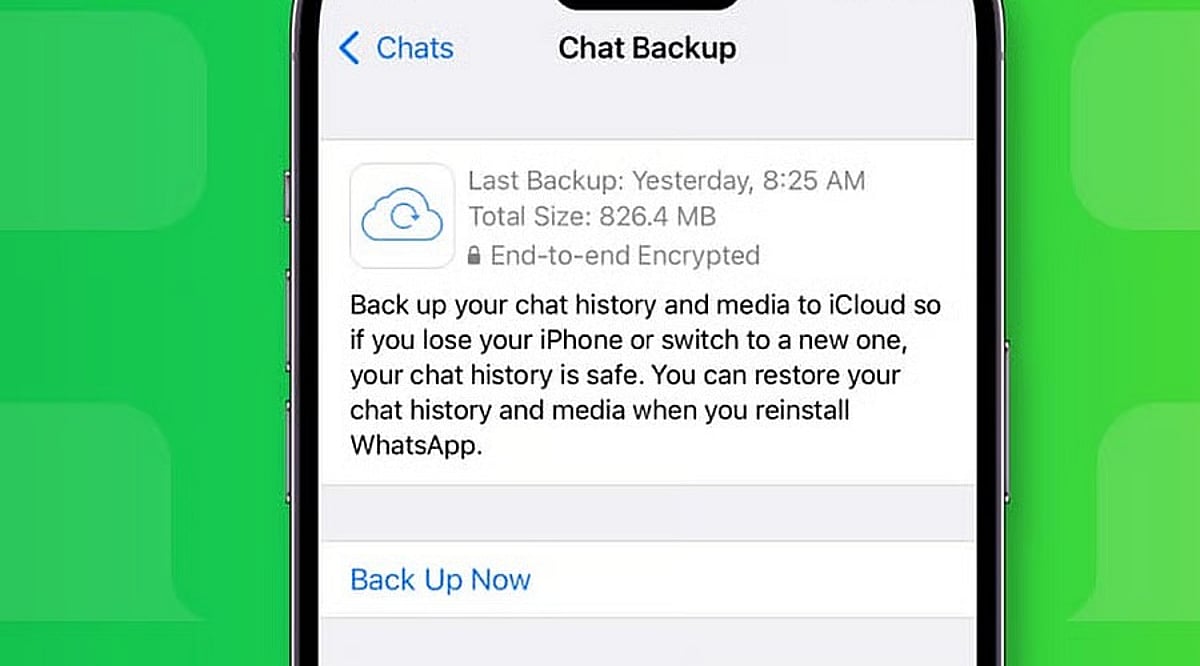
    Open WhatsApp on your iPhone and go to Settings > Chats > Chat Backup. The screen shows the date and size of the latest backup if a valid iCloud copy exists. The same phone number and iCloud account used for the original backup must match.

    Ensure enough free space is available on both iCloud and your iPhone. WhatsApp recommends having at least 2.05 times the backup size available as free storage on both. Limited storage can cause a failed or partial restore.

    If the backup is encrypted, you will need the associated password, passkey, or 64-digit encryption key. Without these recovery details, WhatsApp cannot provide access to the encrypted copy.

    Reinstall WhatsApp and Start the Chat Restore

    Once the backup details are confirmed, delete WhatsApp from your iPhone and install it again from the App Store. Open WhatsApp after the fresh install and complete account setup with the same phone number used for the backup.

    WhatsApp will then ask for the Apple ID linked to the backup. After account verification, a Restore Chat History option appears. Tap that option to start the restore. Extra identity checks may appear; a text message or call can provide a verification code if required.

    Restore time depends on backup size and chat media. A large history with many photos, documents, and videos takes longer than a small text-only history. Keep enough free space on both your iPhone and iCloud account.

    What the iCloud Backup Can Restore

    WhatsApp restores data from the latest successful backup. Any messages or media added after that backup date cannot be recovered from that backup. Videos require an extra condition: the Include Videos option must have been active before the latest backup. Without that option, chat history can return but videos will remain absent.

    Messages and media from WhatsApp communities may also be included in the backup. Channel updates can exist, but channel media returns only for accounts with an admin role. Note that WhatsApp does not keep complete chat history on company servers for manual recovery; an iCloud backup or direct chat transfer is the only route back to old conversations.

    Fix Common Restore Problems

    Failed restores often point to storage, account details, or the backup itself. Check free iCloud space and iPhone storage first. Confirm the same phone number and iCloud account used for the original backup, then verify the latest backup date inside WhatsApp.

    If storage caused the failure, free up space, then delete WhatsApp and repeat the restore. For encrypted backups, ensure you have the correct password, passkey, or 64-digit key.

    If no usable iCloud backup exists and your old iPhone still works, use WhatsApp’s Chat Transfer feature for an iPhone-to-iPhone move. Both phones need the latest iOS and WhatsApp versions, Wi-Fi, internet access, and a power source. The old phone can send the chat history directly to the new iPhone without an iCloud restore.

    Protect Future WhatsApp Chats

    A successful restore can recover a large part of your chat history, but the backup date sets the limit. WhatsApp offers automatic backup schedules under Chats > Chat Backup, with daily, weekly, or monthly options.

    An end-to-end encrypted backup can be protected with a password, passkey, or 64-digit encryption key. Keep the chosen recovery detail safe; a forgotten password or lost key can block access to the encrypted backup.

    The safest restore starts before the reinstall: check the backup date, confirm the phone number and iCloud account, verify storage, and protect any encryption key. Once those details match, WhatsApp can restore your saved chat history with far less risk of an incomplete recovery.

    Frequently Asked Questions

    Can I restore WhatsApp chats from iCloud?
    Yes, if a valid WhatsApp iCloud backup exists and you use the same phone number and iCloud account.
    Will WhatsApp restore messages received after the backup?
    No. Messages and media added after the latest successful backup cannot be recovered from that backup.
    Why are my WhatsApp videos missing after restoration?
    Videos are restored only if the Include Videos option was enabled before the backup was created.
    What if my encrypted WhatsApp backup asks for a password?
    You need the correct password, passkey, or 64-digit encryption key associated with the encrypted backup.
    Can I restore WhatsApp without an iCloud backup?
    If your old iPhone still works, WhatsApp’s Chat Transfer feature can transfer chat history directly to another iPhone.
  • Crypto ETFs: The Bridge Bringing Digital Assets to Everyday Investors

    Crypto ETFs: The Bridge Bringing Digital Assets to Everyday Investors

    Crypto ETFs are changing how everyday investors access digital assets. Instead of buying cryptocurrencies directly, investors can purchase ETF units through traditional brokerage accounts, making crypto investing feel more familiar, accessible, and integrated with established financial markets.

    What is a Crypto ETF?

    A crypto ETF is an exchange-traded fund designed to provide exposure to cryptocurrency prices or related assets. Like other ETFs, it trades on a stock exchange, allowing investors to buy and sell units during market hours without holding cryptocurrency directly.

    Bitcoin Leads the Way

    Bitcoin ETFs have become an important gateway for mainstream investors. They let market participants gain exposure to Bitcoin through conventional investment accounts, potentially reducing the complexity of setting up crypto wallets, managing private keys, and navigating cryptocurrency exchanges.

    Ethereum Expands Investor Choice

    Ethereum-focused ETFs broaden options for investors seeking digital-asset exposure. Ethereum’s role in decentralized applications, smart contracts, and blockchain infrastructure gives these investment products a different proposition from Bitcoin-focused funds, although both remain exposed to significant cryptocurrency market volatility.

    Familiar Investing Experience

    Crypto ETFs fit into investment habits people already understand. Investors can research funds, compare performance, monitor prices, and place trades through brokerage platforms. This familiar structure may make digital assets less intimidating for people who have avoided direct cryptocurrency ownership.

    Risks Still Remain

    Accessibility does not eliminate risk. Crypto ETFs can experience substantial price swings because underlying digital assets remain volatile. Investors should also consider fees, tracking differences, regulatory developments, market conditions, and the possibility of significant losses before allocating money to these products.

    A Bridge to Digital Assets

    Crypto ETFs could bridge traditional finance and the cryptocurrency ecosystem. By combining regulated market infrastructure with digital-asset exposure, they may help broaden participation while giving investors a simpler route into an increasingly mainstream investment category.

  • XRP Ledger DEX Poised to Power Tokenized Institutional Asset Markets

    XRP Ledger DEX Poised to Power Tokenized Institutional Asset Markets

    XRP Ledger’s (XRPL) native decentralized exchange (DEX) was designed to let assets issued on XRPL trade without relying on a centralized platform. As tokenized bonds, funds, and other real-world assets migrate on-chain, this built-in market structure could become increasingly relevant for institutions seeking continuous settlement and deep liquidity.

    XRPL Combines Order Books and AMMs

    XRPL supports native on-chain order books alongside Automated Market Maker (AMM) pools. According to Ripple, this structure aggregates liquidity at the protocol level, potentially reducing fragmentation and improving execution for tokenized assets. This differs from networks where issuers must deploy separate smart-contract exchanges before an asset can trade. On XRPL, issued assets can connect directly to built-in trading infrastructure, cutting operational layers required for secondary markets.

    Tokenized Assets Need Secondary Markets

    Issuing a tokenized Treasury or fund is only the first step. Institutional investors also need to buy, sell, redeem, pledge, and possibly borrow against those assets. Ripple and Boston Consulting Group estimate tokenized assets could reach nearly USD 19 trillion by 2033. XRPL already supports tokenized products from institutions including Ondo Finance and Société Générale, while its stack includes escrow, metadata, and compliance-oriented controls.

    In May 2026, Ondo, Kinexys by JPMorgan, Mastercard, and Ripple completed a cross-border redemption of tokenized US Treasuries. The asset leg settled on XRPL in under five seconds, demonstrating how public blockchain infrastructure can connect with traditional banking rails.

    Institutional Compliance Is Being Built In

    Traditional institutions cannot trade regulated assets anonymously. XRPL therefore includes Credentials and Permissioned Domains that restrict access to verified participants. Single Asset Vaults can also be configured as private, allowing only accounts with valid credentials to deposit. This creates a potential framework for institutional liquidity pools that remain compliant with regulatory requirements.

    Liquidity Is Expanding Beyond Trading

    Credit is another part of XRPL’s roadmap. XLS-66 proposes fixed-term, uncollateralized lending using pooled funds from Single Asset Vaults, with off-chain underwriting and risk management. Ripple’s August investments in ZILO and Licuido also added transfer-agency, issuance, and collateral-mobility capabilities to the XRPL ecosystem, extending its institutional infrastructure beyond payments.

    Why This Matters

    Institutional tokenization needs more than issuance; it requires compliant liquidity, secondary trading, and credit infrastructure. XRPL’s native DEX could become part of that stack if institutional volume, order-book depth, and AMM liquidity grow alongside tokenized asset adoption.

    Final Thoughts

    XRPL is increasingly positioning itself as infrastructure for tokenized capital markets rather than solely for payments. The real test is whether pilots, vaults, and lending tools translate into sustained institutional trading, settlement, and credit activity. If adoption grows, its advantage will come from combining issuance, compliance, liquidity, and credit within one ledger — not from tokenization announcements alone.

    FAQs

    1. What is the XRP Ledger DEX?
    The XRPL DEX is a native decentralized exchange built directly into the XRP Ledger. It combines on-chain order books and Automated Market Makers to provide liquidity without relying on a centralized exchange.

    2. Why could XRPL matter for tokenized institutional assets?
    Institutions need more than token issuance; they also require trading, settlement, compliance, and liquidity. XRPL combines these functions within the same ledger, which could simplify secondary-market infrastructure.

    3. How does XRPL support institutional compliance?
    XRPL includes Credentials and Permissioned Domains that can restrict access to verified participants. Private Single Asset Vaults can also limit deposits to accounts meeting specific eligibility requirements.

    4. What role could XLS-66 play on XRP Ledger?
    XLS-66 proposes fixed-term lending using pooled liquidity from Single Asset Vaults. The model combines on-chain liquidity with off-chain underwriting and risk management for institutional credit markets.

    5. Are institutions already using XRPL for tokenized assets?
    Yes. XRPL supports tokenized products involving institutions such as Ondo Finance and Société Générale. In May 2026, a tokenized US Treasury redemption involving Ondo, J.P. Morgan’s Kinexys, Mastercard, and Ripple settled on XRPL in under five seconds.

  • From Zero to Millions: 6 Self-Made Millionaires Who Started With Almost No Capital

    From Zero to Millions: 6 Self-Made Millionaires Who Started With Almost No Capital

    From Almost Nothing to Millions

    Big businesses do not always begin with big bank accounts. Some entrepreneurs started with tiny shops, personal skills, borrowed resources, or early customer revenue. Their stories show how execution and persistence can sometimes matter more than having a huge starting budget.

    Sara Blakely: Solving a Simple Problem

    Sara Blakely started Spanx with about $5,000 of her own savings. She handled much of the early work herself and focused on solving a simple problem for women. Spanx eventually became a major shapewear brand, turning Blakely into a billionaire entrepreneur.

    Daymond John: From Queens to Global Fashion

    Daymond John started FUBU from his mother’s house in Queens with limited resources. He and his partners began making and selling clothing themselves. The brand eventually grew into a major fashion business, while John became a well-known entrepreneur and investor.

    Jan Koum: Building WhatsApp Without Expensive Ads

    WhatsApp co-founder Jan Koum came from a modest immigrant background and experienced financial hardship while growing up. He later built WhatsApp with Brian Acton, focusing on simple messaging rather than expensive advertising. Facebook eventually acquired the company in a multibillion-dollar deal.

    Richard Branson: Reinvesting His Way to a Virgin Empire

    Richard Branson began building his Virgin business empire with relatively modest resources, starting with a student magazine before entering the music business. He repeatedly reinvested earnings into new ventures. Virgin later expanded into airlines, telecom, media, and numerous other industries.

    Michael Dell: Selling Directly From a Dorm Room

    Michael Dell began selling upgraded computers from his university dorm room. Instead of building a traditional retail network, he focused on selling directly to customers. The direct-sales model helped Dell grow rapidly and eventually created one of the world’s best-known computer companies.

    John Paul DeJoria: $700 and a Hair-Care Vision

    John Paul DeJoria had limited financial resources when he entered the beauty business with Paul Mitchell. The pair reportedly started with about $700 and sold their products directly to salons. The business grew into a global hair-care company, making DeJoria a billionaire.

    Conclusion

    These founders prove that starting capital is not the only predictor of success. Resourcefulness, focus, and the ability to move quickly can turn a modest beginning into a major enterprise.

  • 2026 Guide to Measuring Crypto AI Visibility: Essential Metrics and Tracking Tools

    2026 Guide to Measuring Crypto AI Visibility: Essential Metrics and Tracking Tools

    A crypto AI visibility tracker measures how often an answer engine names an exchange, wallet, or protocol when someone asks a buying question, and which sources it cites when it does. Collecting that number is the easy part. Knowing whether it means anything is harder, because the same prompt run twice can return a different answer.

    This is what to measure, where crypto answers actually come from, and how to tell a tracking figure that survives scrutiny from one that does not.

    What Does Crypto AI Visibility Tracking Actually Measure?

    Three different things, and they get reported interchangeably, which is where most of the confusion in this category starts.

    • Mention rate is how often a brand is named in the answer text.
    • Citation share is how often a page the brand controls, or a page that talks about it, appears in the engine’s source list.
    • Position is where the brand sits against competitors when the engine returns a ranked set.

    These move independently. A large exchange can be named in most answers and cited almost never, which happens when engines know the brand from training but reach for third-party pages when they need a source. The reverse happens to smaller protocols carrying one strong write-up.

    When a tool reports a single visibility score, the question to ask is which of the three it is built from and how they are weighted. The weights behind the citeOS score are published at citeos.io/methodology. Most vendors do not publish theirs, which is not disqualifying, but it does mean two scores are not comparable.

    Where Do AI Engines Actually Get Their Crypto Answers?

    Almost entirely from pages the brand does not own, and the mix is specific to this category.

    Across a corpus of 39,948 citation events covering 72 crypto brands between April and August 2026, spanning 17,276 pages and 4,395 source domains, 92.22% of citations pointed at pages the brand does not control. Its own domain accounted for 7.78%.

    The rest of the map, as a share of all citations recorded:

    • Long tail of independent sites: 79.09%
    • The brand’s own domain: 7.78%
    • YouTube: 4.49% (appears for all 72 brands)
    • Mid-tier crypto press: 2.27%
    • Aggregators such as CoinGecko and CoinMarketCap: 2.26%
    • Reddit: 2.19%
    • Other community sources: 1.34%
    • Top-tier crypto press: 0.36%
    • X: 0.29%

    This is what a horizontal tool built for B2B software cannot supply. It can report that a brand is invisible. It cannot say where to go, because it holds no map of which sources answer crypto buying questions.

    What Is Crypto Press Actually Worth for AI Visibility?

    Far less at the top than the rate cards imply, and this is the most checkable claim in the dataset.

    The four outlets crypto teams pay most for — CoinDesk, Cointelegraph, The Block and Decrypt — returned 143 citations between them across the entire corpus, which is 0.36%. A basket of 21 mid-tier outlets returned 907, or 2.27%, cited 6.34 times more often at a fraction of the placement cost. CryptoSlate on its own returned 312, more than double all four top-tier outlets combined.

    That basket is a judgement call and it is published on request.

    The mechanism looks like format rather than prestige. Mid-tier outlets publish more roundups, comparisons and “best X for Y” pages, and those are the pages engines quote. A single announcement piece, however good the masthead, is rarely the page that answers a buying question.

    None of this makes top-tier placement worthless. It buys trust transfer and human readers, and both are real. It is simply not what moves citations.

    Why Do Two Trackers Report Different Numbers for the Same Exchange?

    Because answer engines are non-deterministic. The same prompt, same engine, same day, can return a different answer and a different source list.

    On top of that sits personalisation. Account history, geography and logged-in state all shape what an individual sees. There is no single correct number for how visible a brand is in ChatGPT, only a distribution.

    Two tools can both be honest and still disagree, because they sampled different draws from the same distribution.

    What this rules out is spot-checking. Asking ChatGPT about an exchange, seeing a competitor named instead, and concluding there is a visibility problem is not measurement. It is one draw.

    How Many Samples Does a Crypto Tracking Number Need?

    Enough that the noise averages out, and the tool should say what it used.

    For reference, a single citeOS audit is 20 buyer-style prompts across 5 engines, which is 100 observation points per brand. The corpus behind the figures above is 39,948 events across 72 crypto brands.

    Evidence that sampling noise averaged out sits inside the data rather than in a claim about it. Citations scale with the number of pages that mention a brand at a rate of 1.48 per page, with a correlation of 0.80 and a coefficient of variation of 9.5% across brands of very different sizes. A constant that stable does not appear if per-answer randomness is driving the result.

    The practical test for any tracker is to ask how many times it probes each prompt per engine per cycle. If the answer is once, the output is a trend line drawn through noise. If the vendor cannot answer, that is also an answer.

    Appearance Rate Is Not Share of Citations

    This is the most common error in published AI visibility research, and it inflates numbers by an order of magnitude.

    Appearance rate asks: in what percentage of prompts did this source show up at all? Share of citations asks: of all citations recorded, what percentage went to this source?

    Reddit is the standard example. In this corpus Reddit appears for 71 of the 72 brands, which is close to universal, while accounting for 2.19% of citation volume. Both numbers are real and they describe different things. Published figures putting Reddit at 40% or more of AI citations are almost always appearance rates reported as volume shares.

    When a tracker reports a percentage, the only question that matters is which denominator it used. If the documentation does not say, treat the number as directional.

    What Should a Crypto Project Track That a General Tool Will Not?

    Three things, and they are why crypto teams usually outgrow a horizontal tool.

    • The category source map. Covered above. Without it, a low score is a diagnosis with no treatment.
    • Vertical-correct prompts. “Best crypto exchange” and “safest crypto wallet” are different buyer questions drawing on different source pools. A tracker that accepts typed prompts but holds no view on which prompts matter in a given vertical is a spreadsheet with an API attached.
    • Page treatment, not just page count. Being the subject of a page earned 6.22 citations in the data. Being one name inside someone else’s ranked list earned 3.78. Being mentioned nearby without making the list earned 3.39. Dedicated coverage converts better per page, while lists still carry more total volume because there are far more of them and one list serves many brands at once. A tracker that counts mentions without distinguishing these is measuring the wrong unit.

    Which AI Visibility Trackers Are Worth Looking At for Crypto?

    The category has a long tail of thin products. These are the ones with either real adoption or a published method behind them. citeOS publishes this page and appears in the list, placed where the same criteria put it rather than at the top.

    • Profound is the enterprise default and the most widely adopted tool in the category. Deep prompt coverage and reporting built for a team where this is somebody’s actual job. Overkill, and overpriced, for a five-person crypto marketing team.
    • Otterly.AI is the practical choice for small teams that want tracking running the same day. Less depth than Profound, materially cheaper, and enough to answer the basic question of whether a brand is being named.
    • Peec AI is built around competitive benchmarking, so it suits a team whose real question is not “are we visible” but “why is that exchange being recommended instead of us”.
    • Crawlux is the strongest crypto-native option. It covers ChatGPT with browsing, Perplexity and Claude, maps categories across DeFi, exchange, NFT, wallet and L1, and ships a token schema validator for FinancialProduct and CryptoExchange markup that no general platform offers. Free first audit, Pro at $25, Team at $49 for five seats.
    • citeOS runs 20 buyer prompts across 5 engines for 100 observation points per audit, scored against a database of 500+ ranked crypto outlets across 10 verticals, with the weights published. It has no schema validator, and it covers fewer engines than several tools in this list. What it holds that the others do not is the ranked crypto source database, which is what turns “you are invisible” into a named list of places to go.

    The wider general-purpose comparison is at best AI visibility tools, and the crypto-specific one at crypto AI visibility.

    What No Crypto Visibility Tracker Can Tell You Yet

    Citation counts are not traffic and they are not revenue. No tool in this category can currently connect a cited page to a deposit or a swap.

    Personalisation is unmeasured. Every figure above describes a clean baseline. A logged-in user with history in a different jurisdiction sees something else, and no published study yet quantifies how far that moves it.

    Five months is a short window in a retrieval landscape that keeps changing, and this source map is crypto only. It does not transfer to other categories.

    Frequently Asked Questions

    What is a crypto AI visibility tracker?

    A tool that runs buyer-style crypto prompts against answer engines on a schedule and records whether a brand is named, which sources are cited, and where it sits against competitors.

    How often should a crypto project track AI visibility?

    Weekly is enough for most teams. Daily tracking mostly buys noise unless the tool takes many samples per prompt.

    Can I check crypto AI visibility for free?

    Yes. Crawlux and citeOS both offer a free first scan, and DABLOCK publishes a free public index.

    Why does my exchange appear when I ask ChatGPT but not in the tracker?

    Non-determinism and personalisation. A logged-in session with history is not the same draw as a clean probe, which is why a single self-check is not measurement.

    Is AI visibility tracking different for crypto?

    The mechanics are the same. The source pool is not. Crypto answers lean on aggregators, mid-tier crypto press and YouTube in proportions that do not match other categories, and top-tier crypto press returns far less than its price implies.

    Does crypto PR improve AI visibility?

    Mid-tier placement does, measurably more than top-tier. In this corpus the four most expensive outlets returned 0.36% of citations against 2.27% for a basket of 21 mid-tier outlets.


  • How CrewAI Structures AI Agents into Role-Based Teams for Complex Workflows

    How CrewAI Structures AI Agents into Role-Based Teams for Complex Workflows

    CrewAI gives each AI agent a role, a goal, and a backstory that shapes how it handles its task. The framework separates orchestration from model reasoning. Developers control sequencing, delegation, and verification. Its real strength is not more intelligence per agent. It is a clearer way to divide, check, and trace complex AI work.

    Complex AI workflows rarely fail from a lack of intelligence. They fail from a lack of clear responsibility. A single model asked to research, verify, analyze, decide, and write in one pass tends to blur all five steps together. The output becomes hard to check at any single stage.

    CrewAI is an open-source Python framework. It organizes multiple AI agents into a ‘crew,’ where each agent carries a defined role, a specific goal, and access to a set of tools. This is not a chatbot with extra steps. It structures collaboration the way a newsroom or a consulting team would. An editor does not write every paragraph. A researcher does not format the final report. Each contributor handles one slice of the problem. The outputs combine into something more coherent than a single pass could produce.

    How CrewAI Divides Responsibility

    CrewAI rests on four parts: Agents, Tasks, Tools, and Processes. An agent is defined by a role, such as ‘Financial Analyst,’ a goal, such as identifying undervalued assets in quarterly filings, and a backstory. Role, goal, and backstory work as behavioral instructions. They shape how the underlying model approaches its task. They do not turn the model into an actual specialist.

    Tasks are discrete units of work assigned to an agent, each with an expected output format. Tools extend an agent beyond text generation. An agent can query a database, browse the web, or run code. Processes govern how tasks flow. In a sequential process, one agent’s output feeds the next. In a hierarchical process, a manager agent delegates and reviews work from other agents. This separation matters. If a report comes out wrong, the question becomes which agent, task, or tool produced the faulty step. The whole system does not have to be treated as one opaque generation.

    One Workflow, Four Responsibilities

    Picture a competitive intelligence workflow that starts when a rival launches a new product. A Research Agent collects product details, pricing, and positioning from public sources. Its output feeds a Verification Agent, which checks each claim against the sources cited and flags anything unsupported. The verified data then passes to a Strategy Agent, which weighs what the launch means for the company’s own roadmap. Finally, an Executive Writer Agent turns the analysis into a briefing a decision-maker can read in two minutes.

    The value here does not come from having four agents. It comes from giving each stage a distinct responsibility, where the output of one stage becomes controlled context for the next. Splitting the stages keeps research from sliding into speculation and speculation from sliding into recommendation.

    Why Role Design Matters More Than Agent Count

    A tightly scoped role can narrow a model’s attention, tools, and expected output. Its responses end up more consistent with the job assigned to that role. A poorly scoped role tends to produce vague, generic output, no matter how many agents surround it.

    The real advantage of multi-agent AI is not extra intelligence. It is a clearer way to divide responsibility so complex work can be structured, evaluated, and controlled. Four narrowly defined agents can outperform one broadly defined agent, but only when the task genuinely contains distinct responsibilities that call for separate reasoning, tools, or checks. Coordination overhead, duplicated reasoning, and errors passed from one agent to the next can just as easily make a multi-agent setup perform worse.

    Where CrewAI Fits in Production

    CrewAI can support content workflows where research, drafting, and editing run as separate agents, with a final agent checking facts against source material before publication. A software team can use a similar structure, with one agent scanning for security issues, another checking style rules, and a third summarizing findings for a human reviewer. In customer support, a triage agent can sort incoming tickets by intent and route each one to a specialized agent for billing, technical, or account issues. In financial services, the same pattern could apply to earnings call analysis, with one agent pulling figures, a second checking them against prior quarters, and a third drafting a plain summary for analysts short on time.

    Where Multi-Agent Systems Break Down

    CrewAI does not fix reasoning errors on its own. If an agent’s underlying model produces a false claim, the crew catches it only when another agent is specifically tasked with checking it. A five-agent crew running sequential tasks can call the underlying model five or more times per request, adding both latency and spend compared with a single prompt. Debugging a multi-agent system is harder as well. An error in one agent’s output may only show up as a strange result several stages later. Production deployments should log each task boundary so teams can trace exactly where a chain of reasoning went wrong.

    CrewAI vs. AutoGen vs. LangGraph

    CrewAI’s role-based structure suits teams that think in terms of job functions rather than graph theory. It can be less flexible for workflows where the sequence of steps cannot be set in advance. These frameworks move fast, and the lines between their design philosophies keep shifting.

    Final Thought

    As AI agents move into production, the key question will not be how many agents a team can deploy. It will be whether their responsibilities can be separated, their outputs checked, and their decisions traced. CrewAI treats those needs as an architectural problem, offering a way to split complex AI work into specialized responsibilities while keeping the overall workflow coordinated. The next real gain in agentic AI may come less from building smarter agents and more from designing better systems around them.

    FAQs

    1. What is CrewAI? CrewAI is an open-source framework for building multi-agent AI systems. It lets developers assign different roles, tasks, tools, and responsibilities to AI agents and coordinate their work.
    2. How does CrewAI work? CrewAI organizes AI agents into teams called crews. Each agent receives a defined responsibility, while tasks and processes determine how their work is completed and how outputs move through the workflow.
    3. What is a role-based AI agent in CrewAI? A role-based AI agent is an agent given a specific responsibility, goal, and behavioral context. For example, one agent can handle research while another verifies information or analyzes the results.
    4. Is CrewAI a large language model? No. CrewAI is an orchestration framework, not a language model. It coordinates agents, tasks, tools, and workflows while an underlying language model provides the reasoning and text-generation capabilities.
    5. What are the limitations of CrewAI? CrewAI does not eliminate hallucinations or reasoning errors. Multi-agent workflows can also increase API costs, latency, coordination complexity, and debugging challenges, particularly when many agents are involved.
  • NYT Strands Hints and Answers for September 10, 2026 (#921): Victory Lap Theme

    NYT Strands Hints and Answers for September 10, 2026 (#921): Victory Lap Theme

    NYT Strands #921 – September 10, 2026

    Today’s NYT Strands puzzle carries the theme “Victory lap,” featuring the spangram WE HAVE A WINNER and six answers tied to awards and symbols of winning.

    Understanding Today’s Theme

    The official theme is “Victory lap,” pointing to objects and honors that represent a win or celebrate a champion. A secondary clue is “A take-home reminder,” which suggests the answers are mementos of success.

    How NYT Strands Works

    NYT Strands is a word‑search game where you connect letters horizontally, vertically, or diagonally. Every letter on the board belongs to one answer, and you must also find the special spangram that summarizes the theme and touches two opposite sides of the grid.

    Hint for September 10, 2026

    Main hint: “Victory lap”
    Direct clue: “A take-home reminder”

    Spangram Hint

    Still searching for the longest answer? Today’s spangram has 13 letters (spaces removed) and begins with W.

    Spangram Answer

    WE HAVE A WINNER – This phrase ties together the winning theme.

    Complete Answer List

    • CROWN
    • LAURELS
    • MEDAL
    • PENNANT
    • PRIZE
    • TROPHY
    • WE HAVE A WINNER (spangram)

    All six theme words relate to rewards, honors, or symbols associated with victory. The puzzle can be tricky because several answers describe similar ideas: PRIZE, MEDAL and TROPHY indicate rewards, while CROWN and LAURELS carry ceremonial significance.

    The initial letters of the theme words are P, P, C, T, M, and L, which can help narrow your search on the board. The spangram “WE HAVE A WINNER” provides a strong clue about the relationship between the hidden words.

    NYT Strands continues to deliver a fresh theme and letter grid each day. Puzzle #921 uses familiar symbols of achievement for its “Victory lap” challenge. For players stuck today, the answers above offer a direct path through the puzzle.

    Also read: NYT Strands Hints, Spangram, Answers for September 9, 2026 (#920)

  • Apeing Blazes Through Two Presale Stages in Under Six Hours as Meme Coin Momentum Builds

    Apeing Blazes Through Two Presale Stages in Under Six Hours as Meme Coin Momentum Builds

    Meme Coin Market Heats Up as Apeing’s Presale Gains Traction

    The cryptocurrency market is buzzing as meme coins continue to capture trader attention. While established tokens like Cheems and Shiba Inu show positive price action, Apeing ($APEING) is making waves with its accelerated presale stages. In less than six hours, Apeing blasted through two presale stages, quickly moving into Stage 3, dubbed “Paper Hand Panic,” at a price of $0.0004 per token. This rapid progress positions Apeing as a standout contender in the current meme coin presale wave.

    Apeing’s Presale: Stage 3 Live with Strong Early Metrics

    Apeing is built on Ethereum as an ERC-20 token and follows a structured 33-stage presale model. Currently in Stage 3 at $0.0004, the project reports over $68,000 raised, more than 211 token holders, and over 380 million $APEING tokens sold. Stage 4, set at $0.0005, represents a 25% increase from the current price, offering early participants a clear entry point before costs rise. Apeing’s stated listing price of $0.01 implies a potential upside of 2,400% from Stage 3 and 9,900% for Stage 1 investors who entered at $0.0001.

    DEX-First Strategy and Exchange Expansion Plans

    Apeing’s roadmap begins with a decentralized exchange (DEX) first listing, ensuring a smooth transition from presale to open-market trading. The project plans to expand to additional exchanges after the initial DEX listing, creating a clear path from early token distribution to broader market availability. This approach, combined with Ethereum’s robust network, underpins Apeing’s long-term ecosystem development.

    How to Participate in the Apeing Presale Before Stage 4

    To join the presale, users connect a compatible Ethereum wallet to Apeing’s official platform, select Stage 3, enter the desired purchase amount, and confirm the transaction. Participants need sufficient ETH for gas fees. After purchase, tokens can be claimed per project instructions. Apeing also offers a staking system with tiers from “Chimp” to “Giga Ape.” A minimum $25 purchase unlocks a referral code, rewarding referrers with 10% of the referred buyer’s spending and giving buyers an extra 10% in tokens.

    Cheems and Shiba Inu: Recent Price Movements

    Cheems ($CHEEMS) gained 4.94% over the past 24 hours, trading at $0.00007680, while Shiba Inu ($SHIB) rose 1.15% to $0.000005452. These moves highlight ongoing interest in meme coins, though Apeing draws attention through its presale momentum rather than exchange trading. The combined activity underscores a dynamic split in the meme coin market: established tokens rely on price action, while newer projects like Apeing build narratives through structured sales.

    Apeing’s 33-Stage Presale: A Unique Structure

    The 33-stage model is a key differentiator. With each stage setting a fixed price, early buyers benefit from lower entry points. Stage 3 is active now, and Stage 4 at $0.0005 is the next major milestone. Apeing’s ecosystem includes staking, a referral program, and a dedicated community on Telegram and Twitter. The project’s transparent, stage-based approach appeals to traders seeking structured opportunities in the crypto presale 2026 landscape.

    Frequently Asked Questions About the Meme Coin Presale

    What is a meme coin presale?

    A meme coin presale is an early token offering that allows investors to buy meme-based cryptocurrency before it lists on exchanges, often featuring staged pricing and community incentives.

    How does a meme coin presale work?

    Users connect a compatible wallet, select the active stage, enter a purchase amount, and confirm the transaction. Tokens are distributed according to project terms after the presale.

    What is Apeing’s current presale price?

    Apeing is in Stage 3 at $0.0004. The next stage, Stage 4, is priced at $0.0005.

    What is Apeing’s stated listing price?

    Apeing’s planned listing price is $0.01, representing significant potential upside from current presale stages.

    Conclusion: Meme Coin Presale Momentum Continues

    As Cheems and Shiba Inu post gains, Apeing is rapidly advancing through its presale stages. With over $68K raised, 211+ holders, and Stage 3 live at $0.0004, the project offers a compelling entry point before Stage 4’s 25% price increase. Apeing’s 33-stage structure, DEX-first strategy, and ecosystem features make it a notable player in the crypto presale 2026 scene. For more information, visit the official Apeing website or join their Telegram and Twitter channels.

    Disclaimer: This article is for informational purposes only and does not constitute financial advice. Cryptocurrencies are risky investments; always do your own research before participating.

  • Meta Muse: How Meta’s New AI Agent Moves from Answers to Action

    Meta Muse: How Meta’s New AI Agent Moves from Answers to Action

    Meta has unveiled Muse, an AI agent built not just to chat but to act. Unlike conventional virtual assistants that answer questions or generate text, Muse is designed to understand user goals and execute the steps needed to achieve them. This marks a significant shift from passive conversation to active task completion.

    AI That Takes Action

    Traditional AI assistants primarily generate responses, offer recommendations, or retrieve information. Muse represents a different philosophy: it interprets instructions, decides on the required sequence of actions, and performs tasks within digital environments. The goal is to reduce the manual steps users must take for everyday activities, making digital assistance more proactive and useful.

    From Answers to Execution

    Muse highlights the broader transition from conversational AI to agentic AI. Instead of stopping after delivering an answer, an agent can keep working toward a specific outcome. This means future AI systems could handle complex workflows, requiring less frequent guidance or supervision from the user.

    Meta’s AI Ambitions

    Muse fits squarely into Meta’s wider investment in artificial intelligence. The company has been embedding AI across its social platforms, consumer products, and research initiatives. Agentic systems could become a cornerstone of that strategy, enabling more interactive, responsive, and capable AI experiences.

    Understanding User Goals

    A key capability of Muse is its focus on understanding what users ultimately want to accomplish. Rather than treating each command in isolation, the agent is designed around completing broader objectives. This allows it to determine appropriate actions, adapt when circumstances change, and reduce unnecessary back-and-forth between users and digital systems.

    Potential Everyday Uses

    Agentic AI could eventually assist with tasks such as organizing information, completing digital workflows, managing routine chores, and navigating applications. The real value lies in reducing manual effort rather than merely generating another response. As these systems mature, their usefulness will hinge on reliability, permissions, privacy, and appropriate human oversight.

    The Next AI Shift

    Meta Muse represents a broader transition in artificial intelligence—from generating content to performing tasks. As AI agents become more capable, competition may increasingly focus on execution, reliability, and trust. The technology has the potential to reshape how people interact with software, letting AI handle more steps on their behalf.