Blog

  • OpenAI Shifts Focus to Family: ChatGPT Developing Features for Parents, Caregivers, and Seniors

    OpenAI Shifts Focus to Family: ChatGPT Developing Features for Parents, Caregivers, and Seniors

    OpenAI is making a strategic move to expand ChatGPT’s reach beyond individual users into the family household. The company has posted a job listing for a role based in San Francisco focused on developing products for parents, families, and trust-sensitive consumer experiences. This signals a major shift in how the AI firm envisions its popular chatbot being used.

    According to recent data from Sensor Tower, the demographic of ChatGPT users is changing. The share of older adult users rose to 31% in Q2 from 26% a year earlier, while the younger user base dropped to 29% from 34%. This aging user base suggests a growing need for features tailored to different life stages and family roles.

    While OpenAI has not officially announced a family version of ChatGPT, the hiring indicates potential future features such as shared reminders, family schedules, learning assistance, and personalized support for each household member. The move aligns with a broader trend in Silicon Valley where tech companies are increasingly targeting families as a key growth opportunity.

    Companies like Netflix, Spotify, and Google One have successfully grown by offering family plans. AI companies are now following a similar path, seeing families as a chance to reach millions of new users who can use the same service in different ways across multiple profiles.

    If OpenAI eventually launches a family plan, it could become an important revenue stream. One person could pay the bill while each family member gets a separate profile with extra features, better safety tools, memory options, and personal assistants. This subscription model has proven successful for streaming and cloud services.

    For now, the company is keeping its plans under wraps, but the hiring move strongly suggests that ChatGPT is evolving from a personal assistant into a service designed for the entire home.

  • Weekend Dishwasher Deals: Save Big on Top Brands Like Bosch, LG, and IFB

    Weekend Dishwasher Deals: Save Big on Top Brands Like Bosch, LG, and IFB

    Weekend sales offer a practical opportunity to save on dishwashers from leading brands without compromising on features. Many deals include bank discounts, no-cost EMI, or bundled installation, making premium models more affordable. This guide rounds up the best offers and explains which dishwasher suits your budget and household needs.

    Overview of the Best Weekend Offers

    Five in-stock dishwashers from Bosch, IFB, LG, Faber, and Midea are discounted this weekend, each suited to a different household size and budget. Instead of chasing the biggest percentage off, compare the features and long-term value that matter most for your home.

    1. Bosch SMS6IKW01I

    For a kitchen that runs a dishwasher every single day, this model earns its keep. With a 14-place setting capacity and an intensive Kadhai program designed specifically for oily Indian cookware, it tackles tough stains. The Home Connect feature lets you check or start a load from your phone. Perfect for daily use.

    2. IFB Neptune FX14

    The 70°C DeepClean wash pairs with hygienic steam drying. A built-in water softener gives a real advantage in cities with hard tap water, preventing residue on glassware. At 12 liters per cycle, it handles a full day’s dishes for larger households in one load.

    3. LG DFB424FP

    Noise is often a concern with dishwashers, and this LG model answers it well. Four spray arms replace the usual two, and an inverter direct-drive motor eliminates belts and pulleys, cutting sound noticeably. Smart Diagnosis through the LG ThinQ app helps pinpoint faults, making service visits more efficient.

    4. Faber FFSD 6PR 12S

    Built for first-time buyers who want simplicity, this unit offers 12 place settings, six wash programs, and a half-load option for smaller daily loads. Water use stays around 11 liters per cycle—among the lowest here. A 2-year comprehensive warranty with 5-year rust cover adds peace of mind.

    5. Midea MDWPF1301F(B)

    The lowest price on this list doesn’t mean fewest features. It includes 13 place settings, 7 wash programs, a dedicated glass care mode, and WiFi control through the Midea SmartHome app—typically found only on pricier machines. A self-cleaning function reduces manual filter maintenance.

    How to Maximize Your Savings

    Listed prices are rarely final. Checking a few things at checkout can save another ₹1,000 to ₹4,000 on top of the sale price. Bank card tie-ins change between sale events, so confirm the current offer rather than assuming last month’s deal still applies. Amazon and Flipkart often price the same model differently during overlapping sales—compare both platforms. No-cost EMI terms vary by card and tenure; weigh it against paying upfront. Exchange bonuses for old appliances are often hidden until checkout. Installation charges (₹500–₹1,500) are usually separate.

    Matching the Model to Your Household

    Smaller kitchens on a tighter budget are well served by the Faber or Midea models. Larger families running the machine daily gain the most from IFB’s capacity and steam drying. Buyers prioritizing build quality and smart features have strong options in Bosch and LG, with LG holding a slight edge on noise levels for open-plan kitchens. Weekend discounts narrow the price gap between budget and premium dishwashers, making this a better moment to weigh long-term running costs and service support rather than chase the largest percentage off the tag.

    Final Thoughts

    Dishwasher pricing compresses hardest during multi-brand sale events. The next real test for buyers won’t be finding a discount but reading water and energy consumption figures with the same attention usually reserved for the price tag—since that number determines running cost long after the sale ends.

  • Best Home Theater Systems to Buy This Weekend: 2026 Weekend Deal Guide

    Best Home Theater Systems to Buy This Weekend: 2026 Weekend Deal Guide

    Weekend discounts make it a practical time to invest in a quality home theater system. From compact soundbar-based setups to immersive 5.1 surround systems, this guide compares the best home theater systems to help you make an informed purchase.

    Home Theater Buying Guide: What to Look for Before You Buy

    Wattage numbers on packaging tend to dominate marketing copy, but they rarely predict how a system will actually sound in a living room. Channel count matters more. A 5.1 setup with a dedicated center speaker will carry dialogue more clearly than a louder two-speaker setup, since the center channel is designed to separate voices from music and sound effects.

    Room size narrows the choice further. A 2.1 or 3.1 configuration suits a bedroom or small apartment, while a 5.1 system fills a full living room with genuine surround separation. Connectivity also plays an important role. HDMI ARC or eARC, an optical input, and Bluetooth pairing make setup painless and keep cable clutter to a minimum.

    Best Home Theater Systems Compared

    Supersonic SC-37HT

    A gentle way to step into real 5.1 sound. It comes with a few welcome extras built in: a DVD and CD player, FM radio, and a USB port. A natural match for an older TV that could use a boost.

    Rockville HTS45

    Built for anyone who wants bass with real weight behind it. With 800 watts of power and its own subwoofer, movies and music both land harder. Strong performance for a modest price.

    Sony HT-S40R

    The clear favorite on this list. Running at 600 watts with full 5.1 surround, it fills a room with ease. The center speaker keeps voices sharp even during noisy scenes, and a night mode softens the bass for quieter evenings. Rear speakers connect wirelessly, and the whole setup comes together in about thirty minutes.

    LG 4.1 Channel Soundbar System

    Designed to pair naturally with LG OLED and QNED TVs. It supports Dolby Digital and delivers immersive surround sound.

    Yamaha YHT-4950U

    A step into serious home theater territory. As a full receiver, it supports 4K Ultra HD passthrough and Bluetooth streaming, making it well suited to frequent movie nights.

    Yamaha YHT-5960U

    Built to last well beyond the next TV upgrade. It handles 8K HDMI passthrough and connects through Yamaha’s MusicCast for audio across multiple rooms. A solid long-term pick for a serious setup.

    How to Choose the Right Home Theater System for Your Budget

    None of these systems is really better than the others on paper. It just depends on the room and how it gets used. A tiny apartment isn’t going to get much extra value out of a $749 flagship, and anyone setting up a proper home cinema will probably outgrow a $119 starter kit within a year anyway.

    Matching the tier to the space tends to work out better than simply reaching for the most expensive option, and honestly, every system on this list is a big step up from whatever speakers came built into the TV.

    Final Thoughts

    TVs keep getting thinner, and that gap between screen and sound just keeps growing along with them. At some point, a separate audio system stops being an upgrade and starts feeling like the baseline, especially for anyone who watches movies or shows on a regular basis.

    Frequently Asked Questions

    1. What is the best home theater system for most people?
    A 5.1 home theater system offers the best balance of immersive surround sound, clear dialogue, and value for most households. It is well suited for movies, gaming, and everyday TV viewing.

    2. Is a soundbar better than a home theater system?
    A soundbar is ideal for smaller rooms and simple setups, while a full home theater system with dedicated speakers delivers a more immersive surround sound experience for larger spaces.

    3. What should I look for before buying a home theater system?
    Consider your room size, channel configuration, RMS output, connectivity options like HDMI ARC or eARC, Bluetooth support, and compatibility with your TV before making a purchase.

    4. Is a 5.1 home theater system worth buying?
    Yes. A 5.1 system provides dedicated front, center, rear speakers, and a subwoofer, creating a more realistic surround sound experience than standard TV speakers or basic stereo systems.

    5. Can I connect a home theater system to a smart TV?
    Most modern home theater systems support HDMI ARC/eARC, optical audio, and Bluetooth, making them compatible with the majority of smart TVs for quick and easy setup.

  • Why Binance Coin (BNB) Is Poised to Challenge Bitcoin and Ethereum Dominance

    Why Binance Coin (BNB) Is Poised to Challenge Bitcoin and Ethereum Dominance

    Binance Coin (BNB) has transformed from a simple exchange token into the backbone of a vast blockchain ecosystem. With real-world applications spanning decentralized finance (DeFi), NFTs, gaming, AI, and payments, BNB is increasingly seen as a strong contender to rival Bitcoin and Ethereum. While overtaking these giants remains a monumental challenge, BNB’s unique features continue to drive its adoption and value.

    Key Takeaways

    • BNB powers a large blockchain ecosystem including DeFi, NFTs, gaming, AI, and payment applications.
    • Regular token burns reduce BNB’s supply, potentially supporting long-term value appreciation.
    • Fast, low-cost transactions and strong developer support drive ecosystem growth.

    Bitcoin leads on market cap. Ethereum dominates smart contracts and blockchain applications. BNB has established itself as one of the most significant tokens in the market. BNB started as a simple token for the Binance exchange. Today, it has become the main coin of a large blockchain network. It supports many online services, apps, and digital projects. Given its fast growth and many real uses, many people believe BNB has the power to become even bigger in the future. Even though passing Bitcoin and Ethereum will not be easy, BNB has many strong features that make it one of the top cryptocurrencies.

    What Is Binance Coin?

    Binance Coin, also called BNB, is the main cryptocurrency of the Binance ecosystem. It was launched in 2017 during the Binance Initial Coin Offering (ICO). In the beginning, BNB worked on the Ethereum blockchain as an ERC-20 token. Later, it moved to its own blockchain called the BNB Chain. Today, BNB is much more than an exchange token. It helps run the BNB Smart Chain, the BNB Beacon Chain, Layer-2 solutions, and cross-chain technology. It has become an important part of many blockchain services.

    A Large Blockchain Network

    The main reason for the success of BNB is its massive blockchain network. Many cryptocurrencies serve a single purpose, but BNB enables numerous projects at the same time. Many decentralized apps are operational on BNB Chain. These include decentralized finance (DeFi), blockchain games, NFT marketplaces, AI-powered Web3 projects, and stablecoin applications. The more people use these applications, the greater the demand for BNB to pay transaction fees. This leads to an ongoing need for the coin itself. The big network encourages new users and developers to join the platform as well.

    BNB Has Many Real Uses

    BNB is useful in many ways. It is not only a coin for buying and selling. People use it to pay transaction fees on the BNB Chain. It is also used for staking, governance voting, liquidity farming, and joining new token launches. People who trade on Binance can also use BNB to receive discounts on trading fees. Some businesses and payment services also accept BNB as a payment method. Since BNB has many real uses, its value does not depend only on market trading. Regular use across the ecosystem also creates demand.

    Also Read: Why Stablecoins Are Important for the Cryptocurrency Market

    A Supply That Gets Smaller

    One special feature of BNB is its supply system. Binance follows an automatic quarterly token burn program. During every burn, some BNB coins are permanently removed from circulation. This means the total supply becomes smaller over time. When supply goes down and demand stays strong, the value of a coin may increase. Many investors like this system as it makes BNB different from cryptocurrencies that continue to create new coins.

    Fast Transactions and Low Fees

    The BNB Chain is well known for its fast speed and low transaction fees. Many users choose it because sending money and using blockchain applications costs much less than on Ethereum. Lower costs make the network attractive for both users and developers. Many blockchain projects choose the BNB Chain as it offers a smooth and affordable experience.

    Support for New Projects

    Binance continues to support developers who build new blockchain projects. The company offers grants, accelerator programs, venture funding, hackathons, and better network tools. This support helps new projects grow on the BNB Chain. More projects attract more users, increasing demand for BNB. This steady growth helps make the ecosystem stronger every year.

    Can BNB Become Bigger Than Bitcoin and Ethereum?

    BNB already ranks as one of the largest currencies in the industry. However, overtaking Bitcoin or Ethereum is still a daunting task. For this to happen, blockchain adoption would need to expand significantly. The BNB ecosystem would need to continue growing, more businesses would need to adopt its technology, and more users would need to use BNB across a wider range of services. At present, Bitcoin is still the leading digital currency in terms of stored value, and Ethereum stands out as the largest smart contract platform.

    There Are Still Risks

    Like every cryptocurrency, BNB also has risks. Government rules and regulations could affect Binance and its services. Competition from Ethereum, Solana, Avalanche, and other blockchain networks is also very strong. The cryptocurrency market is also known for large price changes. Security problems in blockchain projects can also affect confidence. Given these reasons, future growth is never guaranteed.

    Also Read: Top Smart Contract Cryptocurrencies by Market Cap to Watch in 2026

    Final Thoughts

    Binance Coin has grown from a simple exchange token into one of the world’s most useful cryptocurrencies. It has a large blockchain network, many real uses, low transaction fees, a steadily decreasing supply, and strong support for new projects. Although surpassing Bitcoin and Ethereum is still a big challenge, BNB has built a strong place in the cryptocurrency market. If its network continues to grow and more people use its services, Binance Coin could become one of the most valuable digital assets in the future.

    Frequently Asked Questions

    1. What is Binance Coin (BNB)?
      BNB is the native cryptocurrency of the Binance ecosystem and powers the BNB Chain for transactions, staking, governance, and decentralized applications.
    2. Why do investors consider BNB valuable?
      Its wide range of real-world uses, growing ecosystem, low transaction fees, and automatic token burn mechanism contribute to its appeal.
    3. Can BNB overtake Bitcoin or Ethereum?
      It’s possible in theory, but Bitcoin and Ethereum currently have much larger adoption, market presence, and established use cases.
    4. What makes BNB Chain attractive?
      It offers fast transaction processing, lower fees than many competitors, and supports thousands of decentralized applications.
    5. What are the main risks of investing in BNB?
      Key risks include cryptocurrency market volatility, regulatory changes, security concerns, and strong competition from other blockchain networks.

    Disclaimer: This article is provided for informational purposes only and does not constitute investment advice. Cryptocurrencies are high-risk assets; you may lose your entire investment. Always conduct your own research (DYOR) before making any financial decisions.

  • 10 Mind-Blowing AI Capabilities That Were Impossible Just Five Years Ago

    10 Mind-Blowing AI Capabilities That Were Impossible Just Five Years Ago

    Artificial intelligence has advanced at an astonishing pace. Here are some of the most impressive AI capabilities that seemed like science fiction just half a decade ago:

    • AI Writes Like a Human: AI can now draft emails, stories, reports, and scripts in seconds, naturally matching tone, style, and context.
    • AI Creates Stunning Images: Simple text prompts generate detailed artwork, product designs, portraits, and realistic scenes without requiring traditional drawing skills.
    • AI Talks and Listens Naturally: Modern AI understands speech, answers questions aloud, and holds conversations that feel surprisingly smooth, helpful, and humanlike.
    • AI Translates Languages Instantly: AI translates conversations, documents, and videos across many languages while preserving meaning, tone, and context with remarkable accuracy.
    • AI Helps People Code: Developers use AI to write code, fix bugs, explain functions, and build applications much faster than before.
    • AI Makes Videos From Text: AI can turn written prompts into short videos with motion, characters, backgrounds, and cinematic effects within minutes.
    • AI Understands Photos and Screens: AI identifies objects, reads text, explains screenshots, and answers questions about images with impressive accuracy across devices.
    • AI Becomes a Personal Tutor: Students can ask questions anytime, receive step-by-step explanations, practice problems, and personalized learning support from AI assistants.
    • AI Works Across Many Tasks: One AI assistant can research, summarize, plan trips, organize information, brainstorm ideas, and automate everyday tasks efficiently.

    Read More Stories

    Join our WhatsApp Channel to get the latest news, exclusives and videos on WhatsApp.

  • Bitcoin ETFs See $90M Inflow Surge as BTC Approaches $65K Barrier

    Bitcoin ETFs See $90M Inflow Surge as BTC Approaches $65K Barrier

    US spot Bitcoin exchange-traded funds returned to net inflows on July 10 as Bitcoin moved back above $64,000. The products attracted $90.44 million during the session, while spot Ethereum ETFs added $18.43 million.

    The flow data arrived as Bitcoin traded near $64,150 and approached resistance level around $65,000. The recovery followed a volatile week in which the asset fell near $62,000 before moving higher again. Lower oil prices and a weaker dollar supported risk assets during the session, though ETF demand stayed concentrated in a few products. Market participants now track whether the demand can persist.

    BlackRock Leads Bitcoin ETF Demand

    BlackRock’s iShares Bitcoin Trust recorded $86.83 million in net inflows, accounting for most of the daily total. VanEck’s HODL added $3.61 million, while the other listed spot Bitcoin funds reported no net movement.

    IBIT’s cumulative net inflows reached about $60.29 billion after the July 10 session. HODL’s total stood near $1.14 billion. Across the market, US spot Bitcoin ETFs held about $77.42 billion in net assets, equal to roughly 6.05% of Bitcoin’s market value.

    Cumulative net inflows across the products reached about $51.28 billion. The latest reading followed a difficult period for the funds. A 10-day withdrawal run removed about $2.73 billion before positive flows returned in early July.

    Ethereum ETFs Add $18.43 Million

    Spot Ethereum ETFs also returned to positive flows on July 10. BlackRock’s ETHA attracted $16.20 million, while Fidelity’s FETH received $2.23 million. The remaining products posted no net flows for the day.

    The Ethereum inflow followed a $52.2 million withdrawal on July 9, which ended a five-day positive run. Ether traded near $1,800 as the funds recorded the new capital, while Bitcoin drew nearly five times more money during the same session.

    The two markets showed concentrated demand rather than broad buying across every fund. BlackRock supplied most of the inflows in both asset groups. As a result, daily totals depended heavily on activity in its IBIT and ETHA products.

    Bitcoin Tests the $65,000 Resistance Zone

    Bitcoin’s return above $64,000 placed the market close to a key short-term barrier. The asset earlier reached about $64,500 before losing momentum. Falling futures open interest, weak spot demand and a negative Coinbase premium had raised doubts about the strength of the July advance.

    Short-term holder data also points to possible supply above the current price. The newest buyers hold an average cost near $61,600, while the three-to-six-month group has a realized price close to $74,900. Traders who bought at higher levels may sell as Bitcoin moves toward their entry prices.

    Analyst Axel Adler Jr. said, “Buying pressure is once again outweighing selling pressure at the lows.” His model showed buying scores between 37% and 46% during June and July, while selling pressure stood near 16%.

    Adler identified $71,000 as an important recovery level. A move above that price would bring Bitcoin closer to the average cost of older short-term holders. The $73,200 to $77,500 range may carry heavier supply if the rebound extends.

  • White House Urges Apple, NVIDIA, and SpaceX to Boost Intel’s US Chip Production

    White House Urges Apple, NVIDIA, and SpaceX to Boost Intel’s US Chip Production

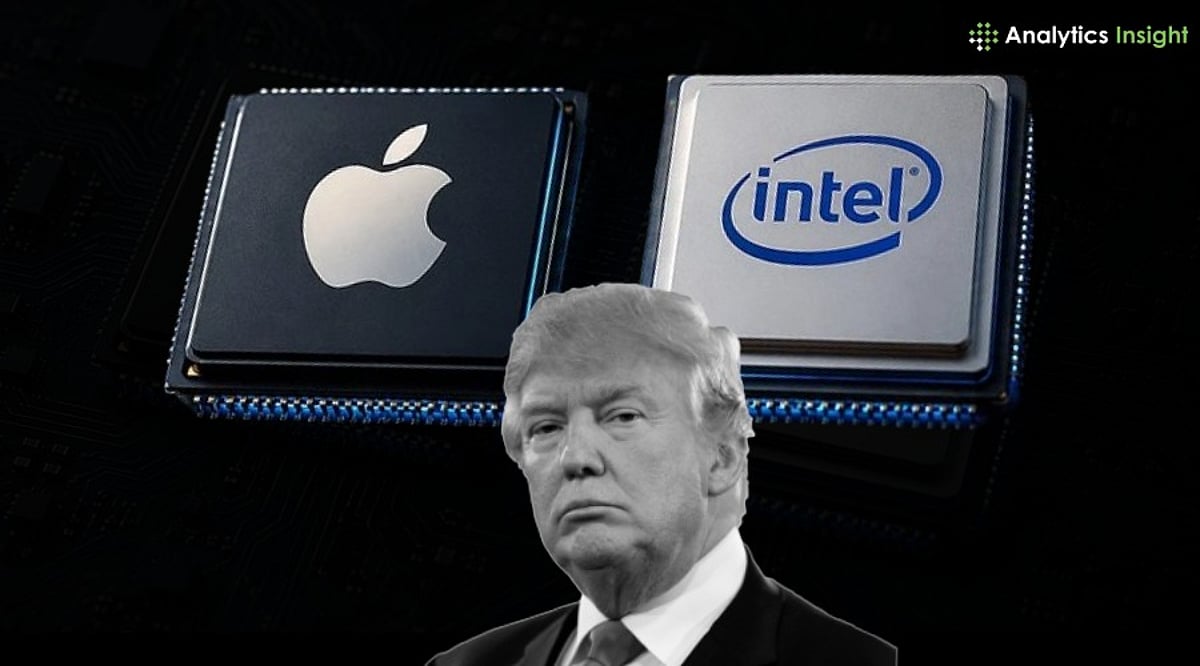
    The Trump administration has taken an active role in Intel’s recovery, urging major US technology companies to invest in or work with the chipmaker. Apple, NVIDIA, and SpaceX have entered talks or partnerships with Intel as Washington seeks to expand semiconductor production within the United States.

    This support has improved Intel’s access to capital and raised demand for its processors. However, the company’s contract manufacturing business still relies heavily on work from Intel’s own product units. Outside foundry revenue remains small compared with the wider manufacturing division.

    White House Presses Tech Firms to Back Intel

    President Donald Trump and Commerce Secretary Howard Lutnick urged Apple Chief Executive Tim Cook to use Intel’s US factories during talks over proposed semiconductor tariffs. Apple later reached a preliminary agreement for Intel to manufacture selected chips, though large-scale production may take several years.

    Washington also converted about $8.87 billion in federal funding into an equity position of roughly 10% in Intel, making the US government the company’s largest shareholder. NVIDIA subsequently invested $5 billion, while SoftBank added $2 billion. Officials also encouraged Intel to work with NVIDIA and SpaceX.

    Meanwhile, Intel Chief Executive Lip-Bu Tan reorganized engineering teams and shifted spending toward equipment for advanced production and packaging. Intel also recruited managers with experience at Samsung Electronics and SK Hynix.

    Server Sales Rise as Intel Posts a Loss

    Intel reported first-quarter revenue of $13.6 billion, up 7% from one year earlier. Data Center and AI revenue rose 22% to $5.1 billion as cloud and AI customers bought more Xeon processors. Intel still recorded a net loss of $3.7 billion, partly linked to restructuring charges.

    The company expects second-quarter revenue between $13.8 billion and $14.8 billion and projects adjusted earnings of $0.20 per share. Tan said AI inference is ‘significantly increasing the need for Intel’s CPUs and wafer and advanced packaging offerings.’

    Additionally, Intel expanded its work with Google Cloud. The companies agreed to use Intel Xeon processors across AI, inference, and general computing tasks. The agreement gives Intel a large processor customer, though it does not establish Google as a major outside buyer for Intel’s foundry plants.

    Outside Foundry Revenue Stays Limited

    Intel Foundry reported $5.4 billion in first-quarter revenue, up 16% from a year earlier. Most of that amount came from Intel’s internal product groups. External foundry revenue reached only $174 million, compared with $31 million in the same quarter of 2025.

    The increase mainly came after Altera became an outside customer following its separation from Intel. Intel’s filing said the change accounted for much of the $143 million annual rise. Chief Financial Officer David Zinsner described the outside sales as ‘legacy business that we have mainly on the wafer side.’

    Intel has identified external foundry growth as a key long-term strategy. The company has secured capital, processor agreements, and government support, but first-quarter figures show that third-party manufacturing orders have not yet become a major source of revenue.

  • SK Hynix Stock Jumps 13% on Nasdaq Debut After Record $26.5 Billion IPO

    SK Hynix Stock Jumps 13% on Nasdaq Debut After Record $26.5 Billion IPO

    SK Hynix shares surged nearly 13% in their Nasdaq debut on Friday, marking a strong entry into the U.S. market for the South Korean chipmaker. The company’s American depositary receipts opened at $170 and closed at $168.01, well above the $149 offer price.

    The $26.5 billion raised through the sale sets a record for the largest U.S. initial share offering by a foreign company. The listing gives American investors direct access to one of the leading suppliers of memory chips for artificial intelligence systems, amid a busy IPO market.

    Record-Breaking $26.5 Billion Sale

    SK Hynix sold 177.9 million American depositary receipts, with each ADR representing one-tenth of a common share. Demand exceeded available shares by more than seven times, according to reports, allowing the company to price the offer at $149 per ADR.

    The shares traded under the temporary ticker SKHYV during Friday’s when-issued session. Nasdaq said the ticker will change to SKHY on Monday, July 13, when regular trading begins. The company’s main stock market listing will remain on the Korea Exchange.

    AI Memory Demand Fuels Investor Interest

    SK Hynix leads the market for high-bandwidth memory (HBM), a type of chip placed close to advanced processors. HBM provides AI systems with quick access to data for complex computing tasks. Nvidia uses the technology in graphics processors built for data centers.

    Chairman Chey Tae-won said customer demand has remained high as companies expand AI infrastructure. “The demand is enormous, exponentially,” he said. He added that customers asked for more supply after SK Hynix announced plans to double production capacity within five years.

    The company supplies major technology firms, including Nvidia and Apple. Its regulatory filing indicates it holds 56.4% of the HBM market. Samsung Electronics and Micron Technology also produce HBM and storage chips for servers, phones, computers, and other electronic devices.

    New Funding Targets Factories and Equipment

    SK Hynix plans to use the proceeds from the U.S. offering to finance factories and production equipment. The company is expanding capacity as memory shortages raise prices and limit supply across the technology sector. New chip plants take several years to build and prepare for production.

    Part of the expansion includes a $4 billion advanced packaging facility in Indiana. The company also plans large manufacturing projects in South Korea, including a chip cluster in Yongin. These sites will support production of HBM and other memory products for AI servers.

    Memory manufacturing has a long history of sharp supply cycles. High demand can lead chipmakers to add capacity, while later oversupply can push prices lower. SK Hynix said newer uses, including AI agents and robots, require more memory than earlier computing systems.

    The U.S. listing follows a steep rise in SK Hynix’s Korea-listed shares. The stock gained 634% over the past year, supported by higher memory prices and AI spending. Friday’s Nasdaq debut broadens the company’s investor base while its Seoul listing remains active.

  • Meta Stock Surges on AI Monetization Plans and Data Center Expansion in 2026

    Meta Stock Surges on AI Monetization Plans and Data Center Expansion in 2026

    Meta Platforms stock rebounded strongly on Friday as investors welcomed fresh details about the company’s artificial intelligence revenue strategy, data center investments, and competitive model pricing. Shares climbed approximately 6% on the day and posted a nearly 15% weekly gain—the best weekly performance since early 2024.

    The rally erased Meta’s year-to-date losses. The stock had been under pressure due to concerns over rising capital expenditure and slower-than-expected returns from AI investments. The latest updates provided Wall Street with clearer signals on how Meta intends to convert its heavy infrastructure spending into new revenue streams beyond advertising.

    Meta Explores AI Cloud Business

    CEO Mark Zuckerberg revealed that Meta is considering renting AI computing power to external customers, noting that demand for the company’s compute capacity is “so high that it may make sense” to offer access through a cloud business. While the plan remains in early stages, it could involve providing access to AI chips and servers or hosting models for enterprises that need additional computing power. This move would position Meta in direct competition with Amazon Web Services, Microsoft Azure, and Google Cloud.

    Demand for computing capacity is rising as users adopt chatbots, coding tools, and agentic systems. Meta already invests heavily in data centers to support Facebook, Instagram, advertising, and AI tools. A cloud offering could generate revenue from the same infrastructure that supports its core platforms.

    Muse Spark 1.1 Introduces Paid Model Access

    Meta released Muse Spark 1.1, a new AI model optimized for coding and agentic workloads, and introduced pricing for developer access. The company will charge $1.25 per million input tokens and $4.25 per million output tokens—significantly lower than Anthropic’s Claude Opus 4.8, which costs $5 per million input tokens and $25 per million output tokens. This aggressive pricing may appeal to developers seeking cost-effective tools for coding, workflow automation, and AI agents.

    Tokens are units of text processed by AI models. Input tokens cover user prompts and commands, while output tokens cover the model’s responses. Lower token prices help developers manage costs when applications handle large volumes of text.

    Earlier in the week, Meta also launched Muse Image, an image generation model targeting creators, advertisers, and subscription products. Together, Muse Image and Muse Spark 1.1 demonstrate Meta’s expanding portfolio of AI tools for both business users and developers.

    Data Centers and Custom Chips Shape the Spending Debate

    Meta announced a new data center in Alberta, Canada, as part of its global infrastructure build-out. The facility will support the company’s growing needs for AI training and model delivery.

    Meanwhile, Meta is advancing its custom AI chip, Iris, with production expected to begin in September. Iris is part of Meta’s effort to reduce costs and gain greater control over the hardware powering its AI systems.

    Capital spending remains a key investor concern. Meta previously guided 2026 capital expenditure as high as $145 billion, raising questions about the pace at which AI investments will generate returns. However, Bank of America analyst Justin Post noted that Meta “may have engineered significant cost savings” in data center capacity, supporting the view that the company could manage its AI build-out at a lower cost than anticipated.

    These developments—combined with AI cloud services, competitive model pricing, infrastructure expansion, and custom chip progress—have renewed investor confidence in Meta’s ability to turn its AI strategy into tangible revenue growth.

  • Dogecoin Consolidates Near $0.074 as Bulls Target $0.081 Resistance Breakout

    Dogecoin Consolidates Near $0.074 as Bulls Target $0.081 Resistance Breakout

    Dogecoin traded near $0.074 on July 11, 2026, holding a narrow range as market participants watch for a breakout above key resistance levels. The token posted a small daily gain, but volatility remains low after months of subdued trading.

    Market focus has shifted to the $0.070–$0.073 support zone. A steady hold above this area could sustain buyer interest, while a drop below it might trigger fresh selling pressure. DOGE currently hovers close to $0.074, a level that has become a critical short-term floor.

    Traders note that a move above $0.078 would improve sentiment, with $0.081 emerging as the next major resistance. A break above $0.081 could open the door to $0.10 and beyond. Conversely, a fall below $0.070 would weaken the setup, potentially targeting $0.060 next.

    Derivatives activity has added mixed signals. Analyst CW observed that several short positions on BitMEX closed recently, yet DOGE did not rally. This lack of upward reaction indicates weak spot demand and low conviction among buyers. Open interest also fell after the July 8 sell-off, and trading volume remains low, suggesting many traders are waiting for a clearer price signal.

    Immediate resistance sits around $0.075–$0.076, with a secondary barrier near $0.078–$0.079. DOGE must clear these zones before any broader recovery can gain momentum.

    Technical analysts are tracking possible reversal patterns. Celal Kucuker noted that Dogecoin appears to be forming a double-bottom pattern near long-term support. Although this pattern often signals fading selling pressure, confirmation requires a clean move above resistance. Kucuker also pointed to a rounding-bottom formation on the daily chart and an inverted head-and-shoulders pattern. For the latter, a break above the neckline near $0.095–$0.100 would confirm the setup, with a potential target around $0.118–$0.120.

    Another analyst, Trader Tardigrade, compared the current two-week chart to past cycles in 2017 and 2021, when DOGE traded in a long range before a stronger move. Cryptollica noted that Dogecoin’s RSI is near the low 30s, close to oversold territory. A move above $0.081 would indicate better buyer control, while failure at resistance could keep the token stuck in its current range.

    Overall, Dogecoin remains in a consolidation phase. Bulls are defending the $0.070–$0.073 support zone, and a breakout above $0.081 could signal a stronger recovery. Until then, the token is likely to trade within a narrow band.