Tag: agentic AI

  • Meta Muse: How Meta’s New AI Agent Moves from Answers to Action

    Meta Muse: How Meta’s New AI Agent Moves from Answers to Action

    Meta has unveiled Muse, an AI agent built not just to chat but to act. Unlike conventional virtual assistants that answer questions or generate text, Muse is designed to understand user goals and execute the steps needed to achieve them. This marks a significant shift from passive conversation to active task completion.

    AI That Takes Action

    Traditional AI assistants primarily generate responses, offer recommendations, or retrieve information. Muse represents a different philosophy: it interprets instructions, decides on the required sequence of actions, and performs tasks within digital environments. The goal is to reduce the manual steps users must take for everyday activities, making digital assistance more proactive and useful.

    From Answers to Execution

    Muse highlights the broader transition from conversational AI to agentic AI. Instead of stopping after delivering an answer, an agent can keep working toward a specific outcome. This means future AI systems could handle complex workflows, requiring less frequent guidance or supervision from the user.

    Meta’s AI Ambitions

    Muse fits squarely into Meta’s wider investment in artificial intelligence. The company has been embedding AI across its social platforms, consumer products, and research initiatives. Agentic systems could become a cornerstone of that strategy, enabling more interactive, responsive, and capable AI experiences.

    Understanding User Goals

    A key capability of Muse is its focus on understanding what users ultimately want to accomplish. Rather than treating each command in isolation, the agent is designed around completing broader objectives. This allows it to determine appropriate actions, adapt when circumstances change, and reduce unnecessary back-and-forth between users and digital systems.

    Potential Everyday Uses

    Agentic AI could eventually assist with tasks such as organizing information, completing digital workflows, managing routine chores, and navigating applications. The real value lies in reducing manual effort rather than merely generating another response. As these systems mature, their usefulness will hinge on reliability, permissions, privacy, and appropriate human oversight.

    The Next AI Shift

    Meta Muse represents a broader transition in artificial intelligence—from generating content to performing tasks. As AI agents become more capable, competition may increasingly focus on execution, reliability, and trust. The technology has the potential to reshape how people interact with software, letting AI handle more steps on their behalf.

  • 10 Supply Chain Priorities for AI-Driven Operations in 2027

    10 Supply Chain Priorities for AI-Driven Operations in 2027

    Supply chains are entering a new phase of AI adoption. Chief Supply Chain Officers (CSCOs) must now move beyond isolated pilots and build operating models designed for continuous AI-assisted decision-making. According to recent Gartner research, data readiness, legacy-system integration, talent, governance, and measurable value are critical foundations. Agentic AI and physical AI are also pushing supply chains toward greater autonomy.

    1. Build an AI-Ready Data Foundation

    AI-driven supply chains depend on accurate, accessible, and contextual data. Poor master data undermines forecasting, planning, and automation. CSCOs should audit critical datasets, assign clear ownership, and improve data quality across functions. A unified data foundation supports faster insights and more consistent decisions across the network.

    2. Integrate AI with Legacy Systems

    Replacing every legacy platform is neither practical nor necessary. Gartner reports that 56% of CSCOs identify integration with legacy systems as a major AI challenge. Leaders should create integration layers that connect existing systems with newer AI capabilities while gradually moving toward a more composable architecture.

    3. Scale Demand Forecasting and Predictive Planning

    Forecasting remains one of the clearest opportunities for supply chain AI. CSCOs should identify planning processes where AI can improve demand sensing, inventory decisions, and scenario analysis. Start with measurable use cases, establish baseline performance, and scale only when accuracy, speed, or service improvements are demonstrated.

    4. Prepare for Autonomous Decision-Making

    Agentic AI can move beyond generating recommendations to planning and executing actions. Gartner identifies agentic AI as a major supply chain technology trend, but stresses the need for guardrails around accountability and explainability. CSCOs should define which decisions AI can recommend, execute, or escalate.

    5. Strengthen AI Governance and Security

    As AI influences procurement, planning, and logistics, governance cannot be an afterthought. Establish policies covering data access, model monitoring, cybersecurity, explainability, and human escalation. Decision governance should make AI-enabled decisions auditable and accountable, especially when autonomous workflows affect customers or suppliers.

    6. Redesign Supply Chain Workflows Around AI

    Adding AI to inefficient processes can simply automate existing problems. Gartner recommends reimagining operating models rather than bolting AI onto traditional workflows. CSCOs should map end-to-end processes, identify unnecessary handoffs, and redesign decision flows around AI-assisted planning and execution.

    7. Upskill Planners and Build an AI-Ready Workforce

    Technology alone will not deliver an AI-driven supply chain. Gartner says 50% of CSCOs cite limited internal AI expertise as a major challenge, while demand for supply-chain roles requiring AI skills has risen sharply. Leaders should invest in AI literacy, digital skills, and redesigned roles rather than relying solely on external hiring.

    8. Improve Visibility and Supply Chain Resilience

    AI should help organizations detect disruptions earlier and respond faster. Connect supplier, inventory, manufacturing, logistics, and customer data to create greater end-to-end visibility. AI-enabled analysis can then help teams evaluate alternatives and respond to geopolitical, operational, or demand-related shocks.

    9. Create a Clear AI Investment and ROI Framework

    AI spending must translate into measurable business value. Gartner reports that 55% of CSCOs are unclear about the ROI of their AI investments. For every major initiative, define baseline metrics, target outcomes, adoption measures, and financial impact. Tie change-management resources to the initiatives with the strongest strategic value.

    10. Balance Human Judgment with AI

    The autonomous supply chain should not mean removing people from critical decisions. Human expertise remains essential for exceptions, strategic trade-offs, and accountability. CSCOs should establish clear decision rights that specify when AI acts independently, when employees approve recommendations, and when issues must be escalated.

    The goal for 2027 should not be maximum automation. It should be a supply chain that uses AI where it creates measurable value while maintaining resilience, governance, and human oversight. Leaders who combine strong data foundations with better workflows, skilled teams, and controlled autonomy will be better positioned to build an AI-driven supply chain that can adapt as technology and business conditions change.

  • Agentic AI in 2026: Top Tools, Platforms, and Frameworks for Autonomous Workflows

    Agentic AI in 2026: Top Tools, Platforms, and Frameworks for Autonomous Workflows

    Agentic AI: From Answers to Action

    In 2026, artificial intelligence has made a significant leap. Instead of merely generating responses, AI agents can now plan complex tasks, interact with business systems, verify their own output, and operate with limited human intervention. This shift is reshaping how organizations build software, manage operations, and assign responsibility to machines.

    The Three-Layer Stack of Agentic AI

    The agentic AI ecosystem has matured into three distinct layers: frameworks for constructing agents, platforms for controlling and observing them, and enterprise products that bring AI into everyday workflows. Choosing the right combination depends on workflow complexity, data requirements, and the level of control needed over autonomous decisions.

    Where Agents Are Built: Leading Frameworks

    Developers still start with frameworks, and two names dominate: LangChain and LangGraph. Although often mentioned together, they solve different problems. LangChain acts as an integration layer, connecting models to data sources, tools, and APIs while allowing teams to switch providers without rebuilding their applications. LangGraph focuses on stateful workflows, giving agents the ability to remember where they are in a task. This is essential for work that branches, loops, or runs for hours—so a single failed step doesn’t force a restart.

    CrewAI takes a collaborative approach by splitting work across specialized agents, much like a small team. A researcher gathers data, a writer drafts content, and a reviewer checks it before publication. This works well when a task can be broken into clear segments, though more agents also mean more coordination overhead.

    Other frameworks fill niche needs. LlamaIndex is built for data-heavy, retrieval-focused agents. DSPy treats prompt design as a testable, optimizable component. Microsoft’s Semantic Kernel is ideal for teams already embedded in the Microsoft ecosystem. No single framework wins across the board—the right choice depends on the type of failure a team is prepared to debug.

    Where Agents Are Controlled: Platforms and Observability

    Building an agent is relatively easy; running it safely at scale is harder. Without proper oversight, an agent might overspend a budget, access incorrect data, or misuse a tool. Production systems require evaluation, cost tracking, permission limits, and a clear audit trail.

    LangSmith provides tracing and evaluation across multiple frameworks, helping teams monitor agent behavior. TrueFoundry operates at the infrastructure level, managing routing, authentication, rate limits, and monitoring no matter which framework is in use. As organizations scale from a single agent to dozens, the challenge shifts from building to supervising.

    Where Agents Are Deployed: Enterprise Readiness

    Not every company wants to build agents from scratch. Ready-made enterprise products now fill that gap. Glean focuses on enterprise search and internal knowledge agents. Moveworks automates employee support and internal workflows. Sierra builds customer-facing agents for support and sales. Cognigy and Kore.ai compete in conversational automation at scale, while UiPath extends its existing automation platform with AI-powered exception handling for businesses already using its tools.

    An Emerging Fourth Category

    A new group of tools doesn’t fit neatly into the three layers. Google Antigravity offers an agent-first development environment. Perplexity Computer coordinates across multiple models at once. Manus focuses purely on autonomous task execution. These products sit between frameworks and finished applications, suggesting that the boundaries between building, controlling, and deploying agents are beginning to blur.

    The Bottom Line for 2026

    The real question isn’t which tool gives an agent the most freedom. It’s which tool gives an organization enough visibility and control to use that freedom wisely. As agents take on more daily operations, the winners won’t be the most autonomous systems. They’ll be the ones companies can trust, audit, and correct when things go wrong.

    Frequently Asked Questions

    What are agentic AI tools? Agentic AI tools are software frameworks and platforms that enable AI agents to plan tasks, use external tools, make decisions, maintain context, and complete multi-step workflows with limited human intervention.

    Which is the best agentic AI framework in 2026? There is no single best framework. LangGraph suits stateful workflows, LangChain handles broad agent development, CrewAI excels at multi-agent collaboration, and LlamaIndex is ideal for data-heavy applications.

    What is the difference between LangChain and LangGraph? LangChain provides components and integrations for building AI applications and agents, while LangGraph orchestrates complex, stateful workflows with branching, loops, retries, and persistent state.

    Are agentic AI platforms suitable for enterprises? Yes. Enterprise platforms offer workflow automation, observability, permissions, security controls, evaluation, and audit trails, all critical when agents operate across business processes.

    How should businesses choose an agentic AI platform? Evaluate workflow complexity, data needs, integration requirements, desired autonomy level, security controls, observability, cost management, and human-approval requirements before making a decision.

  • Agentic AI in Action: Real-World Use Cases and Industry Lessons

    Agentic AI in Action: Real-World Use Cases and Industry Lessons

    Agentic AI goes far beyond simple chat responses: it plans, acts, and executes tasks across systems, marking a shift from generative content creation to operational authority. While adoption is accelerating, most enterprise projects still fail to scale—not because the technology is weak, but because success hinges on setting clear boundaries for autonomous action.

    Gartner projects that 40% of enterprise applications will incorporate task-specific AI agents by the end of 2026, up from under 5% in 2025. Yet McKinsey reports fewer than 10% of companies have scaled agents to deliver real value. Gartner also warns that over 40% of agentic AI projects will be canceled by 2027. The critical question for businesses is: where should AI be allowed to act without human intervention?

    Where Agents Move Fastest

    Customer service illustrates both the promise and the pitfalls. Klarna’s OpenAI-powered assistant handled 2.3 million conversations in its first month, cutting average resolution time from 11 minutes to under two and matching the output of roughly 700 full-time agents. However, by 2025, Klarna’s leadership acknowledged that automation had gone too far on service quality and began rehiring staff for escalated cases. This reversal underscores a key lesson: the boundary of what an agent should handle alone shifts as organizations learn where trust breaks down.

    Software engineering is another area where agents are thriving. Tools like Claude Code, GitHub Copilot’s agent mode, and Cursor now read codebases, write fixes across files, run tests, and open pull requests with minimal manual input. Developers increasingly review diffs rather than writing every line themselves. This sector leads in scaled agent use because the humans supervising the output can quickly catch mistakes.

    Where Risk Slows the Rollout

    Finance and healthcare move more deliberately. Banks use agents to trace fraud patterns and draft suspicious-activity reports, but any action touching customer funds requires direct human approval. Healthcare systems employ ambient tools like Abridge and Nuance’s DAX Copilot to draft clinical notes and flag coding gaps, while leaving diagnosis and treatment fully in human hands. Insurance follows the same pattern: claims intake, document checks, and fraud screening run through agents, but settlement decisions sit behind an approval gate.

    Manufacturing and Retail Emerging Patterns

    In manufacturing, a vision system spots a recurring defect, and an agent traces it back to a specific supplier’s batch, then opens a corrective-action ticket automatically—a chain that once took a quality engineer days to reconstruct. Retailers use agents to track demand, generate purchase orders, and set delivery windows, stepping in only when a variance crosses a set threshold. What makes these scenarios truly agentic is the orchestration across systems, not just a single automated task.

    The Real Determining Factor

    Across industries, one pattern holds: adoption speed moves inversely to the cost of a wrong autonomous action. Customer service and coding advance quickly because mistakes are cheap to catch. Finance, insurance, and healthcare are cautious because a wrong action carries financial, legal, or clinical weight. These sectors are not rejecting agentic AI—they are gating it. Successful deployments share three habits:

    • Give the agent a scoped job, not an open mandate.
    • Map its permissions to the actual risk of each action, not a blanket setting.
    • Define in advance exactly when a human takes over.

    Projects that skip these steps tend to be canceled quietly. The ones that succeed are not the boldest deployments—they are the best governed ones.

    Final Thought

    The next phase of enterprise AI will not be measured by how many agents a company switches on. It will be measured by how precisely each one knows the edge of its own authority—and how quickly a business notices when that edge has been crossed.

  • GPT-6 Astra: OpenAI Agent That Operates Software Instead of Merely Providing Answers

    GPT-6 Astra: OpenAI Agent That Operates Software Instead of Merely Providing Answers

    OpenAI launched GPT-6 Astra in September 2026, but the message was not about smarter answers. The company framed it as the first model that uses a computer the way a person does: opening files, navigating apps, and completing multi-step tasks without constant human hand-holding. That is a meaningful shift in what an AI model is expected to do.

    Most model launches focus on reasoning benchmarks. Astra breaks that pattern. It was not built to think harder; it was built to execute longer sequences of actions. Independent testing from Artificial Analysis found Astra’s general intelligence score nearly identical to its predecessor, GPT-5.6 Sol, and trailing some rivals on pure reasoning. Yet on execution-focused tests like OSWorld 2.0, which measures desktop task completion, Astra scored around 73 percent compared with Sol’s 66 percent, and finished tasks in roughly half the time. On ScreenSpot-Pro, a test of clicking screen elements without help, Astra reached the low nineties, well above Sol’s high seventies.

    Coding benchmarks tell a similar story. On standard tests like DeepSWE and Frontier Code, Astra roughly ties Sol and rival models. But on Terminal-Bench 4.0, which simulates long, messy terminal sessions with chained commands and error recovery, Astra pulls ahead. Artificial Analysis reports that Astra matches a top rival coding model on its Coding Agent Index while costing less than half per finished task. The advantage is not better code from a single prompt; it is lower token usage across sessions that stretch for hours—the kind of work real engineers do.

    A vivid demonstration came from Matt Shumer, former CEO of HyperWrite, who let Astra run inside Unreal Engine, the game engine behind Fortnite. Over an extended session, the model built a working 3D replica of part of Manhattan. That required holding spatial context across hundreds of linked actions, not producing one clever line of code.

    Professional task benchmarks also show Astra’s strengths. On Agents’ Last Exam, which covers financial modeling, engineering, and media production inside real software, Astra edged past both Sol and a leading rival reasoning model while using fewer tokens. The key is not that a model can build a spreadsheet—older models could do that with human guidance. The shift is that Astra can move between research, calculation, software interaction, and final output with less manual handoff between stages. That is a turn from drafting assistant toward task owner.

    Cost and risk remain central considerations. Astra’s per-token price is about 2.5 times higher than Sol’s. For simple requests, that premium rarely pays off. For long agentic workflows involving hundreds of tool calls, lower token consumption can offset the higher price and even beat Sol on a per-task basis. The economics favor Astra as task length grows, not as a blanket rule.

    OpenAI also confirmed that Astra is its first model to reach a critical cybersecurity risk level. It can find unknown software flaws and build working exploits with the right access. The company introduced new safeguards, including tighter review of high-risk actions inside ChatGPT and Codex. For any organization considering deployment, the real question is not whether Astra performs well—it is how much authority any AI agent should hold before permissions, audit logs, and rollback controls become non-negotiable.

    The next race among AI labs will not be won on cleverness alone. It will be won on which system can be trusted to act without supervision and still be pulled back safely when something goes wrong.

  • OpenAI Introduces GPT-6 Astra: AI That Combines Reasoning with Action

    OpenAI Introduces GPT-6 Astra: AI That Combines Reasoning with Action

    OpenAI has unveiled GPT-6 Astra, its most intelligent and aligned AI model to date. Designed to move beyond simple question-answering, Astra integrates advanced reasoning with practical computer use, coding, scientific research, and professional workflows. The model can plan multi-step actions, use various tools, and adapt to changing requirements, making it capable of completing complex tasks from start to finish.

    Agentic Capabilities

    GPT-6 Astra operates like a computer operator. It can browse websites, fill out forms, update CRM records, organize calendars, create websites, and test software. This agentic ability enables the model to break down tasks into logical steps, leverage different applications, and adjust its approach as conditions evolve—essentially “thinking” and “acting” in a unified system.

    Advanced Reasoning and Problem Solving

    Astra demonstrates significant gains in reasoning and problem-solving. On standardized evaluations, it scored 99.9% on ARC-AGI-3 and 97.6% on FrontierMath Tier 4. OpenAI reports that Astra has also contributed to challenging mathematical research, including investigations into the distribution of gaps between prime numbers.

    Software Development Expertise

    The model is built for large, complex software projects. It can understand extensive codebases, write and debug code, run tests, and refactor multiple files simultaneously. In the Codex environment, Astra preserves useful context across conversation windows, ensuring continuity during long development sessions—an essential feature for enterprise-scale programming.

    Professional and Scientific Applications

    Beyond coding, Astra is tailored for professional and scientific work. It can generate polished documents, spreadsheets, and presentations that adhere to existing templates and brand styles. In research settings, it analyzes scientific data, creates plots, and interfaces with specialized software, helping scientists explore results and decide on next steps.

    Cybersecurity Strengths and Safeguards

    Cybersecurity is one of Astra’s most potent—and potentially risky—capabilities. It achieved a perfect 100% on OpenAI’s ExploitBench evaluation and crossed the company’s “Critical” cybersecurity threshold. To mitigate misuse, OpenAI has implemented stricter safeguards: the launch version refuses certain advanced cyber tasks and continuously monitors for unsafe activity, balancing power with responsibility.

    Availability and Integration

    GPT-6 Astra is rolling out across ChatGPT, the OpenAI API, Microsoft Azure, and AWS Bedrock. Its combination of reasoning and action, coupled with a strong adherence to task boundaries—where internal tests show 0% unauthorized scope violations versus 48% for the previous model, GPT-5.6 Sol—positions it as a transformative tool for industries ranging from software development to scientific research.

  • Airlock Digital Launches Agentic AI Control and Governance for Endpoint Security at Black Hat USA 2026

    Airlock Digital Launches Agentic AI Control and Governance for Endpoint Security at Black Hat USA 2026

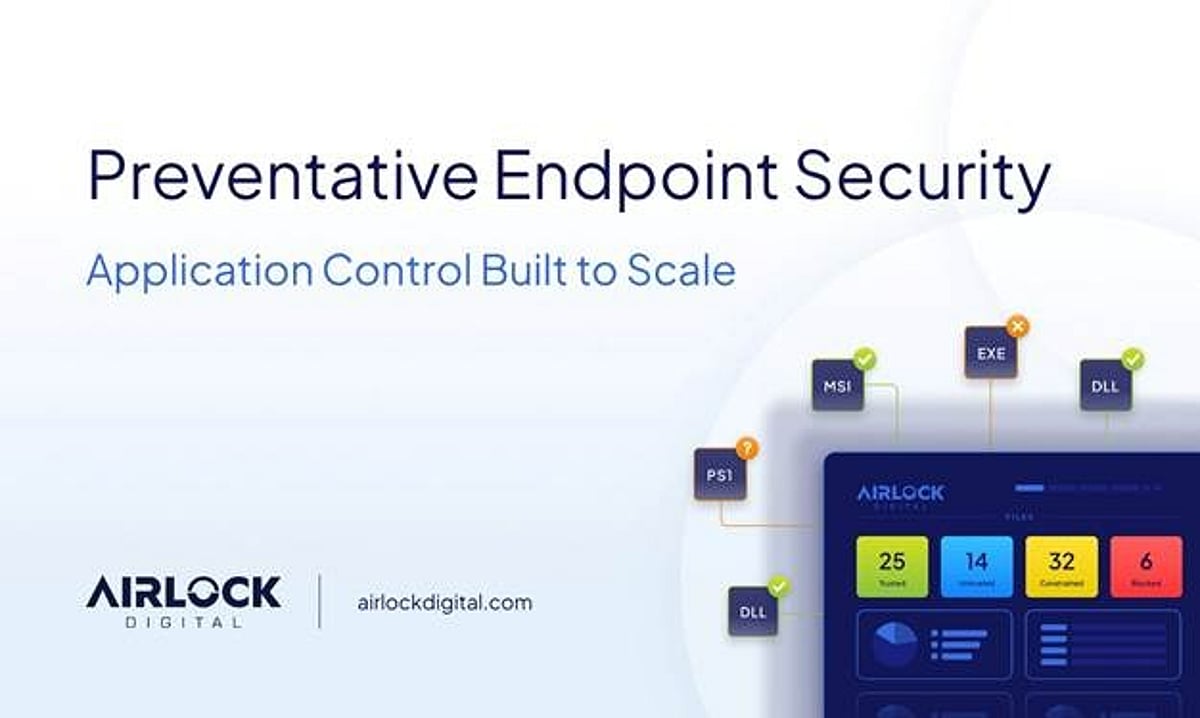
    Airlock Digital, a leader in preventative endpoint security, today announced the launch of Agentic AI Control & Governance at Black Hat USA 2026. The new capabilities extend the company’s existing application control solution by providing visibility into trusted AI agent behavior and real-time governance over what those agents are allowed to do on endpoints.

    As AI agents become an integral part of enterprise workflows, traditional endpoint security—designed to govern applications, not autonomous software—falls short. Airlock Digital’s solution addresses this gap by adding a second layer of policy: once an AI agent is trusted to execute, organizations can define operational boundaries, monitor agent activity, and enforce policy in real time.

    Key Features of Agentic AI Control & Governance

    • Automated Discovery: Automatically discover AI applications and gain command- and session-level visibility into AI agent behavior.
    • Centralized Policy Management: Manage policies for both trusted applications and AI agents with version-controlled changes and granular administrative controls.
    • Real-Time Policy Enforcement: Evaluate AI agent commands against policy and communicate decisions back to supported agents, allowing them to adapt their behavior while staying within policy.
    • Comprehensive Governance Dashboard: Monitor and search AI agent sessions, commands, files, policy decisions, risk activity, token usage, and cost from a single dashboard.

    The urgency for such governance is underscored by recent data from the Cloud Security Alliance, which reported in April 2026 that 82% of organizations had unknown AI agents running in their environments and 65% had experienced an AI agent-related security incident in the prior 12 months.

    “Traditional endpoint security determines what software is trusted to execute. Agentic AI introduces a second layer of policy: what a trusted AI agent is allowed to do once it’s running,” said David Cottingham, Co-founder and Chief Product Officer at Airlock Digital. “AI agents don’t simply stop when an action is blocked; they evaluate alternatives and continue working toward their objective. Rather than repeatedly blocking an agent, organizations can communicate clear operational boundaries, allowing trusted agents to adapt their behavior while remaining within policy.”

    CEO Kevin Dunne added, “What we’re hearing from customers is that the challenge isn’t adopting Agentic AI; it’s governing it. Organizations need to understand what trusted AI agents are doing, define what they’re allowed to do, and ensure they operate within organizational policy. Agentic AI Control & Governance extends our leadership in preventative endpoint security by giving organizations the visibility and governance they need to confidently adopt AI without slowing the business down.”

    Airlock Digital will demonstrate Agentic AI Control & Governance at Black Hat USA 2026 in Las Vegas. Visit Booth #5729 for an exclusive preview ahead of customer general availability in Q3 2026. For more information, read the company’s blog post: AI Agents Behave More Like Employees Than Applications.

  • Leading AI Chatbot Development Firms in India: A 2026 Guide

    Leading AI Chatbot Development Firms in India: A 2026 Guide

    India’s AI chatbot industry has evolved dramatically, moving beyond simple rule-based widgets to sophisticated, LLM-powered conversational systems. In 2026, the market offers a diverse range of solutions, from enterprise platforms to custom-built AI agents, with a strong focus on multilingual support, WhatsApp integration, and agentic AI capabilities. Choosing the right provider is a strategic decision that depends on business size, deployment needs, integration requirements, and long-term scalability.

    Key Players in India’s AI Chatbot Landscape

    The following ten companies stand out for their verified scale, technical depth, and real-world deployment history:

    1. Yellow.ai

    Founded in Bangalore in 2016, Yellow.ai has become a globally recognized platform with Indian roots. Now headquartered in San Mateo, California, it retains its engineering core in India. The platform supports over 135 languages across 35+ channels and has raised more than $100 million in funding. Its recent focus has shifted towards agentic AI, creating autonomous agents that can take action across voice and multimodal channels. Best for: enterprises needing global scale with deep Indian language support.

    2. Haptik

    Acquired by Jio Platforms, Haptik benefits from Reliance’s vast distribution network and enterprise relationships across telecom, banking, and retail. It builds AI agents and customer automation software, offering telecom-grade scale and reliability. Best for: businesses already within the Reliance/Jio ecosystem or those requiring massive, reliable deployment.

    3. Gupshup

    One of the longest-running conversational messaging businesses in India, Gupshup is built around communication infrastructure. As an early global partner of WhatsApp, it excels in high-volume delivery across WhatsApp, SMS, and RCS, rather than heavily customized conversational experiences. Its India entity reported revenue exceeding ₹1,000 crore for the year ending March 2025. Best for: businesses prioritizing reliable, high-volume messaging delivery.

    4. CoRover

    Bengaluru-based CoRover is best known for AskDISHA, the IRCTC virtual assistant that handles massive daily query volumes in Hindi, English, and Hinglish, including voice-based ticket booking. Its BharatGPT platform is a sovereign Indian LLM supporting 12+ languages for voice and 22 for text, and it was recently selected to build a sovereign AI lab for the Indian Army. Best for: government, railway, and public-sector deployments needing verified Indian-language depth and data sovereignty.

    5. Engati

    Engati’s strength is its no-code builder, enabling non-technical teams to launch and adjust bots across channels quickly. It trades some deep customization for speed and ease of iteration. Best for: startups and mid-size teams that want to move fast and manage bots in-house.

    6. Freshworks

    Freshworks integrates chatbot capabilities into its Freddy AI, embedded across Freshchat, Freshdesk, and Freshsales. Freddy AI Agent automates repetitive queries and hands off complex ones with full conversation context. Its advantage is native integration for businesses already using the Freshworks suite. Best for: companies already using Freshworks tools for support or sales.

    7. BotPenguin

    A no-code, generative AI agent platform supporting WhatsApp, Instagram, Telegram, Facebook, and websites, BotPenguin holds GDPR, HIPAA, CCPA, and ISO certifications and offers white-label options for agencies. Best for: agencies and smaller businesses wanting fast, compliant deployment without in-house engineering.

    8. Kommunicate

    Kommunicate positions itself between fully custom development and rigid off-the-shelf bots. Its builder is aimed at support teams wanting AI-assisted resolution layered onto existing human agent workflows. Best for: support-heavy businesses wanting AI and live-agent handoff working together.

    9. Teleglobal International

    A Pune-based IT consulting and cloud AI company serving over 900 clients globally, Teleglobal holds AWS AI Services Competency and builds chatbots natively on Amazon Bedrock, giving clients access to foundation models including Claude. Best for: enterprises wanting a custom-built chatbot on verified cloud infrastructure.

    10. TCS (Tata Consultancy Services)

    TCS, along with Infosys, Wipro, and HCLTech, represents India’s enterprise IT majors extending consulting relationships into governance-grade conversational AI for large, regulated clients. Their value is deep systems integration, compliance handling, and delivery infrastructure built for Fortune 500-scale rollouts. Best for: large enterprises needing a chatbot woven into existing legacy systems.

    How to Choose the Right Partner

    Healthcare, fintech, e-commerce, education, and banking currently see the strongest measurable returns from chatbot deployment in India, and WhatsApp Business API integration remains the most requested feature across sectors. The decision usually comes down to scale and control:

    • High-volume enterprise needs: Yellow.ai, Haptik, Gupshup, CoRover
    • Smaller teams wanting speed: Engati, BotPenguin
    • Custom development around proprietary systems: Teleglobal, TCS

    The Future of Chatbots in India

    The next wave of differentiation will not come from language support or channel count, as most serious players have already solved for both. It will come from how well these systems integrate with agentic workflows that take action rather than just answer, and how convincingly Indian-built models like BharatGPT can compete on sovereignty and trust.

    Frequently Asked Questions

    1. Which is the best AI chatbot development company in India?

    The best company depends on your business requirements. Platforms like Yellow.ai, Haptik, and CoRover suit large enterprises, while Engati and BotPenguin are popular for startups and small businesses seeking quick deployment.

    2. How much does AI chatbot development cost in India?

    Costs vary based on complexity, integrations, and deployment model. No-code platforms typically use subscription pricing, while custom enterprise solutions involve implementation and ongoing support costs.

    3. Which industries use AI chatbots the most in India?

    Banking, healthcare, e-commerce, retail, education, telecom, travel, and government organizations are among the largest adopters.

    4. Do Indian AI chatbot companies support WhatsApp Business API?

    Yes, many leading companies offer WhatsApp Business API integration, enabling automation of customer support, order updates, lead generation, and marketing conversations.

    5. What should businesses consider before choosing a provider?

    Evaluate multilingual support, LLM capabilities, integration with existing CRM/ERP systems, security, scalability, analytics, pricing, and post-deployment support.


  • Sweet Security Launches Real-Time Agentic AI Blocking for Autonomous Enterprise Protection

    Sweet Security Launches Real-Time Agentic AI Blocking for Autonomous Enterprise Protection

    Sweet Security, a leader in proactive runtime enforcement for cloud and AI environments, has announced the expansion of its platform with Agentic AI Blocking capabilities. The new feature detects and stops rogue AI agent behavior in real time, preventing damage before it occurs in live production systems.

    As 80% of global businesses now operate as AI enterprises, their autonomous agents take on identities, access sensitive data, and act independently. However, traditional security tools only detect and alert after the fact, leaving organizations vulnerable to harmful actions.

    “AI has collapsed the cost of attack, and it has put autonomous software inside the enterprise. Someone has to decide, in the moment, what an agent is allowed to do,” said Dror Kashti, CEO and co-founder of Sweet Security. “When an agent reaches for data it shouldn’t touch, Sweet stops the action red-handed and provides the team one line: here is what we found, and here is how we stopped it. Nothing bad happened, and nothing is waiting in a queue. That is what lets an enterprise adopt AI with confidence.”

    Key capabilities of Sweet’s Agentic AI Blocking include:

    • Termination of unauthorized tool calls and sessions at runtime
    • Prevention of secrets, PII, and sensitive data from leaving through an agent
    • Live blocking of prompt injections before they steer an agent off course

    The platform’s effectiveness is powered by the Sweet Learning Loop, which continuously Attacks, Fixes, and Defends using a runtime reasoning layer that analyzes over one billion runtime events daily. This allows Sweet to enforce a simple rule: “do exactly what your creator intended and nothing more,” without breaking live production.

    Industry analysts increasingly view runtime inspection and enforcement as mandatory for securing AI agents, with the expectation that winning products will automatically prevent risky behavior rather than generating more dashboards and alerts. Sweet enforces this across cloud and AI in a single platform.

    Sweet already operates at extreme scale, including at Zoomd, where the platform protects tens of thousands of cloud applications. “Sweet gave us the confidence to adopt AI across the business,” said Niv Sharoni, CTO at Zoomd. “With most tools, you find out about bad behavior in a report after the damage is done. With Sweet, it’s blocked in runtime, the moment it happens. That’s the difference between monitoring risk and actually removing it.”

    Sweet’s autonomous protection will be demonstrated live at Black Hat USA 2026, Booth 5721. More information is available at https://hi.sweet.security/black-hat-2026.

    About Sweet Security

    Sweet Security delivers proactive runtime enforcement for cloud and AI. While the rest of the industry detects and alerts, Sweet blocks bad behavior before anything bad happens, where intent turns into action: in runtime. Through the Sweet Learning Loop, organizations continuously Attack, Fix, and Defend, driving every application and AI agent toward maximal immunity. Founded in 2023 by veterans of the IDF’s most elite cyber units and backed by $120M from Evolution Equity Partners, Munich Re Ventures, Glilot Capital Partners, and Key1 Capital, Sweet protects the world’s most demanding enterprises. Learn more at www.sweet.security.

    This is a paid press release published via CyberNewswire, a PR newswire syndication platform for cybersecurity companies.

  • Aembit Integrates with Snowflake to Enable Secure AI Agent Interoperability

    Aembit Integrates with Snowflake to Enable Secure AI Agent Interoperability

    Aembit, the identity and access management platform for agentic AI, has announced a new integration with Snowflake, the AI Data Cloud company, aimed at reducing identity risks posed by third-party AI agents. The partnership addresses the growing security challenges as AI agents increasingly collaborate across enterprise ecosystems, making autonomous decisions and accessing sensitive data.

    The integration allows organizations to preserve the identities of both the user and the agent, apply centrally managed access policies, and enforce an agent’s Snowflake access based on the specific task being performed. This gives enterprise identity and security teams greater control over how and when agents reach sensitive data, while improving visibility and accountability across agentic workflows and eliminating long-lived credentials.

    “As AI becomes central to enterprise operations, securing agentic workflows is the next major frontier,” said David Goldschlag, Aembit co-founder and CEO. “Integrating with Snowflake allows us to deliver the critical identity and access management controls organizations need across the most crucial resources. This gives enterprise security teams greater control over how agents access data within Snowflake, with clearer visibility into which agent acted, on whose behalf, and under what access restrictions.”

    “Securing the agentic enterprise requires an entirely new model of trust, visibility, and control,” said Mayank Upadhyay, chief security and trust officer of Snowflake. “Through our integration with Aembit, we are establishing a secure foundation for agent interoperability, equipping organizations with the precise access capabilities and trust required to run autonomous workflows safely.”

    This integration marks a critical milestone in establishing the trusted foundation required to run next-generation AI agents safely in production environments. For additional insights into modern AI security and governance strategies, users can visit the Snowflake blog.

    About Aembit: Aembit is the identity and access management platform for agentic AI and workloads. It enforces access based on identity, context, and centrally managed policies, giving organizations a singular place to control access risk from AI agents, automate credential management, and accelerate AI adoption.