Tag: AI Strategy

  • Why 80% of AI Pilots Fail: Ashish Chandra on Moving from Experiments to Enterprise Impact

    Why 80% of AI Pilots Fail: Ashish Chandra on Moving from Experiments to Enterprise Impact

    Artificial intelligence is reshaping the way enterprises operate, moving beyond predictive analytics to systems capable of autonomous decision-making and intelligent execution. Even with increased investment in AI infrastructure, many companies struggle to make pilot initiatives drive enterprise-wide change because of disjointed data, isolated systems, poor governance, and a lack of measurable business goals.

    In the latest episode of the Analytics Insight Podcast, Ashish Chandra, a global AI thought leader, shares his perspective on how organizations can transition from AI experimentation to enterprise-scale execution. He talks about reasons why most AI projects don’t succeed in generating value, the need for good-quality data and governance, ways that companies should stay away from ‘AI Theatre,’ the skills needed to be ready for AI, and what’s ahead for AI in the business world during the next ten years. Here are the excerpts:

    Why do Many Organizations Fail to Scale AI Beyond Pilot Projects?

    In my opinion, the major problem is that firms perceive AI as a technological effort rather than a business transformation. Trying out new things is not difficult, but transforming the entire business involves data, governance, ownership, operating models, and business impacts. At present, most firms possess hundreds of proofs of concept but only a few production-ready AI products. Those organizations that succeed will be those that use AI as part of their everyday business activities. Only through this can the value of AI be realized.

    How Can Enterprises Build AI as Core Business Capability Instead of Another Technology Layer?

    I believe AI should become part of the enterprise architecture rather than sitting on top of existing systems as another application. Organizations need to create an AI fabric that connects enterprise data, business processes, knowledge layers, memory systems, human expertise, and decision intelligence. Instead of deploying hundreds of disconnected AI assistants, businesses should establish a unified intelligence layer that continuously learns from operations. The future will be intelligence-centric rather than application-centric. Just as cloud computing transformed enterprise infrastructure over the past decade, AI will become the underlying intelligence powering every critical business function.

    Why are Data Quality and Governance Critical to Successful Enterprise AI?

    As I have said before, data and context should be considered the bedrock of enterprise AI. Bad data leads to bad intelligence, no matter how intelligent the model is. Enterprises should invest in data foundations, metadata management, semantics, security, compliance, explainability, and governance. Equally critical is developing infrastructure purpose-built for AI workloads rather than relying on existing enterprise infrastructure. In the years ahead, enterprises won’t have any more AI; they’re going to have more trustworthy AI. Trust will be the key differentiator as companies rely on AI systems that can produce transparent and explainable results.

    How Should Organizations Measure Return on Investment from AI Initiatives?

    I think the assessment of the success of an AI solution has to be much wider than a conventional financial ROI approach. There are four areas where I measure the AI value. First, it is a financial one, involving such metrics as increased revenue, optimized costs, higher margins, and automation benefits. The second one is operational and involves faster cycle times, increased efficiency, and lower error rates. Third, it is the area of intelligence that relates to parameters such as improved decision-making quality, higher accuracy of forecasting and predictions, and better reusability of knowledge. Finally, there is a strategic aspect that includes innovation, customer experience, competitiveness, and agility.

    What does Future of Enterprise AI Look Like Over Next Decade?

    This is going to be a time when companies will go beyond systems of record and into systems of reasoning. Not only will businesses stop digitizing themselves, but they will also start thinking, predicting, optimizing, and adapting continuously. There will be self-governing business capabilities, AI-driven business models, enterprise memory, agentic workforces, self-optimizing supply chains, digital twins, and executive decision intelligence all in real-time in this new age. Human beings will have to play a greater role in judgment, governance, creativity, and strategy. Companies that embrace the intelligent transformation will not only be more efficient but will also create the future of competitive advantage.

    Listen to the full conversation on the Analytics Insight Podcast for deeper insights into building enterprise AI that delivers measurable business impact.

  • 7 Executive Strategies for Dominating the AI Economy

    7 Executive Strategies for Dominating the AI Economy

    The AI economy is reshaping competitive dynamics, cost structures, and customer expectations simultaneously. According to McKinsey’s 2026 State of AI report, 78% of organizations now use AI in at least one business function, up from 55% the year before — a pace of adoption that means the gap between leaders and laggards is widening faster than most boards anticipated. For CXOs, the question is no longer whether to adopt AI but how to adopt it in ways that create durable advantage rather than temporary efficiency gains.

    Treat AI as a Strategic Priority, Not an IT Project

    The most frequent pitfall in executive oversight is to delegate AI adoption to the technology department and measure success by operational outcomes only. Leading organizations are those where the CEO has set clear AI goals linked to revenue and holds the entire C-Suite accountable. According to Gartner’s 2026 CIO research, companies whose CEO sponsors AI programs are 2.5 times more likely to have business impact from them. In this era, AI literacy is not negotiable for non-tech executives: an incompetent CFO unable to critically assess an AI investment case or a CMO who cannot judge the attribution model of an AI marketing campaign is at a considerable disadvantage.

    Build AI into the Core, Not the Edge

    Many organizations in 2025 ran AI pilots at the edges of the business: isolated proofs-of-concept in one department, a chatbot on customer service, a forecasting tool in one market. These generated learnings but rarely competitive advantage, because they were never connected to the core operating model. Winning in the AI economy requires integrating AI into the processes that directly determine how value is created: the customer experience, the supply chain, the product development cycle, and the sales motion. Companies that have integrated AI into their core operations report 40% higher productivity gains compared to those running isolated experiments, according to BCG’s 2026 AI adoption analysis.

    Rethink the Workforce, Don’t Just Retrain It

    AI will displace some jobs, radically alter many others, and bring into being job categories that do not currently exist. Managers who view this as a training issue invariably underestimate the magnitude of the change needed. The better way to think about this challenge is through workforce redesign — figuring out how to map activities into areas managed by AI, those requiring AI-human interaction, and those requiring uniquely human input, and then redesigning job categories, teams, and incentives accordingly. Companies that redesign their workforces with AI rather than augmenting pre-existing designs with AI realize far greater benefits.

    Govern AI Before It Governs You

    AI adoption without governance is a weakness rather than a strength. Failures show that the costs incurred in terms of reputation and regulation can often outweigh the efficiency benefits which motivated the adoption of AI technology in the first place. Leading organizations have established AI governance frameworks with clear accountability, mandatory human oversight for high-stakes outputs, regular bias auditing, and documented correction processes. This is not a compliance exercise. It is risk management and increasingly, a customer trust signal.

    Win on Data, Not Just on Models

    The commoditization of foundation models means model access alone is no longer a competitive differentiator. The durable advantage in the AI economy sits in proprietary data. Organizations that have invested in data quality, infrastructure, and governance for years can fine-tune models on their own customer behavior and operational history in ways competitors without that data asset cannot easily replicate. For executives building AI strategy, data strategy and AI strategy are the same document, and the executives who understand that distinction earliest will be the ones best positioned to lead in the AI economy over the decade ahead.

    Why This Matters

    Organizations that strategically integrate AI into their business models are more likely to improve productivity, accelerate innovation, and respond quickly to changing market conditions. Executive leadership, not technology alone, will determine which companies gain lasting competitive advantage.

    FAQs

    What is the AI economy?

    The AI economy refers to the growing business environment where artificial intelligence drives productivity, innovation, customer experiences, and competitive advantage across industries. Organizations increasingly use AI to automate workflows, improve decision-making, and create new products and services.

    Why should CEOs treat AI as a business strategy instead of an IT project?

    AI influences every business function, including finance, marketing, operations, and customer service. When executive leadership aligns AI initiatives with revenue growth and strategic objectives, organizations are more likely to achieve measurable business outcomes than when AI remains solely a technology initiative.

    How can organizations successfully integrate AI into core business operations?

    Companies should embed AI into value-generating processes such as customer service, supply chain management, sales forecasting, product development, and decision support. Integrating AI into daily operations delivers greater long-term benefits than isolated pilot projects.

    What is AI governance, and why is it important?

    AI governance establishes policies, oversight mechanisms, and accountability for AI systems. It includes bias testing, human review, regulatory compliance, data privacy protection, and continuous monitoring to reduce legal, ethical, and reputational risks.

    Why is data strategy essential for AI success?

    High-quality proprietary data enables organizations to train and fine-tune AI systems for better business outcomes. Since AI models are becoming more widely accessible, unique data assets increasingly provide the strongest competitive advantage.

  • From GenAI to GenOps: Shashank Sharma on Scaling Enterprise AI with Intelligent Automation

    From GenAI to GenOps: Shashank Sharma on Scaling Enterprise AI with Intelligent Automation

    Podcast Highlights: Inside GenOps with Shashank Sharma

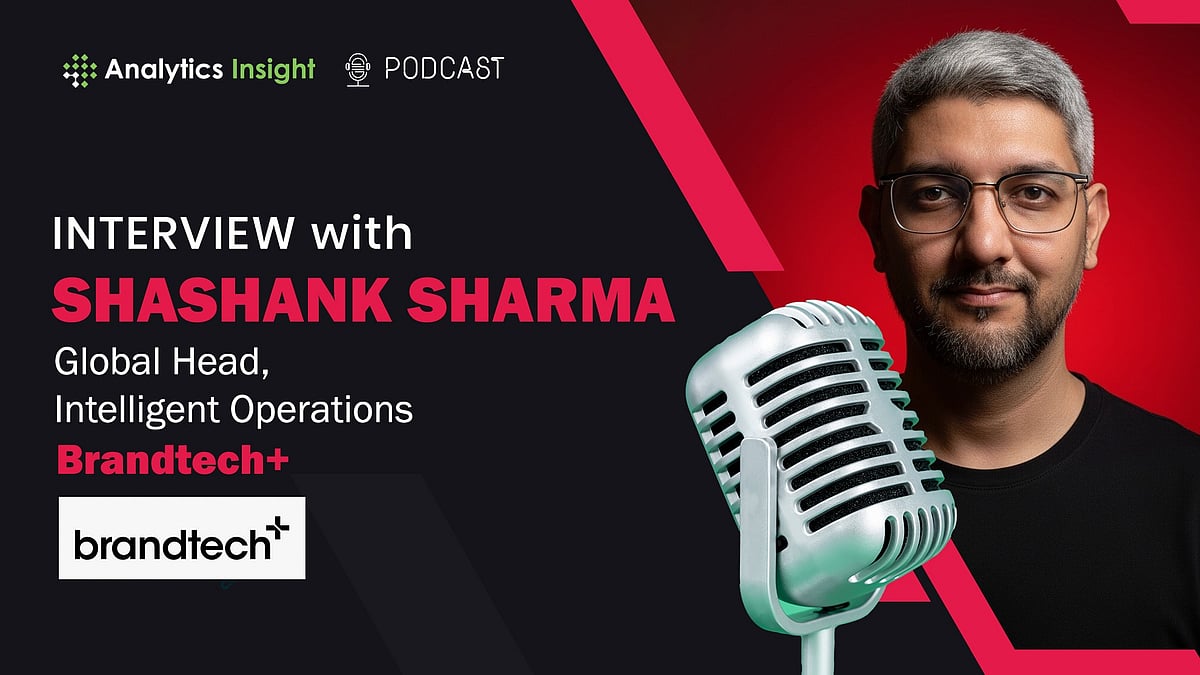
    As enterprises move beyond initial Generative AI experiments, the focus shifts to scaling AI efforts while maintaining governance, compliance, efficiency, and business impact. In a recent episode of the Analytics Insight podcast, host Priya Dialani spoke with Shashank Sharma, Global Head of Intelligent Operations, AI and Automation at Brandtech Plus, about the evolution from Generative AI to GenOps. The conversation covered AI-RPA integration, intelligent business operations, human oversight, enterprise governance, automation strategies, and maximizing ROI through responsible AI scaling.

    Key Takeaways from the Interview

    Generative AI vs. GenOps

    Sharma explained that while Generative AI primarily focuses on creating content—such as text, images, and videos—GenOps applies AI to business operations. GenOps integrates AI with governance, automation, compliance, and operations to increase efficiency, reduce costs, and ensure AI functions effectively within enterprises.

    Why AI and RPA Are Stronger Together

    AI provides intelligence and reasoning, whereas Robotic Process Automation (RPA) handles rule-based tasks consistently. By combining both, organizations can automate complex business processes, minimize errors, secure information assets, and balance the probabilistic nature of AI with the deterministic execution of RPA.

    “AI provides intelligence and reasoning, whereas RPA handles rule-based tasks consistently. By combining both, organizations can automate complex business processes, minimize errors, secure their information assets, and balance the probabilistic aspects of AI with the deterministic aspects of RPA execution.”

    Business Benefits of AI and Automation

    Organizations can expect productivity gains, faster process execution, reduced costs, enhanced compliance, improved data accuracy, and higher returns on investment. Automation frees employees from routine tasks, allowing them to focus on more strategic functions.

    Why Human Oversight Remains Essential

    AI can make smart decisions, but it can also make wrong or dangerous ones. Human intervention is necessary to confirm important decisions, govern, prevent unnecessary errors, ensure accountability, and keep business transactions safe until AI technology becomes fully reliable.

    “AI can make smart decisions, but it can also make wrong or dangerous ones. Human intervention is required to confirm important decisions, govern, prevent unnecessary errors, hold people accountable, and keep business transactions safe until AI technology becomes reliable.”

    Challenges in Scaling AI

    Sharma identified budget constraints, staff resistance, poor-quality data, and lack of clarity about organizational processes as major obstacles. He recommended focusing on the most significant AI use case, experimenting, engaging subject-matter experts, and improving data quality to overcome these issues.

    Conclusion

    The shift from Generative AI to GenOps represents a maturation of enterprise AI. By integrating intelligent automation with robust governance and human oversight, companies can scale their AI initiatives responsibly while achieving tangible business outcomes. As Sharma’s insights demonstrate, the future of enterprise AI lies in balancing innovation with operational discipline.

  • How Entrepreneur Ankur Warikoo Leverages ChatGPT to Enhance Daily Productivity and Deep Work

    How Entrepreneur Ankur Warikoo Leverages ChatGPT to Enhance Daily Productivity and Deep Work

    Entrepreneur and author Ankur Warikoo has openly shared how he integrates ChatGPT into his daily workflow to boost productivity, sharpen his thinking, and accelerate learning. Rather than using AI as a crutch to complete tasks for him, Warikoo treats it as a collaborative partner that helps him brainstorm ideas, simplify complex topics, and structure his thoughts before taking action. His approach offers a practical blueprint for professionals who want to harness AI without sacrificing critical thinking or creativity.

    Why This Matters

    As artificial intelligence becomes more embedded in professional environments, the conversation has shifted from whether to adopt AI to how to use it effectively. Warikoo’s methodology demonstrates that AI tools can enhance productivity while preserving human judgment and independent decision-making.

    Overcoming the Blank-Page Challenge

    Starting a new task—whether it’s a presentation, newsletter, or business plan—is often the hardest part. Many professionals spend more time figuring out how to begin than actually completing the work. Warikoo uses ChatGPT to break through this initial barrier. He starts with a simple request, explores different angles, and lets the AI inspire him rather than copying its output verbatim. This approach cuts down the time spent staring at a blank page while keeping creative decisions firmly in human hands.

    Simplifying Complex Information

    In fast-moving fields like finance and business, staying informed is essential—but the challenge is often organizing information, not accessing it. Warikoo uses ChatGPT to clarify complicated concepts, make comparisons, and generate concise summaries. This helps him grasp new topics quickly before diving into deeper research, a strategy that is especially valuable for busy professionals juggling multiple responsibilities.

    Building Better Daily Habits

    Warikoo also applies ChatGPT beyond work tasks. For instance, he asked the chatbot which habits could help someone become more successful than most people. The response emphasized practical, everyday routines such as maintaining a steady schedule, exercising regularly, carving out time for deep work, continuous learning, eating well, saving money, reducing distractions, and nurturing personal relationships. While none of these points are revolutionary, turning them into a structured checklist makes them easier to follow. This exercise highlights how AI can organize proven principles into a manageable daily routine.

    The Importance of Deep Work

    One of Warikoo’s key takeaways from using ChatGPT is the emphasis on uninterrupted, focused work. He recommends dedicating two to four hours each day to deep work—free from notifications, meetings, or social media distractions. This aligns with the growing productivity trend that prioritizes concentrated effort over multitasking. For Warikoo, AI serves as a habit reminder for well-known productivity techniques rather than a source of novel methods.

    Accelerated Learning Without Cutting Corners

    Warikoo also leverages ChatGPT for faster learning. Instead of spending hours searching for articles, videos, and reports, he asks the chatbot for a general overview of an unfamiliar topic. Once he has the basics, he continues with in-depth research—but in a more efficient order. This approach saves time while maintaining research quality.

    AI as a Thought Partner, Not a Replacement

    Perhaps the most important aspect of Warikoo’s strategy is viewing AI as a thinking partner rather than a substitute for expertise. ChatGPT can help structure information, generate ideas, and automate repetitive tasks, but judgment, creativity, and decision-making remain human responsibilities. The quality of the output depends heavily on the quality of the questions asked. Warikoo’s core takeaway is that AI delivers the most value when it augments human thought rather than replacing it.

    Frequently Asked Questions

    1. How does Ankur Warikoo use ChatGPT every day? He uses it to brainstorm ideas, simplify complex topics, plan tasks, accelerate learning, and organize his daily workflow.
    2. Does Ankur use ChatGPT to write all his content? No. He uses it for idea generation and structure, but relies on his own knowledge and judgment for final content.
    3. What productivity habit does Ankur highlight the most? He emphasizes deep work, recommending two to four hours of uninterrupted focus daily for high-impact tasks.
    4. Can ChatGPT help professionals improve productivity? Yes, by organizing information, generating ideas, summarizing topics, and reducing repetitive work, it allows professionals to focus on important decisions.
    5. What is Ankur’s biggest takeaway about using AI? He believes AI works best as a thinking partner that supports human creativity and decision-making, not as a replacement for them.
  • Databricks Reaches $188 Billion Valuation With New Strategic Funding for Enterprise AI

    Databricks Reaches $188 Billion Valuation With New Strategic Funding for Enterprise AI

    Data and AI company Databricks has announced a new strategic funding round that values the company at $188 billion, signaling strong investor confidence in enterprise artificial intelligence. The financing, led by existing investor Coatue with participation from other new and existing investors, is expected to close later this summer.

    The fresh capital will be used to strengthen Databricks’ AI portfolio, expand research efforts, and support future acquisitions as the company meets rising enterprise demand for AI-powered business solutions.

    Focus on AI Products

    Databricks said the funding will accelerate development across three key offerings: Unity AI Gateway, Genie, and Lakebase.

    Unity AI Gateway enables enterprises to manage AI models from multiple providers while improving governance, security, and cost control. Genie acts as an AI-powered coworker that helps employees turn business data into actionable insights. Lakebase is a serverless PostgreSQL database designed to support AI agents and modern enterprise applications.

    According to the company, these products aim to address what it describes as the ‘context gap’ in enterprise AI, where disconnected data systems, governance challenges, and rising infrastructure costs prevent organizations from deploying AI effectively at scale.

    Enterprise AI Strategy

    Commenting on the funding, Databricks Co-founder and CEO Ali Ghodsi said enterprises are increasingly prioritizing measurable business value over indiscriminate AI spending.

    ‘Enterprises are moving from tokenmaxxing to valuemaxxing. They don’t want to burn expensive tokens on the smartest model for every task, they want the best outcome per dollar. That means having the freedom to choose the right AI for the job,’ Ghodsi said.

    He added that the new investment will help the company strengthen its multi-AI strategy by enhancing Unity AI Gateway, expanding Genie, and advancing Lakebase.

    Growing Enterprise Adoption

    Headquartered in San Francisco, Databricks serves more than 20,000 organizations worldwide, including Adidas, AT&T, Bayer, Block, Mastercard, Rivian, and Unilever. The company says around 70% of Fortune 500 companies use its Data + AI Platform to build AI applications, analytics tools, and autonomous AI agents.

    The latest funding further strengthens Databricks’ position in the rapidly expanding enterprise AI market as businesses continue to invest in scalable, governed, and cost-efficient AI infrastructure.

  • Marriott International’s Digital Transformation: AI, Cloud, and New Systems Reshape Hospitality

    Marriott International’s Digital Transformation: AI, Cloud, and New Systems Reshape Hospitality

    Booking a hotel room has changed dramatically in recent years. Today’s travelers expect to book in minutes, check in via smartphone, unlock doors with digital keys, and receive assistance without waiting in long queues. Meeting these expectations is a formidable challenge for a company operating thousands of hotels worldwide. Marriott International, serving millions of guests annually, has been quietly rebuilding its technology infrastructure from the ground up to keep pace with evolving travel habits.

    Rather than making incremental updates, Marriott is replacing legacy systems that have been in use for years. Simultaneously, the company is embedding artificial intelligence (AI) across various business areas and migrating more services to the cloud. While most guests may not notice these changes day-to-day, Marriott expects these initiatives to significantly streamline booking, check-in, customer support, and hotel operations.

    A Measured and Practical AI Journey

    While many companies rushed to adopt AI as soon as it gained popularity, Marriott took a more cautious approach. The company chose to test the technology first and expand its use only after seeing real-world results. To facilitate this, Marriott established its own AI Studio in 2023. Small teams began experimenting with different ideas to identify where AI could deliver tangible benefits—some focused on supporting employees directly, while others aimed to enhance the guest experience.

    Personalization is a key goal for Marriott. Every traveler is unique—some travel for business, others with family. AI enables Marriott to better interpret these preferences and recommend hotels or services that genuinely match each guest’s needs, rather than offering generic options. The company is also leveraging AI to improve its website and mobile app, making it easier for guests to find the right hotel by understanding their search queries more clearly.

    Employees also benefit from these changes. Hotel staff can access guest information more quickly, reducing time spent navigating multiple systems and allowing them to assist guests promptly. Marriott has also emphasized that good AI depends on good data. If the underlying information is incomplete or outdated, AI cannot deliver useful results. This is why the company has invested considerable effort in improving its data quality before expanding AI across the business.

    Importantly, Marriott has made it clear that AI is not intended to replace hotel workers. Hospitality remains fundamentally about people. Technology simply helps employees perform their jobs more efficiently.

    New Systems for a Future-Ready Business

    While AI garners much attention, Marriott’s most significant changes are happening behind the scenes. The company is replacing three of its oldest systems: the hotel management platform, reservation system, and Marriott Bonvoy loyalty program. These systems have supported the business for years but now require faster and more flexible technology.

    Marriott is also moving more of its operations to the cloud. Instead of relying on older computer systems, cloud technology enables faster deployment of changes and upgrades. It also helps the company handle millions of reservations and customer requests without performance degradation. Another major goal is to connect different systems so they can work together seamlessly. Today, guest information, reservations, loyalty rewards, and hotel services need to share data quickly to create a smooth experience from booking to checkout.

    Marriott is taking a practical approach to AI, deploying it only where it solves a real problem. This helps avoid unnecessary costs while improving daily operations. The company is also preparing for what experts call an “Agentic Mesh”—a concept where multiple AI assistants work together. One could help guests make bookings, another could support hotel employees, and a third could manage loyalty rewards or answer customer questions. These AI systems would share information while handling different tasks. Although Marriott is not fully using this model today, its new cloud systems are being built to support these technologies as they become more common.

    Why This Matters

    Marriott’s technology upgrades could have a ripple effect across the hospitality industry. With better AI, faster cloud systems, and connected platforms, hotels may see improved guest experiences, fewer delays, and greater modernization in how they serve customers. Travel is changing, and hotels must change with it. Guests now expect fast service, simple booking, and personalized experiences every time they travel.

    Marriott understands that good technology is now as important as comfortable rooms and friendly staff. The company’s approach is notable because it didn’t rush into every new trend; instead, it focused on building a solid foundation first. AI is being added step by step, while employees remain central to the guest experience. As more hotels adopt AI and cloud technology, Marriott’s early investments could give it a strong competitive advantage and help shape the future of hospitality technology.

  • Wipro Shares Rise 1.65% Ahead of Q1 FY27 Results: Revenue Guidance and AI Strategy in Focus

    Wipro Shares Rise 1.65% Ahead of Q1 FY27 Results: Revenue Guidance and AI Strategy in Focus

    Wipro shares climbed 1.65% to Rs. 177.39 on the NSE as investors awaited the company’s Q1 FY27 earnings announcement scheduled after market hours on July 16. The stock touched an intraday high of Rs. 180.79 and a low of Rs. 176.29, reflecting cautious optimism ahead of the results.

    India’s fourth-largest IT services company is expected to report another subdued quarter, with analysts forecasting muted sequential revenue and profit growth amid continued weakness in discretionary technology spending. While the June quarter numbers are unlikely to surprise the Street, the management’s outlook on artificial intelligence (AI), client spending, large deal momentum, and revenue guidance for the September quarter is expected to determine investor sentiment.

    June Quarter Likely to Reflect Cautious Spending

    Brokerage estimates place Wipro’s consolidated revenue for Q1 FY27 at Rs. 24,850 crore to Rs. 25,350 crore, indicating high double-digit year-on-year growth. However, sequential growth is expected to be minimal as firms defer technology spending amid uncertain macroeconomic conditions. Currency appreciation could provide some lift to revenue figures, but demand remains weak in overseas geographies, according to analysts.

    Margins May Face Temporary Pressure

    The bottom line is projected to come under continued strain due to Wipro’s investments in artificial intelligence, salary increases, and expenses tied to recently signed large deals. Despite these challenges, market experts expect the company to sustain stable margins through cost control measures. Analysts will closely monitor any management commentary regarding margin improvement in the remaining period of fiscal year 27.

    Guidance Will Be the Biggest Market Trigger

    The Street believes Wipro’s September quarter guidance will carry greater significance than its reported June quarter numbers. Technology budgets in both North America and Europe remain very prudent, with emphasis on savings over digital transformation plans. An improvement in discretionary spending would be a major positive for investors. Conversely, a more cautious stance might confirm doubts about further recovery in the IT services industry.

    AI Remains the Long-Term Growth Story

    Artificial intelligence continues to be a major talking point within the global technology services sector, and Wipro is expected to provide insight into its AI plans during the quarterly earnings call. Analysts and investors will be keen to see signs that pilot AI deals are moving toward larger projects that can generate future revenue. Generative AI adoption and consulting demand will come under intense scrutiny.

    What Investors Will Monitor

    • Estimated Revenue Drivers: Currency benefits, acquisition contributions, and large deal wins.
    • Large Deals and BFSI Outlook: BFSI (banking, financial services, and insurance) remains a major revenue contributor. Large deal signings will be closely watched as they provide visibility into future growth.
    • Dividend Decision: Wipro’s board is expected to consider an interim dividend alongside the results, which will attract investor attention.

    Market Outlook

    Wipro’s June quarter is not expected to show significant performance, with growth likely flat due to global uncertainty and cautious technology investments. However, the results alone are not the main focus. The outlook and commentary from management regarding AI opportunities, client spending, large deals, and the September quarter guidance will be the key drivers for investor sentiment.

  • Top Digital Leadership Programs for CEOs and CXOs in 2026

    Top Digital Leadership Programs for CEOs and CXOs in 2026

    Digital transformation is redefining how businesses compete. Artificial intelligence, automation, cloud computing, cybersecurity, and data analytics influence everything from operations to customer experience. Senior leaders are now expected to make technology-driven decisions that deliver measurable business outcomes. Digital leadership programs help executives understand emerging technologies, develop transformation strategies, and lead change across their organizations.

    Best Digital Leadership Courses for CEOs and CXOs

    Here are some of the top programs for CEOs, CXOs, founders, and senior business leaders.

    Wharton Digital Leadership Certificate

    Wharton School’s Digital Leadership Certificate is one of the most prestigious executive programs for business leaders. It includes modules on digital strategy, artificial intelligence, innovation, customer-centric growth, and organizational transformation. The self-paced online model makes it highly effective for busy executives.

    • Best for: CEOs, Managing Directors, Business Leaders
    • Highlights: Digital Strategy and Innovation, AI for Business Leaders, Customer-first Transformation, Leadership in Digital Organizations

    ISB Strategic Digital Leadership Program

    ISB runs this program for leaders responsible for driving business transformation. Topics include digital business models, AI, analytics, platforms, and innovation. The mix of live online classes and campus visits makes it interactive and helps solve real-world challenges.

    • Best for: CXOs, Business Heads, Senior Managers
    • Highlights: Enterprise Digital Transformation, AI & Analytics, Platform Business Model, Customer Experience Strategy

    ISB Chief Digital & AI Officer Program

    This executive development program is designed for executives who wish to lead digital transformation. It provides perspectives on implementing AI, digital governance, innovation management, and technology strategy. The program aligns digital transformation with business goals.

    • Best for: CIOs, Chief Digital Officers, Technology Executives
    • Highlights: AI Strategy, Digital Governance, Enterprise Innovation, Business-driven Technology Strategy

    MIT Sloan & Kellogg Executive Programs

    Both MIT Sloan and Kellogg School of Management offer executive programs focusing on innovation, digital transformation, organizational agility, and strategic leadership. Executives learn through case studies, collaborative learning, and practical business situations.

    • Best for: Global Executives, Entrepreneurs, Decision Makers
    • Highlights: Innovation Leadership, Digital Business Ecosystems, Strategic Decision Making, Organizational Agility

    IITM Pravartak Future Chief Technology & AI Officer Program

    This program prepares experienced technology leaders to become executives. It blends technical know-how with business savvy, covering AI, cybersecurity, enterprise architecture, cloud technologies, and tech governance.

    • Best for: CTOs, Engineering Leaders, Technology Executives
    • Highlights: Artificial Intelligence and Emerging Technologies, Cloud Strategy, Cybersecurity, Technology Leadership

    What You Will Learn

    While each program has its strengths, most equip you with crucial skills for guiding digital transformation:

    • Digital Transformation Strategy
    • Artificial Intelligence and Automation
    • Innovation Management
    • Data-Driven Decision-Making
    • Cybersecurity Governance
    • Customer Experience Design
    • Change Management
    • Digital Product/Platform Strategy
    • Leadership Communications

    Many programs also offer simulations and case studies to apply learning in practice.

    Choosing the Right Program

    Your choice depends on your role and leadership objectives:

    • Wharton is ideal for executives seeking a global perspective on digital strategy and innovation.
    • ISB Strategic Digital Leadership suits executives tasked with transforming their businesses.
    • ISB Chief Digital & AI Officer Program fits individuals leading AI and digital initiatives.
    • MIT Sloan & Kellogg provide exposure to global innovations and trends.
    • IITM Pravartak is for technology leaders aiming to become strategic executives.

    When choosing, evaluate curriculum, faculty, learning approach, length, alumni network, and industry relevance. The program should provide skills you can immediately apply within your organization.

    Why This Matters

    Technology alone does not drive business transformations; leadership does. Companies need senior executives to link technological investments to business strategy, manage transformation, and create value in the digital age.

    FAQs

    What is a digital leadership course?

    A digital leadership course teaches executives how to lead AI adoption, digital transformation, innovation, and technology-driven business growth effectively.

    Who should enroll in digital leadership programs?

    CEOs, CXOs, founders, CIOs, CTOs, business heads, and senior managers leading transformation initiatives benefit most.

    Which skills do digital leadership courses cover?

    Most programs cover AI strategy, cybersecurity, innovation, data analytics, digital business models, change management, and executive decision-making.

    Are online digital leadership courses effective?

    Yes. Reputed institutions combine expert-led sessions, case studies, peer learning, and practical projects to deliver valuable online executive education.

    How do I choose the right digital leadership program?

    Compare curriculum, faculty, industry recognition, learning format, networking opportunities, duration, and alignment with your leadership responsibilities and goals.

  • The Enterprise Leader’s Guide to Digital Transformation Roadmaps

    The Enterprise Leader’s Guide to Digital Transformation Roadmaps

    Digital transformation succeeds or fails long before any system goes live. Nearly 90% of organizations run some form of transformation program, yet only 30% meet their goals. Sequencing and governance now matter more than the tools themselves. Enterprise leaders no longer question whether digital transformation deserves a place on the boardroom agenda; attention has shifted toward execution, sequencing, and accountability across every business unit.

    Why Most Programs Fail

    Consultants tracking enterprise technology describe the gap between ambition and actual results as structural, not temporary. Most programs struggle to close the gap between what leadership promised and what teams delivered. The root cause is rarely the technology — it is almost always the sequence in which decisions get made. Roadmaps built purely on technology upgrades rarely survive contact with actual budgets.

    Data Foundations Are Critical

    Transformation programs tend to stumble at the data layer, often before execution even begins. Data quality remains the single largest barrier: 64% of leaders name it their top challenge, and 77% describe their own data as average or worse. Investing heavily in AI without fixing data quality first backfires within months. Enterprises that treat data governance as groundwork, not an afterthought, move faster once AI work actually starts. Skipping this step simply moves the cost further down the timeline, where it costs more to fix.

    Key Priorities for Enterprise Roadmaps

    Digital leaders now build transformation into core strategy rather than treating it as a side initiative. TEKsystems research shows digital leaders are 2.5 times more likely to embed transformation deeply than laggards. Governance has become its own workstream, with steering committees that have direct executive sponsorship over sequencing and budget calls. The following priorities consistently surface across enterprise roadmaps that deliver measurable returns:

    • Data governance and quality repair ahead of AI scaling
    • Cloud-native infrastructure supporting hybrid, distributed workloads
    • Change management run as its own workstream with metrics
    • Initiatives ranked by value, feasibility, and delivery risk
    • Agentic AI rollout paired with architectural oversight

    Governance and Execution Gaps

    Successful programs pour nearly half their total effort into change management, not technology deployment. SupraITS research puts that figure near 50% for leading organizations. Yet only 27% of operations leaders report broad organizational impact from recent digital investments, per PwC’s 2026 survey. Integration complexity and inconsistent user adoption top the list of obstacles. Executive sponsorship alone rarely closes this gap; a dedicated program office tracking progress is essential. Middle management often decides whether a roadmap survives past its first year.

    What This Means for Enterprise Strategy

    A widening gap between transformation spending and actual results shows that budget size guarantees nothing. Leadership alignment, sequencing discipline, and honest data readiness now separate enterprises earning real returns from those still experimenting without direction. Organizations with strong integration achieve 10.3x ROI versus 3.7x, proving that disciplined roadmaps, cloud readiness, and structured change management deliver stronger business outcomes.

    Final Words

    Enterprise leaders entering the next phase of digital transformation are relearning an old lesson: spending the most no longer guarantees the strongest results. Structured sequencing, disciplined governance, and honest data assessments now separate lasting transformation from repeated, costly experimentation. The roadmap itself has become the real differentiator, not any single technology purchase. Enterprises aligning data foundations, cloud architecture, and workforce readiness before scaling AI will capture compounding returns and enter the next decade ready to lead.

  • Building a People-First Digital Transformation Roadmap: Key Phases and Strategies for Enterprise Success

    Building a People-First Digital Transformation Roadmap: Key Phases and Strategies for Enterprise Success

    Digital transformation in 2026 has reached a critical juncture: expectations are higher than ever, yet execution consistently falls short. According to Gartner’s 2026 CIO survey, 94% of CIOs anticipate major changes to their plans within 24 months, but only 48% of digital initiatives meet or exceed business targets. The gap is not ambition or investment—it’s the lack of a disciplined roadmap that turns strategy into sequenced, accountable execution.

    Why Most Transformation Roadmaps Fail

    The most common failure occurs when digital transformation is treated as a mere IT upgrade. Assigned solely to the CIO or IT department, it becomes a technology implementation rather than a holistic business change. Another error is rolling out new platforms without redesigning the processes around them—new tools on old workflows rarely deliver efficiency gains. Many companies also fail to measure ROI at intermediate stages, leaving them blind to course corrections needed mid-implementation.

    The Five Phases of an Effective Roadmap

    A strong roadmap breaks the journey into sequenced phases:

    1. Maturity Assessment: Evaluate people, process, technology, and data. Most enterprises still run 400+ fragmented applications and legacy ERP systems from the early 2000s—this baseline is essential.
    2. Strategy Definition: Align technology investments with business goals and define clear metrics.
    3. Early Execution (90-Day Quick Wins): Build momentum with small, visible successes.
    4. Infrastructure Modernization: Move to cloud-native architecture and zero-trust security.
    5. AI and Automation Integration: Embed AI into core workflows across finance, operations, and customer service.

    Governance and Ownership Determine Success

    The clearest differentiator between successful and stalled transformations is ownership. Effective roadmaps are collectively owned by the CEO, CIO/CTO, COO, CFO, and CHRO—shared accountability, not one executive’s burden. Gartner research shows CIOs who tie technology initiatives to measurable financial outcomes are 25% more likely to outperform peers, though only a third consistently do so.

    The 2026 Shift: From AI Pilots to Operational Integration

    The biggest change in roadmaps this year is the move away from isolated AI experiments that never leave pilot phases. Enterprise AI adoption has doubled year-over-year, reaching 24% in 2026 (up from 12%). Digital leaders are nearly four times more likely to achieve this maturity. Experts note that 2026 marks the year AI adoption shifts from a technical problem to a people and management challenge—roadmaps now explicitly address these human factors.

    Building a Roadmap That Survives Reality

    Winning companies in 2026 share three traits: a senior executive responsible for results (not just delivery), a dedicated budget for change management and training separate from technology, and quarterly review cadences from day one. The lesson: success comes not from bigger goals but from the discipline to execute them.

    Why This Matters

    As organizations accelerate AI adoption and cloud modernization, successful digital transformation depends on leadership, governance, and employee adoption—not technology alone. A structured roadmap reduces risk, improves ROI, and ensures transformation initiatives deliver lasting business value.