Tag: Apple

  • Apple iPhone Eye Tracking: How to Set Up and Use Hands-Free Navigation

    Apple iPhone Eye Tracking: How to Set Up and Use Hands-Free Navigation

    Apple has introduced a new Eye Tracking feature for iPhones, enabling users to control their devices using only their eyes. This accessibility-focused tool provides a hands-free alternative to traditional touchscreen controls, benefiting individuals with physical disabilities and anyone seeking a touch-free experience.

    How to Enable Eye Tracking on iPhone

    To activate Eye Tracking, go to Settings, select Accessibility, and toggle the Eye Tracking option on. Once enabled, you can customize sensitivity and assign specific actions to eye movements for a personalized experience.

    How Eye Tracking Works

    The feature relies on the iPhone’s front-facing camera to track and interpret eye movements. Apple has developed advanced algorithms that allow the device to follow your gaze and respond accordingly. This eliminates the need for physical contact with the screen, making navigation easier for users with limited mobility.

    Performance and Considerations

    Early user feedback highlights precise and responsive tracking. However, performance can be affected by lighting conditions and camera angles. For best results, position your face clearly in front of the camera and ensure consistent lighting.

    A New Hands-Free Control Option

    Eye Tracking offers a new way to interact with your iPhone without touch input. While it significantly improves accessibility for people with physical disabilities, it also serves as a convenient hands-free option for all users. Apple combines the front camera with facial recognition and movement detection to deliver this innovative control method.

  • Apple Adds ‘Prepare to Ship’ Mode to iPhone 18 Pro Max to Meet 20Wh Battery Shipping Rules

    Apple Adds ‘Prepare to Ship’ Mode to iPhone 18 Pro Max to Meet 20Wh Battery Shipping Rules

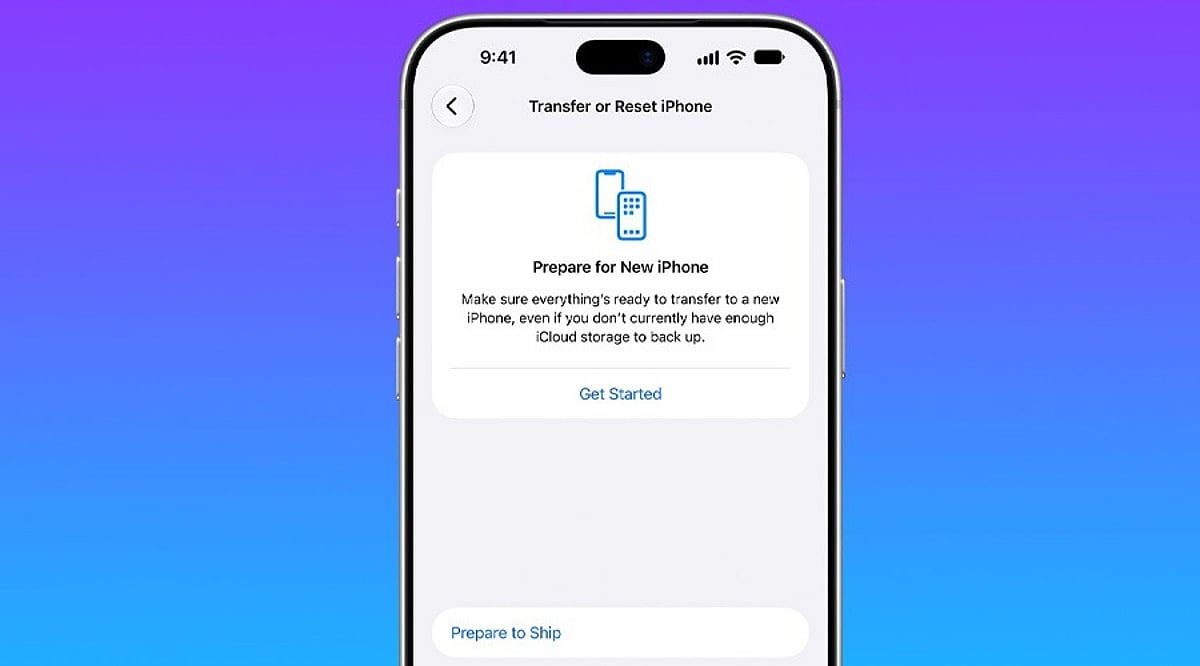
    Apple has introduced a new Prepare to Ship option for the iPhone 18 Pro Max after increasing the device’s battery capacity beyond 20 watt-hours (Wh). The feature is designed to help owners send their phones in for repair, trade-in, return, or gifting without running into stricter shipping regulations for high-capacity batteries.

    Why the 20Wh Battery Threshold Matters

    In most countries and regions, devices with a single-cell battery above 20Wh are subject to additional shipping requirements. To keep the iPhone 18 Pro Max compliant through the supply chain, Apple uses a battery-firmware solution that keeps the battery below 20Wh during manufacturing and transport. Once the device is activated, the software restriction is removed and the battery operates at its full capacity.

    How Prepare to Ship Works

    When you need to send your iPhone 18 Pro Max to Apple for service, trade-in, return, or as a gift, the Prepare to Ship feature discharges the battery below the 20Wh threshold. It also applies a charging limit so the battery stays within the required range during transit.

    To use the feature:

    • Open Settings.
    • Go to General.
    • Tap Transfer or Reset iPhone.
    • Select Prepare to Ship.

    Apple says the process typically takes only a few minutes, but a fully charged device may take up to a couple of hours to complete. During discharge, the iPhone 18 Pro Max may feel warmer than usual, but it should cool down once the process finishes.

    No Safety Concern, Says Apple

    Apple has clarified that Prepare to Ship is not a response to a battery safety problem. The iPhone 18 Pro Max battery remains safe for shipping and air travel, and the additional step simply helps owners meet current regulations. Apple’s shipping guidance also recommends discharging the phone to 25% or less before switching it off and packing it in the provided shipping kit.

    For anyone planning to send back an iPhone 18 Pro Max, the new feature should help streamline the process and avoid shipping delays.

  • Apple AirPods 5 Review: Enhanced ANC, Adaptive Audio, and Improved Battery Life

    Apple AirPods 5 Review: Enhanced ANC, Adaptive Audio, and Improved Battery Life

    Overview

    The latest Apple AirPods 5 bring significant improvements to Apple’s standard wireless earbuds while retaining the familiar open-ear design. These earbuds now feature active noise cancellation (ANC), adaptive EQ, adaptive audio, and personalized spatial audio. Apple has notably enhanced noise cancellation performance, and the updated acoustic system delivers richer, more balanced sound quality. Additionally, the AirPods 5 offer increased resistance to dust, sweat, and water, along with better battery life and hands-free Siri voice commands.

    General Specifications

    • Design: Open-ear, stem-style
    • Active Noise Cancellation: Yes (improved over previous generation)
    • Adaptive EQ: Yes
    • Adaptive Audio: Yes
    • Spatial Audio: Personalized with dynamic head tracking
    • Dust, Sweat, and Water Resistance: IPX4-rated (increased)
    • Battery Life: Up to 6 hours (ANC on), up to 30 hours with charging case
    • Voice Assistant: Siri with voice activation
    • Connectivity: Bluetooth 5.3, Apple H2 chip
    • Weight: 4.0 g per earbud

    Pros and Cons

    Pros

    • Excellent active noise cancellation for open-ear design
    • Rich, detailed sound with adaptive EQ
    • Seamless integration with Apple ecosystem
    • Improved durability against dust, sweat, and water
    • Longer battery life compared to AirPods 4
    • Hands-free Siri and adaptive audio features

    Cons

    • Open-ear design limits passive noise isolation
    • Bass response not as deep as in-ear models like AirPods Pro
    • No customizable fit options (one-size-fits-all)
    • Price premium over competitors

    Final Verdict

    Overall, the AirPods 5 are an excellent choice for Apple users who prefer open-ear earbuds but still want advanced features like ANC, adaptive audio, and spatial sound. The improved audio quality, enhanced noise cancellation, increased durability, and seamless compatibility with Apple devices make them a great everyday listening companion. However, if you require maximum noise isolation or deep, punchy bass, in-ear alternatives such as the AirPods Pro series may be more suitable. For those seeking a well-rounded upgrade with strong value, the AirPods 5 deliver a compelling package.

    Rating: 4.5 / 5

  • Apple’s Smart Glasses: A Potential Smartwatch Replacement with Augmented Reality and Health Tracking

    Apple’s Smart Glasses: A Potential Smartwatch Replacement with Augmented Reality and Health Tracking

    Apple may be taking wearables to the next level. According to recent reports, the company is developing smart glasses that could feature health-tracking capabilities and augmented reality (AR) functions. This move could signal a new direction for Apple’s wearable lineup, potentially challenging or even replacing the smartwatch as we know it.

    The rumored smart glasses are expected to integrate seamlessly with Apple’s ecosystem, offering users a hands-free way to access information, navigate, and monitor their health. While details remain scarce, the combination of AR and health tracking could make these glasses a versatile everyday accessory.

    If these reports hold true, Apple’s smart glasses might become the next big wearable after the smartwatch, reshaping how we interact with technology. However, it’s still early, and Apple has not confirmed any such product. Stay tuned for updates.

  • India-Made iPhone 18 Pro and Pro Max Enter Global Launch Supply as Foxconn and Tata Expand Production

    India-Made iPhone 18 Pro and Pro Max Enter Global Launch Supply as Foxconn and Tata Expand Production

    Apple is expanding its India manufacturing push ahead of the global launch of the iPhone 18 Pro and iPhone 18 Pro Max, with locally assembled units already moving to overseas markets. Multiple chartered flights have reportedly departed from Chennai carrying premium iPhone 18 models as Apple works to secure enough supply for customers when sales begin on September 18.

    The move signals a new phase in Apple’s India production strategy. For the first time, Pro and Pro Max models assembled in India are expected to be available in international markets from day one of global sales. The standard iPhone 17 reached overseas buyers on launch day last year, but Apple’s Pro models previously entered Indian production later in the product cycle.

    Foxconn and Tata Electronics Scale Up Output

    Two Indian plants are currently producing the iPhone 18 Pro and Pro Max: one run by Foxconn and one run by Tata Electronics. Reports indicate that both factories have been operating around the clock as Apple prepares for launch demand.

    Production capacity may grow further as well. Industry reports suggest the number of assembly lines could eventually approach 12, depending on international demand. Apple has not disclosed production volumes or confirmed how many units are allocated to individual countries.

    An estimated 80 to 90 percent of India’s Pro-series output is expected to be exported, with the United States identified as a major destination. That figure is a reported production estimate rather than an Apple-confirmed shipment target.

    Chartered Flights Move iPhones From Chennai

    Speed is central to Apple’s launch logistics. Several chartered aircraft have reportedly carried India-made iPhone 18 Pro and Pro Max units from Chennai to international markets ahead of the September 18 sales date.

    The US is expected to account for a significant share of those shipments. India has become an increasingly important source of iPhone exports to the US as Apple broadens manufacturing beyond China. Analysts cited by India Today estimate that about 26 percent of all iPhones shipped globally in 2026 could be made in India.

    India’s Growing Role in Apple’s Supply Chain

    Apple’s expanding Pro-series production in India adds to an ecosystem that already includes assembly, testing, enclosures, selected mechanical components, battery packs, chargers, cables, packaging, and other subassemblies. However, several high-value components, including displays, camera modules, memory, and advanced semiconductors, continue to be sourced from outside India.

    The latest shipments also highlight a broader shift: India is moving from serving primarily its domestic market to supporting Apple’s international supply chain. With Pro and Pro Max models now entering global distribution from launch day, Indian factories are becoming part of the launch-time production network rather than a later-stage manufacturing base.

  • Maximizing Siri AI on iPhone 18 Pro: Features, Tips, and What’s New in iOS 27

    Maximizing Siri AI on iPhone 18 Pro: Features, Tips, and What’s New in iOS 27

    Apple’s Siri AI has officially arrived in India with iOS 27, bringing a more intelligent and context-aware voice assistant to compatible iPhones. The feature launched on September 14 and comes pre-installed on the iPhone 18 Pro. Currently in beta, Siri AI supports English and requires users to join a waiting list. Apple also enforces daily limits on server requests to manage load.

    Deeper Access to iPhone Data

    The updated Siri can search across Messages, Mail, and Photos. Users can ask Siri to retrieve specific details, such as booking codes from older emails. During business calls, Call Context can display relevant information like a booking number automatically.

    Screen Awareness and App Integration

    Siri AI now understands content on your screen. For example, you can ask it to turn a sports fixture list from a webpage into calendar entries. Activate Siri via the wake phrase, side button, or a swipe down from the Dynamic Island.

    Visual Intelligence in Camera

    Visual Intelligence works through the Camera app as a Siri mode. Point your camera at a printed schedule, such as a wedding card, and ask Siri to extract relevant details.

    Third-Party App Support

    Siri AI integrates with third-party apps. Apple specifically mentions WhatsApp for sending messages via voice commands. Audible playback is supported, and apps like Microsoft Outlook, Notability, and Tripsy are slated for upcoming support.

    Writing, Dictation, and Shortcuts

    Writing Tools can draft and rewrite text in any app where you type. Siri can adapt its writing style to match yours. Dictation gets an upgrade via Apple’s AFM Core Advanced model, adding punctuation and formatting as you speak. The Shortcuts app now accepts plain-language instructions—just describe the action you want instead of manually building each step.

    Price Tracking and Personal Organization

    Safari’s Notify Me feature monitors webpages for changes, including restocks and price drops. Calendar and Reminders can add events and list items through spoken instructions. Siri AI maintains conversation history across devices via iCloud, so chats continue seamlessly on Mac, iPad, Apple Watch, or Vision Pro.

    Language Support in India

    Siri AI launched with English only. French, Japanese, Korean, Portuguese, and Spanish are scheduled to arrive next month, but Apple has not announced a timeline for Hindi. The feature works on iPhone 15 Pro and later models, including the iPhone 18 Pro and iPhone Duo.

  • iPhone Duo: 5 Exclusive Features That Redefine Apple’s Foldable Experience

    iPhone Duo: 5 Exclusive Features That Redefine Apple’s Foldable Experience

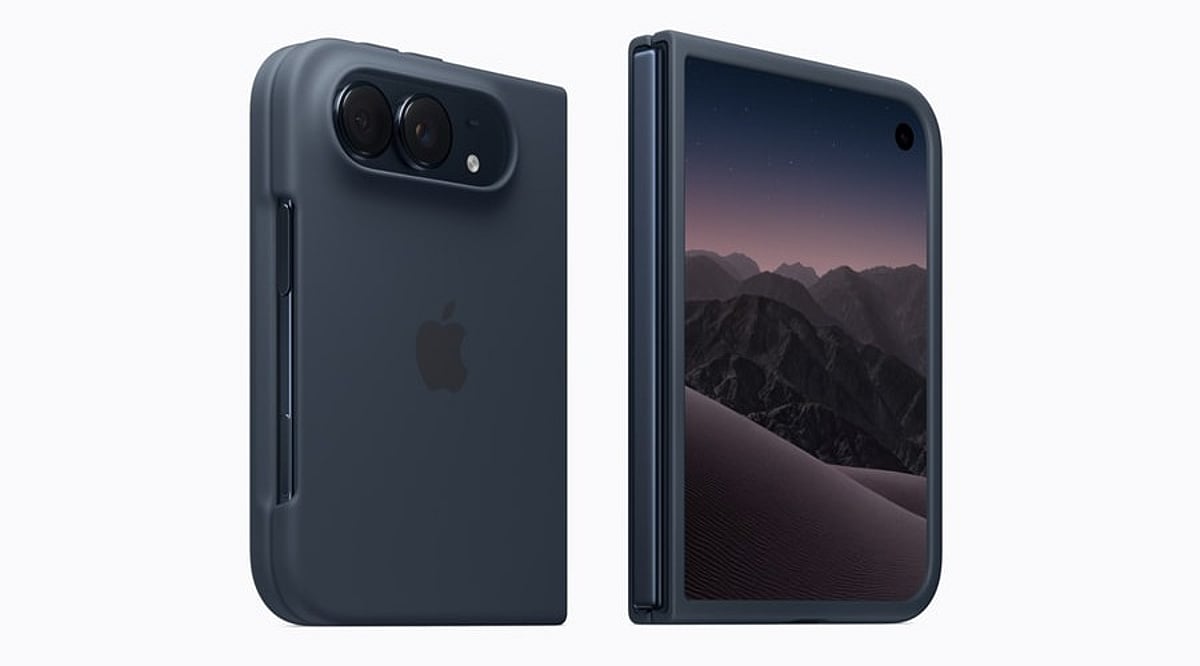
    Apple has finally entered the foldable phone market with the iPhone Duo, a book-style device featuring two screens. This launch answers questions iPhone users have been asking for years: What changes when a phone becomes a small tablet, and what stays the same? Apple has packed the iPhone Duo with exclusive features that don’t exist on any other iPhone model, from dual-screen camera tricks to a different unlocking method and even unique charging capabilities.

    1. Dual-Screen Camera Software

    The iPhone Duo sports a dual 48-megapixel camera system on the back, similar to the iPhone 18 Pro, but its software is where Apple gets creative. Features like Smart Take, Kid Cue, and Duo Preview are exclusive to this model, and they exist because the phone can display a live camera view on both screens simultaneously. A parent photographing a child can use Kid Cue to capture their attention on the outer display while framing the shot on the inner one. Duo Preview lets a photographer show the subject exactly what the shot looks like before the picture is taken—something a single-screen iPhone simply cannot do.

    2. Under-Display Camera on the Inner Screen

    For the first time on any iPhone, Apple has placed a camera underneath the display itself. The inner 7.6-inch screen carries this under-display camera, keeping the folding display free of any visible cutout or notch. The trade-off is that this camera doesn’t match the quality of the Center Stage front camera on the outer screen, so Apple recommends using the outer camera for video calls and selfies whenever the phone stays closed.

    3. Touch ID Instead of Face ID

    Every recent iPhone has relied on Face ID for unlocking, but the Duo breaks that pattern. Apple moved authentication to a side-mounted Touch ID sensor, a design choice driven by the thinner profile needed for a folding phone. This lets users unlock the device whether it sits open or closed, without needing a front-facing sensor array that would otherwise eat into the slim bezels Apple aimed for on the folding screen.

    4. Apple Pencil Support & Familiar Charging

    Apple Pencil has always been an iPad feature, but the iPhone Duo changes that boundary. The company has confirmed that Apple Pencil support will roll out for both the inner and outer displays later this year. On the charging side, the Duo sticks with what iPhone owners already know, supporting fast wired charging alongside MagSafe and Qi2 wireless charging, so an existing iPhone charger still works fine with the new model. This turns the Duo into a note-taking and sketching device in a way no earlier iPhone allowed, positioning it as a bridge between Apple’s phone and tablet lineups.

    5. Adaptive Postures

    The iPhone Duo supports several distinct postures that Apple built software around, including Landscape, Portrait, Closed, Seated, and Standing modes. In Seated mode, the phone can rest at an angle for watching a video or following a workout routine. In Standing mode, it doubles as a bedside display through StandBy, showing a clock, photos, or widgets. Split View lets two apps run side by side on the larger inner display, a functionality closer to what people expect from a small tablet than a phone.

    Why These Features Matter

    These five features show that Apple did not simply put a hinge on an existing iPhone design. Each one, from the camera software to the authentication method, reflects a rethink of what a phone can do once it has two screens working together. For anyone weighing whether the Duo justifies its higher iPhone price compared to a regular Apple iPhone, these software and hardware choices matter more than the display size alone, since they define how the phone actually gets used day to day.

    FAQs

    1. What makes the iPhone Duo different from other iPhone models?
    The iPhone Duo is Apple’s first foldable iPhone, featuring a book-style design with two screens, exclusive camera software, and an under-display camera not found on any other iPhone.

    2. Does the iPhone Duo use Face ID?
    No, the iPhone Duo replaces Face ID with a side-mounted Touch ID sensor, letting users unlock the device whether it is open or closed.

    3. Can the iPhone Duo work with Apple Pencil?
    Yes, Apple has confirmed Apple Pencil support for both the inner and outer displays, rolling out later this year.

    4. Does the iPhone Duo need a special charger?
    No, the iPhone Duo supports the same fast wired charging along with MagSafe and Qi2 wireless charging as other recent iPhone models, so an existing iPhone charger works fine.

    5. What are the exclusive camera features on the iPhone Duo?
    The iPhone Duo offers Smart Take, Kid Cue, and Duo Preview—camera features built specifically to use both the inner and outer displays at the same time.

  • Apple’s iOS 27 Introduces Impersonation Risk Detection to Combat iPhone Scams

    Apple’s iOS 27 Introduces Impersonation Risk Detection to Combat iPhone Scams

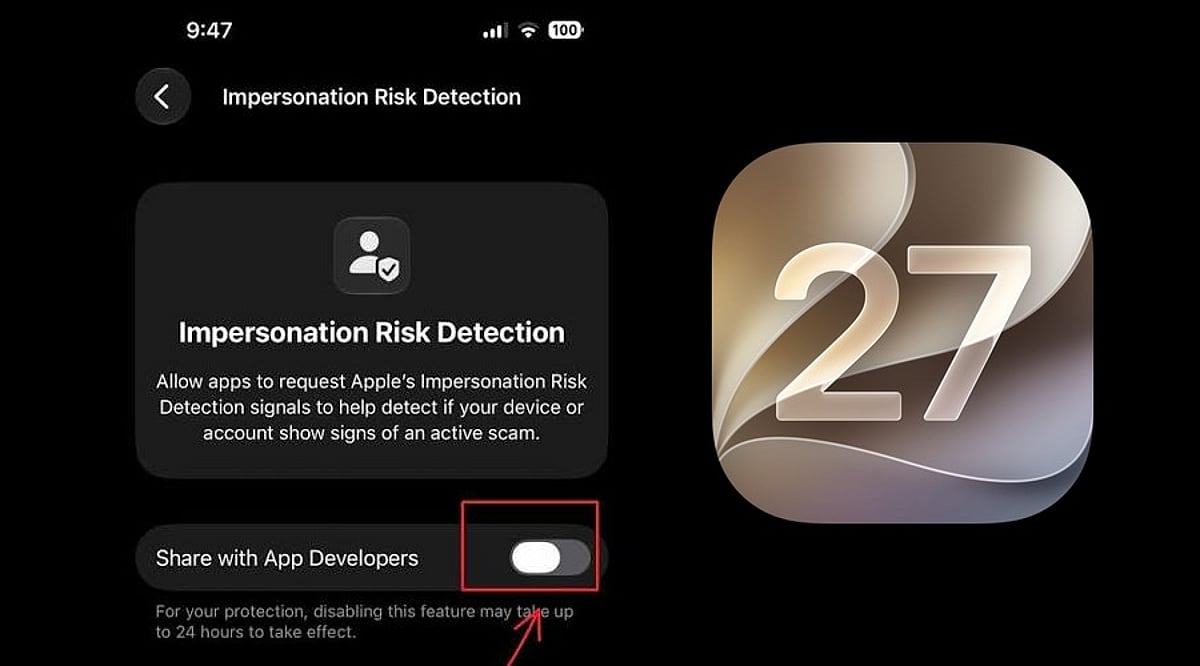
    Apple has unveiled a new security feature in iOS 27 designed to shield iPhone users from impersonation-based scams. Dubbed Impersonation Risk Detection, the tool identifies signs that a user may be caught in an active social engineering attack, particularly when they are about to make a payment or modify sensitive account information.

    Scams involving fake banks, government agencies, delivery services, and even impersonation of known contacts have become increasingly prevalent. Apple says the feature is engineered to detect suspicious activity and alert users before they complete potentially harmful actions.

    How Apple’s Impersonation Risk Detection Works

    According to Apple, the feature protects users from active social engineering scams where an attacker impersonates a trusted entity—such as a bank, government agency, or a familiar person—and pressures the victim into making a payment or altering account details.

    Impersonation Risk Detection analyzes information about the iPhone or iPad and the user’s Apple Account to identify signs of suspicious activity. When a supported app requests an assessment during a potentially risky action, the system generates a risk level that the app can use to determine subsequent steps.

    There are three risk levels: Unknown, Medium, and High. Unknown means no evidence of suspicious activity was detected, though Apple notes this does not confirm an action is safe. Medium indicates some signs of suspicious activity, while High means significant signs were detected.

    Importantly, the app does not receive the underlying information used to generate the assessment. It only receives the resulting risk level and can decide how to respond.

    How to Enable the Feature

    Users can turn on Impersonation Risk Detection by opening Settings, tapping Privacy & Security, scrolling down, and selecting Impersonation Risk Detection. They then need to toggle on Share with App Developers. Users may also need to sign in to the App Store with their Apple Account.

    The feature can be controlled on an app-by-app basis. However, Apple warns that it depends on supported apps and that its risk assessment does not guarantee an action is safe. The company emphasizes that this feature is not designed to replace other security measures or user caution.

  • iPhone 17e Price Drop on Flipkart: Effective Rs 15,000 Off Before iPhone 18 Pro Sale

    iPhone 17e Price Drop on Flipkart: Effective Rs 15,000 Off Before iPhone 18 Pro Sale

    Flipkart Listing Brings iPhone 17e Closer to Rs 62,000

    Apple’s revised pricing for the iPhone 17e in India now starts at Rs 79,900, but Flipkart is still selling the device at its older price of Rs 64,990. That works out to an effective Rs 15,000 saving for buyers.

    The deal arrives just ahead of the iPhone 18 Pro and iPhone 18 Pro Max sale, which begins tomorrow. Flipkart notes that only a limited number of units are left and delivery is available at select locations.

    iPhone 17e Offers on Flipkart

    • Base price: Rs 64,990
    • Additional Rs 3,245 discount with Flipkart Axis Bank credit card, bringing the effective price below Rs 62,000
    • Exchange bonus: up to Rs 49,650 based on the device, variant, and condition
    • EMI options start at Rs 22,212 per month

    iPhone 17e Specifications

    The phone features a 6.1-inch Super Retina XDR OLED display with a 60Hz refresh rate, 2532×1170 resolution, up to 1,200 nits HDR brightness, and an anti-reflective layer.

    Under the hood, the Apple A19 chip powers the device with 8GB RAM and 256GB or 512GB of storage. The chip includes a six-core CPU, four-core GPU, and a 16-core Neural Engine designed to support Apple Intelligence features.

    For photography, the iPhone 17e has a 48MP Fusion rear camera with an f/1.6 aperture and optical image stabilization. It offers 2x optical-quality zoom via an in-sensor crop and up to 10x digital zoom. The front-facing 12MP TrueDepth camera supports autofocus. Both cameras can record 4K Dolby Vision video at 60fps.

    The handset weighs 169 grams and features an aluminum frame, glass back, and Ceramic Shield 2 on the front. It also carries an IP68 rating for water and dust resistance. Color options are Black, White, and Soft Pink.

  • Apple’s M8 Ultra AI Server Plans Signal a Comeback Years After Xserve

    Apple’s M8 Ultra AI Server Plans Signal a Comeback Years After Xserve

    Apple is reportedly preparing to re-enter the server market with a new line of AI-focused systems built around its upcoming M8 Ultra chips. The move would mark the company’s return to enterprise hardware nearly 15 years after it discontinued the Xserve line.

    According to people familiar with the plans, Apple is developing AI servers in two configurations: one powered by two M8 Ultra chips and a larger variant with four. The company is also said to be evaluating NVIDIA’s NVLink Fusion interconnect technology to link the processors. A launch could happen around 2029, though the project is still in flux and Apple may alter or abandon it.

    The reported effort comes as AI companies increasingly turn to Mac mini and Mac Studio systems for local AI workloads. Apple already operates servers for Private Cloud Compute, which handles some Apple Intelligence tasks off-device, and it has been working with Google and NVIDIA to expand that infrastructure. A dedicated server line would give Apple another channel to deploy its own silicon in enterprise AI environments.

    Can Apple Succeed Where Xserve Failed?

    Selling servers to large organizations is a different challenge from selling iPhones and Macs. Enterprise buyers expect long-term support, robust systems management, strong security, and compatibility with existing business software—areas where Apple has limited experience in the data center since ending Xserve in 2011.

    The reported M8 Ultra server plan highlights how quickly AI is reshaping Apple’s hardware roadmap. The bigger test is whether Apple can translate its consumer-chip strengths into a credible enterprise server business.