Tag: finance

  • SEBI Clarifies No Proposal to Trade NSE Shares Post-IPO Amid Exchange’s Rs 22,569 Crore Listing

    SEBI Clarifies No Proposal to Trade NSE Shares Post-IPO Amid Exchange’s Rs 22,569 Crore Listing

    The Securities and Exchange Board of India (SEBI) has confirmed that it has not received any request from the National Stock Exchange (NSE) to permit trading of its own shares after listing. SEBI Chairman Tuhin Kanta Pandey made the clarification on Thursday, addressing market speculation surrounding the highly anticipated NSE IPO, which opened for subscription on September 17.

    No Proposal Received from NSE

    Speaking on the sidelines of the NaBFID Infrastructure Conclave 2026, Pandey stated that no such letter has been submitted by NSE. “No, there is no such letter, and there is no such requirement,” he said, adding that such trading is not currently allowed. The clarification comes as NSE begins its three-day IPO subscription period, which remains open until September 21.

    NSE IPO Opens for Subscription

    The NSE IPO is valued at Rs 22,569 crore and consists entirely of an offer-for-sale (OFS) of 12.64 crore equity shares held by existing shareholders. The price band is set at Rs 1,700–1,785 per share. Since the IPO is fully an OFS, NSE will not receive any proceeds from the sale; after deducting expenses, the funds will go to the selling shareholders. Shares are expected to list on the BSE on September 24.

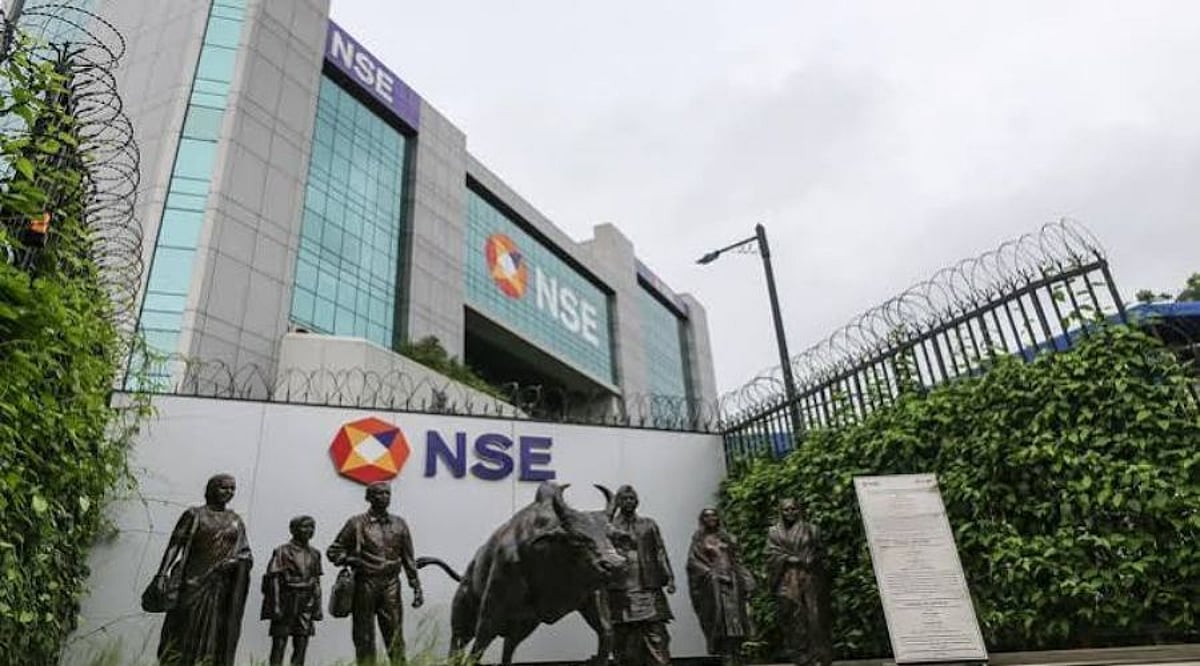
    NSE’s public offering arrives after a prolonged wait for India’s largest stock exchange to enter the listed market. The exchange has led the country in cash-market and equity-derivatives turnover from FY01 to FY26. As of June 2026, NSE had 132.4 million unique registered investors, 1,328 trading members, and 3,005 listed entities, with a market capitalization of approximately Rs 474.1 trillion.

    SEBI to Examine UPI MDR Concerns

    During the interaction, Pandey also addressed concerns raised by brokers and asset management companies regarding the new UPI Merchant Discount Rate (MDR). “I think there are some important issues there. We will certainly look into it and see how we can ease them,” he said. The government recently introduced a 0.4% MDR on eligible UPI merchant transactions above Rs 2,000, capped at Rs 300 for transactions of Rs 75,000 and above, marking a shift from the zero-MDR framework in place since January 2020.

  • Tokenization Goes Mainstream: 7 Real-World Assets Moving to the Blockchain

    Tokenization Goes Mainstream: 7 Real-World Assets Moving to the Blockchain

    Blockchain-based tokenization is no longer an experimental niche. From real estate to carbon credits, real-world assets are being converted into digital tokens, unlocking liquidity, transparency, and programmability. Here are seven asset classes leading the shift.

    1. Real Estate

    Property tokenization divides ownership into smaller digital units recorded on blockchain networks. This model makes traditionally illiquid real estate more accessible, enabling programmable ownership, automated transfers, and faster settlement. Tokenized property can represent residential, commercial, or infrastructure assets, depending on platform rules and legal frameworks.

    2. Government Bonds

    Government securities are increasingly being issued as blockchain-based tokens, letting investors access familiar fixed-income instruments through digital infrastructure. Tokenized bonds support faster settlement, automated compliance, and greater transaction transparency. They also show how traditional financial instruments can integrate with blockchain networks without requiring investors to hold volatile cryptocurrencies directly.

    3. Private Credit

    Private credit and lending assets can be tokenized to create digital representations of loans, receivables, or debt instruments. Blockchain provides transparent ownership records, automates servicing processes, and improves settlement efficiency. For financial institutions, tokenization can streamline fragmented markets and open new ways to distribute credit assets to eligible investors.

    4. Gold

    Physical gold can be represented through blockchain-based tokens, with each digital unit linked to a specified quantity of underlying metal. Tokenized gold offers digital transferability while preserving exposure to a traditional commodity. Depending on the issuer and custody arrangements, holders receive claims to stored bullion rather than owning a cryptocurrency with independently determined value.

    5. Art and Collectibles

    Artwork, luxury goods, and collectibles can be represented digitally through tokens, creating blockchain records tied to physical or digital items. Tokenization helps establish provenance, ownership records, and transfer histories, and can enable fractional ownership in certain structures. Legal rights attached to these tokens depend heavily on contracts, custodianship, and the issuing platform.

    6. Investment Funds

    Traditional investment funds can issue blockchain-based tokens representing shares or units, moving fund administration and ownership records onto digital networks. Tokenized funds can automate transfers, improve settlement, and provide more transparent transaction records. This approach connects established investment products with programmable blockchain infrastructure and digital settlement systems.

    7. Carbon Credits

    Carbon credits can be tokenized to create digital representations of verified environmental instruments on blockchain networks. Tokenization makes ownership and transaction histories easier to track while supporting automated transfers. However, the technology itself does not verify whether a carbon credit reflects genuine emissions reductions, so robust standards, registry integration, and credible projects remain essential to the asset’s value.

    As these examples show, tokenization is moving rapidly into mainstream finance and beyond. The ability to digitize real-world assets on blockchain networks is creating new opportunities for liquidity, efficiency, and transparency across industries.

  • NSE IPO Set to Open on September 17: 12.64 Crore Shares Offered at Rs. 1,700–1,785 Price Band, Key Risks Explained

    NSE IPO Set to Open on September 17: 12.64 Crore Shares Offered at Rs. 1,700–1,785 Price Band, Key Risks Explained

    The National Stock Exchange (NSE) is finally bringing its long-awaited initial public offering (IPO) to the market. The IPO will open for subscription on September 17 and close on September 21, with a price band fixed at Rs. 1,700 to Rs. 1,785 per share. The entire issue is structured as a 100% offer for sale (OFS), meaning no fresh shares will be issued and NSE will not receive any proceeds. All funds will go to the selling shareholders.

    OFS Size Reduced Before Opening

    Selling shareholders have scaled back the number of shares on offer from about 14.89 crore in the draft documents to approximately 12.64 crore in the final offer. This revised issue represents about 5.2% of NSE’s equity capital and values the exchange at nearly Rs. 4.42 lakh crore at the upper end of the price band.

    State Bank of India (SBI) is among the largest sellers, planning to offload about 1.60 crore shares, which could fetch around Rs. 2,850 crore at the top price. SBI Capital Markets will separately offer about 87.8 lakh shares. Other sellers include General Insurance Corporation of India, Bank of Baroda, Stock Holding Corporation of India, and several institutional investors. Some shareholders have reduced the number of shares they plan to sell compared with earlier filings, reflecting the valuation below some market expectations. An analyst tracking the issue noted, With the price band that we eventually saw, it made sense for the shareholders to hold onto their shares for the future.

    NSE Maintains Dominant Market Position

    NSE holds a commanding position across multiple segments of India’s capital market. It has been the country’s largest exchange by cash-market turnover and equity derivatives activity for years. On a global scale, in FY26, NSE accounted for about 11.4% of global cash equity activity and around 51.2% of equity derivatives contracts, according to data cited in the offer documents.

    The exchange also plays a major role in the primary market. Companies raised approximately USD 20.1 billion through NSE in FY26, and 219 IPOs were listed during the year. Rising retail participation, higher institutional activity, digital adoption, and wider fundraising are expected to support activity on Indian exchanges over the long term.

    Technology and Data Drive Revenue

    NSE operates a technology-driven trading platform that handles large volumes across equities, derivatives, and currencies. Its systems also support clearing, surveillance, settlement, and investor services. NSE Clearing supports both T+1 and T+0 settlement cycles. The exchange has also expanded internationally through NSE International Exchange at GIFT City, offering products linked to Indian markets.

    Beyond transaction fees, NSE earns revenue from colocation, market data, connectivity, index licensing, and terminal services. Its colocation racks grew from 934 in FY24 to 1,868 by the first quarter of FY27. Revenue from colocation, connectivity, data, and index licensing rose from Rs. 1,395 crore in FY24 to Rs. 1,956 crore in FY26.

    Key Risks: Trading Volumes, Cyber Threats, and Regulatory Changes

    NSE’s revenue remains closely tied to trading activity. Weak economic conditions, high interest rates, inflation, or lower investor participation could reduce market volumes and transaction income. Regulatory changes can also affect trading patterns, especially in derivatives, where NSE earns a large share of its transaction revenue.

    Technology failures and cyberattacks are another concern. NSE reported a distributed denial-of-service attack in May 2025, though it did not report any uncontained cybersecurity incidents during FY24–FY26. Its clearing business also carries counterparty risk if a member fails to meet settlement obligations. NSE Clearing must maintain adequate Settlement Guarantee Funds and strong risk controls to support market operations.

    The NSE IPO therefore gives existing shareholders a route to sell part of their holdings while bringing India’s largest stock exchange to the public market without raising fresh capital.

  • Indian Rupee Slides 27 Paise to 95.79 as Soaring Oil Prices and Foreign Outflows Bite

    Indian Rupee Slides 27 Paise to 95.79 as Soaring Oil Prices and Foreign Outflows Bite

    The Indian rupee faced renewed selling pressure on Friday (September 11, 2026), weakening by 27 paise to Rs. 95.79 against the U.S. dollar in early trade. The decline extended the currency’s recent losing streak, driven by surging crude oil prices and sustained foreign portfolio outflows.

    Crude Oil Crosses USD 108

    A key factor weighing on the rupee is the sharp rise in international crude prices. Brent crude climbed above USD 108 a barrel, raising India’s import bill since the nation relies heavily on imported oil to meet its energy needs. The oil surge also hit broader financial markets, with the Nifty 50 and Sensex sliding to their lowest levels in about three months amid inflation and global interest-rate concerns.

    Foreign Outflows Add to Currency Pressure

    Continued foreign investor selling has added another layer of pressure on the rupee. Portfolio outflows increase demand for dollars as investors withdraw funds from Indian assets, making it harder for the currency to recover. The rupee has now been under pressure for several consecutive sessions, with traders closely watching developments in global oil markets and West Asia.

    The Reserve Bank of India (RBI) has been conducting dollar/rupee sell-buy swaps for a second consecutive day, with much of the activity concentrated in December maturities. “Such operations can drain excess rupee liquidity and support forward premiums, potentially offering some cushion to the currency,” said Amit Pabari, MD and CEO of CrForex Advisors. “These operations help drain surplus rupee liquidity and support forward premiums, which can provide support to the currency. Yet, the rupee continued to depreciate.”

    What Lies Ahead for the Rupee?

    The near-term outlook will depend heavily on how long crude prices remain elevated. A prolonged period above USD 100 could increase India’s energy import costs, widen external-sector pressures, and make the rupee more vulnerable. Markets are also watching U.S. bond yields and expectations around global monetary policy. Higher inflation risks linked to oil could limit the scope for easier interest rates worldwide. Unless oil prices ease or investor flows improve, the domestic currency is likely to remain volatile in the near term.

  • How Modern Technology Is Making Payments Faster and More Secure

    How Modern Technology Is Making Payments Faster and More Secure

    Technology is transforming the way we pay, making transactions both faster and safer. From real-time settlement to biometric verification, here are the key innovations driving this change.

    Real-Time Payments

    Real-time payment systems enable money to move between accounts within seconds. Services like UPI have made instant transactions practical for everyday purchases, bills, and transfers. This reduces waiting periods and provides immediate confirmation. Businesses benefit from quicker settlements, improved cash flow, and smoother customer payment experiences.

    Biometric Authentication

    Biometric authentication adds an extra security layer by using fingerprints, facial recognition, or other unique characteristics. Instead of relying solely on passwords or PINs, payment systems can verify the person making a transaction. This deters unauthorized access while allowing users to complete transactions quickly without repeatedly entering lengthy credentials.

    Tokenization

    Tokenization replaces sensitive card information with unique digital tokens during transactions. Merchants and payment platforms process payments without directly exposing the actual card number. Even if transaction data is intercepted, the token generally cannot be used like the original card details, reducing risks associated with stolen payment information.

    Artificial Intelligence

    Artificial intelligence helps payment companies identify unusual transaction patterns and potential fraud. Systems analyze transaction behavior, location, device information, and other signals to detect suspicious activity quickly. This allows financial institutions to flag or block potentially fraudulent payments while minimizing unnecessary interruptions for legitimate transactions.

    Contactless Payments

    Contactless payments use technologies like near-field communication (NFC) so users can pay by tapping compatible cards, phones, or wearables. Transactions complete within seconds without inserting a card or re-entering details. Secure authentication and transaction limits provide additional protection, making contactless payments convenient for everyday use.

    Encryption and Security

    Encryption protects payment information as it moves between devices, banks, and payment networks. Modern payment platforms also use secure authentication, fraud monitoring, and layered security controls. These measures help safeguard sensitive financial data from unauthorized access while allowing legitimate transactions to flow efficiently between customers, merchants, and financial institutions.

    Digital Wallets

    Digital wallets bring payment cards, bank accounts, and other payment options together in one application. Users can transact through smartphones or wearable devices without carrying physical cards. Wallets often incorporate device authentication, tokenization, and transaction monitoring, combining convenience with multiple security measures for everyday digital payments.

  • WEEX Returns as Platinum Sponsor at TOKEN2049 Singapore, Expanding Trading Beyond Crypto

    WEEX Returns as Platinum Sponsor at TOKEN2049 Singapore, Expanding Trading Beyond Crypto

    WEEX is set to return to TOKEN2049 Singapore for the third consecutive year, this time as a Platinum Sponsor, as the platform expands its trading proposition beyond cryptocurrencies to include traditional financial assets. The event, scheduled for October 7-8, 2026, at Marina Bay Sands, is expected to attract over 25,000 attendees from more than 160 countries.

    As part of its evolution, WEEX now offers access to over 2,100 global assets, including stocks, gold, oil, and ETFs, all through a single account. This move reflects a broader industry trend where traders seek to diversify across multiple asset classes without switching platforms. The company’s new brand slogan, “One Account. All Markets,” encapsulates this vision.

    At TOKEN2049, WEEX will showcase its AI-powered trading tools, allowing attendees to test AI-assisted trading strategies through demo accounts and team competitions. The platform will also introduce a Trading MBTI interactive experience to help participants understand their trading styles. Additionally, the second edition of WEEX AI Wars, themed “Human vs AI,” will launch on September 3, 2026, with a top prize of up to $600,000.

    Andrew, COO of WEEX, commented, “We want to make it simpler for traders to access more markets. Expanding beyond crypto is one part of that journey; the next is using smarter technology to change how people engage with and trade those markets.”

    WEEX has been operating since 2018 and now serves over 10 million users globally. It emphasizes security through 1:1 Proof of Reserves and a 1,000 BTC Protection Fund. The platform’s participation in TOKEN2049 underscores its commitment to building a global presence and engaging directly with traders and industry participants.

    For more information, visit WEEX on X, Instagram, TikTok, YouTube, Discord, or Telegram.

  • Apple’s Stock Split History: A Complete Timeline from 1987 to 2020

    Apple’s Stock Split History: A Complete Timeline from 1987 to 2020

    Apple’s Stock Splits Over the Decades

    Since 1987, Apple has executed five stock splits, each designed to make shares more accessible to retail investors while preserving overall market capitalization. Here is a timeline of each split and its context.

    • 2-for-1 Stock Split (1987): Announced on June 16, 1987, this split doubled shareholders’ holdings while halving the share price. The move aimed to increase accessibility for retail investors amid growing confidence in Apple’s future despite a competitive PC market.
    • 2-for-1 Stock Split (2000): Executed on June 21, 2000, during the dot-com boom, this split increased liquidity and encouraged broader participation as investor enthusiasm for technology companies surged.
    • 2-for-1 Stock Split (2005): Effective February 28, 2005, following the success of the iPod and strong financial performance, this split attracted additional investors while maintaining shareholder value.
    • 7-for-1 Stock Split (2014): Effective June 9, 2014, this surprising move dramatically reduced the share price, improving accessibility, liquidity, and positioning Apple for inclusion in price-weighted indexes.
    • 4-for-1 Stock Split (2020): Effective August 31, 2020, after a remarkable rally driven by iPhone, services, and wearables growth, this split lowered the entry price for investors and boosted trading activity.

    Why Apple Splits Its Stock

    Stock splits do not change a company’s overall market value or shareholder ownership percentage. Instead, they reduce the per-share price, improving affordability, increasing market liquidity, and making shares psychologically more attractive to retail investors.

    Impact on Long-Term Investors

    Apple has delivered exceptional long-term returns despite only five stock splits since 1987. Investors who held shares through each split saw their ownership multiply significantly, demonstrating how stock splits combined with sustained business growth can amplify investment potential over decades.

  • How COOs Are Using AI Agents to Build Truly Autonomous Operations

    How COOs Are Using AI Agents to Build Truly Autonomous Operations

    Modern Chief Operating Officers (COOs) are moving beyond traditional automation by integrating AI agents into core business processes. These intelligent software systems can analyze data, make decisions, and execute multi-step tasks across supply chains, finance, customer service, and IT operations—all with minimal human intervention. The shift from simple automation to autonomous workflows is redefining how enterprises operate, enabling faster decisions, stronger governance, and more resilient business models.

    From Automation to Autonomous Workflows

    Traditional automation tools follow fixed instructions. AI agents, by contrast, process data in real time, determine the next best action, and execute tasks across different enterprise systems. For example, in supply chain management, an AI agent can monitor inventory, forecast demand, detect shortages, place orders, and only alert managers when approval is needed. This integrated approach streamlines processes that were previously handled in silos.

    Where Companies Are Deploying AI Agents

    Organizations are already applying AI agents in several high-impact areas:

    • Supply Chain: AI agents track stock levels, predict demand, flag supplier issues, and recommend purchases—responding faster than humans and reducing waste.
    • Finance: Departments use agents for invoice processing, account reconciliation, anomaly detection, and report generation, cutting manual steps while maintaining control.
    • Customer Service: Agents handle routine inquiries, categorize tickets, and escalate complex issues, freeing human teams for higher-value interactions.
    • IT Operations: Technology teams deploy agents to monitor networks, detect failures, and even prevent outages before they affect customers.

    The Evolving Role of the COO

    As AI becomes integral to daily operations, COOs are shifting focus from pure efficiency to designing a collaborative human-AI operating model. This requires investments in data quality, governance, cybersecurity, and employee training. The key question is no longer which tasks to automate, but which business processes can run autonomously with sufficient human oversight. Successful adoption demands an enterprise-wide approach rather than isolated departmental implementations.

    Building Autonomous Operations: A Phased Approach

    Most organizations take a step-by-step path:

    1. Identify repetitive, high-volume workflows with clear business value.
    2. Improve data quality and establish governance policies.
    3. Define when human intervention is required.
    4. Ensure AI agents can integrate with existing enterprise applications, cloud platforms, and databases.

    Companies that treat AI as a strategic, enterprise-level initiative are more likely to succeed than those deploying it in silos.

    Why This Matters

    The shift to autonomous operations is revolutionizing how businesses manage daily workflows. COOs who combine AI-driven processes with strong governance, reliable data, and human oversight will gain competitive advantages in efficiency and adaptability.

    The Challenges Ahead

    Despite the promise, risks remain. Poor data quality, outdated IT infrastructure, and siloed architecture can undermine even sophisticated AI agents. Governance is critical—especially for decisions involving finance or customer interactions. Firms must develop transparent methods to explain AI-driven decisions, or they risk compounding problems rather than solving them.

    Frequently Asked Questions

    What are AI agents in business operations?

    AI agents are intelligent software systems that analyze data, make decisions, and execute multi-step tasks with minimal human intervention.

    How do AI agents help COOs?

    They automate routine workflows, improve operational efficiency, support faster decisions, and allow COOs to focus on strategic priorities.

    Which departments benefit most from AI agents?

    Supply chain, finance, customer service, procurement, and IT operations are among the earliest and biggest adopters.

    Can AI agents replace human employees?

    No. They handle repetitive tasks, while humans continue overseeing critical decisions, governance, compliance, and complex problem-solving.

    What is the biggest challenge in adopting AI agents?

    Ensuring high-quality data, strong governance, cybersecurity, and seamless integration with existing enterprise systems remains the biggest challenge.

  • Indian Stock Market Opens Higher: Nifty 50 Edges Up, Sensex Gains Over 200 Points

    Indian Stock Market Opens Higher: Nifty 50 Edges Up, Sensex Gains Over 200 Points

    The Indian stock market opened on a positive note Thursday, tracking mixed global cues. The benchmark Nifty 50 index opened 16.35 points, or 0.07%, higher at 24,641, while the Bank Nifty climbed 75.05 points, or 0.13%, to start at 57,815. The Sensex opened 201.43 points above the previous close of 78,581, reaching 78,782.43.

    Among broader indices, the Nifty midcap index rose 0.18%, while the smallcap index gained 0.76%. The Indian rupee opened flat at Rs. 95.13 per dollar against the previous close of Rs. 95.13.

    Foreign institutional investors (FIIs) turned net sellers on August 5, offloading shares worth Rs. 943.42 crore. In contrast, domestic institutional investors (DIIs) remained net buyers, investing Rs. 2,883.17 crore.

    Sensex Outlook

    Technically, the Sensex witnessed range-bound activity. Short-term support is placed at 78,200–78,000, while 78,900–79,000 remains the crucial resistance area for the bulls. According to Shrikant Chouhan, Head of Equity Research at Kotak Securities, “We believe that, as long as the market is trading between these ranges, a range-bound texture is likely to continue. On the higher side, a breakout above 79,000 could push the market towards 79,300–79,500. On the flip side, a dismissal of 78,000 could push the market towards 77,500.”

    Nifty 50 Outlook

    The Nifty 50 formed a bullish hammer-like candle on the daily chart, indicating buying interest at lower levels. Bajaj Broking Research stated, “We expect the index to extend the last two sessions’ consolidation and form a base at higher levels. The overall structure is positive; we believe the current breather should be used to accumulate quality stocks in a staggered manner.” The brokerage expects the benchmark index to gradually move towards the 25,000–25,200 zone over the coming weeks. Immediate support is placed in the 24,400–24,500 range. As long as the Nifty remains above this zone, analysts expect a pullback towards 24,720 and 24,800 in the near term. Stronger short-term support is now seen around 24,200–24,000, where key Fibonacci retracement levels coincide with the 20-day and 50-day exponential moving averages (EMAs).

    Bank Nifty Outlook

    Bank Nifty traded within a narrow range during Wednesday’s session and formed an inside-bar candle, reflecting indecision after recent profit booking. Bajaj Broking noted, “The index continues to consolidate within the broader 56,500–58,700 range that has been in place over the past seven weeks. A decisive breakout above 58,700 would signal a resumption of the uptrend, opening the door towards 59,300 and 60,000 in the coming sessions. Until then, the index is likely to remain range-bound with a stock-specific bias.” According to the brokerage, immediate support for Bank Nifty is near 57,400, followed by the 57,000–56,800 zone. On the upside, resistance is seen around 58,000–58,100, while a sustained move above the 58,500–58,700 range could strengthen bullish momentum.

    Disclaimer: This article is for informational purposes only and does not constitute investment advice. Please conduct your own research before making any financial decisions.

  • MCX Gold Rises 0.61% to ₹1,49,401 as Softer Dollar and Strait of Hormuz Hopes Boost Sentiment

    MCX Gold Rises 0.61% to ₹1,49,401 as Softer Dollar and Strait of Hormuz Hopes Boost Sentiment

    Gold prices climbed on the Multi Commodity Exchange (MCX) on August 6, buoyed by a softer U.S. dollar, lower oil prices, and growing optimism that the Strait of Hormuz may reopen soon after U.S. President Donald Trump pledged to reach an agreement with Iran.

    August gold futures rose 0.61% to ₹1,49,401 per 10 grams, while September silver futures advanced 0.23% to ₹2,28,115. Meanwhile, Brent crude futures slipped 0.11% to $79.32 per barrel, and U.S. West Texas Intermediate (WTI) edged down 0.20% to $75.07 per barrel.

    Domestic Gold Prices

    In the domestic market, 24K gold rose by ₹398 to ₹1,49,730 per 10 grams, and 22K gold advanced by ₹365 to ₹1,37,250. City-wise rates: Mumbai and Kolkata quoted ₹1,49,730, Delhi ₹1,49,860, and Chennai ₹1,47,060.

    U.S. Gold Prices

    U.S. gold prices extended gains for a fourth consecutive session, touching their highest level in seven weeks. A soft U.S. dollar and lower Treasury yields, combined with hopes of the Strait of Hormuz reopening, supported the rally. Spot gold rose 0.5% to $4,265.22 per ounce, while U.S. gold futures gained 0.5% to $4,324.60.

    Spot silver fell 0.1% to $62.02, platinum climbed 1.2% to $1,755.18, and palladium advanced 0.8% to $1,374.33, marking its third straight session of gains.

    Key Levels to Watch

    “The sharp rally came on building optimism that a diplomatic breakthrough in the Middle East is close to being finalised. This in turn would keep downside pressure on oil prices and reduce the need for central banks to raise rates, providing a clear tailwind for gold,” said Tony Sycamore, market analyst at IG.

    Sycamore added that a sustained break above the 200-day moving average could pave the way for a stronger recovery toward the $5,000 mark.

    On MCX, gold is currently trading in a broader range of ₹1,45,000 to ₹1,52,000 per 10 grams, with a narrower range of ₹1,47,000 to ₹1,50,000. Resistance is seen at ₹1,50,000; a breakout above this level could push prices toward ₹1,52,000. Internationally, COMEX gold faces immediate resistance at $4,320 per ounce. A break above this level could target $4,350.