Tag: Google

  • Google Hit with €403 Million Fine by Irish Regulator Over Location Data Privacy Violations

    Google Hit with €403 Million Fine by Irish Regulator Over Location Data Privacy Violations

    Ireland’s Data Protection Commission (DPC) has imposed a €403 million fine on Google for mishandling users’ location data between 2018 and 2020. The penalty, equivalent to nearly ₹4,000 crore, follows a six-year investigation under the European Union’s General Data Protection Regulation (GDPR).

    The investigation focused on three Google features: Web & App Activity, Location History, and Location Accuracy. Regulators found that Google’s settings were unclear and gave users insufficient control over their location data, violating GDPR rules on lawfulness, fairness, and transparency. The case began after European consumer groups filed complaints in 2020.

    Location data can reveal sensitive details about a person’s daily life, including where they live, work, travel, and spend time. The DPC stated that users must receive clear information and simple controls over such data. The inquiry also noted that the wording and design of Google’s settings pages may have made it difficult for users to understand their choices, limiting their control.

    Google responded by stating that the case relates to outdated policies and that the company has made significant changes since 2019, including simpler settings, easier data deletion options, and less precise location tracking in some cases. The company has been ordered to bring its practices fully into compliance with GDPR within six months. This fine is the fourth-largest issued by Ireland’s privacy regulator and adds to the growing scrutiny of how major tech companies collect and use location data.

  • Walled Garden Advertising Explained: Why Publishers Are Moving Beyond the Big Three

    Walled Garden Advertising Explained: Why Publishers Are Moving Beyond the Big Three

    Three companies now capture a larger share of global ad spend than the rest of the internet combined. At the same time, the search traffic that once funded publishers is shrinking rapidly. Alphabet, Amazon, and Meta are on track to absorb 58.8% of the global ad market outside China by 2027, according to WARC. Meanwhile, Chartbeat data shows publisher search referral traffic fell by a third globally in the year to November 2025. This double squeeze is why understanding walled garden advertising has become essential for publishers and advertisers alike.

    A walled garden is a closed system operated by a single platform that controls how ads are bought, targeted, and reported. Advertisers gain scale and precision; publishers gain access to demand. Neither side has much say in the rules or visibility into what happens behind them.

    This guide explains what walled garden advertising means, identifies the major players, outlines how the model works, and examines the real trade-offs today. It also explores why ad revenue diversification through independent platforms has become a serious strategy.

    Key Takeaways

    • A walled garden is a closed ad platform that controls buying, targeting, delivery, and reporting, sharing only the data it chooses to release.
    • Google, Meta, and Amazon are the three largest walled gardens, with TikTok and retail media networks growing rapidly behind them.
    • Walled gardens offer rich first-party data and easy setup, but limited transparency, data portability, and negotiating power for advertisers and publishers inside them.
    • Alphabet, Amazon, and Meta already absorb the majority of global ad spend, while publisher search traffic is falling simultaneously — a genuine double squeeze, not a slow drift.
    • Diversifying across walled gardens, the open web, and independent ad networks is a practical way to reduce dependency on any single platform’s rules or pricing.

    What Is Walled Garden Advertising?

    A walled garden is a closed advertising platform that controls how ads are bought, served, tracked, and reported, giving advertisers and publishers only limited visibility into what happens inside it. Google, Meta, and Amazon are the clearest examples: each runs its own auction, holds its own first-party audience data, and shares only the performance metrics it decides to surface.

    This contrasts with the open web, where advertisers buy inventory across many independent publishers through demand-side platforms, supply-side platforms, and ad exchanges, with more visibility into bid data and placement. A walled garden approach means accepting the platform’s rules, measurement, and reporting as the price of access to its audience and first-party data. There is no external audit, no alternative bid view, and no way to take that data elsewhere if you decide to leave.

    Examples of Walled Gardens in Advertising

    The term covers a small set of companies, each closed in a slightly different way. Search, social, and commerce all have their own dominant walled garden, and newer entrants are climbing the same ladder.

    Google

    Google’s walled garden spans Search, YouTube, and its ad-buying tools, including AdSense and DV360. Each surface feeds the same pool of first-party data, and the buying and measurement tools stay entirely inside Google’s own infrastructure. Advertisers get enormous reach and precise targeting. What they don’t get is an outside view of the auction their spend competes in.

    Meta

    Meta’s social advertising business runs Facebook and Instagram as one closed environment for targeting and reporting. Meta’s ad tools draw on user behavior across both apps, and campaign performance is measured entirely by Meta’s own attribution model. Advertisers can optimize inside that system but cannot independently verify it against a neutral source.

    Amazon

    Amazon’s walled garden runs on shopper and purchase data rather than social behavior. Retail media, powered by the Amazon DSP, lets advertisers target people close to a purchase decision using signals no other platform has at that scale. That purchase-intent data stays inside Amazon’s own systems.

    Other Emerging Walled Gardens

    TikTok is the clearest newer entrant, building its own closed targeting and measurement layer on top of a fast-growing audience. Retail media networks beyond Amazon, such as Walmart and other large retailers, are following the same pattern: platforms with valuable first-party data are increasingly choosing to keep that value inside a closed system.

    How the Walled Garden Model Works

    Walled gardens run on three things: first-party data, proprietary auctions, and self-reported measurement. The platform collects behavioral or transactional data from its own logged-in users, uses that data to run its own ad auction, and then reports back on performance using its own tools.

    Self-reported measurement is worth pausing on because it is the part advertisers feel most directly. It means the platform that sold you the ad is also the one telling you how well it performed, with no independent party checking the numbers. That does not necessarily make the numbers wrong, but it does mean there is no outside verification of the platform’s own report — a very different situation from buying through a neutral ad exchange.

    Platforms keep these systems closed for straightforward business reasons. Data and measurement locked inside one system — sometimes called ecosystem lock-in — makes it harder for advertisers and publishers to leave, since switching means starting audience insight and performance history from zero. It also protects a genuine competitive edge: first-party data at that scale is difficult for any single competitor to replicate.

    The Pros and Cons of Walled Garden Advertising

    Walled gardens are not good or bad by default. They represent a trade-off between reach and data on one side, and transparency and flexibility on the other.

    Advantages of Walled Gardens

    The biggest advantage is data. Walled gardens hold detailed, first-party information on logged-in users, which supports precise targeting most open-web inventory cannot match. That scale, combined with a single dashboard for buying and measurement, makes campaigns easy to launch and easy to read. For direct-response advertisers chasing conversions, that combination of targeting depth and integrated reporting often delivers strong, fast results.

    Drawbacks of Walled Gardens

    Advertisers cannot fully audit delivery or targeting because the platform controls every number it reports. Data portability is limited or nonexistent, so leaving a platform later means losing the audience insight built up while using it. The biggest risk is platform dependency: pricing, policy, and algorithm changes happen on the platform’s schedule, and advertisers and publishers relying on one walled garden exclusively have no seat at that table.

    Transparency issues compound this. Publishers using walled gardens for demand often cannot see the full bid landscape behind their earnings, which is one reason independent platforms that build in-house anti-fraud technology and share it openly with partners have become a meaningful point of difference.

    How Walled Gardens Dominate Ad Budgets

    The scale of ad spend concentration shows up clearly in the numbers. In the US, walled gardens already commanded most programmatic display spend a couple of years ago. A Skai walled garden share analysis put walled gardens at 71.5% of US programmatic display ad spending in 2024. The eMarketer 2027 programmatic forecast shows that trend extending further: US walled garden programmatic display spending is forecast to hit $182.75 billion in 2027, more than four times the open web’s projected $42.53 billion.

    Globally, the picture matches. Per the WARC global ad spend forecast (December 2025), Alphabet, Amazon, and Meta together take 56.1% of the global ad market excluding China in 2025 (about $556.6 billion), rising to 58.8% by 2027. The ExchangeWire revenue outlook, citing WARC, puts the combined figure at more than $200 billion in new ad revenue for Alphabet, Meta, Amazon, and TikTok through 2027. US digital advertising overall backs this up too: the IAB/PwC 2024 revenue report found US internet advertising revenue hit $258.6 billion in 2024, up 14.9% year over year, its strongest growth since 2021.

    The pressure is not only about ad dollars. Chartbeat data in the Reuters Institute’s Journalism and Technology Trends and Predictions 2026 report found global Google search referral traffic to publishers fell 33% year on year to November 2025, and 38% in the US. Define Media Group reported a 42% drop in organic search traffic across 64 US publishers since AI Overviews launched in 2024. Falling traffic and a shrinking share of ad dollars at the same time is what has turned this from background chatter into something publishers are watching closely.

    Alternatives to Walled Gardens: The Open Web and Ad Revenue Diversification

    The open web is what sits outside the walled gardens: independent publishers, plus the demand-side platforms, supply-side platforms, and ad exchanges that connect them to advertiser demand. Buying and selling here happens through open programmatic advertising with more visibility into bid data than any single walled garden offers.

    For publishers, ad revenue diversification comes down to a simple problem: relying on one dominant provider, such as Google AdSense, means accepting that company’s rates, policies, and payout terms as the ceiling on what a site can earn. The concentration numbers above make the risk concrete: IAB/PwC concentration data shows the top 10 companies controlled 80.8% of US digital advertising revenue in 2024, while companies ranked 11 to 25 held 11%, and everyone else split just 8.3%. A publisher earning entirely through one of the largest platforms is exposed to whatever that single company decides next.

    Independent ad networks are the practical counterweight. They give publishers a second or third demand source with its own reporting, its own payout terms, and no ownership stake in competing content. For advertisers, the same logic applies in reverse: independent platforms let you reach untapped audiences outside the walled gardens, often at a lower cost per result, through a wider set of high-performing ad formats than a single closed platform typically offers.

    How to Diversify Beyond Walled Gardens

    Diversifying means adding independent, transparent demand alongside the walled gardens you already use, so no single platform decides your results on its own.

    For publishers, start by adding an independent ad network alongside your existing AdSense setup, or, if you are monetizing a site for the first time, go straight to an independent publisher monetization platform built around these terms. From there:

    • Compare fill rate and eCPM across your demand sources, not just your top earner.
    • Check whether you can see real bid data and payout terms before committing, not just a summary dashboard.
    • Confirm the network handles anti-fraud detection in-house, since outsourced detection is harder to hold accountable.
    • Look for format variety. Spreading earnings across pop-under, in-page push, and display inventory limits how much a single format’s performance swings affect total income.
    • Weigh user experience alongside earnings. A network that respects your site’s UX keeps visitors coming back, which protects earnings long-term.

    For advertisers, the equivalent move is spreading spend across walled garden and open-web campaigns, so no single auction sets the ceiling on results. Demand transparency from every platform you use: ask what data you will actually see, not just what results you will be told. Evaluate open programmatic and independent networks on the same criteria you would apply to a walled garden: targeting precision, fraud protection, and reporting depth. Closed platforms are not automatically the safer choice just because they are familiar.

    Conclusion

    Nobody serious is arguing that publishers and advertisers should abandon Google, Meta, or Amazon. Walled gardens offer data and reach that is genuinely hard to match. But given how much of the market they already hold, and how much more they are forecast to absorb while publisher traffic keeps thinning out, treating diversification as optional is a bigger risk than it looks.

    The practical move is adding independent, transparent demand sources alongside whatever walled gardens you already use. The goal is to prevent any single platform’s policy change, algorithm update, or AI feature from defining your results on its own.

  • Google Launches Noto Emoji Site for Searching, Exploring, and Downloading 2D and 3D Emoji Assets

    Google Launches Noto Emoji Site for Searching, Exploring, and Downloading 2D and 3D Emoji Assets

    New Noto Emoji Website

    Google has launched a dedicated Noto Emoji website that provides users with a searchable interface to explore the entire collection. The platform allows users to search for individual emoji and browse available designs. Alongside viewing, users can download both 2D and 3D versions of the open-source emoji in various file formats.

    The site also grants access to the original proposals that helped transform certain concepts into official emoji, offering a behind-the-scenes look at the emoji creation process.

    Noto 3D Brings Emoji into Three Dimensions

    Earlier this year, Google unveiled Noto 3D, a major redesign of its emoji collection. The company reimagined nearly 4,000 emoji with richer expressions, improved accessibility, and a three-dimensional design. While the design process begins with 2D drawings, the Noto 3D collection exists as true 3D models, adding depth and physicality while retaining the expressive character of emoji.

    During development, Google utilized an AI-powered contrast tool that analyzes emoji at the pixel level, identifies areas of low contrast, and suggests solutions to improve visibility, particularly for emoji with darker skin tones displayed in dark mode.

    Noto Emoji Available for Creators

    The open-source approach enables creators to download and work with the emoji assets. Google has confirmed that raw OBJ files for Noto 3D emoji are available to the community. The files can support a range of uses, from immersive VR environments and indie applications to creative projects and memes. The new website serves as a central resource for anyone wanting to explore, download, and work with Google’s Noto Emoji designs.

  • Dell XPS Googlebook DX13267: 13.4-Inch Google Laptop Appears in Official Filing

    Dell XPS Googlebook DX13267: 13.4-Inch Google Laptop Appears in Official Filing

    Dell’s first XPS Googlebook appears to be nearing launch after the model name DX13267 surfaced in an official Dell document. The Product Carbon Footprint report for September 2026, now available on Dell’s website, lists the upcoming laptop and reveals several early details about the device.

    What the Dell Report Reveals

    The filing identifies the Dell XPS Googlebook DX13267 with a 13.4-inch display and an approximate weight of 1.1 kg. It also lists China as the assembly location and assigns the laptop a four-year product lifetime. Those details align with earlier leaks and benchmark sightings that connected the DX13267 to Dell’s XPS 13 design and the internal codename Mica.

    Expected Hardware and Features

    While Dell has not confirmed final specifications, earlier reports point to Qualcomm’s Snapdragon X Elite processor, 16GB or 32GB of LPDDR5X memory, and a 13.4-inch OLED touchscreen with 2,880 x 1,800 resolution. As a Googlebook, the device will combine Android with Chrome, support Google Play apps, and highlight Gemini-powered AI features.

    Googlebook Launch Plans

    Google’s website currently lists September 21 for Googlebook pre-orders, with Dell among the first hardware partners alongside Acer, Asus, HP, and Lenovo. Dell has yet to announce pricing, regional availability, or final configurations for the XPS Googlebook. More details are expected as pre-orders approach.

  • Sergey Brin Takes Hands-On Role in Google’s Gemini AI Development

    Sergey Brin Takes Hands-On Role in Google’s Gemini AI Development

    Google co-founder Sergey Brin is returning to a hands-on role in artificial intelligence research, focusing on the development of Gemini, Google’s flagship AI model. The move comes as Google accelerates efforts to compete with OpenAI and Anthropic in the rapidly evolving AI race.

    Brin, who stepped away from day-to-day management years ago, does not hold an executive title but has become increasingly involved in decisions surrounding Gemini, according to current and former Google employees. He has established a base inside a converted microkitchen at Google’s Gradient Canopy building in Mountain View, California, where he works closely with a small group of leaders and engineers.

    Pushing Gemini to Move Faster

    Brin’s renewed involvement comes as Google faces intense competition in generative AI. Reuters reported in August that Brin urged key AI staff to go all in on Gemini as Alphabet sought to close the gap with rivals. During an April town hall, Brin addressed hundreds of employees and urged Google DeepMind to move faster. Google has delayed a new flagship version of Gemini by two months after internal testing showed its performance lagged behind rivals in some areas.

    Brin has also shown particular interest in recursive self-improvement (RSI), the point at which AI systems could improve themselves, according to Business Insider.

    Google’s Wider AI Research Push

    Brin’s increased involvement coincides with a broader expansion of Google’s AI research. Google DeepMind’s current research includes generative AI, robotics, scientific discovery, and projects like AlphaGenome Atlas, WeatherNext 3, and Gemini Robotics. Google has also highlighted Gemini for Science and its Co-Scientist system. At Google I/O 2026, the company said Gemini had expanded to more than 70 languages across 230 countries.

    From Garage to Microkitchen

    Brin and co-founder Larry Page launched Google from a Silicon Valley garage in 1998. Nearly three decades later, Brin is once again working closely with researchers and engineers. While he has no formal executive role, his involvement gives him considerable influence over Google’s AI strategy. His return follows a major leadership reshuffle at Google DeepMind.

    For Google, the challenge is no longer just building powerful AI models. The company is competing with top AI labs while turning research advances into products used by billions. Brin’s renewed presence puts one of Google’s original technical leaders closer to that effort.

    FAQs

    Why is Sergey Brin returning to Google’s AI research?

    Brin is becoming more hands-on with AI as Google accelerates Gemini development and competes with leading artificial intelligence companies.

    What AI project is Sergey Brin focusing on?

    Brin is focusing on Gemini, Google’s flagship AI model, and working closely with researchers and engineers involved in its development.

    Does Sergey Brin have an executive role at Google?

    No, Brin does not hold an executive role but remains involved in Google’s AI work and technical discussions surrounding Gemini.

    What is Brin’s interest in recursive self-improvement?

    Brin has shown interest in recursive self-improvement, referring to AI systems potentially reaching a stage where they improve themselves.

    Which companies compete with Google in AI?

    Google faces competition from companies including OpenAI and Anthropic as it works to improve Gemini and expand its artificial intelligence capabilities.

  • How Your Smartphone Apps Track You: A Deep Dive into 2026’s Biggest Data Collectors

    How Your Smartphone Apps Track You: A Deep Dive into 2026’s Biggest Data Collectors

    Your smartphone can reveal significant details about your habits—location, purchases, searches, contacts, identifiers, and usage data can create a detailed digital profile. However, data collection is not automatically the same as harmful tracking. Some information is necessary for app functionality, security, personalization, or analytics. Learn what app tracking means and how to reduce your personal data exposure.

    Meta Apps Lead in Data Collection

    A 2026 Surfshark analysis highlighted Meta apps among the biggest data collectors. The study examined 171 iOS apps from major technology companies. Meta apps disclosed an average of 25 data types. This does not mean every user shares every data type; it shows what developers disclose through Apple’s privacy system. Seven of the study’s most data-hungry apps belonged to Meta. Meta AI reportedly listed 33 of 35 possible data types. Meta Horizon, Messenger, Facebook, and other apps followed closely. The categories can include identifiers, location, product interactions, and browsing information. Some Meta apps also declare data linked directly to users. Meta says information from businesses can help personalize content and AI experiences. Its June 2026 update expanded how this activity can influence personalization. The important point is context: data collection does not automatically mean misuse.

    Google Apps Also Gather Broad Data

    Google apps ranked below Meta on average in the same study. However, Google’s enormous app portfolio makes the picture more complicated. The research examined 44 Google apps. Twenty-nine Google apps appeared among those declaring the broadest data collection. Different Google apps can collect different types of data, including search history, purchases, photos, email addresses, and identifiers. Some collection directly supports useful features like search personalization, account synchronization, and security. Users should examine individual app disclosures rather than relying on a company’s overall reputation.

    Amazon and Other Popular Apps

    Amazon’s apps also collect several categories of user information. The study found an average of 12 data types across Amazon’s apps. Amazon apps commonly declared names, email addresses, device identifiers, and product interactions. Some also declared precise location information. Fitness apps deserve separate attention. Health and fitness applications can access particularly sensitive information. The Surfshark analysis found Fitbit, Strava, and Nike Training Club among data-heavy fitness apps. Fitbit declared 24 data types in that analysis. Fitness data can reveal routines, locations, activities, and other personal details, making permission choices especially important.

    What Does ‘Tracking’ Actually Mean?

    Data collection and tracking are not the same thing. Apple’s privacy system separates these concepts. ‘Data linked to you’ means collected information connects with your identity. ‘Data used to track you’ involves linking information with third-party data. That distinction matters when reading privacy labels. An app can collect information without necessarily using it for cross-service tracking. Apple’s App Store labels show declared data categories and their purposes. Developers provide this information themselves, so privacy labels should be treated as a starting point—not a complete technical audit of an application.

    How to Reduce Your Data Exposure

    You do not need to delete every app to improve privacy. Start by reviewing permissions you rarely use. Location access deserves particular attention. Consider whether an app really needs precise location access. Review microphone, camera, contacts, photos, and Bluetooth permissions too. Disable access when those features are unnecessary. On iPhone, the App Privacy Report can show network activity and accessed domains, providing visibility into connections made by apps and websites. Android users can similarly review permissions through system privacy controls. App-store privacy information can provide another useful reference. Users should also review advertising and personalization settings regularly, as these controls can change as platforms update their privacy systems.

    The Goal Is Smarter Privacy, Not Zero Data

    Modern apps need some information to function properly. Navigation apps need location, while shopping apps need account and purchase details. The bigger issue is understanding what information leaves your device and why companies collect it. The data-hungry app rankings offer a useful warning: popular services can collect far more categories than users expect. That does not make every data-heavy app dangerous, but it does make privacy settings worth reviewing. A few minutes spent checking permissions can significantly improve your digital privacy. The best approach is informed use, not fear of every app.

    FAQs

    What are data-hungry apps?
    Data-hungry apps are applications that report collecting many categories of user information. These categories can include location, identifiers, browsing history, purchases, contacts, and usage data. Collection levels vary between apps, and gathering more data does not automatically mean an app is unsafe or malicious.

    Which apps collect the most personal data in 2026?
    Surfshark’s August 2026 analysis found Meta had the highest average data collection among five major technology companies. Meta apps collected an average of 25 out of 35 possible data types. Meta AI ranked highest individually, declaring 33 data types.

    Does data collection mean an app is tracking me?
    Not necessarily. Data collection and tracking have different meanings. Apple defines tracking as linking app or device data with information from other companies for targeted advertising or measurement. An app can collect information without necessarily using it for cross-service tracking.

    What personal information can mobile apps collect?
    Depending on the app, collected information can include location, email addresses, names, device identifiers, purchase history, browsing history, photos, and usage information. Health and fitness apps can also handle sensitive activity-related information. The exact categories depend on the app and its disclosed practices.

    Are Meta apps the most data-hungry apps?
    According to Surfshark’s 2026 study, Meta had the highest average among the five Big Tech companies analyzed. Its apps averaged 25 of 35 possible data types. The study found that Meta’s seven highest-collection apps occupied the top seven positions.

  • Files by Google App: Features, Pros, Cons, and How to Use It Effectively

    Files by Google App: Features, Pros, Cons, and How to Use It Effectively

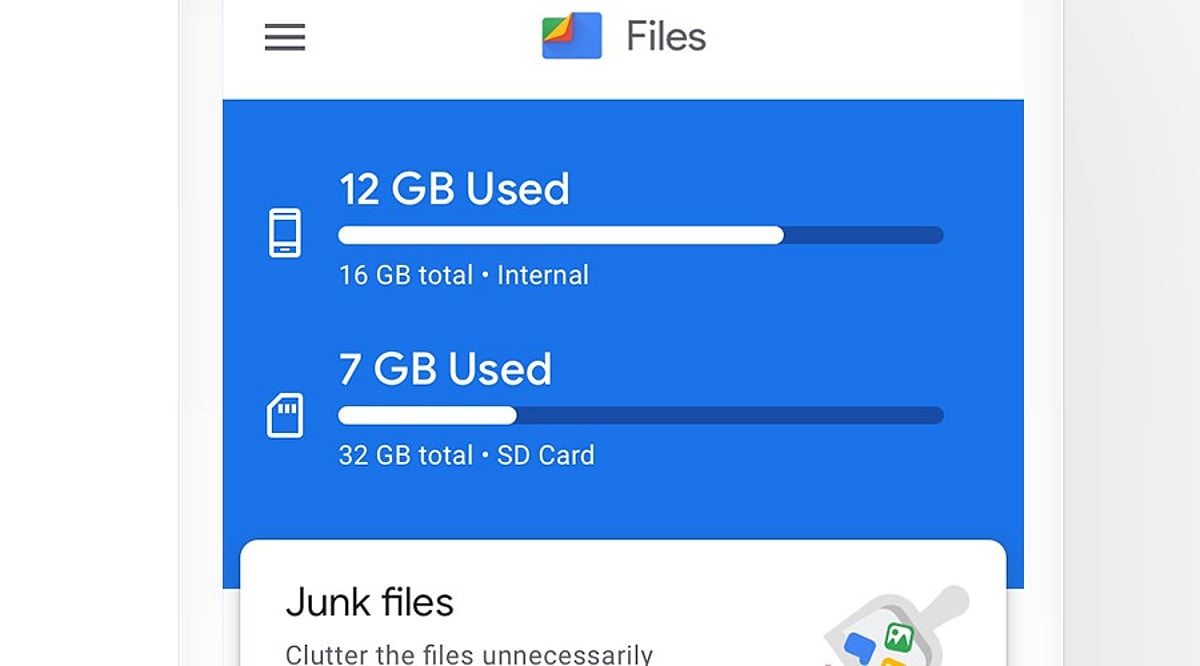
    Files by Google is a free Android file manager that simplifies file organization, storage cleanup, content sharing, and privacy protection. With over 5 billion downloads on the Google Play Store and a 4.3-star rating, it has become one of the most popular tools for managing phone storage.

    What Is Files by Google?

    Developed by Google, this app helps Android users find, move, copy, share, and delete files quickly. Files are neatly categorized into sections like Images, Videos, Documents, and Downloads, making navigation intuitive. A powerful search option lets you locate specific files instantly.

    Key Features

    • Storage Cleanup: Identifies junk files, duplicate content, old screenshots, and large unused files. Users can review suggestions before deleting.
    • Safe Folder: Protects private files with a PIN or pattern, keeping them hidden from the main file list.
    • SD Card Support: Move files to external storage on compatible devices.
    • Quick Share: Send files to nearby devices without email or messaging apps.
    • ZIP Support: Compress files or folders into ZIP archives.
    • Cloud Backup: Back up important files to the cloud.
    • Media Playback: Play stored videos and music directly within the app.

    Where to Download

    Download Files by Google exclusively from the Google Play Store. The app is free, ad-free, and uses less than 20 MB of storage. Official downloads ensure timely updates and security patches.

    Pros and Cons

    Pros

    • Free and ad-free
    • Simple, user-friendly interface
    • Lightweight (under 20 MB)
    • Effective storage cleanup and duplicate file detection
    • Quick Share and Safe Folder features
    • SD card and ZIP file support
    • Cloud backup and media playback

    Cons

    • Limited advanced file controls
    • Some features depend on Android version
    • Users must manually review cleanup suggestions
    • Safe Folder security relies on user-set PIN/pattern
    • Not ideal for users seeking a highly advanced file manager

    How to Use Files by Google

    1. Open the app and browse categories like Images, Videos, Documents, or Downloads.
    2. Use the search bar to find a specific file by name or type.
    3. Go to the Clean section to review and remove junk or duplicate files.
    4. Select a file, tap the menu, and choose Move or Copy to relocate it.
    5. Use Quick Share to send files to nearby compatible devices.
    6. Move private files to the Safe Folder and set a PIN or pattern.
    7. Select files or folders and use Compress to create a ZIP archive.

    Always double-check files before deleting—old photos or documents may still be important.

    Why It Stands Out

    Files by Google focuses on solving everyday storage and file management problems without unnecessary complexity. Its popularity—over 5 billion downloads—reflects its reliability and ease of use. For Android users who want a clean, straightforward tool to keep their phone organized, this app is a practical choice.

  • Bill Gates-Backed Fervo Energy Inks Record Geothermal Deal with Google for Utah Data Center

    Bill Gates-Backed Fervo Energy Inks Record Geothermal Deal with Google for Utah Data Center

    Fervo Energy, a geothermal power company backed by Bill Gates, has signed a landmark 396-megawatt power purchase agreement with Google, significantly expanding their existing partnership. The deal, announced this week, covers electricity from Fervo’s Cape Station project in southwestern Utah, with power delivery expected to begin in the third quarter of 2028.

    Google plans to use this carbon-free electricity as a foundational energy source for a potential new data center in the state. The agreement marks the largest enhanced geothermal power purchase deal ever signed, coming at a time when hyperscalers across the United States are racing to secure reliable electricity for growing artificial intelligence infrastructure demands.

    Under the terms, power will be delivered through four separate 99-megawatt blocks over a 15-year term. Google also holds an option to expand its purchase by roughly 600 additional megawatts by June 2030, which could push total contracted capacity to nearly one gigawatt.

    Fervo CEO Tim Latimer emphasized that the agreement demonstrates enhanced geothermal systems are ready to power next-generation computing infrastructure. “As demand for reliable electricity grows, customers like Google need energy resources that can be deployed at scale, operate around the clock, and deliver where power is needed,” Latimer said.

    Lucia Tian, Google’s Director of Advanced Energy Technologies, noted that the project will drive real economic benefits for the local community and help lower long-term energy costs by making geothermal power more affordable and accessible.

    The partnership dates back to 2021, when Google first collaborated with Fervo to jointly develop next-generation geothermal projects. Their pilot project in Nevada, known as Project Red, went live in 2023 and continues to supply power to the local grid, including Google’s own data centers in the state. In June 2024, the two companies signed a smaller 115-megawatt deal in Nevada alongside utility NV Energy.

    Fervo leverages drilling techniques borrowed from the oil and gas industry to tap underground heat more efficiently. This approach is quickly becoming an attractive alternative to solar and wind, as it can deliver steady, round-the-clock power without depending on weather conditions.

  • Google Launches Five Sustainability Projects to Accelerate India’s Climate Ambitions

    Google Launches Five Sustainability Projects to Accelerate India’s Climate Ambitions

    On September 10, 2026, Google announced five sustainability initiatives across India, focusing on solar energy, agriculture, research, and climate technology. The company aims to accelerate India’s clean energy transition by leveraging artificial intelligence, satellite data, and local partnerships.

    The initiatives target more than 300 million Indian rooftops, farmers in Telangana, and new solar capacity in Rajasthan. Google will combine geospatial AI, clean energy investments, and research support to address climate challenges.

    Expanding Solar Potential with AI

    Google is expanding its Solar API to cover over 300 million rooftops in India. The tool uses AI and imagery to assess solar potential without requiring an initial site visit. Companies like Solar Ladder and OpenSolar have already integrated the technology into their solar workflows.

    New Solar Project in Rajasthan

    The company signed a long-term agreement with ReNew Power for a 150 MW solar project in Rajasthan. This marks Google’s second Scope 3-focused solar project in India. Together, both projects will bring 300 MW of contracted solar capacity with ReNew.

    Supporting Sustainable Agriculture

    Agriculture forms another major part of the sustainability push through a partnership with Mitti Labs. The initiative will help tens of thousands of smallholder rice farmers in Telangana adopt Alternate Wetting and Drying (AWD) practices. AWD periodically drains and refills rice fields, reducing methane formation while lowering irrigation demand. Google expects the programme to mitigate nearly three million tonnes of CO₂e under the GWP20 measure. NASA-enabled satellite monitoring will help verify results alongside field networks.

    Expanding Climate Research

    Google is also expanding the Google Center for Climate Technology with new research areas. Water stewardship and waste and circularity will join green workforce training and low-carbon construction materials. The center selected three inaugural projects from 77 applications and will invite proposals through the government’s Manthan Platform. The programme aims to turn climate research into scalable, data-driven environmental solutions.

    AI for the Planet Accelerator

    Google DeepMind’s AI for the Planet accelerator includes four Indian climate-tech startups: Terrastack, Varaha Climate, Farmers for Forests, and Climitra Carbon. These startups will apply AI, Geo-AI, drones, and satellite models to environmental challenges.

    “Digital innovation and environmental stewardship can go hand in hand to create practical, lasting impact for India,” said Vrushali Gaud, Google’s Director of Climate Operations.

    The initiatives show Google broadening climate action beyond corporate energy use into India’s homes, farms, research ecosystem, and startup economy.

  • Google Commits $15 Billion to AI Infrastructure in Finland in Landmark European Investment

    Google Commits $15 Billion to AI Infrastructure in Finland in Landmark European Investment

    Google has announced plans to invest at least EUR 13 billion (USD 15.1 billion) in Finland over 2027 and 2028, marking its largest single investment in Europe to date. The massive expenditure will fund new data centers, artificial intelligence infrastructure, and low-carbon energy projects across the Nordic nation.

    The investment will support expansion in the cities of Hamina, Kajaani, Muhos, and Vaala, where Google will build three new data centers in northern Finland. The region’s cool climate reduces energy needed for cooling, while its robust electricity grid and access to low-carbon power make it an ideal location for energy-intensive AI operations.

    Google’s existing Hamina facility, converted from a former paper mill in 2009, will be complemented by the new sites. The company has operated in Finland for over 15 years and sees the country as a strategic hub for its European AI ambitions.

    Economic and Employment Impact

    The initial construction phase is expected to support more than 37,000 jobs nationwide during the two-year period and contribute approximately EUR 3.6 billion annually to Finland’s GDP. Once operational, the facilities will sustain thousands of permanent positions. Google will also allocate EUR 31 million over four years to community initiatives in the four locations, focusing on education, research, and economic development.

    Energy Partnerships: Nuclear and Wind

    To power its expanding operations, Google has signed a 22-year power purchase agreement with Fortum covering up to 50% of the output from the Loviisa nuclear power plant from 2030 to 2049. The deal provides long-term certainty for extending the plant’s operations. Additionally, Google is backing new onshore wind capacity and a 94 MW battery system near Kajaani to help balance Finland’s electricity grid and stabilize prices during peak demand or low wind generation.

    Finland’s abundant low-carbon electricity, cool climate, and relatively uncongested power grid have made it a prime destination for data center investments. The country’s established infrastructure supports Google’s goal of running its AI workloads on clean energy.

    Community and AI Training Programs

    Beyond infrastructure, Google plans to provide AI training for more than 4,400 workers through local partnerships and fund programs for students preparing for data center careers. Environmental projects, including forest and wetland restoration, will also be implemented around its Finnish sites. The existing Hamina data center already uses seawater for cooling and supplies heat recovery to the local district heating network.

    “This is Google’s largest single investment in Europe and a testament to Finland’s leadership in responsibly building AI infrastructure,” the company stated. Finland’s Prime Minister Petteri Orpo added, “Google’s decision is a clear testament to our strengths.”

    The expansion reflects Google’s broader strategy to secure the computing capacity and energy needed to meet surging AI demand while building closer ties with local communities and energy providers.