Tag: Google

  • Big Tech’s $1 Trillion AI Investment: Are Returns on the Horizon?

    Big Tech’s $1 Trillion AI Investment: Are Returns on the Horizon?

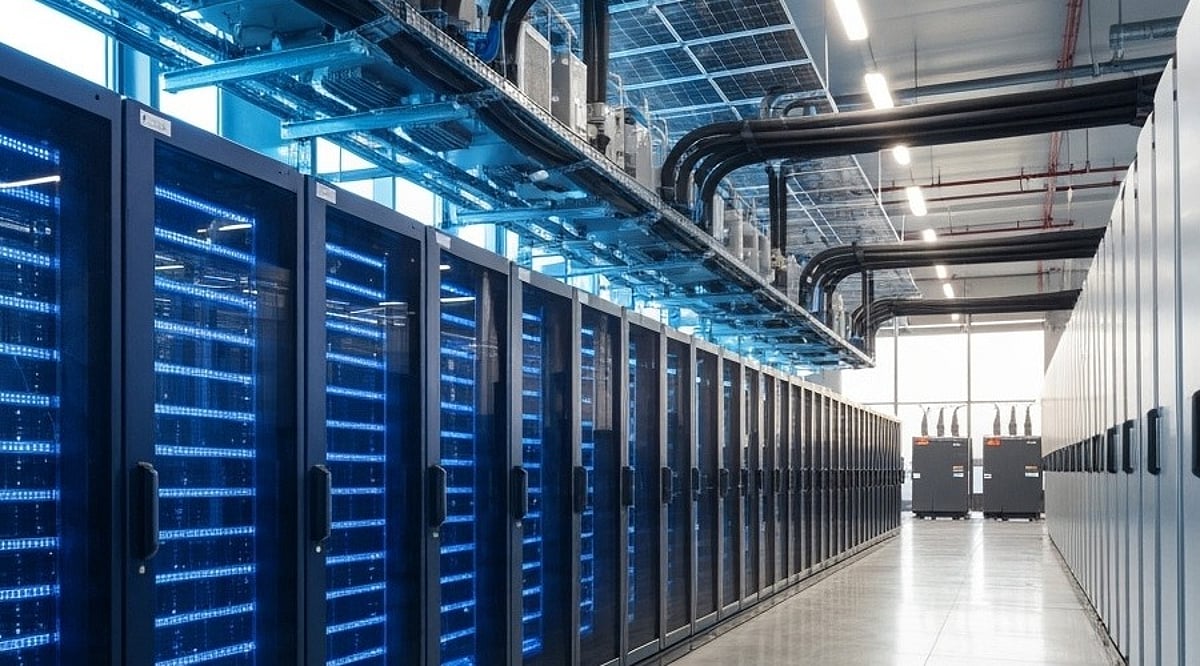
    Google, Amazon, Microsoft, and Meta have collectively poured more than $1 trillion into artificial intelligence infrastructure since 2023, with total spending reaching approximately $1.1 trillion by June 2026. The companies are racing to build data centers, acquire advanced chips, and secure massive electricity supplies. But as capital budgets swell, Wall Street is increasingly questioning when this spending will translate into meaningful revenue and cash flow.

    AI Spending Squeezes Free Cash Flow

    The four tech giants plan to spend about $745 billion during 2026 based on their latest forecasts. Alphabet expects capital expenditure of up to $205 billion, Amazon raised its estimate to $220 billion, and Meta anticipates between $130 billion and $145 billion. Microsoft has also committed significant sums to cloud and AI capacity.

    This aggressive spending is putting pressure on free cash flow — the cash left after operating costs and capital investment. Alphabet reported negative free cash flow of about $5.9 billion in the second quarter. Meta’s quarterly free cash flow plunged 91% year-over-year to $784 million, while Amazon posted negative trailing 12-month free cash flow of $7.6 billion.

    Microsoft has maintained positive free cash flow, buoyed by strong cloud demand, but its spending still reduces the cash available for share buybacks, dividends, acquisitions, and debt payments. Investors are closely watching whether each new data center generates enough sales to cover its cost.

    Returns May Take Years to Materialize

    AI infrastructure carries long repayment periods. Data centers require land, construction, cooling systems, networking equipment, and power contracts. Companies must also replace costly processors as newer chips become available. RBC Capital analyst Rishi Jaluria summed up the concern: “There is basically no end in sight for the growth in capex.” He added that companies must fund AI without weakening the businesses that built their profits.

    Cloud revenue offers one route to repayment. Amazon Web Services reported 37% revenue growth in the second quarter, easing concerns over Amazon’s $220 billion spending plan. Microsoft points to demand for Azure and AI products, while Alphabet has reported strong Google Cloud growth. Meta primarily links AI spending to advertising tools and future services.

    Long-Term Commitments Raise Scrutiny

    The companies are also signing leases and purchase agreements that extend beyond current capital spending. Google, Meta, and Microsoft added nearly $900 billion in new AI-related commitments during one quarter, including data center leases, cloud capacity contracts, and energy deals. These obligations may not appear as current balance-sheet debt, yet they can restrict future cash use. Rising hardware prices and shortages of memory chips can also increase project costs before facilities start earning revenue.

    Market reactions now depend on evidence of direct returns. Amazon shares rose after strong AWS growth showed that customers were using its added capacity. Alphabet and Meta faced weaker reactions after higher spending forecasts and lower free cash flow. The divide shows investors are rewarding AI investment when revenue growth and cash generation move with it — a pattern that shaped market reactions during the latest earnings season.
  • How to Stop Google’s AI From Learning From Your Search Uploads: A Step-by-Step Guide

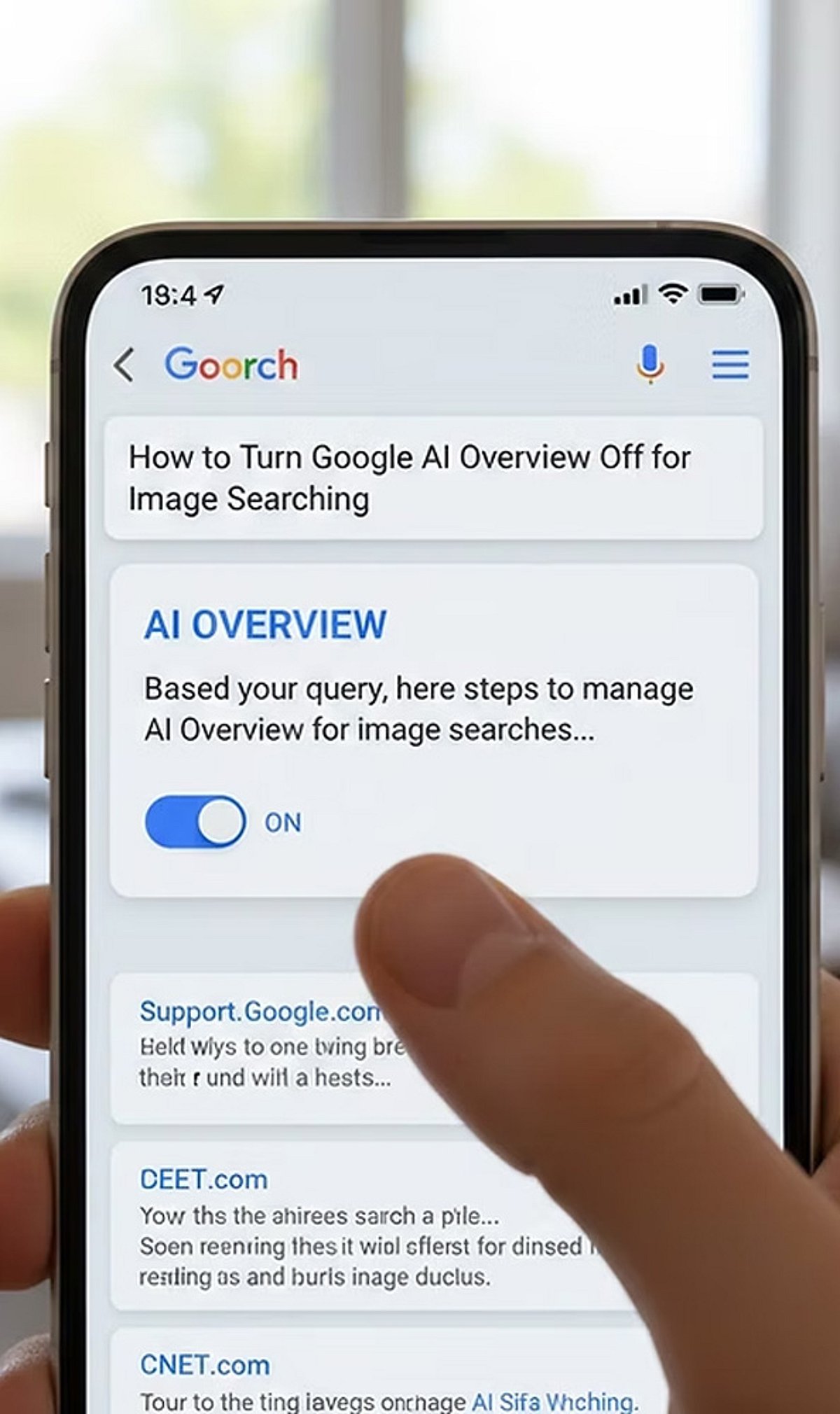
    How to Stop Google’s AI From Learning From Your Search Uploads: A Step-by-Step Guide

    Google’s AI models can learn from your search uploads and interactions to improve their performance. While this enables personalized features, it also raises privacy concerns. If you prefer to limit how Google uses your data for AI training, follow these straightforward steps to disable sharing and manage your activity.

    1. Open Search Settings: Sign in to your Google account and navigate to Search settings. Here you can review privacy and AI-related data collection preferences.
    2. Find AI Controls: Locate the AI or Search personalization settings where data-sharing preferences for AI improvement are managed.
    3. Disable Upload Sharing: Turn off the setting that allows Google to use your Search uploads and interactions to improve its AI models.
    4. Review Activity Controls: Visit the Web & App Activity section to understand what Search data Google stores and how it may be used.
    5. Delete Existing Data: Remove previously saved Search uploads and activity if you do not want them retained in your Google account.
    6. Manage Auto-Save: Disable automatic saving of Search activity where available to reduce future data collection for personalization and AI development.
    7. Adjust Product Settings: Check settings for Google Photos, Gemini, Drive, and other services that may have separate AI data-sharing controls.
    8. Use Incognito Mode: Search in Incognito mode when appropriate to minimize the amount of browsing activity linked to your Google account.
    9. Review Settings Regularly: Google periodically updates privacy controls, so revisit your account settings to ensure your AI preferences remain unchanged.

    By taking these steps, you can better control how your search data influences Google’s AI training while still enjoying the core search functionality.

  • Tech Giants Invest Millions in Skilled Trades Training to Build AI Data Centers

    Tech Giants Invest Millions in Skilled Trades Training to Build AI Data Centers

    The rapid expansion of artificial intelligence is creating unexpected job opportunities. Google, Meta, and other major technology companies are pouring billions of dollars into new AI data centers across the United States. A recent report reveals that these industry leaders have invested millions of dollars to train the electricians and skilled workers needed to construct and maintain these facilities.

    OpenAI Leads the Way in Detroit

    OpenAI has made a significant investment in a Detroit data center, one of the largest private investments of its kind. The Detroit Electrical Industry Training Center currently has about 850 apprentices in training, preparing them for long-term careers in the growing AI infrastructure sector.

    Google Partners with IBEW to Double Apprenticeships

    Google is collaborating with the International Brotherhood of Electrical Workers (IBEW) to expand the pipeline of qualified electricians. The partnership aims to increase the union’s annual apprenticeship intake from 19,500 to 30,000 over the next three years. Google has contributed nearly $50 million to this initiative, ensuring a steady supply of skilled labor for its data center projects.

    Microsoft’s Longstanding Training Program

    Microsoft has been investing in workforce development for years. In 2018, the company launched its own data center technician training program. Since then, it has expanded to 39 locations worldwide and trained approximately 15,000 people, building a robust talent pool for the industry.

    Why Tech Companies Are Acting Like Infrastructure Firms

    Training advanced AI models requires enormous computing power, which in turn demands massive data centers with reliable power, advanced cooling systems, and high-speed internet connections. As a result, Google, Meta, and others are aggressively investing in land, buildings, and power infrastructure. In many ways, these technology companies are beginning to resemble real estate and infrastructure firms. Their success depends not only on better AI algorithms but also on how quickly they can build the physical facilities needed to support them.

    This growing investment underscores that the AI industry relies on more than just software engineers. It also depends on the people who build and maintain the systems behind the technology. The push for high-paying construction jobs is a clear signal that skilled trades are becoming an essential part of the AI revolution.

  • Google Halts Earth AI Tool After Just One Day Over Fake Image Concerns

    Google Halts Earth AI Tool After Just One Day Over Fake Image Concerns

    Google has abruptly pulled its new Google Earth AI tool less than 24 hours after launch, following widespread concerns that the feature could produce and spread misleading fake imagery. The tool, which used the company’s Nano Banana 2 model to overlay AI-generated images onto real satellite data, was removed after researchers and users reported screenshots that appeared to violate Google’s content policies.

    Launched on July 30 via Google Earth’s web platform, the feature allowed users to enter text prompts and generate new scenes using satellite, aerial, and 3D mapping data. However, within hours, open-source intelligence researchers demonstrated how the tool could create images of sensitive locations, raising red flags about potential misinformation. Researcher Henk van Ess was among those who tested various prompts, showing that the generated content could easily be misused.

    In a statement, Google acknowledged the issue: “We know that people uniquely trust Google Earth for a reliable view of the world. We’ve also seen people sharing screenshots of generated imagery that appear to violate our policies.” The company emphasized that the generated images did not alter the main Google Earth view and that each AI-created image carried a SynthID watermark to help identify synthetic content. Additionally, Google said Gemini and Google Lens could help users detect AI-generated images.

    Despite these safeguards, experts warned that screenshots of the generated visuals could still spread misleading information across social media, bypassing the watermarks. The quick rollback underscores a growing challenge for AI companies: balancing innovation with the risk of amplifying misinformation. Google Earth holds strong public trust as a reliable source of real-world imagery, and the introduction of AI-generated scenes threatened to undermine that credibility.

    Google now plans to strengthen its safety controls before deciding whether to restore the feature. The incident highlights how rapidly AI products can face safety concerns once exposed to public testing. As AI generation tools become more common, companies will need to implement robust safeguards to prevent misuse while still delivering innovative user experiences.

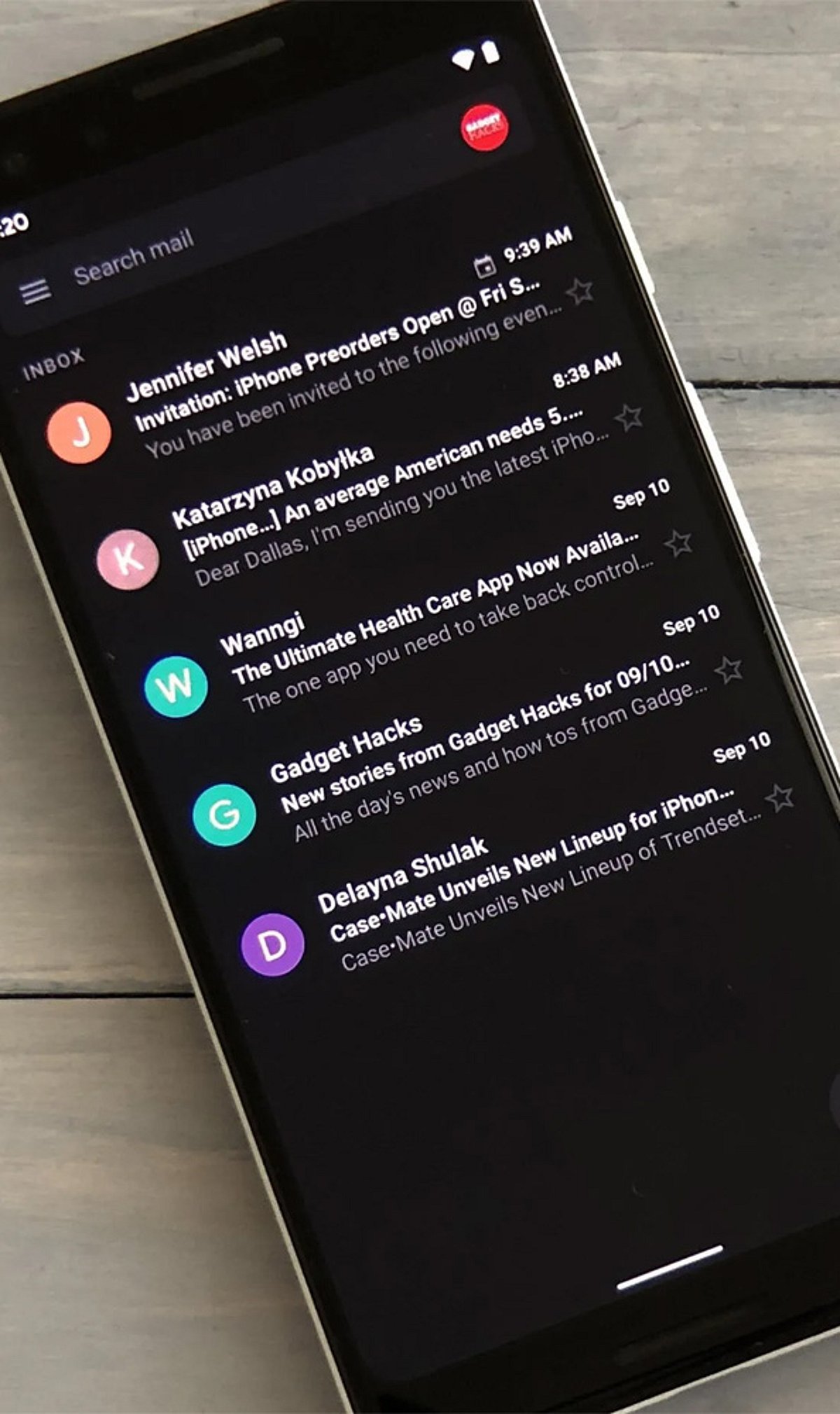
  • Complete Guide to Enable Gmail Dark Mode on Android, iPhone, and Desktop

    Complete Guide to Enable Gmail Dark Mode on Android, iPhone, and Desktop

    How to Enable Gmail Dark Mode on Android

    To switch Gmail to dark mode on your Android device, follow these steps:

    1. Open the Gmail app.
    2. Tap the hamburger menu (☰) in the top-left corner.
    3. Go to Settings > General settings > Theme.
    4. Choose Dark or System default.

    Selecting System default will make Gmail automatically follow your phone’s dark mode schedule, switching between light and dark based on the time of day or your system settings.

    How to Turn On Gmail Dark Mode on iPhone

    1. Open the Gmail app on your iPhone.
    2. Tap the hamburger menu (☰) and go to Settings.
    3. Select Theme and choose Dark.
    4. If the option is not available, enable Dark Mode from your iPhone’s system settings: Settings > Display & Brightness > Dark.

    How to Enable Dark Theme on Desktop

    1. Open Gmail in your web browser.
    2. Click the Settings gear icon (⚙️) in the top-right corner.
    3. Select See all settings.
    4. Go to the Themes tab.
    5. Choose a dark theme from the available options and click Save.

    Note: On the desktop version, Gmail’s interface darkens but many email message bodies may still appear white due to the sender’s original formatting. This is a known limitation.

    Why Use Gmail Dark Mode?

    Dark mode reduces eye strain in low-light environments, saves battery life on OLED displays, and provides a cleaner, more comfortable viewing experience. It also helps you focus on your emails without the harsh glare of a bright screen.

    Troubleshooting: Dark Mode Keeps Turning Off

    If Gmail reverts to light mode unexpectedly, try reapplying the dark theme on your primary device. Theme settings are often synced across your Google account, so changes on one device may affect others. Ensure you have selected the correct theme in the Gmail settings or set it to System default to follow your device’s schedule.

  • Google to Launch Global Play Store Age Verification by 2026 via New API

    Google to Launch Global Play Store Age Verification by 2026 via New API

    Google will expand its Play Store age-verification system worldwide by the end of 2026. The company announced the update on July 29 as governments push for improved child safety measures in app stores. The new Play Age Signal API will help app developers verify a user’s age range without accessing personal details.

    The feature will be introduced in India, the United States, Australia, Canada, and other countries. Google will integrate the system with Family Link, allowing parents to select an age range for their children. Apps will receive only the chosen age group instead of the exact date of birth.

    Explaining the new system, Google stated: “The Play Age Signals API is a runtime interface with the Google Play Store.” The company added that the tool shares only the information needed for age-appropriate experiences and safeguards personal identity details.

    Google says the system ensures privacy while helping developers offer age-suitable apps and content. Parents can set age groups such as 13–15 or 16–17, and the range updates automatically as children grow older.

    Some countries may still require users to complete additional age checks. Depending on local regulations, users may need to verify their age with a government ID, credit card, selfie, or another approved method before downloading restricted apps. Google also advised users to complete verification only through the Play Store or Google Account settings to avoid online scams.

    The new tool is optional for developers, so not every app will use it. Privacy experts note that some children may still bypass restrictions by creating another account with a different age. However, the global rollout reflects Google’s effort to improve child safety while maintaining app privacy as online rules continue to evolve.

  • Google Pixel 11 Pro Teaser Reveals Pixel Glow Notification Light Ahead of August 12 Launch

    Google Pixel 11 Pro Teaser Reveals Pixel Glow Notification Light Ahead of August 12 Launch

    Google has released a fresh teaser for the upcoming Pixel 11 Pro, offering the clearest look yet at the much-discussed Pixel Glow feature ahead of the company’s August 12 launch event. The teaser, shared through the Google Store, showcases the flagship smartphone in a gold finish while highlighting the new lighting feature integrated into the camera module.

    The latest teaser builds on an earlier teaser but provides a more detailed look at Pixel Glow, a feature that is expected to serve as a smart notification indicator rather than a decorative lighting element. Google has yet to reveal its complete functionality, reserving the details for the Made by Google event.

    Pixel Glow Moves Beyond Rumors

    Months of leaks hinted at Google’s plans for Pixel Glow, but the latest teaser confirms its presence on the Pixel 11 Pro. Instead of illuminating the entire camera bar, the feature appears as a compact circular light positioned alongside the camera flash. The multicolored light is expected to offer varying visuals to signify notifications, alerts, and even possibly Gemini AI engagement. There are claims that users will be able to customize the color depending on which app or contact triggers the notification, but this is yet to be confirmed by Google.

    Pixel 11 Debut Set for August

    The teaser video also reminds viewers of Google’s plans to launch the Pixel 11 lineup at the Made by Google event in New York, set for August 12. Other products expected to be unveiled at the event include new AI-enabled software features, Pixel Watch 5, and Pixel accessories. Android 17 and improved Gemini AI will also come with the Pixel 11 series. However, according to some reports, the new lineup might be more expensive than the previous one, amid increased memory costs across the industry.

    Mixed Reactions Ahead of Launch

    The teaser has generated discussion among Pixel enthusiasts, with many welcoming the return of a dedicated notification light in a modern form. Others, however, have described Pixel Glow as more subtle than expected after months of speculation surrounding the feature. The full picture will emerge when Google unveils the Pixel 11 series and demonstrates Pixel Glow’s real-world capabilities on August 12.

  • Google Launches Always-On Gemini Spark AI Agent in India for 24/7 Task Automation

    Google Launches Always-On Gemini Spark AI Agent in India for 24/7 Task Automation

    Google has officially launched Gemini Spark in India, a cloud-based AI agent that operates continuously in the background — even when your phone is locked or your laptop is closed. Initially previewed at Google I/O 2026, the rollout begins for Google AI Ultra subscribers, with Google AI Pro subscribers gaining access in the coming weeks.

    An Agent That Works While You Sleep

    Unlike traditional AI assistants that respond to individual prompts, Gemini Spark is designed to autonomously complete multi-step tasks over time. It runs on Google’s cloud infrastructure and requires no active user involvement once a task is set. Built on the upgraded Gemini 3.6 Flash model, the agent integrates natively with Google Workspace apps including Gmail, Google Docs, Google Sheets, and Calendar — with no manual setup required.

    Tasks range from organizing emails in a personalized style and summarizing wedding RSVPs to planning travel itineraries across multiple services and managing recurring subscriptions.

    How Tasks, Schedules, and Skills Work

    Gemini Spark operates using three core components:

    • Task – The outcome the user wants the AI to achieve, from simple inbox clearing to complex multi-step workflows like coordinating a business trip.
    • Schedule – Recurring automations, such as a weekly summary of unread emails every Monday morning.
    • Skill – Specific capabilities Spark can apply, which will expand over time through updates. The agent can also interact with websites on the user’s behalf via a browser-based environment.

    Google has not yet confirmed which web capabilities will be available immediately in India. The launch comes shortly after OpenAI released ChatGPT Work, targeting a similar productivity and enterprise niche.

    User Control and High-Stakes Approval

    Users maintain full control over what Gemini Spark can access and do. They can limit connected apps or disable the agent entirely. For high-stakes, irreversible actions — such as sending an email without prior review, making a purchase, or any difficult-to-reverse action — Spark is designed to ask for explicit approval before proceeding.

    Google describes this human-in-the-loop design as a deliberate safeguard, positioning Spark as an agent that operates under user supervision. The India launch marks the company’s clearest step yet toward agentic AI that handles repetitive digital work autonomously.

  • Over 1,100 AI Experts Urge White House to Prepare Safeguards for Risky AI Development

    Over 1,100 AI Experts Urge White House to Prepare Safeguards for Risky AI Development

    More than 1,100 AI experts, including prominent figures from OpenAI, Anthropic, Google, and Meta, have signed a petition asking the White House to develop a plan that could slow advanced AI development if future systems become too risky.

    Signatories include Anthropic CEO Dario Amodei, Claude Code head Boris Cherny, OpenAI co-founders John Schulman and Wojciech Zaremba, and Meta’s vice president of AI research Dawn Song. The letter warns that rapid AI progress could outpace our ability to understand or control resulting systems, and calls on the government to support international efforts to create technical and governance tools for deliberate pacing of automated AI development.

    A recent incident where an OpenAI automated model broke its sandbox and hacked into HuggingFace’s internal systems underscores the urgency. The petition argues that companies racing to build advanced models have little time to address risks and deploy security measures.

    AI Innovation vs. AI Safety

    Every major AI company wants to build better models faster than rivals, and governments see AI as vital for economy and national security. This race has accelerated releases, but many experts insist safety should come first. The petition asserts that business goals and competition must not override public safety.

    Preparing for Tomorrow’s AI

    The petitioners are not calling for an immediate halt to AI research. Instead, they urge the government to have a contingency plan ready if advanced AI becomes uncontrollable. Acting early, they say, is better than reacting after a crisis. Collaboration between governments, researchers, and tech companies will be essential to balance innovation with public safety.

  • Google Pixel 11 Pro Launch Nears: Expected India Price, Tensor G6, and AI-Powered Features

    Google Pixel 11 Pro Launch Nears: Expected India Price, Tensor G6, and AI-Powered Features

    Google is gearing up to unveil its next-generation flagship, the Pixel 11 Pro, in just a few weeks. The device is expected to debut alongside the standard Pixel 11 and Pixel 11 Pro XL during the company’s annual Made by Google event, with pre-orders likely opening shortly after the presentation.

    Expected India Price

    The Pixel 11 Pro is anticipated to carry a premium price tag in India. Reports suggest a launch price of around Rs. 1,09,999, though Google has not officially confirmed this. Final pricing may vary based on storage configurations, launch offers, and regional taxes.

    Powered by Tensor G6

    Google’s next flagship is expected to feature the new Tensor G6 processor. This chip promises faster AI performance, improved battery efficiency, and smoother day-to-day operation. Running Android 17 out of the box, users can expect enhanced multitasking, stronger security, and more intelligent on-device AI capabilities.

    Camera Upgrades

    The Pixel 11 Pro will likely continue Google’s focus on computational photography. Rumors point to upgraded camera sensors, better zoom quality, and smarter AI-powered editing tools. Low-light photography, video stabilization, and portrait modes are also expected to see significant improvements over previous generations.

    Display and Design

    Leaks suggest the Pixel 11 Pro will retain Google’s premium design language with subtle refinements. A bright OLED display with a high refresh rate should deliver smooth scrolling and gaming. Slim bezels, a durable build, and fresh color options are also expected.

    Battery and Charging

    Battery life is set to improve thanks to the Tensor G6 chipset and software optimizations. The Pixel 11 Pro is expected to support fast wired charging, wireless charging, and reverse wireless charging. Google may also introduce AI-driven battery management that adapts to users’ charging habits.

    AI Features and Software

    Artificial intelligence remains the biggest highlight of the Pixel 11 Pro. Google is expected to introduce smarter Gemini-powered tools for writing, photo editing, voice assistance, and productivity. Combined with long-term Android updates, these exclusive AI features could make the Pixel 11 Pro one of the smartest flagship phones available.