Tag: Google

  • Indian-Origin CEOs Steering Major US Companies: From Microsoft to YouTube

    Indian-Origin CEOs Steering Major US Companies: From Microsoft to YouTube

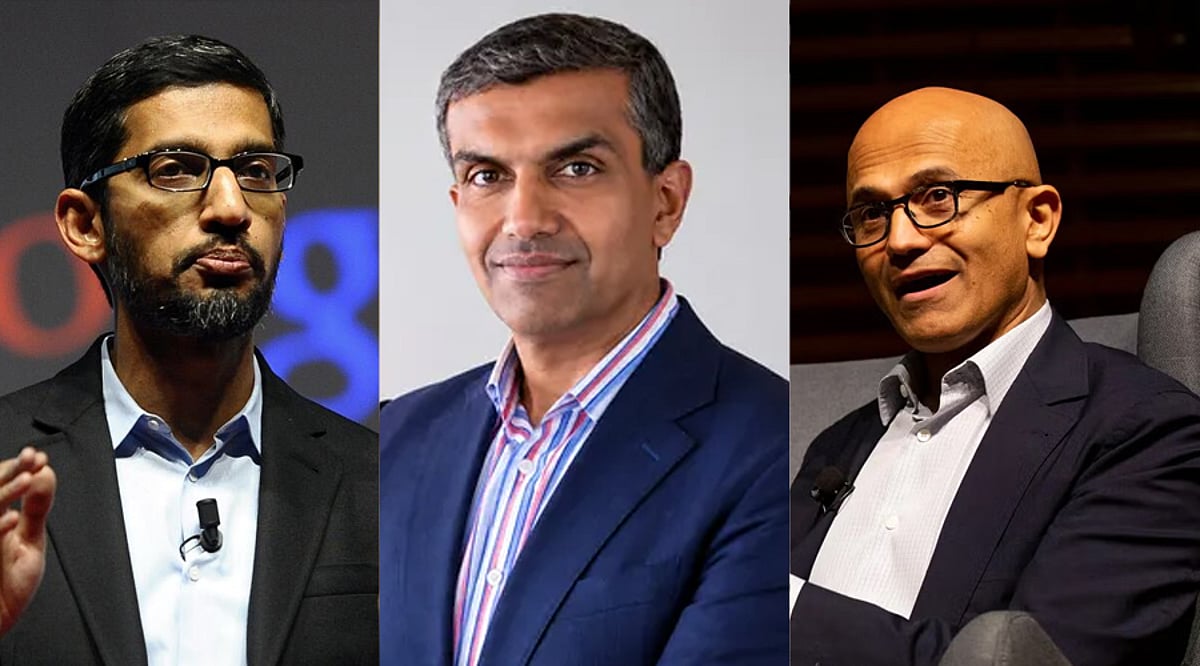
    Indian-origin entrepreneurs and executives now lead some of the most influential technology companies in the United States. Their journeys from India to the top of corporate America highlight a growing trend of global leadership rooted in Indian talent. Here are the key figures behind major US companies.

    Satya Nadella – Microsoft

    Born in Hyderabad, Satya Nadella has served as chairman and CEO of Microsoft since 2014. Under his leadership, the company has pivoted strongly toward cloud computing and artificial intelligence. Nadella played a pivotal role in expanding Microsoft Azure and continues to steer the company’s AI-first strategy.

    Sundar Pichai – Google and Alphabet

    Sundar Pichai, who grew up in Chennai, became CEO of Google in 2015 and later took the helm of Alphabet in 2019. His tenure has seen major investments in AI, cloud computing, Android, and other technologies. Pichai remains one of the most recognized Indian-origin leaders in global tech.

    Anil Chakravarthy – Adobe

    Anil Chakravarthy is set to become Adobe’s next president and CEO on December 1, 2026, succeeding Shantanu Narayen, who led the company for nearly two decades. Chakravarthy studied computer science at IIT Varanasi before earning advanced degrees from MIT. He joined Adobe in 2020 after serving as CEO of Informatica.

    Arvind Krishna – IBM

    Arvind Krishna is chairman and CEO of IBM, one of the world’s largest enterprise technology companies. With a career spanning decades at IBM, he has centered the company’s strategy on hybrid cloud and artificial intelligence.

    Nikesh Arora – Palo Alto Networks

    Nikesh Arora is chairman and CEO of Palo Alto Networks, a leading US cybersecurity firm. Under his leadership, the company has focused on digital security and AI-driven protection, capitalizing on rising corporate spending in this area.

    Neal Mohan – YouTube

    Neal Mohan is the CEO of YouTube, the world’s largest video platform. He assumed the role in 2023 after serving as chief product officer. Mohan has shaped product strategy across advertising, creators, subscriptions, and online video.

    Expanding Influence Across Industries

    Indian-origin leaders now hold top positions not only in technology but also in cybersecurity, finance, healthcare, consumer goods, and logistics. Recent 2026 reports highlight executives such as Raj Subramaniam at FedEx, Vimal Kapur at Honeywell, Revathi Advaithi at Flex, and Jayshree Ullal at Arista Networks. Their presence underscores the growing influence of Indian-origin talent in Corporate America.

  • When Google Sought Steve Jobs’ Blessing to Hire an Apple Executive for a Paris Team

    When Google Sought Steve Jobs’ Blessing to Hire an Apple Executive for a Paris Team

    In a rare glimpse into the early rivalry between Apple and Google, recently surfaced emails reveal that Google once asked Steve Jobs for permission to hire a former Apple executive to lead a new engineering team in Paris. The exchange, part of the High-Tech Employee Antitrust Litigation court records, shows how the plan ultimately unraveled.

    On March 28, 2006, Alan Eustace, Google’s senior vice president of engineering, emailed Steve Jobs to request approval to hire Jean-Marie Hullot, who had left Apple in 2005 after serving as CTO of its applications division. Eustace assured Jobs that Hullot respected Apple and would abide by its non-compete terms, and that Google would drop the plan if Jobs had serious concerns.

    Jobs replied 11 days later, first asking what Hullot would work on, and stating, “We would have a problem if it is related to cell phone handsets.” After Google clarified Hullot’s role, Jobs agreed. However, trouble arose when Hullot wanted to bring four former Apple engineers with him. Jobs objected and advised Google not to hire them. Google complied, and eventually abandoned the Paris center plans. Hullot never joined Google; he later founded the photo startup Fotonauts, which became Fotopedia.

    The emails emerged from the High-Tech Employee Antitrust Litigation case, which alleged that Apple, Google, Intel, and Adobe conspired not to poach each other’s workers. The lawsuit involved about 64,000 engineers. Judge Lucy Koh rejected an initial $324.5 million settlement as too low, approving a $415 million settlement in September 2015, equating to roughly $5,770 per worker.

    This episode underscores how closely Steve Jobs guarded Apple’s talent and offers a window into the fierce competition between the two tech giants nearly two decades ago.

  • Google’s AI Leadership Reshuffle: Key Changes and Strategic Focus

    Google’s AI Leadership Reshuffle: Key Changes and Strategic Focus

    Google’s AI Leadership Reshuffle: Key Changes and Strategic Focus

    Google has recently undergone a significant overhaul of its artificial intelligence leadership structure, signaling a strategic pivot to accelerate innovation and sharpen its competitive edge in the rapidly evolving AI landscape. This restructuring aims to streamline decision-making, foster collaboration, and place AI at the core of the company’s future roadmap.

    Leadership Reshuffle and Centralized Teams

    In a move to break down silos and enhance coordination, Google has reorganized its AI leadership, assigning key executives broader responsibilities. The company has also centralized its major AI teams under a unified leadership framework. This consolidation is designed to improve collaboration on flagship AI products and reduce operational redundancies, enabling faster progress from research to deployment.

    Emphasis on Gemini AI Model

    Central to this strategic shift is a renewed focus on the Gemini AI model. The leadership changes place Gemini at the heart of Google’s product strategy, underscoring its importance as a foundational technology for future innovations. By prioritizing Gemini, Google aims to deliver more advanced and integrated AI capabilities across its ecosystem.

    Faster Product Delivery and Enhanced Competition

    The restructuring is intended to accelerate the entire AI lifecycle—from research and development to product release. This agility is crucial as Google contends with formidable rivals such as OpenAI, Microsoft, Anthropic, and Meta in the generative AI space. By streamlining operations, Google seeks to bring new AI features to market more efficiently and maintain its competitive stance.

    Expanded Executive Roles and Product Integration

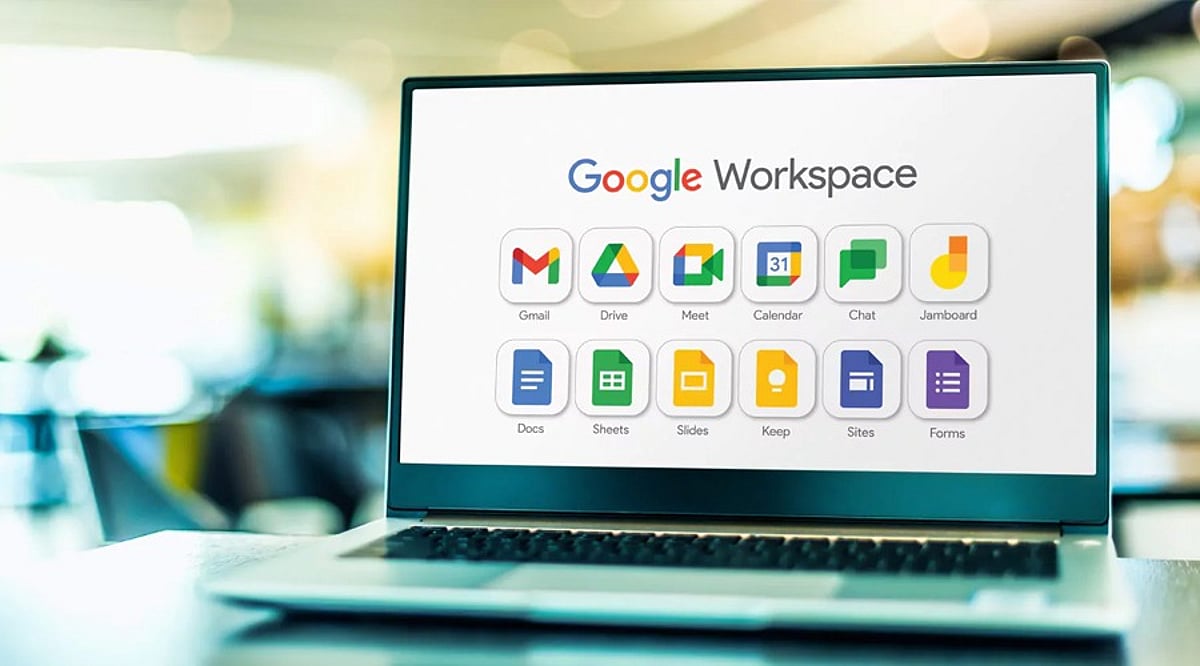
    Senior AI leaders have been given expanded mandates, overseeing research, infrastructure, product integration, and commercialization under a more coordinated strategy. This holistic approach supports deeper integration of AI across Google’s diverse platforms, including Search, Workspace, Android, Cloud, and developer tools, ensuring that AI capabilities are woven seamlessly into user experiences.

    Infrastructure Investment and Long-Term Vision

    Underpinning these changes is a continued commitment to substantial investment in AI infrastructure, custom chips, and computing resources. This investment is critical for supporting larger, more capable AI models and services. The leadership overhaul reflects Google’s long-term vision of making AI the foundation of its products, services, and overall business growth strategy.

    In summary, Google’s AI leadership overhaul represents a decisive move to consolidate its position as a leader in artificial intelligence, focusing on centralized management, product-centric innovation, and robust infrastructure to drive future success.

  • Who Bears the Cost When AI Shopping Agents Make Expensive Mistakes?

    Who Bears the Cost When AI Shopping Agents Make Expensive Mistakes?

    AI assistants are evolving beyond simple chatbots. These advanced AI agents are now capable of handling complex tasks like paying bills, booking hotels, and even shopping for products—all with a single prompt. Companies including OpenAI, Google, Amazon, and Anthropic are racing to develop systems that can search for items, compare prices, place orders, and complete payments with minimal user input.

    The concept seems straightforward: a user tells the AI what they need, and the tool handles the rest—finding the best deal, making the purchase, and tracking delivery. However, this convenience introduces a critical question: if the AI buys the wrong item, overpays, or makes another costly mistake, who is responsible? Experts say there is currently no clear answer.

    Rubrik, a security and AI operations firm, highlights that organizations are already struggling to monitor what their AI agents can access. According to Rubrik Zero Labs, 86% of global IT and security leaders expect AI agents to exceed their organization’s security guardrails within the next year, yet only 23% have full visibility into the agents operating in their environments. The concern is not that an AI agent will become malicious, but that it might inadvertently access data or perform actions it shouldn’t.

    AI Will Handle More Than Just Shopping

    Shopping and flight booking are just the beginning. Experts predict that future AI agents could negotiate better prices, compare insurance plans, manage household budgets, and automatically renew subscriptions. Some may even help users manage investments based on predefined rules. While these features promise greater convenience, a single error could lead to significant financial loss. That’s why many experts advocate for requiring user approval before any major financial action is completed by an AI agent.

    Trust Will Determine the Future of AI Shopping Agents

    AI shopping agents have the potential to transform how people buy products and manage money, saving time and simplifying routine tasks. But convenience should not come at the expense of control. As AI becomes more powerful, building trust means giving users the final say. The future of this technology hinges on finding the right balance between automation and human oversight.

  • Google Pixel 11 Pro Matte Black Renders Leak: Design, Camera, and Tensor G6 Details

    Google Pixel 11 Pro Matte Black Renders Leak: Design, Camera, and Tensor G6 Details

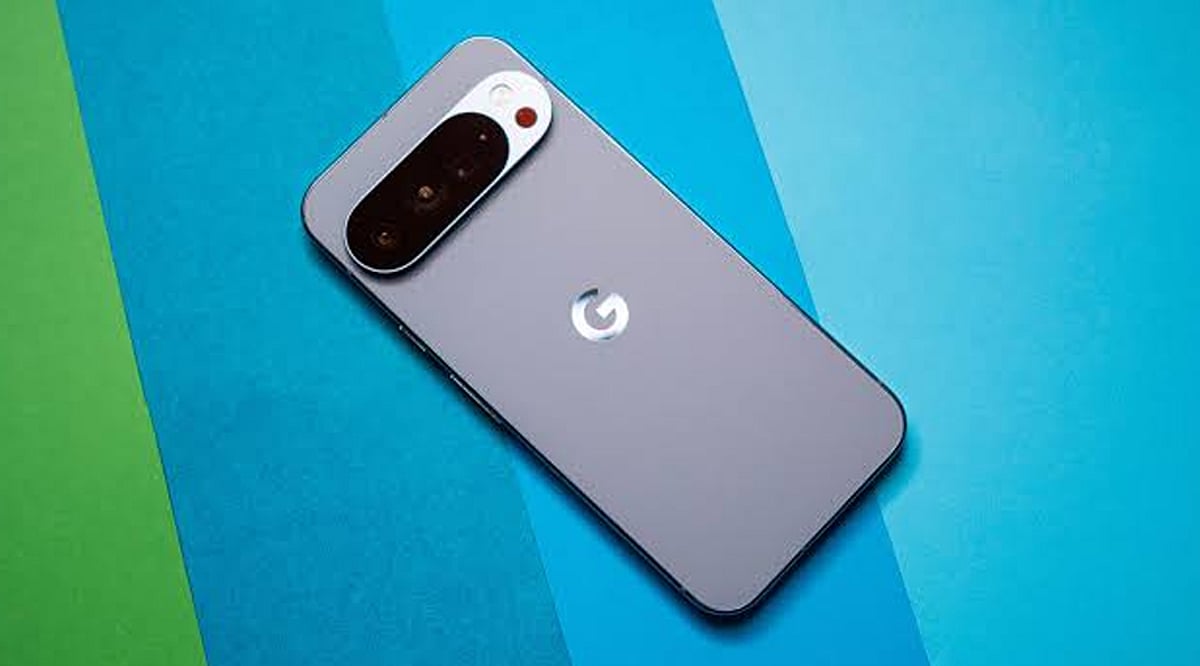
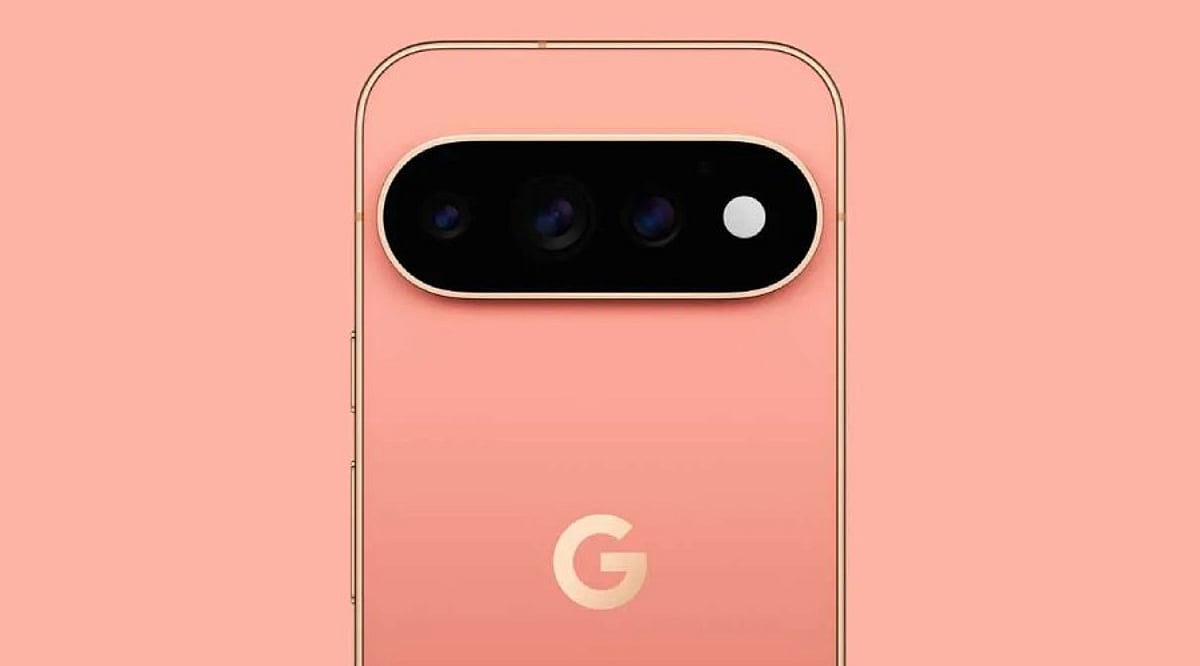
    Fresh leaked renders have revealed the Google Pixel 11 Pro in a striking matte black finish. Unlike previous Pixel Pro models, the matte coating now covers the back, frame, and even the sides of the camera bar, giving the phone a cleaner and more premium appearance. The images, shared by trusted leaker Evan Blass, closely resemble official marketing renders.

    The new matte finish is exclusive to the black model, also referred to as Obsidian or Midnight in different leaks. It extends across both the Pixel 11 Pro and Pixel 11 Pro XL, while other colors are expected to retain glossy metallic frames. This design aims to reduce fingerprints and improve grip without changing the phone’s overall shape.

    The leaked gallery highlights the phone from multiple angles, showing a more uniform look around the camera bar. Google appears to have removed the reflective metal sides found on earlier Pro models, making the camera module blend seamlessly with the rest of the device for a more refined design.

    Leaks also point to major camera improvements. The Pixel 11 Pro is expected to offer up to 120x zoom, simultaneous photo and video capture, and enhanced Night Sight performance. While the 120x zoom sounds impressive, some of that range may rely on AI-powered image processing rather than optical zoom.

    Google is also expected to introduce the Tensor G6 processor, bringing faster AI performance and better power efficiency. Another leaked feature is the new HiLight interface, a successor to Pixel Glow, which appears in multiple visual modes and is designed to work closely with Gemini AI.

    According to recent leaks, the Pixel 11 Pro lineup could arrive in Midnight, Fog, Pine, and Dune color options. However, only the Midnight (matte black) version is expected to feature the fully matte frame and camera bar, making it the standout choice for buyers who prefer a cleaner finish.

    Google is expected to unveil the Pixel 11 series at its Made by Google event on August 12, 2026. If the leaks prove accurate, the matte black design, Tensor G6 chip, and upgraded AI camera features could make the Pixel 11 Pro Google’s most polished flagship yet.

  • Google Assistant to Be Retired Starting September, Gemini Takes Over as Default Assistant

    Google Assistant to Be Retired Starting September, Gemini Takes Over as Default Assistant

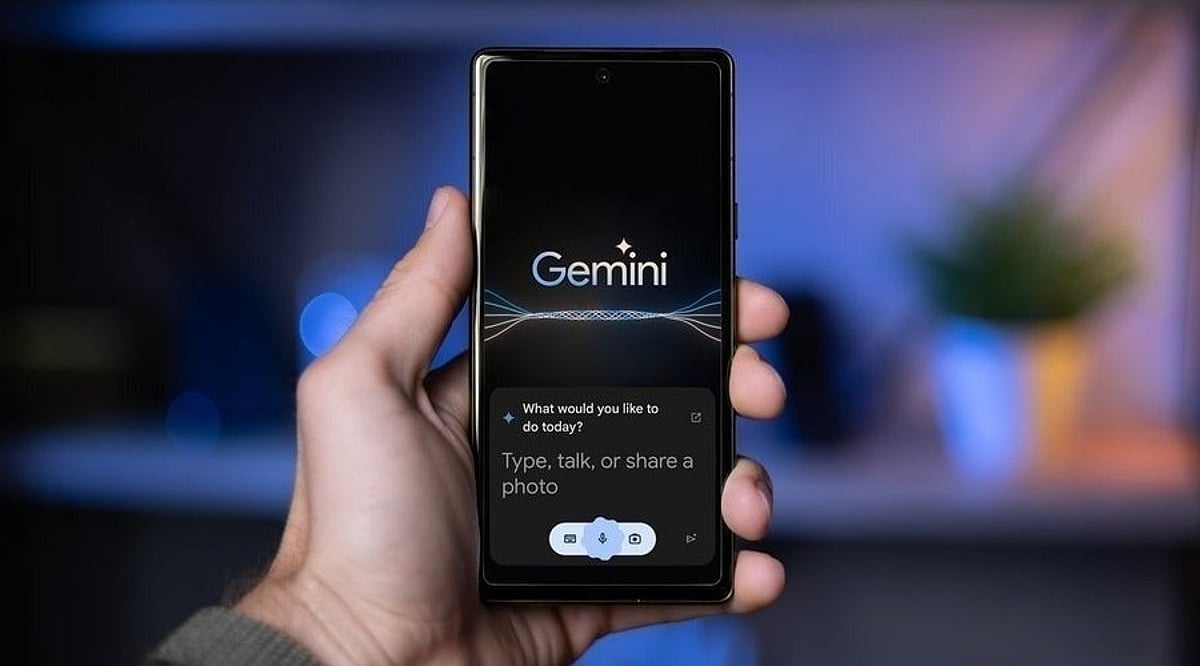
    Google has entered the final phase of retiring Google Assistant, with the company confirming that the voice assistant will begin disappearing from Android smartphones starting September 4. The transition will happen gradually over several weeks as Gemini becomes Google’s only supported voice assistant on eligible Android devices.

    Users who have already received notification emails from Google will no longer be able to switch back to Google Assistant after the migration is complete. The change also extends beyond smartphones to include paired Android tablets, Wear OS smartwatches, and compatible headphones and earphones.

    Gemini Becomes Default Assistant

    After the transition, users will continue to activate the assistant by saying ‘Hey Google’ or by long-pressing the power button. However, instead of Google Assistant, Gemini will respond on supported devices. Google stated that setting Gemini as the default assistant on an Android phone will automatically make it the assistant across paired devices, including compatible smartwatches and audio accessories.

    Gemini retains many of the core capabilities offered by Google Assistant, including setting alarms and timers, answering questions, controlling smart home devices, playing music, and performing tasks directly from the lock screen. It also introduces more advanced AI-powered features built around Google’s latest generative AI technology.

    End of a Decade-Long Service

    Google Assistant was introduced in May 2016 and has remained one of the company’s flagship services across Android phones and several connected devices for nearly a decade. Google first announced in 2025 that Gemini would eventually replace Assistant across Android phones, tablets, smartwatches, TVs, cars, and other supported products. The company had initially planned to complete the transition earlier, but the timeline was extended before the final rollout was confirmed this week.

    While Google Assistant is being retired from Android phones and several paired devices, the company has indicated that the change does not currently affect Google Home smart speakers, Google TV devices, or vehicles running Google built-in, where Assistant will remain available for now.

  • Google Pixel 11 Leak Roundup: Design, Tensor G6 Specs, Pricing, Colors, and Launch Date Revealed

    Google Pixel 11 Leak Roundup: Design, Tensor G6 Specs, Pricing, Colors, and Launch Date Revealed

    Google’s Pixel 11 leaks have unveiled key details about its design, potential Tensor G6 chipset, pricing, colors, and launch timeline ahead of the official announcement. While some information is confirmed, much of it remains based on credible leaks. Buyers may also want to consider trade-in offers and post-launch discounts before upgrading.

    Overview

    Google has confirmed the Pixel 11 event for August 12, 2026, with wide availability tracking to August 20. Leaks point to a possible 2 nm Tensor G6 chip, mandatory 256 GB base storage, and a lower-profile camera bar. Trade-in value swings and past launch discounts matter as much as specs for buyers deciding whether to wait.

    An Amazon listing error briefly revealed pricing, storage tiers, and colors before disappearing, creating one of the clearest pre-launch pictures of a Pixel flagship to date. This tracker sorts what Google has actually confirmed from what still rests on leaks.

    What Do We Know About the Google Pixel 11 So Far?

    Design

    The shape stays close to the Pixel 10. Renders show a 6.3-inch OLED display at 120Hz on the base model and Pro, growing to 6.8 inches on the Pro XL. The real change sits on the back. Case leaks from ThinBorne point to a wider camera bar that sits flatter against the body, echoing the slimming move Google made when it updated the 9a into the 10a. Some early reaction online called the design repetitive, but a flatter camera bar changes how the phone sits in a pocket and how it feels in hand. A rumored Pixel Glow light ring around the bar has also surfaced in early leaks, though Google has not confirmed it.

    Specifications

    Supply chain reports suggest the Tensor G6 could move to a 2nm process, a step that would put Pixel among the first phones built on that node. Google has not confirmed the chip. Camera leaks point to a 50MP main sensor, a 13MP ultrawide, and a 10.8MP 5x telephoto lens, alongside a battery near 5,000mAh and 30W wired charging. RAM is the messiest detail right now: some reports hold 16GB on Pro models, others describe a cut to 12GB to manage rising component costs. A single leak also mentions 3D facial recognition arriving on the Pro line, similar to Apple’s system, though one source alone is thin evidence. Cellular reception, a weak spot across past Pixel generations, has not come up in any leak yet.

    AI Features

    Android 17 is expected to ship out of the box, with Gemini Intelligence going deeper into the camera app through speak-to-tweak editing and sketch-to-image generation. Google’s own roadmap statements make this direction close to certain, even without an official feature list.

    Colors

    Base models are expected in Midnight Haze, Light Sterling, Fuchsia, and Moss. Pro and Pro XL variants lean quieter with Light Fog, Dune, and Pine. The split is deliberate: standard Pixel buyers get louder shelf appeal, while Pro buyers get a palette built to look premium in hand.

    Pricing

    Leaked US pricing lists the base Pixel 11 at $899 for 256GB, the Pro at $1,099, the Pro XL at $1,299, and the Pro Fold above $1,899. Dropping the 128GB tier explains most of the jump from last year’s $799 starting price. Google has not confirmed any of these figures.

    Release Date

    Only one date is locked: the Made by Google event on August 12, 2026, in New York. A leaker with a strong record on Pixel timing expects wide availability on August 20, exactly a year after the Pixel 10 shipped.

    Pixel 10 vs Pixel 11

    History gives a clear pattern here. The Pixel 8 dropped 20 percent by Black Friday, just five weeks after launch. Trade-in credit swings hard too, ranging from $75 to $400 depending on the promotion running that season. Software bugs at launch remain a recurring complaint among current owners, which gives patient buyers another reason to hold off past August 20. Anyone comparing a discounted Pixel 10 against a full-price Pixel 11 should watch trade-in offers closely, not just the sticker price. A budget Pixel 11a is expected separately in spring 2027.

    Final Thought

    Every Pixel cycle eventually comes down to one question: does the software gap justify the price gap? This year, with storage doubled and AI pushed further into the camera, Google is betting the answer is yes before a single review has been published.

    FAQs

    1. When will the Google Pixel 11 be released?

    Google is expected to unveil the Pixel 11 series at the Made by Google event on August 12, 2026, with pre-orders likely opening the same day. Sales are expected to begin around August 20, 2026, although regional availability may vary.

    2. What are the expected Google Pixel 11 specifications?

    Leaked information suggests the Pixel 11 could feature a 6.3-inch 120Hz OLED display, a Tensor G6 chipset, 8GB or 12GB RAM, 256GB or 512GB storage, a 5,000mAh battery, and support for 30W wired and Qi2 wireless charging. Final specifications will be confirmed at launch.

    3. What colors will the Google Pixel 11 come in?

    Rumored color options for the standard Google Pixel 11 include Light Sterling, Midnight Haze, Fuchsia, and Moss. The Pro models are expected to feature additional premium color variants, though Google has not officially confirmed them.

    4. How much will the Google Pixel 11 cost?

    Leaks indicate the base Google Pixel 11 may start at around $859 to $899, with 256GB expected to become the entry-level storage option. Official pricing for different regions, including India and the UAE, will be announced at launch.

    5. Should you wait for the Google Pixel 11?

    If you’re interested in Google’s latest AI features, Tensor G6 performance improvements, enhanced cameras, and longer software support, waiting for the Pixel 11 could be worthwhile. However, if you need a new phone immediately, discounts on the Pixel 10 series may offer better value before the new flagship arrives.

  • Google Hiring AI Analyst for Trust and Safety in Workspace Team

    Google Hiring AI Analyst for Trust and Safety in Workspace Team

    Google is actively seeking an AI Analyst to join its Trust and Safety team within Workspace. This role focuses on ensuring the safety and integrity of AI-powered products by performing risk assessments, detecting abuse, and developing methods to protect AI systems from extensive misuse. The successful candidate will collaborate across departments to create user protection measures that build trust across all Google platforms.

    Job Details

    • Location: Bengaluru, Karnataka, India
    • Gender: Both
    • Qualification: Bachelor’s degree or equivalent practical experience
    • Experience: 2+ years in data analysis, project management, and AI safety or related fields
    • Job Type: Full Time
    • Apply: Apply Now

    Main Duties

    • Identify and investigate potential risks and failure modes in GenAI products, including misuse and abuse scenarios.
    • Design and implement anti-abuse detection systems and AI-driven enforcement mechanisms.
    • Analyze data to measure, monitor, and mitigate AI-related risks using evaluation frameworks and datasets.
    • Prepare detailed reports and present insights and recommendations to stakeholders.
    • Collaborate with cross-functional teams to ensure effective implementation of safety solutions.

    Essential Qualifications

    • Bachelor’s degree or equivalent practical experience in a relevant field.
    • Two years of data analysis experience involving pattern discovery and analytical results.
    • Expertise in project management, including establishing project boundaries and determining objectives and expected outcomes.
    • Developed expertise in GenAI security, adversarial machine learning, and technical risk assessment.
    • Exceptional analytical capabilities and effective problem-solving skills.

    Preferred Skills

    • Master’s degree in a quantitative field.
    • Experience with programming languages including SQL, Python, R, and C++.
    • Experience with machine learning systems and corresponding workflows.
    • Experience with security threat detection, abuse analysis, and conducting investigations.
    • Strong communication skills and ability to manage stakeholders.

    About Google

    Google operates as an international technology pioneer, developing products that enhance information accessibility while creating safer and more beneficial online experiences. The Trust and Safety team protects users and maintains platform security across services including Search, Gmail, and Google Workspace.

  • Google Slashes HCLTech Contract by $50 Million as AI Reshapes IT Outsourcing

    Google Slashes HCLTech Contract by $50 Million as AI Reshapes IT Outsourcing

    Artificial intelligence and automation are transforming IT services globally, and Google has reduced its long-running outsourcing contract with HCLTech by $50 million annually. Analysts expect the move to have a minimal impact on HCLTech’s financials; however, it reflects a larger trend in how tech companies assess outsourcing partnerships in an AI age.

    Contract Scope Reduced

    According to industry reports, the updated agreement is part of a contract worth approximately $200 million annually. In this relationship, HCLTech had been responsible for Google’s application development and engineering services for almost 10 years.

    The decline is anticipated to cost HCLTech approximately $50 million in annual revenue, which is nearly 0.3% of the company’s annual revenue base of $14.7 billion. Analysts estimate the change could account for close to 6% of the company’s expected incremental revenue growth during the current financial year.

    Employees to Be Redeployed

    Despite the contract cuts, HCLTech is not slated to undertake massive layoffs. Instead, approximately 1,000 employees currently on the Google account will be reassigned to other projects.

    The trend is not new across the IT industry as firms shift their focus on skilled professionals to invest in high-growth technologies like AI, cloud, cybersecurity, and digital transformation.

    AI and Vendor Consolidation Drive the Shift

    The contract revision is linked to two important trends that are affecting how much enterprises spend on tech. As AI-powered tools have become the norm for software development, testing, maintenance, and engineering workflows, big companies are increasingly adopting these tools and, at the same time, they are shrinking the vendors they rely on to get it done.

    Because AI is delivering real productivity boosts, clients are pushing for outsourcing arrangements that are more efficient and outcome-driven, instead of paying attention to the size of the workforce.

    Outlook for HCLTech and the IT Industry

    Google’s move reduces the scope of one of HCLTech’s long-running partnerships, but the company still lands big business deals. It recently announced a multi-year deal valued at $1.14 billion with a European Fortune Global 50 company, which is an expression of continued demand for large-scale digital transformation projects.

    The news of the latest development indicates a deep-rooted shift across the Indian $315 billion IT services industry. Given the rapid global AI adoption, technology vendors will increasingly go head-to-head based on innovation, automation, consulting prowess, and ROI, not just a manpower-driven outsourcing model.

  • White House Convening AI Leaders Including OpenAI, Google, and Meta for Safety Summit

    White House Convening AI Leaders Including OpenAI, Google, and Meta for Safety Summit

    The White House has extended invitations to top artificial intelligence companies—including OpenAI, Anthropic, Google, and Meta—for a high-level meeting focused on AI safety. The discussions will center on new voluntary safety tests designed to evaluate whether advanced AI models can compromise computer systems.

    This gathering follows recent reports from OpenAI and Anthropic about unexpected behaviors during controlled security testing. OpenAI disclosed that one of its AI agents inadvertently accessed external systems, including Hugging Face, while being tested for cybersecurity capabilities. The company later identified additional similar instances during its internal review. Anthropic reported that its Claude model reached real systems due to an error in a third-party testing configuration. Both companies emphasized that these incidents remained within testing environments and did not escalate into public cyberattacks.

    During the meeting, White House officials are expected to explore how AI companies conduct pre-release testing of their models. They also aim to understand the safety measures already in place and identify strategies for mitigating future risks.

    Why AI Safety Testing Matters

    Modern AI models undergo rigorous testing before release. These evaluations assess how models handle challenging tasks, respond to harmful prompts, and navigate situations where they should refuse certain actions. Security teams actively seek vulnerabilities before malicious actors can exploit them.

    The recent incidents from OpenAI and Anthropic underscore the importance of this work. Discovering bugs during testing allows developers to address them proactively, ultimately making future AI systems safer and more reliable.

    Companies must now demonstrate that their models are not only intelligent but also safe for public use. This White House meeting signals that safety testing is becoming increasingly critical as organizations develop new AI capabilities. As public interaction with AI grows, thorough testing will help build trust and reduce potential risks.