Tag: India

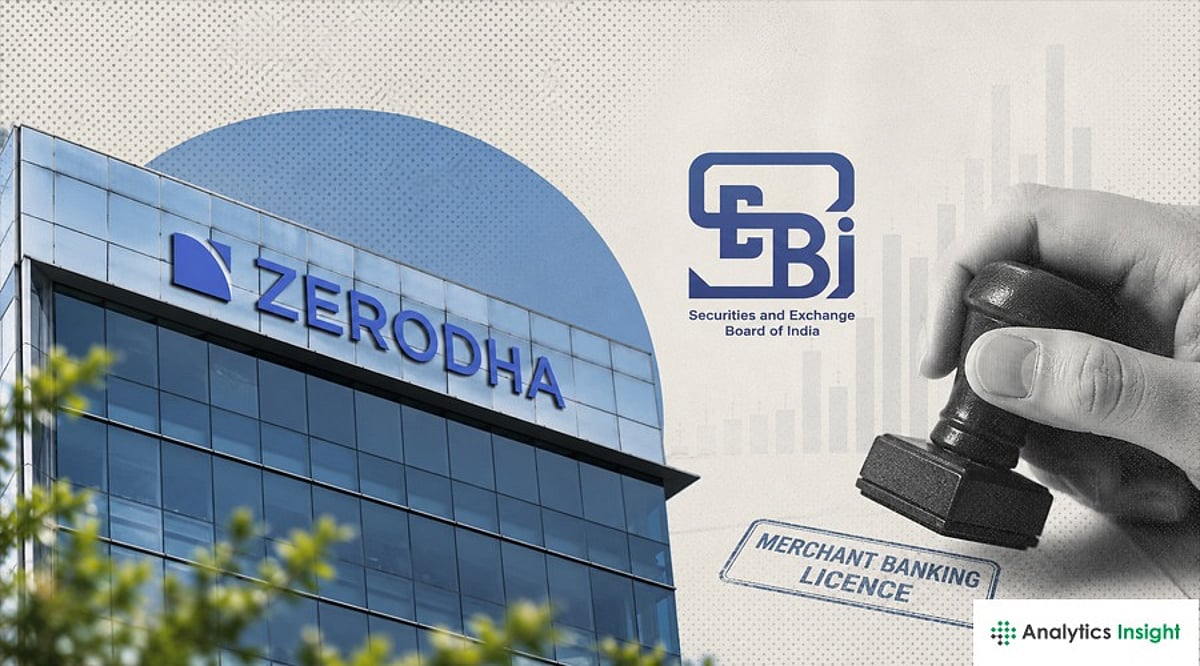
  • Zerodha Files for SEBI Merchant Banking License as Revenue Hits ₹8,847 Crore

    Zerodha Files for SEBI Merchant Banking License as Revenue Hits ₹8,847 Crore

    Zerodha, India’s largest stockbroker by active clients, is taking a significant step beyond its core business. The Bengaluru-based fintech company has applied for a Category I merchant banking license from the Securities and Exchange Board of India (SEBI), seeking to offer services such as initial public offering management, corporate advisory, and fund-raising. The application was submitted in April and awaits regulatory approval, a company spokesperson confirmed, adding that more details will be shared once the license is granted.

    Strategic Expansion into Investment Banking

    The move positions Zerodha to tap into India’s booming IPO pipeline, as dozens of startups and new-age companies prepare to go public over the coming years. A merchant banking license would allow Zerodha to help these firms navigate public offerings, raising capital through the stock market. This expansion comes as the company already offers a wide array of financial services—mutual funds, lending, asset management, startup investments via Rainmatter, international investing, and fixed deposits through its Coin platform.

    By adding investment banking to its portfolio, Zerodha aims to diversify revenue streams and reduce its reliance on brokerage income. In FY25, the company reported revenue of ₹8,847 crore and net profit of ₹4,237 crore, underscoring its financial strength as it ventures into new territory.

    Competition and Market Impact

    Zerodha’s entry into merchant banking could intensify competition in a sector traditionally dominated by established players such as JM Financial, Kotak Mahindra Capital, Axis Capital, and ICICI Securities. Industry experts believe that a digital-first approach from Zerodha may appeal especially to technology companies and startups, potentially improving service quality and offering more choices for businesses raising capital.

    The application aligns with a broader trend of fintech companies moving into conventional financial services. As India’s public markets continue to attract new issuers, more firms are seeking merchant banking licenses, which could foster a more dynamic capital market ecosystem.

    What This Means for Zerodha’s Future

    If SEBI approves the license, Zerodha will join a growing list of full-service financial companies. The company recently launched fixed deposit investments on its Coin platform, allowing customers to invest across partner banks from a single interface. Expanding into investment banking would further solidify its presence in the capital markets and create new income sources, supporting long-term growth.

    Zerodha’s latest move highlights how fintech innovators are reshaping traditional finance. With strong fundamentals and a loyal user base, the company is well-positioned to compete for IPO and fund-raising mandates in the years ahead—pending the regulator’s green light.

  • Tata Power-DDL and Ashoka Centre Forge Five-Year Partnership to Drive India’s Energy Transition Research

    Tata Power-DDL and Ashoka Centre Forge Five-Year Partnership to Drive India’s Energy Transition Research

    New Delhi, June 26, 2026 — The Ashoka Centre for a People-centric Energy Transition (ACPET) and Tata Power Delhi Distribution Limited (Tata Power-DDL) have signed a five-year Memorandum of Understanding (MoU) to accelerate research, innovation, and capacity building across India’s energy and power sector. The collaboration aims to create scalable solutions that support the country’s broader energy transition goals.

    The partnership unites ACPET’s expertise in research, data analysis, energy policy, and sustainable transitions with Tata Power-DDL’s operational experience as a leading Indian power distribution utility. Joint activities will include research projects, technology demonstrations, policy engagement, and knowledge-sharing initiatives designed to build a more sustainable, secure, and equitable energy future.

    This collaboration arrives at a pivotal moment for India’s power sector, which is undergoing rapid technological and regulatory transformation. Key focus areas include smart grids, electric vehicles, distributed energy resources, energy storage, demand-side management, and consumer engagement. The MoU creates a structured platform for both organizations to explore these opportunities and contribute to industry best practices.

    Specific initiatives under the partnership include joint research and learning, development of policy briefs and technical reports, expert dialogues, training programs, and the potential establishment of a Centre of Excellence to drive innovation and strengthen institutional capabilities.

    “India’s energy transition presents a unique opportunity to bring together research, policy, innovation and real-world implementation. As the sector evolves over the coming years, meaningful progress will depend on stronger collaboration between academia, industry, policymakers, startups and innovators,” said Dr. Praveer Sinha, CEO & Managing Director, Tata Power.

    “Technology alone will not deliver India’s energy transition — the human capacity to deploy, operate, and innovate around that technology is equally decisive. This partnership between Tata Power-DDL and ACPET brings together operational depth and research rigour to address both,” said Vaibhav Chowdhary, Director, ACPET.

    “India’s electricity sector is undergoing a profound transformation. We want renewable energy to scale rapidly, but we also recognise that transitions of this magnitude are shaped by historical realities, market dynamics, and technological constraints. Together, we can bridge evidence and practice to shape more effective pathways for India’s energy transition,” added Rakesh Kacker, Senior Advisor, ACPET.

    “The power sector is undergoing a fundamental transformation driven by rapid technological advancements, growing renewable energy integration, distributed energy resources, and evolving consumer expectations. Our partnership with ACPET will bring together industry experience and academic excellence to develop innovative solutions, strengthen policy and regulatory frameworks, and contribute meaningfully to India’s energy transition journey,” said Dwijadas Basak, CEO, Tata Power Delhi Distribution Limited (Tata Power-DDL).

    Under the agreement, Tata Power-DDL will support dedicated research personnel and provide infrastructure access, while both institutions will jointly design and implement research projects, consumer awareness programs, and disseminate outcomes. A Joint Steering Committee with representatives from both organizations will provide strategic oversight.

    The collaboration reflects a shared commitment to addressing the complex technological, regulatory, and societal dimensions of the energy transition, contributing to India’s vision of a sustainable and secure energy future.

    About Tata Power-DDL

    Tata Power Delhi Distribution Limited is a joint venture between Tata Power and the Government of NCT of Delhi. It distributes electricity in North Delhi, serving a population of around 9 million. The utility has been a frontrunner in power distribution reforms, achieving a record reduction in Aggregate Technical & Commercial (AT&C) losses from 53% in July 2002 to 5.42% today. It has been awarded the highest ‘A+’ rating by the Ministry of Power under the Consumer Service Rating of Discoms (CSRD) framework for FY 2024–25.

    About ACPET

    The Ashoka Centre for a People-centric Energy Transition (ACPET) supports energy transition toward a net-zero economy, addressing critical knowledge gaps for India and the Global South. ACPET builds context-responsive, people-centric frameworks and solutions that advance economic, social, and governance pillars of sustainable growth. It collaborates with industry, government, and community leaders to test and evaluate practical interventions.

    For more information, visit acpet.ashoka.edu.in.

  • Narayan Iyer Named Managing Director and Chair of Randstad India Management Council

    Narayan Iyer Named Managing Director and Chair of Randstad India Management Council

    Bengaluru, 29 June 2026 – Randstad India, the country’s and world’s leading talent company, today announced the appointment of Narayan Iyer as its new Managing Director for India and Chair of the Randstad India Management Council. He will lead all four Randstad specializations – Operational, Professional, Digital and Enterprise – in India and have indirect responsibility for Randstad’s three India-based shared service centers.

    Narayan brings more than three decades of diversified expertise and leadership in the IT services and consulting industry, having most recently served as the President of Bajaj Technology Services, the Technology Business Unit of Bajaj Finserv Direct Limited. Narayan will be responsible for driving Randstad India’s next phase of growth, sharpening its digital-first capabilities, and strengthening the company’s position as the partner for talent across India.

    Myriam Beatove Moreale, Executive Board Member, Randstad said: “We are pleased to welcome Narayan Iyer as the Managing Director of Randstad India. He has a strong track record of driving growth for large-scale enterprises and leading strong teams across global markets. His IT and digital experience will be vital as we accelerate the implementation of our Partner for Talent strategy. We also extend our deepest gratitude to Vishy (Viswanath PS) for his exceptional service over the past 12 years. His leadership and passion for our business have created the strong foundation we stand on today.”

    Narayan Iyer, Managing Director, Randstad India and Chair of the India Management Council, added: “The Indian talent ecosystem is undergoing an exciting transformation, driven by rapid technological advancements and evolving workforce expectations. I am thrilled to join Randstad at this pivotal juncture. By leveraging our deep industry specializations and accelerating our digital capabilities, we will continue to deliver scalable, high-impact talent solutions and anchor India’s position as a premier global talent destination.”

    For over 30 years, Randstad has been a leading force in the Indian talent ecosystem. Randstad India is committed to providing equitable opportunities to people from all backgrounds and helping them remain relevant in the rapidly changing world of work. The organization has a deep understanding of the labour market to help clients create high-quality, diverse, and agile workforces they need to succeed. In the process, the organization helps talent secure meaningful roles, develop relevant skills, and find purpose and belonging in their workplace.

    About Randstad

    Randstad is the world’s leading talent company with the vision to be the world’s most equitable and specialized talent company. We are a partner of choice for talent and clients. We have a deep understanding of the labor market and through our four specializations – Operational, Professional, Digital and Enterprise – help our clients create the high-quality, diverse and agile workforces they need to succeed. We are committed to providing equitable opportunities to people from all backgrounds and help them remain relevant in the rapidly changing world of work. Through the value we create, we are committed to making the world of work better for all. Headquartered in the Netherlands, Randstad operates in 39 markets and has approximately 38,000 employees. In 2025, we supported nearly 150,000 clients and over 1.7 million talent, generating a revenue of €23.1 billion. Randstad N.V. is listed on the Euronext Amsterdam. For more information, see www.randstad.com.

    Media Contact:
    Manjulakshmi: manjulakshmi.p@randstad.in
    Arnab Ray: arnab.ray@randstad.in
    Tanima Das: tanima.das@adfactorspr.com
    Dwaipayan Gupta: dwaipayan.gupta@adfactorspr.com

  • Epson EcoTank Printers Under ₹20,000: The Best Picks for 2026 in India

    Epson EcoTank Printers Under ₹20,000: The Best Picks for 2026 in India

    When it comes to budget printers, the initial price tag can be misleading. A low-cost machine often leads to high ink replacement costs. Epson’s EcoTank series flips that equation by using refillable ink tanks instead of cartridges, dramatically reducing long-term expenses. Here are the top Epson printers under ₹20,000 available in India this year.

    Why EcoTank Changes the Game

    Traditional printers are cheap upfront but expensive to maintain. EcoTank models replace cartridges with large, refillable ink tanks. The cost per page drops significantly, making them ideal for regular printing—whether for school assignments, home offices, or small businesses. The savings add up fast, which is why EcoTank dominates this price range.

    Epson EcoTank L3252 – The Best All-Rounder for Most Homes

    The L3252 prints, scans, and copies. It connects wirelessly via Wi-Fi and Wi-Fi Direct, so you can print from phones, tablets, and laptops without cables. Its running costs are low, setup is simple, and performance is reliable. For everyday home use, this is the most balanced choice.

    Epson EcoTank L3250 – A Close Second

    Similar to the L3252, the L3250 offers printing, scanning, copying, and wireless connectivity at a slightly lower price. It’s perfect for home offices that need consistent daily performance without frills.

    Epson EcoTank L3211 and L3210 – No-Nonsense Value

    If wireless isn’t needed, these models focus on core functions: print, scan, copy. They’re cheaper and still deliver low running costs. The L3210 is particularly popular in India for its reliability. The L3211 offers a slightly updated build. Great for students and families on a tight budget.

    Epson EcoTank M2110 – Designed for Business Volume

    This monochrome printer is built for heavy document printing. Small businesses, CA firms, and legal offices that print hundreds of pages daily will benefit from its efficiency and low operating costs. Color printing isn’t available, but that’s a smart trade-off for pure text work.

    How to Choose the Right Model

    Ask yourself three questions: How much do you print each month? Do you need wireless? Is color essential? Your answers will point to the right model. For wireless-first users: L3252 or L3250. For simple, reliable printing: L3210 or L3211. For high-volume monochrome: M2110.

    Final Thoughts

    Epson’s EcoTank platform removes the biggest pain of budget printing—the cost of ink. Under ₹20,000, each of these models delivers excellent value. Match your choice to your actual printing habits, and you’ll rarely regret it.

  • OpenAI Names Former Uber India President Prabhjeet Singh as Managing Director for India

    OpenAI Names Former Uber India President Prabhjeet Singh as Managing Director for India

    OpenAI has appointed Prabhjeet Singh, the former President of Uber India and South Asia, as its Managing Director for India, signaling the company’s deepened commitment to one of its fastest-growing global markets. Singh will join the AI startup in September as the most senior executive in the country, tasked with leading operations, partnerships, and AI adoption.

    This strategic hire comes at a time when OpenAI is expanding its footprint in India, driven by surging demand for generative AI solutions from businesses, developers, and consumers. The company views India as a key market for scaling AI adoption and forging strategic alliances.

    Singh to Drive Growth and Partnerships

    In his new role, Singh will oversee OpenAI’s India operations, focusing on consumer growth, enterprise adoption, strategic partnerships, regulatory compliance, and overall business performance. He will collaborate with public and private sector organizations to accelerate AI adoption across the country. Singh will report to Kiran Mani, OpenAI’s Managing Director for the Asia-Pacific region, who was recently appointed to lead the company’s regional expansion.

    A Veteran of India’s Tech Industry

    Singh recently stepped down as President of Uber India and South Asia after more than a decade with the ride-hailing giant. During his five-year tenure starting in 2015, he was instrumental in expanding Uber’s presence, adding new mobility services, and building a strong footprint in India and neighboring regions. Before leading Uber, Singh worked in strategy and business development, earning recognition for driving growth in one of the company’s most challenging markets.

    India Crucial for OpenAI’s Expansion

    The appointment underscores OpenAI’s broader ambition to establish a stronger presence in India, as companies, startups, universities, and governments increasingly embrace generative AI. Analysts view the move as a deliberate effort to hire a leader with deep knowledge of India’s tech sector. Singh’s experience in scaling digital businesses will help OpenAI expand as AI technology gains traction among businesses and individuals.

    This development comes amid intense global competition in the AI industry, with major players making significant investments in India’s rapidly growing sector.

  • Top Low-Fee Crypto Exchanges in India for 2026: A Detailed Comparison

    Top Low-Fee Crypto Exchanges in India for 2026: A Detailed Comparison

    In 2026, crypto trading fees have become even more critical for Indian investors due to strict tax rules. With a 30% tax on profits and a 1% TDS on every transaction, every fee counts. Several exchanges now offer competitive rates, making it essential to choose wisely. This article compares the lowest-fee crypto exchanges in India for 2026, including MEXC, Binance, CoinSwitch, Mudrex, and CoinDCX.

    Why Low Fees Matter More in 2026

    Crypto exchange fees can quickly erode profits. Even small charges add up over many trades. Beyond trading fees, users face withdrawal costs, deposit fees, conversion charges, and spreads. With India’s heavy crypto taxation, traders now prioritize platforms that minimize extra charges. This trend has made low-fee exchanges more popular than ever.

    MEXC: The Lowest Overall Fees

    MEXC has become a top choice for Indian traders, primarily due to its extremely low fees. Many trading pairs offer 0% maker and 0% taker fees under special promotions, helping active traders save significantly. The exchange supports over 2,000 cryptocurrencies, attracting those who trade newer altcoins. Market reports in 2026 consistently rank MEXC among the cheapest exchanges worldwide.

    Binance: Great Value and Liquidity

    Binance remains a strong option for Indian users despite past regulatory issues. Its standard spot trading fee is 0.10%, which is highly competitive. Users holding Binance’s native BNB token can reduce fees further. Large trading volumes also provide better pricing. For serious traders, Binance continues to be a low-cost powerhouse.

    CoinSwitch: Simple and Affordable for Indian Retail Investors

    CoinSwitch has gained traction among retail investors in 2026. It focuses on easy crypto investing and seamless INR transactions. Fees can be as low as 0.015% on selected Web3 assets, attracting younger investors. The simple app design and quick signup process make it ideal for beginners. For those seeking an Indian platform with lower fees, CoinSwitch is a strong contender.

    CoinDCX: Trusted and Compliant

    CoinDCX continues to be a reliable Indian exchange, with strong compliance to local regulations. Its spot trading fees typically range from 0.1% to 0.2%, keeping it competitive with international platforms. Operating under Indian regulations makes it preferred for easier tax reporting and greater trust.

    Mudrex: Growing Fast with Security and Low Fees

    Mudrex has seen significant growth, attracting first-time investors with its simple design, robust security, and affordable fee structure. The platform charges zero crypto deposit fees, and trading fees remain competitive. Mudrex emphasizes asset security and insurance protection, building trust among new crypto investors in India.

    Latest Crypto Exchange News in 2026

    One major development in June 2026 was Coinbase’s official return to India, offering direct INR deposits and withdrawals via IMPS banking support. This move increases competition among exchanges. Another trend is the rise of Proof of Reserves systems, where exchanges publish reserve reports more frequently to assure users of fund safety. Transparency has become a top priority after several global exchange failures.

    Final Best Low-Fee Crypto Exchanges in India

    Currently, the lowest-fee crypto exchange in India is MEXC, with zero-fee promotions and a vast coin selection. Binance follows with strong liquidity and low fees. CoinSwitch offers a simple, low-cost option for retail users. Mudrex is popular for security and affordable pricing. CoinDCX remains trusted for local compliance. The best exchange now balances low fees, security, compliance, smooth INR support, and trust.

    FAQs

    Which crypto exchange has the lowest fees in India in 2026?
    MEXC currently offers the lowest fees with zero-fee trading promotions.

    Is Binance legal for Indian crypto users?
    Binance continues to serve Indian users while improving compliance standards.

    Why do exchange fees matter so much now?
    India’s 30% tax and 1% TDS make low fees more important for preserving profits.

    Which Indian crypto exchange has low fees?
    CoinSwitch, Mudrex, and CoinDCX offer competitive pricing for Indian traders.

    What is the biggest crypto exchange trend in 2026?
    Greater focus on proof of reserves, lower fees, and stronger regulatory compliance.

    Disclaimer: This article is for informational purposes only and does not constitute financial advice. Cryptocurrencies are risky; always do your own research before investing.

  • BPCL Stock at Rs 313.80: Should You Buy Oil Stocks After Brent Crude Decline?

    BPCL Stock at Rs 313.80: Should You Buy Oil Stocks After Brent Crude Decline?

    Bharat Petroleum Corporation Ltd. (BPCL) was trading at Rs. 313.80 on the NSE during Thursday’s session, down 0.60 percent after touching an intraday high of Rs. 320.85. Despite the marginal decline, the stock remains one of the biggest beneficiaries of Brent crude slipping below its pre-Iran conflict levels, with the global benchmark hovering around USD 72 per barrel. The decrease in geopolitical risks in the Middle East has eased fears of supply disruptions, creating positive sentiment toward oil marketing companies in India.

    Low oil prices are economically beneficial for India, since the country meets about 85 percent of its crude oil needs through imports. In other words, it reduces import costs and helps prevent price levels from jumping. Moreover, lower oil prices tend to boost profits for downstream operators, as production costs fall and margins improve for refineries and oil marketing outfits. Among the public-sector OMCs, BPCL has been getting more investor focus lately, mainly because its execution has improved.

    Why Brent Crude’s Decline Matters

    There was an initial surge in Brent crude earlier this year amid heightened geopolitical tensions in the Middle East, raising concerns about disruptions to crude oil flows through the Strait of Hormuz, a crucial passageway for global crude exports. With improved diplomacy and stable crude oil flows, these worries have been addressed. Brent crude is currently trading below pre-Iran conflict levels, thereby reducing the geopolitical risks associated with oil prices. This news will be favorable for India’s downstream petroleum industry, as falling crude oil prices reduce their procurement costs and help them plan their profits well in advance.

    BPCL’s Chart Signals a Recovery in Progress

    BPCL’s one-year daily chart shows a stock gradually rebuilding momentum after a sharp correction. Earlier this year, BPCL climbed close to Rs. 390 before geopolitical tensions and rising crude prices triggered heavy selling across the sector. The stock eventually slipped below Rs. 280 during March and April as investors worried about shrinking refining margins and rising input costs. The trend has changed over the past two months. A wide trading range has been created for BPCL between Rs. 285 and Rs. 315, and buyers have consistently emerged when the stock has touched the lower end of the range. The presence of lower lows suggests a considerable reduction in the selling pressure. The increase in volume suggests an accumulation of institutions.

    Although BPCL was trading at Rs. 313.80 in the last session, it has touched a higher level of Rs. 320.85. It signifies buying interest near an important resistance level. A breakout above Rs. 320-321 will strengthen the uptrend and pave the way towards Rs. 340-350, with Rs. 300 as the important support level. From a technical perspective, BPCL is shifting its posture from correction to recovery.

    Lower Crude Prices Could Boost BPCL’s Profitability

    BPCL is among the major gainers when crude oil prices drop, given its downstream nature. While upstream businesses tend to benefit from higher crude oil prices, BPCL is more focused on refining crude and bringing its petroleum products to market. So when Brent crude is lower, BPCL usually sees reduced production costs, which tends to improve refinery and fuel margins, as long as fuel prices stay roughly where they are. That part happens because inventory costs can be down, working capital needs become lighter, and the operating cash flow picture tends to look cleaner. Should Brent crude remain below USD 75 per barrel, then the company is expected to perform well in future quarters.

    Other Oil Stocks Also Benefited

    The positive sentiment extended across India’s oil marketing sector as investors anticipated stronger profitability from lower crude prices. Hindustan Petroleum Corporation Ltd. (HPCL) advanced 0.9 percent to Rs. 416.85, supported by expectations of improving refining spreads and lower input costs. Indian Oil Corporation (IOC) edged 0.1 percent higher to Rs. 146.47, as investors anticipated better inventory management and stronger cash generation from its integrated refining and fuel retailing operations. The rally was also visible beyond the oil sector. InterGlobe Aviation, the parent company of IndiGo, climbed 4.49 percent to Rs. 5,443, benefiting from expectations that lower aviation turbine fuel (ATF) costs would improve operating margins.

    Low Oil Prices Provide Broad Economic Advantages

    The advantages of falling crude prices go well beyond oil marketing firms. Falling oil prices help reduce India’s import expenditure, thereby narrowing its current account deficit and easing inflationary pressures. Falling oil prices will also cut costs for companies operating in sectors such as aviation, logistics, chemicals, manufacturing, and transportation, leading to improved bottom lines. A benign crude situation also gives the authorities room on the monetary policy front, thus creating a conducive environment for economic growth and equities.

    Risks that Could Alter Outlook

    Even with the optimistic mood, investors need to watch out for international events. Geopolitical risks in the Middle East, supply disruptions via the Strait of Hormuz, or a sudden reduction in production from the OPEC+ coalition can turn the situation around very rapidly. Local factors such as changes in fuel price structures, excise duties, or government intervention in fuel prices may also influence BPCL’s profitability.

    Investment Outlook

    Brent crude oil prices are currently correcting again, and it is bringing investors’ focus back to the Indian oil marketing industry, sort of like BPCL, as the one stock to watch. Even with its current share price of Rs. 313.80 in the latest trading session, BPCL has bounced back strongly from the recent April lows, especially as crude prices have been easing. In the meantime, BPCL should be in a position to benefit from better refining margins and marketing upside as long as crude stays under USD 75, and there is no geopolitical risk hanging over. Sure, both HPCL and IOC will also benefit if crude prices rise, however, BPCL still looks like the stock to watch given its technical strength and earnings visibility.

  • Apple Raises MacBook, iPad, and Mac mini Prices in India Amid AI-Driven Component Cost Surge

    Apple Raises MacBook, iPad, and Mac mini Prices in India Amid AI-Driven Component Cost Surge

    Apple has raised prices on several products in India, including MacBooks, iPads, Mac mini, and HomePod devices, citing rising costs of memory and storage chips driven by the global AI boom. iPhone prices remain unchanged for now.

    The price hike affects the MacBook Neo, MacBook Air M5, MacBook Pro range, Mac mini M4, iPad lineup, and HomePod lineup. The steepest increase is on the MacBook Pro M5 Max, which now starts at ₹4,99,900, up ₹1 lakh. The standard MacBook Pro M5 starts at ₹2,39,900 after a ₹70,000 increase, while the MacBook Air M5 is now priced from ₹1,49,900, up ₹29,000.

    Apple’s more affordable Mac lineup also saw significant increases. The Mac mini M4 now starts at ₹94,900, compared to its earlier launch price of ₹59,900 — one of the largest percentage jumps. The entry-level MacBook Neo starts at ₹79,900, up ₹10,000.

    For tablets, the 11th-generation iPad now starts at ₹49,900, the iPad mini at ₹69,900, the iPad Air at ₹89,900, and the iPad Pro at ₹1,39,900.

    Apple attributes the price hikes to higher costs of memory and storage chips, as suppliers prioritize manufacturers focused on AI, limiting supply to consumer electronics and raising production expenses. Industry experts note Apple has shielded iPhone customers from these increases for now.

  • Top 5 Fast-Charging Power Banks Under ₹1,500 for 2024

    Top 5 Fast-Charging Power Banks Under ₹1,500 for 2024

    Finding a reliable fast-charging power bank under ₹1,500 is now easier than ever. With modern features like 20W to 22.5W output, USB-C connectivity, and compact designs, these budget-friendly options keep your devices powered throughout the day.

    Key Features to Look For

    • Fast Charging Speed: Choose power banks offering 20W to 22.5W output for quicker smartphone charging and reduced downtime during daily use.
    • Battery Capacity: A 10,000mAh capacity provides multiple charges for most smartphones while maintaining a lightweight and travel-friendly design.
    • USB-C Connectivity: Modern USB-C ports enable faster input and output speeds, improving charging efficiency for devices and power banks.
    • Compact Design: Slim and lightweight models fit easily into pockets, backpacks, and handbags, making them ideal for commuting.
    • Multiple Output Ports: Dual or triple ports allow users to charge several devices simultaneously without carrying extra chargers.
    • Safety Features: Look for protection against overcharging, overheating, short circuits, and voltage fluctuations to safeguard connected devices.
    • Brand Reliability: Trusted brands generally offer better battery quality, consistent performance, warranty coverage, and dependable after-sales support.
    • Value for Money: Budget-friendly options under ₹1,500 now include fast charging, USB-C support, and premium-looking designs.

    Best Buying Choice

    Prioritize charging speed, capacity, safety features, and portability to get maximum utility within your budget. Whether you’re a commuter, traveler, or heavy smartphone user, these power banks deliver reliable performance without breaking the bank.

  • Top SEO Agencies in India 2026: Best Companies for Digital Growth

    Top SEO Agencies in India 2026: Best Companies for Digital Growth

    India’s SEO landscape continues to evolve, with agencies delivering cutting-edge strategies to help businesses dominate search rankings. Here are the top 10 SEO companies in India for 2026, recognized for their expertise, results, and innovation.

    1. PageTraffic

    PageTraffic delivers enterprise SEO, local optimization, technical audits, and content strategies that help businesses improve search rankings and long-term online visibility.

    2. Techmagnate

    Techmagnate specializes in SEO, performance marketing, and content optimization for businesses seeking sustainable organic traffic growth across competitive digital industries.

    3. EZ Rankings

    EZ Rankings provides affordable SEO services, link building, website optimization, and local search strategies for startups, SMEs, and enterprise clients nationwide.

    4. IndeedSEO

    IndeedSEO offers customized SEO campaigns with keyword research, technical optimization, and digital marketing solutions tailored for businesses across multiple sectors.

    5. Incrementors

    Incrementors focuses on ROI-driven SEO strategies, conversion optimization, content marketing, and website improvements that strengthen organic search performance consistently.

    6. SEO Discovery

    SEO Discovery combines technical expertise, on-page optimization, and strategic content marketing to improve search visibility for businesses across domestic and international markets.

    7. Rankon Technologies

    Rankon Technologies delivers comprehensive SEO, local search optimization, reputation management, and digital marketing solutions designed to increase online customer acquisition.

    8. eSearch Logix

    eSearch Logix helps brands improve website rankings through technical SEO, quality content creation, link building, and data-driven optimization strategies for sustainable growth.

    9. ThatWare

    ThatWare integrates artificial intelligence with advanced SEO techniques, technical optimization, and semantic search strategies to maximize organic visibility and digital performance.

    These agencies are at the forefront of India’s SEO industry, offering tailored solutions for businesses of all sizes. Whether you need local SEO, enterprise-level strategies, or AI-driven optimization, these companies provide the expertise to boost your online presence.