Tag: India

  • Oppo Reno 16 Series Debuts in India: Up to 7,000mAh Battery, 50MP Cameras, Pricing Starts at ₹46,999

    Oppo Reno 16 Series Debuts in India: Up to 7,000mAh Battery, 50MP Cameras, Pricing Starts at ₹46,999

    Oppo has officially launched the Oppo Reno 16 and Oppo Reno 16c in India, bringing a host of AI-powered features, AMOLED displays, fast charging, and robust water and dust resistance. Both phones are aimed at the upper mid-range segment, offering large batteries and upgraded camera systems.

    Pricing and Availability

    The Oppo Reno 16 starts at ₹61,999 for the 8GB RAM + 256GB storage variant, while the 12GB + 256GB model is priced at ₹67,999. The Oppo Reno 16c is more affordable, starting at ₹46,999 for the 8GB + 128GB version. The 8GB + 256GB model costs ₹49,999, and the top-end 12GB + 256GB variant is available for ₹55,999.

    Sales begin on July 9 across Amazon, Flipkart, the Oppo India online store, and retail outlets. Buyers can also enjoy an instant 10% cashback with select SBI, HDFC Bank, and other eligible credit cards.

    Oppo Reno 16 Key Features

    The Reno 16 sports a 6.32-inch AMOLED display with a 120Hz refresh rate and peak brightness of 3,500 nits. It is powered by the Snapdragon 7 Gen 4 processor, paired with up to 12GB RAM and 256GB storage. The camera setup is a standout: a 50MP main sensor with OIS, a 50MP telephoto lens with 3.5x optical zoom, a 50MP ultra-wide camera, and a 50MP front-facing camera. All rear cameras support 4K HDR video recording.

    A 6,700mAh battery with 80W SuperVOOC fast charging keeps the device running. It runs ColorOS 16 based on Android 16 and promises long-term software and security updates.

    Oppo Reno 16c Key Features

    The Reno 16c features a larger 6.57-inch AMOLED display with a 120Hz adaptive refresh rate and 1,400 nits peak brightness. It is equipped with a MediaTek Dimensity 7300 processor and up to 12GB RAM and 256GB storage.

    Its camera array includes a 50MP main sensor, a 50MP telephoto portrait camera, an 8MP ultra-wide lens, and a 50MP selfie camera. The biggest differentiator is the massive 7,000mAh battery, also supported by 80W SuperVOOC charging.

    Additional Highlights

    Both models carry IP66, IP68, IP69, and IP69K ratings, offering exceptional dust, water, and high-pressure water spray protection — a rarity in this price range. Oppo has also integrated AI tools such as AI Remix Collage, Pop Cam, Popout 2.0, Dual View Video 2.0, and a Snap Key shortcut button for quick app access.

    For users prioritizing camera versatility and a Snapdragon chip, the Oppo Reno 16 is the better pick. Those who need longer battery life at a lower price point should consider the Oppo Reno 16c.

  • India Orders Meta to Halt WhatsApp Username Feature Over Digital Arrest Scam Risks

    India Orders Meta to Halt WhatsApp Username Feature Over Digital Arrest Scam Risks

    The Indian government has issued a stern warning to Meta, demanding an immediate pause on the rollout of WhatsApp’s username feature. The Ministry of Electronics and Information Technology (MeitY) sent a formal notice on Wednesday, July 1, 2026, citing grave concerns that the feature could be exploited for impersonation, phishing, and the rising menace of digital arrest scams.

    In its notice, MeitY gave Meta a three-day ultimatum to provide a detailed explanation of its safety measures. The government explicitly directed the company not to proceed with the feature until consultations are concluded to the government’s satisfaction.

    Why the Government Is Concerned

    The username feature would allow WhatsApp users to create a unique identifier (e.g., @Name123) and communicate with others without revealing their phone numbers. While Meta pitches this as a privacy enhancement, regulators fear it could become a tool for bad actors.

    “It is felt that the feature may materially increase the incidence of online fraud, phishing, digital arrest scams and impersonation attacks by enabling bad actors to solicit and message victims,” the ministry stated. The notice also warned that usernames could facilitate identity spoofing of public authorities, financial institutions, and government agencies.

    Meta’s Response and Safeguards

    In response, a WhatsApp spokesperson said, “We’ve announced the option for people to reserve their preferred username on WhatsApp.” The company outlined several layers of protection, including holding high-profile names (public figures, government entities, celebrities) and lookalike derivatives so that only legitimate owners can claim them.

    WhatsApp also clarified that a phone number is still required to access the app; usernames are an optional layer. The feature will limit the number of new users an account can message, block repeated username-guessing attempts, and display safety indicators such as whether the sender is a saved contact or from another country.

    How the Username Feature Works

    To set up a username, users navigate to Settings > Account > Username and reserve a unique @-name. This name can appear in chats, groups, and calls instead of the phone number for contacts who haven’t saved the user’s number. Other users must know the exact username to initiate a conversation.

    The government will review Meta’s response and then decide whether to allow the feature to proceed. Usernames were not yet live and were originally slated for rollout later in 2026.

  • Electric vs. Petrol Cars: A 2026 Cost Comparison for Daily Driving

    Electric vs. Petrol Cars: A 2026 Cost Comparison for Daily Driving

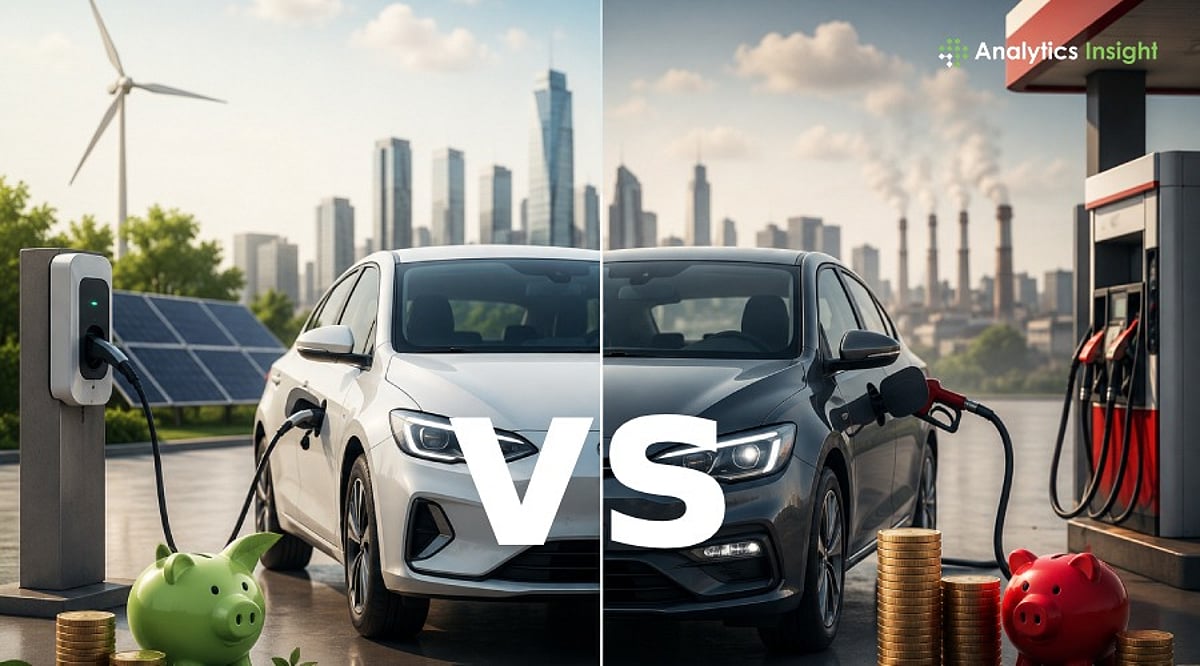
    Electric cars are more expensive upfront but offer significantly lower running costs, making them cheaper than petrol cars over time, especially for daily commutes. In 2026, the gap in total ownership costs has narrowed further, with electric vehicles (EVs) recovering their price premium within three to four years.

    Daily Cost of Driving

    Petrol prices remain near Rs. 100 per litre in many parts of India. A typical petrol car delivers about 14 km per litre, translating to roughly Rs. 7 per kilometer. In contrast, electric cars consume 15–18 kWh per 100 km. At home electricity rates of around Rs. 8 per unit, the cost drops to Rs. 1.2–Rs. 1.5 per kilometer. Even using public fast chargers, the cost stays between Rs. 2.5 and Rs. 4.5 per km — a 70–80% reduction compared to petrol.

    Yearly Fuel and Charging Expenses

    For a driver covering 15,000 km annually, petrol costs about Rs. 105,000 per year. Home-charging an electric car for the same distance costs just Rs. 20,000–Rs. 25,000. That’s over Rs. 80,000 in annual savings, a gap that widens as petrol prices rise.

    Maintenance Costs Remain Lower for EVs

    Petrol cars require regular oil changes, filter replacements, spark plug service, clutch and gearbox work, and exhaust repairs — costing Rs. 12,000–Rs. 20,000 per year. Electric cars have far fewer moving parts, no engine oil, and no exhaust system, reducing annual maintenance to Rs. 4,000–Rs. 8,000. Studies show EVs cut maintenance expenses by 40–60%.

    Purchase Price Still Favors Petrol Cars

    In 2026, a compact petrol SUV in India costs around Rs. 13–14 lakh, while a comparable electric SUV ranges from Rs. 16–18 lakh — a premium of Rs. 3–5 lakh. However, manufacturers like Tata and Mahindra are introducing lower-priced EVs, gradually closing the gap.

    Charging Infrastructure Still Creates Problems

    Petrol stations are ubiquitous, but charging stations remain limited in many areas. A June 2026 survey of Uber drivers found charging availability is now a bigger concern than vehicle price for those considering switching to EVs. Fast-charging stations also cost more than home charging, reducing savings for drivers dependent on public networks.

    Five-Year Ownership Cost Comparison

    A petrol car priced at Rs. 13.5 lakh incurs about Rs. 5 lakh in fuel and Rs. 70,000 in maintenance over five years — total approximately Rs. 19.2 lakh. An electric car at Rs. 17 lakh needs only Rs. 70,000 for charging and Rs. 25,000 for maintenance, totaling about Rs. 17.95 lakh. Despite the higher upfront cost, the EV recovers the difference within three to four years.

    Final Verdict

    Electric cars clearly cost less to run. Daily expenses are much lower, yearly fuel savings are significant, and maintenance remains minimal. Petrol cars still appeal to buyers seeking a lower purchase price and easy access to fuel stations, especially for long-distance travel. However, for regular city driving and higher annual mileage, EVs offer better long-term value. The shift toward electric vehicles continues because lower running costs have become impossible to ignore.

    FAQs

    1. Are electric cars cheaper to run than petrol cars in 2026? Yes, electric cars cost much less per kilometer because electricity remains far cheaper than petrol.
    2. How much does a petrol car cost per kilometer in 2026? A petrol car costs around Rs. 7 per kilometer based on average fuel prices and mileage.
    3. How much does an electric car cost per kilometer in 2026? An electric car usually costs between Rs. 1.2 and Rs. 1.5 per kilometer with home charging.
    4. Why do electric cars have lower maintenance costs? Electric cars have fewer mechanical parts and do not require engine oil changes, exhaust repairs, or spark plug replacement.
    5. Which car type saves more money over five years? Electric cars usually save more money over five years because charging and maintenance costs stay much lower than petrol cars.
  • Top Convertible Refrigerator Brands in India for 2026: Flexible, Efficient Cooling

    Top Convertible Refrigerator Brands in India for 2026: Flexible, Efficient Cooling

    Refrigerators have evolved from basic cooling appliances to smart storage solutions. In India, convertible refrigerators have gained popularity for their ability to switch between freezer and fridge compartments, adapting to changing household needs. Whether it’s storing extra vegetables during festival seasons or freezing bulk purchases, these models offer flexibility and energy savings.

    What Is a Convertible Refrigerator?

    A convertible refrigerator lets you adjust the function of the freezer compartment—turning it into additional fridge space or back to a freezer as needed. This feature is controlled digitally, allowing you to optimize storage based on your weekly groceries, seasonal produce, or family size. Most modern models also include inverter compressors, digital displays, and multiple cooling modes for efficient operation.

    Why Choose a Convertible Fridge?

    Indian households often face varying storage demands. Convertible refrigerators help reduce food waste by providing extra fridge space when needed, and they maintain energy efficiency by adjusting cooling based on usage. Many models are designed to work without a voltage stabilizer, making them suitable for areas with fluctuating power supply. Energy savings from inverter technology also lower electricity bills over time.

    Top 10 Convertible Refrigerator Brands in India

    Here are the leading brands offering convertible refrigerators in the Indian market as of June 2026:

    • Samsung – Known for digital inverter compressors that deliver consistent cooling and energy efficiency even under heavy use.
    • LG – Offers smart diagnostics, stabilizer-free operation, and multi-airflow systems for uniform cooling.
    • Whirlpool – Recognized for quick cooling mechanisms and durable designs at competitive prices.
    • Haier – Provides affordable, space-saving models ideal for small apartments and families.
    • Godrej – Tailored for Indian climates, with efficient cooling even in high temperatures.
    • Panasonic – Focuses on temperature consistency and quiet operation with well-insulated compartments.
    • Bosch – Premium build quality with advanced cooling technology and long-lasting durability.
    • Hitachi – Features advanced cooling technologies and is favored for reliability.
    • Electrolux – Mid-range models with user-friendly controls and efficient cooling for everyday needs.
    • Siemens – German-engineered premium models that emphasize strong performance and durability.

    How to Select the Right Convertible Refrigerator

    Consider your family size, kitchen space, and typical storage needs. Larger families benefit from bigger capacities with convertible zones, while smaller households may opt for compact, energy-efficient units. Always check the energy rating—models with 5-star BEE ratings offer the best long-term savings. Features like inverter compressors and multi-airflow systems improve temperature stability and reduce power consumption.

    Final Thoughts

    Convertible refrigerators have moved from a luxury to a practical necessity in modern Indian homes. They offer greater flexibility, reduce food waste, and improve energy efficiency. With multiple brands offering models across various price ranges, there is a suitable option for every budget and lifestyle.

    Frequently Asked Questions

    1. What is a convertible refrigerator?
    A convertible refrigerator allows you to switch the freezer compartment into additional fridge space and vice versa, using digital controls. This flexibility helps manage seasonal storage needs.

    2. Which brands are best for convertible refrigerators in India?
    Top brands include Samsung, LG, Whirlpool, Haier, Godrej, Panasonic, Bosch, Hitachi, Electrolux, and Siemens—all offering energy-efficient models with inverter technology.

    3. Are convertible refrigerators energy efficient?
    Yes, most models use inverter compressors that adapt cooling to usage, leading to lower electricity consumption and stable temperatures.

    4. Who should buy a convertible refrigerator?
    These are ideal for families with varying storage needs, small apartments, and those who store seasonal produce. They help optimize freezer and fridge space efficiently.

    5. What is the price range for convertible refrigerators in India?
    Prices typically range from ₹18,000 to over ₹1,00,000 depending on brand, capacity, and features. Premium models include smart cooling, better durability, and advanced inverter systems.

  • How Fintech Is Powering India’s Startup Boom in 2026: UPI, Embedded Finance, and Merchant Lending Lead the Charge

    How Fintech Is Powering India’s Startup Boom in 2026: UPI, Embedded Finance, and Merchant Lending Lead the Charge

    India’s fintech story in 2026 is one of divergence: venture funding has normalized, but the real-economy footprint of fintech continues to expand. Despite a slowdown in capital inflows, usage metrics show no signs of easing. UPI processed 23.2 billion transactions worth ₹29.90 lakh crore in May 2026 alone, while the RBI’s Digital Payments Index rose to 493.22 in March 2025 from 445.50 a year earlier. This is why fintech remains a critical engine for startup growth—it has evolved from a venture category into essential infrastructure.

    Payments, merchant acceptance, embedded finance, account aggregation, and digital lending rails are reducing friction for e-commerce, SaaS, consumer internet, logistics, and MSME startups. The regulatory architecture has also matured: UPI continues to expand globally, the Account Aggregator framework is entering a more formal phase, RBI’s interoperable sandbox lowers experimentation costs, and the DPDP Rules raise the baseline for trust and data governance.

    Funding Reset, Operating Boom

    India remains the world’s third-largest fintech ecosystem. IBEF pegs the domestic fintech market at $111 billion today, with potential to reach $421 billion by 2029. Tracxn counted 16,461 fintech companies in India, including 2,890 funded firms and 30 unicorns as of late May 2026. The macro context remains supportive: the World Bank reports India grew 6.5% in FY24-25, and the IMF projects 6.5% real GDP growth in 2026. With 886 million active internet users in 2024 and a mobile broadband base of 944.12 million, the digital user base is vast and growing.

    Financial inclusion is also deepening. PMJDY had 57.78 crore accounts as of February 2026, 55.8% held by women and 78.2% in rural/semi-urban areas. RBI’s Financial Inclusion Index improved to 67.0 in March 2025 from 64.2 a year earlier. UPI now accounts for 84% of retail payment volumes, with 185.9 billion transactions totaling ₹260.6 lakh crore in FY25. By FY26, UPI’s annual value exceeded ₹314 lakh crore with 700+ banks live, and India accounts for nearly 49% of global real-time payments.

    How Fintech Powers Startup Formation and Scaling

    Fintech behaves as a productivity layer for the startup economy. API-led rails for checkout, collections, payouts, KYC, merchant onboarding, and small-ticket credit lower the cost of starting and scaling a business. Credit deepening is the second leg: NITI Aayog’s 2026 credit report expects women’s credit penetration to reach 36%, with total credit outstanding to women rising to ₹76 lakh crore. Fintech NBFCs sanctioned 10.9 crore personal loans worth ₹1,06,548 crore in FY25.

    Adoption at the household and MSME level is another driver. 85.5% of Indian households have at least one smartphone, and 97.1% of people aged 15-29 used a mobile phone in the prior three months. Startup distribution increasingly begins with a payment-enabled, identity-linked handset.

    Case Studies: Where Value Is Accruing

    Indian fintech leaders are moving beyond pure transaction acquisition into multi-product monetization. Razorpay’s FY25 consolidated revenue rose 65% year over year to ₹3,783 crore, processing roughly $180 billion in annual payment value. PhonePe has 650+ million users and processed nearly 10 billion UPI transactions in January 2026, targeting an IPO valuation of $9–10.5 billion. BharatPe reported ₹1,734 crore in FY25 revenue with its first adjusted profit before tax, driven by merchant lending rather than just QR acceptance.

    Risks and Recommendations

    Risks include credit quality deterioration if underwriting lags growth, intense competition in payments (PhonePe and Google Pay held 79% of UPI market share in May 2026), and rising data governance and cyber costs. Private-market money is more selective, with global fintech deal count at a multi-year low in Q1 2026. For policymakers and investors, deepening AA and ULI coverage, preserving trust while lowering compliance duplication, revisiting payments economics, and prioritizing cybersecurity are key next steps.

    The bottom line: fintech is fueling India’s startup growth in 2026 less by attracting peak venture dollars and more by rewiring how startups collect money, lend, onboard, underwrite, and retain customers. Funding has become harder, but infrastructure has become stronger—a more important signal in a maturing startup market.

  • India’s Government Scrutinizes WhatsApp Username Feature Over Privacy and Security Concerns

    India’s Government Scrutinizes WhatsApp Username Feature Over Privacy and Security Concerns

    India’s central government is evaluating the potential risks of WhatsApp’s upcoming username feature, stating that it will not compromise national security while assessing the privacy-focused update. According to government sources, authorities are examining whether the username feature could be exploited for impersonation, fraud, and other cybercrimes before its wider rollout in the country.

    WhatsApp recently introduced optional usernames, allowing users to communicate without sharing their phone numbers. This feature is designed to enhance user privacy, particularly in group chats and when interacting with unknown individuals. Users can create a personal username in the app’s account settings, while creators and brands can set usernames matching their Instagram or Facebook handles.

    However, authorities view anonymity as a potential threat that could lead to fake profiles and internet fraud. According to sources, the government is carefully weighing the implications of this feature to avoid undermining India’s digital security framework and ongoing efforts to combat cyber fraud.

    On the other hand, WhatsApp continues to tie accounts to users’ mobile numbers. Meta maintains that usernames are simply another way to connect without revealing phone numbers, aiming to balance privacy with security.

  • India Scrutinizes WhatsApp’s New Username Feature Over Impersonation and Fraud Risks

    India Scrutinizes WhatsApp’s New Username Feature Over Impersonation and Fraud Risks

    The Indian government is closely examining WhatsApp’s upcoming username feature following concerns about fake accounts and online fraud. Sources from the Ministry of Electronics and Information Technology (MeitY) indicate that officials will thoroughly study the feature before it becomes widely available. The goal is to ensure the new capability does not introduce additional risks for users.

    WhatsApp’s username feature allows people to chat without sharing their phone numbers. Instead, users can create a unique identifier—up to 35 characters long, including letters, numbers, dots, and underscores—to communicate with new contacts, join groups, or connect with businesses. The company touts this as a privacy improvement, helping keep personal phone numbers private.

    Government Raises Safety Concerns

    While the feature enhances privacy, the government believes it could also create opportunities for abuse. For example, a malicious actor could register a username that closely resembles a real person’s name or a trusted business. Unsuspecting users might not notice the subtle difference and could end up interacting with impostors, leading to scams, fraud, or the spread of misinformation.

    Officials have stressed that user safety remains the highest priority. Every legal and security implication tied to the feature will be reviewed. If the government finds insufficient safeguards, MeitY may issue a notice to WhatsApp demanding stronger protections before the broader rollout.

    WhatsApp’s Planned Protections

    WhatsApp has already announced several measures to prevent misuse. The company will not maintain a public directory of usernames; users must know the exact username to start a conversation. Additionally, WhatsApp is introducing an optional username key—a secondary code that must be provided before a first message can be sent. This adds an extra layer of security.

    To further reduce impersonation risk, the platform plans to reserve usernames linked to government offices, public figures, celebrities, and well-known brands. WhatsApp says these steps will help keep the platform safe as the feature expands.

    Security experts caution, however, that fake accounts remain a challenge. A scammer could simply alter one letter or add a number to a legitimate username, creating a convincing impostor. Given that online fraud is already prevalent in India, robust verification mechanisms will be essential before the feature reaches millions of users.

    Why India Is Reviewing the Feature

    The government’s review is part of a broader effort to ensure that new technologies prioritize user protection. While privacy is important, strong security is equally necessary when a platform serves hundreds of millions of people daily.

    WhatsApp has already begun allowing users to reserve usernames prior to the official launch. Users can change or delete their usernames at any time. Businesses and creators can claim the same usernames they use on Instagram and Facebook.

    The Indian government has not announced a final decision yet, but the ongoing review signals that New Delhi wants stronger safeguards against online fraud, impersonation, and other digital security threats before the WhatsApp username feature goes live.

  • How Razorpay Revolutionized Digital Payments for Indian Businesses

    How Razorpay Revolutionized Digital Payments for Indian Businesses

    In today’s digital world, money moves faster than ever before. From online shopping and ordering your favorite food to booking tickets or paying bills, almost everything is done online. Behind this smooth flow of payments are crucial players who make these transactions happen seamlessly, including Razorpay.

    From a startup idea to one of India’s leading fintech companies, Razorpay is making online payments easier for businesses across India. The Bengaluru-based startup has become an integral part of the country’s booming fintech industry. Helping businesses accept payments, manage money, and handle finances simply and securely, what started as a small startup idea is now a trusted name for thousands of businesses across India.

    The Beginning of Razorpay

    Founded in 2014 by Shashank Kumar and Harshil Mathur, Razorpay emerged at a time when taking online payments in India was still a mess. Businesses had to go through pages of paperwork, a technical setup, and wait for approvals. Many small businesses and startups couldn’t take it anymore. The founders saw an opportunity and decided they wanted to build something simple. Something that makes digital payments easy, fast, and accessible for everyone.

    Early on, Razorpay focused only on the payment gateway, which allowed businesses to accept payments through debit/credit cards, net banking, UPI, and digital wallets. The setup was super simple, and even non-technical people could get going quickly. This ease of use helped Razorpay stand out and catch the eye of startups and small businesses alike. As more people in India started using digital payments, the need for better financial tools grew. Razorpay continued to thrive while improving its offerings and keeping up with the changing market.

    Growing Beyond Payments

    Over time, Razorpay became much more than just payments. It quietly transformed into an entire financial solutions platform for businesses. Today, the company offers services like payroll management, subscription billing, payment links, vendor payouts, and even business banking solutions. Rather than juggling multiple tools, businesses can manage everything under one roof. This all-in-one system saves businesses time and manual effort. So instead of hopping between multiple platforms, you can collect customer payments, pay employees, manage subscriptions, and track transactions, all from one dashboard.

    Innovation, Security, and Trust

    One of the biggest reasons behind Razorpay’s success is its focus on innovation. The company regularly builds new features and tools to make financial management easier for businesses. Be it automating payments, managing subscriptions, or simplifying salary transfers – Razorpay focuses on reducing complexity. Another important factor is security, as Razorpay handles financial transactions and sensitive data – safety is always top of mind. They constantly work to improve their security systems and follow industry regulations, which helps businesses trust them with their daily operations. Razorpay is also known for its strong customer support and user-friendly design. Many businesses choose Razorpay because it is easy to use, even for people without technical knowledge. Apart from tech, they have built an awesome work culture at Razorpay. They encourage teamwork, learning, and creativity. They allow their employees to think freely, take risks, and improve their products. This culture of innovation has helped them grow quickly and stay competitive in the fast-changing fintech industry.

    Impact and Future of Razorpay

    Razorpay’s impact isn’t limited to just handling payments. It has enabled thousands of entrepreneurs and small businesses to thrive by making digital finance accessible. Now, many small businesses that previously struggled with online payments can operate smoothly. By streamlining finances, the company is helping businesses move online and reach more people. Looking ahead, we expect Razorpay to continue playing an essential role in shaping the future of digital finance as new technologies such as AI, embedded finance, and advanced payment systems transform how businesses manage their money. Razorpay is already working on these innovations to enhance its platform. As more and more digital transactions take place in India, there will be an increasing need for easy and secure financial tools. With its tech prowess and customer-centric approach, Razorpay will play a crucial role in this space.

    Final Thoughts

    The story of Razorpay shows how a simple idea can make a big impact. What started as a solution to simplify online payments has grown into one of India’s leading fintech companies. Through continuous innovation, robust security, and a focus on customer needs, Razorpay has built a trusted platform for businesses of all sizes. As India moves further into a digital-first economy, Razorpay’s role will become even more important, helping businesses manage money in a simple, fast, and reliable way, making it a key part of the country’s financial future.

  • How Arya.ag Combines Satellite AI and Agri-Fintech to Reduce Post-Harvest Losses and Boost Farmer Credit

    How Arya.ag Combines Satellite AI and Agri-Fintech to Reduce Post-Harvest Losses and Boost Farmer Credit

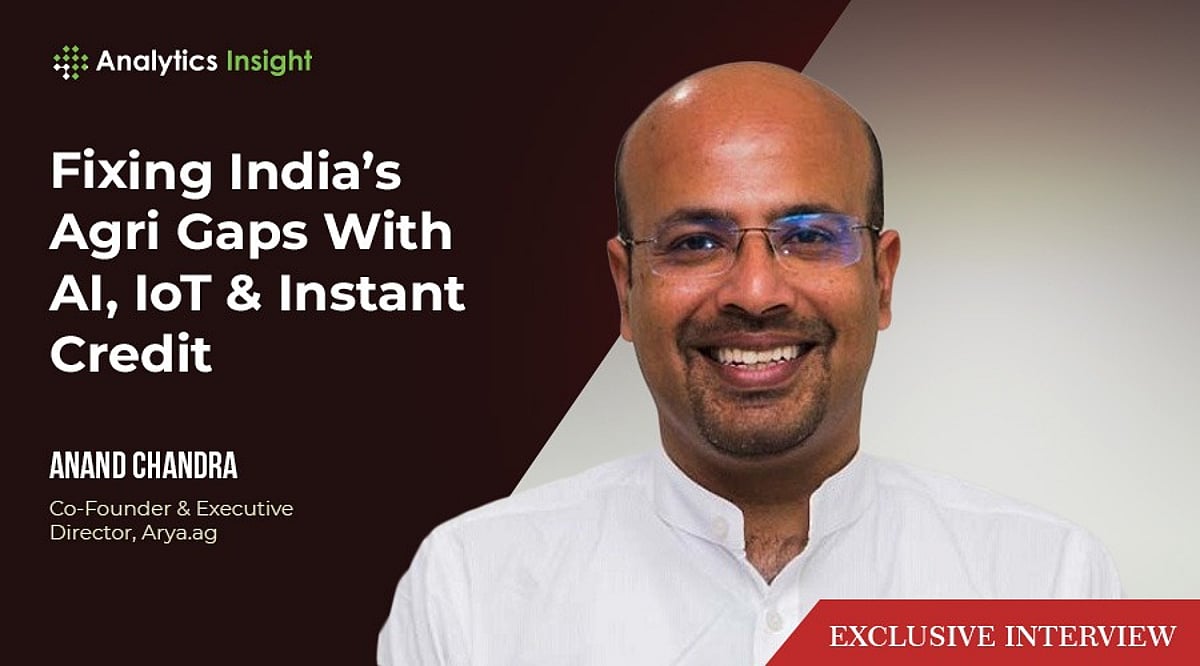
    In an interview with Analytics Insight, Anand Chandra, Co-Founder & Executive Director of Arya.ag, discusses how the company leverages satellite imagery, AI, IoT, and agri-fintech to transform India’s grain supply chain, reduce post-harvest losses, and unlock credit for farmers.

    How does Arya.ag use AI, IoT, and satellite data across the grain value chain, and what makes your tech deployment accurate across diverse geographies and crops in rural India?

    Arya.ag integrates technology to create the most practical value in the agricultural supply chain. Satellite imagery is a key layer in our stack. It enables predictive analytics on crop health, weather-related risks, and biotic stress. These insights directly inform our procurement planning and advisory services. For example, we can flag early warning signs of crop failure or pest outbreaks, allowing farmers and buyers to make timely decisions.

    AI is used for quality grading of grains and for risk scoring that determines a farmer’s credit eligibility. IoT systems are embedded into our hermetic storage infrastructure to support real-time surveillance and inventory management, particularly in warehouses close to the farm.

    What ensures accuracy is how these technologies are layered and localised. We operate across 11,000 near-farm storage points in 425 districts, covering 21 states. The models we use are trained using regional parameters and adapted to local cropping cycles and behaviour. This is not a one-size-fits-all deployment. The stack evolves with geography, making it both context-aware and scalable.

    By turning grain into digital assets, how is Arya.ag reshaping farmer access to credit, and what does this mean for financial inclusion at scale?

    Once produce enters our storage network, it is graded, weighed, and converted into an electronic balance. This balance is a digital representation of value that can be offered as collateral for credit or sold through our platform. This method unlocks access to formal finance without relying on land records, income statements, or traditional credit scores. More than 40 percent of our borrowers are accessing formal finance for the first time. Crucially, this creates an alternative to informal financial systems. Farmers no longer need to depend on local traders or commission agents for liquidity. With digital visibility and secure collateral, they can take loans based on stored produce and choose when to sell. The credit process is designed for speed and transparency. Disbursement happens in minutes, repayments are tied to commodity sales, and all transactions are visible to stakeholders. It is a system that brings financial inclusion to fragmented, underbanked regions, while also de-risking credit by focusing on the commodity rather than the farmer alone.

    What is one AI or IoT application that surprised you with its impact, and how are these insights actually enabling farmers or partners on the ground?

    Biotic stress detection through satellite imagery has been one of the most impactful use cases. We piloted this capability in select districts through our FPO partners, aiming to improve crop visibility. During one cycle, the system flagged early-stage pest risks in maize before they were visible on the ground. This advisory was delivered through our app and verified by our field teams. The FPO acted on the alert, which helped farmers intervene early and significantly reduce crop losses.

    What made this solution stand out was not just the outcome but the cost at which it was delivered. Satellite-based insights have typically been expensive or limited to large enterprises. We have made this capability available at a price rural institutions can afford. That combination of affordability, speed, and accuracy makes it practical for wide-scale deployment.

    It also reinforced an important lesson. Technology only creates value when insights are timely, actionable, and delivered through a trusted interface that connects digital systems to people on the ground.

    With poor connectivity and low digital trust in rural India, what is the most realistic way to scale agritech, and where are policymakers or innovators missing the mark?

    The most realistic path to scale is to decouple digital outcomes from digital literacy. Farmers do not need to become full-time app users. What they need is a consistent experience where technology works seamlessly in the background, delivering visible benefits.

    This is where human-led, tech-enabled models work well. A warehouse operator helping a farmer access finance or an FPO lead executing a trade creates more confidence than a digital-only system. Trust builds when the farmer sees the grain being weighed, tagged, and recorded as an asset they can track and use.

    Affordability is another critical factor. As we saw with satellite-based pest alerts, the cost at which a solution is available determines whether it can move beyond pilot projects. Technologies that are affordable, modular, and localised are the ones that will scale.

    Most importantly, the agritech sector must shift from a solution-first mindset to a problem-solving approach. The focus should be on solving specific, real-world problems, such as post-harvest loss, delayed payments, or access to working capital. When technology addresses pain points rather than pushing pre-built products, adoption becomes organic and sustainable.

    How can India build a rural workforce that is fluent in both agriculture and technology, and how can we encourage global adoption?

    India can build an agri-tech fluent workforce not just through training programs but by creating roles where agriculture and technology are integrated. We have seen this with warehouse managers, sourcing leads, FPO tech operators, and credit enablers who earn by enabling farmers through digital tools.

    This alignment of incentives drives faster learning and adoption. Rural India is not unfamiliar with technology. When there is visible utility and income opportunity, adoption is fast. For instance, the rapid rise of UPI payments among vegetable vendors and rickshaw drivers happened because it solved a real-world problem in a simple, cost-free way. Agri-tech will follow a similar path. The more a tool improves efficiency, reduces loss, or increases income, the more quickly it will be embraced even in low-literacy or low-connectivity environments.

    On the global front, India has an opportunity to set a benchmark. Countries in Africa, Southeast Asia, and Latin America face similar post-harvest and financial access challenges. If India can demonstrate that decentralised infrastructure, tech-led visibility, and commodity-backed finance can succeed in harsh conditions, it provides a practical model for others to adopt.

  • India vs Silicon Valley and China: How Its Startup Ecosystem Stacks Up

    India vs Silicon Valley and China: How Its Startup Ecosystem Stacks Up

    Three decades ago, the global startup conversation belonged almost entirely to Silicon Valley. Then China built its own parallel universe of billion-dollar companies, moving so fast that Western observers could barely track the names. Today, a third force is demanding attention. India has quietly assembled one of the most significant startup ecosystems in the world, and the comparison is no longer a stretch—it is a conversation worth having in full.

    The Scale Argument

    India currently ranks third globally in total number of unicorns, behind the United States and China. As of 2026, India has produced over 115 unicorn companies, with a combined valuation running into hundreds of billions of dollars. The sectors span fintech, edtech, healthtech, logistics, SaaS, and consumer internet, reflecting an ecosystem with genuine breadth rather than concentration in one or two categories.

    Silicon Valley remains the undisputed leader in raw numbers and total capital deployed. The US venture capital market continues to dwarf every other geography, and the Bay Area alone houses more unicorns than most countries combined. China, despite regulatory headwinds in recent years, maintains a deep pool of mature tech giants including Alibaba, Tencent, ByteDance, and Meituan—companies that have scaled globally and built product categories entirely from scratch. India has not yet produced a company of that global reach, but its trajectory is pointing upward, driven by structural rather than temporary conditions.

    The Capital Picture

    Funding is where the comparison gets interesting. Silicon Valley still attracts the largest share of global venture capital, supported by a decades-old investor network, deep institutional familiarity with tech risk, and proximity to the world’s largest technology companies. The exit ecosystem in the US—including acquisitions and IPOs—is far more mature, making it easier for early investors to deploy capital with confidence. China built its startup boom on a combination of domestic capital, state support, and an enormous consumer market. Platforms like WeChat Pay and Alipay created financial infrastructure that startups could build on without reinventing the wheel. However, the government’s relationship with the tech sector has grown complicated, with major regulatory crackdowns reshaping operations, though the underlying market scale remains.

    India faces a more volatile funding environment. After a peak in 2021 and 2022, funding dropped significantly through 2023 and 2024 before stabilising. The correction forced a reckoning with unit economics and profitability—a healthy development. Indian startups that survived the funding winter did so by building leaner, more sustainable businesses. Several high-profile IPOs, including Zomato, Nykaa, and Paytm, have tested public market appetite for new-age tech companies, with mixed but instructive results.

    The Talent Engine

    Talent is one area where India holds a genuine structural advantage. The country produces millions of engineering graduates each year, and the quality at the top tier is internationally competitive. Indian-origin founders and executives hold leadership positions at some of the world’s most valuable technology companies, including Google, Microsoft, Adobe, and IBM. Silicon Valley has long benefited from Indian talent through immigration, but India itself is now keeping more of its best engineers and founders at home. Return migration is rising—experienced professionals who built careers in the US are coming back to build companies in India, bringing capital networks, product experience, and global market exposure.

    China’s talent pool is massive and technically strong, but increasingly insular. Export controls, geopolitical tensions, and restrictions on cross-border data flows have made it harder for Chinese tech companies to attract and retain international talent. India, by contrast, operates in English, follows common law, and maintains open capital account policies for foreign investors, all of which lower friction for international engagement.

    The Market Dynamics

    India’s domestic market is its most compelling long-term asset. With 1.4 billion people, a rapidly expanding middle class, and growing smartphone penetration in tier-two and tier-three cities, the addressable market for consumer technology is enormous and still largely untapped. Silicon Valley startups typically build for a global audience from day one, using the US as a launch market and expanding outward. Indian startups have historically built for India first, creating depth and defensibility but sometimes limiting global ambition. That is changing: Indian SaaS companies like Freshworks, Zoho, and Browserstack have built significant international revenue bases, proving the model works beyond domestic borders.

    China built its internet economy behind the Great Firewall, which had a paradoxical effect. It protected domestic companies from foreign competition and allowed them to scale without facing Google or Amazon. But it also cut them off from global markets in meaningful ways. Indian startups face full international competition at home, which forces sharper product thinking and validates their capabilities when they expand abroad.

    The Infrastructure Gap

    One honest limitation India must acknowledge is infrastructure. Silicon Valley benefits from world-class physical and digital infrastructure built over decades. China made infrastructure a national priority and executed at a speed and scale few countries can match—from high-speed rail to 5G networks to digital payment systems. India’s infrastructure story is improving but uneven. The Unified Payments Interface has become a genuine success, processing billions of transactions monthly and inspiring similar systems in other countries. Digital public infrastructure, including Aadhaar and the Open Network for Digital Commerce, is creating platforms on which startups can build. However, logistics, power supply, and connectivity outside major urban centres remain real constraints for companies trying to reach the full breadth of the Indian market.

    Where India Is Heading

    The most accurate assessment of India’s startup ecosystem is this: it is real, it is growing, and it is building on foundations that are durable. The comparison with Silicon Valley is premature in terms of capital depth and global company creation. The comparison with China is more nuanced—India holds advantages in global integration and English-language capability while China retains advantages in domestic market maturity and state-backed infrastructure.

    What India has built is a third model, one driven by a large domestic market, a strong talent base, a democratic regulatory environment, and an increasingly experienced investor class. The country does not need to replicate Silicon Valley or China to matter. Building its own version, at its own pace, on its own terms, is already changing the global startup conversation.