Tag: India

  • India’s Startup Boom: How Small Towns Are Becoming Job Powerhouses

    India’s Startup Boom: How Small Towns Are Becoming Job Powerhouses

    Not long ago, a skilled professional in Coimbatore or Kochi faced a tough choice: move to a metro city or stay and compromise on career growth. That dynamic has shifted dramatically. Startups across India are now hiring aggressively in smaller towns and emerging business hubs, offering rewarding careers without the need to relocate. This trend is reshaping the country’s employment landscape.

    A Decade of Transformation

    India’s startup story has evolved from a metro-centric narrative to a nationwide phenomenon. According to the Department for Promotion of Industry and Internal Trade (DPIIT), recognized startups surpassed 2.23 lakh by March 2026, generating over 23.36 lakh direct jobs—a 36.1% increase from the previous financial year. This growth didn’t happen overnight. When the Startup India initiative launched in 2016, there were only about 500 recognized startups. Ten years later, the program has facilitated nearly Rs 15 lakh crore in private funding, and more than 1.07 lakh startups now include at least one woman director or partner.

    Shift to Tier 2 and Tier 3 Cities

    The most striking change is where these startups are headquartered. Industry and government estimates indicate that Tier 2 and Tier 3 cities now account for 48 to 50 percent of all DPIIT-recognized startups. Lower operating costs—office space can be up to 50% cheaper and talent costs 25–30% lower than in metros—combined with improved internet access and the rise of remote work have made these cities attractive for founders and employees alike.

    Hiring Beyond Software Developers

    While software engineers remain in demand, startups are hiring a diverse range of professionals. Agritech companies require field officers, agronomists, and customer support staff near farming regions. Fintech firms build local KYC verification, sales, and compliance teams. SaaS companies establish remote engineering, product, and support teams in smaller cities. Designers, marketers, analysts, and operations executives also find ample opportunities. This hiring spree creates a ripple effect, pulling in local vendors, logistics providers, training centers, and consultants who also expand their workforce.

    Emerging Startup Hubs

    Several cities exemplify this shift. Chandigarh’s tricity region had over 633 DPIIT-recognized startups by end of 2025, with companies like AgNext Technologies and DataKund hiring in AI and analytics. Kochi has gained prominence in AI and global capability centers, bolstered by Kerala’s rising startup funding. Coimbatore’s startup count grew from 271 in 2020 to 1,350 by 2024, with agritech, manufacturing tech, SaaS, and fintech companies hiring locally. These cities are retaining talent that would have previously migrated to metros.

    Government Support Fueling Growth

    Government schemes have addressed some common hurdles. The Credit Guarantee Scheme for Startups has backed loans worth over Rs 755 crore, providing capital for hiring and expansion. On the Government e-Marketplace, more than 30,000 startups have registered, with cumulative orders exceeding Rs 54,000 crore through FY 2025–26. This access to customers and capital is crucial for founders outside major investment hubs.

    Challenges Remain

    Despite the momentum, some gaps persist. Graduates in smaller cities often lack exposure to specialized roles like product management or growth marketing. Power and internet reliability remain inconsistent in certain regions. Venture capital funding is still concentrated in a handful of metros. Women-led startups, while growing, still represent a smaller share. Addressing these issues will determine whether the job surge becomes a lasting trend.

    The Road Ahead

    India’s startup story has moved beyond the metros. More founders are building outside big cities, more graduates are finding quality jobs close to home, and more businesses are proving that growth doesn’t require Bengaluru or Delhi. If this trend continues, the biggest employment gains over the next decade could come from India’s smaller towns. What began as a startup movement is now a jobs revolution—and for many in smaller cities, it means career opportunities without leaving their communities behind.

  • Top Smartphones Under ₹30,000 in India: Best Picks for 2025

    Top Smartphones Under ₹30,000 in India: Best Picks for 2025

    Looking for a feature-packed smartphone without breaking the bank? The sub-₹30,000 segment in India now offers flagship-inspired features that deliver exceptional value. Here’s what you can expect from the best devices in this price range.

    Performance

    Modern chipsets in this category provide smooth multitasking, faster gaming, and efficient power management. They balance everyday reliability with battery efficiency, ensuring a lag-free experience for most users.

    Display

    AMOLED panels with high refresh rates are now standard. These displays deliver vibrant colors, smoother scrolling, and immersive viewing, even under direct sunlight. Whether you’re streaming videos or browsing social media, the visual experience is top-notch.

    Camera

    Advanced camera systems capture detailed photos and stable videos. Improved low-light performance and AI-powered enhancements make these phones suitable for content creators and photography enthusiasts alike.

    Battery Life

    Large batteries combined with optimized processors ensure all-day usage. Fast charging minimizes downtime, keeping you connected and productive from morning to night.

    Software Experience

    Clean user interfaces, minimal bloatware, regular security patches, and extended Android updates enhance usability, privacy, and long-term reliability. Many brands now promise three years of OS upgrades.

    Gaming

    Powerful GPUs, responsive touch sampling, efficient cooling systems, and gaming modes deliver lag-free gameplay on demanding titles. Even heavy games run smoothly at high settings.

    Build Quality

    Premium materials, slim profiles, IP ratings for water resistance, and durable construction provide an attractive design that withstands everyday wear and accidental splashes.

    Connectivity

    5G support, Wi-Fi 6, Bluetooth 5.x, NFC, and advanced network optimization ensure faster downloads, seamless streaming, and reliable wireless connections across all your devices.

    Value for Money

    Smartphones under ₹30,000 now offer features once reserved for flagships. Whether you prioritize performance, camera, or display, there’s a device that fits your needs without overspending.

  • July 2026 Smartphone Launches in India: AI Flagships, Foldables, and Budget Devices from Top Brands

    July 2026 Smartphone Launches in India: AI Flagships, Foldables, and Budget Devices from Top Brands

    July 2026 is shaping up to be a landmark month for smartphone buyers in India, with major brands unveiling a wave of AI-powered devices across flagship, mid-range, and budget segments. From cutting-edge foldables to performance-oriented gaming phones, here’s what consumers can expect.

    Samsung is anticipated to launch its latest foldable Galaxy Z Fold and Galaxy Z Flip series, featuring enhanced AI capabilities, improved camera systems, and longer battery life.

    OnePlus is preparing new premium smartphones that emphasize flagship performance, ultra-fast charging, and advanced AI-driven photography.

    Xiaomi is likely to expand its premium lineup with devices powered by next-generation processors, Leica-tuned cameras, and AI-assisted imaging for superior photo quality.

    Nothing will introduce its next-generation smartphone, maintaining the signature transparent design and upgrading the Glyph interface alongside smarter AI software.

    Motorola continues to evolve its Edge and Razr series, bringing premium displays, foldable innovation, and AI productivity features to Indian consumers.

    iQOO and vivo are expected to launch performance-focused smartphones aimed at gamers and power users, equipped with the latest chipsets and optimized cooling systems.

    Budget-friendly launches from Redmi, realme, POCO, and OPPO will offer improved cameras, larger batteries, and AI-powered software enhancements that make everyday tasks smoother.

    Across these new devices, AI features such as live translation, intelligent photo editing, voice assistants, and on-device productivity tools are becoming standard, driving a more intuitive user experience.

    Stay tuned for detailed coverage as each launch unfolds. For the latest news and exclusive updates, join our WhatsApp channel.

  • Commercial LPG Cylinder Prices Drop by Rs. 183.50 from July 1 — City-Wise Revised Rates Announced

    Commercial LPG Cylinder Prices Drop by Rs. 183.50 from July 1 — City-Wise Revised Rates Announced

    Starting July 1, commercial LPG cylinder prices have been reduced, offering relief to businesses such as restaurants, hotels, caterers, and roadside vendors that depend on this fuel for daily operations. Meanwhile, the price of the standard 14.2 kg domestic LPG cylinder remains unchanged, meaning household cooking gas rates stay the same in this revision.

    In Delhi, the price of a 19-kg commercial LPG cylinder has been cut by Rs. 183.50, bringing it down to Rs. 2,930. The 5-kg Free Trade LPG (FTL) cylinder also saw a reduction of Rs. 13, now priced at Rs. 808.50 in the capital, according to a report from ANI.

    City-Wise Commercial LPG Rates (19 kg Cylinder)

    • Mumbai: Rs. 2,885.50 (down Rs. 182)
    • Kolkata: Rs. 3,081.50 (down Rs. 174)
    • Chennai: Rs. 3,106 (down Rs. 177)
    • Gurugram: Rs. 2,947.50
    • Noida: Rs. 2,930
    • Bengaluru: Rs. 3,021
    • Bhubaneswar: Rs. 3,114.50
    • Chandigarh: Rs. 2,954.50
    • Hyderabad: Rs. 3,191
    • Jaipur: Rs. 2,957.50
    • Lucknow: Rs. 3,052.50
    • Patna: Rs. 3,227
    • Thiruvananthapuram: Rs. 2,971.50

    All major cities have witnessed corresponding reductions, reflecting the broader downward revision in commercial LPG rates.

    Domestic LPG Prices Remain Steady

    For households, the price of a 14.2 kg LPG cylinder remains unchanged across the country. Current rates include Rs. 942 in Delhi, Rs. 941.50 in Mumbai, Rs. 968 in Kolkata, and Rs. 957.50 in Chennai. In other cities, domestic LPG rates are: Hyderabad Rs. 994, Bengaluru Rs. 944.50, Lucknow Rs. 979.50, Patna Rs. 1,031.50, Noida Rs. 939.50, and Jaipur Rs. 945.50.

    Why the Prices Were Cut

    The price reduction follows easing international crude oil prices, as Middle East tensions have subsided and supply disruption concerns have diminished. This comes after a hike in commercial LPG prices in June, when Indian Oil Corporation raised the Delhi price from Rs. 3,071.50 to Rs. 3,113.50 due to supply constraints linked to the regional conflict.

    Household LPG prices have been shielded from global energy price volatility, with state-owned oil marketing companies (OMCs) previously reporting substantial under-recoveries on LPG sales, as per a PTI report citing government sources. The increase in import costs was primarily attributed to the Saudi Contract Price, which serves as the benchmark for pricing India’s LPG imports.

    This latest cut provides timely respite for commercial users who rely heavily on LPG for their daily business operations.

  • How to Choose the Best Travel Credit Card in India for 2026: A Complete Guide to Comparing and Saving

    How to Choose the Best Travel Credit Card in India for 2026: A Complete Guide to Comparing and Saving

    Airport lounges look great in credit card brochures. Priority boarding sounds impressive. Travel insurance feels like a safety net. But what nobody mentions upfront is that most people with travel credit cards don’t utilize them fully. They pay ₹5,000 annual fees for cards they barely use, chase reward points that expire before redemption, and assume their “travel insurance” covers everything—only to discover it doesn’t when they need it.

    The issue isn’t that travel credit cards are scams. It’s that people pick them based on marketing instead of math. A card that’s perfect for someone flying twice a month internationally becomes a terrible deal for someone taking one domestic trip annually. So, how do you choose the best travel credit card for yourself? This article answers that question.

    What Actually Matters When Choosing

    Travel credit cards offer a mix of features, and depending on how you travel, some matter much more than others.

    • Reward points: One card gives ₹0.20 per point. Another gives ₹0.50 for the same spending. And most expire within 2–3 years, whether you use them or not.
    • Airport lounge access: Everyone wants this feature, but entry-level cards cap you at 2–4 visits yearly. If you fly twice a year, you might use it twice. The other ten months, you’re paying for access you can’t use. Premium cards offer unlimited access, but they also charge ₹10,000+ annually. Are you going to lounges often enough to justify that?
    • Foreign currency markup: International travelers lose money quietly here. Regular cards charge 3–4% every time you swipe abroad. Travel credit cards reduce this to 1–2%, sometimes zero. On ₹2 lakh spent overseas, that’s ₹4,000–6,000 saved.
    • Travel insurance: Flight delays, lost baggage, medical emergencies, and trip cancellations are covered. But the catch is that coverage applies only if you booked that trip using the specific card.

    Types of Travel Credit Cards (and Who They’re Actually For)

    • General travel rewards cards: These cards provide flexibility. You can earn on everything, redeem for flights, hotels, or whatever.
    • Co-branded airline cards: With these, you fly with one carrier, earn miles, get free baggage, and priority boarding. Makes sense if you’re genuinely loyal. Waste of money if you switch airlines constantly based on whoever’s cheapest.
    • Premium travel credit cards: Expensive, with an annual charge of ₹10,000+. However, they offer unlimited lounge access, comprehensive insurance, concierge services, and high reward rates. These are only worth it if your annual travel spend exceeds ₹4–5 lakh.
    • Entry-level cards: Perfect for someone who wants to test the waters, cost ₹500–2,000 per year, and offer basic lounge access and moderate rewards.

    How to Compare Travel Credit Cards

    Start with your real travel spending from last year. If it’s under ₹1 lakh annually, premium cards will lose you money. Pick your top three priorities—say lounge access, low forex, and flexible redemption. You can’t optimize everything. Focus on what matches your actual travel behavior.

    Now calculate the benefit value:

    • Lounge visits you’ll realistically use: ₹600 per visit.
    • Reward points from your annual spend, multiplied by the redemption value per point.
    • Forex savings if you travel internationally.
    • Insurance value (compared to the standalone policy cost).

    Add it up. If the total value is less than the annual fee, you’re paying to lose money. Check redemption rules. Some cards make it deliberately complicated. If you can’t easily use rewards, they’re worthless.

    Quick Comparison Checklist

    • Route all travel spending through the card: flights, hotels, cabs, and parking. That’s how points accumulate fastest.
    • Track points quarterly. Set calendar reminders. Banks won’t warn you before they expire.
    • Compare redemption options. Sometimes points are worth ₹0.25 per point for flights, ₹0.50 for hotels. Same points, double the value depending on how you use them.
    • File insurance claims when eligible. Flight delayed 4+ hours? Claim it. Most people forget this benefit exists.
    • Pay balances in full monthly. Interest charges destroy any reward gains within weeks.

    Common Mistakes People Make While Choosing the Best Travel Credit Card

    • Paying high annual fees without enough travel spend.
    • Assuming all travel credit cards waive forex charges. They don’t.
    • Not reading insurance terms.
    • Letting points expire unused.
    • Overspending to hit milestone bonuses.

    Eligibility and Fees

    The application usually takes about 7–14 days. First, check eligibility, compare options, then apply with your documents (PAN, Aadhaar, and income proof).

    • Eligibility: Age 21–60. Minimum income of ₹3–5 lakh annually for basic cards (₹10 lakh+ for premium). Credit score of 750+ preferred.
    • Typical fees: Joining and annual fees ₹500–10,000 (sometimes waived for the first year). Forex markup 1–3.5%. Renewal fee may be waived with a minimum spend.

    Example: How the Best Travel Credit Card Can Save You Money

    Say you take three international trips a year and spend ₹1.5 lakh on flights, ₹1 lakh on hotels, and ₹80,000 on overseas.

    • Standard card (3.5% forex): ₹2,800 in forex charges. Rewards at 1 pt/₹100 return roughly ₹1,000–₹1,500 in value.
    • Mid-tier travel credit card (1.5% forex, 4X on travel): Forex charges drop to ₹1,200, saving ₹1,600. On ₹2.5 lakh in travel spends, you earn approximately ₹3,500–₹4,000 in redeemable value.

    That’s a clear value from forex savings and rewards: ₹5,000–₹6,000.

    The Bottom Line

    There’s no universal best travel credit card. Only the one matching your actual travel habits. Flying internationally quarterly? A premium card with zero forex and global lounge access makes sense. Two domestic trips yearly? Paying ₹5,000 annually for unused benefits is wasted money. Start with your real spending from last year. Then find the card whose benefits align with that reality, not with marketing fantasies about how you should travel.

    FAQs

    What should I prioritise when choosing the best travel credit card? Your actual travel frequency decides everything. Spending ₹2–3 lakh+ annually on travel? Prioritise reward rates, lounge access, and low forex. Only travelling occasionally? Focus on low fees and flexible redemption.

    Do all travel credit cards offer lounge access? No. Entry-level might give 2–4 visits per year. Premium cards may offer unlimited. Some only cover domestic lounges. Check which networks are included.

    What happens to unused reward points? They expire, usually after 2–3 years. Set reminders to check quarterly and redeem before they vanish.

    Is travel insurance included with all cards? No. Premium cards usually include it covering delays, lost bags, and medical emergencies. Read the actual policy terms.

    What’s the minimum income required? Entry-level cards need an annual income of ₹3–5 lakh. Premium cards need ₹10 lakh or more.

    Disclaimer: Analytics Insight does not provide financial advice or guidance on cryptocurrencies and stocks. This article is provided for informational purposes and does not constitute investment advice. You are responsible for conducting your own research (DYOR) before making any investments.

  • Fire-Boltt Launches ‘Boltt’ Smartphone Brand in India via Flipkart Partnership

    Fire-Boltt Launches ‘Boltt’ Smartphone Brand in India via Flipkart Partnership

    Fire-Boltt, a leading wearables brand with a user ecosystem of over 4 crore consumers, has officially entered India’s smartphone market with the launch of a new Made-in-India brand called ‘boltt’. The smartphones will be available through Flipkart and other retail channels, marking the company’s strategic expansion from wearables to broader consumer technology.

    The boltt smartphone portfolio will include both 4G and 5G devices across the Evo and Ace series, designed to offer reliability, innovation, and affordability for Indian consumers. Manufactured in India, the brand aims to combine local production with deep market understanding, leveraging Flipkart’s extensive distribution network to reach users across metros and non-metros.

    Arnav Kishore, Founder and CEO of boltt, said: “Over the years, millions of consumers have welcomed Fire-Boltt into their daily lives, helping us build one of India’s largest connected consumer ecosystems. boltt is the next chapter in that journey. Smartphones sit at the heart of how people connect, create, learn, and aspire today, and we believe there is a significant opportunity for a homegrown brand that truly understands Indian consumers.”

    Mukund Kedia, Senior Director at Flipkart, added: “Flipkart is deeply committed to make premium smartphone experiences accessible to every consumer across metros and non-metros. With Flipkart’s large distribution scale and reach, coupled with boltt’s portfolio of 4G and 5G devices designed for everyday realities, consumers across the country can now enjoy smartphones that combine durability, performance, and innovation.”

    With strong presence in Tier 2 and Tier 3 markets and a robust logistics network, Flipkart will play a key role in boltt’s nationwide rollout. Further details about the smartphone lineup are expected in the coming weeks.

  • CheQ Elevates Bipin Toro and Vished Banger to Co-Founders as Startup Hits Profitability

    CheQ Elevates Bipin Toro and Vished Banger to Co-Founders as Startup Hits Profitability

    CheQ, India’s leading credit card management platform, has announced the elevation of Bipin Toro and Vished Banger as Co-Founders. The move recognizes their instrumental contributions to building and scaling the company since its inception in 2022.

    The announcement comes at a pivotal moment for CheQ, as the company closed FY26 with full-year profitability and surpassed $40 million in annual recurring revenue (ARR). This milestone underscores the platform’s rapid growth and the leadership team’s commitment to long-term value creation.

    Since joining in CheQ’s early days, Toro and Banger have played key roles in transforming the startup from an ambitious vision into one of India’s fastest-growing consumer credit platforms. Toro, now Co-Founder & CTO, has been central to building CheQ’s technology foundation and engineering culture, developing a scalable platform that serves millions of users. Banger, elevated to Co-Founder & CBO, has been a key architect of the company’s business strategy, financial management, and operational excellence.

    Aditya Soni, Founder and CEO of CheQ, said: “Building a company is never the work of one individual. Bipin and Vished have been an integral part of CheQ’s story from the very beginning, helping build the foundation of the company, shape its culture, and contribute meaningfully to every major milestone. Their elevation to Co-Founder recognizes the impact they have already created and the important role they will continue to play.”

    Bipin Toro commented: “Technology has always been at the heart of creating meaningful consumer experiences. Over the last few years, we have built a robust and scalable platform capable of serving millions of users. What excites me most is leveraging technology, AI, and data to make credit more transparent, accessible, and rewarding for every Indian consumer.”

    Vished Banger added: “Building a sustainable business requires a balance of innovation, operational excellence, and long-term thinking. As we enter the next phase of growth, I am excited to continue driving strategic expansion, strengthening partnerships, and building a category-defining company that consumers trust.”

    Founded with a mission to simplify credit engagement in India, CheQ started as a credit card bill payment and rewards platform. It has since evolved into a comprehensive credit ecosystem offering credit card management, credit health insights, premium rewards, utility bill payments, AI-powered assistance via Wisor, personal loans, loans against mutual funds, UPI payments, and the CheQ AU Credit Card—India’s first LED credit card.

    With an expanded founding team and strong business momentum, CheQ is poised for its next phase of innovation, scale, and product expansion, aiming to become India’s most trusted destination for everything credit.

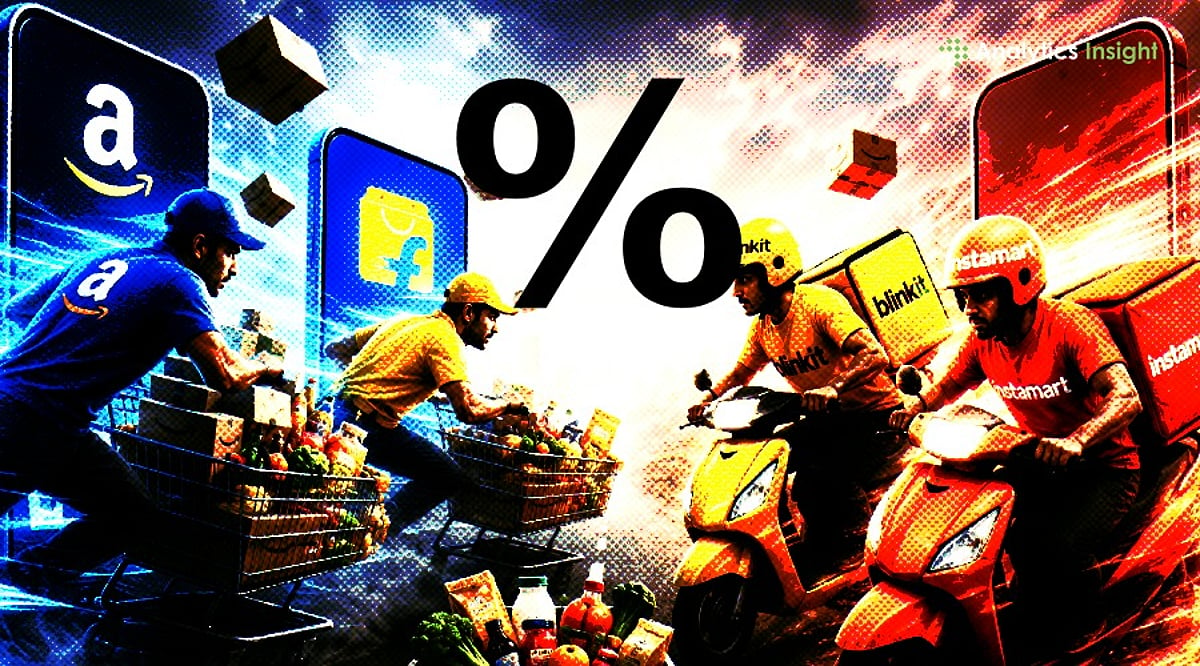
  • Amazon and Flipkart Launch Major Discount Campaigns as Blinkit and Instamart Prioritize Profit Over Price Cuts

    Amazon and Flipkart Launch Major Discount Campaigns as Blinkit and Instamart Prioritize Profit Over Price Cuts

    India’s quick-commerce market is heating up as Amazon and Flipkart roll out aggressive discounts and cashback offers to capture market share, while Blinkit and Instamart take a more cautious path, prioritizing profitability over slashing prices.

    Amazon has introduced cashback ranging from Rs. 50 to Rs. 200 on various order values and plans to expand its quick-commerce service to 300 cities with 500 dark stores. Flipkart Minutes is selling select fresh fruits and vegetables for as low as Rs. 1. The company already operates roughly 1,000 dark stores and aims to reach 1,500, with a strong push into tier-2 and tier-3 cities where demand for rapid delivery is surging.

    In contrast, Blinkit—which recently reported an operating profit—is keeping discounts minimal to protect its margins. Instamart is following a similar strategy, focusing on reaching contribution margin breakeven by using delivery fees and minimum order values rather than heavy price cuts. Zepto has also intensified competition by offering selected non-grocery items for just Rs. 9 as it seeks to broaden its customer base.

    While price wars quickly attract shoppers, they also inflate losses. Industry estimates suggest the quick-commerce sector is losing between Rs. 1,300 crore and Rs. 1,500 crore each month. The challenge for all players is to grow rapidly while keeping costs under control. Analysts note that companies that balance customer acquisition with sustainable financial performance will have a long-term advantage.

    Meanwhile, the Indian government has asked platforms to avoid advertising ‘10-minute delivery’ services to emphasize rider safety and responsible practices. Speed remains important, but sustainable business models are likely to determine the next market leaders.

  • USDT Premium in India Surges 8.5% After Regulatory Crackdown on Crypto Payments

    USDT Premium in India Surges 8.5% After Regulatory Crackdown on Crypto Payments

    Tether’s USDT is commanding an 8.5% premium in India following intensified enforcement actions against unregulated crypto payment networks. The premium, observed on peer-to-peer and over-the-counter platforms, reflects a sharp supply-demand imbalance that is impacting traders, businesses, and freelancers reliant on the stablecoin for cross-border transactions.

    Supply Tightens After Enforcement Action

    Market participants report that the crackdown has severely restricted the availability of USDT in India’s OTC and P2P markets. These channels have long been used for cross-border payments, settlement, and crypto trading. With multiple payment platforms under scrutiny, users are finding it increasingly difficult to access the token, pushing its local price well above the global benchmark of $1.

    It is important to note that the premium stems from local market conditions, not from any issues with Tether’s reserves or the stablecoin’s underlying mechanism.

    Businesses Feel the Impact

    The scarcity is expected to hurt importers, exporters, freelancers, and crypto traders who rely on USDT for fast, low-cost cross-border transfers without the delays typical of traditional banking. Analysts observe that despite the high premium, demand for stablecoin transactions remains strong, underscoring the efficiency of stablecoins for international remittances. At the same time, the situation highlights the dependence of certain segments of India’s crypto community on unregulated liquidity sources.

    Premium Expected to Ease Over Time

    Crypto market experts believe the premium will gradually decline as liquidity is restored through compliant exchanges or alternative regulatory payment methods. However, until sufficient liquidity materializes, USDT is likely to trade at a premium to its global price in India. This event underscores how swiftly regulatory actions can reshape the crypto landscape in a major economy.

  • Meta Rolls Out WhatsApp Plus Subscription in India: Exclusive Themes and Premium Features for Rs. 79/Month

    Meta Rolls Out WhatsApp Plus Subscription in India: Exclusive Themes and Premium Features for Rs. 79/Month

    Meta has officially introduced WhatsApp Plus, a new optional subscription service in India, priced at just Rs. 79 per month. This move marks the company’s first premium tier for WhatsApp, offering users enhanced customization without altering the core free experience.

    Subscribers to WhatsApp Plus gain access to 18 exclusive color themes, 14 customized app icons, unique notification ringtones, premium sticker packs, and the ability to pin up to 20 chats. Additionally, the package includes advanced chat organization tools and early access to select features as Meta continues to roll out updates.

    Users who do not subscribe will still enjoy all standard WhatsApp features, including messaging, voice and video calls, and end-to-end encryption — completely unchanged.

    To activate WhatsApp Plus, users can navigate to Settings > Subscriptions within the app and complete the payment. The feature is being phased out gradually, so not all users may see the option immediately.

    Industry experts view this launch as Meta’s strategic first step toward building a premium ecosystem around WhatsApp while maintaining its free core offering. The subscription is currently available only in India, with potential expansion in the future.