Tag: India

  • Brookfield Commits $600M to ACME’s Green Ammonia and Methanol Projects in India and Oman

    Brookfield Commits $600M to ACME’s Green Ammonia and Methanol Projects in India and Oman

    Brookfield, a global investment firm, is investing up to USD 600 million in ACME Cleantech Ventures through its Brookfield Global Transition Fund. The capital will support the development and construction of green molecule projects across India and West Asia, including green ammonia and green methanol facilities.

    Four Projects Receive Funding

    The investment will back four projects in ACME’s pipeline: the second phase of the company’s green ammonia project in Oman, two green ammonia facilities in Odisha, and a green methanol project in the Indian state. ACME Cleantech Ventures, a UK-based private entity within the ACME Group, focuses on green molecule operations and is developing these projects for both domestic and international markets.

    The transaction is structured as an equity investment. ACME Group Chairman Manoj Upadhyay told the Financial Express that the valuation and stake involved are expected to be finalized by the end of 2026. The first phase of the Oman green ammonia project is already fully funded.

    Offtake Agreements Already in Place

    ACME has secured long-term offtake agreements with several international and Indian companies. Its counterparties include Norway’s Yara International, Japan’s IHI Corporation, Mitsubishi Gas Chemicals, the Solar Energy Corporation of India, and fertilizer companies such as IFFCO, Paradeep Phosphates, Coromandel International, and Indorama India.

    Brookfield Expands Its Energy-Transition Footprint

    Brookfield already has a substantial presence in India’s renewable energy sector, with around 50GW of wind and solar assets across operating projects and its development pipeline. This latest investment broadens that exposure beyond conventional renewable power to green molecules—fuels and industrial feedstocks produced using renewable energy—which can help industries cut emissions while addressing longer-term energy security needs.

    Nawal Saini, Brookfield Managing Partner and Head of Energy for South Asia and the Middle East, said the investment combines the firm’s institutional capital and global scale with ACME’s project development and operating capabilities.

    Why Green Ammonia and Methanol Matter

    Green ammonia can be used in sectors such as fertilizers and shipping, while green methanol has applications across fuels and industrial processes. ACME aims to build a global green molecules platform serving customers across Asia, Europe, and other international markets. The company’s existing offtake agreements are expected to provide a commercial foundation as the projects move through development and construction.
  • NSE IPO Attracts 43% Subscription on Opening Day for Rs 22,569 Crore Offering

    NSE IPO Attracts 43% Subscription on Opening Day for Rs 22,569 Crore Offering

    India’s National Stock Exchange (NSE) launched its much-anticipated initial public offering (IPO) on Thursday, and the Rs 22,569 crore issue saw a 43% subscription rate on the first day. Investors bid for 3.83 crore shares against the 8.86 crore shares on offer, making it the country’s second-largest public offering.

    The IPO faced cautious demand as eleven other public offerings competed for investor capital in the same week. Qualified institutional buyers subscribed 19%, while retail investors reached 44% and non-institutional investors hit 72%.

    The NSE IPO has a price band of Rs 1,700 to Rs 1,785 per share, implying a valuation near USD 46 billion. Regulatory changes and weaker options activity have raised questions about future derivatives-led earnings growth. NSE generates about 80% of its revenue from trading, with options contributing around 60% of trading revenue. Options volumes have fallen 27% from their 2024 peak, increasing investor focus on future revenue growth.

    The crowded IPO calendar added another hurdle for the massive NSE public offering this week. Five mainboard and six SME issues together targeted around Rs 24,500 crore from investors. The NSE issue represented more than 90% of that combined value, concentrating demand around one enormous offering. Market participants therefore had several opportunities to distribute capital instead of committing heavily on opening day.

    The offer follows an offer-for-sale structure, limiting the direct benefit for NSE from the public issue. Existing shareholders are selling shares, while the exchange receives no fresh funds for expansion or new investments. NSE reduced the offering from an earlier plan, bringing the issue below its initial estimate of around Rs 30,000 crore.

    Institutional caution became clearer through first-day figures, despite strong anchor investor participation before launch. NSE raised Rs 6,746 crore from anchors, including LIC, Goldman Sachs, Fidelity, and major sovereign wealth funds. Reuters quoted Fident Asset Management founder Aishvarya Dadheech on institutional participation near the closing stages: “Subscriptions will pick up as institutional buyers start coming in.”

    The NSE IPO remains open through September 21, with listing planned for September 24. The muted opening reflects timing, valuation concerns, and uncertainty around derivatives growth rather than a single factor.

  • Tata Group Stocks Slide as SP Group Moves to Monetize Rs 25,000 Crore Stake

    Tata Group Stocks Slide as SP Group Moves to Monetize Rs 25,000 Crore Stake

    Tata Group stocks witnessed a sharp decline on Friday as the SP Group announced plans to monetize its stake in Tata Sons, targeting at least Rs 25,000 crore through two transactions over an 18-month period. The proposal reignited concerns about ownership structure and governance within the conglomerate, triggering a selloff across key listed entities.

    Market Reaction

    Tata Chemicals led the decline, dropping as much as 7.8% during early trading. Tata Investment Corporation slipped nearly 3.9%, while TCS fell 3%. Tata Motors Passenger Vehicles declined 2.6%, and Tata Power was down 1.4%. Meanwhile, Tata Steel remained almost flat, and Tata Capital gained around 1.1% in early market hours.

    SP Group’s Proposal

    The SP Group, led by Cyrus and Ratan Tata’s estranged factions, seeks liquidity from its Tata Sons holdings without immediately forcing a public listing. The proposed transaction involves shares held through Sterling Investments Corporation and Cyrus Investments. Under the plan, Tata Sons could pursue selective capital reduction through the National Company Law Tribunal (NCLT).

    Governance Disputes Intensify

    The proposal adds to ongoing tensions over Tata Sons’ leadership and future listing ambitions. The board recently approved N Chandrasekaran’s five-year reappointment as executive chairman and moved toward exploring a public listing for the holding company. However, Tata Trusts, the majority shareholder, opposed both developments, stating, “The Trusts’ position remains unchanged, as a considered judgement of a majority shareholder.” The Trusts urged the board to consider alternatives beyond listing.

    Adding to the regulatory pressure, the Reserve Bank of India (RBI) rejected Tata Sons’ request to surrender its Core Investment Company registration, keeping it within the Upper Layer NBFC framework.

    Impact on Listed Entities

    The ownership structure links several listed Tata companies to Tata Sons’ fortunes. Tata Chemicals, Tata Motors, and Tata Investment hold stakes in Tata Sons, making their valuations indirectly sensitive to these developments. According to ICICI Securities, Tata Chemicals holds around 2.5% in Tata Sons.

    Friday’s selloff reflects uncertainty surrounding Tata Sons rather than operational weakness in the individual businesses. The previous day’s rally, driven by the leadership decision and renewed listing expectations, has now reversed as investors reassess the implications of the SP Group’s proposal.

  • Apple Pay’s India Debut Could Begin With Axis Bank as First Partner

    Apple Pay’s India Debut Could Begin With Axis Bank as First Partner

    Apple Pay Prepares for India Launch

    Apple is preparing to bring its Apple Pay service to India, with Axis Bank expected to be its first banking partner for the rollout, according to people familiar with the matter. The service could launch in India as soon as next month, starting with support for Axis Bank credit cards.

    Discussions With HDFC Bank and ICICI Bank

    Apple has also held discussions with HDFC Bank and ICICI Bank about adding their cards to Apple Pay, but those talks have not yet resulted in final commercial agreements, according to two sources. Apple and the three banks declined to comment to Reuters on the discussions.

    Apple Pay is designed to allow iPhone users to make contactless payments using tokenized versions of their card details. Card information is stored on the device, so users can pay without opening another payment app. Apple is expected to add more banks through separate agreements over time, allowing the service to expand gradually after its initial rollout.

    Entering a UPI-Dominated Market

    Apple Pay will enter a payments ecosystem where UPI accounts for a major share of digital transactions. According to Reuters, UPI represented 84% of India’s digital payment volume. The National Payments Corporation of India has also introduced a tap-and-pay option using near-field communication technology, giving smartphone users another way to make contactless payments.

    Recent changes in payment rules have also created room for Apple Pay. The Reserve Bank of India allowed biometric authentication for card payments last year, supporting card transactions through features such as Face ID and Touch ID.

    Apple’s Growing Presence in India

    The India entry comes as Apple gains ground in the country’s smartphone market. Counterpoint Research data cited by Reuters shows Apple’s market share reached 8%, twice its level in 2022. India is now among Apple’s largest smartphone markets.

    Axis Bank had about 16.26 million active credit cards in July, according to RBI data, making it the fourth-largest card issuer in India after HDFC Bank, SBI Cards, and ICICI Bank. An Apple Pay launch would give Apple a foothold in India’s contactless card payment segment, and its expansion will likely depend on adding more banks and card networks to the service.

  • iPhone 18 Pro Launches in India: How to Snag Up to Rs. 7,000 Cashback and More

    iPhone 18 Pro Launches in India: How to Snag Up to Rs. 7,000 Cashback and More

    Apple’s iPhone 18 Pro and iPhone 18 Pro Max have officially arrived in India, bringing powerful new features and a premium price tag. The standard 256GB iPhone 18 Pro starts at Rs. 1,64,900, while the top-tier 2TB model reaches Rs. 3,14,900. The Pro Max begins at Rs. 1,79,900 and scales up to Rs. 3,29,900. Buyers can purchase directly from Apple’s website, Apple Stores, or authorized sellers, and the devices are also available on Amazon, Flipkart, Croma, and Reliance Digital.

    For those who prefer not to queue, quick-commerce platforms like Swiggy Instamart, Zepto, and Blinkit now offer iPhone 18 deliveries within minutes. Apple’s authorized resellers—Imagine, iPlanet, IndiaiStore, and iNvent—also carry the new models.

    Launch Offers to Cut the Cost

    To ease the upfront expense, Apple is rolling out several deals:

    • Cashback: Up to Rs. 7,000 cashback on select American Express, Axis Bank, ICICI Bank, and SBI credit cards.
    • No-Cost EMI: Up to six months of interest-free installments.
    • Trade-In: Up to Rs. 81,500 for an eligible old device, depending on model and condition.

    These offers can be combined. For example, using an eligible card alongside a trade-in and no-cost EMI can significantly lower the total paid. However, the Rs. 7,000 cashback is subject to card and offer terms and does not alter the official retail price.

    Retailers are also adding their own incentives. Flipkart, for instance, offers up to Rs. 8,000 cashback with its Flipkart Axis Bank credit card.

    Smart Shopping Strategy

    Given the high starting price, buyers should consider the combined value of EMI, trade-in, and cashback rather than focusing on the list price alone. Apple’s Trade In program provides an instant reduction at checkout, while no-cost EMI spreads payments over several months without interest.

    The iPhone 18 Pro remains a premium investment, but these launch offers make it more accessible. For the best deal, check your credit card eligibility and trade-in value before purchasing.

  • PFRDA Unveils Draft Digital PoP Framework to Expand National Pension System Access

    PFRDA Unveils Draft Digital PoP Framework to Expand National Pension System Access

    The Pension Fund Regulatory and Development Authority (PFRDA) has released an exposure draft proposing significant changes to the Point of Presence (PoP) framework that governs how National Pension System (NPS) accounts are opened and serviced. The draft, published on September 2, 2026, seeks public feedback until October 2, 2026.

    Physical and Digital Distribution Routes

    Under the proposal, NPS distribution would be split into two distinct channels. A physical PoP can operate through branches, digital tools, or a combination, but must maintain at least five offices in India and have the necessary technology to connect with the pension system and process subscriber requests.

    Digital PoPs, by contrast, would function exclusively through electronic platforms, handling onboarding, contributions, and service requests without a physical branch network. They would need robust technology systems that align with PFRDA’s platform standards and would be required to maintain a separate digital collection account for each pension scheme. The draft also proposes waiving application fees for the digital route.

    Expanded Eligibility and Capital Requirements

    The proposed framework broadens the list of entities eligible for PoP registration to include organizations regulated by financial-sector regulators, certain entities overseen by other authorities, and co-operative societies. For digital-only operations, PFRDA also suggests allowing limited liability partnerships, societies, associations, and trusts, subject to conditions.

    Most applicant categories would need a minimum net worth of Rs. 2 crore, with at least Rs. 50 lakh in capital, share capital, corpus, or capital fund, depending on the entity type.

    Introducing ‘NPS Mitra’ and Subscriber Protections

    The draft replaces the term “Pension Agent” with “NPS Mitra.” These individuals would assist with registration, service requests, and other distribution activities under agreements with a PoP. PoPs would remain responsible for the conduct of their NPS Mitras and for meeting KYC, anti-money laundering, and other regulatory obligations.

    Subscriber safeguards also remain central: a PoP must indemnify subscribers for losses resulting from proven fraud or negligence by the PoP or its NPS Mitras. Strict confidentiality and data protection requirements would apply to subscriber records.

    Context and Next Steps

    As of September 13, 2026, NPS had 2.32 crore subscribers, according to PFRDA data. Separate government labour statistics show about 61.6 crore employed people in India aged 15 and above between January and December 2025, though these figures cover different populations and do not directly measure NPS demand.

    The framework remains a proposal until the consultation period closes and PFRDA issues final regulations.

  • Maximizing Siri AI on iPhone 18 Pro: Features, Tips, and What’s New in iOS 27

    Maximizing Siri AI on iPhone 18 Pro: Features, Tips, and What’s New in iOS 27

    Apple’s Siri AI has officially arrived in India with iOS 27, bringing a more intelligent and context-aware voice assistant to compatible iPhones. The feature launched on September 14 and comes pre-installed on the iPhone 18 Pro. Currently in beta, Siri AI supports English and requires users to join a waiting list. Apple also enforces daily limits on server requests to manage load.

    Deeper Access to iPhone Data

    The updated Siri can search across Messages, Mail, and Photos. Users can ask Siri to retrieve specific details, such as booking codes from older emails. During business calls, Call Context can display relevant information like a booking number automatically.

    Screen Awareness and App Integration

    Siri AI now understands content on your screen. For example, you can ask it to turn a sports fixture list from a webpage into calendar entries. Activate Siri via the wake phrase, side button, or a swipe down from the Dynamic Island.

    Visual Intelligence in Camera

    Visual Intelligence works through the Camera app as a Siri mode. Point your camera at a printed schedule, such as a wedding card, and ask Siri to extract relevant details.

    Third-Party App Support

    Siri AI integrates with third-party apps. Apple specifically mentions WhatsApp for sending messages via voice commands. Audible playback is supported, and apps like Microsoft Outlook, Notability, and Tripsy are slated for upcoming support.

    Writing, Dictation, and Shortcuts

    Writing Tools can draft and rewrite text in any app where you type. Siri can adapt its writing style to match yours. Dictation gets an upgrade via Apple’s AFM Core Advanced model, adding punctuation and formatting as you speak. The Shortcuts app now accepts plain-language instructions—just describe the action you want instead of manually building each step.

    Price Tracking and Personal Organization

    Safari’s Notify Me feature monitors webpages for changes, including restocks and price drops. Calendar and Reminders can add events and list items through spoken instructions. Siri AI maintains conversation history across devices via iCloud, so chats continue seamlessly on Mac, iPad, Apple Watch, or Vision Pro.

    Language Support in India

    Siri AI launched with English only. French, Japanese, Korean, Portuguese, and Spanish are scheduled to arrive next month, but Apple has not announced a timeline for Hindi. The feature works on iPhone 15 Pro and later models, including the iPhone 18 Pro and iPhone Duo.

  • India’s Deep-Tech Boom: 9 Defining Technologies for 2026

    India’s Deep-Tech Boom: 9 Defining Technologies for 2026

    India is entering a new era of technological innovation. By 2026, a wave of deep-tech advancements is expected to reshape industries, businesses, and public services across the country. From artificial intelligence and semiconductors to space exploration and biotech, these are the key technologies driving India’s deep-tech boom.

    AI and Generative AI

    India’s AI ecosystem continues to expand rapidly, with applications spreading across business, research, and government services. Generative AI tools and platforms are becoming central to productivity and innovation, making advanced AI one of the most significant technology drivers of 2026.

    Semiconductor Technology

    India is investing heavily in semiconductor manufacturing, chip design, and related infrastructure. New fabrication plants and design centers are being developed to reduce reliance on global supply chains and strengthen the country’s electronics ecosystem.

    Quantum Computing

    Quantum technology is gaining momentum in India, with research focused on quantum computing, secure communications, advanced sensing, and future industrial applications. These developments could unlock entirely new capabilities across healthcare, finance, and logistics.

    Space Technology

    India’s space sector is opening up to private participation, fostering innovation in launch systems, satellites, Earth observation, and commercial space services. Startups and established companies alike are exploring new ways to make space more accessible.

    Robotics and Automation

    Robotics is moving beyond factory floors. Indian startups are developing intelligent machines for healthcare, logistics, agriculture, defense, and other real-world applications, bringing automation to everyday life.

    Advanced Drones

    Drone technology is expanding into agriculture, mapping, delivery, surveillance, and infrastructure inspection. These applications are creating new opportunities for deep-tech startups and transforming traditional industries.

    Biotechnology

    India’s biotechnology sector is advancing drug discovery, genomics, medical research, and agricultural innovation. These efforts are strengthening the country’s future pipeline of high-impact technologies.

    Electric Mobility Technology

    Battery innovation, electric vehicles, and charging infrastructure are transforming mobility in India. Deep-tech companies are developing more efficient energy solutions to support the shift to electric transportation.

    Defense Technology

    India’s defense sector is embracing drones, sensors, artificial intelligence, robotics, and space systems. A renewed focus on indigenous development is helping the country build self-reliant defense capabilities.

    Together, these technologies signal a transformative period for India, positioning the country as a major player in the global deep-tech landscape.

  • ViewSonic Unveils Google TV Series and Pro AV Displays in India

    ViewSonic Unveils Google TV Series and Pro AV Displays in India

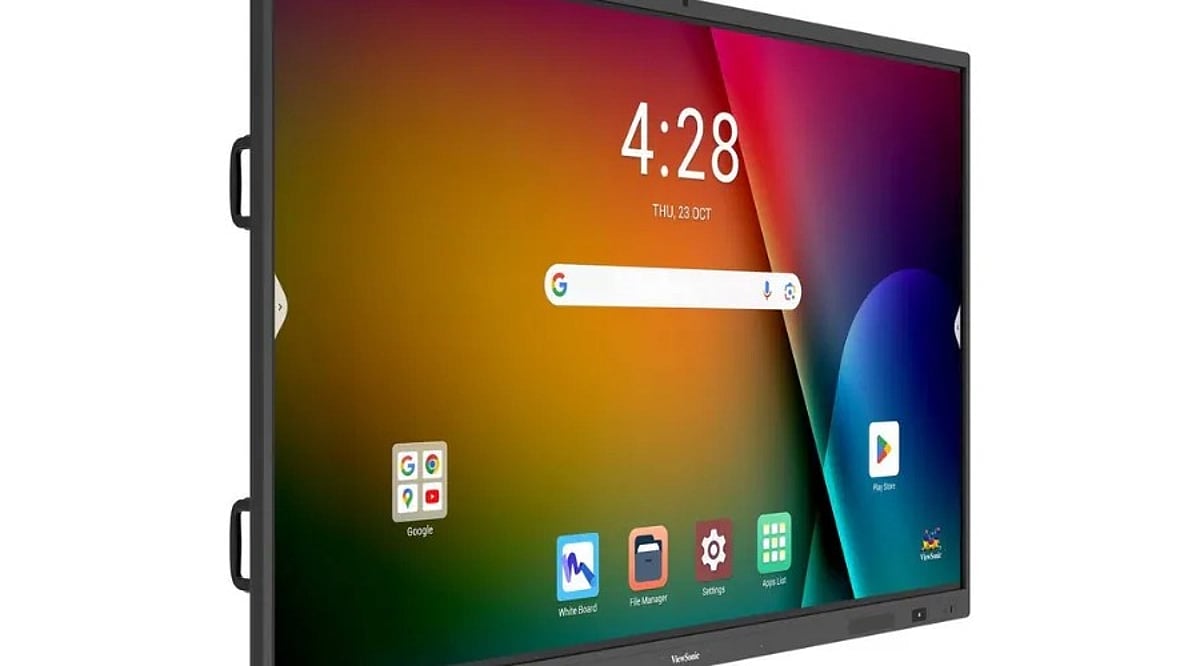
    ViewSonic has officially launched its Google TV Series in India, alongside a comprehensive range of professional AV displays and projection solutions. The company unveiled the new portfolio at InfoComm India 2026 in Mumbai on September 16, targeting businesses, hospitality, retail, education, and smart city deployments across the country.

    The ViewSonic Google TV Series is available in five screen sizes, from 32 inches to 65 inches. It runs Google TV Ref+ 5.0 on Android 14, optimized for commercial use. The smart TVs support business applications, cloud content streaming, Chromecast, HDR, Dolby Audio, and Google Assistant for voice control. ViewSonic positions these televisions for meeting rooms, reception areas, training centers, and hospitality spaces, as well as digital signage and other managed commercial environments. Pricing for the Google TV models starts at Rs. 20,000 (plus taxes), according to reports.

    Beyond the Google TV lineup, ViewSonic introduced two Direct View LED displays: the LDC027-182 for command centers (ideal for dashboards, maps, surveillance feeds, and operational data) and the LDC027G-091C for premium installations, featuring Flip Chip COB technology, a 0.94mm pixel pitch, 600 nits brightness, and a 3,840Hz refresh rate. The company also launched a foldable All-in-One LED display in the LDE Series, available in 108-inch, 136-inch, and 163-inch configurations for portable professional installations with integrated power, control, and image-stitching functions.

    Other new additions include the ViewBoard IFP105UW-N, a 105-inch interactive display with 5K resolution and a 21:9 aspect ratio that supports split-screen collaboration; the VG1457 dual-screen portable monitor; the VP3456A ultrawide professional monitor; and the CN5501-1N commercial display for continuous landscape or portrait playback with content scheduling and wireless casting via AirPlay, Miracast, and Chromecast. Open-frame displays were also announced for kiosks, retail, hospitality, and industrial integration.

    Completing the Pro AV expansion is the LSC600WU-ST short-throw laser projector, delivering 6,000 ANSI lumens with WUXGA resolution, 360-degree projection, image warping, and LAN-based control for large professional installations.

    Muneer Ahmad, Managing Director of ViewSonic India, commented, “ViewSonic has grown significantly in India,” highlighting the company’s wider portfolio across LED, collaboration, commercial displays, monitors, and projection solutions. The expanded range signals a broader focus on integrated Pro AV deployments, addressing command centers, boardrooms, retail spaces, training rooms, and large venues. ViewSonic also reported more than two-fold year-on-year growth in its Indian LED display business.

  • NSE IPO Subscription Begins: Price Band, GMP, Brokerage Insights, and Key Dates

    NSE IPO Subscription Begins: Price Band, GMP, Brokerage Insights, and Key Dates

    The much-anticipated initial public offering (IPO) of the National Stock Exchange (NSE) opens for public subscription on September 17, giving investors a chance to participate in one of India’s largest public issues. The subscription window remains open through September 21, with trading on the BSE scheduled to begin on September 24.

    IPO Price Band and Offer Details

    The NSE IPO is priced between Rs. 1,700 and Rs. 1,785 per share. The issue, which totals approximately Rs. 22,569 crore at the upper price band, is entirely an offer for sale (OFS). This means all proceeds will go to existing shareholders, not to the exchange itself.

    Lot Size and Retail Subscription

    Retail investors can bid for a minimum of eight shares, requiring an outlay of Rs. 14,280 at the upper end of the price band. The net offer reserves 50% for qualified institutional buyers, 15% for non-institutional investors, and 35% for retail investors.

    The exchange has trimmed the number of shares on offer compared with earlier plans, with the final offer comprising up to 12.64 crore shares through the OFS route. On September 16, anchor investors were allocated shares worth roughly Rs. 6,746 crore at Rs. 1,785 per share. LIC was among the largest anchor investors, joined by Norway’s Government Pension Fund, Abu Dhabi Investment Authority, and Fidelity.

    NSE IPO GMP Today

    The grey market is signaling a premium over the upper price band. Business Standard reported a grey market premium (GMP) of up to 9%, placing NSE shares around Rs. 1,945 — a Rs. 160 premium over the issue price of Rs. 1,785.

    Important note: GMP is an unofficial, speculative indicator that can change before listing. It should not be viewed as a guaranteed listing gain or as a substitute for evaluating the company’s fundamentals and valuation.

    What Brokerages Recommend

    Brokerage views are mixed. Choice Broking, Ventura, and Swastika have issued “Subscribe” recommendations, citing NSE’s dominant position in cash equities and equity derivatives, along with its clearing, indices, market data, and analytics businesses.

    Religare Broking has taken a “Neutral” stance, pointing to NSE’s dependence on trading activity, transaction charges, and regulatory changes. The brokerage also cautioned that a slowdown in market volumes could pressure earnings.

    “There is no other way to own Indian market infrastructure at this scale, and a first listing rarely comes cheap. Accordingly, we assign a rating of SUBSCRIBE.” — Choice Broking

    Allotment and Listing Timeline

    Share allotment is expected to be finalized on September 22, with shares likely to be credited to investors’ demat accounts on September 23. NSE’s shares are scheduled to debut on the BSE on September 24.

    Investors evaluating the IPO should weigh NSE’s market position, valuation, reliance on trading volumes, regulatory environment, and the fact that the issue is entirely an offer for sale.