Tag: India

  • India’s 2027 E-Commerce Rules: Compliance Burden Looms for Small Sellers and MSMEs

    India’s 2027 E-Commerce Rules: Compliance Burden Looms for Small Sellers and MSMEs

    India’s amended e-commerce rules, set to take effect on January 1, 2027, are raising compliance concerns among small sellers and micro, small, and medium enterprises (MSMEs) that rely on online marketplaces. The Consumer Protection (E-Commerce) (Amendment) Rules, 2026, introduced by the Department of Consumer Affairs, will replace the 2020 regulations and introduce new requirements on pricing, product rankings, sponsored listings, dark patterns, and consumer grievance support.

    Ranking and Pricing Rules Add to Compliance Work

    Under the updated framework, e-commerce platforms must disclose the factors determining product rankings and clearly label sponsored listings. While the goal of improving transparency is widely welcomed, a senior industry executive noted that smaller sellers may struggle with the complexity. “Requirements around disclosure of ranking parameters, particularly the relative importance of different parameters, could be difficult for small and unorganised sellers to navigate,” the executive said.

    Pricing rules also tighten: discount claims must now reference the lowest price offered in the previous 30 days (the “prior price” requirement). Industry representatives warn that this could force small businesses without dedicated compliance staff to maintain detailed price records to ensure accuracy.

    Dark Pattern Audits and Consumer Helpline Integration

    The amended rules link marketplaces to the government’s 2023 guidelines on dark patterns—practices that mislead or pressure consumers. Businesses must conduct an annual self-audit on dark patterns. Industry executives support stronger accountability but seek clarity on how certification will work for sellers using large platforms. “An annual self-audit is a reasonable way of doing that,” the executive said, while questioning whether some duties might shift from platforms to individual merchants.

    Additionally, platforms must partner with the National Consumer Helpline to streamline complaint handling and improve coordination with government-backed grievance systems.

    Flipkart Welcomes the Move

    Flipkart publicly endorsed the government’s focus on consumer protection and transparency. A company spokesperson stated, “We welcome the Government’s focus on strengthening consumer protection and transparency in e-commerce.” The company said it will study the detailed rules and continue discussions with the government, emphasizing its commitment to supporting small businesses, MSMEs, and farmers.

    As the January 2027 deadline approaches, sellers and platforms must prepare for new disclosure, pricing, audit, and consumer-support requirements. Industry representatives have urged policymakers to ensure the compliance system remains manageable for businesses of all sizes.


  • BMW India Plans Fourth Price Increase in 2026 as Rupee Weakens and Costs Rise

    BMW India Plans Fourth Price Increase in 2026 as Rupee Weakens and Costs Rise

    BMW Group India is preparing to raise vehicle prices for the fourth time in 2026, driven by the weakening rupee and escalating commodity costs. The luxury automaker has already implemented three price hikes this year, with total increases of up to 5% across its BMW and MINI lineups.

    Hardeep Singh Brar, President and CEO of BMW Group India, confirmed that another price revision is under consideration, potentially as early as next month. “The forex has hit us quite a bit. We have increased prices by 4-5% till now and there’s another one around the corner,” Brar said. He noted that foreign exchange conditions have deteriorated by about 18% since January 2025, putting significant pressure on margins.

    Expanding Local Production to Offset Costs

    Brar made the announcement following the launch of the new BMW 7 Series in India. The flagship luxury sedan is now available with both petrol and fully electric powertrains, including the high-performance BMW i7 M70. Bollywood actor Ranveer Singh unveiled the new models and was introduced as the brand voice for BMW India.

    To mitigate cost pressures, BMW is expanding local assembly. The new BMW i7 will be produced at the company’s Chennai plant, making India the only country outside Germany to locally manufacture the electric luxury sedan. However, the higher-performance i7 M70 will continue to be imported as a completely built-up unit.

    Pricing for the New 7 Series

    The new BMW 740 M Sport is priced at Rs 1.95 crore (ex-showroom), while the electric BMW i7 eDrive 50 xDrive M Sport carries the same ex-showroom price. The top-of-the-range BMW i7 M70 xDrive is priced at Rs 2.65 crore (ex-showroom) and will be imported.

    BMW did not specify the size of the next price increase, but Brar confirmed that another revision remains on the table as the company navigates currency volatility and rising input costs. Deliveries of the new 7 Series are expected to begin in October 2026.

  • 9 Essential Facts About ISRO’s EOS-05: India’s First Geo-Imaging Satellite

    9 Essential Facts About ISRO’s EOS-05: India’s First Geo-Imaging Satellite

    1. India’s First Geo-Imaging Satellite in Geosynchronous Orbit

    EOS-05 is India’s first dedicated Earth-observation imaging satellite placed in geosynchronous orbit, enabling persistent monitoring of large regions.

    2. Launched Aboard the Powerful GSLV-F17

    ISRO launched EOS-05 aboard the GSLV-F17 rocket on September 4, marking the rocket’s heaviest mission and 19th flight.

    3. Operating at Nearly 36,000 Kilometers

    EOS-05 operates in an elliptical geosynchronous orbit, ranging approximately between 34,903 and 35,884 kilometers above Earth.

    4. Continuous Regional Observation

    Its geosynchronous position allows EOS-05 to repeatedly monitor the Indian subcontinent, offering sustained coverage unavailable from conventional low-Earth orbits.

    5. Strengthening Disaster Management

    The satellite is designed to provide frequent imagery that can improve monitoring of natural disasters and enhance response planning.

    6. Supporting Agriculture and Forestry

    EOS-05 can capture imagery of large areas frequently, supporting agricultural assessment, forestry monitoring, and broader environmental management.

    7. Strategic Defense Applications

    Beyond civilian uses, EOS-05 is expected to provide strategic imagery, including supporting the Indian Navy’s information requirements.

    8. Designed for a Ten-Year Mission Life

    With a planned operational lifespan of approximately ten years, EOS-05 provides India with a long-term Earth-observation capability from geosynchronous orbit.

    9. A Milestone for GSLV Reliability

    The successful mission strengthens confidence in the GSLV after several recent launch setbacks and demonstrates India’s high-orbit launch capabilities.

  • Consumer Court Orders EPFO to Pay 6% Interest on Delayed Provident Fund Claim of Rs. 14.06 Lakh

    Consumer Court Orders EPFO to Pay 6% Interest on Delayed Provident Fund Claim of Rs. 14.06 Lakh

    The Mumbai Suburban District Consumer Disputes Redressal Commission has directed the Employees’ Provident Fund Organization (EPFO) to pay 6% annual interest on a delayed provident fund claim of Rs. 14.06 lakh. The ruling came after the commission found that EPFO had delayed the payment by 35 days, from November 9 to December 13, 2016.

    Background of the Case

    The case involves a retired employee of Fleet Maritime Services (India) Pvt Ltd who filed a PF claim for Rs. 14,06,272 on October 19, 2016. The claimant stated that he submitted a complete application, but EPFO later argued that a required joint declaration was missing from the original submission.

    According to EPFO, the documents were returned to the claimant on November 7, and a complete set was received only on December 2. The organization then settled the claim on December 14, maintaining that the payment was made within the prescribed 20-day period.

    EPFO’s Defense Rejected

    The consumer commission rejected EPFO’s explanation, noting that the organization failed to produce any written communication showing that the claimant was informed about the missing document. Without such evidence, the commission concluded that EPFO had not adequately established that the original claim was incomplete.

    The commission held that the claim should have been processed within the applicable 20-day period and that the failure to do so constituted a deficiency in service.

    Commission Orders 6% Interest

    The commission ordered EPFO to pay interest at 6% per annum on the claim amount for the 35-day delay. It is important to note that this does not mean the retiree receives 6% of the entire PF amount as a full-year payment; rather, the annual interest rate applies only to the specific period of delay identified by the commission.

    EPFO has been given 45 days to comply with the order.

    What This Means for PF Claimants

    The ruling underscores the importance of clear documentation when filing provident fund claims. Claimants are advised to keep copies of all submitted documents, acknowledgments, and any communications with EPFO. This can be crucial if a dispute arises over when a claim was received or whether additional paperwork was requested.

    The case also highlights that simply citing a missing document may not be enough to justify a delay if the organization cannot prove that the claimant was properly informed about the deficiency.

    Also Read: How to Change Your Bank Account Details in EPFO After Job Switch

  • iPhone 18 Pro and Pro Max Pre-Orders Launch in India: Pricing, Specs, and Offers

    iPhone 18 Pro and Pro Max Pre-Orders Launch in India: Pricing, Specs, and Offers

    Apple has opened pre-orders for the iPhone 18 Pro and iPhone 18 Pro Max in India today, September 12, at 5:30 PM IST. Customers can reserve the devices through Apple’s official online store, the Apple Store app, authorized retailers, and other major online and offline platforms. The phones will go on sale starting September 18. To secure a unit on launch day, buyers are encouraged to place orders during the initial pre-order window, as supply may be limited later.

    Price, Specs, and Features

    The iPhone 18 Pro starts at Rs. 1,64,900 for the 256GB model, while the Pro Max begins at Rs. 1,79,900. Storage options now go up to 2TB, with the top-end Pro Max variant crossing Rs. 3 lakh.

    Both phones are available in Black, Silver, Glacier, and a new shade called Burgundy. The Pro features a 6.3-inch display, while the Pro Max steps up to 6.9 inches with a larger battery.

    Under the hood, the new A20 Pro chip is paired with Apple’s own C2 modem, promising faster and more efficient connectivity. The camera system has received a significant upgrade: a 48MP Fusion Main sensor with a variable aperture, along with 48MP Fusion Ultra Wide and Telephoto units. Apple states this setup enhances low-light photography and provides greater control over depth of field.

    Apple has also introduced a next-generation vapour chamber for improved heat management during intensive use, plus Ceramic Shield 2 for tougher display protection.

    In a notable change, Apple shifted the pre-order date to Saturday instead of the usual Friday, as the original Friday would have fallen on September 11 — the 25th anniversary of the 9/11 attacks. The company reportedly moved the window by a day to avoid any conflict with the solemn anniversary.

    Offers and EMI Options

    Apple is offering up to six months of no-cost EMI through select banks. Shoppers using eligible American Express, Axis Bank, or ICICI Bank cards can also receive an instant cashback of up to Rs. 7,000. Through Apple’s trade-in program, buyers can get credit worth up to Rs. 81,500 depending on the condition and model of their old device.

    New purchasers also receive three months of Apple Music, Apple TV+, and Apple Arcade free with their purchase. Given the current memory shortage affecting the industry, those who delay may see delivery dates pushed beyond September 18. It is advisable to have payment details and trade-in device information ready before the pre-order window opens.

  • BHIM UPI App Review: Features, Benefits, and Challenges of India’s Government-Backed Digital Payments Platform

    BHIM UPI App Review: Features, Benefits, and Challenges of India’s Government-Backed Digital Payments Platform

    General Information

    Here are some known facts about BHIM:

    • Launched in: 2016
    • Platform Support: Android, iOS
    • Download: Click Here

    Main Features of BHIM

    Below are some important BHIM features.

    • Provides quick transfer of money between bank accounts based on mobile numbers, UPI ID, or account numbers with authenticated transactions.
    • Supports payments by QR code to merchants, online as well as offline purchases with ease of payment.
    • Provides features like utility bill payment, mobile top-ups, account balance checking, and transaction history viewing all in one application.
    • Provides digital transaction capability via multiple bank accounts through the Unified Payments Interface.
    • Brings together UPI payments, merchant transactions, bill payments, and banking services all in one reliable UPI Payment App.

    Benefits of BHIM

    Below are some BHIM benefits.

    • Ensures quick and safe UPI payments, making it possible for people to transfer and receive money instantly without divulging sensitive personal bank details.
    • Supports multiple banks to allow customers to make digital payments from one application.
    • Facilitates routine financial tasks through features such as QR code payments, bill payments, mobile recharges, and viewing transaction history.
    • Offers an easy-to-use platform that enables digital payments for users with or without experience in using UPI payments.
    • UPI Payment App brings together safe money transfers, payments at merchants, bank payments, and bill payments into one convenient application.

    Challenges of BHIM

    Some BHIM challenges users may experience while using the platform.

    • Transactions might sometimes be delayed during times of heavy UPI traffic or when there are banking network problems.
    • Some aspects of features and banking services are provided by the participating bank and may be different for various banks.
    • Internet connectivity is necessary for executing UPI payments, synchronizing the account details, and providing payment services.
    • Users might sometimes face problems with login, bank linking, and transaction verification after updates and peak usage times.
    • The UPI Payment App offers secure digital payment services, but transactions can only be successful when the bank and UPI network are active.

    Subscription Information

    The BHIM app is free to download, and there are no subscription fees associated with using the app for making payments through UPI. Banking costs and transaction limits will vary from bank to bank.

    Support Options

    Help Center and Learning Resources: FAQs, user guides, BHIM Help Center, UPI resources, safety tips, NPCI documentation, product updates, and knowledge base.

    Customer Support: In-app support, email support, customer care assistance, Help Center resources, technical support, grievance redressal, and documentation.

    Conclusion

    The BHIM app offers an easy-to-use and safe digital payments solution by integrating UPI-based transactions, merchant payments, bill payments, and bank account management in one app. It is an ideal digital payments option for regular usage because of its government-backed app, banking support, and simplicity of use. While there might be problems due to network connection or any bank-related problems that can slow down the transaction process, it still works effectively.

  • Gautam Adani’s Multi-Layer Strategy for Data Centers, AI Hardware, and Digital Infrastructure

    Gautam Adani’s Multi-Layer Strategy for Data Centers, AI Hardware, and Digital Infrastructure

    Gautam Adani is rapidly expanding the Adani Group into data centers and artificial intelligence infrastructure, positioning the conglomerate to capture the surging demand for computing power, energy, and connectivity driven by AI. Through its data center platform AdaniConneX, the group is building hyperscale facilities across India and has secured a landmark partnership with Google to develop a major AI hub in Visakhapatnam. The strategy extends beyond operating data centers to include AI hardware manufacturing via a proposed alliance with Jabil, as well as enhanced connectivity through partnerships like DE-CIX India.

    AdaniConneX: The Core of the Digital Push

    Established in 2021 as a joint venture with EdgeConneX, AdaniConneX combines the group’s infrastructure capabilities with global data center expertise. The platform targets a 2 GW renewable-powered data center footprint by 2030, with over 55 MW already live and a cumulative order book exceeding 560 MW. Its facilities serve enterprises, technology companies, and hyperscale customers, marking a shift from development to large-scale infrastructure delivery.

    Why Data Centers Fit Adani’s Ecosystem

    Data centers are becoming strategic infrastructure assets, especially for AI workloads that require high-density computing, reliable power, and sophisticated cooling. Adani’s existing interests in renewable energy, transmission, logistics, and construction create vertical integration opportunities. AdaniConneX offers Build-to-Suit and Energy-as-a-Solution models, linking digital growth with the group’s energy ambitions.

    Google Partnership Raises the Scale

    In October 2025, AdaniConneX and Google announced a major partnership to develop an AI-focused data center campus in Visakhapatnam. The broader Google AI hub involves approximately USD 15 billion in planned investment across data centers, clean energy, transmission, energy storage, and subsea connectivity. The project is planned for 2026–2030 and aims to support demanding AI workloads while expanding India’s computing capacity.

    Moving into AI Hardware Manufacturing

    In June 2026, Adani Enterprises announced an intended alliance with Jabil to develop an AI and data center infrastructure manufacturing platform. The proposed platform targets gigawatt-scale AI rack manufacturing and could support advanced infrastructure production for global data centers. This move aligns with India’s ambition to become an AI hardware hub and reduce dependence on imported components.

    Connectivity Becomes Another Priority

    AdaniConneX recently partnered with DE-CIX India to establish an interconnection hub at Chennai 1, providing access to cloud connectivity, enterprise networking, and more than 600 networks. Chennai’s subsea cable infrastructure makes it a key digital gateway, enhancing the appeal of data center campuses and highlighting Adani’s focus on connected digital ecosystems.

    What the Strategy Means for Adani’s Future

    Adani’s data center strategy reflects a larger shift in global infrastructure. AI is driving demand for computing, power, connectivity, and specialized hardware, and India is becoming an important destination for digital infrastructure investment. The group has committed to developing 5 GW of green-energy-powered, hyperscale AI-ready data centers by 2035. If execution remains strong, this could transform Adani’s role from infrastructure owner to digital infrastructure integrator, offering a model that global technology companies may find increasingly valuable.

    Frequently Asked Questions

    Who is Gautam Adani?
    Gautam Adani is the Chairman of the Adani Group, a conglomerate operating across infrastructure, energy, logistics, airports, and other sectors. Under his leadership, the group has increasingly focused on data centers and AI infrastructure.
    What is AdaniConneX?
    AdaniConneX is Adani Group’s data center joint venture with EdgeConneX, developing hyperscale and enterprise facilities across India with a focus on renewable-energy integration.
    How much data center capacity does AdaniConneX have?
    AdaniConneX had more than 55 MW of operational capacity by the end of FY26, later securing a 400 MW hyperscale order in Visakhapatnam, bringing cumulative tied-up capacity above 960 MW as of June 2026.
    What is Adani’s partnership with Google?
    AdaniConneX and Google are developing a large AI data center campus in Visakhapatnam as part of Google’s approximately USD 15 billion AI hub investment planned for 2026–2030, including clean energy, storage, transmission, and subsea connectivity.
    Why is Visakhapatnam important?
    Visakhapatnam offers access to power infrastructure, connectivity, and subsea cable networks, making it a strategic location for international digital connections and India’s emerging data center ecosystem.
  • Blockchain-Powered Grain Receipts: Arya.ag Tests Tokenized Loans for India’s $2B Farm Assets

    Blockchain-Powered Grain Receipts: Arya.ag Tests Tokenized Loans for India’s $2B Farm Assets

    Arya.ag, a major agricultural commodity network in India, is piloting tokenized grain receipts on the Avalanche blockchain. The initiative aims to digitize collateral verification and streamline lending for farmers, leveraging approximately $2 billion in stored agricultural commodities.

    Tokenized Receipts Link Physical Assets to Digital Loans

    The pilot converts verified warehouse receipts and related data into blockchain-based digital records. Working with Finternet, Arya.ag connects grain deposits, collateral commitments, warehouse receipts, and loan status on a single digital ledger. Each tokenized receipt represents ownership of stored commodities, creating a transparent link between physical assets and lending records.

    Devika Mittal, head of Ava Labs India, confirmed that testing is underway for the tokenized warehouse receipt system. The goal is to improve collateral verification and create more efficient lending workflows for agricultural borrowers.

    Potential Benefits for Agricultural Lending

    Traditional farm lending often requires banks to manually verify ownership, inventory, insurance, and existing collateral claims. Tokenized records could consolidate these details, reducing redundant checks and giving lenders clearer visibility. Banks could verify stored crops faster and check whether another lender already holds claims against those assets. Farmers could approach multiple lenders with a single verified digital record.

    Greater lender competition could eventually improve loan terms, processing times, and financing flexibility. The model also supports post-harvest financing, allowing stored crops to secure working capital so farmers can avoid immediate crop sales when market prices are unfavorable.

    Challenges and Infrastructure Focus

    Blockchain cannot independently prove that physical grain exists inside a warehouse. Reliable inspections, accurate warehouse records, legal ownership, and strong data controls remain essential. Digital access is another hurdle, as many farmers face limited connectivity, devices, or digital literacy.

    Arya.ag’s pilot therefore focuses on building infrastructure rather than promising immediate cheaper or faster credit. The company notes that faster approvals and broader credit access are potential outcomes that require real-world validation.

    Future Opportunity: Composite Digital Records

    The larger opportunity involves composite digital records that combine farmer, commodity, insurance, and loan information. Such systems could eventually create a portable financial identity for agricultural assets and lending decisions. For Indian agriculture, tokenization could become less about cryptocurrency and more about trusted collateral infrastructure.

  • Visa and ONDC Join Forces to Revolutionize Tourism Discovery in India

    Visa and ONDC Join Forces to Revolutionize Tourism Discovery in India

    Visa and the Open Network for Digital Commerce (ONDC) have announced plans to explore a collaboration aimed at enhancing tourism discovery and digital commerce in India. The announcement was made at the Global Fintech Festival 2026.

    The proposed partnership seeks to help travelers find destinations, tourism experiences, itineraries, and local businesses through digital channels. Visa and ONDC will assess how Visa’s digital commerce and discovery capabilities can integrate with ONDC’s open network infrastructure.

    Digital Tourism Discovery Network

    The initiative will focus on leveraging open network technology, trusted digital commerce, and digital tools to improve how travelers search for tourism services. The envisioned system could allow users to discover cities, attractions, travel plans, and businesses through connected digital services.

    Suresh Sethi, Visa Group Country Manager for India and South Asia, noted that open networks have become a vital part of India’s digital development. He emphasized that travelers increasingly expect digital tools to help plan journeys and find relevant experiences. “Tourism can be a very important asset where ONDC can serve as the digital infrastructure for tourism in the country,” Sethi said at the Global Fintech Festival 2026.

    Sethi also highlighted the growing use of digital agents to build travel plans and help users discover services. He suggested that a tourism network could bring together information about cities, travel itineraries, experiences, and small businesses in a connected digital system. “Everything related to tourism, whether discovering experiences, cities or travel itineraries, as well as small and medium businesses of the ecosystem can potentially be housed in one place,” he added.

    Connecting Travelers with Local Businesses

    ONDC views tourism as part of its broader mission to create digital markets for sellers while offering buyers more choices. The network already operates across sectors such as retail, financial services, and logistics.

    Hrushikesh Mehta, Chief Business Officer for Financial Services at ONDC, revealed that the network has processed over 500 million lifetime transactions. He explained that ONDC now sees tourism as another area where its open commerce model can connect buyers with service providers. “At ONDC, our North Star is creating markets for sellers and choice for buyers, whether it is in retail, financial services, logistics or tourism,” Mehta said.

    Mehta also noted that ONDC has received support from the Ministry of Tourism and Culture for its tourism track. However, he stressed the need for stronger participation from the demand side. “We are very keen to work with Visa to see what we can do together to make that happen and help connect travellers with the diverse experiences that India has to offer,” he stated.

    Expanding Access to India’s Tourism Services

    Under the proposed collaboration, Visa and ONDC will explore ways to connect travelers with tourism providers across different destinations and regions. They will also assess how digital discovery tools can make local tourism businesses more accessible.

    The approach could cover travel experiences, destination information, itineraries, and services offered by small and medium enterprises. It may also provide an additional digital channel for tourism operators participating in ONDC’s open network.

    Visa would contribute its digital commerce and discovery capabilities, while ONDC would provide its open network infrastructure. No launch date or detailed rollout plan has been announced yet. For now, the initiative remains in the exploration phase, with both organizations evaluating potential models for tourism discovery and digital commerce to serve domestic and international travelers across India.

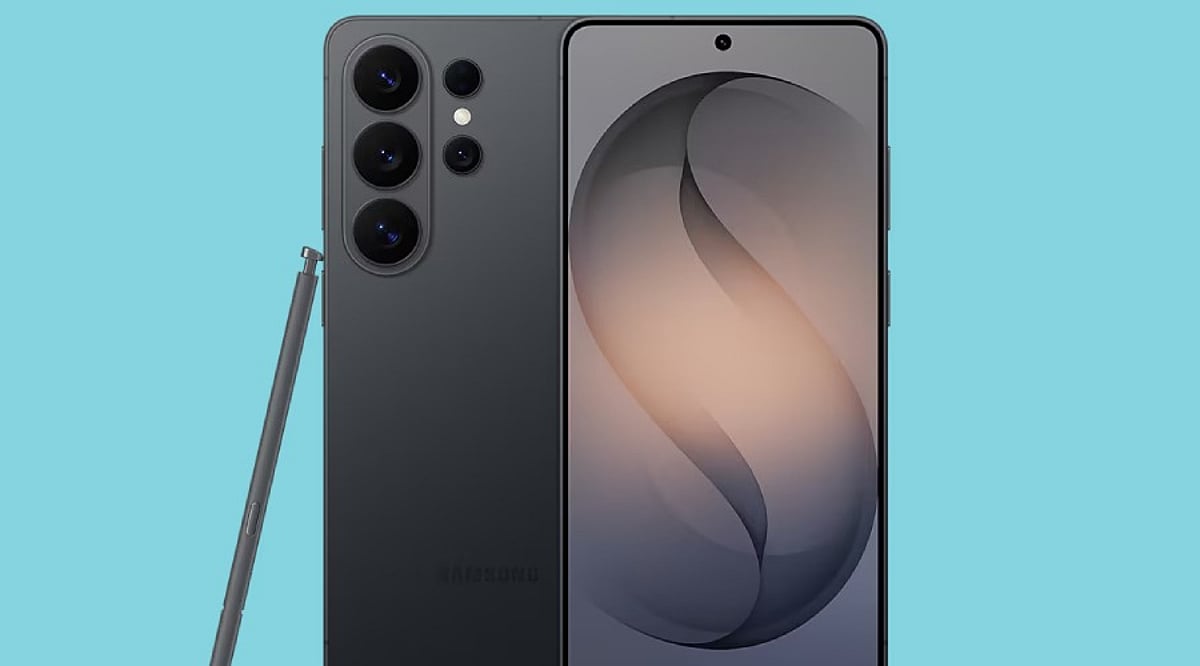
  • Samsung Galaxy S26 Ultra Refurbished Models Launch in India: Save Up to ₹15,000

    Samsung Galaxy S26 Ultra Refurbished Models Launch in India: Save Up to ₹15,000

    Samsung has introduced its Galaxy S26 and Galaxy S26 Ultra as refurbished models in India under the Certified Re-Newed (CRN) program. Buyers can save up to ₹15,000 compared to the price of a brand-new device while receiving genuine replacement parts, a certified battery, and a one-year company warranty.

    Samsung Galaxy S26 Ultra Refurbished Pricing in India

    The Galaxy S26 Ultra Certified Re-Newed model starts at ₹1,18,999 for the 256GB variant, which is ₹12,000 less than the new model’s price of ₹1,30,999. The 512GB renewed variant is priced at ₹1,35,999, compared to ₹1,50,999 for a new unit, delivering a saving of ₹15,000.

    The standard Galaxy S26 is also available under the program. Its 256GB renewed version costs ₹74,799, versus ₹79,999 for a new phone. The 512GB model is priced at ₹91,799, compared to ₹99,999 for a new unit, saving ₹8,200.

    What Samsung’s Certified Re-Newed Program Offers

    Samsung claims that each device undergoes rigorous inspection, cleaning, refurbishment, and testing to meet its quality, performance, and reliability standards. Worn or damaged components are replaced with genuine Samsung parts when necessary.

    Every renewed phone receives a Samsung-certified battery rather than a generic third-party replacement. Before shipment, Samsung factory-resets the devices and updates them to the latest available software.

    Buyers are given a one-year company warranty, matching the warranty provided with a new device. Both the Galaxy S26 and Galaxy S26 Ultra Re-Newed models are available for purchase directly through Samsung’s Certified Re-Newed program.

    Why Samsung Is Offering Refurbished Models

    With flagship prices climbing, many consumers are turning to older models, grey-market imports, and third-party refurbished devices. Samsung’s Certified Re-Newed program allows the company to capture this demand while maintaining control over the quality of refurbished units.

    The program also helps Samsung sell returned, exchanged, or lightly used devices—such as units from exchange offers, canceled orders, or those with minor cosmetic issues—without discounting new stock.

    For buyers considering Samsung’s current flagship, the Galaxy S26 Ultra 512GB Re-Newed model offers the largest savings at ₹15,000, while the standard Galaxy S26 starts at ₹74,799.