Tag: India

  • PayU Unveils AI Agent Store to Help Indian SMBs Automate Commerce and Payments

    PayU Unveils AI Agent Store to Help Indian SMBs Automate Commerce and Payments

    PayU has launched Agent HQ, a dedicated AI agent store designed specifically for small and medium-sized businesses (SMBs) in India. The platform enables merchants to deploy specialized AI agents across various stages of commerce, from improving product discoverability on AI shopping platforms to simplifying payment operations and creating conversational AI experiences.

    According to PayU, the platform helps SMBs adapt to shifting consumer behavior, noting that nearly 50% of search traffic is moving to AI agents. Shoppers referred by AI can also achieve conversion rates up to three times higher than traditional channels.

    What Agent HQ Offers

    Agent HQ is built on over a decade of PayU’s commerce intelligence, covering more than 450,000 merchants, over 700 million shopper journeys, and Rs. 7,800 billion in processed transactions.

    Through the platform, merchants can make their products and services discoverable and transactable on AI platforms such as Claude and ChatGPT, as well as messaging channels including WhatsApp. Businesses can also create custom conversational AI assistants for their websites, apps, and customer journeys. These assistants provide real-time shopper support and handle post-purchase queries.

    AI Agents for Payments and Operations

    Agent HQ includes AI agents designed to automate operational tasks such as transaction follow-ups, chargeback reconciliations, refund escalations, and settlements. The agents use merchant transaction data—including success and failure patterns, chargeback histories, and shopper behavior—to suggest targeted sales and marketing campaigns while helping merchants reduce fraud, disputes, and operational effort.

    Integration with PayU Merchant Dashboard

    Agent HQ is integrated directly into the PayU merchant dashboard. Merchants can hire an AI agent in a few clicks, choose its frequency, monitor its activity, and receive outputs through email and WhatsApp. PayU emphasizes that all agents operate strictly within boundaries defined by merchants.

    Manas Mishra, Chief Product Officer at PayU & Wibmo, said Agent HQ expands PayU’s value-added offerings by providing merchants with a personalized team of AI agents to improve discoverability, drive growth, and manage payment operations.

    Merchants including Policybazaar, Daily Objects, and Pinq Polka are already using Agent HQ to enhance their commerce workflows.


  • Google Launches Five Sustainability Projects to Accelerate India’s Climate Ambitions

    Google Launches Five Sustainability Projects to Accelerate India’s Climate Ambitions

    On September 10, 2026, Google announced five sustainability initiatives across India, focusing on solar energy, agriculture, research, and climate technology. The company aims to accelerate India’s clean energy transition by leveraging artificial intelligence, satellite data, and local partnerships.

    The initiatives target more than 300 million Indian rooftops, farmers in Telangana, and new solar capacity in Rajasthan. Google will combine geospatial AI, clean energy investments, and research support to address climate challenges.

    Expanding Solar Potential with AI

    Google is expanding its Solar API to cover over 300 million rooftops in India. The tool uses AI and imagery to assess solar potential without requiring an initial site visit. Companies like Solar Ladder and OpenSolar have already integrated the technology into their solar workflows.

    New Solar Project in Rajasthan

    The company signed a long-term agreement with ReNew Power for a 150 MW solar project in Rajasthan. This marks Google’s second Scope 3-focused solar project in India. Together, both projects will bring 300 MW of contracted solar capacity with ReNew.

    Supporting Sustainable Agriculture

    Agriculture forms another major part of the sustainability push through a partnership with Mitti Labs. The initiative will help tens of thousands of smallholder rice farmers in Telangana adopt Alternate Wetting and Drying (AWD) practices. AWD periodically drains and refills rice fields, reducing methane formation while lowering irrigation demand. Google expects the programme to mitigate nearly three million tonnes of CO₂e under the GWP20 measure. NASA-enabled satellite monitoring will help verify results alongside field networks.

    Expanding Climate Research

    Google is also expanding the Google Center for Climate Technology with new research areas. Water stewardship and waste and circularity will join green workforce training and low-carbon construction materials. The center selected three inaugural projects from 77 applications and will invite proposals through the government’s Manthan Platform. The programme aims to turn climate research into scalable, data-driven environmental solutions.

    AI for the Planet Accelerator

    Google DeepMind’s AI for the Planet accelerator includes four Indian climate-tech startups: Terrastack, Varaha Climate, Farmers for Forests, and Climitra Carbon. These startups will apply AI, Geo-AI, drones, and satellite models to environmental challenges.

    “Digital innovation and environmental stewardship can go hand in hand to create practical, lasting impact for India,” said Vrushali Gaud, Google’s Director of Climate Operations.

    The initiatives show Google broadening climate action beyond corporate energy use into India’s homes, farms, research ecosystem, and startup economy.

  • Apple iPhone 18 Pro and Pro Max Pre-Orders Open Tomorrow: Full Specs, Features, and Indian Pricing

    Apple iPhone 18 Pro and Pro Max Pre-Orders Open Tomorrow: Full Specs, Features, and Indian Pricing

    Apple is set to open pre-orders for the highly anticipated iPhone 18 Pro and iPhone 18 Pro Max in India starting tomorrow, September 12, at 5:30 PM IST. The devices will hit store shelves on September 18, with availability across India and more than 65 other countries through Apple’s official website and the Apple Store app.

    Pricing and Storage Options

    The iPhone 18 Pro starts at Rs. 1,64,900 for the 256GB variant, while the Pro Max begins at Rs. 1,79,900. Both models offer storage configurations ranging from 256GB up to a massive 2TB, catering to users with varying storage needs and budgets.

    Performance and Connectivity

    Under the hood, both phones are powered by the new A20 Pro chip, paired with Apple’s in-house C2 modem for faster and more efficient connectivity. This combination promises a significant performance boost over previous generations, delivering smoother multitasking and improved power efficiency.

    Camera Innovations

    The headline camera upgrade is a 48MP Fusion Main sensor featuring a physical variable aperture. This allows users to have greater control over depth of field and enhances low-light photography, making it a substantial leap forward for mobile photography enthusiasts.

    Design and Durability

    Apple has introduced a next-generation vapour chamber cooling system to keep the devices cooler during intensive tasks, along with the new Ceramic Shield 2 for enhanced display protection. The iPhone 18 Pro sports a 6.3-inch screen, while the Pro Max steps up to a larger 6.9-inch display with a bigger battery to support extended usage.

    Software and Features

    Both models ship with iOS 27, bringing Apple Intelligence and an upgraded Siri that leverages personal context while maintaining user privacy. Apple has also introduced four new colour options, including a fresh Burgundy shade and the return of classic black.

    Trade-In and Financing Offers

    To make the upgrade more accessible, Apple is offering trade-in deals worth up to Rs. 81,500, along with no-cost EMI plans from select banks. This is great news for existing iPhone users looking to switch to the latest Pro models.

    Greg Joswiak, Apple’s senior vice president of Worldwide Marketing, emphasized that the company focused on the areas users care about most—camera, performance, battery, and intelligence—calling these changes a major leap forward for the Pro lineup.

    With pre-orders opening tomorrow, eager buyers in India can secure their iPhone 18 Pro or Pro Max and experience the next generation of Apple’s flagship smartphones.

  • Samsung Galaxy Tab S10+ Gets Rs. 17,000 Festive Discount in India – Wi-Fi Model Now at Rs. 88,999

    Samsung Galaxy Tab S10+ Gets Rs. 17,000 Festive Discount in India – Wi-Fi Model Now at Rs. 88,999

    Samsung has slashed the price of the Galaxy Tab S10+ in India as part of a festive promotion. The discount of Rs. 17,000 applies to both Wi-Fi and 5G variants, making the premium Android tablet more accessible to buyers.

    Discounted Pricing and Availability

    The Wi-Fi model with 12GB RAM and 256GB storage now costs Rs. 88,999, down from Rs. 1,05,999. The 5G variant is available at Rs. 1,03,999, reduced from Rs. 1,20,999. Samsung also offers no-cost EMI options: six-month bank EMI starting at Rs. 14,833 per month for the Wi-Fi model, and NBFC financing from Rs. 7,417 per month. Samsung Finance+ provides EMI starting at Rs. 6,877 with a 15% down payment.

    Display and Performance

    The Galaxy Tab S10+ features a 12.4-inch Dynamic AMOLED 2X display with 2800 x 1752 resolution and a 120Hz refresh rate. An anti-reflective coating enhances visibility in various lighting conditions. The tablet is powered by MediaTek’s Dimensity 9300+ processor paired with 12GB RAM and 256GB internal storage, expandable via microSD up to 1.5TB. It runs Android with Samsung’s Galaxy AI features for productivity and creativity.

    Cameras, Audio, and Battery

    The rear camera setup includes a 13MP primary and an 8MP ultra-wide lens. A 12MP ultra-wide front camera handles selfies and video calls. Four speakers deliver immersive audio. A 10,090mAh battery supports 45W fast charging, and the tablet carries an IP68 dust and water resistance rating. The S Pen is included in the box.

    Why This Deal Matters

    The discounted price makes the Galaxy Tab S10+ a strong contender in the premium tablet segment. Its large AMOLED display, powerful processor, and included S Pen appeal to students, professionals, and creatives. However, as a 2024 model, buyers should compare it with newer tablets to ensure the discount offers sufficient value.

    Is It Worth Buying?

    At Rs. 88,999, the Wi-Fi variant provides excellent value for those who prioritize display quality and performance. The 5G model costs Rs. 15,000 more, suitable for users needing mobile connectivity. The festive offer is available for a limited period, and prices may change without notice.

  • SanDisk Launches NAS-Optimized SSDs in India: NAS 600 SATA and NAS 800 NVMe

    SanDisk Launches NAS-Optimized SSDs in India: NAS 600 SATA and NAS 800 NVMe

    SanDisk has launched a new lineup of NAS-focused SSDs in India, catering to home users, small businesses, and creative professionals. The two models introduced are the NAS 600 SATA SSD and the NAS 800 NVMe SSD, both engineered for reliable, high-performance storage in network-attached storage (NAS) environments.

    NAS 600 SATA SSD: Affordable Upgrades for Existing Systems

    The NAS 600 SATA SSD is designed as a drop-in replacement for traditional hard drives in older NAS units. It comes in a 2.5-inch, 7mm form factor and fits into 3.5-inch drive bays without additional adapters. Key specifications include:

    • Read speeds up to 560 MB/s
    • Capacities from 500GB to 4TB
    • Top endurance of 2,500 TBW (for the 4TB model)
    • Suitable for storage expansion or cache duties

    NAS 800 NVMe SSD: High-Speed Performance for Demanding Workloads

    The NAS 800 NVMe SSD targets heavier workloads such as databases, virtual machines, AI processing, and content creation. It leverages PCIe 5.0 in an M.2 2280 form factor. Highlights include:

    • Capacities from 960GB up to 7.68TB
    • Maximum read speed of 14,900 MB/s
    • Maximum write speed of 13,200 MB/s (actual speeds vary by model)
    • Endurance rating of up to 14 PBW for the top SKU

    Both SSDs are optimized for 24/7 operation in NAS systems, providing consistent performance and reliability. SanDisk states that the new drives will be available from September through its official channels and select retailers.

  • Bitcoin ETFs See $120M Outflows, LAPTOP Memecoin Crashes 95%, Pepe Whales Dump 80B Tokens

    Bitcoin ETFs See $120M Outflows, LAPTOP Memecoin Crashes 95%, Pepe Whales Dump 80B Tokens

    The cryptocurrency market witnessed several major developments recently, including significant outflows from spot Bitcoin ETFs, a dramatic collapse of a politically themed memecoin, large-scale selling by Pepe whales, a US Secret Service freeze on USDT, and a groundbreaking blockchain initiative for India’s grain storage network.

    Bitcoin Spot ETFs Record $120 Million in Net Outflows

    According to data from SoSoValue, Bitcoin spot ETFs saw a total net outflow of $120.24 million yesterday. The ETF with the highest net inflow was Morgan Stanley’s MSBT, which attracted $4.49 million, bringing its cumulative net inflow to $520.89 million. Conversely, Ark Invest and 21Shares’ ARKB experienced the largest net outflow of $77.98 million, though its historical net inflow remains at $1.39 billion. The total net asset value of all Bitcoin spot ETFs now stands at $99.33 billion, with an ETF net asset ratio of 6.31% and a historical cumulative net inflow of $55.45 billion.

    Hunter Biden’s LAPTOP Memecoin Collapses Over 95%

    The LAPTOP memecoin, named after Hunter Biden, lost more than 95% of its value within one hour of trading opening on the Base network. A wallet analysis by Bubblemaps revealed that 12,151 out of 15,206 buyers ended up losing money—roughly 80% of all purchasers. While 3,026 addresses turned a profit and 29 broke even or could not be assessed, the majority of losses were small: 11,311 wallets lost less than $1,000 each.

    Pepe Whales Sell 80 Billion Tokens

    Pepe (PEPE) remained under pressure, trading near $0.00000348 after failing to break through a key resistance level. On-chain data indicates that large holders have been reducing their positions. Wallets holding between 10 million and 100 million PEPE have collectively sold approximately 80 billion tokens since August 25. This distribution suggests profit-taking after a recent rally. Over the same period, smaller and mid-sized wallets (holding between 100,000 and 10 million PEPE) accumulated a combined 5.06 billion tokens.

    US Secret Service Freezes $52.8 Million in USDT

    The United States Secret Service froze $52.8 million in the stablecoin USDT across 52 wallets linked to Xinbi Guarantee, an illegal marketplace operating on Telegram. The operation was enabled by intelligence from blockchain analytics firm Elliptic and coordinated with the Office of Foreign Assets Control (OFAC), which designated the platform as a transnational criminal organization. Xinbi acted as an escrow service laundering proceeds from global fraud schemes, including pig butchering, processing over $24 billion since 2022.

    India’s $2 Billion Grain Network Goes On-Chain

    Arya.ag has begun recording data tied to approximately $2 billion in stored crops on an Avalanche-based blockchain for agricultural lenders in India. The system records grain deposits, electronic warehouse receipts, and loan status, enabling authorized lenders to verify crops offered as collateral. Infosys co-founder Nandan Nilekani announced the project at the Global Fintech Festival in Mumbai. The $2 billion figure represents the estimated value of crops held across Arya.ag’s warehouse network, not the value of loans recorded on the blockchain.

  • iPhone 18 Pro India: How to Save with No-Cost EMI, Cashback, and Trade-In Deals

    iPhone 18 Pro India: How to Save with No-Cost EMI, Cashback, and Trade-In Deals

    Apple has opened the iPhone 18 Pro purchase window in India with a range of financing options starting September 12. The iPhone 18 Pro starts at Rs. 1,64,900 for the 256GB model, while the Pro Max begins at Rs. 1,79,900. Buyers can reduce the upfront cost through a six-month no-cost EMI plan, eligible bank cashback, and trade-in credits. Sales officially begin on September 18 across Apple’s online and retail channels in India.

    The biggest savings come from combining no-cost EMI with cashback and a trade-in. Apple offers up to Rs. 7,000 instant cashback via select cards from American Express, Axis Bank, and ICICI Bank. Eligible customers can also receive trade-in credit worth up to Rs. 81,500, depending on the device and its condition.

    No-cost EMI does not mean banks simply waive interest. Banks calculate interest as usual, but the merchant or bank offsets that cost through an upfront discount. This keeps the repayment amount close to the discounted purchase price.

    For the 256GB iPhone 18 Pro, a six-month no-cost EMI works out to roughly Rs. 27,483 per month. A Rs. 7,000 cashback can bring the effective price down to Rs. 1,57,900, making the monthly installment about Rs. 26,317 across six months.

    Standard EMI plans tell a different story for those seeking longer repayment periods. Indicative interest rates around 15.99% can significantly raise the total cost over longer tenures. A 12-month plan may show a monthly payment near Rs. 14,961, but the overall repayment reaches roughly Rs. 1,79,532. While the lower monthly payment looks attractive, the longer tenure adds a meaningful financing cost. Buyers should compare the total repayment rather than focusing only on monthly affordability.

    Trade-in offers can create another major reduction. Apple currently advertises credit of up to Rs. 81,500, though the final value depends on the old phone’s model and condition. A strong financing strategy combines an eligible bank offer with trade-in credit and no-cost EMI. This approach lowers the amount financed while avoiding the higher interest costs of extended EMI plans.

    Bank offers can vary across cards and transactions, so the advertised Rs. 7,000 cashback does not guarantee the same benefit for every buyer. The final checkout amount, eligible tenure, and trade-in value should determine the purchase decision.

  • iPhone 18 Price Showdown: India, UAE, US – Which Country Pays the Most?

    iPhone 18 Price Showdown: India, UAE, US – Which Country Pays the Most?

    Apple’s latest iPhone lineup—the iPhone 18 Duo, iPhone 18 Pro, and iPhone 18 Pro Max—hit the global market on September 9, 2026, with pricing that varies sharply across regions. A new comparison reveals that the United States offers the lowest official prices, while India tops the list as the most expensive market for Apple’s flagship devices.

    Global Price Comparison: US, UAE, Saudi Arabia, UK, and India

    Across every storage configuration tested, the US provides the cheapest sticker price for the iPhone 18 Duo, iPhone 18 Pro, and iPhone 18 Pro Max. The UAE ranks second, followed by Saudi Arabia. The UK and India are the priciest, with India taking the top spot for highest costs.

    iPhone 18 Duo (256GB) Pricing

    The entry-level 256GB iPhone 18 Duo is priced at $1,999 in the US, which converts to roughly AED 7,336. In the UAE, the same model retails at AED 8,499—a gap of about AED 1,163. Indian buyers face a much higher cost: Rs. 2,99,900, which translates to approximately AED 11,527.

    Higher Storage Widens the Gap

    As storage increases, the price difference becomes even more pronounced. For example, the 2TB iPhone 18 Duo costs about AED 11,740 in the US (after conversion), AED 13,599 in the UAE, and nearly AED 17,293 in India.

    iPhone 18 Pro and Pro Max Pricing

    The iPhone 18 Pro starts at $1,199 in the US for the 256GB variant, while the UAE lists it at AED 5,099 and India at Rs. 1,64,900. Similarly, the iPhone 18 Pro Max begins at $1,299 in the US, AED 5,499 in the UAE, and Rs. 1,79,900 in India. Higher storage options further amplify these disparities.

    Beyond the Sticker Price: Taxes and Other Factors

    The US advantage is not absolute. Apple’s US prices are quoted before state and local sales taxes, so the final checkout amount varies by location. International buyers must also factor in travel costs, currency conversion fees, warranty limitations, and import duties, which can eat into apparent savings.

    For Indian consumers, the UAE presents a closer alternative than the US, but only after accounting for taxes, travel expenses, exchange rates, and import regulations. While the US offers the lowest list prices, the true cost depends on individual circumstances.

  • SS Retail IPO Listing Date, Price Band, and Lot Size Announced

    SS Retail IPO Listing Date, Price Band, and Lot Size Announced

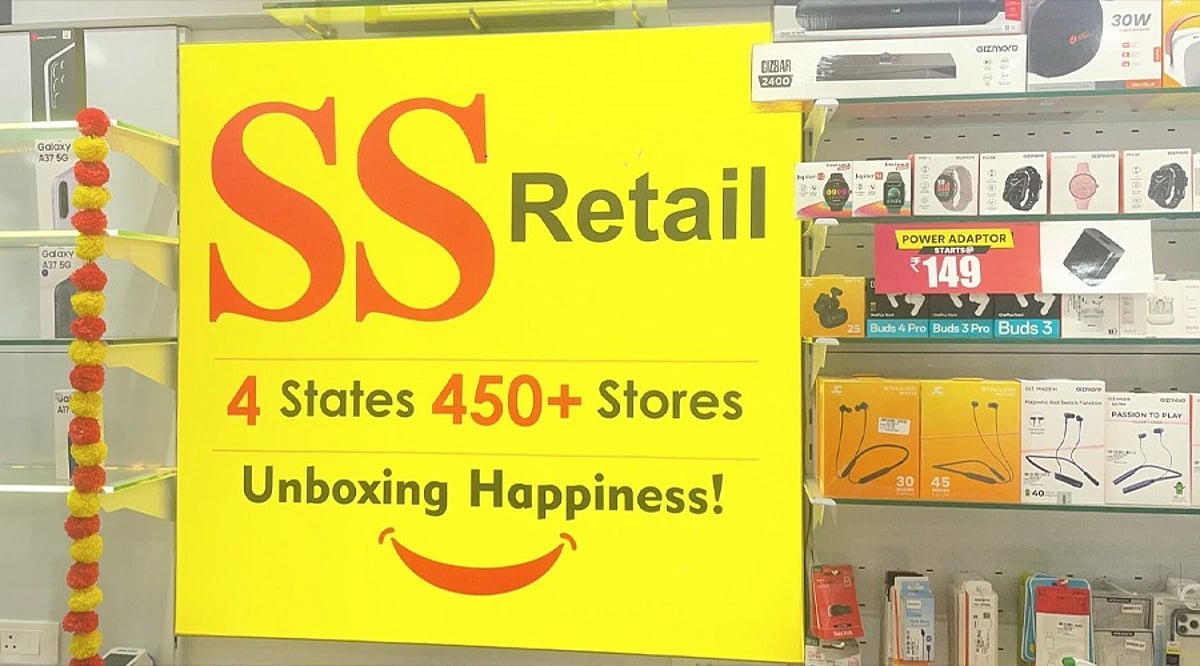
    SS Retail, a leading mobile and electronics retailer in India, is set to launch its initial public offering (IPO) on September 16, 2026. The company aims to raise approximately Rs. 500 crore through this public issue, which includes both a fresh issue and an offer for sale.

    IPO Details and Key Dates

    The three-day subscription period will run from September 16 to September 18, 2026. The price band has been fixed at Rs. 403 to Rs. 424 per equity share, with a face value of Rs. 10 each. Investors can bid for a minimum lot of 35 shares, and in multiples of 35 thereafter. At the upper price band, one lot will cost Rs. 14,840.

    The anchor book will open on September 15, one day before the public bidding begins. The basis of allotment is expected to be finalized on September 21, with refunds and share credits scheduled for September 22. The company anticipates its shares will start trading on the BSE and NSE on September 23.

    Offer Structure and Allocation

    The IPO comprises a fresh issue of shares worth Rs. 360.75 crore and an offer for sale worth Rs. 140 crore. For the net offer, up to 50% has been reserved for qualified institutional buyers, at least 35% for retail investors, and at least 15% for non-institutional investors. Additionally, shares worth up to Rs. 12 crore have been reserved for eligible employees, who will receive a Rs. 25 discount per share.

    Use of IPO Proceeds

    SS Retail plans to utilize Rs. 241.3 crore from the fresh issue for additional working capital requirements. Another Rs. 12.4 crore has been earmarked for store fit-outs as the company expands its retail network during fiscal 2027 and fiscal 2028. The remaining proceeds will be used for general corporate purposes.

    The company intends to open 57 new stores in fiscal 2027 and 58 new stores in fiscal 2028, allocating approximately Rs. 5.81 crore and Rs. 6.6 crore for these expansions, respectively.

    Business Overview and Financial Performance

    SS Retail operates a multi-brand retail network selling mobile phones, accessories, and other electronic products. As of March 2026, it operated 503 stores across Maharashtra, Karnataka, Madhya Pradesh, Goa, and Gujarat, with 458 stores in Maharashtra alone. The company identifies itself as the largest mobile phone retail chain in West India and the third-largest in India among its peers.

    For the year ended March 2026, SS Retail reported consolidated revenue of approximately Rs. 2,352.85 crore and a profit after tax of Rs. 59.28 crore. In fiscal 2025, standalone revenue stood at Rs. 1,597.9 crore, with a profit of Rs. 39.86 crore.

    The IPO is being managed by Anand Rathi Advisors and Emkay Global Financial Services as the book-running lead managers.

  • India’s Next Industrial Boom: Six Sectors Powering a New Technology Economy

    India’s Next Industrial Boom: Six Sectors Powering a New Technology Economy

    India’s Technology Economy Takes Shape

    India is undergoing a major transformation in how it builds and uses technology. According to a recent Jefferies report, six key industries are driving this shift: semiconductors, electronics, space, data centers, solar equipment, and aerospace.

    The numbers underline the momentum. India’s space industry has grown fivefold and is projected to reach USD 40-45 billion by 2030. Semiconductor investments have hit around USD 20 billion, with an additional USD 13 billion incentive plan in the works. Data centers have also seen explosive growth, expanding fivefold over the past five years and expected to hit 10 gigawatts in the next half-decade.

    Solar power remains one of India’s strongest sectors. The country is the world’s second-largest photovoltaic manufacturer, and by 2030, it aims to cover 90% of the entire solar value chain.

    Dipal Dutta, CEO of RedoQ, encapsulated the shift: “By expanding deep-tech capabilities across semiconductors, space systems, and next-generation data centers, the nation isn’t just participating in the global supply chain, it is actively rewiring it.”

    From IT Services to Building Technology

    India’s traditional technology story was centered on IT services, software, and outsourcing. Companies built software for global clients and handled tech work for businesses worldwide. The new model is broader and more ambitious. India is now striving to manufacture more of the technology it uses—chip plants underpin a local semiconductor industry, electronics factories move beyond assembly, data centers support cloud and AI services, and space and aerospace firms push deeper into global markets.

    The fundamental change is clear: India is transitioning from being a provider of technology services to becoming a builder of the hardware and systems that power them. If this growth trajectory continues, these six sectors could elevate India’s role in the global technology market significantly.