Tag: IPO

  • Oneindig Technologies IPO Allotment: Check Status, GMP, and Key Facts

    Oneindig Technologies IPO Allotment: Check Status, GMP, and Key Facts

    Investors who applied for the Oneindig Technologies IPO are expected to receive allotment status on August 4, as the basis of share allotment is finalized. The SME public issue ran for subscription from July 30 to August 3, and overall it saw a moderate response across different investor categories.

    After the allotment gets completed, successful applicants will get the shares credited to their demat accounts, while unsuccessful bidders will have their application money refunded, or their UPI mandates may be revoked, according to the timelines in the issue schedule. The company’s shares are scheduled to make their first appearance on the BSE on August 6.

    Applicants can look up the allotment position via the BSE website, the registrar Maashitla Securities Pvt. Ltd., or the NSE IPO bid verification portal, by typing in their PAN, application number, or DP ID/Client ID.

    Subscription and GMP

    The public issue wrapped up with a total demand of 1.73 times for the Rs. 27.65 crore offering. The Non-Institutional Investor (NII) category led demand with a subscription of 2.40 times, while the Retail portion was subscribed 1.84 times. The Qualified Institutional Buyers (QIB) segment received bids for 1.05 times the shares reserved.

    Overall, the company received bids for approximately 33.28 lakh shares against 19.20 lakh shares offered. Despite healthy participation, grey market sentiment remains subdued. According to market trackers, the Grey Market Premium (GMP) currently stands at Rs. 0, suggesting an expected listing price close to the IPO issue price of Rs. 96 per share.

    IPO Details and Use of Funds

    Oneindig Technologies raised Rs. 27.65 crore through a book-built issue consisting entirely of a fresh issue of 28.80 lakh equity shares, with no offer-for-sale component. The IPO was priced between Rs. 91 and Rs. 96 per share.

    The company plans to utilize around Rs. 20 crore from the net proceeds to meet its working capital requirements, while the remaining funds will be used for general corporate purposes.

    Retail investors were required to apply for a minimum of 2,400 shares, translating into a minimum investment of Rs. 2,30,400 at the upper price band.

    IPO Allotment Status on Registrar Website

    Registrar: Maashitla Securities Pvt. Ltd.
    Website: https://maashitla.com/allotment-status/

    Follow these steps:

    • Visit the registrar’s IPO allotment page.
    • Select Oneindig Technologies IPO from the list.
    • Enter your PAN, application number, or DP ID/Client ID.
    • Complete the verification and submit the details.
    • The screen will display whether shares have been allotted or not.

    IPO Allotment Status on BSE

    Website: https://www.bseindia.com/investors/appli_check.aspx

    • Open the BSE IPO allotment page.
    • Choose Equity as the issue type.
    • Select Oneindig Technologies IPO.
    • Enter your application number and PAN.
    • Complete the verification process and submit.

    Company Financials and Business

    Oneindig Technologies operates in the solar energy sector, offering engineering, procurement and construction (EPC) services for solar power projects, along with operations and maintenance (O&M) services. The company also trades in solar photovoltaic modules, inverters, solar pump controllers, wires and cables.

    The company generated revenue of Rs. 57.46 crore and reported a net profit of Rs. 6.16 crore for the 10 months ended January 2026. In comparison, it posted a net profit of Rs. 4.16 crore on revenue of Rs. 46.01 crore during FY2025, reflecting continued growth in both revenue and profitability ahead of its stock market debut.

    FAQs

    1. When will the Oneindig Technologies IPO allotment be announced?

    The IPO allotment is expected to be finalized today. Once completed, successful applicants will receive shares in their demat accounts, while refunds or UPI mandate releases will be processed for unsuccessful applicants.

    2. How can I check my Oneindig Technologies IPO allotment status?

    You can check the allotment status through the BSE website, Maashitla Securities’ registrar portal, or the NSE IPO bid verification portal using your PAN, application number, or DP ID/Client ID.

    3. What is the latest GMP of Oneindig Technologies IPO?

    According to market trackers, the Grey Market Premium (GMP) is currently ₹0, indicating that the shares are expected to list around the IPO issue price of Rs. 96 per share.

    4. How was the Oneindig Technologies IPO subscribed?

    The IPO received an overall subscription of 1.73 times. The NII category was subscribed 2.40 times, the retail portion 1.84 times, and the QIB segment 1.05 times, reflecting moderate investor interest.

    5. What does Oneindig Technologies do?

    Oneindig Technologies operates in the solar EPC sector, providing engineering, procurement, construction, and maintenance services for solar power projects. It also trades in solar PV modules, inverters, solar pump controllers, wires, and cables.

  • How Vijay Shekhar Sharma Bet on a Cashless India and Won

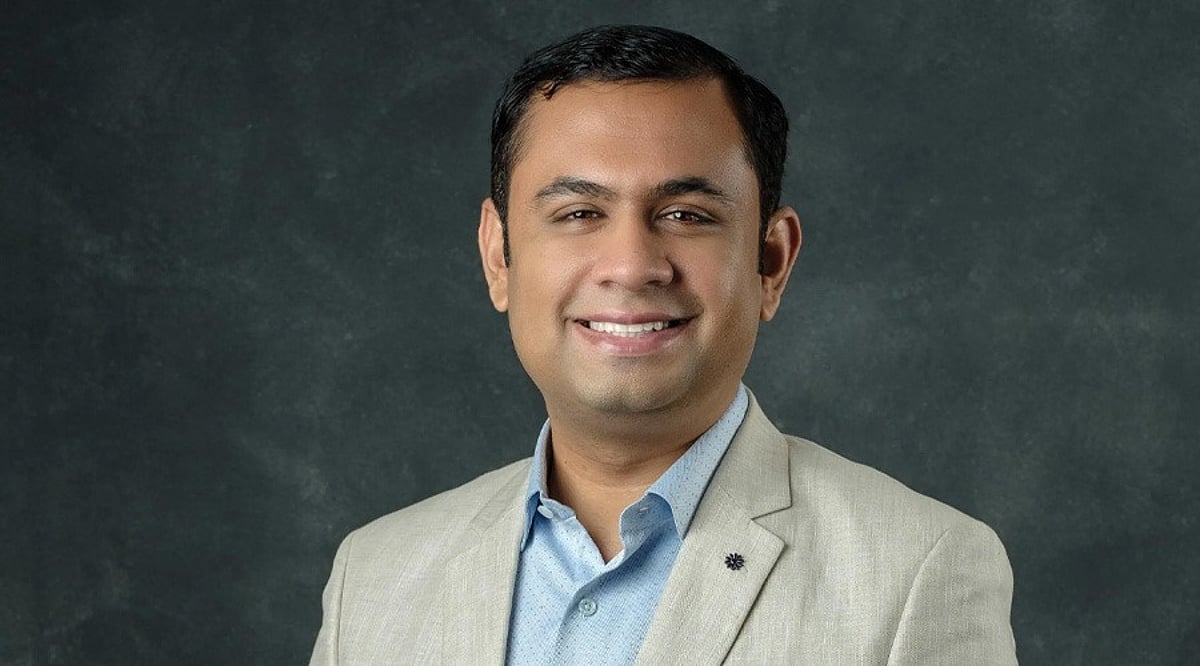
    How Vijay Shekhar Sharma Bet on a Cashless India and Won

    Every day, millions of Indians scan a QR code without a second thought. From roadside tea stalls and neighborhood kirana stores to taxi rides and hospital bills, digital payments have become part of everyday life. Long before that familiar QR sticker appeared across the country, Vijay Shekhar Sharma was betting that India’s relationship with cash would eventually change.

    From a Hindi-Medium Classroom to Big Dreams

    Sharma grew up in Harduaganj, a small town in Uttar Pradesh, in a Hindi-medium household where English was not spoken. When he entered engineering college in Delhi at fifteen, the coursework was not what slowed him down—the language was. Textbooks, lectures, and classroom conversations all arrived in a language he was still learning to read fluently, let alone speak with confidence. He has often said that English, not mathematics or physics, was the steepest climb of his early life. That struggle shaped how he approached everything afterward. Sharma taught himself English by reading everything he could find, and he carried the same self-taught instinct into technology.

    Building One97 Before Smartphones Took Over

    While still in college, he built indiasite.net, an early web content venture. He sold it two years later for a million dollars, a deal that gave him both confidence and capital for what came next. In 2000, he started One97 Communications, offering mobile content and services at a time when most of India had barely heard of the internet, let alone owned a smartphone. The dot-com crash tested that first venture severely. One97 survived by pivoting and adapting, a pattern Sharma would repeat throughout his career.

    The Bet That Became Paytm

    Those years also changed how Sharma viewed technology. While many internet companies were still thinking in terms of websites, he had become convinced that India’s next computing platform would be the mobile phone. Paytm began modestly, as a platform for prepaid mobile recharges, but the ambition behind it was never modest. Sharma wanted to turn the phone into a wallet—one that could hold money the way a physical wallet did and move it as easily as a text message.

    How Demonetisation Accelerated Paytm’s Growth

    For years, that vision grew steadily rather than explosively. Then, in November 2016, the government withdrew high-value currency notes from circulation overnight. Cash, the backbone of Indian commerce, disappeared from circulation almost instantly. Demonetisation did not create Sharma’s vision; it accelerated one that already existed. While demonetisation drove a surge in adoption, Paytm had already spent years building its payments infrastructure, merchant network, and consumer base before the policy took effect. Sharma became the public face of a shift the entire country was living through at once.

    The IPO That Changed the Conversation

    Growth on that scale eventually demands a different kind of scrutiny. In 2021, Paytm’s parent company, One97 Communications, went public in what was then India’s largest IPO, raising close to 18,300 crore rupees. The transition from startup darling to publicly listed company fundamentally changed the questions investors asked. Growth alone was no longer enough. Paytm’s listing was followed by a sharp decline in its share price as public investors questioned when, or if, the company would turn a profit. The optimism that had carried Paytm through a decade of private funding rounds met a far more skeptical audience.

    Regulatory Challenges and Rebuilding Trust

    If the IPO tested Paytm’s financial discipline, what followed tested its governance. The Reserve Bank of India moved against Paytm Payments Bank in 2024, citing persistent compliance concerns and ultimately restricting most of its operations. The action marked one of the biggest regulatory setbacks in Paytm’s history. Beyond the operational impact, it raised broader questions about governance, compliance, and how quickly fintech companies could scale while still meeting banking regulations. It forced Sharma into a period of restructuring and rebuilding, separating the payments bank from the broader Paytm ecosystem and working to reassure both regulators and customers that the business could operate within tighter compliance boundaries. Public markets demanded profitability. Regulators demanded stronger governance. Both pressures arrived within a few years of each other, and both forced Sharma to prove that Paytm could mature into an institution, not just remain a fast-growing startup.

    The Legacy of Vijay Shekhar Sharma

    Vijay Shekhar Sharma’s story mirrors the evolution of India’s digital economy itself. It began with a language barrier in a small town, accelerated through bold bets on mobile technology, and was tested by the realities of public markets and regulation. Sharma has often credited his upbringing for giving him the discipline to keep rebuilding after setbacks—a quality that has become as important as his willingness to take risks. His journey suggests that building a company at a national scale is less about getting a single decision right than about repeatedly adapting as technology, markets, and institutions evolve.

  • How Harshil Mathur and Razorpay Revolutionized India’s Digital Payments Ecosystem

    How Harshil Mathur and Razorpay Revolutionized India’s Digital Payments Ecosystem

    When Harshil Mathur and Shashank Kumar launched Razorpay in 2014, India’s online payment infrastructure was a mess of failed transactions, clunky integrations, and limited options for businesses trying to accept money digitally. Twelve years later, Razorpay processes over $180 billion in annualized total payment volume, has onboarded more than 12 million merchants, and filed a confidential DRHP with SEBI in June 2026, targeting a public listing valued at $5 to $6 billion. For Mathur, the journey from wireline field engineer to CEO of one of India’s most consequential fintech companies is anything but accidental.

    From Jaipur to IIT Roorkee to a Bold Bet

    Born in 1991 into a middle-class family in Jaipur, Rajasthan, Mathur developed an early fascination with technology and coding. He completed a degree in metallurgical engineering from IIT Roorkee in 2013 and joined Schlumberger as a wireline field engineer, a technically intensive role that lasted just eight months before the pull toward building something of his own won out. In December 2014, he co-founded Razorpay with Kumar around a straightforward insight: India’s businesses desperately needed a clean, developer-friendly API to accept online payments, and nothing available delivered that reliably.

    Y Combinator and the Developer-First Growth Engine

    In 2015, Razorpay got into Y Combinator’s Winter batch, one of the world’s most selective startup programs. The YC period sharpened the company’s product thinking and opened the door to early investors. Early growth was built almost entirely on developer trust; Razorpay’s clean API documentation and reliable integration made it the default payment gateway for startups, SMEs, and eventually larger enterprises. By 2020, the company had crossed the $1 billion unicorn mark. By December 2021, a $375 million Series F round valued it at $7.5 billion, backed by Peak XV Partners, Tiger Global, Ribbit Capital, Lightspeed, and Singapore’s GIC.

    Building Beyond Payments

    Mathur’s strategic ambition for Razorpay was never limited to a payment gateway. Under his leadership, the company expanded into RazorpayX, a neobanking platform now serving over 40,000 businesses with payroll, corporate cards, and connected banking; Razorpay Capital for merchant credit; and Magic Checkout, a one-click product reportedly reducing cart abandonment by 22%. In January 2026, Razorpay received RBI’s payment aggregator cross-border license, enabling transactions across 130-plus currencies in over 180 countries, and the company has established operations in Singapore and Malaysia.

    The IPO Moment

    Razorpay’s planned stock market debut is the most significant milestone on the horizon. The company filed a confidential DRHP with SEBI on June 12, 2026, targeting Rs 5,000 to Rs 6,000 crore through fresh shares and an offer for sale, with Axis Capital, Kotak Mahindra Capital, JPMorgan, and Citi appointed as lead managers. The targeted $5 to $6 billion IPO valuation is a markdown from the $7.5 billion 2021 peak, reflecting broader compression in fintech valuations and a public market that now demands profitability alongside growth. Razorpay’s FY25 revenue grew 65% to Rs 3,783 crore, though a net loss of Rs 1,209 crore, driven by ESOP costs and one-time reverse-flip tax liabilities from its 2025 domicile shift back to India, is a narrative that Mathur will need to tell convincingly to public-market investors.

    The Leader Behind the Company

    Mathur’s leadership style is widely described as product-first, technically grounded, and collaborative. He has consistently credited the broader Razorpay team and his co-founder rather than positioning himself as the singular force behind the company’s rise. He is also an active angel investor with a portfolio of over 22 companies, has been recognized on the Forbes 30 Under 30 Asia list, and has been a vocal voice in India’s startup community on digital policy issues. What makes his story particularly resonant is the consistency of the original thesis: building reliable, developer-first financial infrastructure for Indian businesses was not a fashionable idea in 2014. A decade on, it has become the foundation of how a significant share of India’s digital economy moves money.

    Why This Matters

    India’s digital economy depends on reliable payment infrastructure, and entrepreneurs like Harshil Mathur have played a significant role in building it. His journey demonstrates how solving a fundamental business problem with technology can create lasting impact, inspire future founders, and accelerate innovation across an entire industry.

  • SpaceX Stock Drops to New Low Despite Starship Flight Success

    SpaceX Stock Drops to New Low Despite Starship Flight Success

    SpaceX shares fell to a record low on Monday, even after the company’s Starship completed its most successful test flight yet. The stock dipped below $109 before closing 1.4% lower at $113.50, extending a decline that began after its IPO in June.

    Investors are now looking beyond launch milestones. They are focused on whether Starship can achieve high flight rates, safe returns, and cost-effective operations to support SpaceX’s long-term ambitions.

    Starship Achieves Key Flight Milestones

    Starship lifted off from Starbase, Texas, on Friday during its 13th test flight. The mission deployed 20 next-generation Starlink V3 satellites, completed an engine relight in space, and ended with the upper stage making a controlled splashdown in the Indian Ocean.

    SpaceX spokesperson Dan Huot expressed excitement during the livestream, calling the mission ‘lucky number 13.’ The spacecraft remained intact after landing, providing engineers with valuable heat shield data from reentry.

    However, the Super Heavy booster did not complete its planned landing sequence. Five engines failed to restart during the landing burn, causing the booster to hit the Gulf of Mexico harder than intended. SpaceX did not plan to recover either vehicle.

    The mission followed an engine-ignition abort on July 16 and a weather delay on July 23. Elon Musk said SpaceX may attempt to catch the Starship upper stage with its launch tower during Flight 14, pending a thorough data review.

    SpaceX Stock Continues Post-IPO Decline

    SpaceX stock closed at $115.07 on Friday before the launch, after falling 2.7% during the session and 7.2% over the week. Monday’s decline pushed shares further below the company’s $135 initial public offering price.

    The stock has lost nearly half its value since reaching a post-IPO high above $225 in June. Short sellers have built positions during the decline, while investors question the company’s valuation and spending plans.

    Alex Morris, CEO of F/m Investments, said the shares could move into ‘double digits.’ He acknowledged SpaceX’s strong product and limited direct competition but attributed some volatility to the company’s growing focus on artificial intelligence.

    SpaceX plans to report second-quarter results on August 4. The release will give investors their first detailed look at quarterly revenue, costs, cash usage, Starlink growth, and spending across space and AI operations.

    Starship Becomes Central to Future Plans

    SpaceX is shifting its launch strategy toward Starship and away from Falcon 9. Reports indicate the company has turned away some satellite operators seeking dedicated Falcon 9 launches after 2028 and stopped accepting new rideshare reservations for later missions.

    The company has also reduced production of some non-reusable Falcon components. This shift makes Starship’s reliability, reuse, and launch rate critical to operations, as Falcon 9 supports commercial launches and much of the Starlink deployment schedule.

    Investors are monitoring the cost of repairing Starship after reentry and the turnaround time between flights. SpaceX aims to increase launch frequency sharply, but each test carries technical risk and can face hardware or weather delays.

    SpaceX has not confirmed a date for Flight 14. Any tower-catch attempt depends on the company’s review of Flight 13 data, including engine performance, reentry conditions, heat shield results, and splashdown control before approving the next flight.

  • SK Hynix Stock Drops Below IPO Price as AI Enthusiasm Wanes

    SK Hynix Stock Drops Below IPO Price as AI Enthusiasm Wanes

    SK Hynix shares have fallen below their initial public offering price for the first time since listing on the NASDAQ, as the artificial intelligence rally that powered the stock loses steam. The South Korean memory chipmaker’s American depositary receipts closed at $143.02 on July 27, down 7.47% from the previous session, and traded as low as $139.01 during the day.

    The stock opened at $170 on its first trading day and hit an intraday high of $194.80 shortly after the $26.5 billion IPO — the second-largest US share sale after SpaceX. But the early gains have evaporated amid broader selling pressure in semiconductor stocks and growing investor skepticism about AI infrastructure spending.

    IPO Gains Fade Within Weeks

    SK Hynix raised about $26.5 billion by selling 177.9 million depositary shares, each representing one-tenth of a common share. Strong institutional demand drove the offering, but the rally quickly reversed. Monday’s close placed the shares 4% below the $149 IPO price and about 27% below the July 14 peak. Trading volume exceeded 50 million shares as selling accelerated.

    The decline comes just ahead of SK Hynix’s earnings report on Wednesday, where investors will scrutinize demand for high-bandwidth memory, production plans, and capital expenditure levels. The company supplies advanced memory products used with NVIDIA processors in AI servers.

    Semiconductor Stocks Face Broad Selling

    Pressure extended across the semiconductor market. The Philadelphia Semiconductor Index fell 2.2% on Monday, closing at its lowest level since May 19. The index has dropped more than 20% during July after strong gains earlier in the year. NVIDIA, Micron, and other chip companies also declined as investors questioned the pace of AI infrastructure spending.

    Concerns around ‘circular financing’ resurfaced after several large technology agreements involved funding, loan support, and equipment purchases among connected companies. Meanwhile, Chinese memory producer ChangXin Memory Technologies surged 466% during its Shanghai debut, drawing attention to rising competition in the memory market. Reports of new Chinese chipmaking equipment added pressure across Asian and US semiconductor shares.

    Major US Listings Lose Early Support

    SK Hynix joins SpaceX among large US listings trading below their offering prices. SpaceX closed at $113.50 on Monday, compared with its $135 IPO price, after climbing above $225 shortly after its June listing. Other recently listed companies, including gas engine maker Innio, have also lost early gains, raising closer scrutiny of pricing across major technology offerings.

    SK Hynix’s decline came despite a new partnership between NVIDIA and SK Group, which announced a planned investment exceeding $500 billion across AI data centers and next-generation memory. SK Telecom plans to develop an AI facility with capacity of up to two gigawatts. The project could support long-term demand for SK Hynix memory products, but markets are assessing whether planned spending will match future demand.

  • Chinese Chipmaker CXMT Soars 466% in Shanghai Debut After Record $8.6B IPO

    Chinese Chipmaker CXMT Soars 466% in Shanghai Debut After Record $8.6B IPO

    ChangXin Memory Technologies (CXMT) saw its shares skyrocket 466% on their first day of trading on Shanghai’s STAR Market, propelling the DRAM manufacturer to become China’s most valuable publicly listed company. The stock closed at 49 yuan, well above the IPO price of 8.66 yuan per share, after raising 57.92 billion yuan (approximately $8.6 billion) in the largest Asian IPO of 2026.

    The massive rally valued CXMT at over 3.2 trillion yuan ($487 billion), surpassing Industrial and Commercial Bank of China as the largest A-share company. Full-day turnover exceeded 140 billion yuan, as investors scrambled to trade the newly listed shares. Only about 6.73% of CXMT’s total shares were available for trading on the debut, limiting supply and concentrating demand on a small free float.

    Theodore Shou, CEO of Yiyi Capital, expressed confidence in CXMT’s potential to become a global memory chip leader but cautioned that the market may be near a ‘short-term peak’ in memory-cycle sentiment. He noted that large first-day gains are more common among smaller companies, and questioned whether the current margins and enthusiasm could be sustained.

    DRAM Market Position and Expansion Plans

    CXMT is China’s leading producer of dynamic random-access memory (DRAM) chips used in smartphones, computers, servers, and other electronics. It ranks fourth globally behind Samsung Electronics, SK Hynix, and Micron Technology, holding 7.67% of the global DRAM market in 2025 based on fourth-quarter sales, according to its prospectus. By chip volume, its share was near 9%.

    The company plans to direct most of its IPO proceeds toward memory wafer production, equipment upgrades, and research projects to increase output and develop more advanced memory products. Morningstar noted, however, that restricted access to leading manufacturing equipment still limits the pace of its technology development.

    Revenue Surge Driven by AI Demand

    CXMT reported first-quarter revenue of 50.8 billion yuan, up 719% year-over-year, and net profit of 33.01 billion yuan, reversing a 2.83 billion yuan loss in the same period last year. The improvement was driven by higher DRAM prices, increased sales volumes, and a better product mix.

    Demand from artificial intelligence systems and data centers has tightened the global memory market, while China promotes locally produced chips for major technology projects. Apple has reportedly started testing CXMT memory for devices sold in China, and Morningstar expects domestic internet companies to increase their use of CXMT chips as China expands its AI infrastructure.

    Despite the optimism, Morningstar sees a technology gap with global memory leaders and expects new industry capacity from late 2027 to ease supply pressure, potentially normalizing profitability. Shou added that investors had already started selling into the IPO, signaling caution about near-term market conditions.

    CXMT forecasts first-half revenue between 110 billion yuan and 120 billion yuan, and parent-company net profit between 50 billion yuan and 57 billion yuan, citing continued memory demand, higher prices, and increasing sales.

  • Zepto IPO Faces Investor Resistance Over Aggressive Valuation

    Zepto IPO Faces Investor Resistance Over Aggressive Valuation

    Zepto is encountering fresh resistance from institutional investors as it prepares for its highly-anticipated initial public offering. While the company has already lowered its valuation expectations from last year’s peak, several domestic mutual funds remain unconvinced. They argue that the proposed pricing still fails to reflect the company’s business profile and long-term profitability prospects. The disagreement could complicate the timeline of India’s most closely-watched startup listings.

    Institutional Investors Seek Steeper Valuation Cut

    According to reports, Zepto previously achieved a private market valuation of around $7 billion, but has since reduced its IPO expectations to approximately $4 billion – $5 billion. Even at those levels, several institutional investors believe the valuation remains aggressive under prevailing market conditions.

    Fund managers are reportedly seeking a further 30%-40% reduction in valuation before committing capital. Their cautious stance reflects a broader shift in India’s IPO market, where investors are placing greater emphasis on profitability, sustainable growth and realistic pricing rather than rapid revenue expansion alone.

    Business Model Under Scrutiny

    A major issue investors pointed out is that Zepto has a fairly limited business model. Unlike its listed peers like Swiggy and Eternal (Blinkit), the company continues to focus on fast commerce and does not have any sizable food delivery service.

    Market players believe that the lack of another high-traffic vertical makes it difficult for Zepto to have valuations at par with those of its peers. Another factor behind the hesitation is the poor performance various new-age technology firms show post-listing.

    Company Continues Preparations for IPO

    Zepto has already submitted updated draft documents with the Securities and Exchange Board of India (SEBI) and is expected to raise more than Rs. 8,000 crore through a combination of fresh equity issuance and an Offer for Sale. The funds are expected to support expansion of its dark-store network and business growth initiatives.

    Reports also suggest that the company has intensified discussions with high-net-worth individuals, family offices and institutional investors to strengthen demand ahead of the issue. However, bankers may first need to bridge the gap between Zepto’s pricing expectations and investors’ valuation benchmarks.

    IPO Timeline Hinges on Investor Consensus

    India’s stock market appears alive, with several firms looking to raise capital from investors in the next few months. Zepto’s IPO filing shows how institutional investors are becoming more significant for deciding a company’s valuation. Although high-growth tech companies are in demand, markets are less willing to pay a premium price without assurance of their profitability. As negotiations are ongoing, the final price and issue will be determined by whether Zepto gains investors’ support.

  • Anthropic Hires Investor Relations Director at $600K Salary as IPO Nears

    Anthropic Hires Investor Relations Director at $600K Salary as IPO Nears

    Anthropic, the artificial intelligence company behind Claude, is strengthening its preparations for a public stock market listing by hiring a senior investor relations executive. The role, Director of Investor Relations, comes with a base salary ranging from $425,000 to $600,000 per year, according to a job listing reviewed by the Times of India.

    The new director will be responsible for shaping how Anthropic communicates its growth story to Wall Street. Key duties include building the company’s investment narrative, meeting with institutional investors, and serving as a liaison between company leadership and the financial community. The hire will also track AI industry trends and explain how major business decisions could impact Anthropic’s stock and long-term growth prospects.

    The position reports to Kenneth Dorell, who joined Anthropic in June as Head of Investor Relations after previously leading investor relations at Meta. The role opened after the company’s earlier investor relations lead departed earlier this year.

    Anthropic has experienced rapid growth over the past year. Enterprise adoption of tools like Claude Code has pushed annualized revenue to $47 billion as of May, making it one of OpenAI’s most formidable competitors. However, the company must convince public investors that its high valuation is justified given the enormous costs of training advanced AI models. As a public benefit corporation, Anthropic also faces the challenge of balancing investor returns with its commitment to building AI safely.

    The job listing underscores the growing importance of investor communication for AI companies approaching public markets. Firms like Anthropic now need to articulate not only their technological capabilities but also their governance and long-term strategy to a broader investor base as competition in the AI sector intensifies.

  • Alphabet Reveals $94.1 Billion SpaceX Stake Under Full Trading Lock-Up

    Alphabet Reveals $94.1 Billion SpaceX Stake Under Full Trading Lock-Up

    Alphabet has disclosed that its SpaceX investment was valued at approximately $94.1 billion at the end of the second quarter. This holding makes the Google parent one of SpaceX’s largest outside shareholders.

    The disclosure follows SpaceX’s listing on NASDAQ in June. The filing explains how market gains boosted Alphabet’s reported profit without adding cash to its accounts. Currently, Alphabet cannot sell any part of the position because all shares remain under short-term or long-term trading restrictions.

    Alphabet’s SpaceX Stake Reaches $94.1 Billion

    Alphabet’s quarterly filing shows that about $80 billion of SpaceX shares carry short-term restrictions on the ability to sell. Another $14.1 billion remains restricted through the third quarter of 2027. Together, these two groups cover the full reported position.

    The investment dates back to January 2015, when Google and Fidelity invested a combined $1 billion in SpaceX, receiving a stake of just under 10% at the time. Later funding rounds and SpaceX’s public offering reduced Alphabet’s ownership percentage through dilution.

    The filing provides the stake’s dollar value but does not disclose an ownership percentage. Published estimates range from about 4% to 6%, based on valuation and share-count methods. SpaceX stock has since fallen below its $135 IPO price, so Alphabet’s position is now worth less than its reported June 30 value.

    Unrealized Gain Boosts Alphabet’s Quarterly Profit

    Alphabet recorded a $99 billion gain on equity securities during the quarter. The company stated that the increase mainly came from unrealized gains tied to SpaceX and another private company investment, which media reports have identified as AI developer Anthropic.

    Alphabet’s net income rose to $112.1 billion, with earnings reaching $9.11 per share. Revenue increased 24% from a year earlier to $119.8 billion. Google Cloud revenue rose 82% to $24.8 billion during the same period.

    However, the equity gain did not provide cash for Alphabet’s daily operations or investment plans. The company adjusted the value of the holdings on its balance sheet without selling the shares. Future price changes can raise or lower the reported value.

    Meanwhile, Alphabet reported negative free cash flow of $5.9 billion. It also raised its 2026 capital spending forecast to between $195 billion and $205 billion, mainly to support data centers, servers, networking equipment, and other AI infrastructure.

    SpaceX Lock-Up Releases Start in August

    SpaceX priced its initial public offering at $135 per share and began trading under the SPCX ticker on June 12. The company later confirmed that the offering raised about $85.7 billion after underwriters exercised their option for additional shares.

    SpaceX plans to publish its first quarterly results as a public company after the market closes on August 4. Its lock-up schedule starts releasing some restricted shares on August 6, two full trading days after the earnings report.

    Alphabet has not announced plans to sell its shares when the first restrictions expire. A separate $14.1 billion group will stay restricted through September 2027, limiting how much of the position Alphabet can convert into cash. SpaceX shares recently traded near $112, below both the IPO price and their June peak.

    This decline lowers the market value of Alphabet’s holding. Later quarterly filings will record changes based on SpaceX’s share price and any shares that Alphabet sells after the restrictions end.

  • CXMT’s $8.6 Billion IPO: What China’s Biggest Memory Chip Debut Means for AI Chip Stocks

    CXMT’s $8.6 Billion IPO: What China’s Biggest Memory Chip Debut Means for AI Chip Stocks

    Global AI chip stocks could face fresh volatility next week as ChangXin Memory Technologies (CXMT), China’s largest memory chipmaker, prepares to debut on the Shanghai Stock Exchange. The listing, one of the biggest market events of the year, is expected to draw worldwide investor attention as Beijing intensifies efforts to strengthen its domestic semiconductor industry.

    CXMT has raised $8.6 billion through its Initial Public Offering (IPO), making it Asia’s largest IPO of 2026. The offering comes amid an AI-driven surge in demand for memory chips and continued efforts by China to reduce its dependence on foreign semiconductor suppliers.

    China’s Bet on Homegrown Chipmaking

    Founded in 2016, CXMT has grown into the world’s fourth-largest DRAM memory chipmaker, trailing only Samsung Electronics, SK Hynix, and Micron Technology. DRAM chips are essential components in smartphones, personal computers, servers, and AI systems, where they temporarily store data for processing.

    The company has grown significantly with substantial support from government-linked investors. Entities from Hefei, an eastern Chinese city, own 36.8% of CXMT’s stock. At the IPO valuation, those shares are worth approximately $31.5 billion, underscoring the scale of China’s state-backed investments in technology.

    Why Investors Are Watching Closely

    According to analysts, the IPO’s impact on semiconductor stocks will be significant, as large listings often trigger portfolio realignment among investors. CXMT’s market debut follows a recent downturn in global chip stocks, making its performance a key gauge of investor confidence in the AI hardware sector.

    Despite market volatility, demand for the IPO remains robust, with institutional investors subscribing to the offer over 500 times.

    A Key Player in China’s AI Strategy

    CXMT plays a pivotal role in China’s quest for technological self-reliance. High-performance AI processors require vast amounts of fast memory, and domestic DRAM production has become a priority due to US-led export restrictions reshaping the semiconductor supply chain.

    Although CXMT lags behind global leaders in advanced memory technologies, its rapid growth reflects the Chinese government’s strategy of cultivating domestic champions in critical industries. The company’s stock market performance will be closely watched by investors worldwide.